Showing posts with label Grom Div. Show all posts

Tuesday, 29 December 2020

Harvest in Scotland


Harvesting in Scotland by a Scottish painter Joseph Farquharson (1846-1935). 

Scottish harvest customs. From "Carmina Gadelica - Hymns and Incantations, Ortha Nan Gaidheal, Volume I" by Alexander Carmichael [1900]


Reaping blessing. From "Carmina Gadelica - Hymns and Incantations, Ortha Nan Gaidheal, Volume I" by Alexander Carmichael [1900]


The Sun god to whom Scots gave thanks for their grain and their wellbeing is Crom Dubh of the Irish (Scots). The deity to whom the Irish prayed in the Early Bronze Age "Grange Circle" on the first day of the harvest. 


The biggest and the only square stone in the circle is still known as the Crom Dubh stone. And next to it is the pile of flat bread like stones known as the Grain Child...


I talked about this amazing ancient monument in my post "Grange circle" 

He was the good whose holy mountain was and is the holiest place in Ireland. Except it is now called St Patrick's mountain...


I talked about this in my post "Sun mountain"...

They prayed to him on the last Sun-day in July, which is still known in the area around the holy mountain as the "Domhnach Crom Dubh" which means "Crom Dubh's Sunday"...

People prayed to Crom Dubh because they believed that "It was he who was giving them the light of the day, the darkness of the night, and the change of seasons"...Basically The Sun...I talked about this in my post "Dun Briste"...

Crom Dubh was said to be another name for Dagda, the Giving God of the Irish... 
Hromi Daba was another name for Dabog, the Giving God of the Serbs...

Both of these gods had a bull cult associated with them...

I talked about this in my posts "Bull of Crom Dubh" and "Bull of Grom Div (Hromi Daba)"...

And Dabog (Hromi Daba), The Sun God, is the god to whom Slavs still "raised stones" until very recently "for the weather". 


Just like the Early Bronze Age Irish raised stones and built stone circles to Dagda (Crom Dubh)??? 

I talked about these weather manipulation rituals involving stones in "The last megalithic ritual in Europe" and "Weather stones"...

The Sun God of the Pagan Serbs, Dabog, Hromi Daba, became the Devil of the Christian Serbs. 
The Sun God of the Pagan Irish, Dagda, Crom Dubh became the Devil of the Christian Irish. 

But after all these years, in Ireland "By Crom" still means "By God" πŸ™‚ 


Thursday, 15 August 2019

Bull of Grom Div

Storm clouds over norther Serbia, 2nd of August.


Terrible storms hit Serbia yesterday and today. Crops were destroyed, houses damaged, people killed. 

In Serbian the expression "On vedri i oblači" means "he rules", "he has absolute control, absolute power". Literally this expression means "he makes the sky clear and cloudy"... Storm clouds over northern Serbia... You can read more about this in my post "The power of the Thunder Giant" 

You can see why agricultural societies, like the Early Slavic society, would consider the Sky God, Perun to be the Supreme god... Procopius, 6th c. Byzantine historian, who tells us that the Slavs “believe that one god, the maker of lightning, is alone lord of all things...

Interestingly the 2nd of August is the old day of Perun, Slavic Thunder god. Painting depicting Perun by Andrey Shishkin.  


I like that Shishkin depicted Perun with a blazing sun on his chest. This is because Perun's day falls in the middle of Kresovi (Fires), the hottest part of the year in the Northern hemisphere.  You can read more about this in my post "Two Crosses"

This is why the 2nd of August is also the day of Helios, The burning sun. Today in Serbia known as the the day of St Elijah. St Elijah who every year gets so angry, that he wants to burn the world into cinder... Very saint like πŸ™‚ 


You can read more about St Elijah the Thunderer in my post "Thundering sun god". 

But St Elijah doesn't burn the world to cinder. Because his wife Ognjena Marija (Fiery Mary) calms him down. Ognjena Marija who is also known as Perunika. The wife of Perun, who has burning sun at its heart πŸ™‚ Here is Ognjena Marija surrounded by Perun's burning wheels...


You can read more about Ognjena Marija in my post "Ognjena Marija".


The fact that Perun comes on the 2nd of August, when Sun is the hottest is symbolically depicted through Perun's wheel being basically Svetovid's wheel on fire...


Basically Perun and Svetovid are one and the same. 

You can read more about Svetovid in my post "The Horseman". 

So Perun comes at the moment of maximum heat to announce the beginning of the cooling of the northern hemisphere...This is part of the never ending change of the climate as a result of the never ending interplay between the Father Sun, Sky (Male principle) and Mother Earth (Female principle).  


You can read more about this in my post "Yin and Yang" and "Square and Compases";  


That Perun (thunder) really has Svetovid (sun) at its heart can be seen from the latest scientific data. It shows that it is the high speed solar wind particles which directly cause lightning. 


You can read more about this in my post "Sun Thunder Fire";

Svetovid (Sun) through Perun (Thunder) creates (Fire) Svarog. Fire (Svarog) heats up Sun (Svetovid) who creates lightning (Perun). In Slavic mythology this is symbolically represented by Triglav (Three headed) god... 

"Because it is a great secret how come Svarog (hevenly and earthly fire) is at the same time Perun (thunder) and Svetovid (Sun)..." From Book of Veles...


You can read more about this in my post "Triglav Trojan Trinity Trimurti Agni". 

In Slavic mythology, Perun's main "opponent" is Veles. He is "the great horned snake" who "stole heavenly cows from Perun". Every year on his day, 2nd of August, "Perun defeats Veles" and "rescues his heavenly cows"... 

Great snake is another name for a Dragon, a fire breathing beast. In Serbian mythology Dragon is just "an old male snake". Serbian word for dragon "zmaj" is a masculine form of the Serbian word for snake "zmija". And snakes are solar animals who Slavs believed "eat sun's heat, sun's fire" and cause sun to cool down and summer to end. You can read more about this in my post "Apep".

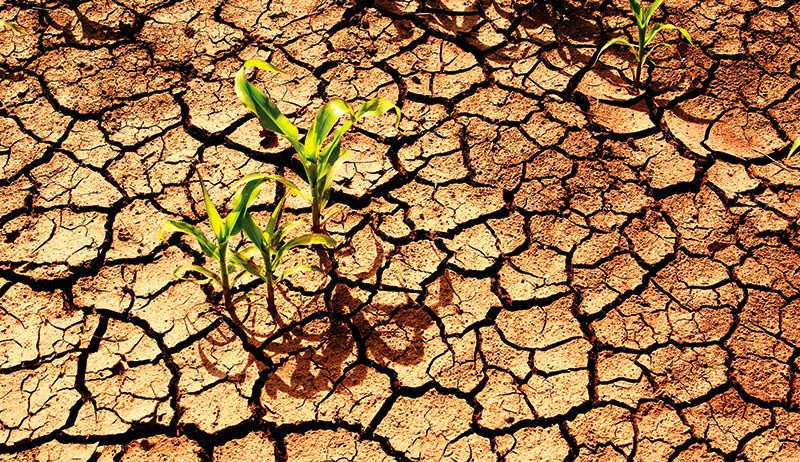
Fire breathing dragon is the symbol of sun's heat, sun's fire which causes draught.


Heavenly cows are clouds and their milk is rain. 


Basically Veles, the fire breathing Dragon, is the end of summer heat which dries the sky and the land and causes draughts. And guess what. The end of summer, the hottest part of the year in the northern hemisphere, which is by Balkan Slavs called "kresovi" (fiers), is also known as "dog days" and falls in the middle of Leo zodiac sign. St Austell Norman baptismal font with a dragon standing between the lions (in the middle of Leo) on top of a dog??? 


You can read more about this symbolism in my post "St Austell font" and "You will trample the great lion and the serpent". 

And every year, in the middle of Leo, in the middle of Dog Days, on Perun's day, 2nd of August, Perun "kills" Veles. Summer (draught) ends and Autumn (rain) begins. 

The reason why Veles is "horned snake" or more precisely "horned dragon" is because Veles is not just dragon, he is also a bull (hence his love of heavenly cowsπŸ™‚). This is because Veles is summer, and summer starts in Taurus. You can read more about this Dragon-Bull duality in my post "Water bull" where I talk about Balkan legends which equate dragons and monstrous bulls. 

At the beginning of summer the bull of summer is young, fertile and life creating. At the end of summer the bull of summer is old, sterile and life destroying. And has to be slaughtered before it destroys everything...Which is what happens on day of Perun...The bull is killed, summer ends. 


Interestingly, bull is also the animal sacrificed in Serbia on Perun's day, which falls on the same day as Lughnasadh (Crom Dubh day) in Ireland (2nd of August, Last Sunday in July or First Sunday in August, the beginning of Autumn). You can read more about sacrificial animals in Serbian culture in my post "Sacrificial animals"


This tradition of sacrificing bulls to Perun was attested by Procopius, 6th c. Byzantine historian, who tells us that the "Slavs sacrifice to Perun oxen and every victim.”  

Now remember my post "Bull of Crom Dubh"? In it I talked about the link between bull and mysterious Irish Sun (Sky) god and god of Agriculture, Crom Dubh. The Irish celebrated him on the Lughnasadh, Crom Dubh Day, the First Sunday in August and sacrificed bulls to him. As I said at the end of that post, there is one more god to whom people sacrificed bulls at the end of summer: Grom Div (which means Thunder Giant, Thunder God in Serbian), Perun...Interestingly in Serbian folklore (and only in Serbian folklore, not any other Slavic folklore), Dabog (Giving god), who is at the same time Sun god and Rain god (Sky god) is also known as Hromi Daba. Believe or not, in Irish folklore, Crom Dubh is said to be another name for Dagda (Giving god)...

In Bosnia every first Sunday in August, people organise traditional bull fights. These were originally probably organised as part of the old Perun day celebration which revolved around "bull sacrifice"... You can read more about these bull fights in my post "Bo-Vo". 


Day of Perun, sorry day of Helios, sorry day of St Elijah the Thunderer πŸ™‚ is so important that it is also celebrated by Balkan Muslims (Serbs who converted to Islam during Turkish rule) as Alidjun, meaning "The day of Ali (Elijah)". More about this in my post "Alidjun"

As I said, the reason why bull is sacrificed on this day is because this is the day when summer ends. And the summer starts in Taurus (Bull). So killing the bull is symbolic killing of the summer, summer heat. But bull is also symbol for grain which grew through the summer and is ready to be harvested. In most of Europe, harvest (from Old English "hΓ¦rfest" meaning autumn) begins at the beginning of August. And so killing of the bull on Perun's day is also symbolic killing of the grain, beginning of harvest. You can read more about this in my post "Klas". 


In Ireland this is Crom Dubh day, the day of first fruits when in the distant past even first born were sacrificed to the God of Grain, Crom Dubh, but to whom until recently people sacrificed bulls as replacements for human sacrifice. You can read more about these ancient sacrifices to Crom Dubh in my post "How old is Crom Dubh".

In Cornwall the last sheaf of wheat is ceremonially "slaughtered" while crying "we have cut the neck" (of summer). 


In Slavic countries the last sheaf of wheat is called "Velesova brada" (Veles's beard)...Veles (summer) has been slaughtered...Harvest is finished...


Interestingly, in some Slavic areas this last sheaf is called Perun's beard...and in Bulgaria the last sheaf of wheat is dedicated (sacrificed) to St Vlas, Christianised Veles...

So what is the link between Irish Crom Dubh, Serbian Hromi Daba and Grom Div?

I believe that Grom Div arrived to Ireland during Bronze Age, when we find many stone circles being aligned to his day, 2nd (1st) of August, beginning of harvest, Crom Dubh Day, Lughnasadh. There, the true meaning of God's name was forgotten and was replaced with the closest Gaelic words Crom Dubh (stooped dark???, strange name for sun, sky god). I believed that Crom Dubh then arrived to the Balkans during Early Iron Age. By then the original name of the Sky God, Grom Div, was long forgotten and Gaelic Crom Dubh was replaced with the closest Serbian words Hromi Daba (lame daba???, daba means nothing in Serbian). But both the Irish and the Serbs preserved the ancient link between the Sky god and the bull and his day which marks the end of summer and beginning of autumn.

This explanation, I know, opens sooooo many "difficult" questions...

I also believe that this is one the most important links found in European folklore and mythology, the link which is a key for understanding a lot of forgotten ancient lore encoded in numerous legends, rituals and monuments scattered throughout Eurasia and North Africa...I have been writing extensively about this on my blog.

Monday, 21 September 2015

The power of the Thunder Giant

In Serbian the expression "On vedri i oblači" means "he rules", "he has absolute control, absolute power". Literally this expression means "he makes the sky clear and cloudy"...

This expression was obviously originally applied to the sky god, The God, The Lord of the early agricultural societies and the peasants, particularly the wheat farmers, whose lives depend on the climate...

Having the right weather at the right time is most important during the vegetative season from May to November. Having the right weather at the right time is in the north of Europe most critical right in the middle of the vegetative season. This is the period around the beginning of August. The period from just before the end of the ripening season to just after the beginning of the harvest season.


At this time, too much clear sunny sky and the wheat will burn. 

 
Too much cloudy rainy sky and the wheat will not ripen properly or it will fall down and rot. 


Either one of these extremes will result in the destruction of the harvest and famine. 

And so the wheat farmers, the world over, have since the time immemorial been turning their eyes to heaven (sky) at this time of the year, and praying to the same Sky God. They would pray to the one who "vedri i oblači", the one who can make the sky clear and cloudy, The Lord in heaven (sky). They would pray to him, the Giving God (Dabog in Serbian) to give them just the right amount of sunshine and rain, and by doing so to give them the good harvest.

And interestingly right there, on the 2nd of August, on the day that marks the border between the summer and autumn, growing and harvesting, we find In Ireland the day of Crom Dubh. I believe, as I said many times before, that this god is the same god which is in Serbia known as Hromi Daba, Dabog. And that both Chorm Dubh and Hromi Daba are just corruptions of Grom Div, The Thunder Giant, The Thunder God. That this is indeed so can be seen from the fact that the 2nd of August is in Serbia known as the day of Perun, the Thunder God, the one who "vedri i oblači", the one who can make the sky clear and cloudy, the Lord....


PS:

All weather-related French phrases also imply the action of God. 
Il fait beau = He makes beautiful (weather)
Il pleut = He rains
Il vente = He winds
Il neige = He snows
etc. 
Similarly, "Il fait la pluie et le bau temps" (he makes rain and sunshine) defines an all-mighty person.