Showing posts with label anthropology. Show all posts

Sunday, 23 April 2023

Female pots from Sudan

Fur women from Sudan making clay pots...Pic from "Sudan Notes and Records Vol. 22, No. 1 (1939)". 

And in there we read that Fur people regarded pots, their making and their use, as "female" only and a taboo for men...

For instance, in the above article we can read that when ethnographers asked Fur men how do you say in their language "he lit fire under "burma" (pot used in brewing beer)", the reply was that "you can't say that in our language, cause only women can do that"...


The authors then say that this taboo most likely originates from the ancient association between pots and goddess [mother earth] as for instance "in Nigeria, pots are still associated with mother goddess and a pot is a symbol for a female genitals"...

In "Nile Valley archaeology and Darfur ethnography: the impact of women on cultural evolution. A personal reflection" Randi Haaland gives us further info about this association between pots and women in Fur society:

"The Fur used terms for body parts to describe parts of pots in addition they explicitly associated pots as females, and in particular with motherhood occasionally manifested by placing two protrusions called nansu (breasts) on pots..."

"...Grain storage pots were made by women and only accessed by women...Body terms are used for different parts of the container such as stomach, neck and mouth. And these granary pots are made with features resembling breasts."

It seems that not only pots were exclusively in the female domain. Any grain processing and storing equipment was under strict female control too...Like a cooking fireplace, which is exclusively controlled by a woman. And grinding stones...

"Women in the village were making their own grinding stones. Suitable raw material was found in only one area, where a fine grained sandstone was located. Women had their own quarry where they extracted the raw material and did the rough shaping of the grinders..."

"...The making and using of grindstones were closely associated with female identity, so much so that when grinders are used in male dominated activities like iron production, it is only women who perform the task of grinding the ore."

These taboos are all linked with tools used for storing, grinding, cooking grain. Which indicates that they all come from the grain cult, which directly links woman, mother and female fertility and earth, mother earth and earth fertility...

This is confirmed by this taboo:

"Porridge and beer, both made from the same raw material – millet – are both made by women. In Fur tradition, they were set apart from other food items in the sense that the selling of these products would imply an activity classified as shameful, similar to selling sex."

This elevation of grain, grain food and grain drink to a level of holy food is very interesting...It must be very very old, coming from the time when grain was rare luxury. I believe that this grain cult most likely arrived to Sudan with the Neolithic farmers.

And got preserved in Sudan isolated until present time. We actually find evidence of the existence of such cult in archaeological, historical and ethnographic data throughout Eurasia from Neolithic until present day...

The remnants of this female grain cult were preserved in European "folklore" to this day, particularly among Slavs...I talked about this a lot already, like in this post about the "Mother of grain"...

The symbolic link between women and earth depicted on this Early Vinča Culture terracotta figurine from Jela, Iron Gate region of the Danube, Serbia, c. 5200 BC, H. 5.3 cm, which has a branching plant growing out of the womb...

I have been meaning to talk about the female cult of the bread baking pottery from Serbia for a while, but I always get distracted with something else, so...But I promise I will get to it soon...

PS: I want to thank my friend @dalaygiz for reminding me of this amazing Bronze Age terracotta couple from Tell Marlik in Iran. The man is depicted with a knife and a woman with a...pot...


Sunday, 23 January 2022

Si-Amun

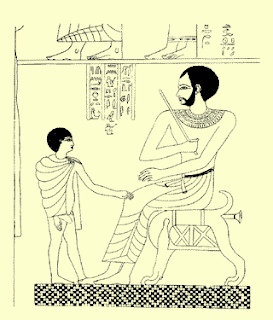
This is a wall painting from the 3rd century BC tomb of Si-Amun at Gebel al-Mawta in the Siwa Oasis in Egypt...It depicts seated Si-Amun, and his son, standing before him and touching his father's knee... 

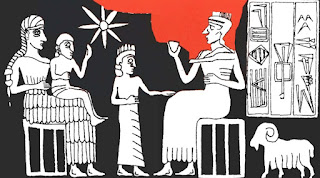
Now have a look at this: "Seal depicting...Queen Uqnitum & King Tupkish of the Hurrian kingdom of Urkesh (late 3rd millennium BC) with...the young prince touching his father's knee". 

I talked about this in my post "Queen Uqnitum

What's with touching the knee? Remember the article about the Serbian expression "From knee to knee" meaning "From generation to generation", "From father to son". 

In it I talked about the fact that the word for generation and the word for knee have the same root in many languages. Why?

Because of this: The English etymological dictionary says something interesting about the etymology of the word genus: "...could come from Latin genu (knee) from a supposed ancient custom of a father acknowledging paternity of a newborn by placing it on his knee..."

How widespread was this ancient custom?


Thursday, 5 November 2020

Long ears

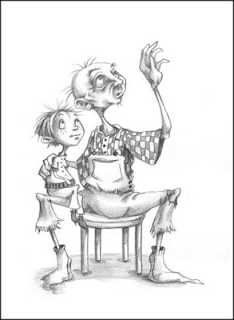
There is a very unusual story about a king with long (goat's or donkey's or horse's or ox's) ears and his barber. This story has only been preserved as a folk tale in a few places. Are these places connected with each other in some way? 
Midas, Greece


Bacchus, on a certain occasion, found his old schoolmaster and foster-father, Silenus, missing. The old man had been drinking, and in that state wandered away, and was found by some peasants, who carried him to their king, Midas. Midas recognized him, and treated him hospitably, entertaining him for ten days and nights with an unceasing round of jollity. On the eleventh day he brought Silenus back, and restored him in safety to his pupil. Whereupon Bacchus offered Midas his choice of a reward, whatever he might wish. He asked that whatever he might touch should be changed into gold. Bacchus consented, though sorry that he had not made a better choice.

Midas went his way, rejoicing in his new-acquired power, which he hastened to put to the test. He could scarce believe his eyes when he found a twig of an oak, which he plucked from the branch, become gold in his hand. He took up a stone; it changed to gold. He touched a sod; it did the same. He took up an apple from the tree; you would have thought he had robbed the garden of the Hesperides. His joy knew no bounds, and as soon as he got home, he ordered the servants to set a splendid repast on the table. Then he found to his dismay that whether he touched bread, it hardened in his hand; or put a morsel to his lip, it defied his teeth. He took a glass of wine, but it flowed down his throat like melted gold.

In consternation at the unprecedented affliction, he strove to divest himself of his power; he hated the gift he had lately coveted. But all in vain; starvation seemed to await him. He raised his arms, all shining with gold, in prayer to Bacchus, begging to be delivered from his glittering destruction. Bacchus, merciful deity, heard and consented. "Go," said he, "to River Pactolus, trace its fountain-head, there plunge yourself and body in, and wash away your fault and its punishment." He did so, and scarce had he touched the waters before the gold-creating power passed into them, and the river sands became changed into gold, as they remain to this day.

Thenceforth Midas, hating wealth and splendor, dwelt in the country, and became a worshipper of Pan, the god of the fields. On a certain occasion Pan had the temerity to compare his music with that of Apollo, and to challenge the god of the lyre to a trial of skill. The challenge was accepted, and Tmolus, the mountain god, was chosen umpire. The senior took his seat, and cleared away the trees from his ears to listen.

At a given signal Pan blew on his pipes, and with his rustic melody gave great satisfaction to himself and his faithful follower Midas, who happened to be present. Then Tmolus turned his head toward the Sun-god, and all his trees turned with him. Apollo rose, his brow wreathed with Parnassian laurel, while his robe of Tyrian purple swept the ground. In his left hand he held the lyre, and with his right hand struck the strings. Ravished with the harmony, Tmolus at once awarded the victory to the god of the lyre, and all but Midas acquiesced in the judgment. He dissented, and questioned the justice of the award. Apollo would not suffer such a depraved pair of ears any longer to wear the human form, but caused them to increase in length, grow hairy, within and without, and movable on their roots; in short, to be on the perfect pattern of those of an ass.

Mortified enough was King Midas at this mishap: but he consoled himself with the thought that it was possible to hide his misfortune, which he attempted to do by means of an ample turban or head-dress. But his hairdresser of course knew the secret. He was charged not to mention it, and threatened with dire punishment if he presumed to disobey. But he found it too much for his discretion to keep such a secret; so he went out into the meadow, dug a hole in the ground, and stooping down, whispered the story, and covered it up. Before long a thick bed of reeds sprang up in the meadow, and as soon as it had gained its growth, began whispering the story, and has continued to do so, from that day to this, every time a breeze passes over the place.

Source: Thomas Bulfinch, The Age of Fable (1855), chapter 6.

Bulfinch's source: Ovid, Metamorphoses, book 11, and other classical writers.


The Goat's Ears of the Emperor Trojan, Serbia

Once upon a time there lived an emperor whose name was Trojan, and he had ears like a goat. Every morning, when he was shaved, he asked if the man saw anything odd about him, and as each fresh barber always replied that the emperor had goat's ears, he was at once ordered to be put to death.

Now after this state of things had lasted a good while, there was hardly a barber left in the town that could shave the emperor, and it came to be the turn of the Master of the Company of Barbers to go up to the palace. But, unluckily, at the very moment that he should have set out, the master fell suddenly ill, and told one of his apprentices that he must go in his stead.

When the youth was taken to the emperor's bedroom, he was asked why he had come and not his master. The young man replied that the master was ill, and there was no one but himself who could be trusted with the honor. The emperor was satisfied with the answer, and sat down, and let a sheet of fine linen be put round him.

Directly the young barber began his work, he, like the rest, remarked the goat's ears of the emperor, but when he had finished and the emperor asked his usual question as to whether the youth had noticed anything odd about him, the young man replied calmly, "No, nothing at all."

This pleased the emperor so much that he gave him twelve ducats, and said, "Henceforth you shall come every day to shave me."

So when the apprentice returned home, and the master inquired how he had got on with the emperor, the young man answered, "Oh, very well, and he says I am to shave him every day, and he has given me these twelve ducats"; but he said nothing about the goat's ears of the emperor.

From this time the apprentice went regularly up to the palace, receiving each morning twelve ducats in payment. But after a while, his secret, which he had carefully kept, burnt within him, and he longed to tell it to somebody. His master saw there was something on his mind, and asked what it was. The youth replied that he had been tormenting himself for some months, and should never feel easy until some one shared his secret.

"Well, trust me," said the master, "I will keep it to myself; or, if you do not like to do that, confess it to your pastor, or go into some field outside the town and dig a hole, and, after you have dug it, kneel down and whisper your secret three times into the hole. Then put back the earth and come away."

The apprentice thought that this seemed the best plan, and that very afternoon went to a meadow outside the town, dug a deep hole, then knelt and whispered to it three times over, "The Emperor Trojan has goat's ears." And as he said so a great burden seemed to roll off him, and he shoveled the earth carefully back and ran lightly home.

Weeks passed away, and there sprang up in the hole an elder tree which had three stems, all as straight as poplars. Some shepherds, tending their flocks near by, noticed the tree growing there, and one of them cut down a stem to make flutes of; but, directly he began to play, the flute would do nothing but sing: "The Emperor Trojan has goat's ears." Of course, it was not long before the whole town knew of this wonderful flute and what it said; and, at last, the news reached the emperor in his palace.

He instantly sent for the apprentice and said to him, "What have you been saying about me to all my people?"

The culprit tried to defend himself by saying that he had never told anyone what he had noticed; but the emperor, instead of listening, only drew his sword from its sheath, which so frightened the poor fellow that he confessed exactly what he had done, and how he had whispered the truth three times to the earth, and how in that very place an elder tree had sprung up, and flutes had been cut from it, which would only repeat the words he had said. Then the emperor commanded his coach to be made ready, and he took the youth with him, and they drove to the spot, for he wished to see for himself whether the young man's confession was true; but when they reached the place only one stem was left. So the emperor desired his attendants to cut him a flute from the remaining stem, and, when it was ready, he ordered his chamberlain to play on it. But no tune could the chamberlain play, though he was the best flute player about the court -- nothing came but the words, "The Emperor Trojan has goat's ears."

Then the emperor knew that even the earth gave up its secrets, and he granted the young man his life, but he never allowed him to be his barber any more.

Source: Andrew Lang, The Violet Fairy Book (London: Longmans, Green, and Company, 1901), pp. 52-54.

Lang's source: Volksmärchen der Serben.


The King with the Horse's Ears, Ireland
The story I'm going to tell you is not to be met every day. I heard little Tom Kennedy, the great schoolmaster of Rossard, say that he read it in the history of Ireland, and that it happened before the people were Christian. It is about a king who had his hair cut only once a year. He lived in some old city on the borders of Carlow and Kilkenny, and his name was a queer one: Lora Lonshach it was.

So, as I said, he got his hair cut only once a year, and afterward nothing more was ever heard of the barber who did it. This happened to about seven unlucky fellows, and then no barber would come close the castle for love or money. So the king proclaimed that all the barbers in the country were to draw lots, and if the one who got the short straw would dare to refuse, he would be put to death.

The short straw was drawn by a poor widow's son named Thigueen. Fearing that she would never again see her son, the mother ran to the castle and beseeched the king to spare him the fate of the previous barbers.

"You'll get your boy back safe and sound," promised the king.

The next day the frightened barber reported for duty.

"My good fellow," said the king, "you'll be at liberty to go wherever you please after cutting my hair, but you must swear Dar lamh an Righ (by the king's hand) that you'll never tell anything that has ears and tongue what you see here today."

The king sat down on his throne and took off his hood, revealing two brown horse's ears, quite as long as those of an ass.

"Pick up your scissors and do your job!" he ordered.

The poor lad did as best he could, taking special care not to nick the king's ears.

When the job was finished, the king paid him, saying, "Now, my lad, if I ever hear word of this, I'll make you wish that you had never been born."

The boy returned to his mother, only to fall into bed, deathly ill. She asked him what ailed him, but he gave no answer.

Two days later the doctor came.

"I have a secret," said poor Thigueen. If I cannot tell it, I'll die, and if I do tell it, I'll not be allowed to live."

When the doctor heard that the secret was not to be told to anyone with a tongue or ears, he said, "Go into the woods, make a split in the bark of one of the trees, tell your secret into the cut."

The doctor was hardly out of the house when Thigueen got up and went into the woods, not stopping until he reached the middle, a place where two paths crossed one another. At this spot he found a healthy tree, cut a gash in its bark, and then whispered into it, "Da Chluais Chapail ar Labhradh Loingseach," which means, "The two ears of a horse has Lora Lonshach."

The poor fellow had hardly whispered these words when he felt as if a mountain had been lifted off his back.

Before a year passed, when again it would be time for the king's haircut, a great harp-playing match was announced, a contest between Craftine, the king's harper, and anyone who dared play against him. The other four kings of Ireland were invited, as well as all the lords and ladies who chose to travel so far. One week before the appointed day, Craftine found a crack in his harp, so he went into the forest to look for wood for a new one.

Where should bad luck send him but to the very tree that Thigueen had told his secret to! Craftine cut it down and fashioned it into the finest harp you have ever seen, and when he tried it, he himself was enchanted with its beautiful music.

The great day came at last, and the big hall in the palace was crammed. The king was on his high throne, with the four other kings before him. On either side were all the great lords and ladies, around the open place in the center where the harpers were sitting.

Craftine began. He first played so mournfully that all who heard him were grief-stricken. Then he played a merry jig, and because there was no room to dance, everyone shouted out for joy. Next came a war-like march, and everyone who had room drew his sword and waved it over his head, each one crying out the war-cry of his own chief or king. Finally he played a beautiful heavenly tune, and they all closed their eyes, hoping that the beautiful music would never come to an end.

When Craftine finally ceased playing, gold and silver were thrown in showers to him. Then the harpers of Leinster, Munster, Connaught, and Ulster tried their hands, and, sure enough, they played very well, but not nearly as well as Craftine.

When they were finished, the king said to Craftine, "Give us one more tune to finish decently, and put all that we invited in good humor for their dinner."

"I am afraid of my harp," answered Craftine. "It wasn't my fingers that struck out the music, but the music that stirred my fingers. There is magic in that harp, and I fear it will play us some trick."

"Trick be hanged!" said the king. "Play away!"

The harper had to obey his king, and he took up his harp, but he had hardly touched the strings, when a loud voice came from them, shouting, "Da Chluais Chapail ar Labhradh Loingseach!"

The startled king put his hands to his head, not knowing what he was doing, and in his fumbling he loosened the bands of his hood, revealing the two long hairy ears. What a roar came from the crowd! King Lora was not able to stand it, and in a trance he fell down from his throne. In a few minutes he had the hall to himself, except for his harper and some of his old servants.

They say that when he came to himself, he was very sorry for all the poor barbers that he had put out of the way, and that he pensioned their wives and mothers. From then on Thigueen was no more concerned about giving the king a haircut than he would have been about giving one to you or to me.

Source: Abstracted from Patrick Kennedy, Legendary Fictions of the Irish Celts, 2nd edition (London and New York: Macmillan and Company, 1891, pp. 219-225.


March's Ears (1), Wales (Llyn peninsula inhabited by the Irish)

One of Arthur's warriors, whose name was March (or Parch) Amheirchion, was lord of Castellmarch in Lleyn. This man had horse's ears (resembling Midas), and lest anybody should know it, he used to kill every man he sought to shave his beard, for fear lest he should not be able to keep the secret; and on the spot where he was wont to bury the bodies there grew reeds, one of which somebody cut to make a pipe.

The pipe would give no other sound than "March Amheirchion has horse's ears."

When the warrior heard this, he would probably have killed the innocent man on that account, if he had not himself failed to make the pipe produce any other sound. But after hearing where the reed had grown, he made no further effort to conceal either the murders or his ears.

Source: John Rhys, Celtic Folklore: Welsh and Manx (Oxford: Oxford University Press, 1901), v. 1, pp. 233-234.

March's Ears (2), Wales (Llyn peninsula inhabited by the Irish)

March ab Meirchion was lord of Castellmarch, in Lleyn. He ruled over leagues of rich land, tilled by hundreds of willing and obedient vassals. He had great possessions, fleet horses, greyhounds, hawks, countless black cattle and sheep, and a great herd of swine. (But few possessed pigs at that time, and their flesh was esteemed better than the flesh of oxen. Arthur himself sought to have one of March's sows.) In his palace he had much treasure of gold, silver, and Conway pearls, and all men envied him.

But March was not happy. He had a secret, and day and night he was torn with dread lest it should be discovered. He had horse's ears!

To no one was the secret known except his barber. This man he compelled to take a solemn oath that he would not reveal his deformity to any living soul. If he wittingly or unwittingly should let anyone know that March's ears were other than human, March swore that he would cut his head off.

The barber became as unhappy as March. Indeed his wretchedness was greater, because his fate would be worse if the secret were revealed. March would undergo ridicule, which is certainly a serious thing, but the barber would undergo decapitation, which is much more serious.

The secret disagreed with his constitution so violently that he lost his appetite and his color, and began to fall into a decline.

So ill did he become that he had to call in a physician. This man was skilled in his craft, and he said to the barber, "You are being killed by a suppressed secret. Unless you communicate it to someone you will soon be in your grave."

This announcement did not give the barber much consolation. He explained to the physician that if he did as he was directed he would lose his head. If in any event he had to come to the end of his earthly career, he preferred being interred with his head joined to, rather than separated from, his trunk.

The physician then suggested that he should tell his secret to the ground.

The barber thought there was not much danger to his cervical vertebrae (this is the learned name for neck bones) if he did this, and adopted the suggestion. He was at once relieved. His color and appetite gradually came back, and before long he was as strong and well as he had ever been.

Now it happened that a fine crop of reeds grew on the spot where the barber whispered his secret to the ground.

March prepared a great feast, and sent for one of Maelgwn Gwynedd's pipers, who was the best piper in the word, to make music for his guests.

On his way to Castellmarch, the piper observed these fine reeds, and as his old pipe was getting worn out, he cut them and made an excellent new pipe. When his guests had eaten and drunk, March ordered the piper to play.

What was the surprise of all when the pipe gave out no music, but only the words, "Horse's ears for March ab Meirchion, horse's ears for March ab Meirchion," over and over again.

March drew his sword and would have slain the piper, but the hapless musician begged for mercy. He was not to blame, he said. He had tried to play his wonted music, but the pipe was charmed, and do what he would, he could get nothing out of it but the words, "Horse's ears for March ab Meirchion."

March tried the pipe himself, but even he could not elicit any strains from it, but only the words, "Horse's ears for March ab Meirchion."

So he forgave the piper and made no further effort to conceal his deformity.

Source: W. Jenkyn Thomas, The Welsh Fairy Book (London: T. Fisher Unwin, Ltd., [1908], pp. 93-95.

          The horse's ears of King Mark of Cornwall  

The myth is also known in Brittany where the king Mark of Cornwall is believed to have ruled the south-western region of Cornouaille. Chasing a white doe, he loses his best horse Morvarc'h (Seahorse) when the doe kills it with an arrow thrown by Mark. Trying to kill the doe, he is cursed by Dahut, a magician who lives under the sea. She gives life to Morvarc'h back but switches his ears and mane with Mark's ears and hair. 
Worried that the word might get out, Mark hides in his castle and kills every barber that comes to cut his hair until his milk brother Yeun is the last barber alive in Cornouaille. He promises to let him live if Yeun keeps the secret and Yeun cuts his hairs with a magical pair of scissors. The secret is too heavy for Yeun though and he goes to a beach to dig a hole and tell his secret in it. When he leaves, three reeds appear. 
Years later, when Mark's sister marries, the musicians are unable to play for the reeds of their bagpipes and bombards have been stolen by brigands. They find three reeds on the beach and use them to make new ones, but the instruments, instead of playing music, only sing "The King Mark has the ears and the mane of his horse Morvarc'h on his head" and Mark departs never to be seen again.  
Source: Larvol, Gwenole. Ar Roue Marc'h a zo gantañ war e benn moue ha divskouarn e varc'h Morvarc'h   


          The Child with the Ears of an Ox, India


Once upon a time a son was born to a certain raja, and the child had the ears of an ox. The raja was very much ashamed and let no one know. But the secret could not be kept from the barber who had to perform the ceremony of shaving the child's head. However, the raja made the barber vow not to tell anyone of what he had seen.

So the barber went away, but the secret which he might not tell had an unfortunate effect. It made his stomach swell to an enormous size. As the barber went along in this unhappy condition he met a Dom [member of a low caste, comprising scavangers, basketmakers, and drummers] who asked why his stomach was so swollen. The barber said that it was because he had shaved the raja's child and had seen that it had the ears of an ox. Directly he had broken his vow and blurted out the secret, his stomach returned to its usual size.

The Dom went his way and cut down a tree and made a drum out of the wood, and went about playing on the drum and begging. He came to the raja's palace, and there he drummed and sang: "The son of the raja has the ears of an ox."

When the raja heard this, he was very angry, and swore to punish the barber who must have broken his vow. But the Dom assured the raja that he knew nothing about the matter, that it was the drum that sang the words and not he, and that he had no idea what they meant. So the raja was pacified, and the barber was not punished.

Source: Cecil Henry Bompas Bompas, Folklore of the Santal Parganas (London: David Nutt, 1909), no. 53, p. 171.

King of Ossounes with donkey's ears

In pre-Islamic legend of Central Asia, the king of the Ossounes of the Yenisei basin had donkey's ears. He would hide them, and order each of his barbers killed to hide his secret. The last barber among his people was counselled to whisper the heavy secret into a well after sundown, but he didn't cover the well afterwards. The well water rose and flooded the kingdom, creating the waters of Lake Issyk-Kul. 
This is such an obscure story, that there is no way that all these people could have come up with it independently. Accepted opinion is that this story was invented by Phrygians in Anatolia, it was then recorded by the Ancient Greeks who then passed it to Indians, Central Asians, and Romans, who then passed it on to the Irish and the Serbs...

Few questions:

How was this story transmitted? Through written texts? By learned men? The stories recorded in Ireland and Serbia were recorded among illiterate peasants...How did they learn the story in the first place?

Also do the Serb, Irish, Breton, Indian and Central Asian peasants and shepherds have a weird taste in legends, that no one else has, considering that it was only them who preserved this mad story as a folk legend, but not Greeks, Turks, Italians...And they didn't preserve the actual Phrygian story about the actual Phrygian king Midas. Which you would expect if all these people learned the story from the same Greco-Roman source. No. They actually have their own story with their own king and their own ears (horse, ox, goat)...Cultural appropriation?

Don't really know what to think about all this.... 

Anyway, you can read abut why I don't think that the choice of ears given to King Midas by Apollo was random in my post "Onager".

Sunday, 15 December 2019

Fire goddess


Tapati is a Hindu goddess, a  daughter of the sun god Surya. Her name means the "warming", "the hot one", "burning one".  The name comes from PIE root "tp-" meaning warmth, shine. 

Herodotus tells us that Scythians respected one goddess more than any other and called her the queen of gods: Tabiti. This is most likely Tapati...

Herodotus also tells us that Tabiti is actually Hestia, the Greek goddess of the hearth, actually of the hearth fire. Which fits in with the meaning of the Tapati's (Tabiti's) name: warm one, burning one, bright one...

The hearth fire was believed to be directly linked to the sun fire. This can be seen from the Yule log ritual preserved in the Balkans. In it the Yule log (Serbian: Badnjak) was specifically kept burning through "the longest night" so that the fire of the sun doesn't get extinguished...You can read more about this in my post "Badnjak".

Remember originally only Sky god (Sun + Thunder) knew how to make fire. Sun, created Thunder (Lighting) which created fire. By the way this link sun-thunder-fire has been scientifically proven recently. You can read more about it in my post "Sun thunder fire".

This "sacred fire" kindled by Sky God, once found in nature, was brought to the hearth and had to be perpetually kept burning... This ancient memory was preserved in the rituals of eternal flame. Which is what Hestia was. The eternal flame which had to be kept burning...

The tradition of keeping the house hearth fire burning at all times was still one of the main duties of the mistress of the house in Serbian villages in the early 20th century.

Just like in Ancient Greece, accidental or negligent extinction of a domestic hearth-fire represented a failure of domestic and religious care for the family.

Hestia's name means "hearth, altar". And in Serbian houses the hearth was the original altar around which the most important religious ceremonies were performed, officiated by the mistress of the house, the high priestess of the domestic cult, the keeper of the sacred fire.

In Serbia when a family moved house, the new hearth fire was kindled with the flame brought from the old hearth. When a sons built his own house, he kindled the first fire in his new house with the flame brought from his parent's hearth. I wrote about house building rituals in my post "New house".

In Ancient Greece: "...with the establishment of a new colony, flame from Hestia's public hearth in the mother city would be carried to the new settlement...". Do we have the same custom in Ancient Greece with regards to family fire, like in Serbia?

Serbian expression "his hearth was extinguished" is identical to "his line has ended, his family died out"

The hearth fire is here clearly equated with the family. Hence the responsibility for the propagation of both, the hearth fire and the family lied on the mistress of the house...

While keeping the fire burning inside of the hearth, the mistress of the house has to keep fire burning inside of her womb too. As without either of these fires, the house will go dead and cold...

This link between the generative power of the hearth fire and the generative power of the womb fire can be seen in the fact that in some parts of Serbia a bread oven, like this one, is called "Baba" (Mother, Grandmother, Birth giver). 


You can read more about it in my post "Baba - Earthen bread oven".

Only the fire burning inside the woman's womb can transform man's seed into living child. Only the fire burning inside the oven can transform dough into bread. Only the fire burning inside the earth can transform Sun light into Life... Interesting, right?

O and only a female fire burning inside the crucible can transform ore, that a male smith puts into it, into metal. Is this the reason why Irish "hearth fire goddess" Brigid was also the patron of smiths?

This magic transformative power of "female fire" burning inside of the house hearth is what turned difficult to digest raw carcasses into nutritious broths and roasts allowing our ancestors to grow bigger stronger and smarter...

This magic transformative power of "female fire" burning inside of the house hearth is what turned inedible acorns full of poisonous tannins, through leaching and roasting, into nutritious gruels, broths and breads... You can read more about this in my post "Eating acorns". 

This magic transformative power of "female fire" burning inside of the house hearth is what turned inedible grains into porridge and bread...

This magic transformative power of "female fire" burning inside of the house hearth is what turned leaves, root and bark into medicines...

House hearth was the first alchemical laboratory and the house mistress was the first alchemist, preserving and enriching the accumulated knowledge of generations of women who tended the "sacred fire" and used it to make food and medicine...

Is this where the image of an old witch bent over a bubbling cauldron hanged over a house hearth making magic potions comes from? And is it possible that this image was not originally a negative one?


You can read more about this in my post "The skilful one".

Sunday, 24 November 2019

Pan

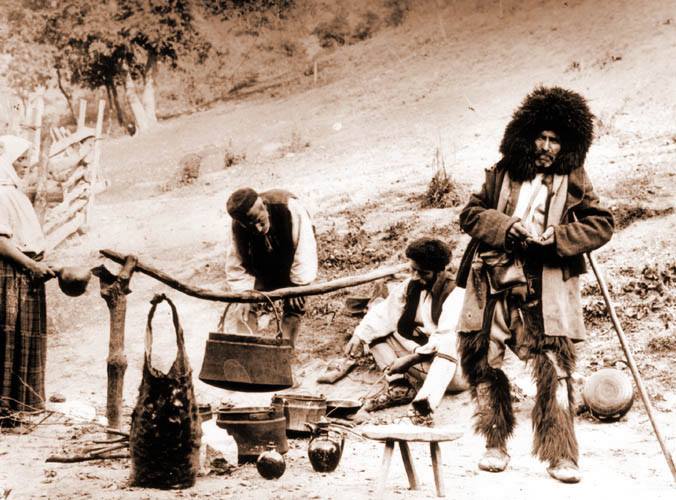
Bačije (summer highland shepherd settlement) Koželj region, Timočka Krajina, Eastern Serbia. People in the background are cooking food or boiling milk. The interesting bit is the shepherd on the right in his sheep fleece trousers...


This is a detail of the fresco called "The birth of Jesus" (dated to 1346) from the Serbian monastery Pećka patrijaršija lokated in Kosovo. The old shepherd in the fresco also wears fleece trousers. 


The strange sheep on the fresco are "Racka" (meaning Serbian) sheep. I wrote about this strange sheep in my post "Racka sheep".

Now meet Pan, Ancient Greek god of the wild, shepherds, flocks, nature of mountain wilds... Is it possible that the "goat legs" of Pan were not originally not goat legs at all, but highland shepherd fleece trousers, misinterpreted by coastal Greeks to be goat legs? 


After all in Greece the worship of Pan began in Arcadia which was always the principal seat of his worship. Arcadia was a district of mountain people, culturally separated from other Greeks.  

Shepherd deity, the protector of flocks would be imagined by shepherds like a shepherd, dressed the way shepherds dress, which includes the fleece trousers. 

If you didn't know what you were looking at, you could be forgiven for thinking that you were looking at a man with goat legs when you saw one of these highland shepherds for the first time in a distance...And this is how myths are made... 


Friday, 22 November 2019

Rings


In the village Postenje, in Azbukovica, highland area in western Serbia, women used to wear a ring for every son they had. Each son had his own finger with a single ring on it. 

If one of her sons died, she would put the ring on the finger of one of her still living sons...If the woman then had another son, she would leave the dead son's ring where it was, and would put a new ring on an empty finger for her new son...

When an old woman died, she was buried with all her rings. But if a young woman died, all her "son" rings were taken off her fingers before her burial...

The rings are kept by the dead woman's husband until he finds a new bride that he wants to marry. Then a very interesting ritual is performed with them...

The a new bride is chosen, "widows from the village" take the dead woman's "son rings", chose one, and "cary it around the bride". After that they give it to the dead woman's husband to look at his new bride through it. This seals their future marriage...

Does anyone know of any similar custom? It is absolutely fascinating. The ethnographer that recorded it in 1921 thought that this custom was once widespread...

From the "Journal of the Ethnographic museum in Belgrade, book 1", published in 1926. Link here, Serbian, Cyrilic

Sunday, 8 September 2019

Donja Dolina

Helmet (6th. c. BC) from Sisak, Croatia found in Illyrian warrior grave. Prior to the arrival of the Romans, who gave it the Latin name Siscia, the region was Celtic and Illyrian and the city there was named Segestica or Segesta


Similar helmet, also dated to 7th-6th c BC, was found in 1896, by Ilija Knežević, a peasant from the village of Donja Dolina (Lower valley) located further downstream on Sava river in Bosnia

The discovery of this second helmet led to the discovery of a very important prehistoric industrial and trading centre, which was continuously inhabited from the second half of the second millennium BC until the Roman times.

The Donja Dolina site is located on the right bank of the river Sava, near marshy area full of fish, surrounded by big forests full of game and on the land which is ideal for agriculture. 50km southwest are mountains full of iron ore. Ideal settlement for an Iron Age community


Interestingly, the old Iron Age settlements (there were two, an older and newer one), which were abandoned 2000 years earlier, were found in areas known locally as Velika i Mala Gradina (Big and Small ruined city)...


The old, Late Bronze Age settlement was built on land. But right about the time when the place was settled (1300-1200 BC), a sudden catastrophic climate change made climate much wetter and colder.


This diagram is from my post about ancient salt extraction techniques

The cold and wet period, which increased the river water level, caused frequent floods, made land even more marshy and pretty much completely wiped out agriculture in the area, culminated around 850 BC.

It is around 800 BC when people finally abandoned land life and started living in houses on stilts. The image by Igor Ilijev from his upcoming book about Donja Dolina.


The excavations started in 1896. The settlement was exceptionally well preserved because of the fact that it was covered by thick layers od mud. Pic 1: support substructure. Pic 2: stairs going down to the water level


A very interesting burials were discovered in the settlement. 8 people were buried in wooden coffins in the ground between the stakes which supported the house platforms. None of the people buried under the settlement were warriors


Most of the people were buried in cemeteries located near the settlement. They were either cremated and urns (pic) were placed in shallow graves or their bodies were placed in the ground either directly or in wooden coffins


Most burials had no grave goods apart from food vessels (bowls and cups). These are particularly beautiful examples


However hight status individuals were buried with jewellery, armour and lots of additional grave goods (multiple ceramic vessels). This is a grave of a high status woman buried with her jewellery


Warrior graves contained weapons and food and drink vessels. Here are contents of three warrior graves all dated to 7th-6th c BC. From: The Forgotten Graves from Donja Dolina 


The Donja Dolina was an important trading centre. Goods from as far as Greece in the south, Italy in the west, Bulgaria in the east and Baltic in the north were found in the graves belonging to the people from settlement


The settlement was also an important metallurgical centre. This fibula mould found in one of the graves is of a type found only in Italy at the time, suggesting that this was a grave of an immigrant metalworker


Among many items produced in the Donja Dolina Iron Age settlement, I particularly like this type of bracelets. Are they unique? Anyone seen anything similar from the period 800-400 BC?

Another interesting type of objects found in Donja Dolina Iron Age settlement were bronze "ornamental rods". Up to 10cm long, they are found in graves as components of the funerary ornaments. Anything similar anywhere else? Meaning?

Here is a complete inventory of one of the warrior graves where these ornamental rods (also classified as staffs, even though they are only 10cm long) were found


Most helmets found in the Donja Dolina 7th-6th c BC graves, were made in Macedonia where they were found in princely graves. At that time in Greece, they are found only in sanctuaries, linked with the territory of ancient Macedonia

Among the scattered finds from the cemetery, these two peculiarly shaped clay objects stroke my attention. The size of the objects is less than 10cm. Use unknown. Any ideas? Stamps of sort? For bread maybe?


Another type of objects without good explanation are these sandstone prisms with swastikas engraved on the top and bottom.


Another interesting swastika design was reconstructed from several fragments found at the site


The results of the excavations, were published by Ćiro Truhelka in 1904 in "Der vorgeschichtliche Pfahlbau im Savebette bei Donja Dolina

I like this stamp issued by Bosna i Hercegovina - Republika Srpska (Bosnia and Herzegovina - Serbian Republic), showing weapons found in Donja Dolina site


To me the most interesting finds from Donja Dolina Iron Age archaeological site are boats. This is the biggest one, 12 meter long oak dugout, currently in Zemaljski muzej Bosne I Hercegovine, Sarajevo


And this is the photo from 1901 showing the lifting of the boat from the site. Were boats like this one used during the early Iron Age for trade transport along Sava river?


And this is the picture showing the smallest boat found in the Early Iron Age settlement Donja Dolina in Bosnia, a miniature model of an oak dugout. Several are found in every house in the settlement. Toys? Or???


What is interesting is that almost identical boats were still used in Donja Dolina in the early 20th century. In the book "Vremeplov: Narodno ribarstvo u Bosni I Hercegovini" we find this fishing boat


I particularly like this picture from the book about the folk fishing from Bosnia, showing three types of dugout boats from Donja Dolina: a) male, b) female, c) front male back female...

The dugout boats are not the only thing which has been in continuous use since the early Iron Age in Donja Dolina. These are stilt houses in which people lived in Donja Dolina in the early 20th c


And finally here is my favourite picture. Women from Donja Dolina, in a "female" boat, coming back home from a bridal party. This could easily be a scene from the Iron Age Donja Dolina...


In the end, here is the link to the report about Donja Dolina Archaeological site published by the commission for preservation of national monuments from Bosnia and Hercegovina from which I translated some excerpts for this post.