Showing posts with label Serbian folklore. Show all posts

Sunday, 27 July 2025

Thunder book

In the Annals from 1605, the Dubrovnik writer Jakov Lukarević says that Serbian kings Stefan Nemanja and Dušan "persecuted witches", whom he calls "evil women from Mount Hemo", and burned their book of magic, which was in Slavic tongue called Grominjak (Thunder book)...

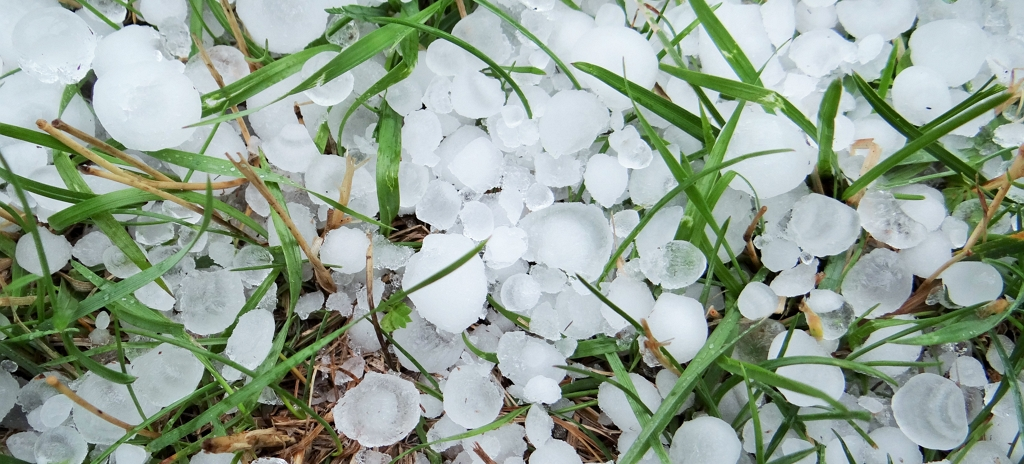
That book probably had spells and rituals for affecting meteorological phenomena. St. Sava, in the "Zakonopravilo", condemns the magical summoning of hail, although he himself summons hail, in the story about the Hungarian king.

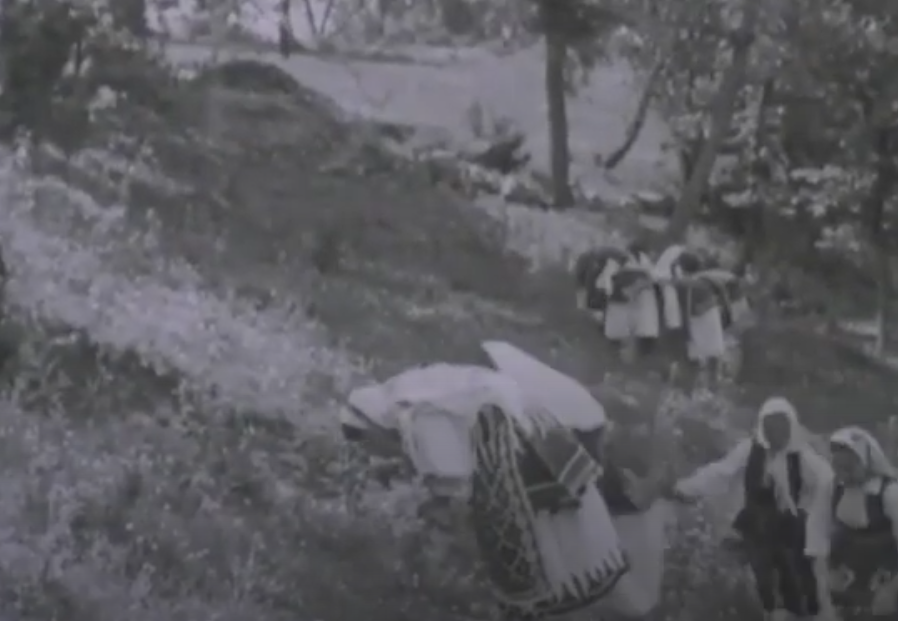
St Sava from Serbian folktales basically replaced Dabog, the old Serbian supreme god and took all his magical powers, including weather control...I talk about Dabog as both sun and rain god in two article "The last megalithic ritual in Europe" and "Weather stones" about the use of "weather stones" by Slavs to manipulate weather. Like here, where women raise Dabog's stone during drought to get cool and wet weather...


Another interesting bit here is that it is women who were always associated with rain (hail) storm rituals. 

Did you know that the sudden climate change which resulted in the medieval mini ice age was blamed on the weather controlling witches and was the excuse for the subsequent witch-hunt. I talked about this in my article "De Lamiis et Pythonicis Mulieribus" about the 1489 book "De Lamiis et Pythonicis Mulieribus" by Ulrich Molitor which talks about weather altering magic (witchcraft) performed by women...

This is an illustration from the book depicting "two witches conjuring up a destructive (hail) storm"...


In South Slavic folklore, cold, wet weather is "feminine"...Yin...

Which is why, in South Slavic folklore, it is a female dragon, ala, that brings hailstorms and unseasonably cold, wet weather during summer months, which destroys crops...I talked about this in my article "Pozoj"...

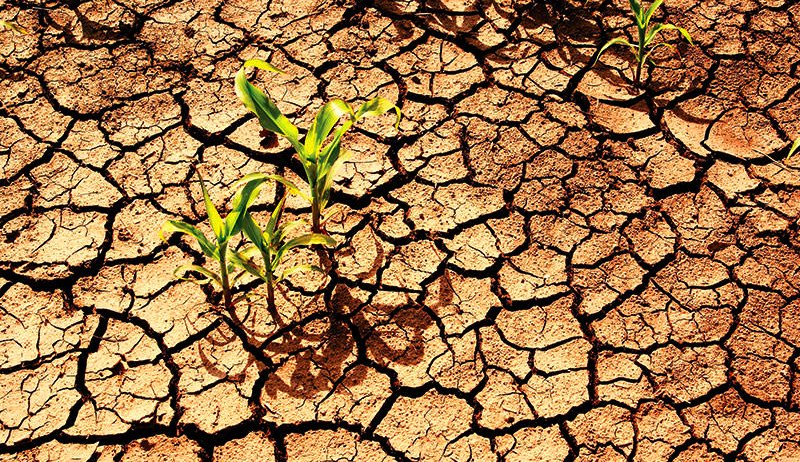
While male dragon, zmaj, brings hot, dry weather which brings drought, which destroys crops...Yang...I talked about this in my articles "Scaring off the dragon" and "Letnitsa treasure"...


Monday, 3 February 2025

Mother of grain from Otok

In Otok near Senj, Croatia, a very interesting ritual was performed at the end of the harvest until mid 20th century 

The last sheaf of wheat harvested from a field was stood upright. All male harvesters would then stick their sickles into it. They would then  all kneel around the sheaf and pray to the "lady" thanking her for the harvest 

Then the oldest woman would put her hand all the way through the sheaf and would grab a handful of soil from under it. This soil was then tied into a handkerchief and later used as a cure for uterus problems. It was diluted in water given to the sick woman to drink 

Clearly a thanks giving ritual performed for Mother Earth, otherwise known as The Lady. In South Slavic folklore (mother) earth fertility and (mother) female fertility was always linked and was believed to influence each other 

This same Lady, was represented by the Corn dollies which were made from the last sheaf. They were preserved in homes during the winter, and the seads from the corn dollies were the first sawn next spring. 

It was believed that this last sheaf contained the "corn spirit" the fertile power of Mother Earth...Which farmers depended on for their survival.

Source: "Ivo T. Franić, JUGOSLOVJENSKA ŽETVA, Običaji i obredi s uporedbama"


You can read more about Slavic beliefs and rituals related to grain in my posts "Wheat cross", "Diduch", "Walking sheafs of wheat", "Cock bashing", "The old woman of the milldust", "Wheat wreath", "Sowing", "Can you see me", "Babji mlin", "Bogovo gumno"...

This is just a continuation of the ancient "Mother of grain" cult which originated in the Fertile Crescent in early Neolithic...

Articles about the Mother of grain in Neolithic Europe, Central Asia, Mesopotamia, Iran, Levant: "Mother of grain" "Altyn Tepe mother of grain", "A person in little boat", "Sabi Abyad venus", "Hathor grain pendant"...

Sunday, 2 February 2025

Dewy head

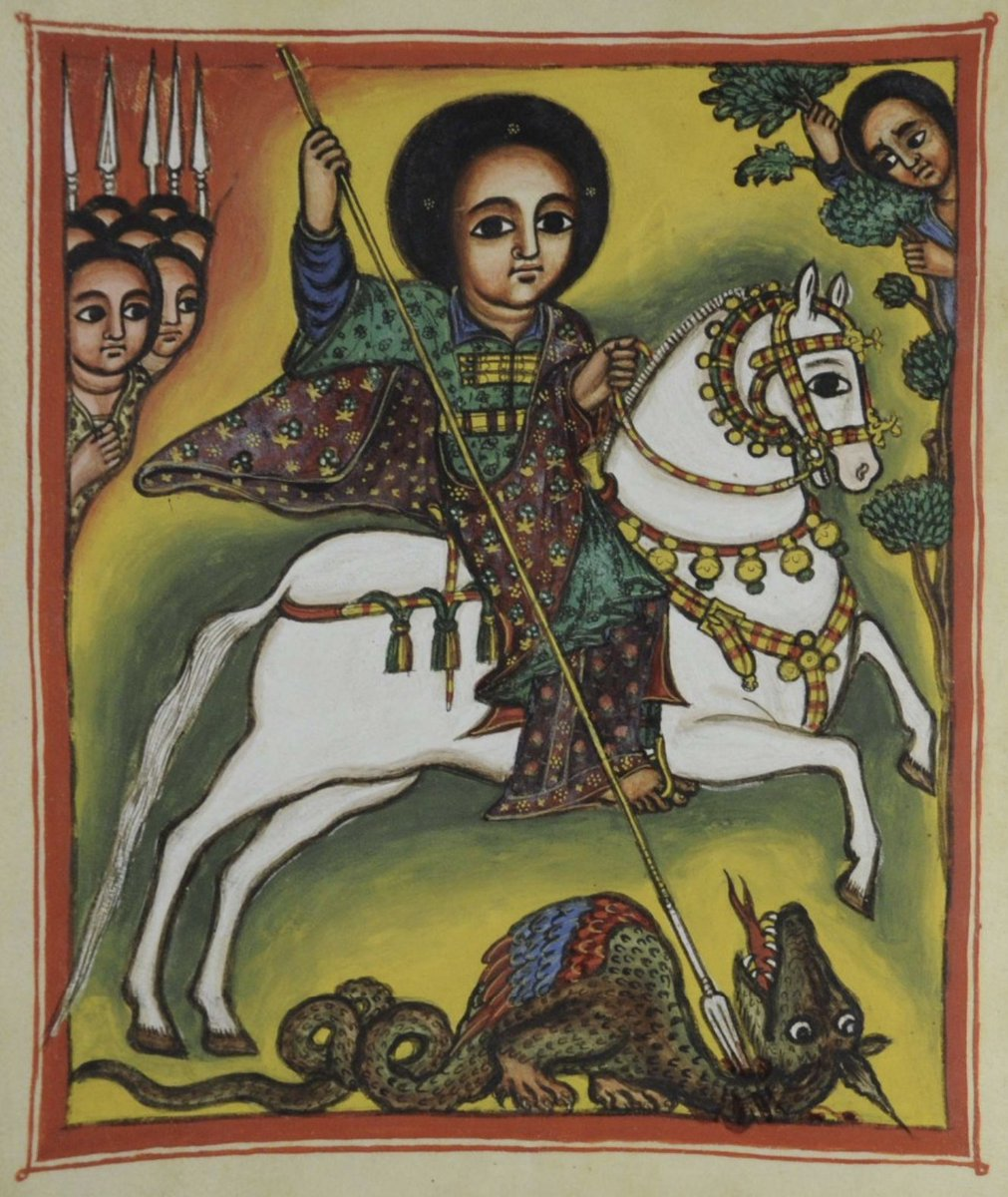
"Greetings to the hair of your head, spun like silk,

and to your head with its curly locks,

O George, star brighter than (other) stars!

May the ointment of his dewy head refresh me every morning,

like the rain of grace a thirsty field!"

This is one stanza of the liturgical poem መልክአ፡ ጊዮርጊስ፡, "The Image of George". This genre of poems praises the body parts of a saint from the head and down to the feet...


Ethiopia, 18th c.

I want to thank @ArtEthiopic for all his hard work promoting amazing Ethiopian religious art...

And I want to add few comments that might explain the last two verses:

"May the ointment of his dewy head refresh me every morning, like the rain of grace a thirsty field..."

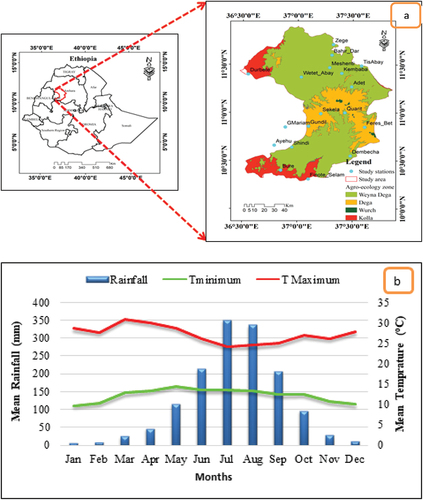
Rains arrive to Ethiopia in Mar/Apr...Right on time for St Georges day...Full blown monsoon starts in Jun...You can read about Ethiopian climate here...

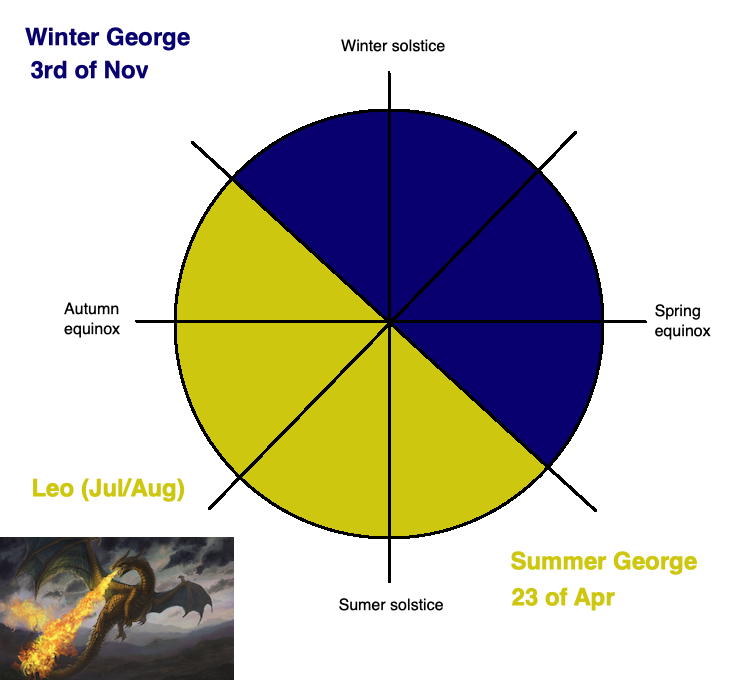
Interestingly, in Serbian Orthodox calendar, the beginning and the end of the "Time of Dragons", the hot sunny half of the year, is marked (guarded) by Two Georges, Summer and Winter St George('s day)...In Ethiopia, the climate is the opposite to the one in Serbia...I wrote about this in my post "Two Georges"...


Speaking of dew, this also might be of interest:

Irish riddle

Q: I wash my face in water that has never rained nor run, and dry it in a towel that was never wove on spun   
A: A face washed in Mayday dew and dried in the open air.  

The same tradition is in the Balkans linked to St George's day, Jurjevo. 

On the morning of St George's day, girls would go to fields to wash their faces in dew, so that they are beautiful all year round. Recorded in Skopska Crna Gora region of Macedonia.


This ritual was widespread among Serbs too, where dew bathing was done on the so called "herb Friday", the last Friday before St George's day, when medicinal herbs were also collected because people believed that they were the most potent on that day. This would explain why washing your face with the morning dew collected from these the plants on that morning was also the most beneficial...I talked about this in my posts "Morning dew" and "Jani", "Parilia"...


Many other traditions which are in Celtic parts of Europe linked to Beltane, 1st of May, are in the Balkans linked to St George's day, indicating that these two calendar markers are one and the same...

Friday, 14 June 2024

Scaring off the dragon

The main worry of the Bulgarian farmers at the beginning of the summer (Apr/May) is drought. 

Traditionally people thought that drought was caused by a winged dragon (zmey), who "stole and locked up" the waters...

And so, to prevent the dragon from steeling the water, in northwest Bulgaria, on a certain date, all the strong and healthy village men would gather at midnight, strip naked and walk the village land in ritual silence brandishing axes or cudgels to scare off the dragon...

It is interesting that they carried axes, just like Perun, the Slavic thunder god, but also like may other Eurasian thunder gods...The dragon slayers...

Article "Kataibates" about the link between stone axes and thunder gods. An altar from Vindolanda dedicated to the late Roman god Jupiter Dolichenus, whose mystery cult was widespread in the Roman Empire in 2nd and 3rd c. AD, wielded an axe. And rode on a bull...

And it is interesting that they carried cudgels...Just like Orion, that father of (sky) gods...Check my posts "Jack and the magic beans" and "Grandmother's cudgels" you might find them interesting...


They are trying to answer the questions such as: Why was Orion seen by Ancient Greeks as a "the greatest hunter" armed with a cudgel (club)? And why do Bulgarians call Orion "cudgels (clubs)" and why do Serbs call Orion "Baba's (grandmother's) sticks" and all the stars "Baba's (grandmother's) cudgels (clubs)"? And why were thunderbolts believed to be made of stone?

Some people might say that maybe they just carried whatever "dangerous implements" they had. But they also had sickles, shovels, hoes, knives, swords, rifles...Why not carry them? I don't know, maybe I am reading too much into it...

Anyway, it is also interesting that the ritual was performed by "healthy naked men"...Considering that rain, and subsequently flowing water, which the "dragon scarers" were trying to protect from the dragon, was considered to be "the semen of the the sky father"...

Is this an example of sympathetic magic? Where men lend their reproductive power to the sky (father) to increase his ability to produce "heavenly semen", rain? Check this out:

In Serbia in the past people lived in extended families called "zadruga". When grain needed to be sown, the family would choose one man to do all the sowing. He had to abstain from sex from that moment until all the seeds were sown...


Sowing (spreading of seeds) is here directly linked with ejaculation (spreading of semen). Male reproductive energy which is usually used to impregnate a woman has to be during sowing period preserved and used to impregnate the Earth...

From my post "Sowing"...

Now while North Western Bulgarians were walking around naked scaring dragons, their North Western neighbours Serbs did this: In the past, during spring droughts, Serbs used to go to mountain lakes and pray for rain on their shores "to a dragon living in the lake who swallowed the rain"...


I talked about this in my post "Dragon who stole rain"...

The dragon that stole water is one of the oldest Indoeuropean myths. In Rig Veda we read:

"I WILL declare the manly deeds of Indra, the first that he achieved, the Thunder-wielder.

He slew the Dragon, then disclosed the waters, and cleft the channels of the mountain torrents."

But why are dragons steeling water is "a bit of a mystery"...Apparently...Well maybe a clue is in the fact that they are always fought by Thunder/Rain gods, who kill the dragon and release the waters...

Question: what causes droughts that the arrival of rains ends? The Sun...Sun's heat...

Now in Slavic folklore (remnants of old mythologies), an animal that is directly associated with the sun's heat is a snake. It eats sun's heat.

Snakes are the only true solar animals. They are in our world when sun is in our world (day and hot part of the year) and they are in the underworld when sun is in the underworld (night and cold part of the year)...Which is why we find them associated with the sun (gods)...I talked about this in my posts "Enemy of the sun", "The chthonic animal"...

Ok, amazing...But what is the link between snakes and dragons? 

Glad you asked...Have a look at this:

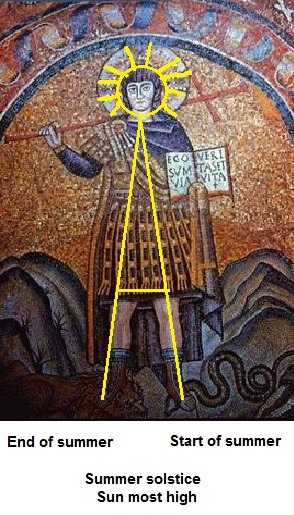
God most high...

Snake: Apr/May, beginning of the main snake mating season, beginning of summer.

Lion: Jul/Aug, beginning of the main lion mating season, end of summer. 

From my post "You will trample great lion and serpent"

Now have a look at this:

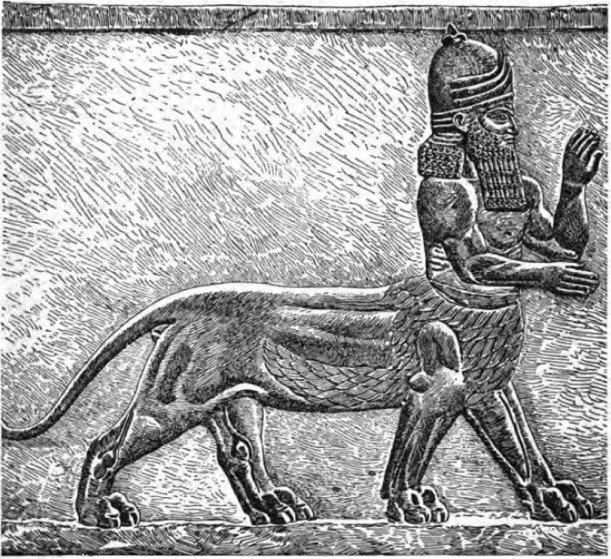
Possibly earliest depiction of a multi headed dragon...And dragon killer(s). 2200 BC, Akkad...Dragon is a symbol of a destructive sun's heat, and this one has lion body, cause Leo is the hottest time of the year, and 7 snake heads, cause of 7 summer months. I talked about this in my post "Seven headed dragon"...

The reason why Mesopotamian dragon has a lion's body, is the same reason why the Mesopotamian god of death has a lion's body...

I am the (sun) god of death...About Nergal, the destructive sun in Leo, Jul/Aug, the hottest and driest part of the year in Mesopotamia...I talked about this in my post "Winged superhuman hero"...


Slavs believed that "dragons are just old snakes"...So if snake marks the beginning of the hot dry part of the year, and if snake symbolises sun's heat, then old snake symbolises old sun, the destructive sun of the late summer which causes drought...The (lion) dragon...

It was this Slavic belief that snakes evolve into dragons which was a key that unlocked all these snake/dragon/lion symbolic links found all over the place...

Just search my twitter account or my blog for snake or dragon and you'l see what I mean...

Anyway, you can find more about Slavic snakes and dragons in this article "Letnitsa treasure"...Follow the links at the end of the article to (only some) related articles about snakes and dragons from other mythologies 🙂 

Sources for Bulgarian folklore: 

Ivanichka Georgieva's book "Bulgarska Narodna Mitologia" (1993) p 113, and Vihra Baeva's "Zmey, Zmeyitsa, Lamia, Hala" (2016) p316

I want to thank "A Spell In Time: British-Bulgarian storytelling company" for the info...

You can read more about snakes, dragons and lions in my posts "You will trample great lion and serpent", "Chimera", "Lion killing snake", "Jörmungandr", "Bactrian snakes and dragons", "Seven headed dragon", "Khafajeh vase", "Nude winged hero dominating snakes", "Winged superhuman hero", "Tiger and dragon", "Eagle snake struggle", "Wolf vs snake"...

To read more about ancient animal and plant calendar markers, start here…then check the rest of the blog posts related to animal calendar markers I still didn't add to this page, and finally check my twitter threads I still didn't convert to blog post...I am 9 months behind now...


Saturday, 11 March 2023

Koloocheh

These are Koloocheh (Persian کلوچه) or Koleecheh (Persian کلیچه ) - golden round cookies decorated with spirals and made for Perisan new year. 

The name of these cookies comes from Middle Persian "kulachag" (round bun). Further etymology is unknown... 

Hmmm...Maybe...

In Slavic languages any round (originally ceremonial) bread or cake was called "kolač" (pronounced kolach).

Serbian Christmas and Slava "kolač" examples...

The word "kolač" comes "kolo" (wheel, spinning circle). Hence "kolo" also being the name for the Slavic ceremonial circular dance...I talked about this in my post "Oro" and "Shield of Achiles"...

Fresco from the 14th century Serbian Lesnovo monastery, today located in Macedonia.


So the word "kolač" does mean "round, circular" bread, cake...But the name has additional meaning of "spinning, turning, rotating"...

Ceremonial cakes are rotated 3 times "s leva na desno" (from left to right), by the family members, before they are broken and eaten...

Turning "from left to right" is also known as "sunwise" and was apparently a big thing in the past...Cause that's the way sun moves across the sky...I talked about this in my post "Sunwise"...

Now it is interesting that the Iranian Koloocheh/Koleecheh cookies are made with spirals...Which are a symbol of rotation...

They are also made as ritual cookies for New Year...The day when the old solar year ends and new solar year begins...Now Slavs imagined solar year as an ever spinning solar wheel (kolo)...

The Slavic name of the old "New Year" celebration, Winter Solstice celebration, was Koljada, Koleda, Kolenda...It marked the end of one and the beginning of another spin of the solar wheel...Kalendar...🙂

Remember this post, "Janus", about Janus and Juno and wheels within wheels? 


Or this post, "Young god", about the Serbian folk song celebrating the birth of the New Sun (God) or New Solar Year: "Pass me cold water, o Koledo, to bath the young god, Božića Svarožić...His horse is the bright sun, a flaming war steed"...


Or this post, "The end of time", about the Koledari, traditional Slavic carol singers who went from house to house during Koleda (Originally Winter Solstice, but now Christmas) singing ritual songs celebrating the immanent brith of the new god (once new Sun God, now Son of God)...

But look a this...This is one of the traditional Koleda (Christmas, Winter Solstice, New Solar Year) ritual breads from Bulgaria...Looks familiar? 

Also some Serbian votive breads were actually made in a shape of "kolo" (wheel). Serbian Votive bread (kovrtanj, kolač, kravaj).  

The word "kovrtanj" most likely comes from "kolo" (wheel) + "vrt" (spin)...We find the same word in Russian kovriga (коврига) meaning "round bread", which was mentioned in the Primary Chronicle under year 1074. Funnily enough, according to the linguists, "its ultimate etymological origin is uncertain"...How about Ko(lo)+vr(t)+ga = wheel+spin+it???

On Xmas morning the bread was brought to the threshing floor, pulled on the central stake, and then the father and the children would walk on hay, around the stake, holding onto the bread... 

You know, threshing floors, circular platforms with the central pole...


Where grain was threshed by waling around the and around the central pole

I talked about this in my post "God's threshing floor"...

Threshing floor which was in the past used as a solar observatory, with the central pole serving as a "gnomon"...


Threshing floor on top of which, for some weird reason, the First Temple was built. The First Temple, which according to the Josiah, Jews worshiped the Sun God...I talked about this in my posts "Boaz and Jachin", "The sun god from the First Temple" and "The tree of light (life)"...

But I am digressing...

These Serbian "wheel breads" (kolač, kovrtanj, vrtanek) were also used as part of the first footer (Christmas, New Year) rituals in Serbia and Bulgaria...

If the first footer was a man, kovrtanj was placed on man's head. 


I used AI to enhance this image

If the first footer was a bull, kovrtanj was placed on bull's horns...If anyone knows of a picture of a bull with kovrtanj on his horn, please post the link in the comments, so I can add it to the article. 

I used AI go generate this image


I talked about this in my post "First-footer"...

And in Bulgaria, In return for good wishes, the Koledari Carol Singer, receive gifts of food and ritual ring-shaped breads, "Коледно колаче" (Koledno kolache) meaning little Christmas circular bread or "кравай". 

Which they string on the wooden sticks they carry with them...

Pic from "Българска Етнография" by Николай Колев

These breads were often made by the young women in the family...Some kind of symbolism here, wheel breads and sticks...

So we have all these Slavic words with the root "kolo" (wheel) used for ritual circular breads, ritual circular dances, new year rituals...

And yet...

According to linguists: 

The similarity of Slavic "kolač" to Middle Persian "kulachag" (small, round bun) and Ancient Greek "κολλύρα" (koloura) (loaf of bread) may be coincidental as it is difficult to explain through usual models of inheritance and borrowing...

BTW, the Ancient Greek "κολλύρα", from which modern Greek "κουλούρι" (kuluri) is believed to be "of Pre Greek origin"...

I know, difficult, difficult...Not difficult to explain...Difficult to accept...That all these ancient Non Slavic words for round breads have the root in Slavic "kolo" (circle, wheel)...

BTW, in Turkey, this type of wheel bread is called simit. 

The word simit comes from Arabic samīd (سميد) "white bread" or "fine flour". Ceremonial breads were in the past the only breads made from white flour...

Another name for these breads in Turkish is gevrek meaning "crisp", and this word in a form of "djevrek" is now used for these wheel breads in all the Slavic Balkan lands, thanks to multi century Ottoman Turkish cultural influence...

What is very interesting is that simit/gevrek only became a thing in Ottoman Empire since the 16h century...It was most likely a Slavic cultural import... 

I forgot the most important bit. The recipes 🙂

Recipe for Koloocheh, Recipe for Koledno kolache, Recipe for Kovrtanj

Wednesday, 22 February 2023

Willow whistle

Willow whistles and flutes are made in the spring when willow sap rises and loosens the bark...


Because they were easy to make, these flutes and whistles were favourite kids instruments...(Pic The Willow Whistle, 1888, Ellen Day Hale)

Now if you wanted to have a musical child, that can make music and not noise, this is what you were advised to do in 18th century Sweden:

"In the spring fetch water from a stream that flows southwards. The water should be taken where it murmurs the most loudly..." (Pic Kamajokk river Sweden)

"...Then a child's parent should blow into the water with a willow flute that a child had used. The child then has to drink this water for three days on an empty stomach. This would ensure that the child would have a very good ear for music"...

That would also insure that the child's parent would save his/her ears 🙂

This music spell can be found (with loads of other interesting stuff related to ancient European musical instruments) in "Music and sounds in ancient Europe"...

Now there were times when you wanted to make noise and not music with your willow whistles, flutes and trumpets...Like these ones from the Balkans:

During the night before St George's day, in the Balkans, these instruments were blown "to scare witches (winter) away"...

I talked about this in my post "May horns"...

A lot more interesting Slavic willow folklore can be found in my article "Willow in Slavic folklore"...