Showing posts with label Mythology. Show all posts

Saturday, 17 February 2024

Invisible archer

If arrows are shooting down from the night sky (Orionid meteorite shower)...


...there must be an [invisible] archer (Orion) standing somewhere up there shooting them out of his bow...

An example of an ancient "scientific" explanation for an annual natural event...

Of course, if you look at the stars that form Orion constellation, this is what you see...

The lines were added by people to form the imagined archer which rises in the night sky as the arrow like meteorites, the debris from the Halley comet, start shooting down on earth from Orionid radiant. Right above Orion...

Anyway, this is how some people saw and explained Orionid meteor shower, which starts every year in Sep, and ends in Nov, and peaks in mid Oct.

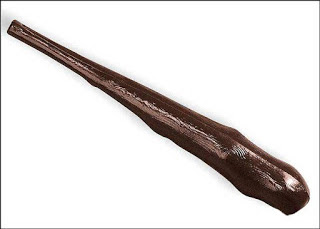
Some other people did't see arrows coming down from the sky. They saw clubs...

And so

Why was Orion seen by Ancient Greeks as a "the greatest hunter" armed with a cudgel (club)? And why do Bulgarians call Orion "cudgels (clubs)" and why do Serbs call Orion "Baba's (grandmother's) sticks" and all the stars "Baba's (grandmother's) cudgels (clubs)"? I talked about this in my post "Grandmother's cudgels (clubs)"

You might also like this article, "Jack and magic beans", about (thunder) giants living in the sky...And the possibility that our myths about sky gods originated as the best scientific explanation for observed phenomena. If huge rocks are falling from the sky, someone is throwing them...So, giants living in the sky...

A 15th-century engraving depicts the town of Ensisheim in present-day France being struck by a thunderbolt as a giant rock...

Now guess what happens in Mesopotamia in Oct/Nov? The dry season, the season of drought and death, ends when the first rains arrive...In Oct/Nov...


And these rains are brought by Ninurta/Ningirsu...The old storm god, the old god of rain...The same guy, depicted here with a bow, killing the blazing sun that causes drought...From my post "Adda seal"...

Why was Ninurta/Ningirsu depicted as an archer? Well, originally, I thought that it is because when it rains, you can see a rainbow. And in Mesopotamia this is only between Oct/Nov and Apr/May...

In Hindu mythology, rainbow or the Indradhanush is the bow of Lord Indra, the god of lightning, thunder and rains.

But the Mesopotamians didn't see the rainbow as Ninurta/Ningirsu's bow. They saw it as the rain/thunder god's crown/tiara...

So why then? Maybe because just before the rains arrive to Mesopotamia, the arrows start shooting from the sky announcing the arrival of the Sky god, Ninurta/Ningirsu...The bringer of rain...The Great Archer...Who also shoots thunder and lightning bolts...

Anyway, that's that...Hope you enjoyed it 🙂

Saturday, 4 November 2023

Vučedol dove

How old are "Ancient Greek" myths? And are they "Greek" in origin? Like the myth about Hephaestus, the lame/limping Smith God and his wife, the goddess of love and beauty, Aphrodite? 

Why do I ask?

This is the so called "Vučedol dove"...
This figurine, is one of the most well-known objects from Vučedol culture, a  Chalcolithic/Bronze Age culture which flourished in the Balkans between 3000 and 2200 BC, and was contemporary with Sumerian Mesopotamia, Early Dynastic Egypt and Troy I/II.


Vučedol Culture was a metallurgical culture which made bronze objects on an industrial scale. The bronze made by Vučedol Culture smiths was arsenic bronze, the most primitive form of bronze, and most dangerous, if you are a smith...


Arsenic is extremely poisonous, and it gets released into the air from the molten metal in a form of toxic fumes. The first sigh of arsenic poisoning is the loss of the sensation in the legs, which then expands throughout the body and finally leads to death...

Therefore forging this metal was a dangerous job. But if you got out of your workshop on time, then the danger passed, although limping due to loss of sensation in the legs remained for some time...

Sounds familiar so far? We have a lame, limping smith...who had a figurine of a dove in his blacksmith workshop (this is where Vučedol dove was found)...

So???

Well dove is the bird of Aphrodite...Who was married to a lame/limping Smith God Hephaestus...

So, is it possible that this is an indication that some kind of mythological, symbolic link between lame limping smiths and doves, a precursor of the Lame/Limping Smith God/Love Goddess mythology, existed in the 3rd millennium BC Balkans?

I think so. But there is more...

Recently, some archaeologists proposed that this figurine does not depict a dove, but instead it depicts a partridge, and so should be known as not as "Vučedol dove" but as "Vučedol partridge".

Native Balkan dove


Native Balkan partridge


You can see how it can be difficult to determine which one of these two birds was depicted...

These archaeologists draw the link between limping smiths and male partridges, because when a predator manages to find a partridge nest, male partridge will draw the predator from the nest by running away from the nest pretending to limp, acting as if they are wounded...

Interesting...

Hephaestus, the smith, was a lame, limping Smith God.

The sister of Daedalus, the smith, is called Perdix (partridge) and her son, who became Dedalus's student was also called Perdix (partridge)...

Some say that Deadalus's student's name was Talos and that Perdix (partridge) was the name of Talos's father. Talos was such a good smith himself, that Daedalus, in a jealous rage, threw him off the rock of the Acropolis at Athens...

But Athena intervened and turned Talos/Perdix into a partridge to save his life. According to Ovid, that partridge later watched the death and burial of Daedalus’s son Icarus with glee...

Hephaestus limped like a partridge and was flung from Olympus...

Talos/Perdix (partridge), whose father was "Perdix" (partridge), and whose nickname was "Tantalus" (hobbling, or lurching), was flung from the Acropolis and was turned into a partridge...

So, we have either

1. A lame/limping Vučedol culture smith and "Vučedol dove" = Hephaestus and Aphrodite
2. A lame/limping Vučedol culture smith and "Vučedol partridge" = Hephaestus and Talos

Or both...

That's it folks. Cool, right? 🙂

Saturday, 13 May 2023

Inanna and dove

A pottery cup, Syria, dated to 1800-1600 BC. The rounded body tapering to a flat base, with 26 bird heads. Christies auction... 


Doves??? Similar objects were interpreted as votive objects dedicated to Ishtar/Inanna, whose sacred bird was dove...

And Demeter...

I explained why dove was sacred to Demeter in my post "Demeter with dove"... 

Demeter was the goddess of grain (harvest)...And European doves nesting season overlaps with the grain harvest season in Europe...So...

Interestingly, Inanna/Ishtar, was in "A song of Inanna and Dumuzid" described as: "Maiden, glossy mane, lovely beauty...colourful as a pile of grain, fit for the king, fit for Dumuzid! Maiden...a stack of...barley, fully developed in loveliness"...

I talked about this in my post "Demeter riding a panther"...

Remember this thread about the grain symbol? See all these female bodies with grain symbol on their bellies?

This is Inanna/Ishtar speaking: 

"...Before my lord, Dumuzi,

I poured out plants from my womb.

I placed plants before him,

I poured out plants before him.

I placed grain before him,

I poured out grain before him,

I poured out grain before my womb..."

I talked bout this in my post "Mother of grain"...The symbolic link between women and earth depicted on this Early Vinča Culture terracotta figurine from Jela, Iron Gate region of the Danube, Serbia, c. 5200 BC, H. 5.3 cm, which has a branching plant (grain?) growing out of the womb...

This is Inanna again:

...

As for me, Inanna,

Who will plow my vulva?

Who will plow my high field?

Who will plow my wet ground?

...

I talked about this in my post "Mother of grain from Yarim Tepe". Figurine of a nude woman form Yarim Tepe, 5000-4000 BC. Iraq Museum...

This is threshing floor, somewhere in Mesopotamia, recently...

This is threshing floor, in upper Mesopotamia, Arslantepe, Turkey, 4th millennium BC

If it works...🙂

From "Insights from a tribological analysis of the tribulum"...

In "Threshing floor in reality and metaphor", we can read that "The annual sacred marriage reenactment between Ea/Enki and Ishtar/Inanna was performed on a threshing floor"...

Fitting for the goddess that "pours grain out of her womb"...And is as lovely as as ripe barley...

Homer says this about Demeter, the goddess of grain harvest, and threshing floors:

"And even as the wind carries chaff about the sacred threshing-floors / of men that are winnowing, when fair-haired Demeter / amid the driving blasts of wind separates the grain from the chaff"...

Which is why Eugene Vanderpool in "ΕΠΙ ΠΡΟϒΧΟΝΤΙ ΚΟΛΩΝΩΙ: The Sacred Threshing Floor at Eleusis" proposes that threshing floors were sacred to Demeter and were in fact her temples...

I talked about this in my post "Sacred marriage on the threshing floor"...

And here I come back to doves...


The breeding season of most common Eurasian doves, collared dove (top) and turtle dove (bottom) starts in Apr and lasts until Sep. So it overlaps with the grain harvest season in Europe and Western Asia...Which is why, I think, this bird is associated with Demeter...Goddess of grain harvest...

Is this why dove was also sacred to Inanna, who is as lovely as ripe barley and who pours barley out of her womb and who marries the god of water on a threshing floor?

I think so...

To read more about ancient animal and plant calendar markers, start here…then check the rest of the blog posts related to animal calendar markers I still didn't add to this page, and finally check my twitter threads I still didn't convert to blog post...I am 9 months behind now...

Thursday, 28 April 2022

Cow and calf ivory

Decorative carved ivory with a cow suckling her calf and licking its tail among (very stylised) papyrus flowers. Neo-Assyrian, 9th-7th c. BC. Found in Nimrud, Iraq. Currently in the Iraq Museum in Baghdad...

Take a good look at the scene depicted on this ivory...

Pic by Osama Shukir Muhammed Amin


Now have a look at this: Another decorative carved ivory with a cow suckling her calf and licking its tail among (much less stylised) papyrus flowers.  No idea where it was found. Currently in the Ashmolean museum, Oxford and apparently "it was probably carved in Syria, 850–700BC"

Pic: Ashmolean museum

It must have been a very popular theme at the time...Cause while wondering through Mesopotamian section in the Louvre museum last weekend, I came across three Neo Assyrian ivory plaques, all found in Arslan Tash, all dated 800-700BC and all depicting the same scene: A cow suckling her calf...

Pic: Louvre museum

Pic: Louvre museum

Pic: Louvre museum

Why? Well, one possible explanation could be this: These objects are not (only) decorative...

Well they wouldn't have been if they were made in Ancient Egypt...There, papyrus flowers were sacred to the Egyptian mother goddess Hathor...Celestial Cow goddess Hathor...Who is often depicted emerging from the flowering papyrus thickets...

To understand why papyrus was sacred to Hathor, we need to look at the association of Hathor with Mehet-Weret, another "Celestial Cow goddess" whose name means "Great Flood" and who was thought to bring the inundation of the Nile River which fertilised the land...

Mehet-Weret, had no independent cult of her own. It is presumed that Hathor absorbed most of her attributes as early as the Old Kingdom, as many references of the two as identical are found in Pyramid and Coffin Texts...

Now Mehet-Weret is goddess who causes the annual Nile River flood. The flooding of the Nile is the result of the yearly monsoon Mar/Apr and Jul/Aug causing enormous precipitations on the Ethiopian Highlands...

This rain causes the nile water flow rate and water level to start rising from May/Jun

And interestingly, the period (Apr/May), right before the Nile water level begins to rise, is marked by a bull animal calendar marker...And has been in Eurasia and North Africa since Neolithic...Animal calendar marker which we today know as Taurus zodiac sign...

But which has nothing to do with stars...This animal calendar marker marks the start of the Eurasian wild cattle calving season. So originally it was a wild cow and calf marker...I talked about this in my post "Ram and bull"...

So Hathor, Mehet-Weret (The Great Flood), arrives during the time when wild cows start giving birth to their calves and start producing milk...Interestingly, Hathor was said to be a "wild cow whose udders were spilling milk on the earth"...

Oh yeah, Taurus is also the beginning of summer, the season marked with the bull throughout Eurasia and North Africa since Neolithic too...In Egypt that is the season during which the Nile water levels rise until the river floods Jul/Aug...I talked about this in my post "Symbols of the seasons"...

Oh and: Hathor arrives carrying sun between her horns...Translation: The half of the year dominated by the sun, starts when the wild cows start calving...In Taurus...

So if the above two ivories were carved by Ancient Egyptian artists, that would explain why the cow and the calf scene wouldn't have been "only decorative"...I think...But what about papyrus?

As I said, papyrus plant was sacred to Hathor. 

The main annual ritual associated with Hathor was the so called "Ritual of Plucking Papyrus for Hathor" which appears to have been an invocation, offering and pacification ritual...

This is the depiction of the ritual. Goddess Hathor emerges from the papyrus thicket on a sacred boat and is greeted by the woman who offers her papyrus flowers...

Apparently: "the ritual has extremely early origins and may have become a ritualised form of the simple act of picking papyrus flowers as votive offerings for the goddess Hathor"...Why papyrus and not some other plant?

Apparently: "papyrus symbolised life, joy and renewal"...Why papyrus and not some other plant?

The answer can be found in this paper: "Ecology and biomass production of Cyperus papyrus L. on the Nile bank at Damietta, Egypt" by Mamdouh S. Serag...

In this article you can find this chart...It seems that if you wanted to go plucking papyrus flowers, the best time to do it was during Taurus (April-May), right at the time of the arrival of the the great flood, Mehet-Weret, Hathor...Calving wild cow...

All of this happens right at the time when the Nile water level start to rise...So flowering of the papyrus plants announces the arrival of Hathor, Mehet-Weret, Great Flood...

I talked about this in my post "Holy cow"...

No wonder papyrus flower symbolised life, joy and renewal. No wonder papyrus flowers were sacred to Hathor and were plucked and offered to her as a sacrifice...No wonder papyrus flowers were sacred to the Ancient Egyptians...

Soooo....The two original carved ivories are calendar markers for Apr/May - when wild cows calve and papyrus plant flowers and Nile water level starts to rise...As I said, a pretty important part of the year in Ancient Egypt...Even more important thing in Ancient Mesopotamia...

As the sun's elevation rises, the earth starts to warm...Which cause the snowmelt to start in the mountains North-East from Mesopotamia...


Which causes the snowmelt runoff to increase and peak in Apr/May (Taurus 🙂)

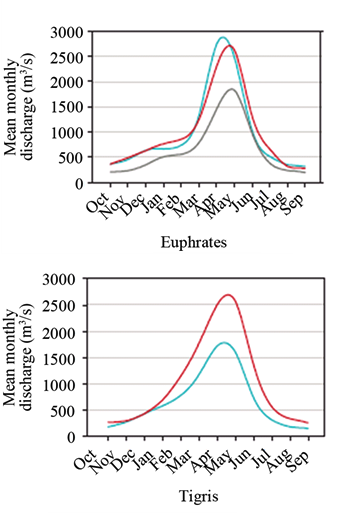
And it is this snowmelt that is the main contributor to the water flow of Tigris and Euphrates...Which also peaks in Apr/May (Taurus)...

In Mesopotamia the flood was thought to be caused by the god of fresh water and flood Enki who: "stood up full of lust like a rampant bull, lifted his penis, ejaculated and filled the Tigris with flowing water. He was like a wild cow mooing for its young in the wild grass..."

At the same time "Enki placed in charge of the whole of heaven and earth the hero, the youth Utu (Shamash), the bull standing triumphantly, audaciously, majestically...the great herald in the east of holy An...with a lapis-lazuli beard, rising from the horizon..."

Pic: Penn museum

I talked about the link between bull and flood in my posts "When Utu steps up into heaven", "Butt chewing", "Green Pastures", "Shamash young and old"...

So the above two carved ivories made a lot of sense to Mesopotamians and probably weren't "only decorative" to them either...

Apparently no one knew why Enky was "like a wild cow mooing for its young", or why Hathor was "a wild cow", or why papyrus was so sacred to her, or why these carved ivories depict cow and calf among papyrus flowers...Until I started researching animal calendar markers...Weird...

To read more about ancient animal and plant calendar markers, start here…then check the rest of the blog posts related to animal calendar markers I still didn't add to this page, and finally check my twitter threads I still didn't convert to blog post...I am 9 months behind now...

Wednesday, 2 March 2022

Goatfish

In this article, I would like to talk about goatfish, the sacred (mythical) animal of Enki/Ea, the Mesopotamian god of fresh water...Mythical animal 🙂 Of course not. Anyway, let's begin...Lots to talk about...

First who was Enki? Enki was the Sumerian god of sweet water. Actually, he was the source of fresh water, which was seen as his semen, which he emptied into Tigris and Euphrates...

More importantly, he was the god of the annual flood of Tigris and Euphrates...The flood that made land fertile and agriculture possible in Mesopotamia.

When king Ur-Namma built a temple for Enki, he called Enki in his dedicatory inscription: "Enki the flood of heaven and earth"...

I talked about this link between Enki and The Flood, and him being effectively the god of the flood, in my posts "Rain and flood" and "Enki's little boat"...

Enki was mentioned in the earliest extant cuneiform inscriptions throughout the region and was prominent from the third millennium down to Hellenistic times...

On cylinder seals, Enki is most often depicted with two streams of water flowing out of his body: one representing Tigris, the other Euphrates. This portrays Enki as the source of Tigris and Euphrates...

The other most common depiction of Enki is holding a jar from which two streams pour out. This portrays Enki as the god of water who controls the source of Tigris and Euphrates...

Or both

The late 3rd millennium BC text "Debate between Bird and Fish" tells us that it was Enki who: "laid out side by side the Tigris and the Euphrates, and caused them to bring water from the mountains"...

Did you notice that Tigris and Euphrates were made by Enki "to bring water from the mountains"? 

Do you remember Abzu, Enki's home, the source of the water flowing down Tigris and Euphrates?

And how I argued in my post "Shamash young and old" that Abzu was not "the underground sea of fresh water, the aquifer", but that instead, Abzu was the name for the mountains from which the two great rivers emerged?

Now have a look at this: This is part of the Stele of the Vultures, a monument from the Early Dynastic III period (2600–2350 BC) in Mesopotamia celebrating a victory of the city-state of Lagash over its neighbour Umma. 

On another fragment we see a large male figure holding a mace in his right hand and an anzu or lion-headed eagle in his left hand. The hammer and the anzu identify the figure as the storm god Ningirsu. Below the anzu is a large net filled with the bodies of naked men...

In the "The God Enki in  Sumerian Royal Ideology and  Mythology" by Peeter Espak we can read this interesting bit about this monument:

The text on the Stele of the Vultures has a long list of curses intended to frighten the rulers of Umma if they ever decided to overrule the terms of defeat and start another dispute. One of the gods invoked in the curses is Enki who is titled “the king of Abzu”:

"When I (Umma) transgress the border, the great battle-net of Enki, the king of Abzu, according to the oath taken (or: curse given) upon (Umma) from the sky let cover!" 

So the net we see on the above image must be "the net of Enki"...

The text continues with the king Eanatum releasing carp-fish said to be sent or going to Abzu. 

"(To) the carp-fish released/sent to Abzu Eannatum swore"...

Very interesting indeed...

Peeter Espak concludes that "It looks like Eanatum uses carp-fish to intermediate the oath taken or superimposed on the state of Umma to Enki situated in his Abzu. The carp-fish are therefore carriers of the message and informers of Enki"...

This is very interesting, as most of the seals which depict Enki as the source of Tigris and Euphrates, also depict fish...

The fish are either depicted swimming within the two rivers flowing out of Enki...

Or fish are depicted somewhere near the streams...

But regardless where the fish are, they are always facing Enki. They are always swimming towards Enki...Towards Abzu...

Now, the goatfish was to Sumerians known as Carp-goat...This is super important...As the fish which Eanatum sent to Enki, to Abzu, was also carp-fish...

What does all this mean? Why is this important? Because carp was directly linked with the annual flood of Tigris and Euphrates, the most important annual event in Mesopotamia...

In "The God Enki in Sumerian Royal Ideology and Mythology" we can read that the poem written by the king Ur-Namma, he says that "Enki treats me favourably, flood...for me he gives". Now the word Ur-Namma used for flood was actually "a-eštub" which literally means "carp(-filled) water"...

In "A study of Sumerian faunal conception..." we can read that an Ur III text calls Enki "the (wielder of) the a-eštub (carp flood)”...

Now remember all these depictions of Enki with Tigris and Euphrates pouring out of him, full of fish swimming towards Enki? That fish is carp. And not just any carp. A mother of all carps...Barbus esocinus (L. esocinus)...

Barbus esocinus (L. esucinus) is a large fish that can reach a weight of 140 kg (300 lbs) and can be over 2 metres long. It is one of the largest freshwater fishes in the world....It is distributed in most parts of the Tigris and Euphrates and their main tributaries.

Common names for this fish are: “soong, bach, anzeh, anzah, narbach, and anzeh-bach, balzard” in Iran, “bizz, farkh-el-biz” in Iraq, “Yerli Turna, Kurşun, Cero” in Turkey. 

The English called it Tigris salmon, Euphrates salmon. Why?

Cause just like salmon, this Mesopotamian carp is synchronous spawner migrating to the upper reaches of the rivers to spawn. Their spawning beds are at the springheads of the rivers where banks are covered with gravel...

Based on collected observation data, B. esocinus spawned over a relatively short period of time, from mid-April through late June with a peak concentrated in April/May when the water temperature exceeded 19–24° C...

Which is the ideal time to catch these mighty fish which spends the rest of the year in deep waters of the lower Tigris and Euphrates system...

So the migration of B. esocinus is not an event you would miss, if you lived by the river...

Guess what happens at the exact same time when, millions of giant carps all start swimming upstream, towards the shallow waters of the source of Tigris and Euphrates? 

The peak of the annual flood. Enki's flood...It peaks in Apr/May...

Tigris flow

Euphrates flow


The carp flood, "a-eštub", "carp filled water"...This is why all the fish depicted on the seals showing Tigris and Euphrates pouring out of Enki, Abzu, are facing Enki, Abzu. 

Because these seals depict the peak of the flood. When giant carp swim towards Enki who is (in) Abzu...

Do we need better proof that Abzu is not "the underground sea of fresh water, the aquifer"? 

These fishes are not swimming "towards Abzu, an imaginary underground sea of the fresh water". 

They are swimming Abzu, the mountains from which the two great rivers emerge...

So now we know what the fish part is in the goatfish. What about the goat part?... 

Climatic year in Mesopotamia is divided into hot/dry and cool/wet halves.


The first rains (and snow) of the cool/wet season arrive to Mesopotamia when Ibex and Markhor mountain goats start to mate, Oct/Nov...

Ibex

Markhor

The beginning of the Wild Goat mating season signals the beginning of the cool, wet season, Winter. And it is the rain and snow which fall during Winter (Nov-May) that are the source of all the fresh water that flows down Tigris and Euphrates...And of Enki's flood...

This is such an important event in these arid lands that wild goats were basically deified. I talked about this in my post "Goat carrier" and many others...


The gestation period of the wild goats that live in Northern Mesopotamia is 150 days...So the first baby goats appear just before the water levels peak in the two Holy Rivers....Which is why we see baby goats being brought to Enki as offerings on so many seals...

Mesopotamian hydrological report states: "Tigris and Euphrates have two flood periods: an irregular, rain-fed rise of minor proportions lasting from November to the end of March (this is basically a slight increase in water levels) and the main snowmelt flood of April and May"...

Which means that the flood starts when Ibex goats start to mate and peaks when eštub carp start to mate...Hence goatfish as the symbol of Enki, the god (source) of fresh water and the annual flood of Tigris and Euphrates....

So not a mythical animal after all. Just a complex animal calendar marker, marking the time of the year ruled by Enki...Which is why Enki is often depicted standing on a goat fish...His "mythical animal" 🙂 I told you. There are no such things as mythical animals...

Oh, by the way, did you notice that sometimes, the "goatfish" also has bull horns, and not goat horns? Like this one...Why?

For the same reason Enki is depicted standing on a bull on this seal...

The annual flood, carp flood, peaks during the calving season of the wild Eurasian cattle...Apr/May. Time of the year which has been marked by the bull, calf, cow and calf symbol all over Eurasia and North Africa since Neolithic...Taurus...

I talked about this in my posts "Green pastures" and "Rain and flood"...

Hence bull-goat-fish 🙂 subspecies of the goat-fish mythical animal of Enki...

I think that this is quite significant article which explains so many "mysterious things"...Very little mystery left, I am afraid. Just Climatology, Biology and Hydrology...
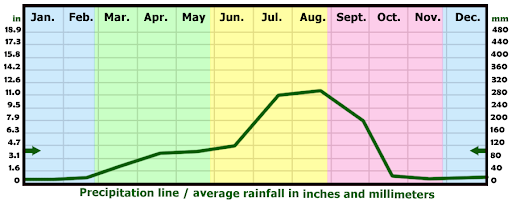
What do you think?

To read more about ancient animal and plant calendar markers, start here…then check the rest of the blog posts related to animal calendar markers I still didn't add to this page, and finally check my twitter threads I still didn't convert to blog post...I am 9 months behind now...