Sunday, 5 March 2023
Pragnje
Thursday, 3 March 2022
Ancile
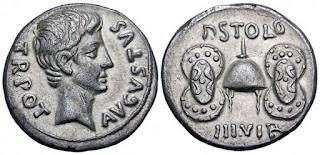
This is a silver denarius from the time of Augustus. On the reverse you can see the sacred shield (ancile) that is said to have fallen from heaven, during the reign of Numa Pompilius, the second king of Rome...
Apparently the ancient sources gave many different potential etymologies for the word "ancile". Like being derived from Greek ankylos (ἀγκύλος) meaning crooked...Crooked what? Basically etymology was and still is unknown...
Now I am beginning to believe that god has a very good sense of humour and is basically taking the piss...This is Coat of Arms of Serbia. Stemmatographia by Hristofor Zhefarovich (1741)...
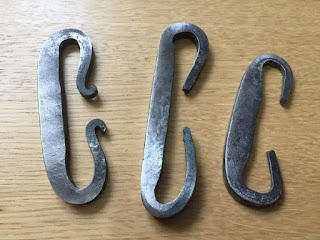
It is a cross with 4 fire-steels, of the type used since Roman times...These are used to strike a piece of flint to produce a spark when kindling fire...
In Serbian, and many other Slavic languages, these fire-steels are called "ocila", which basically just means "steels", plural of "ocil" meaning steel...
The word is cognate with Medieval Venetian azzal (steel) and Medieval Greek ἀτσάλιν (iron)...Both apparently from Late Latin acies (steel) which originally meant sharp and which comes from Indo-European root h₂eḱ - ( sharp )...
Now look at the ancile shield again. What do you see in the centre of the shield? Four arches. Four crooked irons? 4 fire-steels?
Or maybe not...Romans would have surely known this...Or Maybe not...Numa Pompilus, to whom many of Rome's most important religious and political institutions are attributed to, including ancile, was Sabine not Roman...
Now I am not saying that ancile and ocila has anything to do with each other...Just that God has a wicked sense of humour...
Why? Cause I don't think that Slavic "ocila" is linguistically linked to "ancile"...But it is possible that the Serbian cross with 4 ocila might point at what "ankylos" (ἀγκύλος), "crooked" thing could have given the name to "ancile": crooked steel...fire-steel...Maybe...
Saturday, 19 February 2022
Blood and mortar
This beautiful monastery church was built in the early 16th c. by Princess Milica Despina Branković, wife of the Duke Neagoe Basarab, Ruler of Wallachia... Milica was of Serbian origin, and closely related to Serbian noble houses of Branković and Lazarević...
Now there is an interesting legend about the building of the church. For some reason, the builders were not able to keep the church walls standing up. Whatever they build during the day, collapsed during the night...
Finally, the architect in charge of the build, certain Master Manole, was threatened with death by his employers if he didn't finish the church...
After much deliberation with his masons about what to do, Manole remembered an ancient custom of placing a living woman into the foundations of buildings in order to insure they don't collapse...
So he suggested that the first woman who came to the building site the following day, with the food for her husband, should be the one used as the sacrificial victim...
All the other masons, of course, warned their wives not to come to the building site then next day, except Manole. And so Manole was forced to sacrifice his own wife Ana. And that is how the church was built...
Interestingly, there is an identical legend about the building of the Fortress of Deva, also in Romania...
In this legend, a stonemason named Kőműves Kelemen – finds that the castle he’s trying to build keeps falling down, and is forced to sacrifice his beloved wife and mix her remains into the mortar in order to make the castle stand...
Another legend with the same plot is the legend about the building of the Bridge of Arta, a stone bridge that crosses the Arachthos river in the west of the city of Arta (Άρτα) in Greece...
According to the legend, the builders could not build the bridge, because, the foundations they built during the day, would collapse and were swept by the river during the night...
Finally "a bird with a human voice" informed the Head Builder that, in order for the bridge to remain standing, he should sacrifice his wife...He did, and this is how the bridge was built...
There is also an identical Serbian legend about the building of the Skadar fortress. The legend, in a form of an epic poem, was published for the first time in 1815 in a version recorded by Vuk Karadžić from the singing of a Herzegovinian storyteller named Old Rashko...
In 1824, Vuk Karadžić sent a copy of his folksong collection to Jacob Grimm, who was particularly enthralled by "The Building of Skadar" epic poem. Grimm translated it into German, and described it as "one of the most touching poems of all nations and all times"...
The poem describes the building of a fortress on the Bojana river at Skadar, today in Albania, in the 14th c. by the Serbian Mrnjavčević brothers (King Vukašin and his brothers Uglješa and Gojko)...
Whatever the brothers built during the day, was pushed into the river during the night by Vila (a mountain fairy).
Eventually, vila said to the king Vukašin, that if he wanted his fortress to stand, he would have to build a living person into the fortress foundations...
And, the Vila said, it will have to be one of the brothers' wives. Whichever one comes to the building site first the next day, with the food for the builders, will have to be sacrificed...
Vukašin and Uglješa both warn their wives, and so Gojko, the youngest brother, had to wall up his young wife alive within the walls of the fortress...
As his wife just gave birth to the twins, boy and girl, called Stojko and Stoja (Stoj means stand, be upright), she begged the builders to leave her breasts exposed, so she can feed her babies...
This relief, currently in Vienna, made in 1906 by Croatian sculptor Ivan Meštrović, depicts the scene of the sacrifice...
You can find the full English translation of the poem (in a somewhat archaic English) here...
Anyway, I believe that this legend could be of Serbian in origin. The reason for that is that the custom of making blood sacrifices on the foundations of buildings, in order to make them stand, is still common among Serbs...
Not only that, According to Vuk Karadžić, there was a belief still strong during the 19th c. that it was impossible to build a large building without a human sacrifice...
Because, of course, you could't build people alive into buildings any more, builders "stole people's shadows and built them into the foundations or the walls"...
Vuk Karadžić claimed that people even avoided the building sites because they were afraid their shadow could be walled-up and they could die without it...
This belief and custom were recorded by ethnographers in many parts of the Balkans inhabited by Serbs. I talked about this belief and practice in my post "New house"...
But to me, very interesting thing about these legends is that the sacrificial victim is always a woman, the wife of one of the builders...
This gives a completely new meaning to the Serbian proverb: "Ne stoji kuća na zemlji nego na ženi" - The house doesn't stand on the ground but on the woman...I talked about this proverb in my post "Baba - the main beam that supports the house"...
Saturday, 25 December 2021
Willow in Slavic folklore
Today I will talk about willow in Slavic spring fertility rituals, gardening and Cricket the cat 🙂
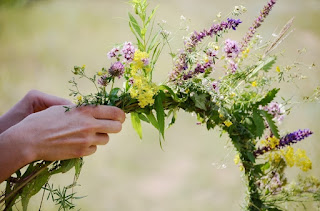
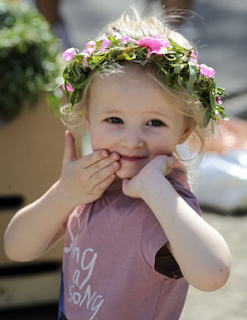
Here we go: Saturday before Palm Sunday is in Serbia known as Vrbica (Willow day). On that day kids and young women make and wear wreaths made of willow twigs and flowers
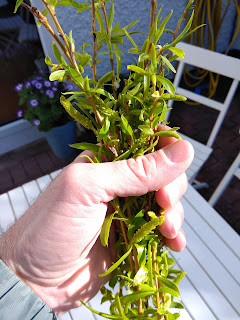
On that day, willow twigs with young leaves and flowers, like these, known in English as Pussy Willow are brought to the church where they are blessed the next day, Palm Sunday, which is in Serbia known as Cveti (Flowers day)...
According to the church, this whole willow business is the consequence of the fact that there are no palms in Serbia, and people replaced palm branches with willow branches...Move on, nothing so see here...
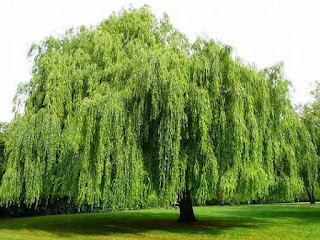
There are few problems with this explanation...Vrbopuc (Willow burst) is an expression which in Serbia means "part of spring during which willow starts growing new green shoots"...
In Serbia in the past people believed that during this time of the year women become very horny and very fertile...So this was the best time to make babies...🙂
Vrbopuc is also a term used in Serbia for the period of sudden surge of sexual hormones in teenage boys and girls...
Basically willow was directly linked with human fertility...Which is why in the past in Serbia, girls used to make belts from willow twigs (wrap willow twigs around their bellies), and wear them going to the rivers to perform ritual baths...
This ritual bathing was performed on Cveti (Flowers day) but also on Djurdjevdan (St George's day), the old Yarilo day, the old day of the young sun, the old celebration of the beginning of summer...Known also as Beltane...I talked about this in my post "Aries must die"...
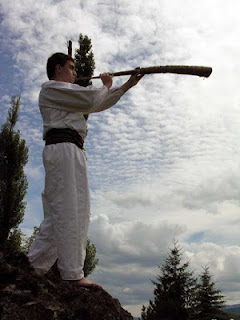
At the same time on St Georges day, while girls were wearing willow belts and bathing, boys and men were blowing into willow horns to "scare the witches away"...I talked about this in my post "May horns"...
It is interesting that this ritual bathing was done before sunrise and willow belt had to be taken off as soon as the sun rose...And that blowing into the willow horns was also done during the night....
I didn't pay much attention to this until I remembered that willow was directly linked with water, water divination....Dodole, young women which took part in rain bringing magic rituals performed during hot summers also wore willow twig belts...
Mother Earth = Yin = Winter, Cold, Wet, Night, Down = Female fertility
Father Sun (Sky) = Yang = Summer, Hot, Dry, Day, Up = Male fertility
Which is why rain, water magic is female magic...
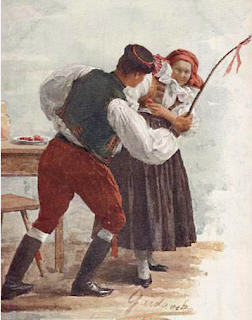
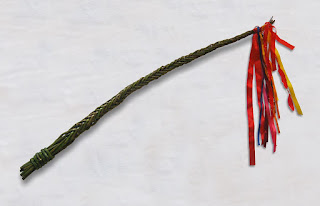
And which is why willow, the tree which grows next to water, is associated with rain, water and female fertility, female sexuality...Hence ritual whipping of teenage girls by teenage boys using willow whips, performed in the Czech Republic, Slovakia on Easter Sunday...
If men arrive at women's houses after 12 o'clock, women throw a bucket of cold water on them. In some regions the men also douse girls with water...
The man first sings a a ritual song about spring, bountifulness and fertility, and the young woman then turns around and gets few whacks on her backside with the willow whip...This was done "so girl would be healthy, beautiful and fertile throughout the following year"...
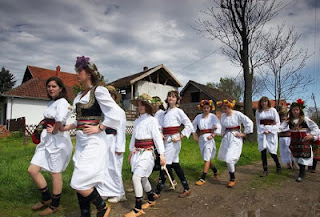
In Serbia willow was also linked with female coming of age rituals, also performed on Willow day...On that day, young unmarried girls, wearing willow twig belts and willow and flower wreaths walked around the village land and blessed the nature... I talked about this in my post "Flower girls"...
They would first go to a spring where they would sing and dance and would then wish good morning to the spring water. Spring water is in Serbia called "živa voda" (live water, water of life) and is believed to have magic properties...
Spring is seen as a place where fertile Mother Earth releases her "water of life" in the same way that a fertile woman releases her menstrual blood, female "water of life". In this way the spring water is magically linked with the menstrual blood...
So no wonder that the spring is the first stop of the Lazarice group, the group of girls whose "water of life has started to run" (who got their period). BTW they are called Lazarice "because Willow day is by Christians also known as Lazarus day"...
After this ritual, the girls would go to meadows to pick wild flowers. They would use these flowers to make wreaths which they would wear on their heads during their procession through the village land and the village...
They would then walk through the fields, forests, meadows belonging to the village, and would sing fertility songs wishing nature to be fertile and bountiful....
Young girls, Spring Earth, Female fertility, Earth fertility, water...Willow...
Remember the Pussy Willow 🙂 branches blessed in churches in Serbia the day after Willow day? They are brought home. Some of them are made into a wreath which is placed in the corner with the icon...The rest are used to decorate the house gate, door and windows...
This is done "to protect the home from thunder" because "thunder doesn't hit willow". Willow also "protects against hail"...So willow twigs are used to "threaten the clouds during hail storms"...
That the belief in the link between willow and fertility was once probably Europe wide, can be seen from this English belief: "Striking an animal or a child with a willow twig will stunt their growth!" This is a great example of Christianity at work...
In Serbia it is actually the opposite...On Willow day, children and animals are whipped with willow twigs so they grow like willow and are healthy and fertile...Which is what you would expect after everything I have presented so far...
Willow twigs, particularly the ones cut around St George's day are considered to be most potent when it comes to growing magic...They were cut into bits and mixed with animal food, particularly food given to bulls...
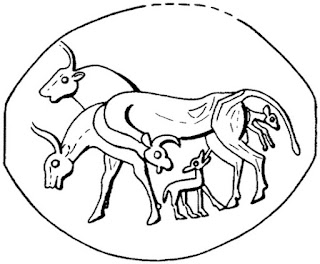
Remember St George's day is the old Beginning of summer celebration, and summer begins in Taurus...Taurus which marks beginning of the calving season of the wild Eurasian cattle...
I talked about this in my posts "Ram and bull", "Symbols of seasons", "Zodiac", "Animal calendar markers", "Seal with narrative scene", "Rain and flood", "Holy cow", "Calydonian boar"
Willow was in the mind of the Slavs definitely linked to growth and fertility...So imagine my surprise when I came across this information: Willow contains two very interesting chemicals: indolebutyric acid (IBA) and salicylic acid (SA)...
Indolebutyric acid (IBA) is a plant hormone that stimulates root growth. It is present in high concentrations in the growing tips of willow branches...
Salicylic acid (SA) is a plant hormone which is involved in the process of “systemic acquired resistance” (SAR) – where an attack on one part of the plant induces a resistance response to pathogens (triggers the plant’s internal defences) in other parts of the plant...
Soooo...The first hormone makes the plant grow...The second hormone makes the the plant healthy...And these hormones can be extracted from the willow shoots and used to help your plants grow and be healthy...
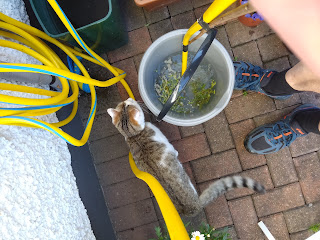
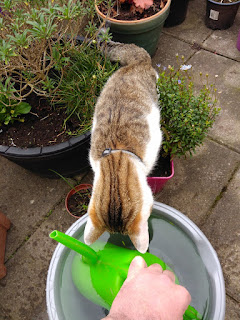
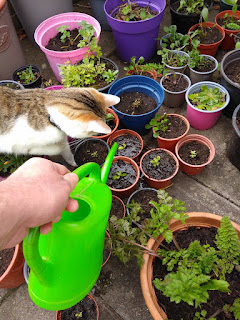
So...I went to the nearest willow, cut some green willow shoots, chop them into small pieces, put them in a bucket of water (under the close supervision of Cricket the cat) and soaked them for a day or two...
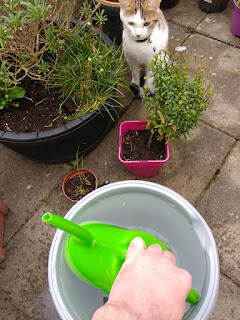
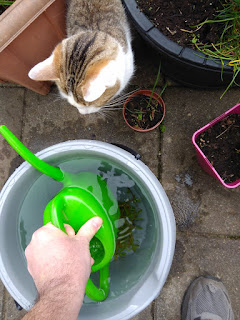
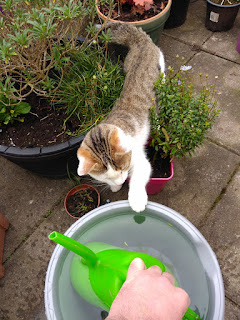
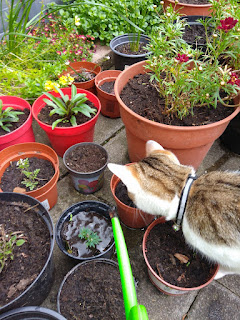
This is me trying to water my plants with my willow water (under the close supervision of Cricket the cat of course)
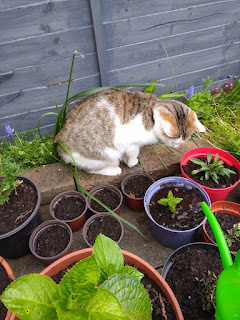
You missed this pot human...
So after successfully making willow water, and all the fun I had watering my plants with Cricket the cat, hopefully my plants will grow like mad and be healthy and fertile...
So if you ever wondered why willow was linked with fertility and health...
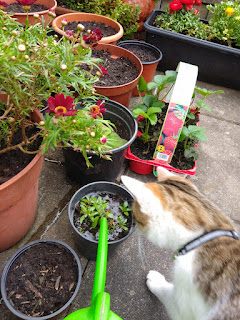
By the way, did I mention that Cricket the cat is not my cat? It officially belongs to our neighbours who live few houses up behind the wall, but it has recently decided that this is his garden so...
Friday, 27 August 2021
Fige
When I was a little kid, this was "the rude gesture" before I learned the other ruder gestures 🙂.
It turns out this gesture has been used at least since the Roman time...Apparently in Roman times it was known as "manu fica" (fig sign) "for the resemblance to female genitalia" (???) Does this remind you of a female genitalia?
Also, this sign "was made by the pater familias to ward off the evil spirits of the evil dead" (???) during Lemuria, the festival of "cleansing the home from the evil dead" (???)
Are the dead really afraid of the female genitalia?
I actually think that the Romans had actually forgotten the original meaning of this sign. This sign represents male genitalia. Which is why it is pater familias (the father of the family) who is making it.
Here is the origin of the sign
So not a female genitalia, right? That this is actually a sign represented male genitalia, can be seen from the fact that in Poland this gesture, also called figa, means "nothing" as in "you will get nothing (from me)", while in Serbia, the expression "dobićeš kurac" (literally you will get dick) means you will get nothing...
Also the whole "evil spirits of the dead" is another sign that the Romans had forgotten the "old ways"...The dead, the ancestors, were not god or bad...They were good to the living if they respected them, remembered them, and bad if they didn't...
It is the dead, the ancestors who brought all the good things to the living...In return for regular mention, food and drink...I talked about this in my posts "Diduch", "Thirst", "Blood red wine" and "Wolf feast"...
And originally this sign was probably not made "to ward off the evil spirits of the dead"...The pater familias was making it to remind the ancestors that they are all part of the the same family...Paternal family...Symbolised by the...

Or I wonder, was pater familias actually telling the ancestors that they will get dick if they don't behave? Risky, very risky...Look what happened to the Hittites when they forgot their ancestors "House of the bones"...
Saturday, 24 April 2021
Sugreb
Here is, at first glance, a very strange Serbian superstition about dogs: A place where a dog has scratched the ground is in Serbian called "sugreb". It is believed that stepping on this place can cause person to get sick "and even to go mad"!
This is why when you see that the dog has scratched the soil, you should spit on that spot, and that would "cure it"...
This is very interesting. Why would people believe this?
Well Serbs also believed that "dogs are unclean" and that "god's breath can reach 100 cubits into the earth"...What does this mean? Why did people believe this?
Maybe this is the clue: "The first puppies are thrown into a river because they can get rabies"...Now this is very interesting...
"Furious rabies occurs when the rabid dog becomes aggressive, highly excitable, and displays evidence of a depraved appetite, eating and chewing stones, earth..."
I presume after furiously scratching the earth...
This is why "you can get mad" if you step on the place scratched by the dog" and why "dog's breath is so poisonous" and why "spitting on the place scratched by the dog cures the place of the disease"...
A lot of Serbian wolf folklore is also directly linked to rabies...I talked about this in my post "Goropad"...
People were so afraid of wolves and the "great disease that they carry" that Serbs believed that even other diseases are scared of wolves too. And so wolves feature prominently in spells used for protection of diseases...
Like this: Serbian ritual practice recorded in Serbia, Montenegro, and East Bosnia, performed to ensure lasting health and strength of children, involved pulling the newborn baby through "vučiji zev" (wolf's yawn), the skin cut from around a wolf’s jaws...
I talked about this in my post "Enemy of demons"
Source of this Serbian superstition about dogs: "Srpski Mitoloski Recnik, grupa autora" (Serbian mythological dictionary)
Sunday, 14 March 2021
Lapot
A Romanian story tells us that "in olden times it was the custom to kill the old people because they were considered useless...Young people did not want their wisdom and their advice, for they were just as clever. They had lived their lives, and that was an end of it".