Showing posts with label Slavic culture. Show all posts

Sunday, 27 July 2025

Thunder book

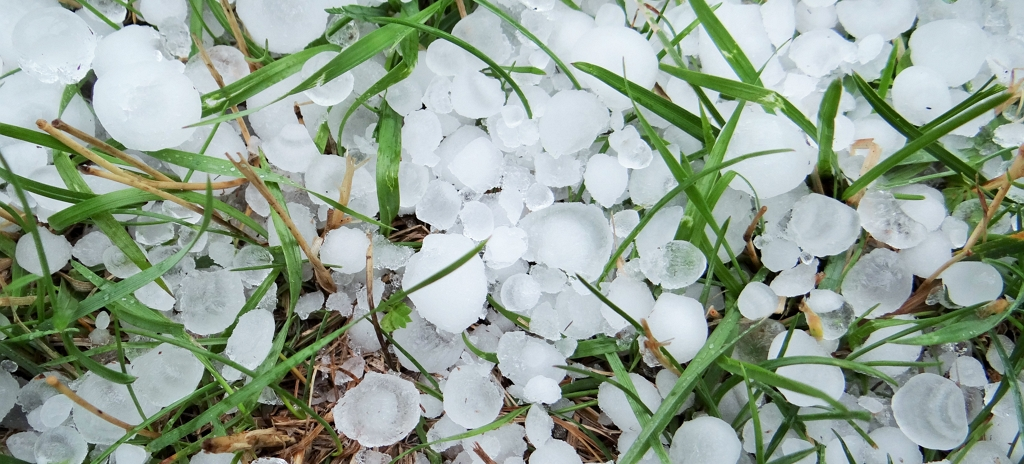
In the Annals from 1605, the Dubrovnik writer Jakov Lukarević says that Serbian kings Stefan Nemanja and Dušan "persecuted witches", whom he calls "evil women from Mount Hemo", and burned their book of magic, which was in Slavic tongue called Grominjak (Thunder book)...

That book probably had spells and rituals for affecting meteorological phenomena. St. Sava, in the "Zakonopravilo", condemns the magical summoning of hail, although he himself summons hail, in the story about the Hungarian king.

St Sava from Serbian folktales basically replaced Dabog, the old Serbian supreme god and took all his magical powers, including weather control...I talk about Dabog as both sun and rain god in two article "The last megalithic ritual in Europe" and "Weather stones" about the use of "weather stones" by Slavs to manipulate weather. Like here, where women raise Dabog's stone during drought to get cool and wet weather...


Another interesting bit here is that it is women who were always associated with rain (hail) storm rituals. 

Did you know that the sudden climate change which resulted in the medieval mini ice age was blamed on the weather controlling witches and was the excuse for the subsequent witch-hunt. I talked about this in my article "De Lamiis et Pythonicis Mulieribus" about the 1489 book "De Lamiis et Pythonicis Mulieribus" by Ulrich Molitor which talks about weather altering magic (witchcraft) performed by women...

This is an illustration from the book depicting "two witches conjuring up a destructive (hail) storm"...


In South Slavic folklore, cold, wet weather is "feminine"...Yin...

Which is why, in South Slavic folklore, it is a female dragon, ala, that brings hailstorms and unseasonably cold, wet weather during summer months, which destroys crops...I talked about this in my article "Pozoj"...

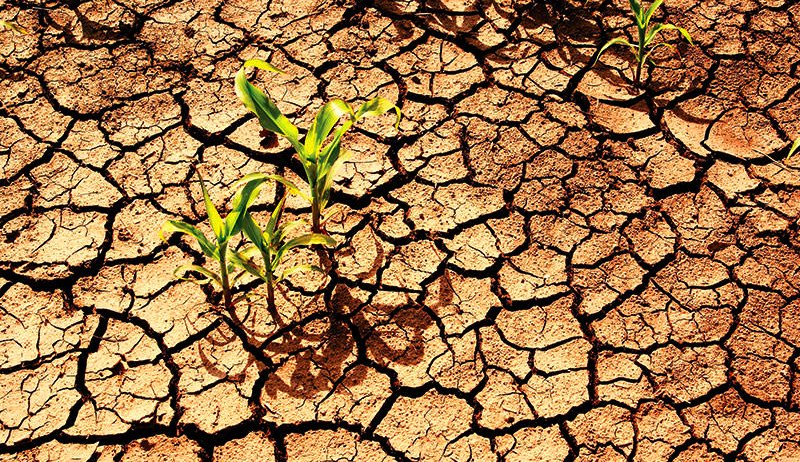
While male dragon, zmaj, brings hot, dry weather which brings drought, which destroys crops...Yang...I talked about this in my articles "Scaring off the dragon" and "Letnitsa treasure"...


Monday, 17 March 2025

Baba - Last sheaf of wheat

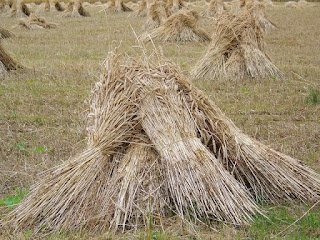
Among Slavs, the last sheaf of wheat was commonly called Baba. This word means grandmother, mother, midwife, birth giver...In some places the woman binding the last sheaf the last sheaf of wheat is also called Baba...

In the Balkans bаbičiti means to make, to tie grain sheaves. I wonder this is symbolically linked with the swaddling babies cause bаbičiti also means to deliver babies...From the meaning of the word Baba in diminutive form Babica which means midwife...

All kinds of rites and beliefs are connected to the Baba, the last sheaf of wheat, including the  dance of the oldest female reaper, accompanied by banter and jokes...

In Prussia, the woman binding the last sheaf represented the Corn-Mother; After she bound the last sheaf, she would lie down in the field and cry like a woman in labour, while an old woman acted as the midwife. Finally, the "midwife" would announce that a child was born...

In Northern Germany, the woman binding the last sheaf was told: "You are getting the child!" In Bohemia, people believed that the woman binding the last sheaf will have a child in the next year...

The Swabs called the one binding the last sheaf "the Old Woman" (basically Baba, Grandmother) and she was said to be married in the next year...

In East Prussia, the female reapers strove to be the one tying the last sheaf, called "the Grandmother". Whoever  got it, would be married in the next year, but her spouse would be old...

Baba (Grandmother) here is Mother Earth in her role as The Mother Of Grain...Talked about this originally in my post "Mother of grain"...

Mor articles about the Mother of grain in Neolithic Europe, Central Asia, Mesopotamia, Iran, Levant: "Altyn Tepe mother of grain", "Mother of grain from Yarim Tepe",  "A person in a little boat", "Sabi Abyad venus", "Hathor grain pendants"...

Sumerians knew here as Inanna. 

Inanna/Ishtar, was in "A song of Inanna and Dumuzid" described as: "Maiden, glossy mane, lovely beauty...colourful as a pile of grain, fit for the king, fit for Dumuzid! Maiden...a stack of...barley, fully developed in loveliness"...
This is Inanna speaking:

"Before my lord, Dumuzi,

I placed grain before him,

I poured out grain before him,

I poured out grain before my womb..."

I talked about this in my post "Inanna and dove"...

Greeks knew her as Demeter...

I talk about Demeter in my posts "Demeter with dove", "Demeter riding panther", "Sacred marriage on the threshing floor"...

Demeter, the goddess with beautiful golden hair...Here she is as Ceres emerging from the ground holding grain, opium poppies and snakes... 


I explain why in my post "Who are Persephone's parents"...

Hippolytus says that during Eleusinian harvest rituals, the priest raised a freshly cut ear of wheat with the loud cry: "The exalted goddess bore a holy boy, the strong one bore a strong child!" Sounds familiar? 🙂 I talked about this in my post "Iacchos"...

The reason why the last sheaf of wheat is called Grandmother is because all these people believed that last sheaf of wheat contained the "grain spirit", basically the spirit of The Mother of Grain...

The "grain spirit" is in European folklore usually preserved as female "corn dolly" made from the last harvested sheaf of wheat...I talked about this in my post "Corn dolly"...

In Romania the grain from the last sheaf of wheat was used to make the wreath that was then used to crown the most beautiful maiden reaper...

A living corn dolly from Romania. From my post "Wheat cross" about grain harvest rituals from Romania...

In Poland and Ukraine too...

Wheat wreath, worn by the "corn maidens" and made from the last sheaf of wheat, was the first batch of grain to be threshed on the threshing floor. This grain was then set aside for next year's sowing and was the fist grain to be sawn. 

I talked about this in my post "Wheat wreath"...

The same symbolic link between Old Woman (Grandmother), Last sheaf of wheat and mother earth is preserved in the Gaelic culture...

In Gaelic, the word Cailleach means both an old woman and the last sheaf of wheat and the corn dolly made from it. Corn dolly which represents Mother Earth, the life (grain) giving mother...

I talked about this in my post "The old woman of the mill dust"...

The symbolic linking of female reapers with The Mother of Grain and of tying the last sheaf of wheat with delivering and swaddling a baby is just another example of the believed link between female and earth fertility...Which we find in Europe since Neolithic...

A gynomorphic (woman like) figurine made of "soil mixed with chaff and grain seeds" from Grčac, Serbia. Proto-Starčevo culture, 6200-5500 BC. Direct symbolic link between earth, grain and female fertility. Basically, "Mother of Grain"... 

This symbolic link was still at the core of Slavic agricultural magic in the 20th century. As is shown by this Russian harvest custom:

In the past in Russia, after the last sheaf of grain was cut, women harvesters would lie down on the ground and roll around the field "to return the strength to the earth"...

In Ireland too we find this symbolic linking of land (grain sheaves) and female fertility (bride). These are Strawboys who used to call at the home of the bride on her wedding day. Co Sligo. Ireland. Early 1900s. (National Museums of Northern Ireland).


I talked about this in my post "Walking sheafs of wheat"...

This belief in the direct link between female and land fertility might have had some pretty dark implications in the past. There is an indication that in the past Serbs sacrificed girls to the Corn Spirit in exchange for good harvest...

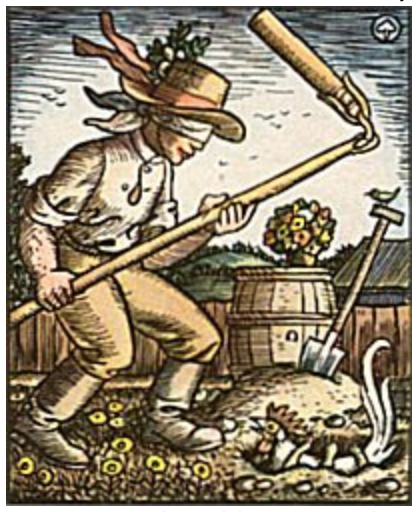
At the end of the harvest, when only the last sheaf of wheat was left standing in the field, Sorbs would sacrifice a rooster by killing it with a flail...

I talked about this in my post "Cock bashing"...

There are actually many indications that sacrificing a cockerel was among Serbs a replacement for a human sacrifice...I talked about this in my post "Third death"...

Add to that that in some parts of the Balkans Serbs ritually "tied the housewife to the central pole of the threshing floor until she promised them roast cockerel for the end of harvest dinner"...Or the next harvest would be bad...

And you have to ask yourself a question: is this a ritual replacement for the real human sacrifice which once used to take place?

Sunday, 28 July 2024

Bride

Bride (the effigy of St Brigit, the "hag" turned "bride", winter turned spring), which is paraded around Ireland on Imbolc, 1st of Feb, the first day of Gaelic spring, was made from the stick or dash from butter churn, which was dressed as a bride...

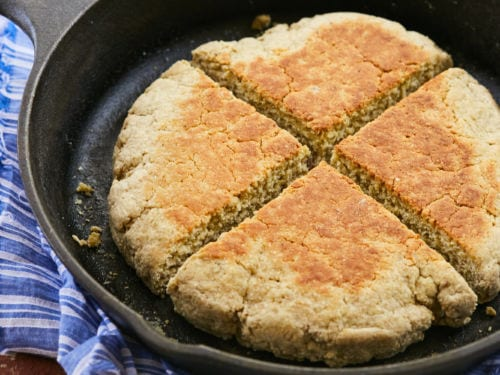
In the past, at Imbolc, St Bride's "bannock" "pan cake", was baked and given to the young girls as a blessing...I talked about this in my post "Bannock"...

In Scotland they made bannock not on Imbolc, but on Pancake Tuesday....At the same time when Slavs celebrate their ancient beginning of spring festival Maslenitsa (butter day)...When they bake and eat pan cakes. Which symbolise the sun...

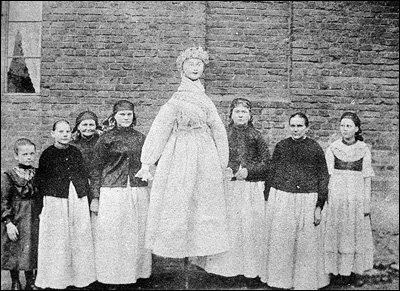
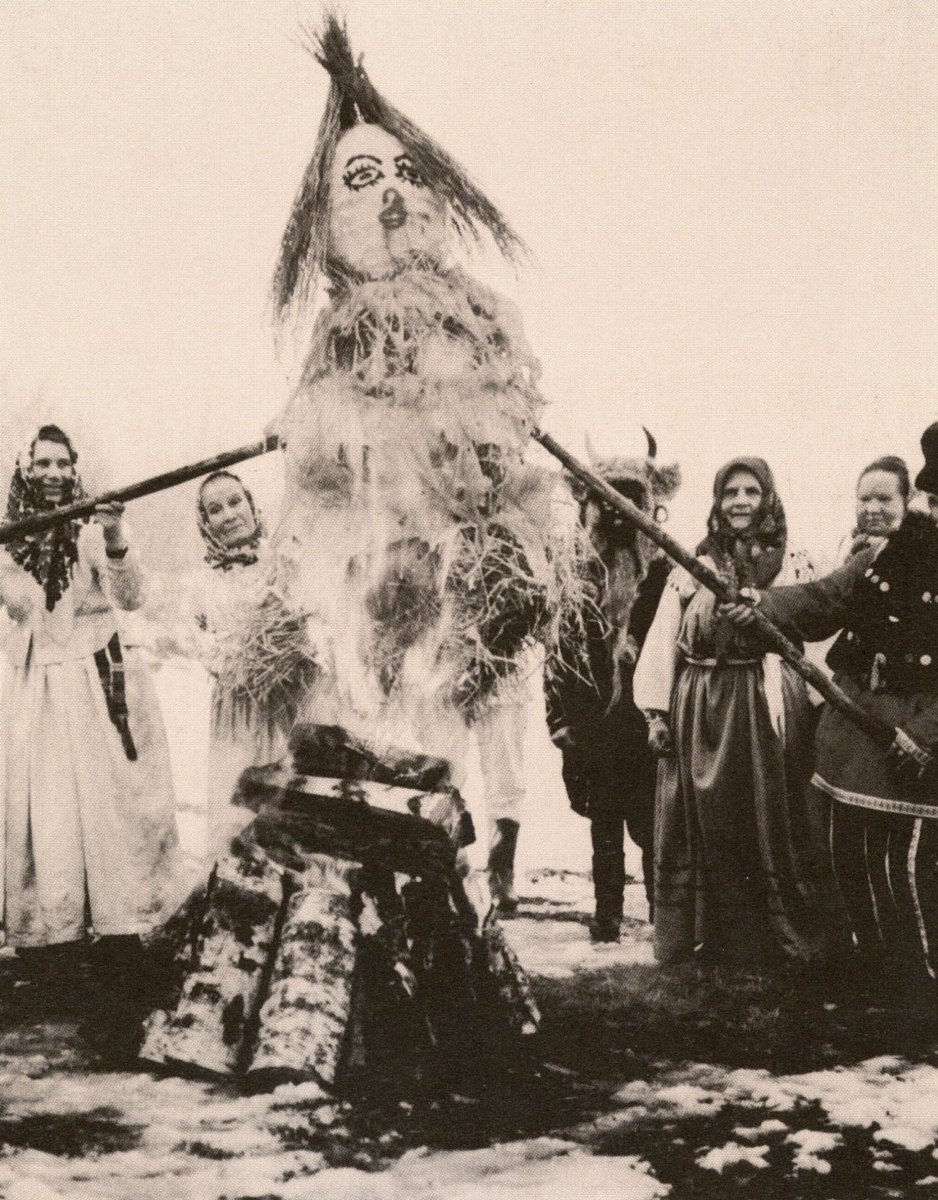
Oh, and on Maslenitsa, the festival that celebrates the death (end) of the witch (winter), people also parade the effigies of Marzana (goddess of death and winter) which are dressed in white, like brides...Because Imbolc/Maslenitsa is time of year when winter ends and spring begins and the hag of winter turns into a maiden of spring...I talked about this in my post "Snow-white"... 

The effigy is then burned (rising temperature) or drowned (snowmelt, flowing water), or both, to be sure to be sure 🙂, to symbolically end (kill) winter (hag) and give birth to spring (maiden). This can give us the clue who Brigid originally was...I talked about this in my post "Gryla"...

BTW, there are also some who believe that the word Imbolc, could be derived from im = butter...Would make a lot more sense than the official etymology...


Sunday, 28 January 2024

Dead man loaf

In Bulgaria, a special loaf of bread was made immediately after a person died, during the washing of the body. It was a simple round loaf, sometimes with a cross. In northeastern Bulgaria it was baked from dough which was made with the water used to bathe the deceased...

Sources:

"Glasnik Etnografskog muzeja u Beogradu knjiga 19 godina 1956"

"Bread in the folk culture of the Serbs in its pan Slavic context"

The dough for the bread was kneaded in a wooden throw. Before the kneading of the bread started, a candle was lit and put next to the through. And the dough was kneaded until the candle burned out...

In some parts of Bulgaria, this bread had to be made by a "clean" woman who had no sexual intercourses, either a virgin girl, a widow or a grandmother...

The name of this bread was пътнина (patnina), meaning "(bread for the) journey". In some parts of Bulgaria, this bread was placed in the coffin with a bottle of water and a bottle of wine, so the deceased would have enough food and drink for his journey to the other world...

This is very interesting. Remember my articles about the pots and pans found in Neolithic, Bronze and Iron Age graves all over the world. Like these Ghandara culture graves from Pakistan, dated to 1200-800BC...Were the drinking vessels placed in graves with drink "for the other world"...

 I talked about this in my post "One for the road"...Why would the living bother with making sure the dead had enough food and drink in the otherworld? 

Our ancestors believed that it was the dead ancestors that directly affected the life of the living and in particular the land/grain fertility. 

I talked about this in many of my posts like my post about Diduch (grandfather), symbolic representation of the ancestral spirit which governs the lives of the living.


The dead had to be remembered, and fed and watered by giving them regular food and drink (mostly water) sacrifices. Cause forgotten, hungry and thirsty dead ancestors will take revenge on their living descendants. And one of the ways they would do that is by causing droughts, storms, floods and other natural disasters that would cause grain crops to fail, and would result in famine and the death of the living...

I talked about this in my posts "Thirst", "White feast", "Soul breads". I talked about the link between the dead and rain and grain fertility in Roman mythology in my post "Lapis Manalis"....

Also, remember this? 

"...humiliation of the Hittite kingdom is the result of the fact that the Hittites have forgotten to respect the sacred bond with their dead..." - Last Hittite king Suppiluliuma II.  From my post "House of bones"...  

Statue of Suppiluliuma II, Hatay Archeology Museum with a pretty depressed expression on his face...

This is why people not just buried their dead with food and water, but also regularly feasted with the dead. 

Starting from the funeral feast. 

In some other parts of Bulgaria, the bread was, while still warm, broken over the deceased person's head, making sure that steam, representing the deceased person's soul, rose the broken bread...The bread was then ritually eaten by the people attending the bathing of the body...

BTW, in Herodotus 4:73 we read that when a Scythian man died his family would put the body on a cart and take it to all his friends houses. They would bring the body into each house where they would eat and drink together with the corpse...

Through the quarterly remembrance feasts. 

There is a custom among Serbs of "feasting with the dead". Four times a year, once per season, on a day called "Zadušnice" (Souls day) a family goes to the graveyard, spreads the tablecloth on the grave, lays food and drink on the grave and has a feast with the dead. 

And literally any other feast.

Serbs actually always feasted with the dead. Every family feast was symbolically eaten with the dead. This prompted some Serbian ethnographers to propose that the whole Serbian belief system was based around the cult of the dead...

Soul breads

As late as the mid 20th century, there was a custom in Poland to bake small loaves of bread for the dead on the All Souls day. Because the All Souls day is in Polish known as Dzien Zaduszki (the day for the souls), the bread was also called zaduszki, bread (for) souls...

Originally these were just a plain sourdough flatbreads...But the recipe gradually evolved into this:

Lublin All Souls' Day breads (powałki)

1 kg of cooked flour potatoes

2 eggs

400 g of wheat flour

100g of fresh yeast

1 teaspoon of sugar

2 flat teaspoons of salt

Press the previously cooked and cooled potatoes through a press, add eggs, flour, salt and yeast grated with sugar. Knead the mixture into a loose dough. Tear off pieces of dough, form thick flat patties and place them on oiled baking tray.

Decorate each patty with a grid pattern using a fork, and leave them to rise for 30 minutes. Bake for 20-30 minutes in an oven preheated to 160°C. 

That's the traditional recipe. If you want, you can add cheese, ham, spices or any other topping of filling to suit your taste...

The origin of this ritual in the old Slavic feast called Dziady, which in Polish means Grandfathers, Forefathers, when the souls of Forefathers would come back to our world to visit their descendants. And the little (soul) breads were made as food for the visiting ancestors.

The soul breads had to be prepared a few days in advance, as people did not want to light the fire on the hearth on All Saints' Day, as they believed that the visiting souls gathered around the house hearth, and they didn't want to disturb them...

Two interesting things here.

First: Slavs believed that it was the (happy) ancestors (satisfied with the way their descendants treated them) who were the source of all good that their descendants enjoyed. Including (and especially) good grain harvest...I talked about this in my post "Diduch" (grandfather), about the East Slavic symbolic representation of the ancestral spirit which governs the lives of the living. 

So a bread for the dead now makes a lot of sense, right? I talked about the ancestral cult root of Slavic agricultural rituals in many of my blog posts and twitter threads. This post, "Wheat cross", is a good jumping point for exploring this subject further. It talks about the ceremonial "wheat cross" from Romania, which was made on the last day of the wheat harvest to carry the "wheat wreath" from the fields to the village. And about the related Slavic harvest traditions and ritual.

Second: Hearth as the place where the dead gather when they visit the house of their descendants. I talked about the link between the dead and the hearth in my post about "Verige" (hearth chain). 

As you can see from the above picture, in the past, the hearth was the focal point of every house. So it is easy to imagine that the souls of the dead ancestors would also gather around the hearth to warm themselves up on the cold November night...

This is confirmed by the fact that in the past in Poland, on All Souls eve, people used to set up bonfires on the crossroads, in order to help the souls of the ancestors warm up a bit...Why on crossroads? Allegedly to show wandering souls their way home...

But interestingly:

In some parts of Serbia, on Christmas eve, a single man from a village would go to a crossroads and lay down a feast for wolves. He would then run home without turning...I talked about this in my post "Wolf feast", about the link between wolves and the ancestors in Serbian folklore. 

And also:

Diduch (Grandfather), the grain effigy representing "The Ancestor" made in Ukraine for Christmas, was in some areas, burned on New Year's eve, on crossroads, "one of the favorite hangouts of evil spirits and vampires"...

See how the souls of the ancestors ended up becoming evil spirits and vampires...With a little help of Christian priests...

Finally, some Serbian ethnographers proposed that the belief that the dead gather around the house hearth might also be a remnant of the ancient (really really ancient) practice of burying the dead under and around the hearth...

I am very important! 

Love this little guy 🙂 Neolithic Vinča culture anthropomorphic terracotta figurine, 5000 BC, Serbia.

"These figurines were found in houses, often near fireplace, sometimes carefully arranged, which indicates that they had ritual, cult value".

Did they represent the deceased, the ancestors?

Sunday, 19 March 2023

Mother of grain

MOTHER Earth...The symbolic link between women and earth depicted on this Early Vinča Culture terracotta figurine from Jela, Iron Gate region of the Danube, Serbia, c. 5200 BC, H. 5.3 cm, which has a branching plant growing out of the womb...Pic from "The Body of Woman as Sacred Metaphor"...

It is interesting that this Neolithic Early Vinča culture depiction of the mother goddess was found in the same region where in Mesolithic we find Lepenski Vir culture, whose people made exactly the same image out of a bone...5000 years earlier...around 10,600 BC. It was found at Cuina Turcului, a rock shelter in the Iron Gates gorges on the Danube river, Romania.


The symbolic depiction of a mother earth as a woman is kind of easy to understand. They both give birth to things...

What is interesting is that Slavs who live in the area today, have preserved this symbolic depiction of the mother earth as a female...

Baba, the word which means Mother, Grandmother, Midwife...Birth Giver...The rock which gives birth to life...Which is why we have so many rocky mountain peaks in the Balkans named Baba. Like this one, "Baba's tooth" from Stara Planina (Old Mountain) You can find many more examples in my post "Baba, mountains and crags"...


That mountain alone has all these toponyms and hydronyms with Baba (mother, grandmother) in them...

But Slavs have also preserved something else: belief that female fertility and earth fertility, particularly agricultural fertility, and even more specifically grain fertility, are directly linked, and that one can affect the other...

Which is why we have Slavic agricultural rituals like these: In the past in Russia, after the last sheaf of grain was cut, women harvesters would lie down on the ground and roll around the field "to return the strength to the earth"...I talked about this in my post "Walking sheafs of wheat"...

Or why we have Slavic beliefs like this: A pregnant woman was forbidden to climb fruit trees or even touch them, because "the tree would dry out" (she would steal the tree's fertile energy for her own pregnancy)...I talked about this in my post "Planting tree when the child is born"... 

Or why bread oven is called "baba" (mother, grandmother, midwife, birth giver, mother earth)...I talked about this in my post "Baba, earthen bread oven"...

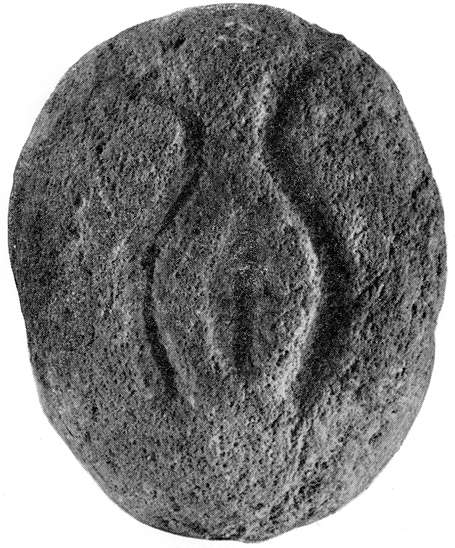
Now back to our mother earth figurines. The people from Lepenski vir who made that figurine depicting plants growing out of the womb of the mother earth, also made these: womb stones. Sculpture from the hearth of house No. 51, Lepenski Vir (9500–6000 BC, Serbia). It shows a vulva in a specific physiological state, just before giving birth, with all its anatomical details...Photo: From "Lepenski Vir" by Dragoslav Srejović 1972...

They also made very strange trapezoidal shaped houses dated to 6300-6000BC. 

They are all shaped like a flat top pyramid they could see from their settlement. Why? Because every summer solstice, the sun rose on top of it...I talked about this in my post "Sun on top of pyramid"...

Interestingly the only other example of a house like this was a Natufian culture "shrine", dated to 12,600-10,000 BC. I talked about this in my post "Natufian house"...

Natufians also made lots of stones like these...The pic is from this paper "The Natural Inspiration for Natufian Art: Cases from Wadi Hammeh 27, Jordan" which says that "They have sometimes been referred to as ‘shaft straighteners’ with the idea being that they were used to straighten bone or wooden shafts, perhaps when heated..."

"This function is unlikely, however, given direct observations of traditional artisans and experimental reconstructions of these objects’ use. Wooden spears or shafts are usually straightened by hand while being held over a fire..."

"Alternatively, the grooved stones were probably used to abrade softer materials such as Phragmites reeds, while drawing shafts back and forth through the cavity formed by binding two stones tied together with the grooves opposed..."


So we don't know what these stones were used for. That they were tools becomes doubtful (at least to me) when we know that they also made decorated, stones of the same type...The pic is from the same above article...


And this is why I don't think these were tools. The same type of objects, just made from clay, were found deposited in a sacrificial pit in the 7th mill BC early grain farming Starčevo culture Blagotin settlement in Serbia. I talked about this in my post "Blagotin"...

These were the guys who brought grain to Europe...The guys who built temple dedicated to grain. 

If we look at the clay objects from Blagotin, we can see that the groves made in them are too wide and shallow to be used for any kind of straightening of anything...

Which is why they were interpreted by Serbian archaeologists as "grain seed models", grain fertility idols...Now if you squint you will see that they don't just look like grain seeds. They also look like vulvas...Vulvas made of stone and clay, made of the body of mother earth...

Starčevo culture was ancestral culture of the Vinča culture...So we have come full circle...Hence plants growing out of the womb of the Vinča culture idol...But also out of the womb of the Lepenski Vir idol. Which predates Starčevo...

I recently came across this: A gynomorphic (woman like) figurine made of "soil mixed with chaff and grain seeds" from Grčac, Serbia. Proto-Starčevo culture, 6200-5500 BC. Direct symbolic link between earth, grain and female fertility. Basically, "Mother of Grain"...

Now that I think about it, the plant is most likely grain...These are symbols for grain from Mesopotamia and Central Asia...


This (widespread) belief that plants (especially grain) grow out of the womb of the mother earth was for the first time spelled out in Mesopotamia, where in "The Courtship of Inanna and Dumuzi" we find these verses:

"...Before my lord, Dumuzi,

I poured out plants from my womb.

I placed plants before him,

I poured out plants before him.

I placed grain before him,

I poured out grain before him,

I poured out grain before my womb..."

BTW, every year during the harvest, a man and a woman performed ritual sexual act on a threshing floor, imitating Inanna (earth, womb) and Enki (sweet water, seed) consummating their holy marriage. I talked about this in my post "Sacred marriage on the threshing floor"...


The result of which was grain grew out of Inanna's womb...

And so on and so forth...I will end this rambling article here. Got to go and make dinner...

PS: Forgot to say that Natufians were some of the first people to eat, gather and maybe even grow grain...I talked about this in my post "How grain came to Sumer"...