Showing posts with label Weater stones. Show all posts

Monday, 7 November 2022

Living stone

Stone Quarry, painted c. 1919, by Czech painter Josef Ullmann...

In Slovenia in the past, a piece of stone that was cut from the wall of a quarry, had "to calm down", because it had been torn off the "mother's body" and was perceived as still alive for a certain time...

This belief was recorded by an published by Boris Čok in  "Kamnoseško izročilo o znamenjih na portalih in kolonah po Krasu" (p: 106)

But this is not an isolated belief...

Bedrock is in the Balkans known as "živi kamen, živa stena" (living stone, living rock) and is called so, because it is believed to be still part of the living body of the Mother Earth which gives birth to all life (plant, animal, human)...

These types of stones are also known as "Baba" (Grandmother, Mother) stones...

There are many "Baba" rocks and rocky mountain peaks all over Slavic Balkans. This is one of my favourites: Babin zub (Grandmother's tooth) peak, Mt. Stara Planina (Old Mountain), Serbia...

I list a lot of them in my article "Baba, mountains and crags"...If you know of any more, please post name and link to the map location in the comments...

These Baba stones were once venerated by the local transhumance shepherds communities...

For instance on Velebit mountain in Croatia, on arriving to the summer pastures, shepherd women used to bring food offerings and leave them on the "Baba" stone.  They also used to lite candles on the stone on various holy days. The stone was also known as "the altar"...

Many of these old "Baba" stones were later Christianised, by having chapels dedicated to Mother Mary built on top of them...Same thing, different name...Like this one on Veliko Rujno, Velebit, Croatia...

I talked about this in my post "Shepherd's chapels from Velebit"...

This was done because people believed that it was "Baba" (Mother Earth) that controls cold and damp weather...While her husband, Father Sun (Sky) controlled hot and dry weather...

Father above, Mother below...

Looks familiar? I talked about this in my post "Square and compasses"...

Srbska zagonetka: 

Pitanje: Visok otac, široka majka

Odgovor: nebo i zemlja

Serbian riddle: 

Question: Tall (high) father, wide mother

Answer: sky and earth

I talked about this in my post "Riddle"...

Shepherd's in Slovenia also believed that "baba" stones were linked to weather, water, humidity, mud, soil and fertility and pasture abundance...

This bedrock outcrop near the village of Rodik in Slovenia is known locally as "Baba" (Grandmother)... 

Locals believed that "Baba" controls the (bad) weather: Baba’s urine turns to rain, her fart to wind, and when she raises her skirt, the weather gets nice...🙂

And also used to leave offerings on "Baba" stones during their spring ascent to the summer pastures...I talked about this in my post "Gryla"...
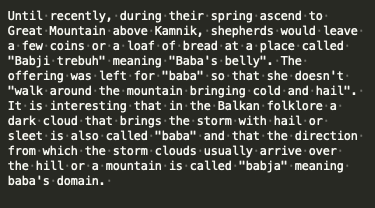
I came across this interesting article in Italian, "La leggenda dell’auricorno e la mitologia delle Alpi slovene" about "Baba" folklore from the Alps. 

This is why stones are so prominently used in Slavic weather magic...Like here, where women raise "Dabog's stone" during drought to get cool and wet weather...
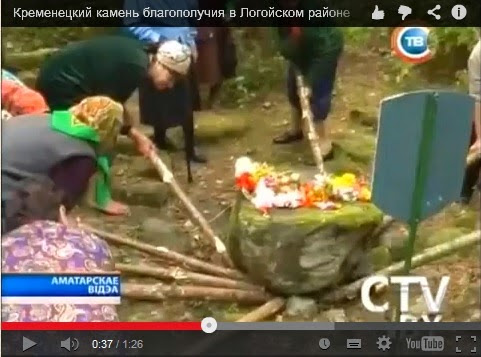
I talked about this in my posts "Weather stones", "The last megalithic ritual in Europe", "Jupiter from Ibrahimovci", "White cross"...

In South Slavic mythology, it is "Baba", meaning Grandmother, Hag, personification of the winter earth, which causes cold weather...I wrote several blog articles about this character...

"Bablji mlin", meaning "Granny's mill" scene, Slovenia. An old hag is being milled, and thus transformed, into a young maiden. Winter being transformed into Spring...I talked about this in my post "Bablji mlin"...
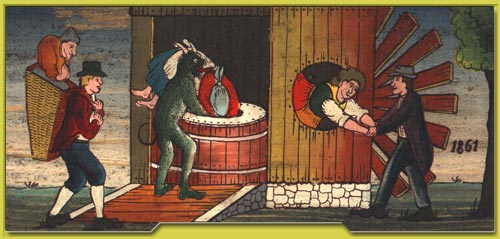
Interestingly, in this version, it's Krampus that does the milling...Krampus, Goat man, an animal calendar marker for winter...


Why? Because Ibex goats mate and fight during the winter...

I talked about this in my post "Krampus"...

"Bablje Leto" (Grandmother's summer), one of the names for Indian summer (warm dry autumn weather), is another remnant of the Mother Earth cult in European Christianity and European folklore...I talked about this in my post "Bablje leto"...

"Everyone knows that an ordinary bullet can't kill a witch. If you want to kill a witch, load the rifle with 3 grains of wheat and a bit of Easter beeswax candle" - Serbian saying. 

To understand why, replace witch with winter...

I gave the analysis of this proverb in my post "How to kill a witch"...

Slavs equated The Goddess of Death, Morana (mor=death) with The Old Hag, The Winter Earth, Marzana (marz=frost). She is ceremonially burned (warmed) or drowned (thawed) or both (to de sure to be sure 🙂) during Slavic spring festivals...I talked about this in my post "Gryla"...

As part of end of winter, beginning of summer rituals, men and boys blew willow horns  to scare the witch (winter) away...I talked about this custom in my post "May horns"...

Willow being symbol of spring...I talked about this in my post "Willow in Slavic folklore"...

In Cornwall we find the character called "The Old Sky Woman" who controls the snowfall across North Cornwall and children were told when the snowflakes began to fall, the Old Woman was up in the sky plucking her Goose....


Baba, The Old Hag, The Spirit of Winter Earth...Is also found in Romanian folklore...Just like in Serbian and Slovenian folklore she is associated with goats, calendar markers for winter (🙂)...
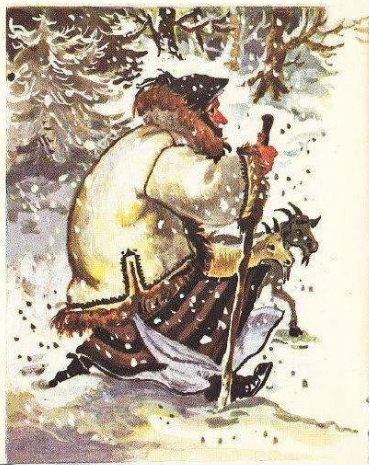
I talked about this in my post "Babele"...

In Iceland we find Gryla, who originally was "really a personification of the winter and the darkness and the snow getting closer and taking over the land again"...


Among Kashubians in the Carpathian mountains we find saying: "the old baba (grandmother) went to dance" - when the weather suddenly changes and it starts to snow...

In the Polish Carpathians we find saying: "the baba (grandmother) is already frozen" - the mountain tops are covered with frost or the first snow...

In Gaelic lands of Ireland and Scotland she is Cailleach...

In Italy she is Befana...

In the mountains of Central Europe she is Perchta to Germans or Peruehty to Slavs...

In the North of Germany and in Scandinavia she is "Mother Holle (Hulda) or "Old Mother Frost"...

Interesting, right?

I think so...

Wednesday, 17 August 2022

White Cross

This is the reconstruction of the Beli križ (White Cross) shrine which was once located in the valley southeast of the village of Prelože, Slovenia...

The shrine was destroyed during the First World War. But the locals preserved a vivid memory of it and of the rituals performed around it. These were collected by ethnographers during the middle of the 20th century...

As you can see, it was "a cross in a circle" made of stones, with four stones in each quarter of the circle and four pointy rocks on the ends of cross hands...

Basically this is a so called "sun cross", which symbolises a solar year with four season. Ever spinning solar wheel. This is confirmed by the fact that a bonfire was lit in the field near the shrine on Kresovanje (Bonfire night, Midsummer night)...


In the center of the "shrine" was a stick on which young green tree branches were attached, symbolising a young green tree. Or maybe this cross was rebuilt every year around a real young tree. This is not clear from the original text...This tree symbolically grew during the fertility ceremony which was performed around the cross in the spring "when the foliage turned green", which in the Prelože area happens in April...The carpet of crocus flowers across the slopes of Velika Planina in Slovenia, April...


It is quite possible that this ceremony took place on Jurjevo (St. George’s Day), the old Jarilo (Slavic Young Sun God) day...The field where the White Cross shrine once stood is linked to St George...I talked about him and why he is "The Dragon Killer" in this article "Letnitsa treasure"...

A very interesting metal plaque from the so called "Let­nit­sa Treas­ure", a 4th c. BC Thracian hoard discovered near Let­nit­sa, Bulgaria...This one depicts one of the most common themes from Balkan fairytales: a princess being kidnapped by a dragon...

Jarilo (Jura), whose name means both "the brightly burning one" (sun) and "the young one, the green one" (bringer of spring, summer, The Green Man) was in other Jurjevo rituals from Slovenia represented by a living walking tree.

Zeleni Jura (Green Yura) walking the earth. Part of Jurjevanje, celebration of the return of Jarilo, Jura, The  Young Sun God who brings spring...Today performed on St George's day...Tells you a lot about the true Identity of St George...


This ritual is performed Bela Krajina, area inhabited by descendants of Serbians who migrated here during Turkish invasions of the Balkans. Today split between Croatia/Slovenia...This is the original Green Man...

The Sun God's name Jarilo (pronounced Yareelo) comes from the root "jar" (yar) meaning: young, green (Life giving warm sun of green spring), but also brightly burning and raging, furious (Life destroying burning sun of yellow summer)...

Interestingly, in Sanskrit, har (cognate of jar, yar) can also mean green and yellow... 

So the fact that a (symbolic) young green tree, symbol of the sun god Jarilo, was "growing" in the middle of the shrine shaped like a sun cross, points at the symbolic meaning of this shrine: solar year and the climate which it creates...

And it is this climate which people of Prelože were trying to control...As part of the ceremony at the White Cross, four young girls span around the circle interconnected by ivy branches, singing prayers for "sun, rain and abundant crops"...

They prayed to "Dajbogec" (Giving god), another name for Dabog, the old Slavic Sky God...

In Serbian the expression "On vedri i oblači" means "he rules", "he has absolute control, absolute power". Literally this expression means "he makes the sky clear and cloudy"...I talked about this in my post "The power of the thunder giant"...

Dabog, Dajbog was also another name for Triglav, Trimurti, the Supreme god...I talked about Triglav in several of my posts: "Lugus or Triglav", "When the bride dies soon after the wedding", "Sun thunder fire", "Riddle", "Krkava Triglav stone", "Triglav, Trojan, Trinity, Trimurti, Agni"...

This is what Triglav is, one God with three faces: Sun, Thunder, Fire...

It is very interesting that the "shrine" contained pointy upward stones and that at this shrine girls (women) prayed to Dabog for good weather (just enough rain and sunshine) so that their crops would yield abundantly...

Because this is not the only place where we find large stones used in weather rituals involving Dabog and performed by women...

In his 1925 paper "The Ring of Nestor", Sir Arthur Evans, the excavator of Knossos, mentions a curious rain-making ritual which was performed in Ibrahimovci, near Skoplje, Macedonia, during droughts. 

Pic: Altar dedicated to Jupiter, Juno und Minerva, Macedonia


This is 1925 we are talking about. At least 1500 years since Jupiter was officially a god of rain...And yet, uneducated, illiterate SLAVIC villagers in Macedonia still remembered him in times of desperation...

What is very interesting is that this altar "was lying face down normally but was lifted when the rain was needed". Compare this with this Slavic rain making ritual from Belarus in which Dabog's stone is ceremonially lifted...I talked about this in my post "The last megalithic ritual in Europe"...

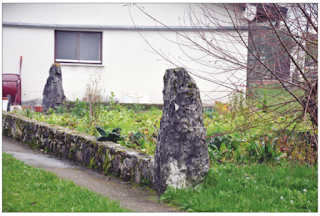
And compare this with other weather controlling Slavic rituals involving sky pointing "weather stones"...See, these weather stones have the same shape as the stones from the White Cross...I talked about them in my post "Weather stones"...


Source of info about the shrine and related rituals:

Pleterski, A. 2015, Preplet 3 in 4, preloška "Beli Križ in Triglavca ter Zbruški idol", in: Nesnovna krajina Krasa