Showing posts with label Slavic folklore. Show all posts

Sunday, 30 August 2026

Bird hills

A map from "Tičnice iz naravoverja: zanesljivi kažipoti v slovensko prazgodovino" [Bird-hills from Natural Religion: Reliable Waymarks of Slovene Prehistory] self published book by Leopold Sever in 2013. 

It is showing "gradišča" [hill-forts] (blue circles) and "tičnice" [bird-hills] (red circles) in the historical  Slovene regions in Slovenia and southern Austria...

In Slovenia, there are currently more than 200 hill-forts known as (gradišče) and more than 200 bird-hills known under various names (Tičnica, Tičn’ca, Tičistan,  Tičerca, Tičnik, Tičevo, Na tičnici, Tičjak, Tičjek, Križ na tičnici, Ptičjek, Za tičnico, etc).

According to local lore, these were the hills where people once performed religious ceremonies (???), fed birds (???) and "exposed their dead to the birds so that the birds could carry the soul of the  deceased into the sky" (???) before burials...Oh and they believed that these hills were haunted and should be avoided after dark...

Thanks to @another_barbara for alerting me to this.  The book is mentioned in this paper:

Staroverstvo - the Old Religion - the Slovene Pre-Christian Religion

In several parts of Eastern Bosnia and Hercegovina, at the end of the wheat harvest, a patch of wheat is left unharvested "for God's birds". 

In pre-Christian times, Slavs believed that souls of their dead entered birds and through birds entered heaven, Iriy. So feeding birds with grain was basically a form of feeding the ancestors, sacrificing to the ancestors...

Scandinavians did the same, although they don't seem to remember why...

I talked about this in several of my posts: NavBird weddingJulenek...

Slavs also believed that the bountiful grain harvest was direct result of the good will of the dead ancestors...

And that good will was the result of their descendants remembering them and providing them with food (grain, bread) and drink (water, milk, red wine).

So...

I talked about the importantce of feeding the dead with bread in several of my posts like "Soul breads" "Dead man loaf"... 

According to the Serbian folklore, it is important that the food served to the dead contains "a bit of everything that land gives birth to". It was believed that the dead are the source of life and that they give back manyfold what we give to them...

It is important that the food for the dead contain especially "a bit of all the grains" again because the dead will give us back manyfold of what we give them... 

This is the root of "Koljivo" the meal made from boiled grains, nuts, raisins and sugar used in the Eastern Orthodox Church for commemorations of the dead...


The origins of koliva predate Christianity. In the Ancient Greece, panspermia, a mixture of cooked seeds and nuts, was offered during the pagan festival of the Anthesteria, which was primarily concerned with placating ancestral spirits...  

So when a priest tells you that you should not bring food to the grave for your dead, because that is a pagan custom, and that instead you should make koljivo, which is Orthodox Christians custom...

Serbian ethnographer Veselin Čajkanović believed that originally the sacrifice offered to the dead included blood sacrifice as well. The meal contained not just plant food, but also one of each type of farmed animal, ritually slaughtered, drained of blood, and roasted...

Blood was given to the dead, as it was their favourite drink...I talked about blood sacrifices in many of my posts...
 And the meat was eaten by the living...

Again all of this was done because people believed that their dead are the ones who "make the crops (and especially grain) grow"...

Depiction of Diduch (grandfather), symbolic representation of the ancestral spirit which governs the lives of the living (and most importantly determines how good grain harvest will be). From Central European Slavic mythology / folklore. 


I talk about Diduch and it's symbolic representation in my post "Diduch"...

Sunday, 27 July 2025

Walpurgis Night

Illustration by Bernard Zuber for Maurice Garçon’s La Vie Execrable de Guillemette Babin, Sorciere, 1926. 

May Day Eve (April 30) is across Northern and Central Europe known as Walpurgis Night, the night when everyone is trying to "ward off, scare, witches"...

Why?

Maybe this has something to do with the old Celtic calendar which divided the year into two halves:


Winter (Samhain, 1st of Nov - Beltane, 1st of May)

Summer (Beltane, 1st of May - Samhain, 1st of Nov)

I talked about this in my post "Two crosses"...

This division of the year, is btw based on the old transhumance shepherd calendar:

Lowland grazing and lambing Oct/Nov - Apr/May

Highland grazing and milking Apr/May - Oct/Nov

I talked about this in my post "April"...

In Serbian Orthodox calendar, the beginning and the end of the "Time of Dragons", the hot sunny half of the year, is marked (guarded) by Two Georges, Summer and Winter St George('s day)...I talked about this in my post "Two Georges"...

This is important to know as a lot of old traditions linked to Beltane were migrated to the Summer St George day...

Where do witches come into the picture here?

Remember this: Hey, you Halloween witches, dressing up in black on the first day of winter...You know that The Witch here is The Hag, Winter Earth, Baba, Cailleach, The Dark, Veiled One...Here she is, all in black, with bare branch, on the four seasons Roman mosaic from the Bignor

The witch here is the Old (Winter) Mother Earth. 

In the Polish Carpathians we find this saying:

"Baba (Grandmother) is already frozen" meaning "The mountain tops are covered with frost or the first snow". 

I talked about this in my post "Gryla" about Winter Hag, Winter Earth...

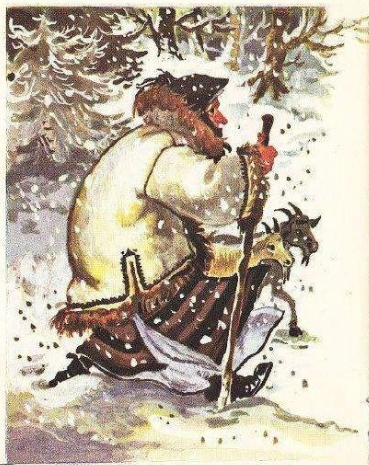
Baba Dochia was an old woman who insulted the month of March. So, while she was going up the mountain with a herd of goats (symbols of winter), March borrowed frosty days from February and froze her to death...

I talked about this legend from Romania in my post "Baba, cold, winter"...

Slovenian folk play called "Baba (grandmother) and Ded (grandfather)": "As they get older he gets weaker and she gets stronger. At one point she takes over him and rules until spring".  

This makes a lot of sense if Baba (Earth, Yin, Cold) and Ded (Sun, Yang, Heat)...


Ever changing Yin-Yang symbol is most likely description of the ever changing daily amount of light and darkness and the effect this change has on Earth's temperature...

More about it in my post "Yin and Yang"...

The winter earth is actually depicted as a witch in the Snow White. 

Crab apples are the last fruit to stay on the branches in Continental Europe, well into winter. 

Winter, which was imagined by our ancestors as "an old hag, and old witch" veiled in black, the bringer of death...

The one Slavs called Morana (the goddess of death) and Marzana (the goddess of cold). From my post "Snow-White"...

Some Slavs performed burning of the witch of winter/goddess of death at the beginning of spring (Jan/Feb)...

"Maslenitsa" by Simon Kozhin. 

As I said, Slavs equated The Goddess of Death, Morana (mor=death) with The Winter Earth, Marzana (marz=frost). She is ceremonially burned (warmed) or drowned (thawed) or both (to de sure to be sure 🙂) during Slavic spring festivals...

Here are some posts in which I talk about this ritual and related customs: "Gryla", "Party" "Bannock", "To kill a witch", "Baba's day", "Living stone"...

And some Slavs performed burning of the witch of winter/goddess of death at the beginning of summer (Apr/May)...

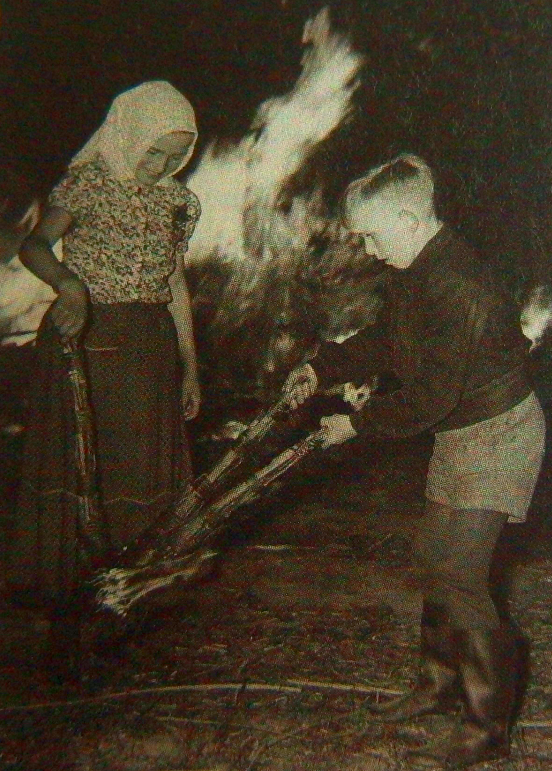
Like Sorbs (Slavs) from Germany, who at the end of April perform "Chodojtypalenje" (the witch burning). A large stack of branches is piled and a straw witch effigy is placed on top. The whole thing is then set ablaze symbolically "killing winter" (witch=hag=winter) 

As I said above, in Serbian and Celtic calendar, year had two seasons: winter Samhain (start of November) to Bealtaine (start of May), and summer Bealtaine to Samhain. Hence Sorbian witch burning at the end of April, just before the start of summer...  

Here is a picture of one of these "witches" (hags) being burned. 

Christianised version of this custom is Walpurgis Night. "As a result of Saint Walpurga's evangelism in Germany, the people there converted to Christianity from heathenism. Saint Walpurga was also known to repel the effects of witchcraft..." 😉

I think that by now you can all see that what was burned on these bonfires was not a witch but the Hag, Ugly, Evil, Winter earth, The Goddess of Death. Who is transformed, every spring, by the fire of the sun into Beautiful, Good, Summer Earth, The Goddess of Life...This "burning" is not destruction but transformation by fire...

The fire lit at these ceremonies is supposed to ignite the reproductive fire of the mother earth. We don't want frigid winter hag, we want hot spring maiden 🙂 burning with desire for her young sun lover. Without this fire there is no life...

In the Balkans they also performed the scaring of the witch of winter

As part of end of winter, beginning of summer rituals, men and boys in Bosnia blew willow horns to scare the witch (winter) away...As I said, the old Serbian year, just like the old Celtic year, was divided into summer (Apr/May-Oct/Nov) and winter (Oct/Nov-Apr/May)...

I talked about this in my post "May horns"...

This link between Mother earth and Yin, dark, wet, cold weather, resulted in the women being the ones who in Slavic tradition performed Yin, dark, wet, cold magic. 

I talked about this in two posts, "Weather stones", about the use of "weather stones" among Slavs and "The last megalithic ritual in Europe", which talks about a ritual from Belarus, where women (Yin, dark, wet, cold) raise Dabog's (sun and rain god) stone during drought to get cool and wet weather...

And in the post "Thunder book" where we read about the prosecution of female witches in medieval Serbia for performing weather magic...

The association between (Yin, dark, wet, cold) magic and women seems to have been common in the past in the rest of Europe too. 

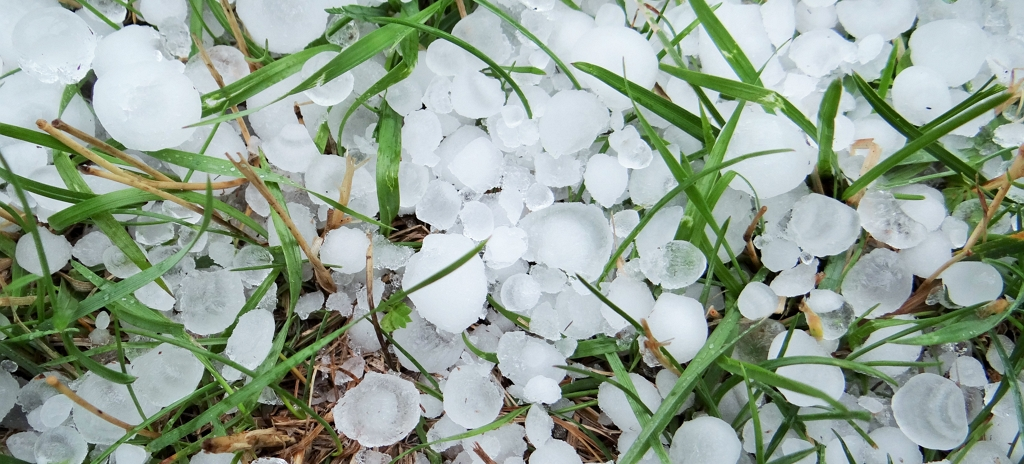
Two witches conjuring a hailstorm, an illustration from the 1489 book "De Lamiis et Pythonicis Mulieribus" by Ulrich Molitor which talks about weather altering magic (witchcraft) performed by women...


Did you know that the sudden climate change which resulted in the medieval mini ice age was blamed on the weather controlling witches and was the excuse for the subsequent witch-hunt? I talked about this in my post "De Lamiis et Pythonicis Mulieribus"...

Now that we know who witches were, I think it is interesting that witches seem to have liked riding on two things which are both associated with storms and winter: brooms and goats...

Broom...Remeber my post "Donderbezem" about Donderbezem (thunder broom), a protective symbol used in Holland and northern Germany as a protection from lightning strikes and evil spirits.

Goat...Goat is universally associated with dark, cold, wet half of the year (Oct/Nov - Apr/May) in Europe, Eastern Mediterranean, Western Asia, Mesopotamia, Central Asia, Iran...This is because ibex goat mating season starts in Oct/Nov and the ibex goat birthing season finishes in Apr/May...


I talked about symbolism of ibex goats in many of my posts, like 

Europe:

"Pitys", "Goat in European culture", "Patera of Rennes", "Gotland sun stone with horses and ibexes"... 

Levant:

"The tree of life/light", "Lachish animal calendar"...

Mesopotamia:

"Feast plaque from Louvre", "Green pastures", "Problems with Abzu", "Relief from Dur Sharrukin", "Goatfish"...

Iran: 

"Flamingos from Susa", "Goat carrier", "Iranian goat of rain", "Strider", "A vessel from Tepe Hissar", "Rhubarb and ibex"...

Interesting, right?

Anyway, don't just sit there. Go burn a witch. We all had enough of winter...

To read more about ancient animal and plant calendar markers, which were the key to deciphering all this, start here…then check the rest of the blog posts related to animal calendar markers I still didn't add to this page, and finally check my twitter threads I still didn't convert to blog post...I am 9 months behind now...

Thunder book

In the Annals from 1605, the Dubrovnik writer Jakov Lukarević says that Serbian kings Stefan Nemanja and Dušan "persecuted witches", whom he calls "evil women from Mount Hemo", and burned their book of magic, which was in Slavic tongue called Grominjak (Thunder book)...

That book probably had spells and rituals for affecting meteorological phenomena. St. Sava, in the "Zakonopravilo", condemns the magical summoning of hail, although he himself summons hail, in the story about the Hungarian king.

St Sava from Serbian folktales basically replaced Dabog, the old Serbian supreme god and took all his magical powers, including weather control...I talk about Dabog as both sun and rain god in two article "The last megalithic ritual in Europe" and "Weather stones" about the use of "weather stones" by Slavs to manipulate weather. Like here, where women raise Dabog's stone during drought to get cool and wet weather...


Another interesting bit here is that it is women who were always associated with rain (hail) storm rituals. 

Did you know that the sudden climate change which resulted in the medieval mini ice age was blamed on the weather controlling witches and was the excuse for the subsequent witch-hunt. I talked about this in my article "De Lamiis et Pythonicis Mulieribus" about the 1489 book "De Lamiis et Pythonicis Mulieribus" by Ulrich Molitor which talks about weather altering magic (witchcraft) performed by women...

This is an illustration from the book depicting "two witches conjuring up a destructive (hail) storm"...


In South Slavic folklore, cold, wet weather is "feminine"...Yin...

Which is why, in South Slavic folklore, it is a female dragon, ala, that brings hailstorms and unseasonably cold, wet weather during summer months, which destroys crops...I talked about this in my article "Pozoj"...

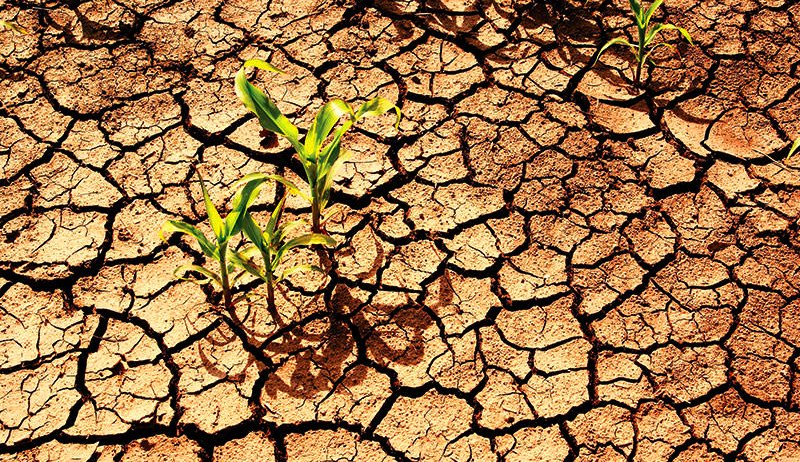
While male dragon, zmaj, brings hot, dry weather which brings drought, which destroys crops...Yang...I talked about this in my articles "Scaring off the dragon" and "Letnitsa treasure"...


Thursday, 15 May 2025

Blinged goddess

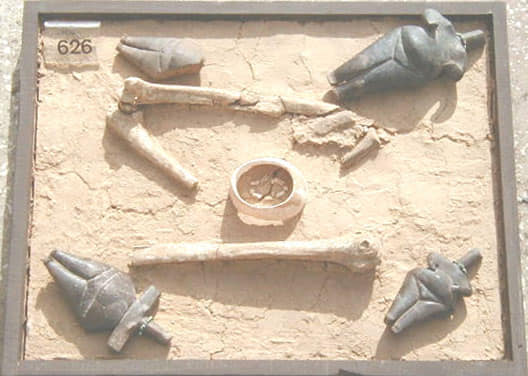
Ceramic figurines with bronze necklaces, found in the Durankulak settlement of the  Late Neolithic Hamangia culture, which flourished in Dobruja (Romania and Bulgaria) during the period 5250-4500 BC. The people of this culture seem to have been immigrants from Anatolia...

The figurines were found together as a group...

Archaeologists also found figurines with bracelets...

And women buried with lots and lots of jewellery...BTW, all the figurines with jewellery were female...

Here are some examples of the jewellery found in the Hamangia culture graves...


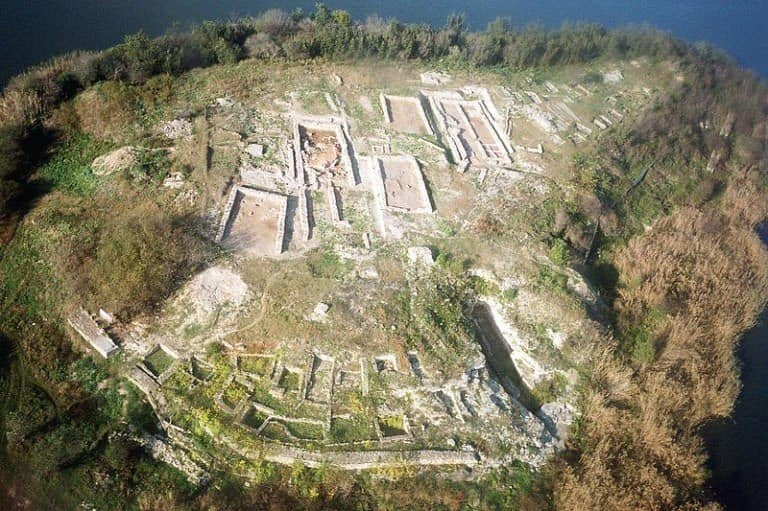
Durankulak settlement on Golemija ostrov in Bulgaria consisted of rectangular wattle and daub houses with stone foundations...Not huts...


The same kind of houses (barns, cowsheds) which were until the 20th c still built in the Balkans, except the roof was covered by thatch...


Sources: "Hamangija culture", "Durankuluk"

ARCHAEOLOGICAL COMPLEX DURANKULAK (Regular Excavations on Golemija ostrov Tell in 2018)

ARCHAEOLOGICAL COMPLEX DURANKULAK. Regular Excavations on Tell Golemija ostrov in 2020. (Presentation 2021)

NEOLITHIC SETTLEMENTS ON BALKAN a comparative study between Durankulak and Sitagroi

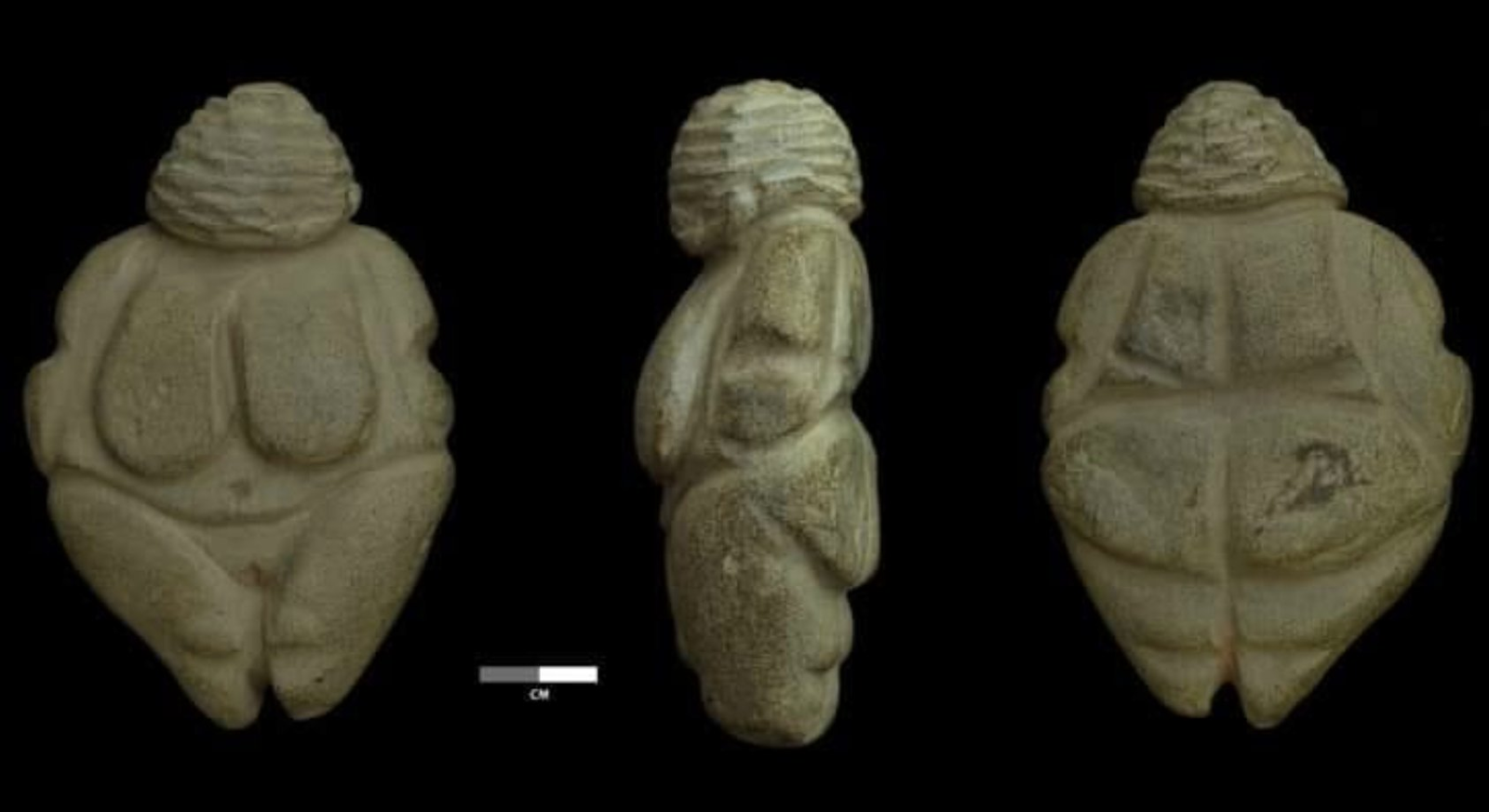
PS: These Neolithic Venus figurines are again faceless, with exaggerated sexual characteristics. Basically depicting the idea (goddess) of fertility. Just like Palaeolithic Venus figurines.

Pic: 17,000 years old Venus of Piatra Neamț, discovered on June 21, 2019, in the area of Piatra Neamț, Romania. 

Talked about this in my posts "Palaeolithic Venus figurines", "The faceless one", "Motanka". 

At the same time when Durankulak people made their faceless goddesses, a gynomorphic (woman like) figurine was made of "soil mixed with chaff and grain seeds" in Grčac, Serbia. by the people of the farming Proto-Starčevo culture, 6200-5500 BC. Direct symbolic link between earth, grain and female fertility. Basically, "Mother of Grain". 


The fact that the people from Durankulak who made these Fertility (Mother Earth) figurines and then put necklaces and bracelets on them, the same type of jewellery worn by the local women, tells me the they have also already symbolically linked the the Earth fertility and female fertility. This symbolic link is still found in Europe, particularly in farming communities in the Balkans and Eastern Europe...

I talk about this in my article "Baba, last sheaf of wheat" and the linked articles...

Wednesday, 23 April 2025

Whipping fresco

5th c. BC Etruscan fresco, Tarquinia, Tomb of the whipping...Depicting...Well you can all see the obvious bit that it is depicting...

I will not talk about that. I will talk about the things "hidden in plain view", that most people who look at this fresco don't see 🙂

Do you see the guy on the left who is ... the woman from behind and also whipping her?

What's with the green branches (growing out of) on his head? Are these willow branches? They look like willow twigs to me...

This insignificant detail 🙂 indicates, at least to me, that this is not just a depiction of an ordinary "fun with friends"...I think this is a ritual, a fertility ritual...

Whose traces, a believe, we can still find among Slavs...As part of willow related spring, rebirth (resurrection) of nature, fertility folklore...

Here is why I think that:

Saturday before Palm Sunday is in Serbia known as Vrbica (Willow day). On that day kids and young women make and wear wreaths made of willow twigs and flowers...

On that day, willow twigs with young leaves and flowers, like these, known in English as Pussy Willow are brought to the church where they are blessed the next day, Palm Sunday, which is in Serbia known as Cveti (Flowers day)...

According to the church, this whole willow business is the consequence of the fact that there are no palms in Serbia, and people replaced palm branches with willow branches...Move on, nothing so see here...

There are few problems with this explanation...

Vrbopuc (Willow burst) is an expression which in Serbia means "part of spring during which willow starts growing new green shoots"...

Vrbopuc is also a term used in Serbia for the period of sudden surge of sexual hormones in teenage boys and girls...

Basically willow was directly linked with human fertility...Which is why in the past in Serbia, girls used to make belts from willow twigs (wrap willow twigs around their bellies), and wear them going to the rivers to perform ritual baths performed during this time...

Among Slavs, willow was directly linked with water, water divination....Dodole, young women which took part in rain bringing magic rituals performed during hot summers also wore willow twig belts...

Mother Earth = Yin = Winter, Cold, Wet, Night, Down = Female fertility

Father Sun (Sky) = Yang = Summer, Hot, Dry, Day, Up = Male fertility

Which is why rain, water magic is female magic...

And which is why willow, the tree which grows next to water, is associated with rain, water and female fertility, female sexuality...

Hence ritual whipping of teenage girls by teenage boys using willow whips, performed in the Czech Republic, Slovakia on Easter Sunday...

The teenage boy first sang a a ritual song about spring, bountifulness and fertility, and "the young woman then turned around and got few whacks on her backside with the willow whip"...

Sounds familiar?

This was done "so girl would be healthy, beautiful and fertile throughout the following year"...They would also splash each other with water...

Cause it is water that makes land fertile...And Slavs directly linked female and land fertility...

I talked about Slavic willow folklore in my post "Willow in Slavic folklore"...

Sooooooooo...What do you think? Just a casual threesome or a fertility ritual?

For those who ask if there is a link to Lupercalia?

These are symbolically similar rituals. During Lupercalia, young men whipped women with sacrificial goat skin thongs. Dead goat was, and still is in Europe, symbol of spring...Goat being the symbol of winter. I talked about this in my posts "The birth of Romulus and Remus", "Goat in European culture"...

That's that. Interesting? I think so. 

To read more about ancient animal and plant calendar markers, start here…Then check my twitter threads I still didn't convert to blog post...I am way way behind...