Showing posts with label Triglav. Show all posts

Wednesday, 17 August 2022

White Cross

This is the reconstruction of the Beli križ (White Cross) shrine which was once located in the valley southeast of the village of Prelože, Slovenia...

The shrine was destroyed during the First World War. But the locals preserved a vivid memory of it and of the rituals performed around it. These were collected by ethnographers during the middle of the 20th century...

As you can see, it was "a cross in a circle" made of stones, with four stones in each quarter of the circle and four pointy rocks on the ends of cross hands...

Basically this is a so called "sun cross", which symbolises a solar year with four season. Ever spinning solar wheel. This is confirmed by the fact that a bonfire was lit in the field near the shrine on Kresovanje (Bonfire night, Midsummer night)...


In the center of the "shrine" was a stick on which young green tree branches were attached, symbolising a young green tree. Or maybe this cross was rebuilt every year around a real young tree. This is not clear from the original text...This tree symbolically grew during the fertility ceremony which was performed around the cross in the spring "when the foliage turned green", which in the Prelože area happens in April...The carpet of crocus flowers across the slopes of Velika Planina in Slovenia, April...


It is quite possible that this ceremony took place on Jurjevo (St. George’s Day), the old Jarilo (Slavic Young Sun God) day...The field where the White Cross shrine once stood is linked to St George...I talked about him and why he is "The Dragon Killer" in this article "Letnitsa treasure"...

A very interesting metal plaque from the so called "Let­nit­sa Treas­ure", a 4th c. BC Thracian hoard discovered near Let­nit­sa, Bulgaria...This one depicts one of the most common themes from Balkan fairytales: a princess being kidnapped by a dragon...

Jarilo (Jura), whose name means both "the brightly burning one" (sun) and "the young one, the green one" (bringer of spring, summer, The Green Man) was in other Jurjevo rituals from Slovenia represented by a living walking tree.

Zeleni Jura (Green Yura) walking the earth. Part of Jurjevanje, celebration of the return of Jarilo, Jura, The  Young Sun God who brings spring...Today performed on St George's day...Tells you a lot about the true Identity of St George...


This ritual is performed Bela Krajina, area inhabited by descendants of Serbians who migrated here during Turkish invasions of the Balkans. Today split between Croatia/Slovenia...This is the original Green Man...

The Sun God's name Jarilo (pronounced Yareelo) comes from the root "jar" (yar) meaning: young, green (Life giving warm sun of green spring), but also brightly burning and raging, furious (Life destroying burning sun of yellow summer)...

Interestingly, in Sanskrit, har (cognate of jar, yar) can also mean green and yellow... 

So the fact that a (symbolic) young green tree, symbol of the sun god Jarilo, was "growing" in the middle of the shrine shaped like a sun cross, points at the symbolic meaning of this shrine: solar year and the climate which it creates...

And it is this climate which people of Prelože were trying to control...As part of the ceremony at the White Cross, four young girls span around the circle interconnected by ivy branches, singing prayers for "sun, rain and abundant crops"...

They prayed to "Dajbogec" (Giving god), another name for Dabog, the old Slavic Sky God...

In Serbian the expression "On vedri i oblači" means "he rules", "he has absolute control, absolute power". Literally this expression means "he makes the sky clear and cloudy"...I talked about this in my post "The power of the thunder giant"...

Dabog, Dajbog was also another name for Triglav, Trimurti, the Supreme god...I talked about Triglav in several of my posts: "Lugus or Triglav", "When the bride dies soon after the wedding", "Sun thunder fire", "Riddle", "Krkava Triglav stone", "Triglav, Trojan, Trinity, Trimurti, Agni"...

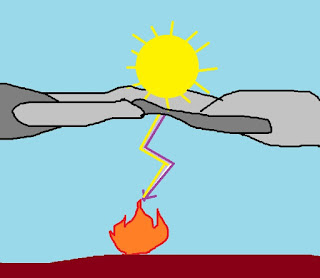
This is what Triglav is, one God with three faces: Sun, Thunder, Fire...

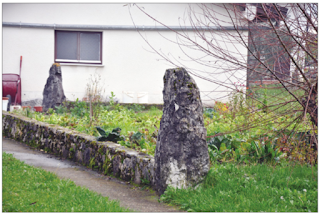
It is very interesting that the "shrine" contained pointy upward stones and that at this shrine girls (women) prayed to Dabog for good weather (just enough rain and sunshine) so that their crops would yield abundantly...

Because this is not the only place where we find large stones used in weather rituals involving Dabog and performed by women...

In his 1925 paper "The Ring of Nestor", Sir Arthur Evans, the excavator of Knossos, mentions a curious rain-making ritual which was performed in Ibrahimovci, near Skoplje, Macedonia, during droughts. 

Pic: Altar dedicated to Jupiter, Juno und Minerva, Macedonia


This is 1925 we are talking about. At least 1500 years since Jupiter was officially a god of rain...And yet, uneducated, illiterate SLAVIC villagers in Macedonia still remembered him in times of desperation...

What is very interesting is that this altar "was lying face down normally but was lifted when the rain was needed". Compare this with this Slavic rain making ritual from Belarus in which Dabog's stone is ceremonially lifted...I talked about this in my post "The last megalithic ritual in Europe"...

And compare this with other weather controlling Slavic rituals involving sky pointing "weather stones"...See, these weather stones have the same shape as the stones from the White Cross...I talked about them in my post "Weather stones"...

Source of info about the shrine and related rituals:

Pleterski, A. 2015, Preplet 3 in 4, preloška "Beli Križ in Triglavca ter Zbruški idol", in: Nesnovna krajina Krasa

Sunday, 31 July 2022

12 Olympians

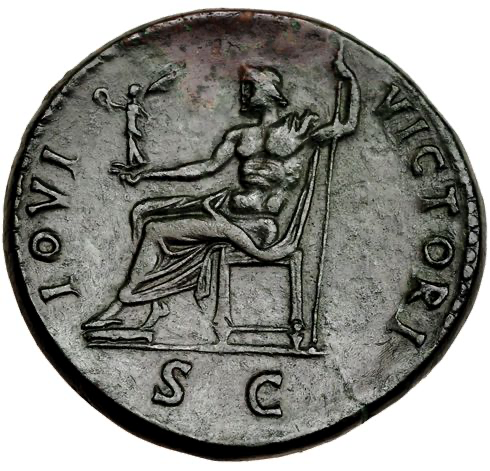
In this article, I would like to again point at things hidden in plain sight...Around 435 BC, Greek sculptor Phidias made a giant seated statue of the sky and thunder god Zeus for the Temple of Zeus in Olympia...

Unfortunately the statue was destroyed during the 5th century AD; but we know what the statue looked like from Greek and Roman coins...

And from written records, like the one left by the 2nd c. AD geographer and traveler Pausanias

What I want to talk about here is what Pausanias says about the platform that supported the throne. He says that it depicted a line of paired deities standing between the sun and the moon...

Zeus and Hera...and Hermes and Vesta close to Hermes...and Eros receiving Aphrodite...and Apollo and Artemis...and Athene and Hercules, and at the end Amphitrite and Poseidon...

They were all coupled based on some mythological link that connected them. What is interesting is that Phidias depicted Hermes coupled with Hestia...Why? 

What is the relationship between these two deities? They are not husband and wife, nor brother and sister, nor mother and son nor protector and protege...

Holy fire and a Messenger of Zeus? What could connect the two? 

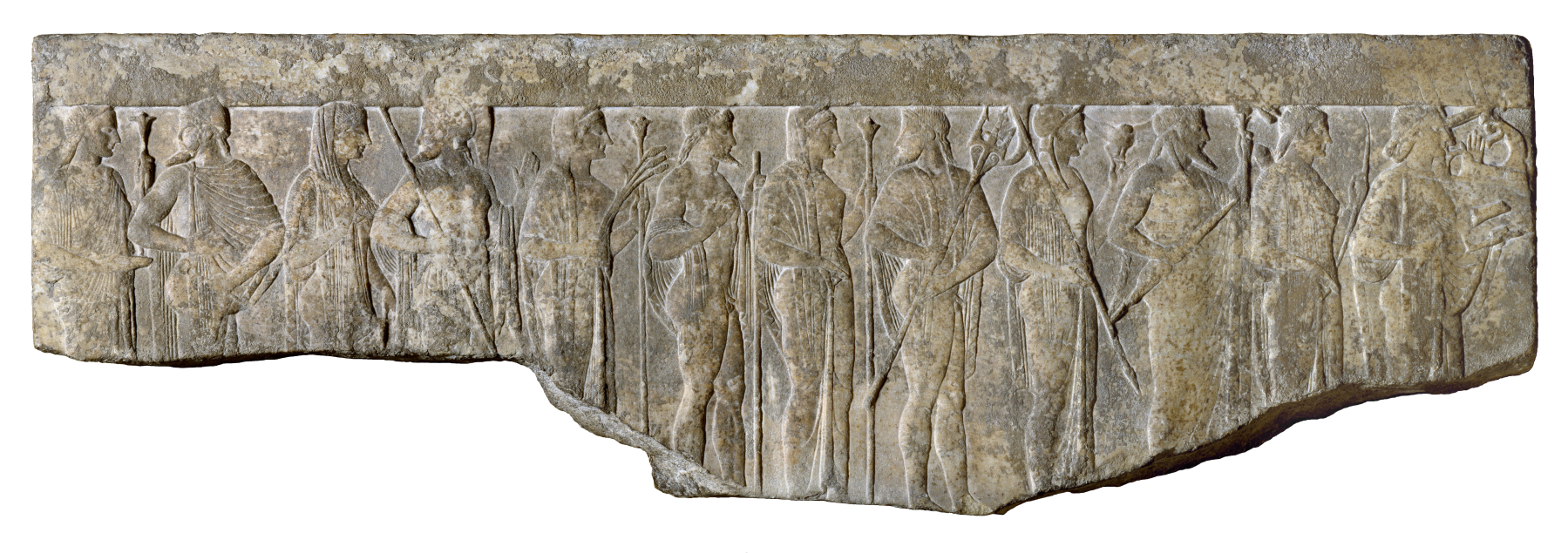
That these two were not put together by accident on the Zeus's throne, can be seen from this Fragment of a Hellenistic relief (1st c. BC–1st c. AD) currently in the Walters Art Museum and depicting the twelve Olympians...


From left to right: 

Hestia, Hermes, Aphrodite, Ares, Demeter, Hephaestus, Hera, Poseidon, Athena, Zeus, Artemis, Apollo

Here they are, Hestia and Hermes...

Hestia and Hermes were also linked together in The Homeric Hymn 29 to Hestia...

"Hestia, in the...dwellings of all, both deathless gods and men who walk on earth, you have gained an everlasting abode and highest honour...for without you mortals hold no banquet...and you, Hermes, messenger of the blessed gods, bearer of the golden rod, giver of good...be favourable and help us, you (Hermes) and Hestia...come and dwell in this glorious house in friendship together; for you two, well knowing the noble actions of men, aid on their wisdom and their strength..."

Really, what's going on with these two? 

Well, lots of people have asked this question before me...

Jean-Pierre Vernant asked this question in 1969 in his paper "Hestia - Hermes : The religious expression of space and movement among the Greeks"

Patricia J. Thompson asked it in 1994 in "Dismantling the Master's House: A Hestian/Hermean Deconstruction of Classic Texts"

Apparently this was still an unanswered question in 2001, so Jean Robert asks it again in "Hestia and Hermes: The Greek Imagination of Motion and Space"

The explanation given by Jean Robert, is that Hestia and Hermes are coupled because they express two opposing, but linked concepts...

Hestia, whose place is at the hearth, in the center of the house, rules over the inside. Hermes, whose place is the door, at the edge of the house, rules over the outside...Hestia anchors, Hermes makes mobile...

Cool. But I think that there is much better reason for this seemingly strange association. Guess what was the first thing Hermes did after he was born? He escaped his cradle, and managed to steal Apollo's cattle...


Funnily enough the thieving Hermes was on the above vase depicted as an adult...With all his attributes including the caduceus, his magic staff...Important detail! Artistic freedom I suppose?

Anyway, after stealing Apollo's cattle, Hermes then wanted to make the first ever sacrifice to the gods. But he couldn't. Cause in order to do so, he needed fire, Hestia, to burn his offerings in...But he had no fire, and apparently, making fire was an art still not invented...

Sooo: "He [Hermes] chose a stout laurel branch and trimmed it with the knife ...held firmly in his hand: and the hot smoke rose up. For it was Hermes who first invented fire-sticks and fire"...From "Hymn 4 to Hermes"...

Wow...


A very strange thing to be attributed to a messenger of Zeus...

Or is it? 

Remember the article about this excerpt from the Homeric Hymn To Hestia: "Hestia, you who tend the holy house of the lord Apollo...come now into this house...having one mind with Zeus the all-wise..."?

In it I talked about how strange it was that Classical cultures still talked about the invention of fire making as if it was a really really big deal?

And I also talked about the fact that before people learned to make fire themselves, Fire (Hestia) descended to earth from the Sun (Apollo, Helios) through Thunder/Lightning (Zeus)... 

So if fire (Hestia) was made (Fathered) by the thunder/lightning (Zeus) then Hermes, "the messenger of Zeus", is the perfect inventor of the fire stick and fire making... 

Remember, Hermes was not the only messenger of Zeus...He shared his workload with Iris. (Attic Red Figure Stamnos, ca. 480-470 BC, Louvre)

Look they are both holding caduceus stick...

Actually, before Hermes got the job, Iris was the sole "speaker of messages of Zeus"...The only "voice of Zeus"...Which is kind of important...

Remember the article "Iris" in which I proposed that Iris might not have been the personification of the rainbow...But that instead she could have been the personification of thunder/lightning, the true "voice of the thunder god"...


Remember that before people invented the fire stick (sorry before Hermes invented the fire stick), Zeus used lightning to light fires on earth...Lightning was the "fire stick" of the Thunder god...

Thunder, which is inseparable from lightning, is the "voice of thunder god"...Which, as I explained in my article about Iris, I believe is the meaning of the "speaker of messages of Zeus"...

If Iris is personification of thunder/lightning, and Hermes is her later replacement as the messenger of Zeus, then Hermes would be perfect god to invent fire stick...The human replacement for thunder/lightning...

That's it...

I mean could there be a more direct link between Hestia and Hermes? Without Hermes there would be no Hestia...To me this is glaringly obvious...Maybe too obvious for some...

But if you "miss" (ignore) this, you can then go ahead and write endless academic papers trying to answer the question "why are Hestia and Hermes linked together"...

Anyway, this brings me back to one of my favourite unanswered questions: why was invention of fire such a big deal in all our mythologies, if people knew how to make fire, like, for ever?

Having one mind with Zeus

"Hestia, you who tend the holy house of the lord Apollo...come now into this house...having one mind with Zeus the all-wise..." from the "Homeric Hymn To Hestia"...

What does this mean?

Maybe the same thing as this: In Hindu mythology, Agni (fire) was believed to have three manifestations: Sun, Lightning, Fire...Which is why he had three heads...I talked about Agni and why he likes riding on a ram in my post "The ram of Agni"...

Just like Slavic Supreme god Triglav (Three headed)..."Because it is a great secret how Svarog (heavenly and earthly fire) is at the same time Perun (thunder) and Svetovid (Sun)"...I talked about Triglav in my posts "Triglav Trojan Trinity Trimurti Agni" and "Lugus or Triglav"...

Interesting right? Cause before people learned how to make fire, fire descended from the sun through lightning...

By the way, modern science seem to confirm that it is indeed Sun (Surya) which gives power to Indra (lightning) which becomes Agni (fire)...I talked about this in my post "Sun thunder fire"...


Or, Sun (Apollo, Helios) through Lightning (Zeus) gives birth to Fire (Hestia)...Hence "one mind", one essence...

Basically, sun gives birth to fire through lightning...Which is why Surya, the sun god, had a daughter, Tapati, whose name literally means "warming", "the hot one", "burning one"...Who was apparently the same as Scythian Tabiti...And Herodotus claimed that Tabiti was the same as Hestia...

And it is because the hearth fire is the same fire burning inside of the sun, that people make sure the hearth fire burns through the winter solstice (Christmas) night, the longest night, "so the sun's fire doesn't get extinguished"...I talked about this in my posts "Badnjak", "La buche de noel" and "Yule log in English tradition"

This fire which descended from the sky, was imagined as a firebird which came down from the sky to earth to nest. It had to be found, caught and brought home...Hence legends about "the hunt for the firebird whose one feather can light up the whole room"...I talked about this in my post "Firebird"...

How old are these legends? Well they most likely predate the moment when "Prometheus stole the fire from the gods" (thunder god to be more precise)...I talked about this in my post "Prometheus"...

Or, before people accidentally discovered fire making while drilling...I talked about this in my post "Fire-drill"...

And how long ago did people become masters of fire, considering that "fire-drill" was still worshiped as deity in Mesopotamia...I talked about this in my post "Holy fire-drill"...

How long ago did people become masters of fire, considering that fire making or fire stealing or fire catching was still the stuff of legends during classical times?

How long ago did people become masters of fire, considering that hearth was the center of the house cult, the house altar in so many Eurasian cultures until recently? 

And considering that making sure that hearth fire never died was so important to Eurasian people until very very recently? 

And considering that "live fire pulled out of wood" (kindled using fire drill) was believed to have magic properties by may Eurasian people until very very very recently? 

Like among the Serbs...I talked about this in my posts "Fire goddess", "Bride and hearth", "Verige", "Live fire"...

I am not saying that people have not been using fire for a very very long time...But I am pretty sure that the making of fire was a pretty recent invention...Neolithic...Mesolithic at the earliest...Which makes legends about the the time when people had to find or steel fire, before they learned how to make it, very very very old indeed... 

BTW, Hestia, (the etymology unknown, believed to be Pre-Greek) has only one cognate, Slavic word jesteja (yesteya) meaning "hearth, paved area around or in front of a hearth used for cooking food" which comes from "jesti" (yestee) meaning to eat...

Which would make Jesteja (Yesteya) the place where food was cooked...Which is exactly what hestia was...Not any fire...Domestic fire...The fire where food was cooked...

I talked about this in my post "Hestia"...

Saturday, 13 November 2021

Having one mind with Zeus

"Hestia, you who tends the holy house of the lord Apollo...come now into this house...having one mind with Zeus the all-wise..." From "Homeric Hymn To Hestia"...

What does this mean?

In Hindu mythology, Agni (fire) was believed to have three manifestations: Sun, Lightning, Fire...Which is why he had three heads...

Just like Slavic Triglav (Three headed)..."Because it is a great secret how Svarog (heavenly and earthly fire) is at the same time Perun (thunder) and Svetovid (Sun)"...

I talked about this in my post "Triglav Trimurti Agni"

Interesting right? Cause before people learned how to make fire, fire descended from the sun through lightning...Basically sun makes fire using its "heavenly fire drill", lightning...

By the way, modern science seem to confirm that it is indeed Sun (Surya) which gives power to Indra (lightning) which becomes Agni (fire)...I talked abut this in my post "Sun thunder fire"...

Basically, sun gives birth to fire...Which is why Surya, the sun god, had a daughter, Tapati, whose name literally means the "warming", "the hot one", "burning one"...

And it is because the hearth fire is the same fire burning inside of the sun, that people make sure the hearth fire burns through the winter solstice (Christmas) night, the longest night, "so the sun's fire doesn't get extinguished"...

And it is because the fire in the hearth is the fire that descended from the sun through lightning, that in Serbia, Yule log, the magic log that has to burn through the longest night of the winter solstice, "so sun's fire would not get extinguished" was traditionally a log from an oak tree, the holly tree of Perun, the thunder god...Pic: Kissing Yule log before placing in on fire...

I talked about this in my posts "Badnjak" and "La buche de Noel"...

This fire which descended from the sun, was imagined as a fire bird which comes down from the sky to earth to nest...

It then had to be found and "caught" and brought home...Which is why we have legends about "the hunt for the firebird whose one feather can light up the whole room"...I talked about this in my post "Firebird"...

How old are these legends? Well they most likely predate the moment when "Prometheus stole the fire from the gods"...I talked about this in my post "Prometheus"...

What does stealing fire from the gods mean? Did Prometheus steal knowledge of making fire from the gods? Or did people accidentally discover fire making while drilling?  I talked about this in my post "Drill"...


And how long ago did people become masters of fire? 

Considering that "fire-drill" was still worshiped as deity in Mesopotamia...I talked about this in my post "Holy fire-drill"...

And considering that fire making or fire stealing or fire catching was still the stuff of legends during classical times?

And considering that hearth was the centre of the house cult, the house altar in so many Eurasian cultures. And considering that making sure that hearth fire never died was so important to Eurasian people until very recently? Like among Serbs...

I talked about this in my posts "Fire goddess", "Bride and the hearth", "Verige" 

And considering that rekindling new fire was one of the most important annual ceremonies all over Eurasia until recently...Like in Slovenia for instance where all the fires in the village are ritually rekindled once a year from a communal fire...I talked about this in my post "Blessed fire from the fire fungus"...

But I am digressing...

The important thing here is that originally fire descended from the sun to earth through lightning...Which is why Hestia "tends the holy house of the lord Apollo" and "has one mind with Zeus"...

BTW, Hestia, (the etymology unknown, believed to be Pre-Greek) has only one cognate, Slavic word jesteja (yesteya) meaning "hearth, paved area around or in front of a hearth used for cooking food" which comes from "jesti" (yestee) meaning to eat. 

Which would make Jesteja (Yesteya) the place where food was cooked...Which is exactly what hestia was...Not any fire...Domestic fire...The fire where food was cooked...

Which is why in the "Homeric Hymn 29 to Hestia" we read:

"Hestia...without you mortals hold no banquet..."

I talked about this in my post "Jestija"...

Thursday, 1 April 2021

Lugus or Triglav

Two years ago I posted this picture 

Three headed Idol from Vaćani, Dalmatia, Croatia, probably represented Slavic god Triglav (Three headed, Trimurti) who was identified with Dabog, the supreme god of the Serbs. Similar ancient stone head was found in Ireland. I talked about it in my post "Triglav"...


Then yesterday I came across this article by Anne Ross: "A pagan tricephalos from Netherton, Lanarkshire"...And in it, she talks about three almost identical idols presumed to be Celtic...

The first one was found in Netherton, North Lanarkshire, Scotland


The second one was found in Marne valley, France


The third was found in Raphoe, County Donegal, Ireland. 

And according to the author, the Irish legends about the stone point to the possibility that it could depict the Celtic god Lugus, who was "one of three brothers" all called the same, basically Triglav (tricephalos)...

So is the idol from Croatia Celtic too? And what is the relationship between Lugus and Triglav?