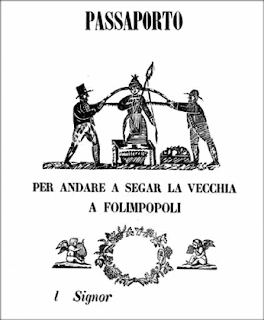
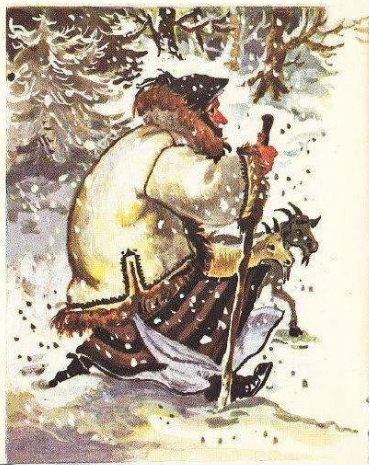
A while back @another_barbara posted this 1865 beehive panel image with this description: An interesting Shrovetide tradition from Slovenija "babo žagajo" (sawing of an old woman).

The other day wanted to write an article about this custom, and while looking around the net for more info on the subject, I came across 1960 paper by Niko Kuret "BABO ŽAGAJO, Slovenske oblike pozabljenega obredja in njegove Evropske paralele".
In which he presents all the different versions (he knew of) of the "SAWING OF THE OLD WOMAN" ritual found in Slovenian lands, and its European parallels...
Here I will translate the most interesting bits from this paper, and will then give my interpretation of the ritual.
Here we go:
In 1791, Anton Tomaž Linhart, in his "Attempt at a history of Corniola and the other southern Slavs of Austria, vol 2" mentioned a "ridiculous legend", which in the middle of Lent circulates among the people, and especially among the children:
In the past, during Lent, people used to lead an old woman out of the village and cut her in half. Considering that this legend was widely known and was everywhere the same, Linhart concluded that this was a "rituals" which was once really performed.
Ethnographic data collected in Slovenian villages in the second half of the 19th century confirmed that this ritual indeed still took place every Lent. And Niko Kuret states that the ritual was still performed in some villages in the second half of the 20th century.
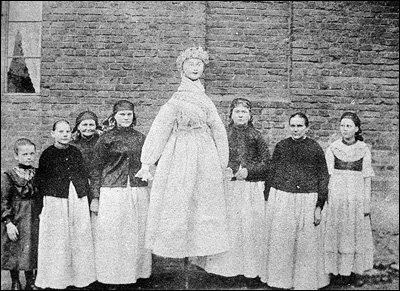
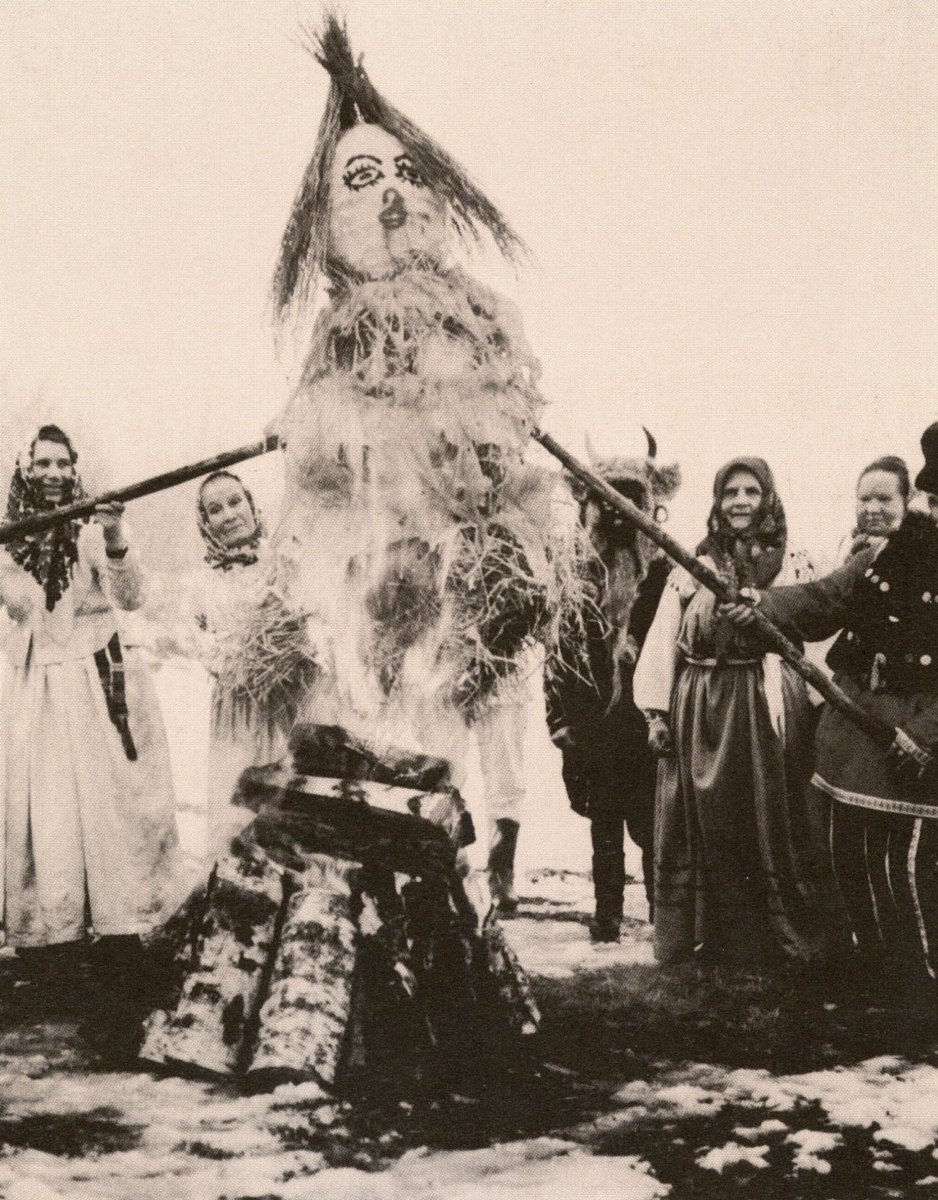
Except "the old woman" was not really an old woman, but an effigy of an old woman made of wood and straw and dressed in old women's clothes, that was cut in half, often on bridges, over running water, or next to running water, and the parts were then thrown into the water...
In the area between Bohinj and the eastern half of the Karavanke mountains, a log or a board with a drawing of a old woman was sawn instead of a wood and straw effigy.
In Carinthia, the hag was represented by a rope/thread which was cut in half...
Finally, in many places in Slovenia, the ritual cutting of the old woman eventually turned into a prank that people played with kids. They would send them somewhere to watch the cutting of the old woman which never actually took place. And they would miss lunch 🙂.
That's Slovenia covered. You can find a lot more details in the paper. The rest are examples of the same custom recorded in Italy, France, Spain, Portugal and Switzerland, organised by the specific subtype of the ritual and then the country.
As we can read in the 1983 book "I giorni del sacro" by Franco Cardini, "The burnings and/or sawings of "Vecchie" or "La Bianca" or "La Monaca" occurred almost everywhere in Italy"...
In some places, like in Florence, or in Reggio Emilia, the people first accused the old woman of everything that was wrong in the city, then she was put on a trial, condemned and then sawed in half. In some other places, like in Feltre, after she "made a will".
In some other parts of Italy, like in Campagna and Sicily, they hid a blood-filled bladder inside the doll and secretly cut it open during the sawing action. In the Ampezzan area, the effigy was stuffed with sawdust which represented blood of the wooden effigy.
A special form of the "Saw the old woman" custom, recorded in Tuscany in the 15th century. There they filled the old woman effigy with dried fruit, sweets and other goodies, which are removed from it during sawing and children, sometimes even adults, fought for them.
In Faenza, the old woman effigy, was decorated with necklaces and earrings made of dried figs, dried plums and chestnuts. The local children made rag dolls, stuffed them with dried fruit, carried them through the streets and shouted: "Sega la vecia!" (Saw the old woman).
Sawing of an effigy of an old woman (La Vieille) was also found in France. In the south, in Labastide-du-Vert, they dressed an effigy in a woman's dress and put an apron on her. They put it on a woodcutter's horse and sawed it.
Everyone around was cheering and singing along: "Pauvre grand'mère! On scie grand'mère ! Adieu, grand'mère" (Poor old woman! We're sawing old woman! Farewell, old woman)...
Around Quercy in the South of France, group of boys masked as "woodcutters" dressed a thin log in old female clothes and drove the "old woman" through the village streets. Finally they would stop on the village square and would start sawing the old woman in half.
While sawing they sang:
Resseguen la vielha, la vielha. Resseguen la vielha, aneit. Adiu paura minina, tu morés recegada, quai malur ! Tant milhor ! éra sorciera, zo méritava ben (Ocitan)
We saw the old woman, the old woman. We're sawing the old lady today! Goodbye poor grandmother, you die sawn, what a misfortune! So much the better ! She was a witch, she deserved it (English)
The same rituals are found in Switzerland where the straw effigy of an old woman being sawn is called "la bagorda" (the ugly one). In Oberland they keep old, useless lumberjack saws in some places and bring them out once a year, for "raz'g'a la vela" (sawing of the old woman).
On the evening before Shrove Wednesday, when it gets dark, two boys would take this saw and would go through the village and would slide it back and forth across corner stones of several houses (sometimes specifically houses with young girls), with lots of noise and sparks...
During the middle of the Lent, a hostile mood is unleashed towards old women in general, and sometimes especially towards a certain old woman in the locality in particular.
Thus, in Marche, Italy, groups of boys noisily knock on the door of an elderly woman who has been chosen as the target of folk satire, calling her by name and shaming her.
They carry a doll with them, dressed in such a way that it resembles the unfortunate victim. The doll is then sawn in half in front of the victim's house "amidst the revelry and jokes".
In Berry, France, on Mid-Lent Wednesday, 10 to 12 year old children roam the streets. With wooden sabers in their hands, they chase old women if they meet them and even try to break into houses where they know an old woman lives.
Then they knead the image of the old woman out of clay and cut it into pieces with their wooden sabers, which they then throw into the nearby river.
In the Gers region of Southern France, a song was sung before Shrove Tuesday: "Aux jeunes il faut des souliers, aux vieilles des coups de pied" (Young people need shoes, old people need kicks)..."
The song has several such shameful couplets, each of which is followed by the refrain: "On scier a les vieilles, cette année, on sciera les vieilles!" (We saw the old ones, this year, we will saw the old ones!)
In Barcelona, on Mid-Lent Sunday, groups of boys walk through the streets carrying a saw and a log. They sing that they are looking for the oldest woman in the city, so that they can saw her in two. At last they act as if they have found her and saw the log in two.
In Portugal, in the Lisbon, children arm themselves with pots and spoons. They greet every old woman with an infernal roar; they even throw stones behind her. The custom is called "Serra a Velha" (Saw an old woman).
Elsewhere they gather in front of the door of the house where they know that an old woman live, and shout that her last hour is approaching, that she should make a will and pray for repentance.
One of the boys then starts sawing a large piece of bark, while the others sing in between: "Oh, how long I've been sawing, but I don't see sawing! Either the saw is lousy or the old woman has too hard skin."
In the eastern regions of Portugal, one of the singers represents an old woman who cries and wails, makes ridiculous requests to her neighbors, and in between confesses all her sins and finally imitates dying with a noise while the saw penetrates through the bark.
In Porto, until recently, every year an effigy of an old woman was carried around town and placed at the door of the oldest woman. Later, they took the effigy to the main square, sawed her there, and finally burned her.
In Napoli the boys cut saws from cloth, whitewashed them with chalk and beat people with them on the back so that they could recognize the saw print on the dress.
In Piedmont (Turin) they sold wooden saws during Lent, later also saws made of chocolate. Boys carried giant lumberjack saws with them and threatened passers-by with them.
In Savoy, in Saint-Jean-de-Maurienne, they used to cut large saws out of paper and hang them on the people's backs ; they were called "rosses-vieilles" (worthless old women). Also in Switzerland, on Shrove Tuesday, children play with wooden saws.
And, just like in Slovenia, in the other above countries the ritual cutting of the old woman finally turned into a prank that people played with kids. They would send them somewhere to watch the cutting of the old woman which never actually took place. And they would miss lunch 🙂.
So what's this all about? The most common explanation is that people symbolically cut lent (fasting) in half. Remember this article about the seven legged "Old Grandma Lent"?
Apparently in the past, when it was the fourth Sunday of Lent, the figure was also cut from top to bottom, "as a sign of entering the second half of the Lent", a custom that gave the figure the name "sa Jaia Serrada".
Niko Kuret uses this to conclude that the old woman sawn during mid lent is a representation of the lent itself But why would lent be personified as an old woman? But where does all the hatred of that old woman comes from, which even leads to symbolic executions?
Apparently, according to Niko Kuret, this comes from the hatred people felt towards the custom of lent which was imposed on them by the Catholic Church, and all the hatred was was actually concealed anti church sentiment...
Eeee...I doubt this is it...
The first explanation for this strange custom was proposed by W. Mannhardt in his 1874 "Wald Und Feldkulte Der Baumkultus Der Germanen Und Ihrer Nachbarstämme" where he tried to fit the sawing of the old woman into his theory about vegetation demons. The sawing of the the old woman was to him the destruction of the vegetation demon of the previous year, i.e. a ritual of a primitive agrarian society.
The vegetation demon is sentenced to death, and then killed — sawn, burned, hanged, buried, thrown into the water. Mannhardt does not say where the origin of the custom of the old woman being sawn originates.
He does wonder if, considering the North-Western Mediterranean distribution of the custom, the custom has a possible Roman origin. The fact that "winter" is a feminine noun could be a clue pointing at that direction.
But unfortunately we don't find any traces of any ritual killing of female representation of winter in Ancient Rome. Apart from maybe Anna Perenna, known from Ovid.
Romans wrote that Anna Perenna was celebrated by the plebs, who made offerings to her so "that the circle of the year may be completed happily". On the 15th of March, beginning of the new agricultural year, her statue was ceremonially thrown into the Tiber river during.
So she could have been a representation of the "old year", but really, I wonder if she alone could have been a source of all the "killing of the old woman" rituals, which all took place at the end of winter, beginning of spring, which is when Lent takes place.
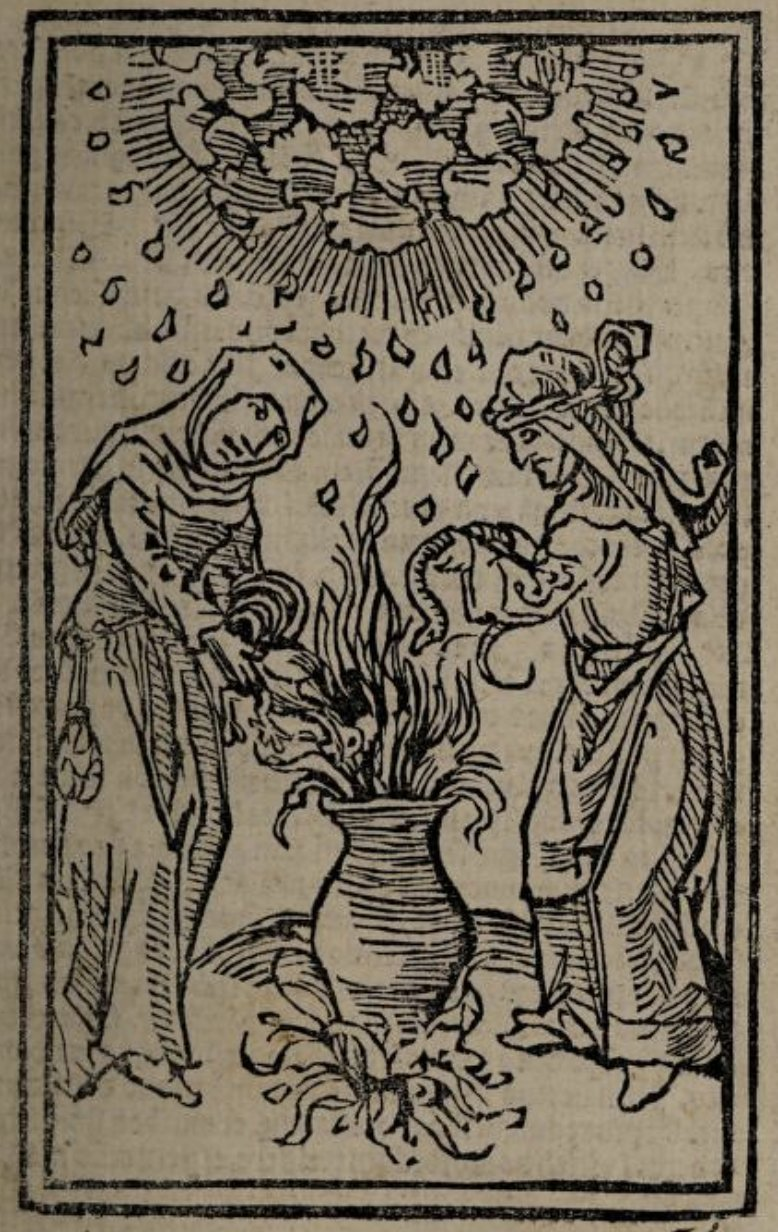
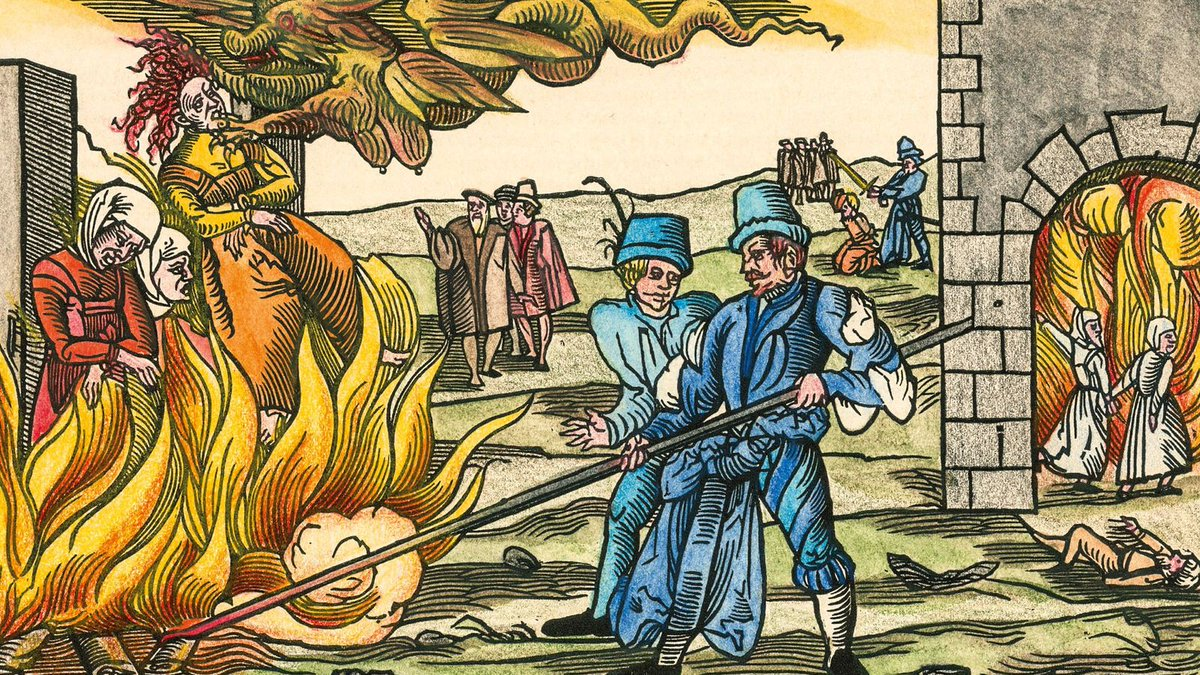
We find these rituals not just in Mediterranean, but also in Slavic countries, where people actually preserved the original meaning of this ritual: killing of winter, who was represented as the old hag, the winter earth, known as Morana (the one who kills) and Marzana (the one who freezes).
And during the Lent, her effigies are carried around, burned (heating up of the earth) and then thrown into running water (snow melt resulting from heating up of the earth)...I talked about this in my posts "To kill a witch" and "Gryla"...
The snowmelt is in the sawing of the old woman ritual represented by the blood of the sawn old woman, and by the custom of sawing the effigy on bridges and throwing the sawn halves of the effigy into running water...
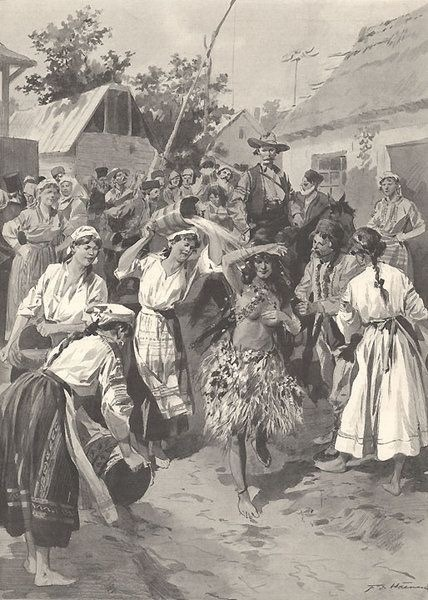
Interestingly, K. Wlislocki reports on the sawing of grandmother among the "Gypsies" in Germany in his 1891 "Volksglaube und religioser Brauch der Zigeuner".
He says that "they made the old woman out of straw and first beat her with sticks on Palm Sunday, after which the undressed boy and girl sawed her, burned her, and threw the ashes into the water".
He also says that "the ritual was performed in honor of the "shadow queen", a demon who torments people (gypsies) during the winter months with hunger, disease and death, disappears in the spring and returns with the winter".
This is why on the Original Slovenian depiction of the ritual killing of winter, you see one group of people standing next to the head (start of winter) who are all despairing, and the other group of people standing next to the legs (end of winter) who are all rejoicing..."
One of the reason why the old hag is cut, like the firewood, is because firewood is prepared in the autumn to last until spring...By the end of winter, almost all firewood is spent, and this is another way to symbolically depict the end of winter...Or at least a hope for its end.
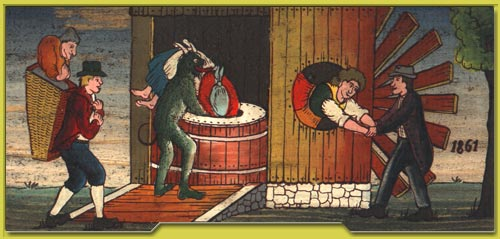
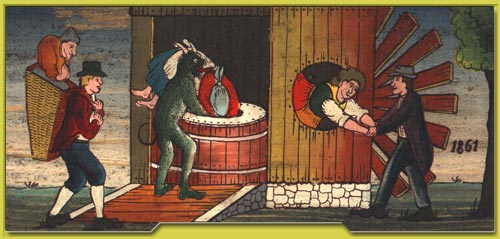
The meaning of this ritual cutting of the old hag is the same as the meaning of the milling of the old hag, also recorded in Slovenia and depicted on another old beehive panel...By the end of winter, the grain stores are getting empty...
"Bablji mlin", meaning "Granny's mill" scene, Slovenia. An old hag is being milled, and thus transformed, into a young maiden. Winter being transformed into Spring...I talked about this in my post "Babji mlin"...
Interestingly, in this version, it's Krampus, anthropomorphised ibex goat, symbol of winter, that does the milling...I talked about this in my post "Krampus"...BTW, this link between the end of grain and and of winter is spelled out in this Eastern Slavic ritual song was sang by young unmarried women as part of "calling the spring" rituals
Larks, larks, fly away
Take the winter cold away
Bring us spring on your way
We are tired of winter
All our bread she has eaten
I talked about it in my post "Inviting spring"...
We have an obscure version of this ritual in Scotland too, in a Gaelic folk song "The old woman of mill dust". I talked about this in this post.
That the sawing of the old woman is indeed killing of winter can be seen from the fact that in some areas of Italy the effigy of the old woman was filled with fruit and nuts, which were released (grow, become available) when the old woman (winter) gets killed (ends)...
And the reason why this is done in the middle of Lent is because Lent marks the end of winter and beginning of spring...When all the firewood, grain and other food is almost all used up, and it's the last time for the winter to end...Which is why all these magic rituals are performed: to help bring the end (death) of winter (ugly old hag)...
So that's that. I don't think that the root of the "sawing of the old hag" custom is Roman. I think it is part of the pre Roman, possibly Europe wide agricultural ritual for marking the end (death) of winter (old hag)...
It just so happens (again, no idea why), that the actual explanation of the custom is preserved the best in Slavic folklore...Maybe Slavs are just extremely culturally conservative.
What do you think? Do you have any info about this or similar custom from any other country?