Showing posts with label Vinča culture. Show all posts

Sunday, 23 April 2023

Female pots from Sudan

Fur women from Sudan making clay pots...Pic from "Sudan Notes and Records Vol. 22, No. 1 (1939)". 

And in there we read that Fur people regarded pots, their making and their use, as "female" only and a taboo for men...

For instance, in the above article we can read that when ethnographers asked Fur men how do you say in their language "he lit fire under "burma" (pot used in brewing beer)", the reply was that "you can't say that in our language, cause only women can do that"...


The authors then say that this taboo most likely originates from the ancient association between pots and goddess [mother earth] as for instance "in Nigeria, pots are still associated with mother goddess and a pot is a symbol for a female genitals"...

In "Nile Valley archaeology and Darfur ethnography: the impact of women on cultural evolution. A personal reflection" Randi Haaland gives us further info about this association between pots and women in Fur society:

"The Fur used terms for body parts to describe parts of pots in addition they explicitly associated pots as females, and in particular with motherhood occasionally manifested by placing two protrusions called nansu (breasts) on pots..."

"...Grain storage pots were made by women and only accessed by women...Body terms are used for different parts of the container such as stomach, neck and mouth. And these granary pots are made with features resembling breasts."

It seems that not only pots were exclusively in the female domain. Any grain processing and storing equipment was under strict female control too...Like a cooking fireplace, which is exclusively controlled by a woman. And grinding stones...

"Women in the village were making their own grinding stones. Suitable raw material was found in only one area, where a fine grained sandstone was located. Women had their own quarry where they extracted the raw material and did the rough shaping of the grinders..."

"...The making and using of grindstones were closely associated with female identity, so much so that when grinders are used in male dominated activities like iron production, it is only women who perform the task of grinding the ore."

These taboos are all linked with tools used for storing, grinding, cooking grain. Which indicates that they all come from the grain cult, which directly links woman, mother and female fertility and earth, mother earth and earth fertility...

This is confirmed by this taboo:

"Porridge and beer, both made from the same raw material – millet – are both made by women. In Fur tradition, they were set apart from other food items in the sense that the selling of these products would imply an activity classified as shameful, similar to selling sex."

This elevation of grain, grain food and grain drink to a level of holy food is very interesting...It must be very very old, coming from the time when grain was rare luxury. I believe that this grain cult most likely arrived to Sudan with the Neolithic farmers.

And got preserved in Sudan isolated until present time. We actually find evidence of the existence of such cult in archaeological, historical and ethnographic data throughout Eurasia from Neolithic until present day...

The remnants of this female grain cult were preserved in European "folklore" to this day, particularly among Slavs...I talked about this a lot already, like in this post about the "Mother of grain"...

The symbolic link between women and earth depicted on this Early Vinča Culture terracotta figurine from Jela, Iron Gate region of the Danube, Serbia, c. 5200 BC, H. 5.3 cm, which has a branching plant growing out of the womb...

I have been meaning to talk about the female cult of the bread baking pottery from Serbia for a while, but I always get distracted with something else, so...But I promise I will get to it soon...

PS: I want to thank my friend @dalaygiz for reminding me of this amazing Bronze Age terracotta couple from Tell Marlik in Iran. The man is depicted with a knife and a woman with a...pot...


Sunday, 19 March 2023

Mother of grain

MOTHER Earth...The symbolic link between women and earth depicted on this Early Vinča Culture terracotta figurine from Jela, Iron Gate region of the Danube, Serbia, c. 5200 BC, H. 5.3 cm, which has a branching plant growing out of the womb...Pic from "The Body of Woman as Sacred Metaphor"...

It is interesting that this Neolithic Early Vinča culture depiction of the mother goddess was found in the same region where in Mesolithic we find Lepenski Vir culture, whose people made exactly the same image out of a bone...5000 years earlier...around 10,600 BC. It was found at Cuina Turcului, a rock shelter in the Iron Gates gorges on the Danube river, Romania.


The symbolic depiction of a mother earth as a woman is kind of easy to understand. They both give birth to things...

What is interesting is that Slavs who live in the area today, have preserved this symbolic depiction of the mother earth as a female...

Baba, the word which means Mother, Grandmother, Midwife...Birth Giver...The rock which gives birth to life...Which is why we have so many rocky mountain peaks in the Balkans named Baba. Like this one, "Baba's tooth" from Stara Planina (Old Mountain) You can find many more examples in my post "Baba, mountains and crags"...


That mountain alone has all these toponyms and hydronyms with Baba (mother, grandmother) in them...

But Slavs have also preserved something else: belief that female fertility and earth fertility, particularly agricultural fertility, and even more specifically grain fertility, are directly linked, and that one can affect the other...

Which is why we have Slavic agricultural rituals like these: In the past in Russia, after the last sheaf of grain was cut, women harvesters would lie down on the ground and roll around the field "to return the strength to the earth"...I talked about this in my post "Walking sheafs of wheat"...

Or why we have Slavic beliefs like this: A pregnant woman was forbidden to climb fruit trees or even touch them, because "the tree would dry out" (she would steal the tree's fertile energy for her own pregnancy)...I talked about this in my post "Planting tree when the child is born"... 

Or why bread oven is called "baba" (mother, grandmother, midwife, birth giver, mother earth)...I talked about this in my post "Baba, earthen bread oven"...

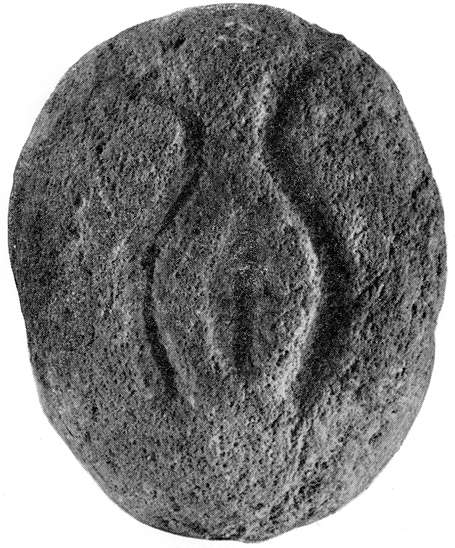
Now back to our mother earth figurines. The people from Lepenski vir who made that figurine depicting plants growing out of the womb of the mother earth, also made these: womb stones. Sculpture from the hearth of house No. 51, Lepenski Vir (9500–6000 BC, Serbia). It shows a vulva in a specific physiological state, just before giving birth, with all its anatomical details...Photo: From "Lepenski Vir" by Dragoslav Srejović 1972...

They also made very strange trapezoidal shaped houses dated to 6300-6000BC. 

They are all shaped like a flat top pyramid they could see from their settlement. Why? Because every summer solstice, the sun rose on top of it...I talked about this in my post "Sun on top of pyramid"...

Interestingly the only other example of a house like this was a Natufian culture "shrine", dated to 12,600-10,000 BC. I talked about this in my post "Natufian house"...

Natufians also made lots of stones like these...The pic is from this paper "The Natural Inspiration for Natufian Art: Cases from Wadi Hammeh 27, Jordan" which says that "They have sometimes been referred to as ‘shaft straighteners’ with the idea being that they were used to straighten bone or wooden shafts, perhaps when heated..."

"This function is unlikely, however, given direct observations of traditional artisans and experimental reconstructions of these objects’ use. Wooden spears or shafts are usually straightened by hand while being held over a fire..."

"Alternatively, the grooved stones were probably used to abrade softer materials such as Phragmites reeds, while drawing shafts back and forth through the cavity formed by binding two stones tied together with the grooves opposed..."


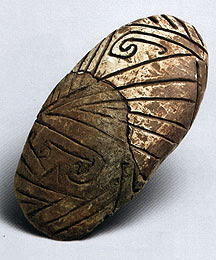
So we don't know what these stones were used for. That they were tools becomes doubtful (at least to me) when we know that they also made decorated, stones of the same type...The pic is from the same above article...


And this is why I don't think these were tools. The same type of objects, just made from clay, were found deposited in a sacrificial pit in the 7th mill BC early grain farming Starčevo culture Blagotin settlement in Serbia. I talked about this in my post "Blagotin"...

These were the guys who brought grain to Europe...The guys who built temple dedicated to grain. 

If we look at the clay objects from Blagotin, we can see that the groves made in them are too wide and shallow to be used for any kind of straightening of anything...

Which is why they were interpreted by Serbian archaeologists as "grain seed models", grain fertility idols...Now if you squint you will see that they don't just look like grain seeds. They also look like vulvas...Vulvas made of stone and clay, made of the body of mother earth...

Starčevo culture was ancestral culture of the Vinča culture...So we have come full circle...Hence plants growing out of the womb of the Vinča culture idol...But also out of the womb of the Lepenski Vir idol. Which predates Starčevo...

I recently came across this: A gynomorphic (woman like) figurine made of "soil mixed with chaff and grain seeds" from Grčac, Serbia. Proto-Starčevo culture, 6200-5500 BC. Direct symbolic link between earth, grain and female fertility. Basically, "Mother of Grain"...

Now that I think about it, the plant is most likely grain...These are symbols for grain from Mesopotamia and Central Asia...


This (widespread) belief that plants (especially grain) grow out of the womb of the mother earth was for the first time spelled out in Mesopotamia, where in "The Courtship of Inanna and Dumuzi" we find these verses:

"...Before my lord, Dumuzi,

I poured out plants from my womb.

I placed plants before him,

I poured out plants before him.

I placed grain before him,

I poured out grain before him,

I poured out grain before my womb..."

BTW, every year during the harvest, a man and a woman performed ritual sexual act on a threshing floor, imitating Inanna (earth, womb) and Enki (sweet water, seed) consummating their holy marriage. I talked about this in my post "Sacred marriage on the threshing floor"...


The result of which was grain grew out of Inanna's womb...

And so on and so forth...I will end this rambling article here. Got to go and make dinner...

PS: Forgot to say that Natufians were some of the first people to eat, gather and maybe even grow grain...I talked about this in my post "How grain came to Sumer"...


Saturday, 14 May 2022

Vinča bread

One of several similar cult models of a loaf of bread, from the Neolithic Vinča culture. This one was found at Banjica-Usek archaeological site in Belgrade, capital of Serbia, and was dated to 4500 BC. Length 18 cm, width 6 cm. Collection of Belgrade City Museum...

Here is another one...


Another Vinča culture votive bread...This one could have found its way to Ireland...


From this post ritual hiding behind giant breads and about Neolithic Newgrange temple from Ireland and a very strange similarity between its entrance stone and this votive bread...


Einkorn and emmer wheat were an important part of the diet of ancient Vinča-culture. Cereals were ground using small quern-stones and the flour was made into dough which was then baked in ovens found in every Vinča house...

Photograph of the excavation of the Vinča Belo Brdo site, showing archaeologist Miloje Vasić standing next to a clay oven "in situ" and local villagers employed as excavators standing in the background. Early 20th c.  

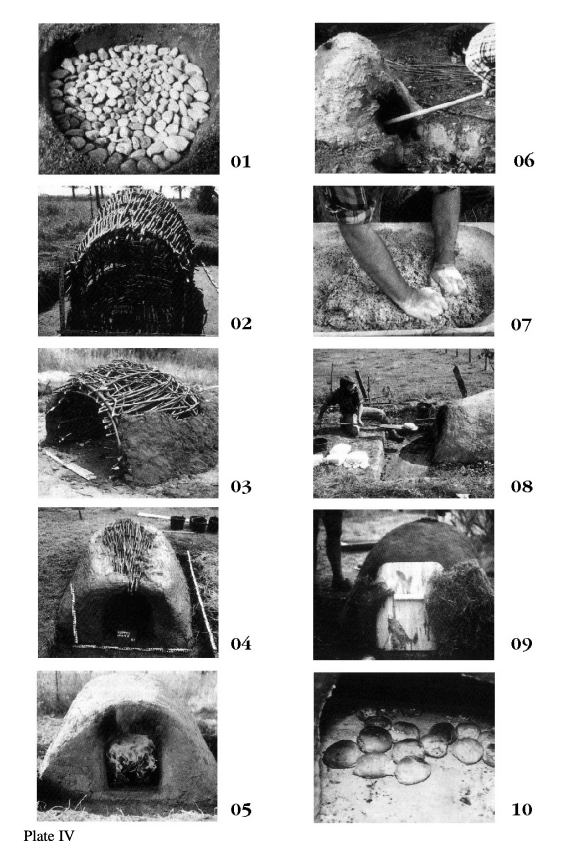
Are you an experimental archaeology fan? Do you want to know how to make Neolithic Vinča culture style bread oven? And Bake bread in it? If you are any of the above, then this paper entitled "Late Neolithic ovens in central Balkans region" is a must... 

This is Pločnik archaeological site in Toplica District, Serbia. The 120 hectare settlement was built by people of the Neolithic Vinča culture around 5500 BCE and was used for 800 years, until it was destroyed by fire in 4700 BC... 

Local archaeologists reconstructed several houses and created a small replica neolithic village... 

The houses are equipped with the replicas of furniture, figurines and bread ovens found during the excavation... 

Local archaeologists use the archaeo village to run educational programs for kids. During one of these programs kids were thought how to make bread "neolithic style"...


Kids absolutely love kneading dough and making flat bread patties...


These are then placed in clay ovens, baked and then eaten by children themselves...


BTW, Vinča culture guys inherited their obsession with bread from the ancestral Starčevo culture. These where the guys who adopted grain agriculture, originally developed in the climate of the fertile crescent, for the European climate...

I wrote and article about one of their sites, Blagotin, where a temple dedicated to grain was found with many votive clay grain seeds...

Thursday, 27 January 2022

Tartaria tablets

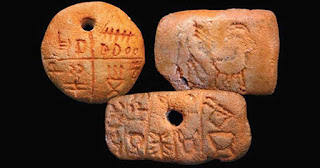
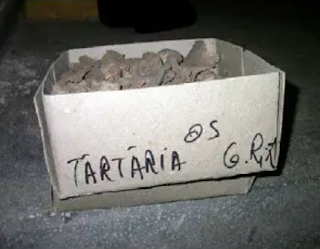
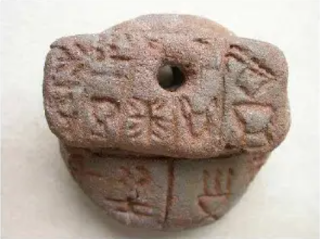
Tărtăria tablets are three clay tablets discovered in a Vinča-Turdaș culture settlement near the village of Tărtăria in Romania...

The tablets were discovered in a sacrificial pit with many other clay objects and human bones. The radio carbon dating of the bones produced the dates 6310 ± 65 yr BP (calibrated 5370-5140 BC)... 

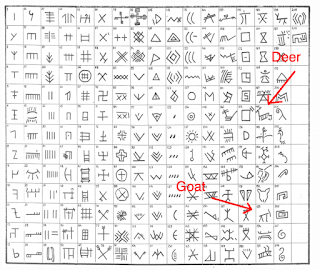
The reason why these tablets are so important is that they contain the Vinča (Old European) symbols


But on Tărtăria tablets they are engraved in such a way as to imply that these symbols can be interpreted as groups...Like a script??? Script which predates Sumerian proto-writing by thousands of years...

By the way, Tărtăria tablets are not the only objects where we find these symbols engraved in sequences...Hence the proposal that this is indeed a kind of script...

Which is why everyone is so edgy about this and why so many people put so much effort into discrediting these tablets...Surely it can't be that proto-writing originated in the Balkans...

And "if" indeed these "so called" Vinča symbols are genuine, "they are surely a local isolated development and have nothing to do with the development of writing in Mesopotamia"..."The similarities are purely coincidental"...

Those who still see Sumerian culture as an isolate without any external influences won't like this post from my blog, or any of the other blog posts linked from it...

But here I would like to pour some really really cold water on the "who invented the first symbolic script" debate...I would like to look closely at one of the Tărtăria tablets. Not one of the two "cool" ones with holes, which seem to have been made to be used together...

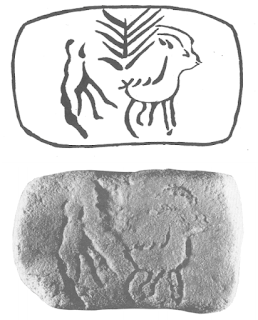
I would like to look at the often ignored third tablet...This one...And I would like to say this: O MY GOD!!! How could I have been so blind!

What I think is depicted on this tablet is from right to left: 1. Ibex goat 

2. Grain

3. A person who looks like he is bent forward...like as if he is working the land...maybe planting grain???

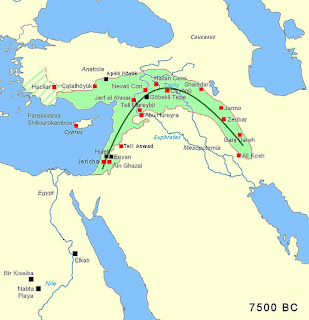
Now if this tablet was found anywhere within the fertile Early Neolithic Fertile Crescent, I would have immediately interpret this tablet like this: When Ibex start to mate, and the first rains arrive, plough and sow your grain...


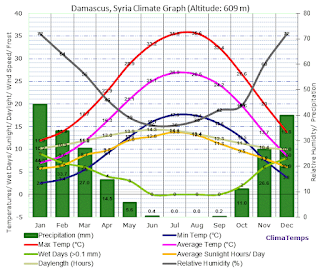
Because in Fertile Crescent the climatic year is divided into two halves: dry and hot, summer (May-Oct) and wet and cool, winter (Nov-Apr). 


And the beginning of the rainy season coincides with the beginning of the mating season of the Ibex goats (Goats of rain). 


It is because of this link between Ibex goats, rain, and agriculture, that Ibex is the most depicted thing on early decorated objects from this region...You can read about "The Goat of Rain" (Ibex) in my posts "Goat carrier", "Rain and flood", "Queen Puabi's cylinder seal"...and many others...

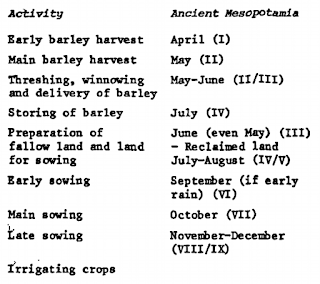
One other thing happens in Fertile Crescent, when ibex goats start to mate and when first rains arrive...It's time to plough the land and plant grain. 


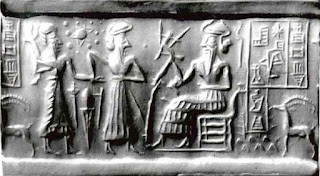
Storm (rain) god Ninurta, was, in the earliest records, also agriculture god...Whose symbol was the the plough...Which he gave to the people...Here is a god (Ninurta) giving plough to the people...With goat of rain next to the throne...

So is this what this Tărtăria tablet means? Plant your grain when Ibex goats mate?

That's amazing!!! Now did Ibex goats ever live in Romania? I don't know. The only info I could find about Ibex goats in South Eastern Europe, is this article "Past and present distribution of the genus Capra in Greece", and in it we can read that: "...The Alpine ibex Capra ibex and the wild goat Capra aegagrus are the only caprids known to have existed in the Balkan Peninsula, from where it disappeared after 5600 BC due to hunting..."

The Tartaria tablets, which are dated to calibrated 5370-5140 BC were made from a small quantity of clay and a lot of sand. According to geological analysis, the sand in the tablet has crystals of quartz typical of the mountain 20-25km west of Tărtăria and very well known in Neolithic times for the gold mines...

So the tablets were most likely made in Romania...So I wonder if the above paper is wrong, and Ibex goats actually still lived in the Balkans at the time when these tablets were made?

The winter grain planting in the Balkans happens in October. I don't know when the ibex root took place in the Balkans. In Most of their range, Ibex goats start mating in Oct/Nov. So it is possible that in the south eastern Balkans their mating season also started during that time of the year. which would have made them a good animal calendar marker for grain planting season, just like in Fertile Crescent.


But, maybe, as someone suggested, the animal depicted on the Tartaria tablet is not an Ibex goat, but a Deer, Deer mating season is October, ideal period for planting wheat in south Eastern Europe...

Maybe, except the animal depicted on the Tartaria tablet looks much more like depictions of an Ibex...And we find both deer and goat among Vinča (Old European) symbols...

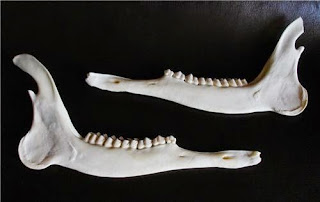
The thing is, the Early Balkan farmers could have found other animal calendar markers that correspond to the main events of the grain agriculture season...Deer would fit. If they were planting grain in autumn...Deer mandibles, like these ones, were found at the bottom of the sacrificial pit of the 7th millennium grain temple in Blagotin...Why? Deer must have been in some way linked to the agricultural cult.

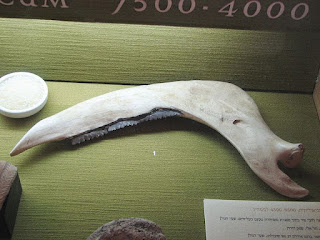
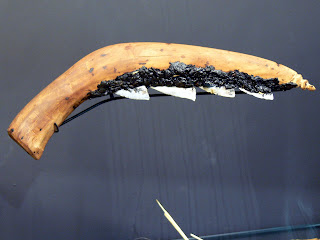
I wrote about it in my post "Blagotin" where I pointed at the fact that deer mandibles and wood/antler + flint imitations of deer mandibles were used as sickles by Neolithic farmers...


So it is possible that deer replaced goat as calendar marker for grain planting season in the Balkans...The thing is that some archaeologists believe the early Balkan farmers grew spring grain varieties, which are planted after the first spring floods...In Apr...I talked about this in my post "How to kill a witch"...Interestingly, this is the time when deer shed their antlers


Not something that you could miss easily if you were a hunter gatherer turned farmer...


So it is possible that deer was used as an animal calendar marker for planting, both winter and spring grain...

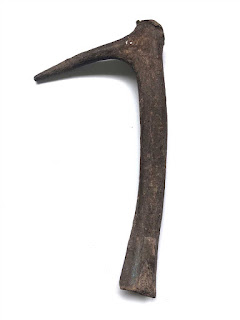
It gets better. Antler pick was used in both farming and mining as early as the Neolithic period. In farming it was used for making furrows for planting grain...


So let me see

1. You find a deer antler shed by a red deer (Mar-May)

2. You make a pick out of it

3. You use it to make a furrow and plant your grain in Apr

4. You use a sickle made out of a deer mandible to harvest your grain

Interesting...

But there is another possibility. That Tartaria tablets were not actually made in the Balkans, but somewhere in Western Asia. 

Did the Neolithic farmers arrive all in one "package tour"? Or did they, like all the immigrants anywhere do, keep coming and going between "the old home" and the "new home". Bringing relatives to "see the Balkans, the land of opportunities"...

Were these artefacts brought to Europe from Western Asia, where Ibex goats still live today? And where during the Neolithic, Ibex was the number one animal calendar marker, linked with agriculture? 

The fact that we find artefacts depicting Ibex goats in huge amounts everywhere in the Neolithic Fertile Crescent, whereas we only find few isolated depictions of Ibex goats in the Neolithic South Eastern Europe, leads me to believe that these were isolated imports...

It is possible that these tablets are much older than calibrated 5370-5140 BC, and they were used during the time when Ibex goats still lived in the Balkans...And were passed as a treasured heirloom from generation to generation... 

By the time they were deposited in the grave where they were found, they were possibly completely meaningless if there were no Ibexes living and mating in South Eastern Europe, around the time when you were supposed to plant your grain...

Oh yeah, I forgot another possible explanation. This one favoured by most archaeologists. 

This is just meaningless bunch of scribbles without an explanation...