Showing posts with label Mother of grain. Show all posts

Monday, 27 April 2026

Chalcedony stamp

Neo Babylonian, 625-539BC, blue chalcedony pyramidal stamp seal with a goat-fish. Before it a rhomb and above its back a crescent. Currently in The Museum of Fine Arts Boston...

And no one knows what all these symbols together mean...So let me try to decipher this quickly:

Rhomb is a symbol for a date fruit. Date harvest season starts in Jul/Aug, in Leo, when Lion (autumn) kills (ends) Bull (summer) and lasts until Oct/Nov. I first encountered this symbol when I talked about date harvest in my post "Lion killing bull under date palm", but at that time I didn't know what rhomb means...


Rhomb also symbolises the womb of the Mother of Grain (Inanna/Ishtar) which produces food when "the seed of the Sky Father" (rain) fertilises her. I talked about this in my post "Rhomb"...


Sumerians actually explicitly state that Inanna is the "Mother of grain". In "The Courtship of Inanna and Dumuzi" we read:

As for me, Inanna

Who will plow my vulva?

Who will plow my high field?

Before my lord, Dumuzi ...

I poured out grain before him

I poured out grain before my womb...

I talk about "Mother of Grain" from various cultures in many of my posts...

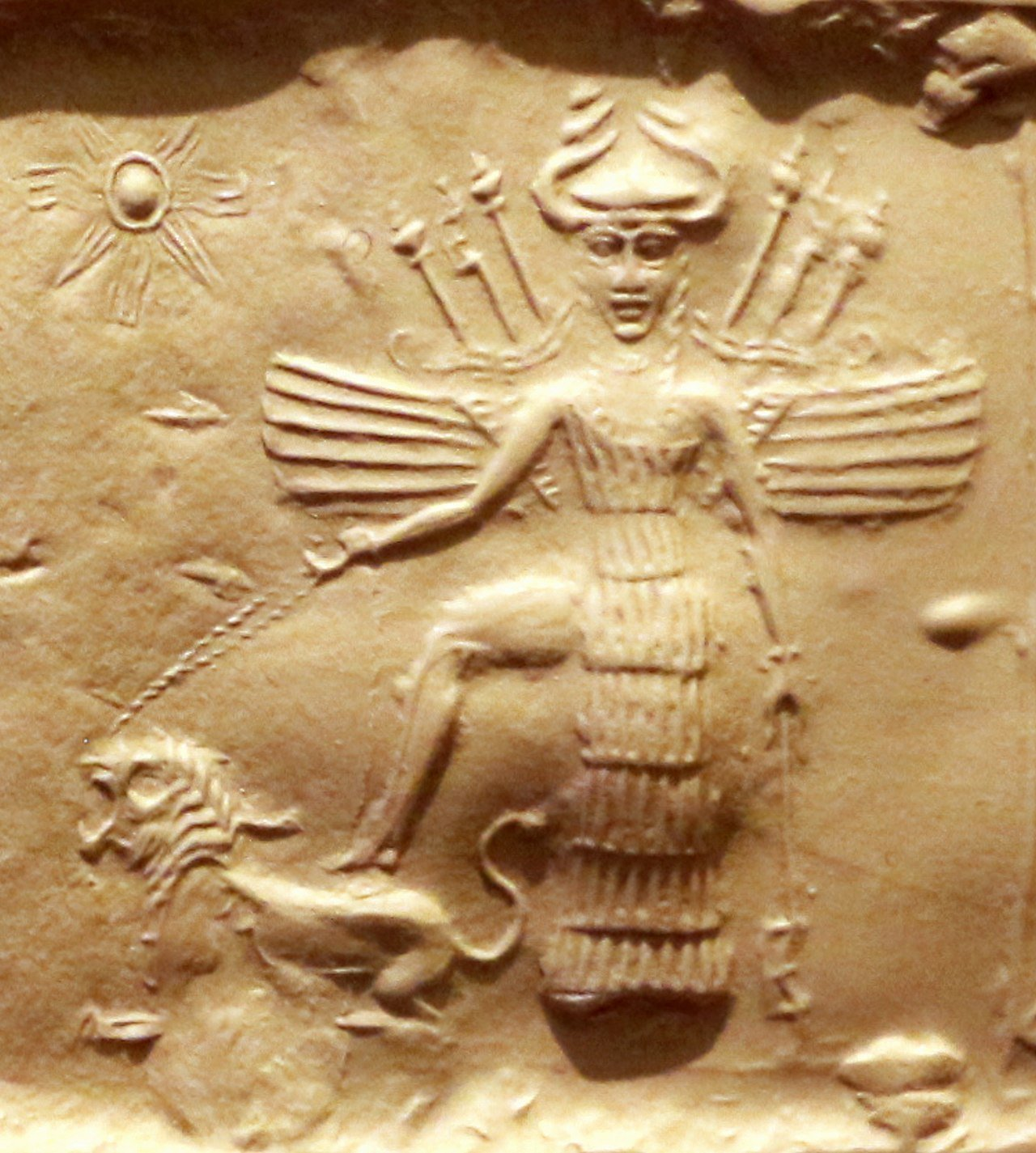
Inanna/Ishtar was also deified Sirius, which rises with the sun (morning star) in Leo, Jul/Aug, the hottest time of the year. Which is why she is depicted standing on a lion with the sun above lion's head and is known as "The Lioness of heaven"...


I talked about deified Sirius in many of my posts...

You can start here: You know how everyone thinks that Inanna/Ishtar (Morning Star) is Venus and how I think that it was originally Sirius, and only later became Venus?

Well, it seems that Ancient Egyptians preserved the proof of this switch in their myths about Sopdet...


I talked about this in my post "Sirius mother of Venus"...

Now Sirius is visible in the night sky from Oct/Nov to Apr/May...

Oct/Nov, when rains arrive to Mesopotamia. 
Apr/May, when flood arrives to Mesopotamia.

Goatfish, the sacred animal of Enki, is a complex animal calendar marker for the wet season in Mesopotamia...Between the mating season of wild goats and the mating season of giant Mesopotamian carps...I talked about this in my post "Goatfish"...


In Mesopotamia, during the harvest which started in Apr/May, a man and a woman performed ritual sexual act on a threshing floor, imitating Inanna (earth, womb) and Enki (sweet water, seed) consummating their holy marriage to produce grain. I talked about it in my post "Sacred marriage on the threshing floor"...

So that was rhomb, goatfish...What about the crescent? In Mesopotamia, the crescent moon points upwards during the wet half of the year...Which is why it became the symbol of the moon god Nana/Sin. The most important Mesopotamian god linked with rain, water, green pastures and (cattle) fertility...I talked about this in my post "Moon god Nana/Sin"...


The same wet half of the year also marked by the rhomb and by the goatfish...

I love that they used blue (water) stone to depict all this...

To read more about ancient animal and plant calendar markers, start here…Then check my twitter threads I still didn't convert to blog post...I am way way behind...


Saturday, 25 October 2025

Goddess of Myrtos

This is the so called "Goddess of Myrtos". Rhyton, in the form of a female deity with pitcher. Found on Crete, near Ierapetra, Fournou Korifi, in the earliest house shrine found on Crete, dated to EM III, 2300-2200 BC. Currently in the Archaeological Museum of Agios Nikolaos, Crete.

The jug the figure is holding is actually a miniature version of actual jugs found during the excavations...

Now I wonder why checkered square design all around the "belly" of the goddess and why checkered pubic triangle? Are these supposed to symbolise fields? Is this another "Mother of grain"?

I talked about this in my post "The oldest Demeter depiction" about Cycladic mother of grain, proto Demeter, dated to the 3rd millennium BC...And in my post "Mother of grain from Mari" about the (most likely) symbolic depiction of Inanna, also dated to the same period in the 3rd millennium BC. 

And the jug...Is this a jug of water? Is this symbolic linking between water and field fertility? I talked about this link in my posts "Minoan bull sacrifice" and "Agia Triada Sarcophagus"...

And in my post "Woman and pitcher" about this interesting vase with ivy and olive wreaths, in white and white flowers on neck. Cyprus, 400–323 B.C Currently in the Met museum...And symbolism linked to start of the rain season...

Or is the pitcher the pitcher of vine? Did Minoans make and drink vine? Most archaeologists concur that this Minoan artefact is one of the earliest depiction of people dancing. 

But is it? Is it people crushing grapes? 

I talk about it in my post "Shield of Achilles"...

I personally think that this is a depiction of a Mother Earth, the provider of both drinking water and grain, and that the jug was a water jug...Why? Because of all this stuff I discovered after I wrote this originally, and which I published in my post "Anavlochos mountain"...

That's it. To read more about ancient animal and plant calendar markers, start here…Then check my twitter threads I still didn't convert to blog post...I am way way behind...

Thursday, 15 May 2025

Blinged goddess

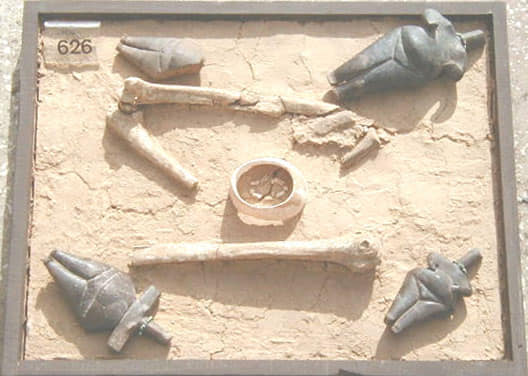
Ceramic figurines with bronze necklaces, found in the Durankulak settlement of the  Late Neolithic Hamangia culture, which flourished in Dobruja (Romania and Bulgaria) during the period 5250-4500 BC. The people of this culture seem to have been immigrants from Anatolia...

The figurines were found together as a group...

Archaeologists also found figurines with bracelets...

And women buried with lots and lots of jewellery...BTW, all the figurines with jewellery were female...

Here are some examples of the jewellery found in the Hamangia culture graves...


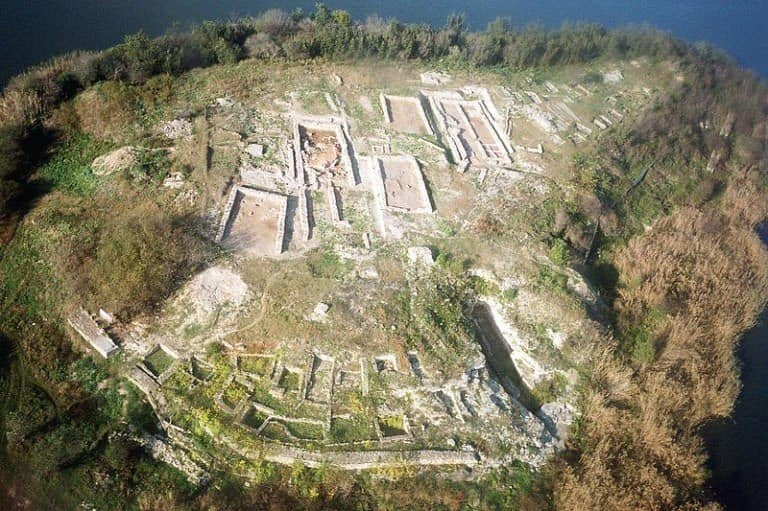
Durankulak settlement on Golemija ostrov in Bulgaria consisted of rectangular wattle and daub houses with stone foundations...Not huts...


The same kind of houses (barns, cowsheds) which were until the 20th c still built in the Balkans, except the roof was covered by thatch...


Sources: "Hamangija culture", "Durankuluk"

ARCHAEOLOGICAL COMPLEX DURANKULAK (Regular Excavations on Golemija ostrov Tell in 2018)

ARCHAEOLOGICAL COMPLEX DURANKULAK. Regular Excavations on Tell Golemija ostrov in 2020. (Presentation 2021)

NEOLITHIC SETTLEMENTS ON BALKAN a comparative study between Durankulak and Sitagroi

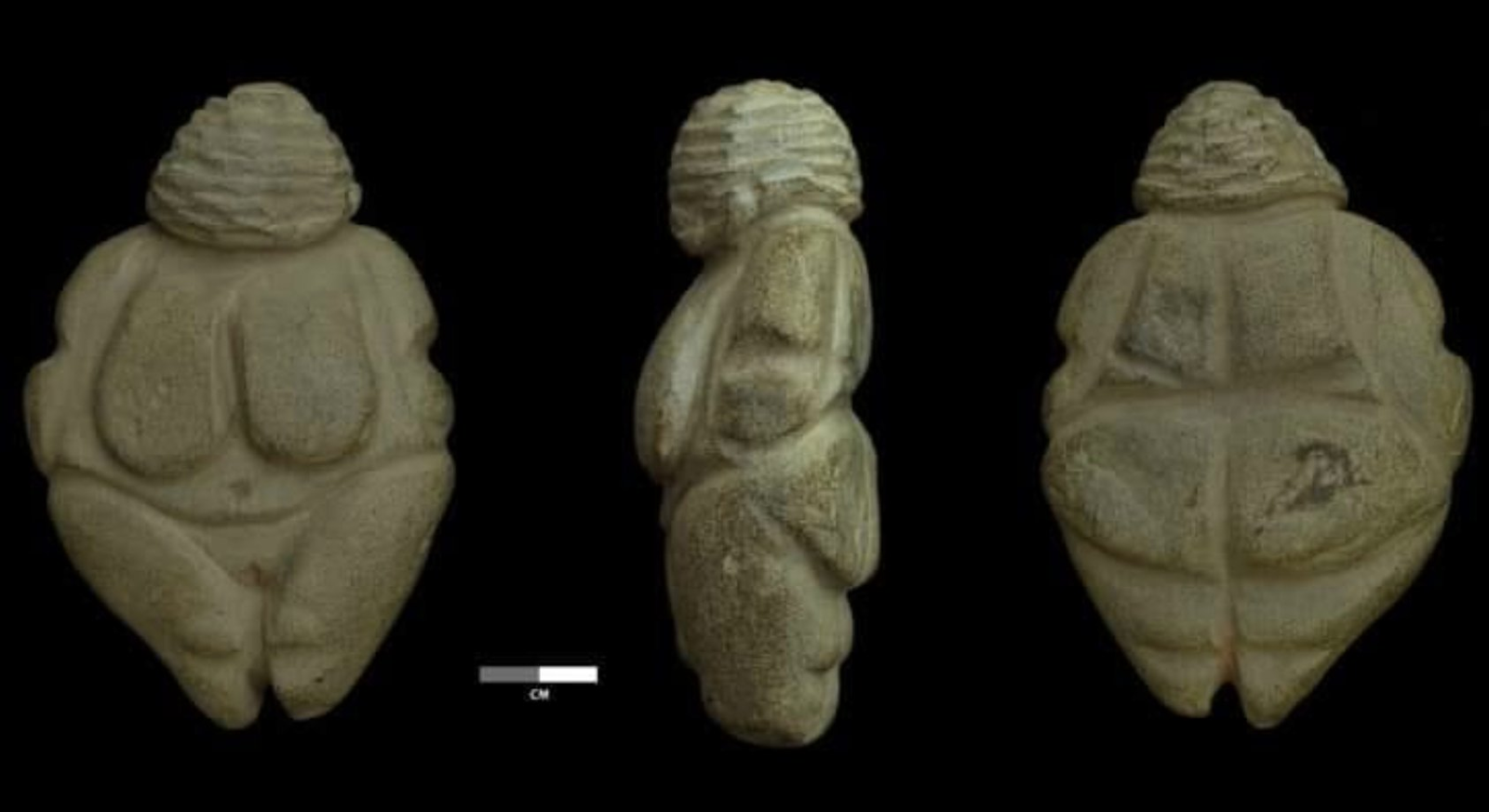
PS: These Neolithic Venus figurines are again faceless, with exaggerated sexual characteristics. Basically depicting the idea (goddess) of fertility. Just like Palaeolithic Venus figurines.

Pic: 17,000 years old Venus of Piatra Neamț, discovered on June 21, 2019, in the area of Piatra Neamț, Romania. 

Talked about this in my posts "Palaeolithic Venus figurines", "The faceless one", "Motanka". 

At the same time when Durankulak people made their faceless goddesses, a gynomorphic (woman like) figurine was made of "soil mixed with chaff and grain seeds" in Grčac, Serbia. by the people of the farming Proto-Starčevo culture, 6200-5500 BC. Direct symbolic link between earth, grain and female fertility. Basically, "Mother of Grain". 


The fact that the people from Durankulak who made these Fertility (Mother Earth) figurines and then put necklaces and bracelets on them, the same type of jewellery worn by the local women, tells me the they have also already symbolically linked the the Earth fertility and female fertility. This symbolic link is still found in Europe, particularly in farming communities in the Balkans and Eastern Europe...

I talk about this in my article "Baba, last sheaf of wheat" and the linked articles...

Saturday, 19 April 2025

Rhomb

Some items of a sexual nature from the Middle Assyrian temple of Ishtar at Ashur. Models of human sexual organs, with holes for attachment and suspension: phalli of stone, and a pubic triangle and vulva of baked clay. Interesting...


Here is Inanna/Ishtar, deified Sirius, which rises with the sun (morning star) in Leo, Jul/Aug, the hottest time of the year. Which is why she is depicted standing on a lion with the sun above lion's head and is known as "The Lioness of heaven"...

I talked about Inanna/Ishtar as Sirius in many of my posts...

Now look at this: palm tree as a plant calendar marker for Jul/Aug in Mesopotamia. Date harvest season starts in Jul/Aug, in Leo, when Lion (autumn) kills (ends) Bull (summer) and lasts until Oct/Nov. I gave full symbolic analysis of this seal in my post "Lion killing bull under palm tree"...


See the rhombs? Now, originally I proposed that the rhombs depicted on the date harvest seal were symbols for a date fruit. But, could it be that rhombs there were also symbols for Inanna/Ishtar's vulva? 

Palm tree is directly linked with Inanna/Ishtar. I talked about it in my post "Tree huggers" in which I analysed this Babylonian moulded plaque dated to ca. 2000–1600 BC. Currently in the Met Museum, New York...


Guess what ends in Mesopotamia in Jul/Aug, right when the date harvest starts? Grain harvest...

Now remember "Mother of grain"? Look at this:

Mesolithic Lepenski Vir culture from Serbia bone figurine depicting Mother Earth (Mother of grain) whose vulva is giving birth to plants (grain?)... 


Mesolithic Lepenski vir culture from Serbia stone vulva depicting vulva at the start of birth


Grain seeds


Compare their shapes...

The Mother of Grain had a name in Mesopotamia: Inanna/Ishtar. In "The Courtship of Inanna and Dumuzi" we find these verses:

As for me, Inanna

Who will plow my vulva?

Who will plow my high field?

Before my lord, Dumuzi ...

I poured out grain before him

I poured out grain before my womb...

Articles about the Mother of grain in Europe, Central Asia, Mesopotamia, Iran, Levant: "Mother of grain", "Altyn Tepe mother of grain", "A person in a little boat", "Sabi Abyad venus", "Arjoune venus", "Mother of grain from Yarim Tepe", "Hathor grain pendants", "Cup of Nestor", "Sacred marriage on the threshing floor",  "Mother of grain from Mari", "Baba, last sheaf of wheat"...

Ha!!! Right on the next page of the "Gods, Demons And Symbols Of Ancient Mesopotamia An Illustrated Dictionary" we find this 🙂

I guess I was right 🙂 It does depict date fruit, grain seed and vulva...

To read more about ancient animal and plant calendar markers, start here…Then check my twitter threads I still didn't convert to blog post...I am way way behind... 

Thursday, 17 April 2025

Cup of Nestor

Cup of Nestor from Mycenae

"There was also a cup of rare workmanship which the old man had brought with him from home, studded with bosses of gold; it had four handles, on each of which there were two golden doves feeding, and it had two feet to stand on." - Iliad, book 11.

Dove was sacred to Demeter. Terracotta statuette of Demeter enthroned with a turtle-dove. The cult image of the harvest goddess was likely venerated in a sanctuary. From Sicily, 5th century BC. Milan Archaeological Museum.

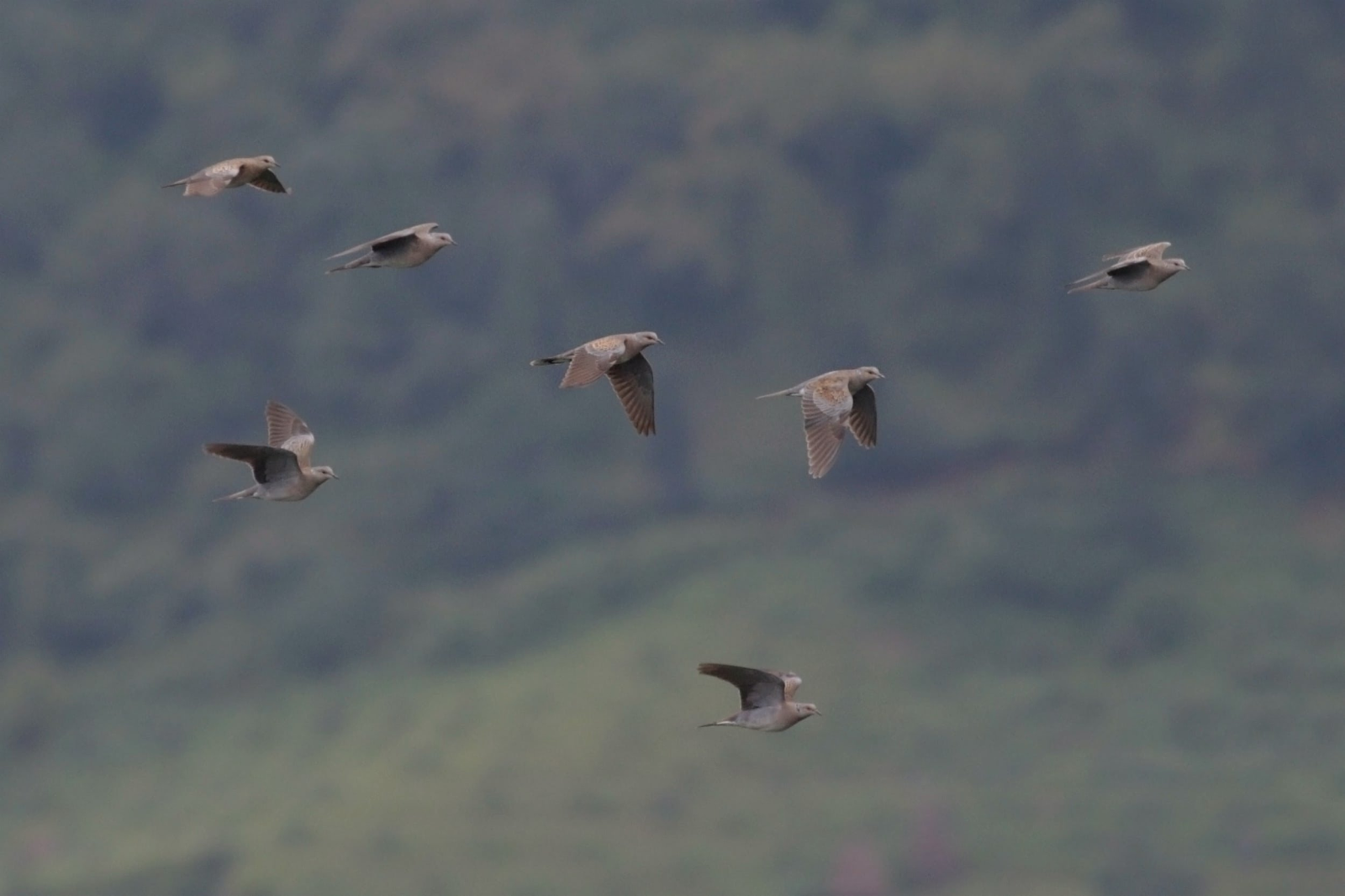
The reason for that is that nesting season of doves overlaps with the grain harvest season. I talked about this in my post "Demeter with dove"...


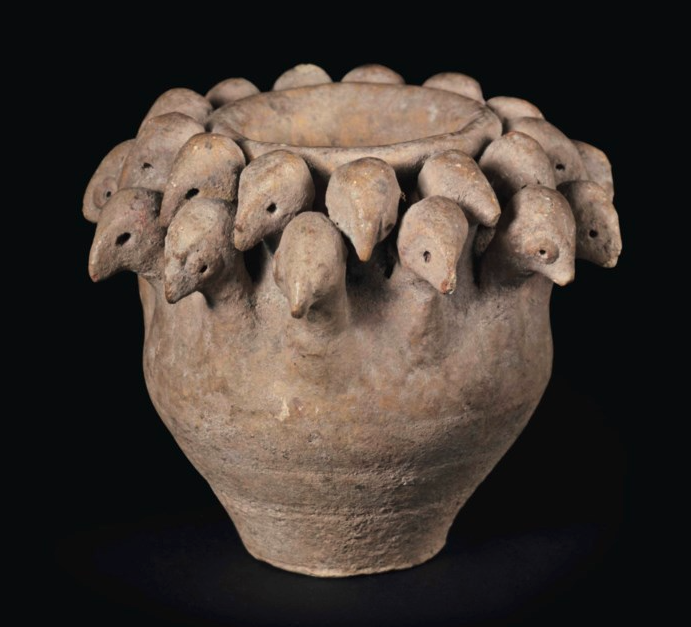
Dove was also sacred to Inanna/Ishtar. 1800-1600 BC pottery cup, Syria. The rounded body tapering to a flat base, with 26 bird heads. Similar objects were interpreted as votive objects dedicated to Ishtar/Inanna, who was also linked to grain and doves. I talked about this in my post "Inanna and dove"...

The start of the nesting season of doves which overlaps with the start of grain harvest also overlaps with the heliacal rising of Pleiades...

Which is why according to the Greek mythology, the Pleiades are the seven daughters of Atlas, whom Zeus transformed first into doves, and then into stars...

I talked about this in my post "Pleiades"...

How what does any of this have to do with the Cup of Nestor from Mycenae? Did you know that Asherah, Levantinge version of Inanna/Ishtar/Demeter was linked to "high places". These were holy grounds of sort, but no one  knows what they were really...And Asherah pole stood in the middle of these "high places". Like the central pole on a threshing floor?

I talked about this in my post "Sacred marriage on the threshing floor"...BTW, this is what Homer says about Demeter, the goddess of grain harvest, and threshing floors:

"And even as the wind carries chaff about the sacred threshing-floors / of men that are winnowing, when fair-haired Demeter / amid the driving blasts of wind separates the grain from the chaff"...

You can find this quote in "A Compendium of Similes in the Iliad and Odyssey"...Which is why Eugene Vanderpool in "ΕΠΙ ΠΡΟϒΧΟΝΤΙ ΚΟΛΩΝΩΙ: The Sacred Threshing Floor at Eleusis" proposes that threshing floors were sacred to Demeter and were in fact her temples..

And did you know that doves were linked to Asherah too...

Why am I talking about Asherah? Asherah was Levantine Ishtar and Ishtar was linked with lions...The reason for this is that Inanna/Ishtar was actually deified Sirius, which rises in the morning before the sun in Leo (Jul/Aug),...Which is why Ishtar stands on a lion (with sun above the lion) and is known as "The Lioness of heaven"...I talked about this in detail in my post "Inanna and Sukaletuda"...


And what does this have to do with Mycenaean dove cup? Well, was the cup dedicated to Demeter or to Asherah/Ishtar/Inanna? Remember the Ishtar/Innana dove cups? 

This stands above the main gate in Mycenae: A pole between two lions...Asherah/Ishtar/Inanna pole?


Threshing floor pole? BTW, Jul/Aug, Leo is when grain harvest ends in Mesopotamia and the Eastern Mediterranean...

So was Mycenaean Demeter actually Asherah/Ishtar/Inanna? I think so...They are one and the same goddess, The Mother of Grain...I talked about the mother of grain in many of my posts...

To read more about ancient animal and plant calendar markers, start here…Then check my twitter threads I still didn't convert to blog post...I am way way behind...