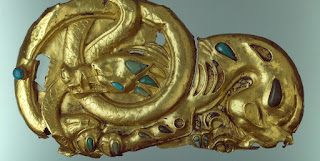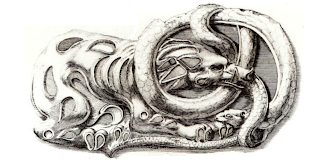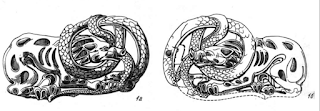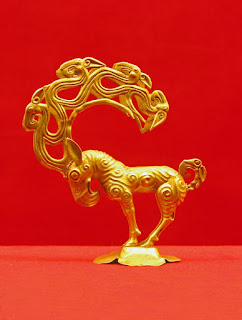
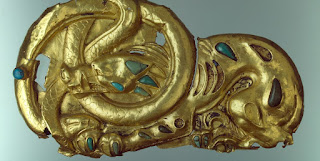
This amazing work of art immediately drew my attention. I don't believe in mythical beasts...All the ones I studied so far turned out to be complex animal calendar markers. But I never looked at anything coming from China before...
So this was something I couldn't ignore. I had to check it out. And so I packed away Turkish climate article and stared digging around to see what I can find about this Chinese mythical animal...
This was in early January...Now it's mid March...Since then I have been "sidetracked" a few times by things I kept discovering, which lead to me writing about 60 twitter threads about various things and never finishing this one...Story of my life 🙂
But finally, here we are, back at the Eastern Zhou and their "mythical beast"...And here is what I have done so far while trying to decipher the meaning of this stunning piece...
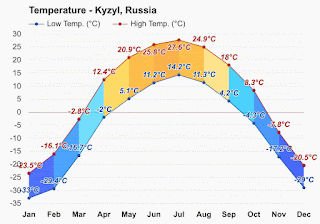
So first I looked at the climatic year in the Xian region of North Eastern China:
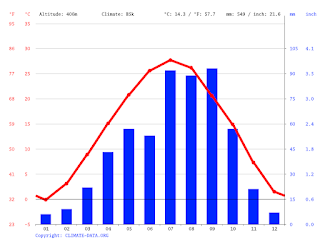
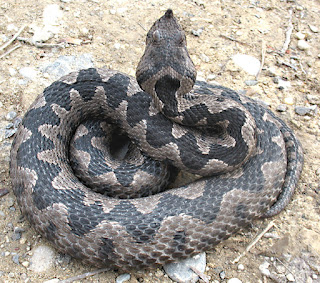
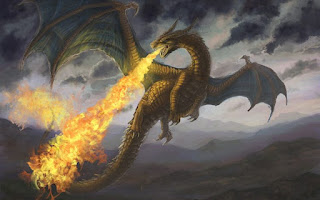
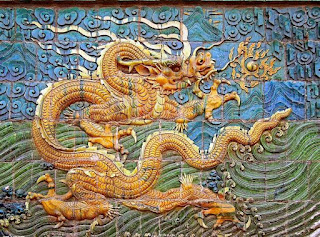
As it often happens, I stumbled across some very interesting things. Like the relationship between the two main Chinese "animal" symbols, dragon and tiger and the climate in the Northeastern China, the birth place of the Chinese civilisation.
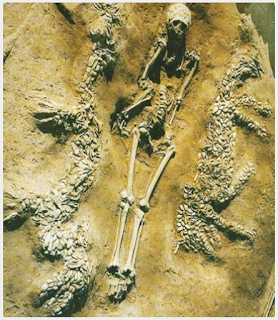
Result, my post about Tiger and Dragon from Yangshao culture:
Once I knew what the local climate looked like, I went to look at the local traditional agriculture. So far, all the "mythical animals" were in some way linked to the local agricultural cycle, and usually grain agricultural cycle...
So here I discovered something else that surprised me. I always thought that the first cereal domesticated and grown in China was rice. It turned out I was wrong. The first cereal domesticated in China was millet. More specifically Broomcorn millet and Foxtail millet.
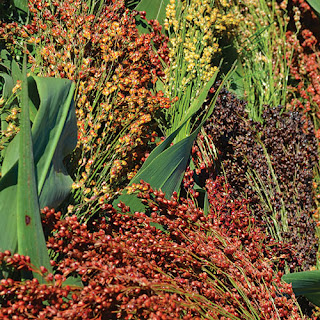
Broomcorn millet
Foxtail millet
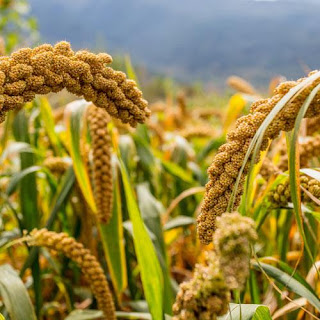
They were both first domesticated in Northern China, with broomcorn preceding foxtail by up to three millennia. Early broomcorn remains have been found dating from 9000BC. Foxtail millet appears dating from 6000BC...
The reason for this is that the Broomcorn millet was a better match for the environment and economy of the first farmers. The earliest agricultural communities depended chiefly on gathering and hunting and used very primitive agricultural technology...
With very limited ability to modify soils through tilling, broomcorn millet was much more suitable for cultivation because of its lower soil fertility requirement and stronger ability to cope with weeds...
But as the agriculture developed, archaeological data shows a gradual increase in foxtail millet cultivation from the late Neolithic (ca. 5000-3500 BCE)...
Sites where foxtail millet is found belonged to many different archaeological cultures including Yangshao (Yellow River area, 5000-3000 BCE), Dawenkou (Shandong, 4100-2600 BCE), Hongshan (Manchuria and Inner Mongolia 4700-2900 BCE)...
Research on the Oracle Bones from the Yin ruins (ca. 1319-1046 BCE) suggests that foxtail millet was the most widely cultivated and consumed crop during the late Shang period...
In the Book of Songs (Shi jing 詩經 ca. 1100-700 BCE), references to foxtail millet far exceed those to broomcorn millet...
The Spring and Autumn Annals of Master Lü (247-239BC), The Book of Rites, The Book of Fan Shengzhi (first century BC) and Essential Methods of the Common People, all classify foxtail millet as the most important crop...
Zheng Xuan’s annotations on the Rites of Zhou (second century BC) indicate that foxtail millet was the main stored grain of "nine cereals"...
Why am I so obsessed with foxtail millet? Because I wanted to show that at the time when out mythical animal was made, foxtail millet was the most important crop in the area of North Eastern China...
That's kind of important to know when you are dealing with animal calendar markers...As these are usually used to mark important dates in the agricultural calendar, like ploughing, irrigation (rains, floods), sowing, harvesting...
In Northern China foxtail millet is sown Apr -Jun. It is harvested from Sep-Oct. While broomcorn millet is planted Apr-Jun. It is harvested Aug-Oct...
Both need warm weather...See how this fits the climatic year in the region...
So here we finally come back to our mythical animal, which I claim is not a mythical animal at all, but instead a complex animal calendar marker linked to the local climate and millet agricultural calendar...How?
Well first, I have to say that I don't think that this is is a stag at all...I think this is a horse...To see why I think this, we need to look at the Yellow river course...You can see where the mythical animal was found...Do you see the thing circled in red?
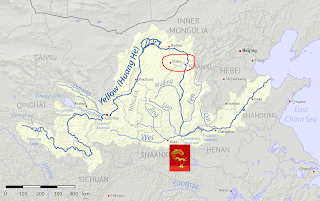
That is Ordos, after which the Ordos culture was named...The culture occupying a region centered on the Ordos Loop (modern Inner Mongolia, China) during the Bronze and early Iron Age from the 6th to 2nd centuries BC...
The Ordos culture is known for significant finds of Scythian art and is thought to represent either the easternmost extension of Indo-European nomads, such as Scythians, or to represent a culture formed by Turkic peoples...
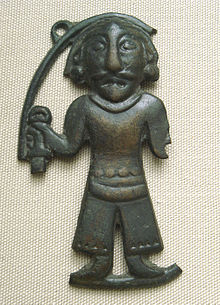
Under the Qin and Han dynasties, from the 6th to 2nd centuries BC, the area came under at least nominal control of contemporaneous Chinese states...Lots of cultural (and genetic) exchange I wold reckon going both directions...
And these Ordos dudes made this: The same mythical beast, this time being attacked by a wolf...See, same eagle head, same deer antlers with little eagle heads...Same ear...But clearly horses mane and tail...
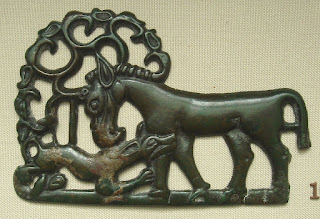
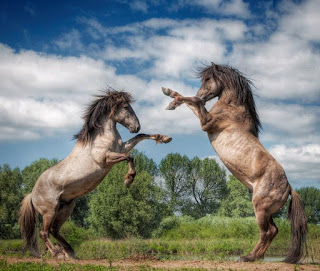
Now the horse depicted here is Przewalski horse, also called the Takhi, Mongolian wild horse or Dzungarian horse. It is a rare and endangered horse native to the steppes of central Asia...Look at the mane...
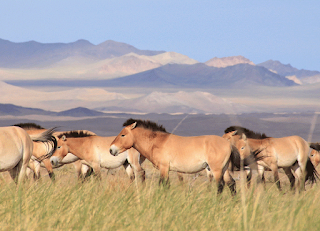
This horse is genetically different from all other horses, which is seen from its mating habits. Mating occurs in April or May and a single foal is born almost a year later. Right at the time when millet is planted...
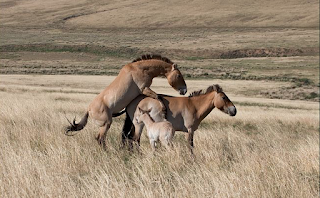
But maybe this is just a horse with plated mane...No matter...The natural breeding season of horses starts in mid-April (sowing of millet), peaks at summer solstice, and finishes in mid September (harvesting of millet)...
Which is why horses are so prominent in solar cults...
Bronze Age "Sun Chariot" pulled by a horse, Denmark 1400 BC.
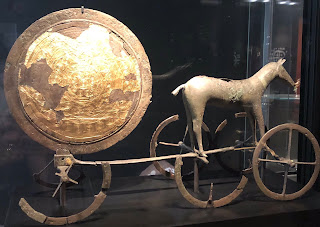
Hence horse pulling sun chariot...I talked about this in my posts "Svetovid", "Trojan horse", "Unicorn", "Re'em"...
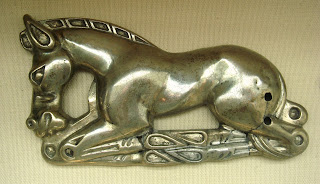
So...Why put antlers on a horse? Ask Scythians...They liked putting deer antlers on their horses heads...Like these from Scythian Pazyryk burial, 5th Century BC...
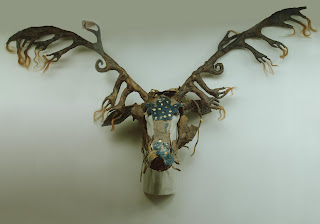
And reconstruction...
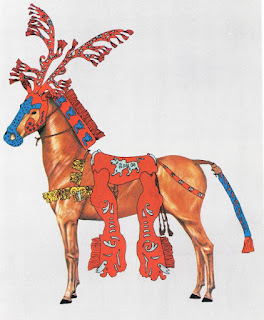
Oh wait. You can't ask Scythians...They are all dead...But no worries...I am also doubtful that they knew themselves why they were doing this...
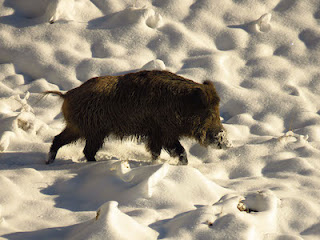
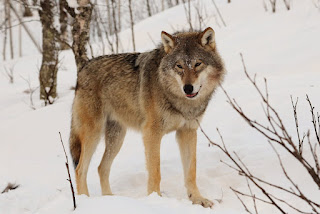
Two main deer species live in that area:
Red deer rut (mating season) takes place from the end of September to November.
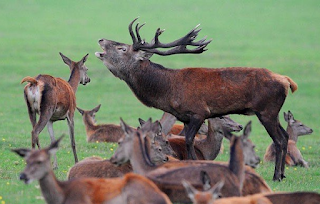
During millet harvest...
They both calve from May...
During millet sowing...
So the beginning of the mating season of horses, which you can't miss as it is an orgy of fighting and fu*king, marks the sowing season for millet, while beginning of the mating season of deer (same thing, fighting...) marks the harvest season for millet...
Sowing
Harvesting
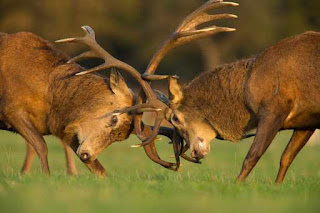
Horse-Deer "mythical animal" makes lots and lots and lots of sense if you are a millet farmer...Makes absolutely no sense at all if you are a nomadic whatever...So I wonder where and how did Scythians acquire the taste for deer antler horse headgear...
So Horse-Deer marks the "old summer" half of the year (Apr/May-Oct/Nov)...Wolf, which mates during winter, is one of the symbols of the "old winter" half of the year (Oct/Nov-Apr/May).
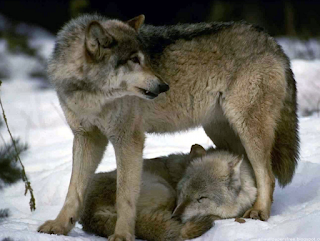
Hence wolf killing horse-deer...
I talked about this in my post "Dragon fighting wolf" about this amazing Iron Age artefact found in Central Siberia where wolf, symbol of winter, cold half of the year, is fighting serpent/dragon, another symbol of summer, hot half of the year...
Now what about the eagle...As you can see, the horse-deer animal calendar marker marks the beginning and the end of the millet agricultural year. The key events in the North Eastern China and Inner Mongolia...
So the eagle head of our Mythical beast and the little eagle heads in the antlers have to fit into this general picture...
But which eagle is it?
In many of my twitter threads and blog posts I talked about a vulture being the symbol of winter...Because they mate during the winter, at which time they perform mad areal dances...
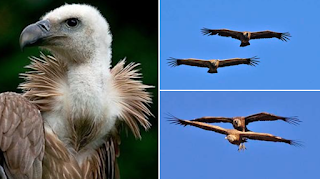
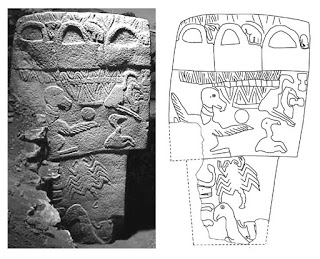
But I don't think this is a vulture's head...We need an eagle which is a summer symbol...
In many of my threads and blog posts I also talked about snake eagle as being the symbol of summer. Because it mates, and fights with snakes, during hot summer months...
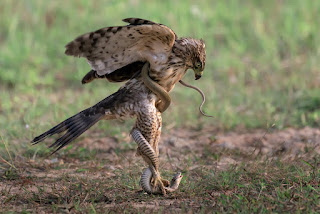
Like in my post about this amazing mosaic depicting Eagle-Snake struggle from Istambul
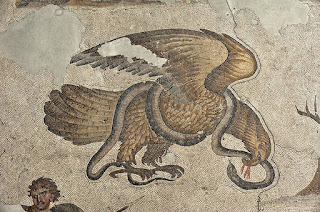
But I don't think the horse-deer has snake eagle head either...
In several of my twitter threads and blog articles I also talked about white tailed eagle being the symbol for summer too...Because it mates and eats fish during summer months...
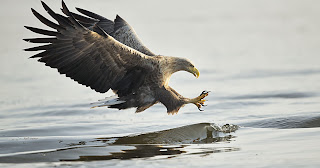
Like in my post about Istros coins...
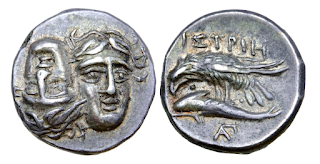
But I don't think this is the right eagle either...
It's all to do with which eagles live in the North Eastern China and Inner Mongolia, and if their reproductive cycle matches the millet agricultural calendar...
And so I originally thought that the eagle head of the horse-deer "mythical beast" must belong to the Golden Eagle...
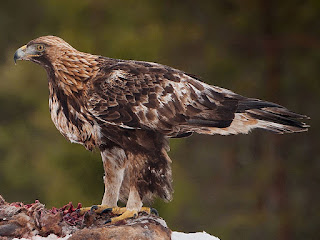
This mighty bird lives in the area and is used by the Mongols for hunting...So people from the area must have always been very familiar with this bird and its lifecycle...
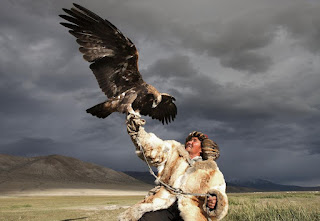
And interestingly, the Golden Eagle mating starts in March. Chicks hatch in late April. They are nest bound for a period of 70 days. After they start flying, the chicks stay with their parents for further 90-100 days and finally leave the nest in October...Perfect...

Is this what the little eagle heads in the antlers represent? Eagle chicks? And the time between the beginning of golden eagle nesting season ( just before sowing of millet) and the end of golden eagle nesting season (just after harvesting of the millet)?
This fitted perfectly...So I was very happy with myself...
Until the other day when I came across this picture: Thousands of steppe eagles wintering in Saudi Arabia...I mean tens of thousands...
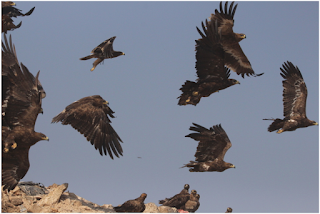
Steppe eagle...
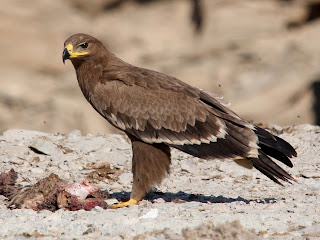
There are actually eagles, which in the spring (March/Apr) arrive in huge flocks and in the autumn (Sep/Oct) leave in huge flocks...And in between they nest and have their chicks in the Eurasian Steppe...And particularly in North Eastern China and Inner Mongolia...
Sooooo...Which is it? Golden Eagle or Steppe Eagle? I would personally go for Steppe eagle. Why? It makes much better animal calendar marker...Why? Because it actually appear at the beginning of the old summer and disappears at the end of it...
And look at this: Ordos culture, 3rd-1st c. BC gilt bronze belt buckle showing "animals in combat". From Washington University site...
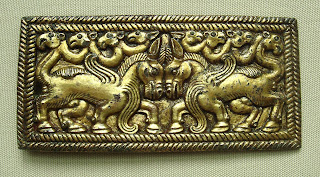
Sooo...Finally back to our mythical beast...
Which marks the period between the beginning of the mating season of wild horses and the beginning of the mating season of deer, during which time steppe eagles are hatching...
Which is also the period between the sowing and harvesting season of millet, the most important crop of the old settled civilisations of the North Eastern China and Inner Mongolia...
So where did Scythians pick this symbol up? Were they once settled millet farmers somewhere in North Eastern China or Inner Mongolia?
The end...
I think we have pretty much solved the mystery of this "mythical beast"...And have reopened another one...About the origin of Scythian culture...
Actually I have one more thing to add :) Red deer shed their antlers Mar/Apr/May...So Just before the millet sowing season...The antlers grow with millet and the eagle chicks, and are fully grown during millet harvest season, just before the rut

This just ups the coolness level of this "mythical beast" (complex animal calendar marker) to 11 🙂 I think...