This article was originally an X thread. So are most of my articles actually, as I publish all my stuff on X first. But this thread is different, as in it I wanted to show how I do my research and how fast you can find things if you know what you are looking for...

Before I saw this post 6 hours ago, I had never heard of "Meroitic language" and have never seen one of these objects before. But I had a funny feeling that I knew what was depicted on it...So I did some googling, and it turns out I was right.
Check this out:
So my hunch was that the relief depicted some kind of connection between water (obvious, as the wavy lines are water bing poured out of the two jars) and summer solstice (not so obvious, but these two jars, for some reason, reminded me of the "twins symbol")...

Twins which mark summer solstice...I talked about these twins in several of my articles. First in my post "Hayagriva".
Surya's wife Saranyu transforms into a mare and runs away from her husband. Surya eventually finds her, turns himself into a white stallion and...
After which Saranyu delivers horse head twins called Ashvins...

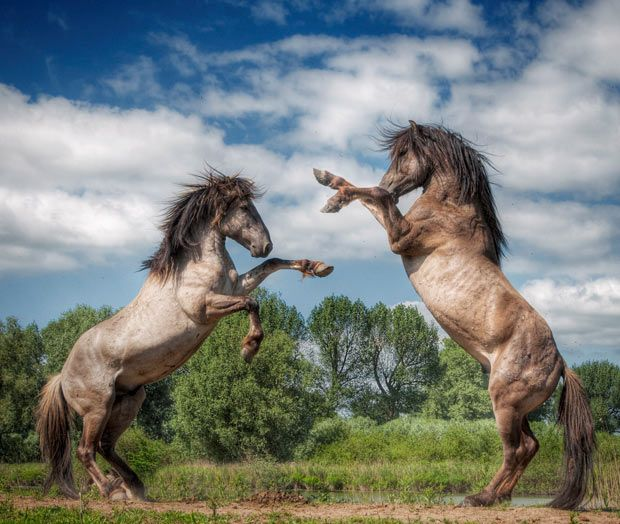
Horse zodiac symbol is disguised as Dioskuri, divine twin horsemen. The guys who wanted to marry "the daughters of the white horse".

They mark Summer Solstice, the peak of the horse mating season, characterised by wild stallion fights for mares...


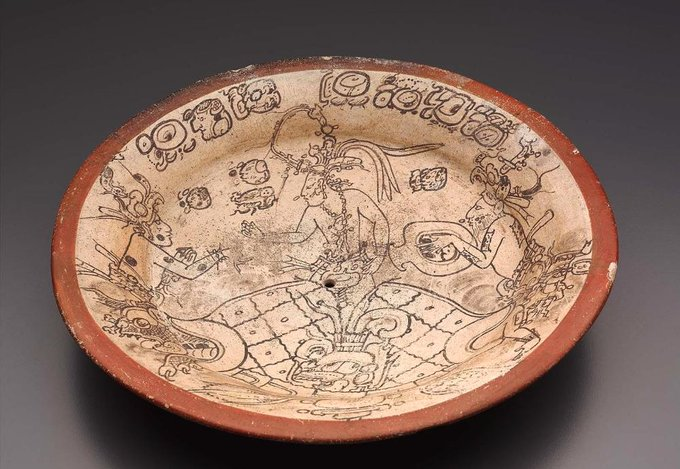

Anyway, now that you know why I thought twins were important,
So, I first went on the museum website and I found the official description of the object here:

"Offering table, from Ballana, dates to Meroitic phase IIIB-IV, decorated in relief with two kohl jars and four loaves and has a Meroitic inscription"...
So I then went to find out what the hell were "kohl jars". Well, they were jars, like this one from New Kingdom, dated to 1492–1473 BC and currently in Met Museum.
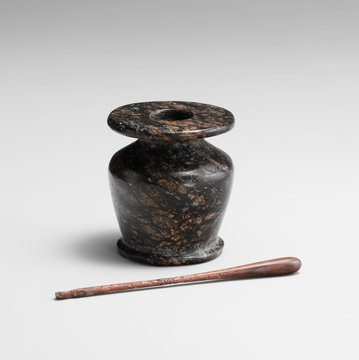
Used for storing kohl, an ancient eye cosmetic, made by grinding stibnite.

The Ancient Egyptians (both men and women) wore kohl on their eyelids as protection against the glare of the sun. Outlining the eyes could also have been a way of drawing a protective amulet, such as the Wadjet Eye, right onto the skin.

Anyway, I couldn't find any link between kohl and kohl jars and water, so I was about to give up and write this off as a false hunch, but I decided to just do one last thing and check where exactly was the Meroitic language spoken.
It was spoken here. In the area between today's Aswan in Egypt and Khartoum in Sudan...

And so, in the spirit of "if all you have is a hammer (animal calendar markers), everything looks (actually is) like a nail (deified calendar)", I went to check the local climate...
And what is very interesting about this part of the world is that it has a very long dry season and very short wet season, and that the rains arrive right around...summer solstice...

So my hunch that the two jars with water pouring out of them somehow links water and summer solstice (and the start of the rain season) was right...
Which would then explain what is depicted on this very interesting offering table (altar), Ptolemaic Period, 306–30 BC. Northern Upper Egypt, Dendera, currently in the Met Museum, New York...

The flowers depicted on this altar are Sacred (blue) lotuses...

Which bloom during the annual Nile flood.

I wrote about the calendar marker meaning of these flowers in many of my posts...
Now look at the above rain chart and the above water flow chart. They overlap...Which means that the two jars are also linked to the start of the flood season...
But what does this have to do with kohl jars? Nothing. University of Chicago was wrong. These were not kohl jars at all. They are hes-vases...
Here is one, currently in the Brooklin museum, from the Old Kingdom to 18th Dynasty. I have no idea how I came across this page. AI decided to help me I guess...I doubled it so you can see how they resemble the vases from the offering table...
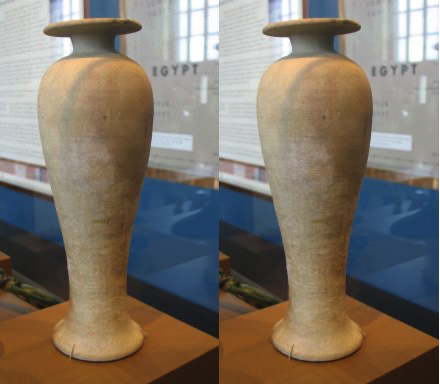
The hes-vases were special vessels used to hold ritually purified water. These containers were frequently left as tomb offerings so the deceased could drink the water...
Thirsty dead? Again? I talked about the "thirsty" dead first in my posts "Drought" and "White feast" about South Slavic beliefs that the dead are linked to rain and grain fertility...And that thirsty ancestors will "drink rain from the clouds and will cause drought".

I then talked about "thirsty dead" in my post "Lapis Manalis" about Roman belief that the dead are linked to rain and grain fertility...BTW, do you see the similarity between cup and ring marked stones and rain caused ripples on water? Or is it just me?

I finally talked about "thirsty dead" in my post "Care of the dead" about Hittite and Sumerian belief that the dead are linked to rain and grain fertility...And if you forget to respect the sacred bond with the dead...
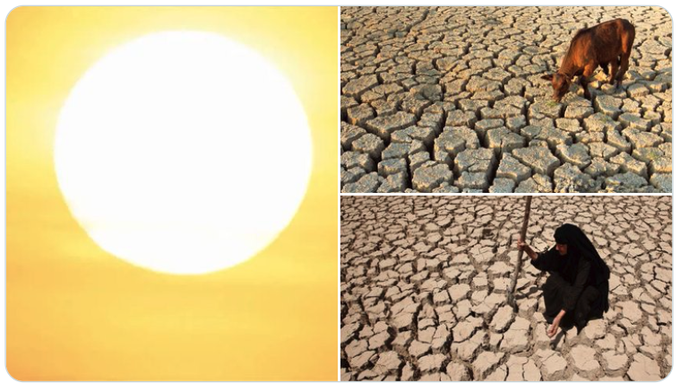
Hmmm ritually purified water...Was this purification intended to turn water back to rain? The pure water that falls from the sky that can be drank without fear of diseases?

So we have water pouring out of hes-vases, which normally contain water for the dead and loaves of bread...Again we see the link between water, the dead, rain and bread...
(This was not in the original thread, but I just remembered this thread:
Sycamore tree goddess, originally Hathor, and later Isis, both goddess of flood, pouring water which is depicted with ankh (life) symbols inside it...Tomb, Siwa Oasis, 400-600 BC. Egypt...Is she pouring water of life from a "Hes-Vase"?
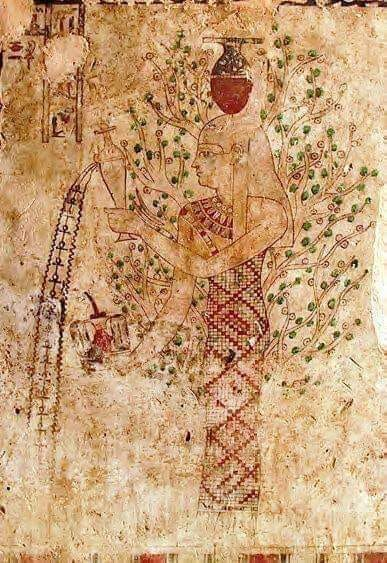
Now I was wondering why would water from the twin vases be pouring on the two loaves of bread. Maybe there is some kind of cereal that directly depends on the rain that starts falling around summer solstice...
And It turns out I was right again...Sorghum is a staple crop in Sudan. Sorghum grows during the rainy season (Jun-Sep). Once harvested, it is ground and stored for the dry season...and is used to make kisra flat breads...


And just when I decided I had found enough info to write this thread, while I was looking for a nice pic of traditional sorghum kisra flat breads, I stumbled across "Sky and Earth – A Nuba Mountains Folktale"...
Nuba Mountains lie just below Khartoum, and this story proves conclusively that my hunch about the twin(s) jars was 100% right. Here it goes:
“At the beginning of time, the sky and the earth lived together as one..."
"...The Nuba people remember a day when a young woman from the Nuba was grinding sorghum on the grindstone. As she worked, she unintentionally struck the sky with her elbow. The sky was insulted and decided to leave the place and take up residence far away from the earth..."
"...The people were unhappy about this and did not know how to continue their lives which had become gloomy and miserable without the sky, its rainy clouds and its shining sun..."
"...They held a meeting and agreed to send an envoy to the sky to persuade it to come back. The envoy somehow managed to convince the sky to come back. It agreed on one condition: that it would return only once a year and would be invited to return each time..."
"...This is how the seasons were created and how the Nuba Mountains received their first Kujur, the rainmaker, who since that time has continued to mediate between the earth and sky. The kujur has passed on his ability to make rain to his children and the children of his children..."
The end...
Now here is the best bit (from "Sudan Notes and Records Volume 23"):
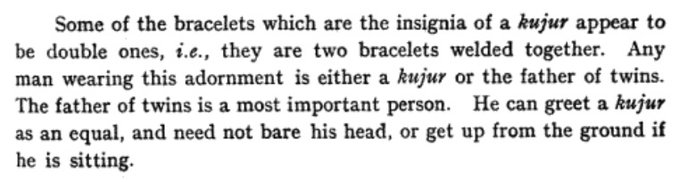
The only person equal to the Kujur is "a man who fathered twins" as "father of twins is the most important person"...Why? The only explanation is that the ancient Sudanese associated rain season with twins...Gemini...
Neat...Oh and in September, right after the rains stopped and the first harvest started, Nuba people hold Kambala festival, which celebrates the harvesting of grain and is associated with initiation rites for young Nuba men.
And we know that rain is linked with grain, semen and male fertility...
PS: Dear @ISAC_UChicago I would really like to know what is written on this offering table, if you know yourself. But I find it interesting that in Meroitic language
at(a) means "bread" and ato means "water"...
PS: please correct the object's description...
That's it. It took about half an hour to find all this info...
To read more about ancient animal and plant calendar markers, start here…then check the rest of the blog posts related to animal calendar markers I still didn't add to this page, and finally check my twitter threads I still didn't convert to blog post...I am 9 months behind now...


