Showing posts with label linguistics. Show all posts

Monday, 6 July 2026

Charioteer

Wow...This turned out to be even cooler than I thought it was when I first saw it: 

Proto Slavic word for man, čelověkъ, is derived from Proto Slavic and further down Proto Indo European words for wheel/cart/chariot and child/clan member/soldier...

Proto-Slavic čelověkъ (man), from...Proto-Balto-Slavic *kelawaikas, (child of a clan).

The first part is from Proto-Indo-European *(s)kwel- (crowd, people), from *kʷel- (to turn, roll > to travel on wheeled vehicles, settle, cultivate; town)...

In Lithuanian we have

kelias (road)

vaikas (child)

What's interesting is that vaikas comes from the PIE root weyk meaning to separate, fight, conquer, overcome...

Now in Slavic languages and Proto-Slavic we have these two words

kolo (spinning circle, wheel), kola (cart, chariot, literally wheels) 

vojakъ (soldier) which comes from PIE root weyh meaning to chase...

Put this all together and in Proto Balto Slavic you end up with

men = wheel/cart/chariot + clan members/soldiers/warriors =  Indo Europeans...

How old are Balto-Slavic languages again?

Monday, 27 February 2023

How old is the Irish language?

How old is the Irish (Gaelic) language? Why am I asking this? Because there is something very interesting in the Irish language, which can possibly help us determine when and where this language had originally developed...This:


This image shows a person standing at the door of his house. The door is facing east. What is astounding is how these words for direction of movement and orientation match in the Irish (Gaelic) language...

This language characteristic can only be explained if we assume that this part of the Irish language was developed by the culture which lived in a world which faced east...Where facing east was something everyone did every day...

Like if their houses were built in such a way that the house entrances faced east...

It turns out that most rectangular [Irish] Neolithic houses had east facing entrances...

The same goes for the Irish Bronze Age round houses, which were also predominantly built with their doors facing East or South East...

So if you were a person living in this kind of the world, then your language will naturally develop in such a way that North is Leftward, South is Rightward...

I can't see any other reason why such a strange cultural trait would develop...Can you?

So when did this part of the Irish language develop? 

During Neolithic, 4th - 3rd millennium BC?
During Bronze Age, 3rd - 1st millennium BC?

Irish dictionaries


Neolithic houses


Bronze Age houses


PS: The only other culture where I found something similar is Hebrew culture...


"An examination of Iron Age buildings and settlements in ancient Israel indicates that a large number of them were oriented toward the east, while the west was extremely under-represented...

An examination of various climatic and functional considerations does not seem to explain the phenomenon. But ethnographic studies, show that cosmological principles can have on the planning of buildings and settlements, and that in many cases the east is preferred...

The common Biblical Hebrew word for east is qedma (forward), while the west is ahora (backward). Additional words for these directions indicate that the east had a good connotation while the west had a bad one...

Thus, the archaeological pattern, along with language and texts (which are used as a substitute for human informants), seem to give an important insight into some of the cosmological principles of the ancient Israelites"...

I want to thank @ainiladra for pointing me to this table found in "Handbook of Ugaritic Studies" by Wilfred Watson and Nicolas Wyatt, which shows that exactly the same overlap between the sides of the world and directions found in Gaelic, is also found in Ugaritic, Akkadian, Hebrew and Arabic...And it obviously dates to at least the Bronze Age... 


Friday, 27 January 2023

Onos

Ancient Greek, ὄνος (ónos) = ass, donkey...

According to Wiktionary, etymology = uncertain. Perhaps from Pre-Greek...

Hmmmmm...I wonder what Pre-Greek language could it be?

Slavic 

"o" = on, on top

"nos" = carry

onos = o + nos = on + carry...

What are donkeys used mostly for???

Mysterious coincidence...

Sunday, 8 January 2023

Palil

Today I came across this paper: "Kissik, Düru and Udannu" and in it, I read this: "deities worshipped in the city Udannu: the god Nergal (always written in the form diGi.DU, which also suggests an alternative reading Palil)..."

This is very interesting... Nergal, the deified destructive "burning" sun, was depicted as a lion man, because Jul/Aug, Leo, is the hottest and driest part of the year in Mesopotamia...Talked abut him in my post "Winged superhuman hero"...

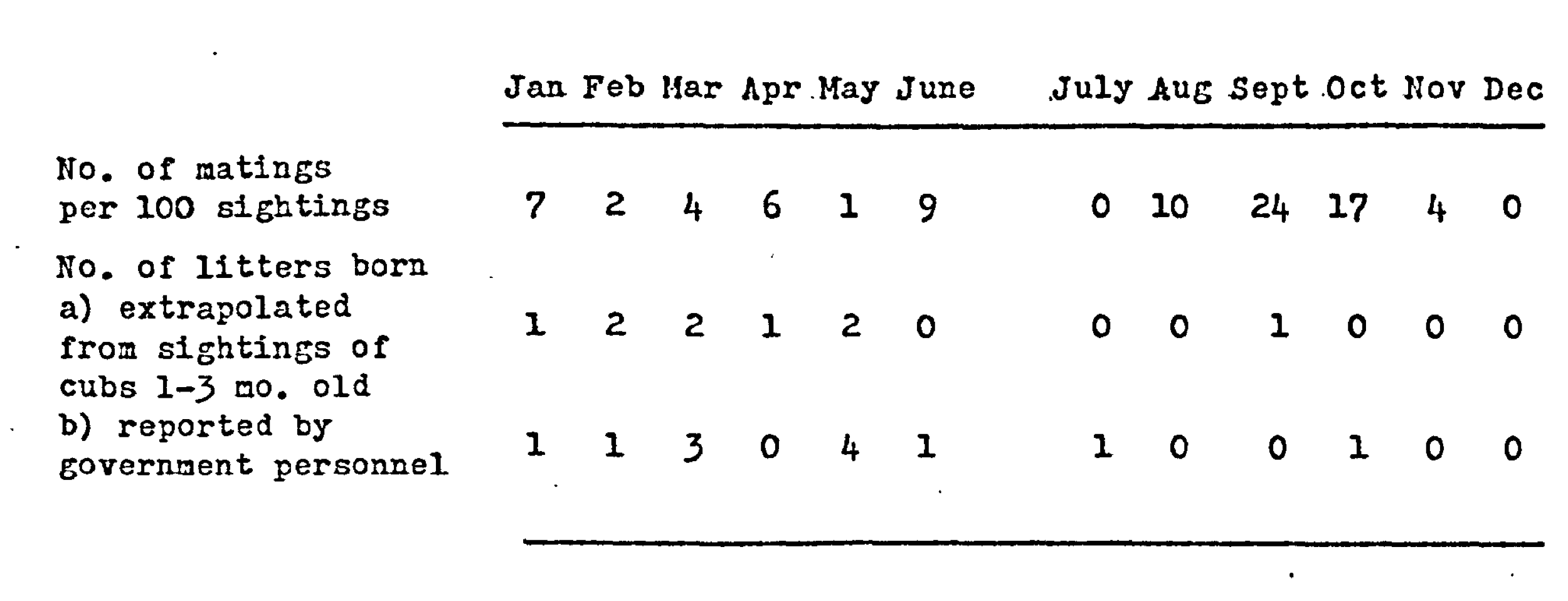
Btw, Leo marks Jul/Aug, cause this is when Eurasian lions main mating season starts...


In Slavic folklore (remnants of old mythologies), middle of Leo, a week at the end of Jul, beginning of Aug, the hottest part of the hottest part of the year is called "kresovi' (fires)...This is because the sun during this period is so hot, that it burns the the land...

Now here is the interesting bit: in Slavic languages the word "pali" means "burns"...

So Palil, the alternative name for Nergal, the destructive, burning sun in Leo, in Slavic languages means "The one that burns", "The burning one (sun)"...

Weird, right? Also, did you know that Aplu was the Late Bronze Age Hittite and Hurrian god of plague, just like Nergal...And that Aplu was also a title given to the god Nergal, the destructive, burning sun, himself...

And even though we can read that Aplu means "the son of" (whom???), I think that much better meaning of this name is "The one that ignites, burns"...Found in Slavic languages, where "upali" means "ignites"...

And did you know that this Aplu was proposed to be one of the possible roots of the Greek Apollo, The "Terrible", "Feared" Sun god...Whose name in Slavic languages would mean "The one that burns"...Just like Nergal/Palil...

But this is surely a complete coincidence, right? Hmmm...It should be. But...Did you know that "there was an Akkadian god Erra who was syncretised with Nergal at an early date, and, especially in literary texts, they functioned as synonyms of each other"?

Also did you know that Erra is derived from the Semitic root HRR, and was etymologically related to the Akkadian verb ereru, "to scorch"? And that this means that Erra meant "The Scorching one"...

Where are you going with this, I can hear you ask...Here: did you know that Slavic word Jara (pronounced Yahrah) means "scorching heat"?

And that this word is the root of the Slavic Sun god Jarilo, The Scorching one...The Dragon...The Feared one...

Sooo...Not sure what to think of this...Amazing "coincidence"...If it was the only one...

Sumerian is a language isolate, without any known descendants or related languages...but...Interestingly, in it we find some very important words which (look like they) are direct cognates with Words from Balto-Slavic branch of IE languages...

Like words for:

KingScribe and TabletMindBreath, Life, GrainWeevil (Grain eating insect), TeethSickle, Fly

BTW, Akkadian, a Semitic language, also has some very interesting words with (what look like direct) cognates in Balto-Slavic languages...

Like words for:

AxeBalance (This could actually be a Sumerian word, we don't know), GownAcorn and OakBlood and Sacrifice

There is no explanation for how these words can be found in Sumerian and Akkadian, some of the oldest known Non IE languages, and in Balto-Slavic languages, allegedly "the youngest branch of IE languages"...

So what happened here? Is this just a giant pile of coincidences? I mean it must be, right? 

Or maybe we should look at Hurrians of the Mitanni and their Indo-Iranian elite as a possible link here???

As I said, I don't know...I am just documenting all this here...

To read more about ancient animal and plant calendar markers, start here…then check the rest of the blog posts related to animal calendar markers I still didn't add to this page, and finally check my twitter threads I still didn't convert to blog post...I am 9 months behind now...

Fly

(In Mesopotamia) "There are flies that bite like bulldogs everywhere. . . The flies are awful; one black web of them this morning; in one's hair and eyes and mouth, in one's bath and shaving-water, in one's tea and in one's towel..." From: "Mons, Anzac & Kut" by Aubrey Herbert

Why am I talking about biting flies of Mesopotamia? 

Cause in the Sumerian lexicon we can find this entry:

"muš4: a biting insect"

Which is very interesting...

Cause of this: 


Serbo-Croatian: mušica = fly, from Proto-Balto-Slavic *máušāˀ, from Proto-Indo-European *mus- 

Cognate with Lithuanian mùsė, dialectal musià, Latvian muša, Latin musca...

Sumerian is a language isolate, without any known descendants or related languages...but...Interestingly, in it we find some very important words which (look like they) are direct cognates with Words from Balto-Slavic branch of IE languages...

Like words for:

King, Scribe and Tablet, Mind, Breath, Life, Grain, Weevil (Grain eating insect), Teeth, Sickle

And now fly???

BTW, Akkadian, a Semitic language, also has some very interesting words with (what look like direct) cognates in Balto-Slavic languages...

Like words for:

Axe, Balance (This could actually be a Sumerian word, we don't know), Gown, Acorn and Oak, Blood and Sacrifice

There is no explanation for how these words can be found in Sumerian and Akkadian, some of the oldest known Non IE languages, and in Balto-Slavic languages, allegedly "the youngest branch of IE languages"...

So what happened here? Is this just a giant pile of coincidences? I mean it must be, right? 

Or maybe we should look at Hurrians of the Mitanni and their Indo-Iranian elite as a possible link here???

As I said, I don't know...I am just documenting all this here...

BTW, there are more interesting words to be added to this list...Soon...

Monday, 20 June 2022

Axe or hammer

Perun, Slavic thunder god wielded an axe...

Thor, Norse thunder god, wielded a hammer...

Both Slavs and Norse wore axe (hammer) protective amulets...

Left: Thor's hammer amulet

Right: Perun's axe amulet


I always thought that Thor's hammer looked like a stylised axe...

That Thor's "hammer" probably was originally an axe, can be seen from this next artifact. A museum in Utrecht has a relic called "the hammer of St. Martin of Tours". 

The "hammer" was made in the 13th or 14th c. from a Bronze Age stone axe dated to 1,000 - 700 BC...

What does this have to do with Thor's hammer? Well, St Martin thunder god in saintly disguise. Oh and Utrecht was founded by Slavic tribe Wiltzi (who worshiped thunder god with an axe) and was originally called Wiltaburg. More in my post "Axe of Martin"...

But the main indication that Thor's hammer was originally an axe, is the etymology of the the Thor's axe name: Mjǫllnir, "which is disputed among historical linguists". You'll quickly see why. Here are proposed etymologies, and you tell me which one is most plausible...

1. Old Norse Mjǫllnir developed from Proto-Norse *melluniaR. This connects it to Old Church Slavonic mlunuji and Russian molnija meaning "lightning", which would make Mjǫllnir "the lightning-maker" (either borrowed from a Slavic or both stemming from a common source)...

2. Another proposal connects Mjǫllnir to Old Norse mjǫll meaning "new snow" and modern Icelandic mjalli meaning "the color white", rendering Mjǫllnir as "shining lightning weapon"???

3. Finally, another proposal connects Old Norse Mjǫllnir to Old Norse mala meaning "to grind" and Gothic malwjan "to grind", yielding Mjǫllnir as meaning 'the grinder'???

Considering the amount of mixing between Slavs and Norse and mutual cultural influences, and the fact that Thor made lightning with his "hammer" (actually axe), I would go with number one...Controversial!!! 🙂 But most logical...

Particularly in light of the fact that stone axes were directly linked with thunder gods for millenniums in Eurasia...And that so many thunder gods wielded axes...I talked about this in my post "Kataibates"...

One last thing: In Scandinavia thunderstones (Neolithic/Bronze Age flint axes) were frequently worshiped as family gods who kept off spells and witchcraft...So...

And finally (promise 🙂) The word "mo(ld)nya" (lightning) exists in all Slavic languages. It's cognates, apart from Norse Mjǫllnir are: Latvian milna (hammer of the thunderer 🙂), Old Prussian mealde (lightning), Middle Welsh mellt, myllt (lightning)...

Also, did I mention that the word for Thursday (Thor’s day) was in the Polabian Baltic Slavic language, Peründan (Perun's day)... 

PS: Someone asked me: Did Perun's axe have a name like Thor's hammer?

Considering that Mjǫllnir just means lightning, and that both Slavs and Norse believed that stone axes were remnants of lightnings, then I would guess that Thor's hammer's "name" is just misunderstanding of Slavs pointing to a stone axe and saying: look, lightning...

Saturday, 21 May 2022

Ishti

Sanskrit इष्टि ("ishti") - 1. Wish, desire. 2. A sacrifice, any sacrificial rite... 

This is the essence of "sacrifice": Hey God (insert name here), we want a lot of something, and in exchange, here is a bit of something...Fair enough?

People made God(s) in their own image, because it is easier to bargain with someone who has a human face, than with a faceless natural force...It is easier to pray for rain to a Rain God than to a cloudless sky...

Every prayer is a wish addressed to someone who we believe can fulfil it...And in exchange we give something in return, something we think is less valuable...Or promise to give at least...

Please mum, can I get...I promise I will...🙂

And so, once you humanise a natural force, you, being human, and knowing how humans work, naturally, try to cheat it, by performing "iṣṭi", a sacrifice...or promising to perform a sacrifice if you get what you want...That's called thanksgiving...

Please Rain God, give us rain when we need it and as much as we need it so that my grain granaries area again full this harvest time...In exchange here is a sacrificial bread, wine... Come and eat and drink it with us...

Fair enough?

So if the Rain God is a benevolent one, meaning if the climate is predictable and suitable for agriculture, then the rains will come when they are needed and as much as they are needed. The sacrificial feast seems to work...And this is what god keeps getting...

But if the Rain God is a grumpy f*ker, and the climate suddenly starts to wobble, and becomes unpredictable, and rains suddenly stop arriving when they are needed and as much as they are needed, the sacrifice changes...

Please Rain God, please give us some rain or my grain harvest will be bad and and my family will starve...We'll have to eat bloody acorns again...Here is a sacrificial animal...Come and eat it with us...

Some Rain Gods will be happy with the "smell of burned meet"...And they will supply rains when they are needed and as much as they are needed...But sometimes Rain Gods like to play hard...And sacrifice becomes the ultimate sacrifice...Human sacrifice...

Of course people wouldn't be people if they didn't try to cheat even at the brink of death...In its essence, even a human sacrifice, even a sacrifice of the first born children, was an attempt to bargain with god, to get a lot for a little...

Please Rain God, please give us some rain or my grain will wither and die and then my family will starve and die...Here is one of my children, please, give us rain so the rest of them will survive...

Terrible...But still in essence the same attempt to bargain with gods to get what we want ("ishti") for what we are willing to pay, sacrifice ("ishti")...

For the record:

According to the linguists, the Sanskrit इष्टि ("ishti") comes from Proto-Indo-European *h₁yaǵ-nós ("to sacrifice, worship") while the Serbian "išti" is the second person imperative of "ìskati" which comes from Proto-Indo-European *h₂i-sḱé-ti ("to wish, request, search") and are apparently unrelated...

So why are all these dictionaries saying that this is one and the same word? 

According to the linguists, the fact that इष्टि (ishti) also means ("to wish, desire") is "a later semantic change" that developed because people did connect wishing and sacrificing, but that does not mean that they have the same origin...

Don't know...

Sunday, 23 January 2022

Si-Amun

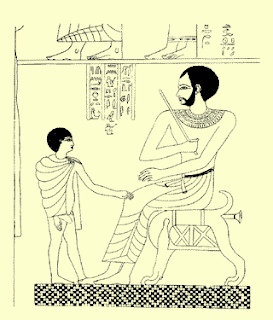
This is a wall painting from the 3rd century BC tomb of Si-Amun at Gebel al-Mawta in the Siwa Oasis in Egypt...It depicts seated Si-Amun, and his son, standing before him and touching his father's knee... 

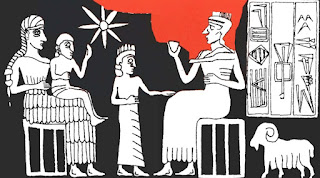
Now have a look at this: "Seal depicting...Queen Uqnitum & King Tupkish of the Hurrian kingdom of Urkesh (late 3rd millennium BC) with...the young prince touching his father's knee". 

I talked about this in my post "Queen Uqnitum

What's with touching the knee? Remember the article about the Serbian expression "From knee to knee" meaning "From generation to generation", "From father to son". 

In it I talked about the fact that the word for generation and the word for knee have the same root in many languages. Why?

Because of this: The English etymological dictionary says something interesting about the etymology of the word genus: "...could come from Latin genu (knee) from a supposed ancient custom of a father acknowledging paternity of a newborn by placing it on his knee..."

How widespread was this ancient custom?


Thursday, 3 January 2019

Birth giver

A stone slab from Gobekli Tepe (10,000 - 8,000 BC), with a carving depicting a woman in a birth giving position. 


Ceramic shard with a female figure possibly giving birth. Starčevo culture, 7th - 6th millennium BC, Sarvaš. The shard is 15 cm X 15 cm so the vessel it was part of must have been very large and was probably used for storing grain. It is possible that the figure depicted was symbolic representation of the Mother Earth.


Mesopotamia, Ur (3800 - 3000 BC)  Archaic seal showing woman in a birth giving position


Akkadian to Old Babylonian relief, 2500-2000 bc. depicting a woman in a birth giving position


Cylinder seal, 2700-2300 bc. of the Mature Harappa period, Indus valley civilisation shows a woman in a birth giving position.


Bronze disk headed pin. Curious, weird representation. All the fertility functions ; sexuality, birtgiving and nurturing ...Inanna star converted in 8 petals flower ... surrounded by 2 antelopes Astarte style. Lajja Gauri? Lorestan.1250-650 bc. 


A small fragment from a ceramic vessel found at Poggio Colla, the site of a 2,700-year-old Etruscan settlement in Italy's Mugello Valley, showing a woman giving birth to a child 


Ancient Greek relief showing child birth assisted by a midwife and family members


Roman relief showing childbirth assisted by a midwife


Lajja Gauri, the Hindu Goddess associated with abundance, fertility and sexuality shown in a birthing posture. Sandstone statue, ca. 6th century AD, India (Madhya Pradesh)


Do you see any similarity between these images? All of them depict a woman in a "natural birthing position". 


This upright sitting position helps the mother push in a very familiar position: the position you are used to using for having a bowel movement. Additionally, the low height of the stool flexes your legs and expands the size of your pelvis, and the upright position helps use gravity to promote the downward movement of the baby. Between contractions, the mother can lean backward and rest supported by the back of the birthing stool or bed or leaning on the helpers who stand behind her. 

Now look at the shape of the woman's body when she is in this birthing position. Do you see anything familiar?

Neolithic talismans (?) in a shape of a woman giving birth

Ruse, Bulgaria, 5th mill BC


Porovec, Bulgaria, 7th mill BC

Ohoden, Bulgaria, 7th mill BC.

Istria, Croatia, 6th mill BC.


Svinjarička Čuka, Serbia, dated ca 6100-5500 BC.


More Neolithic house altars


Neolithic pottery shards, Old Europe. 


Letter M or stylised woman giving birth, otherwise known as:

Basque - ama
Hebrew - eema
Arabic - um
Sumerian - ama
Old Armenian: mayr
Balto-Slavic: *mā́ˀtē 
Slavic: *mati 
Celtic:*mātīr 
Germanic: *mōdēr 
Hellenic: *mā́tēr 
Indo-Iranian: (*máHtā; *máHtār)
Italic: *mātēr 
Messapic: (matura; matira)
Phrygian: ματαρ (matar)
Tocharian: *mācer

Or Both?

Neolithic (6ht - 5th millennium BC) Old Europe Vinča culture symbols compared with consequent "alphabets". Letter M is there..


The Idea that the letter M is stylised woman giving birth (MAMA, AMA...) from "Skopje 8 millenniums ago-the first builders of Cerje-Govrlevo


Saturday, 4 August 2018

Sickle

How did the Mesolithic hunter gatherers get the idea to start eating wild grains? Well my guess was that year after year they watched herds of deer and wild donkeys gorge themselves on ripe emmer wheat or einkorn wheat, both of which grow wild in huge quantities in Middle East. 


But it turns out these wild grains have developed sharp inedible husks and awns (long bristle) to protect their seeds from being eaten by grazing animals which basically avoided the ripe wild grasses. So the idea to start collecting and eating the wild grain seeds must have come to our ancestors in some other way. But once someone did get the idea to start collecting wild grain seeds they ended up with this:


Now luckily the Mesolithic people from Middle East already had all the tools and technique to convert the hard, basically inedible and indigestible seeds into food. This is because for a long time before they tried to eat grain, they have been collecting, processing, cooking and eating acorns. You can read more about human consumption of acorns in this series of posts on my blog

One thing that the Mesolithic people didn't have is the way to efficiently collect the wild wheat seeds. Basically they were yet to invent tools for harvesting: sickle. Sickle is a curved blade with a cutting (normally serrated) edge on the inside of the curve. 


So what did our Mesolithic grain gatherers do? Well the most logical thing. They looked at the deer and donkeys grazing on wild grasses and thought: "Their teeth are doing pretty good job cutting through the grass stems. If we kill a deer or a donkey and get its jaw bone (mandible) with all its teeth still in place, we can use it to cut through grain stems as well as deer and donkeys can..."

And they did just that. They started using deer and donkey mandibles to harvest grain. 


Now, just to clarify that I didn't just dream up the possibility that deer mandibles were used as the first sickles myself. Have a look at this. 


This is a deer jaw sickle from USA. Bone sickles for cutting grass, made from the lower jaw of deer, are found most commonly in central and western Oklahoma. Only one side of the jaw was used and this was lashed onto a wooden handle for service as a grass cutting tool. Actual examples of mounted specimens have been recovered intact from dry caves or rock shelters in the Ozarks area of Arkansas. 

Here is one mounted on a handle:


Article that talks about these jaw sickles can be found here: "The Identification of a Prehistoric Bone Tool from the Midwest: The Deer-Jaw Sickle" by James A. Brown 

Wild grains are kind of grass, right?

Deer mandibles were found in the oldest grain farmer's temple in Europe located in Starčevo culture Blagotin settlement, Serbia and dated to the 7th millennium BC. 

In Blagotin we find several overlapping phases of the settlement development. The earliest feature of the site is a 2,5 meter deep sacrificial pit, around which the temple was later built. At the bottom of the pit archaeologists have found a ritually broken deer scull with separated mandibles positioned at a certain angle. 


Why deer mandibles?

Official theory is that "this seems to connect the Starčevo culture to the much older Paleolithic deer cultures of Europe from the time before the last Ice Age. This makes Starčevo culture a link between the Paleolithic Mesolithic Hunter gatherer cultures and Neolithic agrarian cultures". 

But is it possible that the reason why deer mandibles were placed at the bottom of the sacrificial pit was because it was deer which lead hunter gatherers to the wild grain in the first place. And because it was deer mandibles which were used as the first sickles for harvesting first wild and later domesticated grain. 

So deer mandibles at the bottom of the sacrificial pit at the centre of the grain farmer's temple suddenly makes a lot of sense. 

This also explains why deer is found as a symbol in many agrarian cultures. 

Now people using deer mandibles as sickles quickly realised that they are in fact not very good cutting implements. Teeth are not very sharp to start with compared with flint blades and they can't be sharpened. Once they get blunt you have to throw the whole mandible away and go kill another deer or donkey to get a new jaw. So one day someone smart looked at his flint blade and his mandible sickle and thought: "if only I could stick this flint blade into the jaw bone instead of the stupid teeth". Well whoever that person was he did exactly that, and the next incarnation of a sickle was born: deer or donkey mandible with real teeth being replaced with sharp stone "teeth" micro blades.


This type of sickle quickly proved to be much much better than the original "o'naturel" one. Stone teeth were much sharper and when they got blunt, all you needed to do was replace them with newly chipped sharp ones. No need to go hunting for deer or donkeys every time you need to sharpen your sickle. 

But soon more and more people wanted sickles and for each new sickle (actually for each two new sickles) someone had to go and find and kill a deer or a donkey, get the mandibles....Boring...

So someone smart (again) thought: "If I get a piece of wood which is roughly shaped like a deer or donkey mandible and I stick stone micro blades into it I get a sickle. No need to go hunting for deer or donkeys. I can make ten of these a day." And this is exactly what he did and the next incarnation of a sickle was born: wooden "mandible" with stone "teeth" micro blades. 

Here is a neolithic example:


And here is an Ancient Egyptian example:


Some smart people then thought: "Why do we have to bother with this wooden bit? Why don't we just make the whole bloody thing out of one single piece of stone"? And so they did. And the third incarnation of a sickle was born, a "mandible with teeth" made of single piece of sharpened stone. Like this Bronze Age Sumerian one:


In Iran they even made them from fired clay. This is a clay sickle (A33006) from the site of Chogha Mish in Iran, ca. 3400–3100 BC, currently kept in the Oriental Institute in Chicago. Such clay sickles were widespread in use at the site and have a sharp cutting edge. The edge of this sickle is actually still quite sharp!


As metallurgy developed, sickles started being made of bronze. The "stone mandible with teeth" was replaced with "bronze mandible with (or without) teeth". 

Like this Middle Bronze Age sickle dated to 15th-12th century BC from Europe.


Or this Early Iron Age sickle dated to 7th-6th century BC from Europe. No this sickle is not shaped like a bird. It is shaped like a mandible...


Finally we arrive to the sickles made from iron, like this Roman sickle.


Which is basically the same familiar sickle we all know


Now the word "sickle" comes from Middle English "sikel", from Old English "sicol, siċel", from Proto-Germanic "*sikilō" (ploughshare), of uncertain origin. Possibly a borrowing from Latin "sēcula" (sickle) or, alternatively derived as a diminutive of Proto-Germanic "*seką" (ploughshare), from Proto-Indo-European "*seg-", a variant of Proto-Indo-European "*sek-" (to cut). 

The root "s(e)k" is I believe onomatopoeic. This is the sound which a blade makes when pulled across something in order to cut it. The sound you hear is: “sssssssk”. 

Here you can hear sounds of flesh being cut with a blade. When you cut something off with a sudden hit of blade sound shortens to "tsk" or "tsak". Here you can hear sounds of chopping with a blade. 

What is really interesting is that in Celtic and South Slavic languages the words which are derived from the "s(e)k" basically describe making of a stone blade from a stone and then using of this stone blade. You get a shingly stone, slate, or some other stone that can be split and chipped, like flint, you chip it, split it until you get a sharp blade. Husks and chips fall off in the process. Then you can use it to cut, split and sever…

Here is the Irish example cluster:

Scaineamh– shingly
Sclata– slate
Scaineadh-crack, split

Scoilt  split, crack, cleavage, fissure, parting
Sceallog – chip, thin slice
Scealla – shale, flake
Scablail – chisel work
Scaid – husks
Scaineach – thin, cracked
Scean,scian (pronounced shkian) – knife
Scean – crack, split, sever
Scailp  chasm or a cleft 

Here is the corresponding south Slavic word cluster. You will notice that it is a lot bigger and wider than the Irish one, but it covers the same word range needed to describe making of a stone blade from as tone as well as all the metal blades and their usage. 

Školjka – shell. Shells are sharp and could have been what gave people idea to create first blades
Skriljac – slate. This stone can be easily chipped and was used for weapon blades. 
Skalja – small thin chips of stone or wood
Sek(sometimes pronounced as sik or sk)– root word meaning to cut but also a blade. Word "seći" (to cut) comes from sekti.
Sečivo (pronounced sechivo) – blade which probably comes from sekivo.
Sekira (sikira, skira) – axe
Sekare (škare pronounces shkare) – scissors
Sekia (sekian) – knife. This word is now preserved in Bosnian slang word for knife “ćakija” (sekia). This word can also be deduced from a word škia (pronounced shkia) which is a dinaric dialect word which means a thin hand sliced tobacco. 
Sekač – a one sided blade
Škiljiti – to squint, to make your eyes look like as if they were two cuts.
Skija – a blade on a sled, and later a ski. 
Sekutić – front tooth
Usek,zasek – cut, groove
Sek – log house where logs, which are also called sek, are connected by interlocking cuts made at their ends.
Seknuti – to strike or hit suddenly
Škljocati - to make a noise by closing something sharp like teeth or scissors.
Škrgutati – to grind teeth
Škopiti – to castrate, to cut balls off.
Skulj – a castrated ram
Škrip – a cut, a narrow space

I wonder if other Indoeuropean languages have the same or similar clusters?

How old is this word root? I believe that it comes at least from Neolithic if not from Mesolithic. And I think that we have a proof for this. 

Sumerian language is said to be language isolate, not related to any living language of today. 

In Sumerian dictionary we find these words:


"sag̃a, sag̃, sig̃" - to cut, break, harvest, to make harvesting motion

Now in the dictionary you can read that the sign "g̃" was pronounced as "ng"? But is it possible that in the case of this word the sound was "g" and not "ng"? After all we don't really know how the Sumerian language sounded like. Everything we have is a reconstruction...

And if this word was pronounced ad "sag", "sig" this sounds very very similar to "seg, sek" the Indoeuropean root meaning "to cut". 

Is it possible that here we have pure Indoeuropean word borrowed into the Sumerian language? Or was this a Sumerian word borrowed in Indoeuropean languages? Or is this word even older and comes from the time when the first Mesolithic people in Middle East started using deer and donkey mandibles to harvest grains? And was the word therefore borrowed from that old language into both Sumerian and PIE? I am not sure. 

What is even more interesting is that in Sumerian dictionary we also find these words:

"zú, zu" - tooth, teeth; prong; thorn; blade; ivory; flint, chert; obsidian; natural glass.

"zubu, zubi" - sickle (zú, 'flint; tooth', + bu[r], 'to pull, draw, cut off') 

Remember that the first sickle was basically a deer or donkey mandible (jaw bone with teeth)? And that ever since sickles were basically more and more efficient imitations of jaw bones with teeth?


This Sumerian word literally describes a sickle as "teeth used for cutting". Mad or what?

But it gets even better. In Slavic languages the word for tooth is "zub" and for teeth is "zubi". These words have the same root as the Sumerian word for tooth "zu". And even better Slavic plural teeth "zubi" is the same as Sumerian "zubi" sickle. Sickle literally, as we can see from the above picture, being "teeth" used for cutting wheat...

Now of course the Slavic "zub" (tooth) comes from Proto-Slavic "zǫbъ" (tooth) apparently from Proto-Balto-Slavic "*źambas", from Proto-Indo-European "*ǵómbʰos" (tooth, teeth, peg).

Baltic cognates include Lithuanian "žam̃bas" (sharp edge) and Latvian "zobs" (tooth).

Indo-European cognates include Ancient Greek γόμφος gómphos (peg) and γομφίος gomfíos (tooth), Sanskrit जम्भ jámbha (tooth, tusk, swallowing) and Proto-Germanic *kambaz (comb).

Here I need to ask a question: How is it possible that Slavic (and Baltic) word for tooth has the same root as Sumerian word for tooth starting with "z", while all the other Indoeuropean words for tooth have the root starting with "k,g,j" and the root of the whole cluster starts with "g"? 
Is it the case that this was originally PIE root starting with "k,g,j". And that it was somehow later changed by both Slavic and Sumerian languages, to start with "z"? 
Or is it that the original root, which was much older than both Sumerian and PIE originally started with "z". And that this root was preserved in Slavic and Sumerian languages, while it got corrupted in other Indoeuropean languages where it was changed to start with "k,g,j"? 
I believe that the second explanation is probably closer to the truth. After all the sound you make when you vocalise while showing your teeth is "zzzzz" from which the words for tooth "zu" (Sumerian) and "zub" (Slavic) come from.  Logical right? What are we gonna call that thing you are showing? I suggest something that starts with "ZZZZ", the sound I can make while showing that thing...

Now this is not the only example of such common old word, whose root "z", is found in Sumerian and Slavic languages but was corrupted into "g,k,j" in other Indoeuropean languages. And believe or not these other words are the words for "grain", "life", "breath" all logically related to teeth. 

In Sumerian language we find this word:

"zi" (ži?) - breathing, breath (of life), life, throat, soul...
"zi(d)" "še" - flour, meal
"zíz" - emmer (wheat)
"še" - barley, grain

In Slavic languages the word for "life" is "život". This word comes from the root "živ" which means "alive".

"živ" - alive
"život" - life, stomach
"zev" - yawn (possibly related as yawning is breathing so it could be a remnant of the old meaning zi - breath)
"žir" - acorn (the original first starch food which predates grain. You can read more about human consumption of acorns through history in these posts). In the Balkans the word žir in the past actually meant all plant food. In Eastern Slavic languages, the word for acorn is "želud" which is interesting because in Serbian the word for stomach is "želudac". This word also has the same root as žir.
"žito" - grain

In all the other Indoeuropean languages these words, if they even exist, start with "g,k,j"...

You can read about this in more detail in my post "Breath". 

So in Sumerian and Slavic languages, the word for breath of life, life force, life, grain and acorns (two main staple foods of our ancestors which sustain life), the teeth which are used to eat food, but also to cut wheat all have the same root: "z". 

How is this possible? And why is this not recognised, talked about?

O and one more thing, while we are talking about common wheat related words in Sumerian and Slavic languages. 

In my post "Crop devouring insect" A weevil, a type of beetle which can damage and kill crops, particularly grains and devastate granaries causing famine, has the same name in South Slavic languages and Sumerian...


What do you think about all this?