Showing posts with label Balkan Archaeology. Show all posts

Sunday, 23 May 2021

Torine katun

Transhumance is the seasonal movement of people with their livestock between fixed summer and winter pastures. In mountainous regions like Montenegro, it implies movement between higher pastures in summer and lower valleys in winter. 


In many languages there are words for the higher summer pastures, and shepherds summer camps built on them, and frequently these words have been used as place names. In the Balkans these words are Katun, Stan, Bačija, Torine...I talked about them in my article "Katun"...


In this article I would like to talk about one of these transhumance shepherds summer camps, Torine, which could just be one of the most important archaeological sites in Montenegro, and possibly one of the most important archaeological sites in Europe...

The archaeological site covers a small plateau 150X50 meters which was on the lower side fortified with a stone wall. 


The plateau is located in the Radman gorge 


The archaeological site was discovered by chance, when local villagers tried to widen the road that passed by the plateau, and in process bulldozing away half of the site


Luckily, while pushing through the site, the bulldozers unearthed several skeletons, and the locals thought they better call the police. 


Who called the archaeologists. The archaeologist who came to examine the site was Predrag Lutovac from Polimlje museum.


Archaeologists determined that the skeletons belonged to the people buried on the site during medieval time. 

Then they started opening exploratory trenches and what they discovered was pretty astonishing. One and a half meters of soil contained occupational layers from the end of the 5th millennium BC to medieval time...


The fact that the cultural layers were very thin and very rich in mobile artifacts, indicates that it was a seasonal shepherds summer settlement, Torine... 

According to Predrag Lutovac, the earliest layer located at the depth of only one meter and twenty centimeters, is Vinča cultural layer, from the Vinča-Pločnik phase, dated to the second half of the 5th millennium BC...This is where archaeologists discovered this figurine of a nude woman with a realistically represented torso and a pentagonal head characteristic of the Vinča culture. 


Trnje near the village of Bijedići which contained few dozen houses...
Beran-krš near Berane, which consisted of about twenty houses. 

Both settlements are believed to have existed from Late Neolithic through Copper Age and into Early Bronze Age period, from 4,500 to 3,000 BC.

Now the above figurine from Torine is similar in shape to the late Vinča culture figurines found in Kosovo, at Fatos and Predionica sites. But while the Vinča culture figurines found in Kosovo are dressed and or have painted decorations, the figurine from Torine is naked and has no decorations at all much like later Bubanj-Hum culture figurines...


This earliest Neolithic Vinča layer is followed by a mixed layer of late Neolithic Vinča culture mixed with the early Copper and Bronze Age Bubanj-Hum culture from Serbia and Mediterranean Copper and Bronze Age cultures, like Nakovana culture

These three cultures seem to have peacefully coexisted and merged into a new South Balkan Bronze Age cultural group, that covered huge area of Eastern and Southern Serbia, Kosovo, Montenegro, Croatia and Albania... 


This culture must have had a stronghold in northern Montenegro, because the area is full of Early and Middle Bronze Age fortifications: Tumbarice in Donja Ržanica, Gradac in Budimlja, Pećina grad in Radmanska klisura near Petnjica, gradina Bihor, Samograd in the village of Brzava near Bijelo Polje, Gradac above Godočelj near Petnjica, Gradac in Crnčia near Bijelo Polje, Jerinin grad in Plav, Gradina above the village of Šabotići, Gradina in Korita and Gradina above the village of Muslić.

It is in this Bronze Age layer of the Torine site, at the depth of half a meter, that archaeologists had unearthed a base of a Bronze Age house dated to mid 2nd millennium BC. 

Inside of this Bronze Age house, archaeologists discovered a large number of fully intact ceramic dishes, bone tools, pickaxes made of deer’s antlers, needles, bradawls, studs...All located around a central fireplace. 


A wolf’s teeth necklace was also discovered, showing that here already we have the some form of the wolf cult, not surprising considering that wolves are shepherds main worry in the mountains. After the weather.


Extremely interesting discovery at Torine was a mold for making bronze daggers of the type discovered in Momišići and other Copper and Early Bronze Age tumulus graves, located in the lowlands of the souther Montenegro. 


According to Lutovac this is another proof that Torine was a seasonal summer camp used by people who spent winters in Momišići....


Soooo why is Torine so important? You mean apart from the fact that this is a site used pretty much continuously as a summer camp by transhumance shepherds for 5000 years? Transhumance shepherds which were descended from Vinča people...

Torine site shows that when Vinča culture collapsed at the end of the 5th millennium BC, Vinčans didn't disappear into thin air. We know that some of them contributed to the development of Late Neolithic early Copper Age cultures in the Danube catchment area to the north of the old Vinča territory....

But it seems that at least some of them moved into the highlands to the south of the old Vinča territory and continued living there...And they mixed...And they got influenced and they influenced the seafaring cultures of the Eastern Adriatic coast...

I talked about them in my post about Nakovana cave in Croatia and the Neolithic seafarers...

These are the guys who sailed and traded all along the northern coast of the Mediterranean sea. All the way to Iberia...And beyond? To the Atlantic coast...Ireland???

All of which resulted in the development of some very very interesting Late Neolithic, Early Copper Age links between Montenegro and Ireland...

In my series of articles about Montenegrine tumuli, I showed that archaeological finds from both Montenegro (just south of Pelješac peninsula where Nakovana cave is located) and Ireland, point at a strange link between Copper age Montenegro and Ireland, and indicate that the copper age could have been brought to Ireland by people who arrived there from Montenegro...


And guess what: the Irish legends, which were first time written down during early medieval time, say that the first farmers, miners and metalworkers arrived to Ireland by sea from the Balkans, via Sicily and Iberia...

This voyage, according to the Irish Annals, took place during the 3rd millennium BC...Of course every historian and archaeologist in the world dismissed these legends as "pseudo history"...No one was able for such maritime voyage at that time...Hmmm.....


But, some of these cultural similarities between Ireland and the Balkans predate the Copper Age, and fall right into the Late Neolithic period between disappearance of Vinča culture and the appearance of the Yamna people in the Balkans...And they have a very strange "Vinča" undertone...Which I couldn't explain, because of the time gap of a 1000 years between the disappearance of Vinča culture and the appearance of Vinča like artifacts in Ireland...Until now...


This is Newgrange, a prehistoric monument in County Meath, Ireland, located about one kilometre north of the River Boyne. It was built about 3200 BC. 

This is Newgrange entrance before excavation and renovation. You can clearly see the carved stone standing in front of the entrance. 


This is what Newgrange entrance looks like now. The carved stone is still standing in front of the entrance into the tumulus. 


Why is this stone placed in front of the entrance and what does this stone represent?

I believe that this stone is a huge votive bread. It is placed in front of the entrance of the tumulus, because this entrance represents vulva and vaginal opening of the mother earth. As I said I believe that Newgrange was designed to represent pregnant mother earth in a shape of a pregnant woman's belly together with reproductive organs. And as pregnant women give birth to babies through the vaginal opening, to continue with the symbolism, this votive bread was placed in front of the entrance (which is in this case viewed as exit) to symbolise mother earth giving birth to bread. And to give mother earth a hint how much bread we want her to give birth to. A lot.

Why do I think that this stone represents votive bread. Well have a look at these two pictures:

Entrance stone, with carved diamond and spiral ornaments, Newgrange, Ireland, 4th millennium BC:


Ritual clay votive bread with carved diamond and spiral ornaments, Potporanj - Kremenjak, Serbia, Vinča culture, 5th millennium BC, currently in Vršac museum. Quite a few of these ritual clay breads were found in Vinča sites, and they all have these types of decorations: 


From my post "Newgrange" and "Can you see me

Also this

Here are some examples of the so called "carved stone balls" from Scotland, dated to the beginning of the 4th millennium BC:


At least 1000 years earlier, in Serbia, people from Vinča culture made very very very similar objects from burned clay which they wore as amulets.

This one is from Vinča Beli Breg settlement near Belgrade


And then we have this: Knowth tumulus complex, in the Boyne Valley, also dated to the beginning of the 4th millennium BC...


And this one of the two miniature carved stone ball bead found under the Mound 1 at Knowth...


They were published in 1986 (Eogan 1986, fig. 21) but their significance has not been appreciated until 2011 when professor Alison Sheridan, during her visit to Dublin, saw them and realized that they were miniature versions of a very distinctive type of artefact well known from Neolithic Scotland – the carved stone ball...And a copy of Vinča objects...

I wrote about these objects in my post "Clay balls - stone balls"...

As I said I couldn't explain the almost 1000 years between the Balkan objects and Irish objects mentioned above...But now that we know about the Montenegrin settlements which span period 4500-3000BC and link between Vinča culture and the Late Neolithic and Copper Age cultures of the Mediterranean....

Monday, 1 February 2021

Mummies

WTF. How did I not know about this???

Left, an incised figurine from Draguşeni, Cucuteni phase A (late 6th millennium BC)

Right,  a reconstruction of the pattern of body wrapping

Left, an incised figurine from Draguşeni, Cucuteni tradition phase A (late 6th millennium BC)

Right, reconstruction of the pattern of body wrapping


Now Cucuteni/Trypillia (Tripolye) culture, was a Neolithic–Eneolithic archaeological culture (c. 5500 to 2750 BCE) of Eastern Europe which covered huge territory (350,000 km2) in today's Romania, Moldova and Ukraine..


The above two pics of the figurines depicting bodies wrapped in bandages, are just some of the illustrations from the article "Ritual Technology: An Experimental Approach to Cucuteni-Tripolye Chalcolithic Figurines"

In it we read that: 

An argument in favor of the funerary model was the unusual anatomical details of the human body: the emphasised shoulders, the absence of arms and the superposition of the legs (modeled as the twisted ends of the conical feet)...

All traits which can be observed on the mummified bodies or the skeletons enveloped in vegetal or textile bandages like those in the early Cernica Chalcolithic cemetery, dated to the Boian culture tradition (5th millennium BC). 

I couldn't find any article about this cemetery which mentions textile bandages...If anyone has any link to an article in any language that talks about it, please post it in the comment here...

Now these figurines of course look like Egyptian mummies...

And the oldest Egyptian mummy which was embalmed and wrapped in bandages, is this one:

It dates to dates to 3700-3500 BC. It was discovered near the southern city of Gebelein in a cemetery belonging to the Pre Dynastic Naqada II culture...

This mummy, kept in the Turin museum, which was until recently thought to have been naturally mummified by the desert conditions, turned out to have been embalmed in natural resin and wrapped in linen...You can read more about it in this article on Live science...

Apparently, the mummification of the pharaohs started around 2800BC. It was an expensive process only available to the elite... So who was the above guy who was mummified 1000 years earlier in Gebelein?

That is quite amazing...Right? 

6th millennium BC - Balkans, Cucuteni culture figurines wrapped in bandages (?)

5th millennium BC - Balkans, Boian culture burials with bodies wrapped in bandages (?)

4th millennium BC - Egypt, Naqada culture, Pre Dynastic period burial with body wrapped in bandages

3rd millennium BC - Egyp, Dynastic period burials with bodies wrapped in bandages

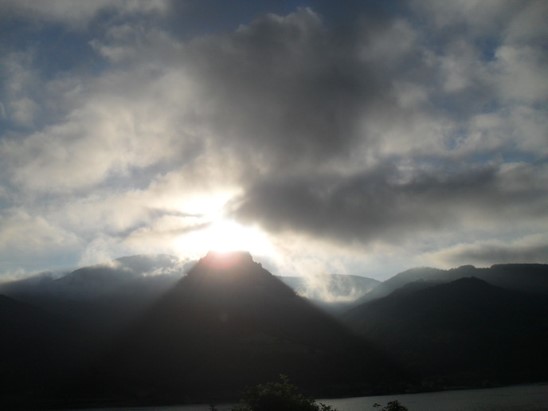
Any link Between Balkans and Egypt here? Well maybe this article about "The sun on top of the Pyramid" might be interesting...Pic: Summer solstice sunrise over Treskavica hill, Balkans...People who lived under this hill moved from the Balkans to Sahara while it was still green...

Sun on top of pyramid

In 2017, after the discovery of a strange trapezoid Natufian culture "shrine" (L) with paved floor and central hearth:


I wrote an article asking is there a link between it and and Lepenski Vir trapezoid houses (R) with paved floors and central hearths...

As a link I proposed Pre Potery Neolithic A and B cultures of levant, which were established by the descendants of the Natufians...

They, just like Lepenski Vir people buried their dead under the floors of their houses. And they plastered the heads of their ancestors, and displayed them in their settlements...

Well Lepenski Vir people made stone heads and displayed them in their settlements...

Well, I just found out today that it seems someone else pointed at possible link between Lepenski Vir culture and Pre Pottery Neolithic Levant cultures. In 2007...

Dusan Boric from Columbia University. In his article "The house between grand narratives and microhistories: a house society in the Balkans" he says that:

And then

And that's all 10 years before the discovery of the Natufian trapezoid "shrine"...You should read his article. It's an interesting one. The archaeologists who excavated Lepenski Vir, believed that the trapezoidal houses developed from shrines and were sacred "house-shrines"...

They believed that the people from Lepenski Vir built their houses to resemble the rocky outcrop, cliff, hill, called Treskavac, which is clearly visible from the settlement site...


The hill looks like a flat top pyramid. The houses look exactly like the hill. They are equilateral triangles with the cut off top...

But why would anyone bother building houses that look like a hill? Because every summer solstice, at sunrise, if you stand at the Lepenski Vir site, you see this. The sun on top of the pyramid...

I mean that will leave an impression, right? Now we are talking about 6300-6000 BC...And people in the Balkans being obsessed with sun on top of a pyramid. So much so that they built house-shines in its liking...

Do you think this is where the idea that "pyramids are cool" comes from?

Here is something interesting about these Mesolithic pyramid worshipers. The carried two very interesting haplogroups: I2 and R1b. The I2 are generally accepted as being Neolithic "Old Europeans". But R1b are generally thought to be Bronze Age "Invaders from Eurasian steppe"...

It seems reality is different from "generally accepted and believed" things...From the pyramid worship point of view, it is very very very interesting that these Lepenski Vir R1b people seem to have dispersed in all directions...Some time around 6000BC...

The earliest R1b R-V88 sample from Lepenski Vir is about 11,000 years old. From the Balkans, these individuals at some stage, in one or many waves, moved to Ukraine, where their eastern expansion ends. They also moved north, to Germany, and south, to the Mediterranean.

One theory is that at some point all R-V88 lived in Sardinia and that around 7,500 years ago some of them crossed from Sardinia into Africa. It is also possible that RV88 arrived to Africa through Levant. But to Africa they arrived, before any pyramid was built there...

Some of these R-V88 carriers moved from the coast towards, what was then, Lake Mega Chad, a much larger version of Lake Chad, that existed during the Green Sahara period, which lasted until 5,500 years ago...

As the area became dry, they moved further and further south. They lived in the oases, rivers, and lakes of Niger, Cameroon, Chad, and Nigeria. Their genes are today found in west African populations...

But not all of the R1b R-V88 moved into African Interior. They show up today throughout the Mediterranean, including Spain, Malta, Lebanon, Egypt, and amongst Jewish populations...You can read more about R1b distribution on Eupedia R1b page...

Were some of them among the people who one day, all that time ago, stood on the Giza plateau looking at the vast emptiness before them and said: you know what would look great here? A pyramid. To remind us of the Old Country...

One thing that really puzzles me. Lepenski Vir culture was both territorially and numerically small, at least based on the archaeological data. Yet, they managed to cross half the world, spread all over Mediterranean and central Africa. How?

In Cameroon alone their descendants make up 90% of the male population...Something is wrong here...

I think we are missing something important...

Tuesday, 26 January 2021

Heavenly throne


Remains of an early Christian basilica, built in 4th c. AD and abandoned in 6th c. AD. It was built on a little plateau called “Nebeske stolice” (Sky chairs), located 1800 meters above the sea level on the Kopaonik mountain, central Serbia...

The interior of the basilica was richly decorated, floors were covered with mosaics, while walls were painted with frescoes. Size of the basilica and its lavish decorations are suggesting that it was connected to a large nearby settlement, whose remains are yet to be found...

I mean, if you wanted to be close to god...I just love the name: "Nebeske stolice". It means "Sky chair" but could also mean "Heavenly throne"...

Saturday, 17 October 2020

Veliki Vetren

In 1997, a group of hunters was chasing a fox up the slopes of the Veliki Vetren peak on Mount Juhor, Central Serbia. 


Finally the fox reached the area which surrounds the peak and which is littered with giant bedrock outcrops. 


There it disappeared in a hole under one of the rocks...


The hunters sent the hound in, and when it emerged back out with the dead fox in its mouth, the hunters noticed that the fox had "a piece of ceramic in its jaws" and that it was entangled "in some rusted irons"...

Tomica Stefanović from the local museum, who heard the story from the hunters, went to the fox hole to see it for himself. And after some poking around, he managed to get out of it a bronze spearhead...


He immediately informed dr Milorad Stojić from the Archaeological institute about his find. The fox hole dig led by dr Stojić unearthed over 400 metal objects: 

Jewellery of Celtic type


Buttons with a Celtic triskelion 


But the most amazing find was a complete equipment for 14 riders. A complete cavalry unit...A Celtic cavalry unit...From the 2nd c. BC...Why was this equipment buried on Veliki Vetren?


Now who were these Celts from Veliki Vetren? Most likely Scordisci, who at that time controlled northern Balkans...Apparently according to dr Milorad Stojić, the historical sources say that Scordisci cavalry units were lead by a leader and two lieutenants. The equipment found on Veliki Vetren confirms this, as three of the cavalry sets were more luxurious than the others. 

The further digs in the area discovered that the whole top of the Veliki Vetren peak was fortified and turned into a Celtic oppidum. 


Celts built the oppidum walls around the existing bedrock outcrops which they incorporated into the walls. 


They also used large boulders to form the rest of the wall


Why would anyone want to build a fortress on Veliki Vetren? Those who controlled the Veliki Vetren peak, controlled the transport along the Morava valley below it, which was the main North-South transport route across the Balkans...

That controlling this part of Serbia was very important throughout Balkan history can be seen from the fact that remnants of 40 fortified settlements were found so far on the mountain Juhor...

So Celtic oppidum on Veliki Vetren was an important military centre, as can be seen from the military equipment found on the site, but it was also an important metallurgical centre, as can be seen from many smelting furnaces found on the site too...

Local villagers say that Veliki Vetren peak "attracts lightning"...Probably because huge amount of metal deposits, particularly slag, located in and around the Celtic oppidum...

Dr Stojić believes that the Celtic opidium was destroyed during the campaign against the Scordisci lead by the Cornelius Scipio Asiagenus in 74BC. 

Dr  Milorad Stojić published his findings in a book entitled "Veliki Vetren". He has since retired... 


When the news about the discovery of the Veliki Vetren oppidum hit the archaeological circles, it caused a sensation..."Celtic lexicon" gave it a special place in its list of Celtic sites. Veliki Vetren is the only known Celtic fort and metallurgical centre south of the Sava and Danube rivers. Way out of the "Land of the Celts"...


One of the world's leading Celts researcher, professor Vaclav Kruta, considered Vetren one of the most important European Celtic sites. 

But, promises made by the Serbian government that they will finance further digs on Veliki Vetren never materialised...No other investigation of the site was done by archaeologists and Veliki Vetren was soon forgotten...Well, by the archaeologists and the press. Not by treasure hunters who are the only people who dig around Mount Juhor today, based on numerous holes that can be seen everywhere in an around the Celtic oppidum...

Now this is amazing in itself. But it gets better...

There are many legends related to the "Devil's Town" on Veliki Vetren peak recorded in the villages surrounding the mountain. And the most famous story is the one about the "14 horsemen who came down the mountain on foggy nights and abducted young girls". 

How incredible is this??? 

Now is it just a coincidence that the archaeologists have found exactly 14 sets of cavalry equipment in the "Devil's town"? I mean the number 14 is not one of the usual mythological numbers, like 1, 3, 7, 9, 10, 15, 30, 100 which are found in so many legends...14 is a very non mythological number...So the chance that this number was picked by the legend makers by chance is very very low... So what then? How old is this legend? Is it possible that it is dating to the time when "riders resided in the oppidum on Veliki Vetren" and from it, terrorised the local population in villages below? How then was it preserved to this day? Passed on from father to son in the villages surrounding Veliki Vetren since the 2nd century BC? 

Now this is amazing in itself...But it gets better...

The legend also says that the riders from the Devil's Town "croaked like ravens" which obviously meant that they spoke in, to the local villagers, foreign and incomprehensible language, which to them sounded like croaking of ravens...


Now, believe or not, in the local Serbian dialect spoken in villages around Veliki Vetren, the word for raven is "gal"...So "the Galli (Celts) croaked like Gali (Ravens)"...

What? Is this a coincidence?

Does this have anything to do with "Galli"??? You know, the Celts? 

I am not entirely sure...This could all be just a coincidence...

But:

Serbian word "gal" which means raven also means black...Black like a corvid...It is the word that gave us Kali and Cailleach...I talked about this in my post "Gal"...

This is indeed very interesting, I can hear you say. But what does any of this have to do with Celts? Particularly when we know that the Hellenistic folk etymology connected the name of the Galatians (Γαλάται, Galátai) to the supposedly "milk-white" skin (γάλα, gála "milk") of the Gauls. 

Well I don't know...

It is this picture that makes me wonder:

"Four Provinces Bringing Tribute to Emperor Otto III" is an illustration from the manuscript: "Gospel Book of Otto III" which was made around the year 1000AD.


What is very interesting is that in this medieval depictions of the people of the Holy Roman Empire, each nation was depicted with different racial characteristics: 

Sclavini, Slavs are depicted with dark skin and red straight hair. 
Germanics were depicted with pale skin and blond straight hair. 
Romans were depicted with pale skin and brown curly hair. 

And

Galls were depicted with dark skin and black curly hair. 

Was this deliberate? Was this based on what people thought Slavs, Germanics, Galls and Romans looked like at the time? Or was this random rubbish which means nothing?

If this was deliberate, is it possible that Gali once meant "people with black hair"???

I think it was deliberate, as Procopius in the 6th century AD says for Slavs: "Their skin is not very white and their hair is reddish".


Just like the depiction of Slavia in the Gospel Book of Otto lll...So I would say the rest is accurate too... 

Also, Celts which lived on Veliki Vetren came to the Balkans in the 3rd century BC lead by BrennusApparently: 

The recurrence of the name Brennus makes it possible that it was a title rather than a proper name. Some 19th century scholars connected the name with the modern Welsh word "breenhín", and Irish words "branán, braine, braineach" meaning "a prince, a chief, leader". There is also an Irish name "Bran" with the same meaning. 

Now in Serbian the word "bran" means to defend, "brana" means defence, "Branko" means defender...So is it possible that Celtic Bran (prince, leader, chief) and Serbian Bran (defend), Brana (defence) and Branko (defender) come from the same root? Leader's first duty is defence of his people and his land...

Also, interestingly

In  Breton word Bran means Raven and Crow. 

In Welsh, word Frân mean crow and word Gigfran means raven. Fran is in old Welsh also spelt Bran, Vran and Uran.

In Irish, word Bran means raven. 

In Serbian we have these two words: 

Bran - defend, protect, be a barrier
Vran - black, Crow

And

As early as the 12th century AD, authors such as Geoffrey of Monmouth (in his Historia Regum Britanniae were connecting the name Brennus with the Welsh personal name Bran (spelt Vran, Uran, Fran in old Welsh) meaning "Crow". 

I wrote about this in my post Bran Vran...

So I don't know what to think really...

It could be all just a coincidence...

PS: Celtic raven helmet from Romania...