Showing posts with label Serbian traditions. Show all posts

Saturday, 24 April 2021

Roast pig for Christmas

Jasper gem engraved with the scene of a wild boar hunt set in a gold frame with pearls and glass. Roman Empire II-III c AD. Metropolitan Museum. 

Wild boar is another symbol (animal calendar marker) for winter...

I talked about this in my post about the locating the exact moment in time when the Abduction of Persephone happened (the taking of Persephone, the fertility of nature, from our world into the otherworld)...

Persephone was abducted while "Eubouleus was pasturing his pigs". I believe that this means that she was abducted during "pannage".

Pannage is the practice of releasing livestock-pigs in a forest, so that they can feed on fallen acorns, beechmast, chestnuts or other nuts. Pannage coincides with the acorn shedding season of whatever oak variety grows in the area.

The acorn shedding season of the Eastern Mediterranean oaks, like Holm Oak or Valonian Oak, starts from October-November and lasts until December-January...I love Valonian oaks...They look like brightly burning suns: 

I talked about this in my post "Christmas trees from the garden of Eden"

The pannage season overlaps with the the main wild boar mating season which in most areas lasts from November to January (Winter). And there are indications that in the past this was also the main mating season of the domesticated pigs too...

Winter was also the time to go wild pig hunting, as this is when they are the fattest...Which is why killing of wild pigs became synonym with killing of winter. But not only winter. The dark, cold part of the year (Nov-Apr)...


Which is why the wild boar jawbone is the symbol of summer. But not only summer, the bright, warm part of the year (May-Nov). I talked about this in my post about Calydonian boar 


Interestingly, pig  is the animal sacrificed as part of the mid winter (now Christmas) rituals in Serbia. 

I talked about this in my post about Sacrificial animals in Serbian tradition 


The same correlation between the time of the year and the sacrificial animal was also found in the archaic Roman tradition. Here is a Roman fresco from Pompeii, which probably depicts sacrificing of a pig during Saturnalia, archaic Roman mid winter festival...


To read more about ancient animal and plant calendar markers, start here…then check the rest of the blog posts related to animal calendar markers I still didn't add to this page, and finally check my twitter threads I still didn't convert to blog post...I am 9 months behind now...

Saturday, 25 April 2020

Hazel

Serbs believed that hazel was a "blessed tree". An old hazel tree was particularly "holy". A person could even confess to it, like he would to a priest...


The most interesting Serbian Easter custom is "hazel communion". In the morning people went to the nearest hazel tree, where the communion was taken by eating a hazel bush blossom instead of communion bread. After that people went to the church to do the confession...


The same was done on Christmas Eve, except then people ate a hazelnut instead of communion bread...


An old man from Smoljani (Bosnia) described this ritual like this:


Also in Bosnia, if some evil befell the house, the family would go to the nearest hazel tree and would walk three times around it praying to god for help...Instead of going to the church...

In Eastern Serbia, if a local "zapis" (holy oak marked with cross where village mass was held), suddenly dried, which was the sign of an impending doom, people would stick a hazel twig into the ground and would then kneel around it and pray to it for protection from evil...


Hazel twig is used to "pull out living fire" (to ritually make fire using fire drill) and this fire was used to light up the first fire in the new house...


Unless people were moving from the old house to the new house, in which case the fire was brought from the old house hearth and used to light the fire in the new house hearth. 


I talked about Serbian rituals linked with the building of a new house in my article "New house"

Christmas bread "česnica" baked on an open fireplace, was covered with charcoal using hazel twigs. These charred twigs were then placed into grain storage...


In some parts of Serbia, "položajnik" (first footer) walked around the house holding hazel branch before entering the house on Christmas morning, to ensure the house is protected from evil...
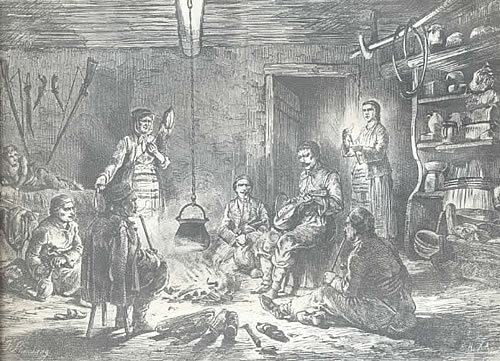
These hazel twigs were used to poke the Yule log during Christmas Eve fertility rituals...


You can read more about these rituals in my article "First footer".

In parts of Bosnia a hazel log, not oak, was used as the Yule log. After bringing the hazel Yule Log into the house, the househusband would first scrape a bit of soot from the sealing with it, and would then use the Yule Log to draw a soot cross on the wall to bless the house...

Hazel was also linked to the otherworld. On Christmas eve, the old winter solstice night, the longest night, when the dead come into the land of living, hazelnuts (and walnuts) were thrown into corners, where the souls of the dead congregated, as the food for the dead...

If a mistletoe was found growing on a hazel bush, people believed that a snake king can be found curled up under the bush, with a shining jewel on its forehead, or some other treasure next to it ...


Snakes that live under a hazel bush have special powers. If one eats the meet of a snake killed under a hazel bush, he will understand the language of animals. And if one eats the snake's heart, he will also understand the language of plants, particularly medicinal plants...


Hazel was believed to be the tree of wisdom, knowledge. The expression “Nije tri puta oko leske sastavljen” (he wasn't three times carried around a hazel tree) depicts a silly, stupid, mad person, who wasn't brought into wisdom, smartness giving contact with a hazel tree...

Which is maybe why Serbian schools kids who didn't know something were beaten with hazel twigs, to "beat wisdom into them" :)...

Hazel twigs were believed to be able to kill or at least ward off devil. It was believed that devil will never be able to cross the circle drawn on the ground with a hazel twig. 

Hazel was a favourite tree of "vilas" (fairies, but more precisely personification of lightning). They liked resting on hazel branches "because devils were afraid of hazel"...

Lightning was in Serbian mythology the weapon used by Ilija Gromovnik (Elijah the Thunderer, Christianised Perun) to kill devils. 


You can read more about Ilija Gromovnik in my post "Thundering sun god".

And hazel features prominently in Serbian thunder and lightning magic...


According to the Serbian tradition "Hazel tree is the best protection from thunder and hailstone. Thunder never strikes into hazel tree because it was blessed by god and god only strikes devil's trees"...Like oaks, the tree of the old God, Perun...


This is why in mountains of Serbia shepherds decorate themselves with hazel branches or tied hazel twigs around their waists during thunderstorms or run under a hazel tree for protection...


The connection between the hazel tree and thunder can be seen from the folk belief that hazel trees will lose all the nuts if there is a thunderstorm on St Elijah the Thunderer day (Perun day, 2nd of August)... 

On St George day, the beginning of the summer, green hazel twigs were used to decorate houses, sheds, pens, fields, gardens as a protection from thunder and hailstone. In some parts of Serbia people made hazel crosses and hang them around their property instead of hazel twigs...

This is also why hazel was often planted next to houses, to protect them from lightning. And why a hazel stick (wand) was kept in houses, because it was a weapon which could break lightning storms, particularly hail storm...

Remember, it is lightning which was the original source of fire. This is how gods made fire. Then people stole the fire from the gods. Figured out how to make it themselves by using (hazel) sticks...Hence the relation between hazel sticks, live fire and lightning...

Serbs also believed that sometimes, a petrified lightning can be found under a hazel tree. It looked like a black or grey egg, and and it smelled like gun powder. It was believed that this stone lightning would bring luck to its finder...


Hazel is particularly linked with fertility. A young hazel or a hazel twig is in Serbian folklore actually known the "tree of life"....

In Bosnia there is a custom that on St George's day every animal in the household is touched with a hazel twig to insure its health and fertility. Hazel leaves were put under chicken nests so that chicken would have lots of chicks...


A flower wreath which is used for ritual sheep milking on St George's day is hang on hazel branch. I talked about St George's day shepherd's rituals in my post "Aries must die". 


Serbs also believed, that if you count sheep on their return from the highland pastures using hazel twig, by touching each sheep as it enters the sheep pen, sheep will multiply...


New bee swarm should be caught in a new basket beehive made from hazel twigs, to ensure that the new beehive will produce lots of honey...More about Slavic bee folklore can be found in my post "Bee". 

"When bees don't want to swarm, pick three hazel twigs before sunrise, and use them to let the sheep flock out of the sheepfold. Then touch the beehive with the twigs. The bees will start swarming after that"...


Serbs believed that the most magically powerful were the hazel twigs which were brought to the church on the "Cveti" (Flowers) day. This is the ancient spring celebration linked to female fertility. 


More about this in my post "Flower girls".

Hazel played special role in Serbian female love and fertility magic. People believed that if a girl hits a boy three times with a hazel twig, he will never look at any other girl...

Serbian girls who wanted to get married used to saw a hazelnut into their clothes, next to their heart, to ensure they found love...

Bits of hazel wood were placed in the clothes of the newly wed and bows were braided from hazel twigs and placed on their heads to ensure they have lots of children...

A woman who eats a worm from a hazel tree or a hazel bud would certainly get pregnant...It was also believed that in the year when hazels have many nuts, there will be many children too...

In Homolje, Eastern Serbia, women used to put a hazelnut under their "tkanica" belt "to give birth to male children". 


More about these beautiful belts in my post "Crios-Tkanica".

A pregnant woman should cary a hazelnut in her blouse near her breasts. When she gives birth, she should put this hazelnut into the water used to bath the baby for the first time, so it would be healthy...

Even healthy people bathed in water with hazel twigs and leaves "for health" because it was believed that hazel had magical power over sickness and even death. Which is why it was believed that a hazel stick can be even used to raise the dead...

That's it for today folks...Hope you enjoyed it...Have a nice evening...

Sources:

"Rečnik srpskih narodnih verovanja o biljkama" by Veselin Čajkanović
"Srpski mitološki rečnik" by Grupa Autora

Friday, 10 April 2020

Transfiguration

"The Transfiguration Cathedral in Pereslavl, Russia" by Anastasia Usvayskaya. The cathedral was built by the Grand Duke Yuri Dolgoruky in 1152.


The transfiguration of Jesus is one of the "miracles" of Christianity and reffers to the moment when Christ's "true nature" was revealed to his disciples. The event happen on top of Mt Tabor and was witnessed by Peter, James and John. It was described in gospels like this:


This is an Icon from The Transfiguration Cathedral in Pereslavl, depicting the moment when "Christ's true nature shone out of him like the sun"...


The Feast of Transfiguration has been celebrated in the Eastern Orthodox church since at least the 6th century, It is celebrated on the 6th of August. Why on this date?

The beginning of August marks the end of summer and the beginning of autumn. This change is marked by the Day of St Elijah the Thunderer. He brings the first autumn rains and cooling of the northern hemisphere. Which is why Serbs say that "From St Elijah, sun becomes ever dearer"

This is the time of the year when a major shift in the balance of power in the Sun-Earth system takes place. The power and influence of the sun (Yang) is at its maximum and starts to decrease. The power and influence of earth (Yin) is at its minimum and starts to increase...


I talked about this in detail in my post "Yin and Yang".

So there is definite change in nature in the Northern Hemisphere that starts at the beginning of August...Maybe this is the reason why it is then that we celebrate the feast of Transfiguration?

By the way, it turns out that the arrival of the St Elijah's thundering chariots corresponds with a natural phenomenon which was only discovered very recently: the yearly maximum of the bouncing of the solar winds off the tops of the clouds...


I talked about this in my post "The thundering sun god".

Interestingly, Elijah, who is in Serbian folklore both Perun (Thunder god) and Veles (Sun god), basically old Sky God, Dabog, is present at Jesus's transfiguration...

In Serbia people believed that the Feast of Transfiguration is "Dan kada se preobražava i voda i gora" (The day when both water and forest are "changing")...

The usual explanation for this belief is that it comes from the fact that at the beginning of August leaves on trees start getting yellow and water in rivers and lakes starts getting cooler...

But there is another interesting scientific discovery which shows that the beginning of August is the time when water changes in another, less obvious way...

According to the Serbian folk calendar, the year only had two seasons. White, Warm part, between St George's Day (start of May) and St Mitar's day (start of October). And Dark, Cold part, between St Mitar's day (start of November) and St George's day (start of May). I talked about this in my post "Two crosses". 


The Feast of Transfiguration which is celebrated at the beginning of August, falls right in the middle of the old Serbian White, Warm half of the year (today end of summer beginning of autumn)...

Recent study by the Belgrade school of mereorology has shown that the rainwater in Serbia is getting more acidic between St George's day and The Feast of Transfiguration (summer) and is getting less acidic from The Feast of Transfiguration to St Mitar's day...

The water indeed "changes", gets "transfigured" around the beginning of August.

I wanted to check if this was just a local fluke. What I found is that this annual fluctuation of the rainwater ph value has been observed in other parts of Europe too...

Diagram showing annual fluctuation of rainwater acidity from Portugal. From: "pH of rainwater in Coimbra, Portugal: the seasonal variation" by J. S. Branco & S. J. Formosinho


Diagram showing annual fluctuation of rainwater acidity from France. From: "Cadmium contamination of three bivalve species (oysters, cockles and clams) in Nord Médoc salt marshes (Gironde estuary, France): Geochemical survey and metal bioaccumulation kinetics"


If anyone has any links to similar studies from around Europe, please let me know.

Anyway, I think that this is seriously cool stuff...

Another coincidence most likely...not. :)

Just found this out. 

Yearly UV radiation in the US


Yearly UV radiation in the UK


I want to thank to my farmer friend who alerted me to this. You can see that the amount of UV radiation starts to drop jus before the transfiguration...

Are theses things linked?

PS:

If it rained on Maundy Thursday (Thursday before Easter) people used to run out with pots and pans to catch it. When bottled it would last for a year and a little used in preparing bread would stop the dough being heavy...


I wonder how much this has to do with Christ and how much has to do with the PH of rain water,  which is in late spring approaching it's lowest yearly value...Acidic water (low PH) helps bread rise... 🙂

Saturday, 25 January 2020

Dragon who stole rain

In the past, during spring droughts, Serbs used to go to mountain lakes and pray for rain on their shores "to a dragon living in the lake who swallowed the rain"...


Procession lead by a man holding a cross would walk around the lake, after which the cross was throwh into the lake...As a sacrifice to the dragon...

These kind of ritual prayers used to be organised in many mountains like Stars Vlah, Mokra, Vinik, Bjelasica...

Rain swallowing, drought causing dragon is a common theme in Slavic folklore...And when a hero kills such a dragon by cutting his head(s) off (the only way to kill a dragon by the way), "rivers (of fertility) flow from each of his necks"...

We even know the name of the dragon to whom Serbs prayed for rain. Jarilo, Slavic sun god, whose name means "The brightly burning one", "The scorcher". He represents the sun's heat...Sun's heat which is life bringing in spring and life destroying in summer...

His symbol is snake, also symbol of sun's heat, because snakes only come out during warm part of the year. I talked about the snake as the symbol of the sun's heat in my article "Enemy of the sun" and "Chthonic animal". During the hottest period of the year, summer, snake turns into dragon, fire breathing, drought causing monster...The scorcher...Jarilo...

That Dragon is directly linked to the sun, is the sun, can be seen from Serbian folklore where "Sun ray calls Dragon his brother" and where "Dragon marries Sun's sister"...

We know this because when spring droughts come, Serbs, both Christian and Muslim living on mountains Šara and Korab, used to come together on the lakeshore on St George's day, old Jarilo's day, and sacrifice a ram whose blood was let flow into the lake. For the dragon...Jarilo...

Sacrificing a lamb on St George's day was a must for every Serbian family. This was originally blood sacrifice to Jarilo, the Dragon. Even after Jarilo was Christianised into St George, and became the Dragon killer, Serbs continued with their annual sacrifices...

Summer, time of scorching heat, time of the dragon, starts in Taurus (bull of summer). And for Taurus to start, Aries (ram of spring) needs to end (die)...I talked about this in my post "Aries must die". 


In the lakeside ritual killing of rams during droughts, on St George's day, Serbs explicitly equated St George, Jarilo with the Dragon...

Christian and Muslim Serbs also sacrificed young girls at the lake under Trojan fortress on Pešter highland...I talked about this in my post "Water bull"...

"According to the local legends, there once was a lake below the peak. The lake was a home to a three headed (!) dragon, or a water bull...Every year the local people sacrificed a young girl to the monster, so that it would leave them in peace. One year, it was Serbian king's daughter's turn to be sacrificed. But at the last moment, a knight, St George, arrived, killed the monster and saved the girl.

Interestingly, at the bottom of the Trojan peak lies Djurdjevica well (St George's well). This well is holly to both Christians and Muslims who live in the area, and they gather around every year on St George's day, to celebrate the Saint's day together..."

This legend equates dragon with the bull, the symbol of summer. Bull is the symbol of summer because summer starts in Taurus, bull... 


Source for the lakeside rain rituals: "Srpski Mitoloski Recnik - Grupa Autora"

PS:

Long ago, drought hit Kingsteignton in Devon.

There was not even enough water to baptise a baby.

The villagers sacrificed a ram in the dry bed of a stream. Water burst forth.

Ever since, the good folk of Kingsteignton have roasted a ram at Whitsuntide amidst much revelling...


Tuesday, 21 January 2020

Enemy of demons

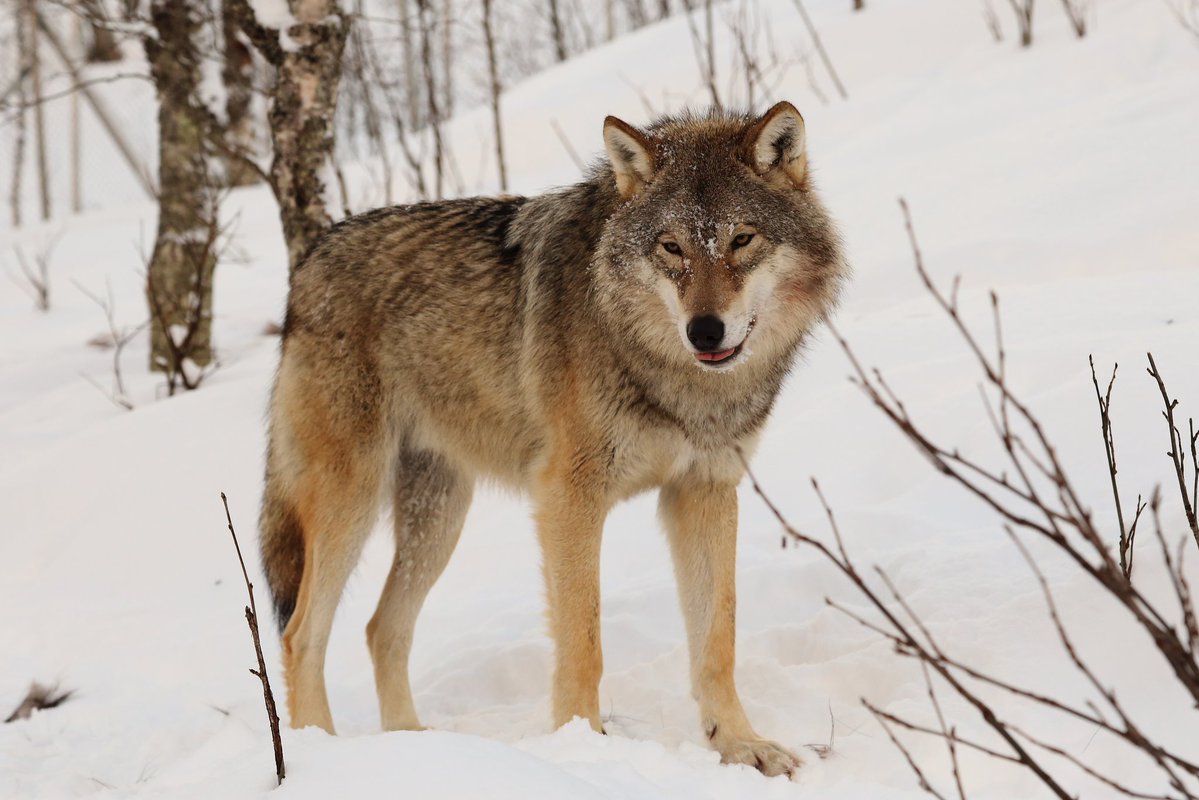
In the past Serbs believed that wolves were "enemies of demons". Which is why when the devil, a vampire, or an "unclean" deceased person was mentioned in conversation in Central Serbia and Montenegro people always added: "Vuk mu na put!" (May a wolf stand in his path!)


Serbs from Bosnia and Croatia drank rainwater from a wolf's paw-prints believing it had magic properties. This was because "wherever a wolf's paw treads, all evil is fended off from people, cattle, and crops"...
 

In Hercegovina, a hot arid area of the Balkans, people shouted "Vuk, vuk, oro krstaš!" (Wolf, wolf, imperial eagle!) to protect themselves from rising whirlwinds – which were believed to be of demonic origin and said to cause disease and insanity...


Incantation from Central Serbia "against any disease": "U kurjaka četir’ noge, dva uva, rep i zev. U kurjaka strašan zev: boljku će zazenut! Ustupi i beži!" (Wolf has four legs, two ears, a tail, and jaws, terrible jaws: it will devour the disease! Back off, go away!)


Serbian ritual practice recorded in Serbia, Montenegro, and East Bosnia, performed to ensure lasting health and strength of children, involved pulling the newborn baby through "vučiji zev" (wolf's yawn), the skin cut from around a wolf’s jaws...


Serbian incantation from Vojvodina "against any disease": "Spusti se kurjak nizbrdo da uhvati ovcu. Ne uhvati ovcu neg' uhvati svo zlo" (The wolf came down the hill to seize a sheep. But instead of seizing a sheep he seized all evil)...


In the past, when a son was born, it was customary in Serbian villages for the father to open the house door, stand on the doorstep, and announce the birth of the son by shouting: "Rodila vučica vuka!" (A she-wolf just gave birth to a wolf cub!) 


More wolf lore in my post "Wolf feast".

When in some family male children kept dying, Serbs would give the next boy to be born name "Vuk" (Wolf). It was believed that this name would scare away demons which cause illnesses...


Wolf teeth were considered to be particularly magically potent. Serbs put them in bed around mother and baby as protection against demons. Children wore them as talismans which were meant to give them good strength and health. Serbs also used to call first child's teeth "wolves".


This magic ritual was recorded in Eastern Serbia and Kosovo. Local Serbs would look at a house through a wolf larynx (throat) if they wanted to cause quarrel in the family that lived in it. "Da bi se pojeli ko vuci" (So they would kill each other like wolves)...


In Serbia (and other Slavic countries and Finland), horse skull was placed on top of beehives to protect bees from pests and diseases. Particularly powerful was a scull of a horse killed by a wolf...Wolf sculls were also used for this purpose... 


More bee related Slavic folklore in my post "bees".

It's getting late. In the mountains of the Balkans we find a peculiar type of "old style" singing which can only be compared with the howling of wolves. It is called "ojkanje" and could be the oldest polyphonic singing that has survived til today. 


More about this ancient singing style in my post "Wolf singing". 

Riddle:

Q: "Kroz goru odilo, kući ne doodilo?" (Wanders through mountain/forest, never comes home?) 

A: Wolf

Symbolically this riddle is also a magic spell which forbids wolf to come from his mountain/forest to "our" human home...


In Serbia, when shepherds lost their sheep in the mountain, they ritually tied "verige" (chain on which cauldron is hang over the hearth). This was done to "close wolf's jaws" and protect the sheep...


More cauldron chain folklore in my post "Verige".