Showing posts with label Slovenian folklore. Show all posts

Wednesday, 5 June 2024

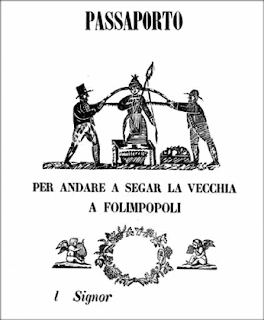
Sawing the old hag

A while back @another_barbara posted this 1865 beehive panel image with this description: An interesting Shrovetide tradition from Slovenija "babo žagajo" (sawing of an old woman). 

The other day wanted to write an article about this custom, and while looking around the net for more info on the subject, I came across 1960 paper by Niko Kuret "BABO ŽAGAJO, Slovenske oblike pozabljenega obredja in njegove Evropske paralele".

In which he presents all the different versions (he knew of) of the "SAWING OF THE OLD WOMAN" ritual found in Slovenian lands, and its European parallels...

Here I will translate the most interesting bits from this paper, and will then give my interpretation of the ritual.

Here we go:

In 1791, Anton Tomaž Linhart, in his "Attempt at a history of Corniola and the other southern Slavs of Austria, vol 2" mentioned a "ridiculous legend", which in the middle of Lent circulates among the people, and especially among the children: 

In the past, during Lent, people used to lead an old woman out of the village and cut her in half. Considering that this legend was widely known and was everywhere the same, Linhart concluded that this was a "rituals" which was once really performed.

Ethnographic data collected in Slovenian villages in the second half of the 19th century confirmed that this ritual indeed still took place every Lent. And Niko Kuret states that the ritual was still performed in some villages in the second half of the 20th century.

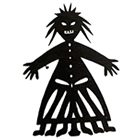
Except "the old woman" was not really an old woman, but an effigy of an old woman made of wood and straw and dressed in old women's clothes, that was cut in half, often on bridges, over running water, or next to running water, and the parts were then thrown into the water...

In the area between Bohinj and the eastern half of the Karavanke mountains, a log or a board with a drawing of a old woman was sawn instead of a wood and straw effigy. 

In Carinthia, the hag was represented by a rope/thread which was cut in half...

Finally, in many places in Slovenia, the ritual cutting of the old woman eventually turned into a prank that people played with kids. They would send them somewhere to watch the cutting of the old woman which never actually took place. And they would miss lunch 🙂.

That's Slovenia covered. You can find a lot more details in the paper. The rest are examples of the same custom recorded in Italy, France, Spain, Portugal and Switzerland, organised by the specific subtype of the ritual and then the country.

As we can read in the 1983 book "I giorni del sacro" by Franco Cardini, "The burnings and/or sawings of "Vecchie" or "La Bianca" or "La Monaca" occurred almost everywhere in Italy"...

In some places, like in Florence, or in Reggio Emilia, the people first accused the old woman of everything that was wrong in the city, then she was put on a trial, condemned and then sawed in half. In some other places, like in Feltre, after she "made a will".

In some other parts of Italy, like in Campagna and Sicily, they hid a blood-filled bladder inside the doll and secretly cut it open during the sawing action. In the Ampezzan area, the effigy was stuffed with sawdust which represented blood of the wooden effigy.

A special form of the "Saw the old woman" custom, recorded in Tuscany in the 15th century. There they filled the old woman effigy with dried fruit, sweets and other goodies, which are removed from it during sawing and children, sometimes even adults, fought for them.

In Faenza, the old woman effigy, was decorated with necklaces and earrings made of dried figs, dried plums and chestnuts. The local children made rag dolls, stuffed them with dried fruit, carried them through the streets and shouted: "Sega la vecia!" (Saw the old woman).

Sawing of an effigy of an old woman (La Vieille) was also found in France. In the south, in Labastide-du-Vert, they dressed an effigy in a woman's dress and put an apron on her. They put it on a woodcutter's horse and sawed it. 

Everyone around was cheering and singing along: "Pauvre grand'mère! On scie grand'mère ! Adieu, grand'mère" (Poor old woman! We're sawing old woman! Farewell, old woman)... 

Around Quercy in the South of France, group of boys masked as "woodcutters" dressed a thin log in old female clothes and drove the "old woman" through the village streets. Finally they would stop on the village square and would start sawing the old woman in half. 

While sawing they sang: 

Resseguen la vielha, la vielha. Resseguen la vielha, aneit. Adiu paura minina, tu morés recegada, quai malur ! Tant milhor ! éra sorciera, zo méritava ben (Ocitan)

We saw the old woman, the old woman. We're sawing the old lady today! Goodbye poor grandmother, you die sawn, what a misfortune! So much the better ! She was a witch, she deserved it (English)

The same rituals are found in Switzerland where the straw effigy of an old woman being sawn is called "la bagorda" (the ugly one). In Oberland they keep old, useless lumberjack saws in some places and bring them out once a year, for "raz'g'a la vela" (sawing of the old woman). 

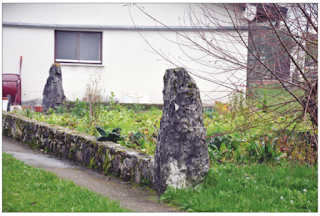
On the evening before Shrove Wednesday, when it gets dark, two boys would take this saw and would go through the village and would slide it back and forth across corner stones of several houses (sometimes specifically houses with young girls), with lots of noise and sparks... 

During the middle of the Lent, a hostile mood is unleashed towards old women in general, and sometimes especially towards a certain old woman in the locality in particular. 

Thus, in Marche, Italy, groups of boys noisily knock on the door of an elderly woman who has been chosen as the target of folk satire, calling her by name and shaming her. 

They carry a doll with them, dressed in such a way that it resembles the unfortunate victim. The doll is then sawn in half in front of the victim's house "amidst the revelry and jokes".

In Berry, France, on Mid-Lent Wednesday, 10 to 12 year old children roam the streets. With wooden sabers in their hands, they chase old women if they meet them and even try to break into houses where they know an old woman lives. 

Then they knead the image of the old woman out of clay and cut it into pieces with their wooden sabers, which they then throw into the nearby river. 

In the Gers region of Southern France, a song was sung before Shrove Tuesday: "Aux jeunes il faut des souliers, aux vieilles des coups de pied" (Young people need shoes, old people need kicks)..." 

The song has several such shameful couplets, each of which is followed by the refrain: "On scier a les vieilles, cette année, on sciera les vieilles!" (We saw the old ones, this year, we will saw the old ones!) 

In Barcelona, on Mid-Lent Sunday, groups of boys walk through the streets carrying a saw and a log. They sing that they are looking for the oldest woman in the city, so that they can saw her in two. At last they act as if they have found her and saw the log in two.

In Portugal, in the Lisbon, children arm themselves with pots and spoons. They greet every old woman with an infernal roar; they even throw stones behind her. The custom is called "Serra a Velha" (Saw an old woman). 

Elsewhere they gather in front of the door of the house where they know that an old woman live, and shout that her last hour is approaching, that she should make a will and pray for repentance. 

One of the boys then starts sawing a large piece of bark, while the others sing in between: "Oh, how long I've been sawing, but I don't see sawing! Either the saw is lousy or the old woman has too hard skin." 

In the eastern regions of Portugal, one of the singers represents an old woman who cries and wails, makes ridiculous requests to her neighbors, and in between confesses all her sins and finally imitates dying with a noise while the saw penetrates through the bark. 

In Porto, until recently, every year an effigy of an old woman was carried around town and placed at the door of the oldest woman. Later, they took the effigy to the main square, sawed her there, and finally burned her.

In Napoli the boys cut saws from cloth, whitewashed them with chalk and beat people with them on the back so that they could recognize the saw print on the dress.

In Piedmont (Turin) they sold wooden saws during Lent, later also saws made of chocolate. Boys carried giant lumberjack saws with them and threatened passers-by with them.

In Savoy, in Saint-Jean-de-Maurienne, they used to cut large saws out of paper and hang them on the people's backs ; they were called "rosses-vieilles" (worthless old women). Also in Switzerland, on Shrove Tuesday, children play with wooden saws.  

And, just like in Slovenia, in the other above countries the ritual cutting of the old woman finally turned into a prank that people played with kids. They would send them somewhere to watch the cutting of the old woman which never actually took place. And they would miss lunch 🙂.

So what's this all about? The most common explanation is that people symbolically cut lent (fasting) in half. Remember this article about the seven legged "Old Grandma Lent"? 


Apparently in the past, when it was the fourth Sunday of Lent, the figure was also cut from top to bottom, "as a sign of entering the second half of the Lent", a custom that gave the figure the name "sa Jaia Serrada".

Niko Kuret uses this to conclude that the old woman sawn during mid lent is a representation of the lent itself But why would lent be personified as an old woman? But where does all the hatred of that old woman comes from, which even leads to symbolic executions? 

Apparently, according to Niko Kuret, this comes from the hatred people felt towards the custom of lent which was imposed on them by the Catholic Church, and all the hatred was was actually concealed anti church sentiment...

Eeee...I doubt this is it...

The first explanation for this strange custom was proposed by W. Mannhardt in his 1874 "Wald Und Feldkulte Der Baumkultus Der Germanen Und Ihrer Nachbarstämme" where he tried to fit the sawing of the old woman into his theory about vegetation demons.  The sawing of the the old woman was to him the destruction of the vegetation demon of the previous year, i.e. a ritual of a primitive agrarian society. 

The vegetation demon is sentenced to death, and then killed — sawn, burned, hanged, buried, thrown into the water. Mannhardt does not say where the origin of the custom of the old woman being sawn originates. 

He does wonder if, considering the North-Western Mediterranean distribution of the custom, the custom has a possible Roman origin. The fact that "winter" is a feminine noun could be a clue pointing at that direction.    

But unfortunately we don't find any traces of any ritual killing of female representation of winter in Ancient Rome. Apart from maybe Anna Perenna, known from Ovid. 

Romans wrote that Anna Perenna was celebrated by the plebs, who made offerings to her so "that the circle of the year may be completed happily". On the 15th of March, beginning of the new agricultural year, her statue was ceremonially thrown into the Tiber river during.

So she could have been a representation of the "old year", but really, I wonder if she alone could have been a source of all the "killing of the old woman" rituals, which all took place at the end of winter, beginning of spring, which is when Lent takes place.

We find these rituals not just in Mediterranean, but also in Slavic countries, where people actually preserved the original meaning of this ritual: killing of winter, who was represented as the old hag, the winter earth, known as Morana (the one who kills) and Marzana (the one who freezes). 

And during the Lent, her effigies are carried around, burned (heating up of the earth) and then thrown into running water (snow melt resulting from heating up of the earth)...I talked about this in my posts "To kill a witch" and "Gryla"...

The snowmelt is in the sawing of the old woman ritual represented by the blood of the sawn old woman, and by the custom of sawing the effigy on bridges and throwing the sawn halves of the effigy into running water...

Interestingly, K. Wlislocki reports on the sawing of grandmother among the "Gypsies" in Germany in his 1891 "Volksglaube und religioser Brauch der Zigeuner". 

He says that "they made the old woman out of straw and first beat her with sticks on Palm Sunday, after which the undressed boy and girl sawed her, burned her, and threw the ashes into the water". 

He also says that "the ritual was performed in honor of the "shadow queen", a demon who torments people (gypsies) during the winter months with hunger, disease and death, disappears in the spring and returns with the winter". 

This is why on the Original Slovenian depiction of the ritual killing of winter, you see one group of people standing next to the head (start of winter) who are all despairing, and the other group of people standing next to the legs (end of winter) who are all rejoicing..."

One of the reason why the old hag is cut, like the firewood, is because firewood is prepared in the autumn to last until spring...By the end of winter, almost all firewood is spent, and this is another way to symbolically depict the end of winter...Or at least a hope for its end.

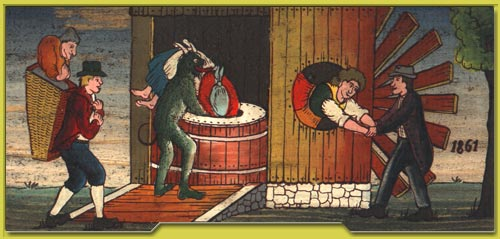
The meaning of this ritual cutting of the old hag is the same as the meaning of the milling of the old hag, also recorded in Slovenia and depicted on another old beehive panel...By the end of winter, the grain stores are getting empty...

"Bablji mlin", meaning "Granny's mill" scene, Slovenia. An old hag is being milled, and thus transformed, into a young maiden. Winter being transformed into Spring...I talked about this in my post "Babji mlin"...


Interestingly, in this version, it's Krampus, anthropomorphised ibex goat, symbol of winter, that does the milling...I talked about this in my post "Krampus"...

BTW, this link between the end of grain and and of winter is spelled out in this Eastern Slavic ritual song was sang by young unmarried women as part of "calling the spring" rituals

Larks, larks, fly away

Take the winter cold away

Bring us spring on your way

We are tired of winter

All our bread she has eaten

I talked about it in my post "Inviting spring"...

We have an obscure version of this ritual in Scotland too, in a Gaelic folk song "The old woman of mill dust". I talked about this in this post.


That the sawing of the old woman is indeed killing of winter can be seen from the fact that in some areas of Italy the effigy of the old woman was filled with fruit and nuts, which were released (grow, become available) when the old woman (winter) gets killed (ends)...

And the reason why this is done in the middle of Lent is because Lent marks the end of winter and beginning of spring...When all the firewood, grain and other food is almost all used up, and it's the last time for the winter to end...Which is why all these magic rituals are performed: to help bring the end (death) of winter (ugly old hag)... 

So that's that. I don't think that the root of the "sawing of the old hag" custom is Roman. I think it is part of the pre Roman, possibly Europe wide agricultural ritual for marking the end (death) of winter (old hag)...

It just so happens (again, no idea why), that the actual explanation of the custom is preserved the best in Slavic folklore...Maybe Slavs are just extremely culturally conservative. 

What do you think? Do you have any info about this or similar custom from any other country?

Monday, 21 August 2023

Holy water

@another_barbara:

I've read that our ancestors believed that on the evening of January 18th and January 19th until noon water is sacred and has healing and protective powers. People sprinkled this holy water in their homes. Bathing in this water was a cleansing ritual.


There are many legends about healing or holy springs in Slovenija. One of them is spring “Gospodična” (Maiden, Young woman) on Gorjanci hills. The story tells that an ill old countess became healthy and young again after drinking this water and washing her hands and face with it. 

Why this specific date?

The Christian explanation was this: John the Baptist baptised Christ on the 27th day after winter solstice. But this is most likely just s substitute tale for an older ritual.

So...What could be that "older ritual"???

Check this out:

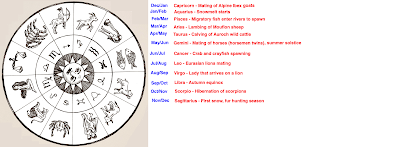
This is winter zodiac...I talked about it in my post "Trentar"...


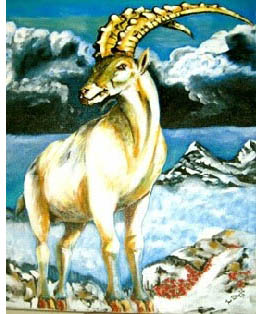
In one of my favourite zodiac related legends, the Slovenian legend about Zlatorog, the Ibex goat with gold horns, it is the "hunter from Trenta valley" that hunts and fatally wounds the magic goat, from whose blood springs magic Triglav rose...Which dying magic goat eats and gets healed (magically)...

So hunter, pursues Ibex goat, shoots it, it bleeds, from it's blood grow flowers...What does this mean?

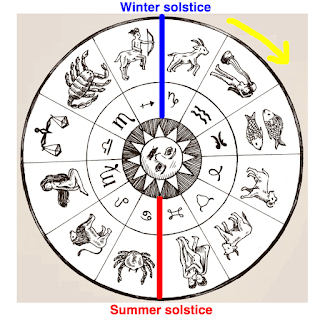
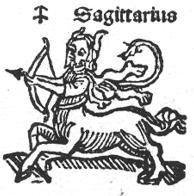
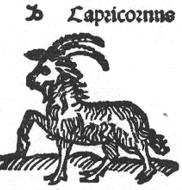
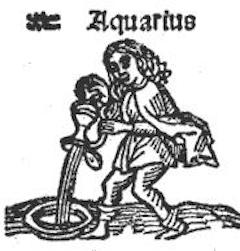
Well, what you are looking at is the winter zodiac: Sagittarius (end of autumn, start of winter), Capricorn (mid winter), Aquarius (end of winter, start of spring)...

Spring starts in Aquarius...Which represents the snowmelt...This is where frigid old hag, winter earth, turns into hot young maiden, spring earth...Who then gets her first "period"...Becomes fertile again...


BTW, the same transformation of winter into spring is contained in a Slovenia ritual calld "Bablji mlin", meaning "Granny's mill" scene. An old hag is being milled, and thus transformed, into a young maiden. Winter being transformed into Spring...I talked about this in my post "Babji mlin"...


The same story of rejuvenation, rebirth (of the mother earth) is preserved in the Scots Gaelic ritual song "The old woman of the mill-dust":

Will you give me your daughter old lady of the mill dust?
Will you give me your daughter 
I will be happy with her
I will dance with her

From Carmina Gadelica, 19th c. Gaelic Scotland

In Gaelic, the word Cailleach means both an old woman and the last sheaf of wheat and the corn dolly made from it. Corn dolly which represents Mother Earth, the life (grain) giving mother...

I talked about this in my post "The old woman of the mill-dust"...

Interestingly Cailleach, or Cailleach Beira, is the Scottish "Queen (Goddess) of Winter". She appears as a blue-skinned hag carrying a magical staff that freezes the ground and a hammer for shaping hills and valleys. At the end of her seasonal reign, she drinks from the Well of Youth to become young again...


Spring of youth being of course the snowmelt, which begins in February, in Aquarius (!!!) 🙂, which marks the beginning of spring...And the arrival of the "Bride" (Brigid), the spring earth maiden, snowmelt being her first "period"...

Effigy of St Brigid taken from house to house to collect money while saying these rhymes

"Here's St Bridget dressed in white,

Give us some money to honour her night,

She is deaf, and she is dumb,

And she can't talk without a tongue"


St Brigid, The Bride, Gaelic Mother Goddess turned Saint is associated with wells (running water)...

Slavic equivalent is the effigy of Marzana (winter) which is made and paraded around in Slavic countries at the same time. The effigy is then burned or drowned to symbolise the end of winter. This can give us the clue who Brigid originally was.


Also, The Witch of Winter, The Old Hag, has to be burned (and drowned) or spring will not come...Burning is heating up of the earth and drowning is the snowmelt...Burning and drowning of Marzana, Slavic name for Winter Earth...I talked about this in my posts "Gryla", "Living stone", "To kill a which", "Babele"

Oh and don't forget The Snow-White...From the article:

"What we have here is the story of Earth going through seasons: Spring, Summer, Autumn, Winter, Spring...

Beautiful young Spring Earth becomes bountiful Summer and Autumn Earth. Still beautiful, but in no way as beautiful as the Young Spring Earth...

Because of the cyclical nature of the solar year, Autumn Earth is the mother of Spring Earth of the next solar year. As Autumn ends, and the crab apples are the last fruit left on the trees, Autumn Earth turn into Old Hag Winter Earth, who "kills" her own younger self...

Dead Earth lies in her icy coffin until Young Spring Sun arrives. He sees beautiful Spring Earth under the ice, falls in love with her and revives her. Spring Earth, marries Spring Sun...

But seasons pass, Spring Earth turns into Summer Earth and then into Autumn Earth and then into Winter Earth...And the story repeats itself...Luckily, every spring, Young Sun arrives to save the day 🙂"

All these stories, beliefs and rituals basically describe the same thing: End of winter, beginning of spring...

Oh, including of course Christ's baptism ("in living", flowing water) and Mary's purification (first period after giving birth)...


@another_barbara
:

After @serbiaireland explained to me what a tale (I teach to kids for 15 years) really means, I had to add that the old countess was barren and she and her husband were sad because of that. After drinking/washing with sacred water she knew she will be able to have children now.


Wednesday, 17 August 2022

White Cross

This is the reconstruction of the Beli križ (White Cross) shrine which was once located in the valley southeast of the village of Prelože, Slovenia...

The shrine was destroyed during the First World War. But the locals preserved a vivid memory of it and of the rituals performed around it. These were collected by ethnographers during the middle of the 20th century...

As you can see, it was "a cross in a circle" made of stones, with four stones in each quarter of the circle and four pointy rocks on the ends of cross hands...

Basically this is a so called "sun cross", which symbolises a solar year with four season. Ever spinning solar wheel. This is confirmed by the fact that a bonfire was lit in the field near the shrine on Kresovanje (Bonfire night, Midsummer night)...


In the center of the "shrine" was a stick on which young green tree branches were attached, symbolising a young green tree. Or maybe this cross was rebuilt every year around a real young tree. This is not clear from the original text...This tree symbolically grew during the fertility ceremony which was performed around the cross in the spring "when the foliage turned green", which in the Prelože area happens in April...The carpet of crocus flowers across the slopes of Velika Planina in Slovenia, April...


It is quite possible that this ceremony took place on Jurjevo (St. George’s Day), the old Jarilo (Slavic Young Sun God) day...The field where the White Cross shrine once stood is linked to St George...I talked about him and why he is "The Dragon Killer" in this article "Letnitsa treasure"...

A very interesting metal plaque from the so called "Let­nit­sa Treas­ure", a 4th c. BC Thracian hoard discovered near Let­nit­sa, Bulgaria...This one depicts one of the most common themes from Balkan fairytales: a princess being kidnapped by a dragon...

Jarilo (Jura), whose name means both "the brightly burning one" (sun) and "the young one, the green one" (bringer of spring, summer, The Green Man) was in other Jurjevo rituals from Slovenia represented by a living walking tree.

Zeleni Jura (Green Yura) walking the earth. Part of Jurjevanje, celebration of the return of Jarilo, Jura, The  Young Sun God who brings spring...Today performed on St George's day...Tells you a lot about the true Identity of St George...


This ritual is performed Bela Krajina, area inhabited by descendants of Serbians who migrated here during Turkish invasions of the Balkans. Today split between Croatia/Slovenia...This is the original Green Man...

The Sun God's name Jarilo (pronounced Yareelo) comes from the root "jar" (yar) meaning: young, green (Life giving warm sun of green spring), but also brightly burning and raging, furious (Life destroying burning sun of yellow summer)...

Interestingly, in Sanskrit, har (cognate of jar, yar) can also mean green and yellow... 

So the fact that a (symbolic) young green tree, symbol of the sun god Jarilo, was "growing" in the middle of the shrine shaped like a sun cross, points at the symbolic meaning of this shrine: solar year and the climate which it creates...

And it is this climate which people of Prelože were trying to control...As part of the ceremony at the White Cross, four young girls span around the circle interconnected by ivy branches, singing prayers for "sun, rain and abundant crops"...

They prayed to "Dajbogec" (Giving god), another name for Dabog, the old Slavic Sky God...

In Serbian the expression "On vedri i oblači" means "he rules", "he has absolute control, absolute power". Literally this expression means "he makes the sky clear and cloudy"...I talked about this in my post "The power of the thunder giant"...

Dabog, Dajbog was also another name for Triglav, Trimurti, the Supreme god...I talked about Triglav in several of my posts: "Lugus or Triglav", "When the bride dies soon after the wedding", "Sun thunder fire", "Riddle", "Krkava Triglav stone", "Triglav, Trojan, Trinity, Trimurti, Agni"...

This is what Triglav is, one God with three faces: Sun, Thunder, Fire...

It is very interesting that the "shrine" contained pointy upward stones and that at this shrine girls (women) prayed to Dabog for good weather (just enough rain and sunshine) so that their crops would yield abundantly...

Because this is not the only place where we find large stones used in weather rituals involving Dabog and performed by women...

In his 1925 paper "The Ring of Nestor", Sir Arthur Evans, the excavator of Knossos, mentions a curious rain-making ritual which was performed in Ibrahimovci, near Skoplje, Macedonia, during droughts. 

Pic: Altar dedicated to Jupiter, Juno und Minerva, Macedonia


This is 1925 we are talking about. At least 1500 years since Jupiter was officially a god of rain...And yet, uneducated, illiterate SLAVIC villagers in Macedonia still remembered him in times of desperation...

What is very interesting is that this altar "was lying face down normally but was lifted when the rain was needed". Compare this with this Slavic rain making ritual from Belarus in which Dabog's stone is ceremonially lifted...I talked about this in my post "The last megalithic ritual in Europe"...

And compare this with other weather controlling Slavic rituals involving sky pointing "weather stones"...See, these weather stones have the same shape as the stones from the White Cross...I talked about them in my post "Weather stones"...


Source of info about the shrine and related rituals:

Pleterski, A. 2015, Preplet 3 in 4, preloška "Beli Križ in Triglavca ter Zbruški idol", in: Nesnovna krajina Krasa

Saturday, 4 December 2021

Trentar

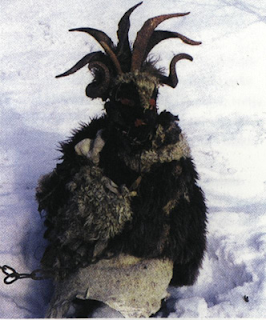
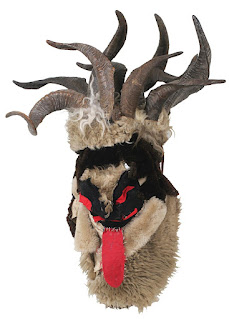
"Trentar", the winter demon from Trenta valley, Slovenija. He´s got 12 horns for 12 months of the year. I want to thank Not Just Another Barbara @another_barbara, great twitter account that tweets about Slovenian folklore, for these pics.


Eeee very very very interesting...

12 "goat" horns, one for each of the 12 months of the solar year which starts in Capricorn (goat)...

In one of my favourite zodiac related legends, the Slovenian legend about Zlatorog, the Ibex goat with gold horns, it is the "hunter from Trenta valley" that hunts and fatally wounds the magic goat, from whose blood springs magic Triglav rose...Which dying magic goat eats and gets healed (magically)...

So hunter, pursues Ibex goat, shoots it, it bleeds, from it's blood grow flowers...What does this mean?

Well, what you are looking at is the winter zodiac: Sagittarius (start of winter), Capricorn (mid winter), Aquarius (end of winter)...

I talked about this in my post "Zlatorog"...


But these are not constellations we are talking about...

Sagittarius marks the fur hunting season in Central Europe...


Capricorn marks the mating season of Alpine ibex goats of Central Europe...


Aquarius marks the snowmelt in Central Europe...

I talked about this in my article about the origin of western zodiac...

Wednesday, 24 February 2021

Living stone

Shepherds chapel, Velebit, Croatia dedicated to Holy Mary. The altar is actually bedrock, around which the church was built, indicating that this a Christianised pagan holy place. I talked about this in my post "Shepherds chapels from Velebit"... 

Bedrock is in the Balkans known as "kamen živac, živi kamen, živa stena" (living stone, living rock), called so, because it is believed to be still part of the living body of the Mother Earth.  And is venerated as sacred...


Transhumance shepherds used to bring offerings to these lumps of exposed bedrock before they took their flocks to the highlands, to ensure good weather. People believed that "Mother Earth, known as Baba, controls the bad, cold, rainy, snowy weather". I talked about this in my post "Weather stones"...

In my post "The City", I talked about an ancient enclosure in Co Kerry, Ireland which was linked with the veneration of the (D)Anu, the Irish version of Baba, The Mother Goddess. 

The enclosure was built around an exposed piece of bedrock, which served as an altar.

The City was the place where annual rituals were perform on Bealtaine, 1t of May, the middle of Taurus, at the beginning of the cattle drive into the highland pastures, "for the protection of the cattle"...

From the bedrock standing in the centre of the enclosure, both people and cattle looked towards the two round breast like hills, made even more breast like by giant stone cairns built on their tops. The hills are known as the Paps of Anu (Boobs of the Mother Earth)...

So here in Ireland, just like in the Balkans, we have association between bedrock, Mother Earth and shepherds...Mountain tops, and bedrock crags called Baba (Grandmother, Mother, Mother Earth) from the Balkans Pic: Velika Baba (Great Grandmother) peak, Slovenia. From the post "Baba, mountains and crags


Tuesday, 12 January 2021

Krampus

 As promised: 

"Does it mean there will be no gifts this year?" by Jakub Różalski

This painting depicts 3 little carolers stumbling upon Krampus killing Santa...I love this image...Because it shows how successful Christian propaganda was in turning Old Gods into New Devils...I also love how New Age "Pagans" lapped it all up...

A news article title from the last year's papers:

"Austria struggles with marauding Krampus demons gone rogue (pic below). Police record rising violence and drunkenness in relation to traditional folkloric festivities!"

I would here like to answer the question: Who the hell is Krampus and why is he acting the goat? 

I can tell you straight away that the "Evil Krampus" dudes are not gonna like the answer...At all...

First, who is Krampus (officially)? 

Krampus is a horned, anthropomorphic folklore figure described as "half-goat, half-demon" (!!!) found in Austria, Bavaria, Croatia, Czech Republic, Hungary, Slovenia and Northern Italy....

The origin of this figure is unclear and some folklorists and anthropologists have postulated that it is a remnant of a pre-Christian cult...Let me spare you the suspense. Krampus is definitely a remnants of a pre-Christian cult...

Krampus appears on the eve of the feast of St. Nicholas, the evening of the 5th of December, when he accompanies St Nicholas in his procession from house to house...

While St Nicholas brings presents to "good" children (the ones who cross themselves and pray to god)...


Krampus and the "demons" stand behind him ready to punish and take away the "bad" children (those who don't cross themselves and don't pray to god)...

If I was one of these little children, I know what I would do...I talked about this in my article "Little Christmas"...

Traditional props commonly used by Krampus are: bells, a birch switch, a back fruit (grape) picking basket, chains...He is accompanied by the "dark faced demons", otherwise known as "the dead"...And the hag...And the bride...Random? Or not random?

So...

1. Bells,

Krampus carries bells to announce his arrival and to drive away evil spirits...Hmmm...Why would an "evil demon" drive away evil spirits?

2. A birch switch

Krampus carries a birch switch with which he hits bad children...Hmmm...Wasn't birch linked with fertility? And wasn't swishing trees, animals and people (especially children) with a birch twig done to "protect them from evil spirits and to make them healthy and fertile"? Would a demon do that?
Also birch is (in Slavic and Celtic tradition) linked with the dead...And in Slavic tradition, it is the dead that bring all the good to the living...Hence all the ancestor worship...Is this why birch was used in fertility rituals?

So if Krampus is accompanied by the dead, are they there to bring bad things, or to bring good things to the living? Well, it depend how the living treated the dead....I talked about the relationship between the dead and the living in Slavic folklore in my posts "Wolf feast", "Thirst", "Blood red wine"...

Hittites forgot about their dead, and look what happened to them:

"...humiliation of the Hittite kingdom is the result of the fact that the living Hittite kings and their subjects have forgotten to respect the sacred bond with their dead..." - From the last Hittite king, Suppiluliuma II's letter...I talked about this in my post "House of bones"... 

By the way, this is where the power of Pluto (Hades) comes from and why Hades and Persephone are depicted sitting on their throne in the land of the dead, holding sheafs of wheat...And flowers...I talked about this in my post "Pluto"...

Is that thyrsus stuck in the ground in front of their throne? 

You know the magic stick that the god of death and resurrection, you know that guy, Dionysus, who was celebrated around winter solstice, carried with him everywhere? Strange...Or not...

I talked about this magic stick in my post "Thyrsus"

And is that cockerel, symbol of fertility? And a replacement for a human sacrifice in Slavic grain agricultural magic...Here a cockerel is slaughtered on a doorstep, one of the seats of the ancestors in Serbian folklore... 

I talked about this in my post "Cock bashing", "Bleeding for Martin", "Thanksgiving"... 

But why am I "digressing" talking about grain agricultural magic, when I should be talking about "Evil Demon Krampus"?

Well, interestingly, in smaller, more isolated villages, which have preserved the oldest version of this ritual, Krampus arrives accompanied by walking sheafs of wheat, like in Bavaria and Styria (Štajerska). Strange...Or not...


I talked about this in my post "Walking sheafs of wheat"...

3. A fruit, grape picking basket, 

Krampus carries this basket to take the bad children away...The ones who don't pray to the new god...Represented by his enforcer, St Nick...Who is now bringing presents to children...Who pray...

Hmmm...Is it possible that it was Krampus who once brought presents to children (and adults) in his basket? And is it possible that Krampus's position as the fruit, food (these were the presents in the old days) bringer, was usurped by Santa? Who turned Krampus into his opposite?

We have many examples of this happening all over Europe...According to the Serbian folk tradition, Hromi Daba was another name for the old god Dabog, "The Giving God", the ancestral deity of the Serbs. Hromi Daba, Dabog was also said to be "the oldest devil"...

4. Chains

Krampus apparently carries chains to tie the devil up...Why would a demon, who looks like what most people imagine the devil would look like (half man half goat) cary chains to tie the devil??? To symbolically tie himself?

So who is really Krampus, and why is he acting the goat?

Well to find out the answer to this question, we have to look at real Alpine goats, and more particularly, Alpine Ibex...Alpine ibex goats are huge animals, with dark bodies and big horns. 

Alpine ibex mating season starts in December, and ends in January typically lasting around six weeks...During which time they "dance" and "fight" to attract the females...

So the Ibex goats start prancing around right at the time when Krampus does too...I talked about this in my post "Goat"...

But so what? Well:

The Hunter (Sagittarius) shoots The Ibex (Capricorn). The wounded ibex wonders off. He is dying (Capricorn ends). But from The Ibex's Blood (Aquarius) grows A Magic Flower (Spring). The Ibex eats one petal of this magic flower, and "springs" back to life. 


This is in short the essence of the Slovenian legend about Zlatorog (Ibex with golden horns) 

This legend is the key for understanding all Goat related European winter folklore...

This legend describes winter...

The time of death...And resurrection...Of the sun...And nature...And the symbol of this resurrection is the crazy, dancing, copulating Ibex goat...

Now in this Slovenian legend, The Hunter represents the beginning of winter, the time of the first snows, and the beginning of the fur hunting season in Continental Europe...This period is marked by Sagittarius...


The Goat is the Solar Goat...Hence the golden horns...He primarily represents the death and resurrection of the sun, which happens on Winter Solstice, in the middle of the Aline Ibex mating period...The period is marked by Capricorn...

The goat's blood, represents the snowmelt in Continental Europe which starts at the beginning of spring. In February...This period is marked by Aquarius...

The flowing water brings the revival of nature, and spring, which starts in the middle of Aquarius...And spring brings fruit, food (all the presents a peasant can want)...

So the dancing, copulating, dying and resurrecting Solar Goat is the bringer of spring and fertility and the bringer of wealth that resurrected fertile nature produces...The real Santa...

Wait...Wasn't pan, the Goat God of nature? 

I talked about Pan and the lifecycle of Ibex goats in my post "Pan - Goat of rain"...

By the way, Aquarius is when Celts and Slavs celebrate the death of "Winter Hag" and the birth of "Spring Maiden". The Bride...

I talked about this in my posts "Gryla", "The old woman of the mill dust" and "Babji mlin"...Is this what "the hag" and "the maiden", which are sometimes found accompanying Krampus and St Nick, represent?

By the way, the Goldhorn lives in the mountains with "white ladies"...

That Goldhorn is not just a fluke crazy legend, and that "goat of resurrection of nature" is not something I have completely fabricated myself, can be seen from the fact that goats dance all over Slavic lands, from December to February...And not just Slavic lands...

In Ukraine, the group of Koledari Carol singers (Old Winter Solstice pagan carols which predate Christmas carols) always contains a goat character...

Carolers would go through the village and would knock on every door asking for permission to sing. If the answer was yes, they entered the house and sang carols for each member of the family, even for the smallest child...

Sometimes they even performed ritualistic dances. They also had to present a short comedy sketch involving the goat. The sketch showed the goat dying and then being brought back to life...Interesting right?

The same theme we find in Goldhorn legend. It symbolizes the death of the old solar year, which dies on winter solstice night and the birth of the new solar year which starts in Capricorn...The Sun Goat...But this "comedy sketch" also depicts the death of winter which is symbolised by a goat. 

I talked about the animal symbols of seasons in my post "Symbols of seasons"

The same goat character is found in Russia, Belarus, Poland as part of the ritual called "Walking with a goat, goat procession"...

And there too the goat dies and gets resurrected as part of a "comedy sketch"...Oh, by the way, a bear and a stork (crane), both symbols of death and resurrection, accompany the goat... 

This tradition survived until the mid 20th c. in Poland. But there it was performed during the period from Fat Thursday to Ash Wednesday. Beginning of spring...And surprise surprise, there is even a hunter with a bow and arrow who kills the goat...(Sagittarius killing Capricorn)

By the way the first character in this picture is "solomenyj ded" (straw old man). Remember "Walking sheafs of wheat" from Austria...Who wonder about with Krampus and St Nick...

Serbian supreme god Dabog (Giving god) was also known as Djed...In Ukraine, he was represented during Christmas (Winter Solstice) rituals by a decorated sheaf of wheat called Didukh (Grandfather, The Ancestor). I will talk about Didukh more soon...

In Cracow, Poland, goat went sometimes alone, accompanied only with a band and singers. In other parts of Poland, goat was accompanied by other masked characters (bear, stork, wedding couple, chimney sweep). The goat was however always the most important character...

Its costume consisted of a goat head mask with large horns, suite made from goat or sheep hide, a large stick and a large bell which was hang around the neck. Just like Krampus...But not evil...

During the procession, goat would be jumping around the room, dancing and miming to the music of "goat band" consisting of bagpiper, bassist and drummer. The belief was that the goat procession will speed up the arrival of spring...See...

The best part: The procession was accompanied with a song:

Where the goat comes - grain will be born (will sprout, will grow),

Where the goat comes - grain will double,

Where the goat comes - grain stacks will rise.

Here's what original Krampus looked like and acted like...


The same goat of resurrection and fertility dances in Romania...There Capra (goat) dances on New Year eve. For Romanians too, the death and resurrection of the Capra reflects the death and rebirth of vegetation...

This same goat also dances in Serbia, just before Christmas, as part of Winter Solstice Koleda procession, where he is accompanied by a bride, groom, musicians...

On the opposite part of Central Europe, in the Baltic we also find dancing goats...But there we see the distortion of the magic goat's nature, which turned it from positive character of fertility magic, into an evil demon...

It's on the Feast Day of St. Knut, the end of Christmas celebration, that in Sweden and Finland goat figures visited houses...There is a saying that "Good [St.] Thomas brings Christmas, evil Knut takes [it] away"...See...Goat bad...Kids terrified...

The Finish name for this festival is Kekri, Keyri, Köyri or Käyri in variant spellings. It was still a living tradition in the Finnish countryside only 100 years ago, more important at one time than Easter or Christmas...

It was originally celebrated at the end of the agricultural year (!!! Dionysus), which all the way up north in Finland can be anywhere from Michaelmas (Sept 29) to All Saints Day (1 Nov)...So just like Samhain, the Celtic new year...

Fins believed that this is when the spirits of the dead walked the Earth...Surprise, surprise...The celebration involved a feast. The spirits of the dead were invited to participate in a feast and a sauna. Where birch twigs are used to swish the body to "rejuvenate it"...

Young unmarried men would dress as Köyri goats, and would go from door to door begging for drink. The man of the house had to get as drunk as possible, so that the grain harvest next year might be equally indulgent. Dinysus??? Goat bringing grain fertility...Again...

Then we have the Swedish Yule goat. Originally, the Yule goat was the same kind of goat masked character found in the rest of Central Europe...

He danced at either Christmas or Epiphany, as part of the band of young men in costumes, who would walk between houses singing songs, enacting plays and performing pranks. The Yule goat was "the rowdy and sometimes scary creature demanding gifts"...So not bringing gifts, nooo...

Believe or not, after forgetting the origin of the whole thing, without knowing what they were doing, in the 19th c. the Yule goat's role in Scandinavia shifted towards becoming the giver of Christmas gifts, with one of the men in the family dressing up as the Yule goat...Love it...

But then...The goat was replaced by the jultomte (Father Christmas/Santa Claus) during the second half of the 19th century and early 20th century, although he is still sometimes called Joulupukki (Yule goat)...The goat was still there though...This time pulling the sled...

Interestingly, a Yule goat is also the name for the last sheaf of grain, which was often fashioned into a goat...A Golden Goat...Just like the Goldhorn from the Slovenian legend...Preserving grain spirit, grain fertility...

From Scandinavia, or maybe directly from Poland, with Knut the Great, the dancing goat arrived to England...There it is called Old Tup, sometimes Derby Tup. People think it's a ram...But actually it's the same old dancing, dying and resurrecting goat...

The Old Tup was part of the troupe made up of between four and six men and boys who all had blackened faces (the dead)...

The most common character in the troupe was the butcher, who carried a knife. And who eventually killed the goat! Another character carried a bowl to gather goats blood! But after the goat died, and bled, it jumped up, alive and well...Resurrected...

So, did I kill Krampus? 

And here is the best bit...This goat character is an amazing example how an animal calendar marker gets mythologised, and how the myth evolves as the people who created move from one climatic zone to another...

And the first time I suspected this could be the case, was when I read this: "A popular theory is that the celebration of the goat is connected to worship of the Norse god Thor, who rode the sky in a chariot drawn by two goats"...

I wrote about this in my post "Goat riding thunder god"...

What??? Thor is a thunder, rain god...There is no thunder or rain in Scandinavia in the winter??? Or wild goats for that matter??? So what the heck is going on??? 

Soon...

To read more about ancient animal and plant calendar markers, start here…then check the rest of the blog posts related to animal calendar markers I still didn't add to this page, and finally check my twitter threads I still didn't convert to blog post...I am 9 months behind now...