Showing posts with label Origin of zodiac. Show all posts

Friday, 20 February 2026

Casa dei Ceii zodiac

Very interesting fresco of hunting animals from the garden of the Casa dei Ceii, Pompeii (I.6.15)...

What is interesting is that the animals are, from left to right, top to bottom, all arranged in order based on their anima calendar marker meaning...

Top row, left to right:

Deer, mating season Sep/Oct/Nov

I talked about deer as animal calendar marker in many of my posts...

Boar, mating season Oct/Nov/Dec/Jan. 

I talked about boar as animal calendar marker in many of my posts...

Wolf, mating season Jan/Feb/Mar. 

I talked about wolf as animal calendar marker in many of my posts...

Leopard: Mating season Jan/Feb. 

I talked about leopard as animal calendar marker in many of my posts...

Sheep: Lambing season, Feb/Mar/Apr. 

I talked about ram/lamb as animal calendar marker in many of my posts...

Bottom row, right to left:

Bull: Calving season Apr/May/Jun. 

I talked about bull/calf as animal calendar marker in many of my posts...

Lion: Mating season Jul/Aug/Sep/Oct. 

I talked about lion as animal calendar marker in many of my posts...

So here we have a full solar year marked circularly, sunwise (turning from left to right as the sun moves in the sky) by animal calendar markers...

Coincidence? Or deliberate? No idea. If deliberate, why? Again, no idea...

That's that. To read more about ancient animal and plant calendar markers, start here…Then check my twitter threads I still didn't convert to blog post...I am way way behind...

Tuesday, 27 May 2025

Ram with royal ribbon

400–699 AD Sassanian silver plate originally from Iran, currently in the Museum of Fine Arts, Boston, USA

What is actually depicted on this plate?

This is the official description displayed under this artefact. I want to thank @officialnhaynes for posting the picture of this description and alerting me to this amazing object...

Who (or What) is this "stately ram" with royal ribbons tied around its neck? Why is it strutting over mountain tops towards a flowering plant? Why is ram symbol of fortune in Iran? The curators don't provide the answer to these questions...

Maybe I can try...

These are the final words spoken by Kay Khosrow, a legendary king of Iran at the end of  Shahnameh, The Iranian Book of Kings:

What's between Pisces and Taurus? Aries, Mar/Apr. 


What happens in Aries? The spring floods begin in Iran...

BTW Arias is an animal calendar marker that marks the end of the lambing season of the wild and domestic sheep...And the beginning of the milking season...Very important time of the year...I talked about the origin of Aries in my post "Aries must die"... 

Here is the Ram King sitting on his Royal Ram Throne...As depicted on this late 6th or early 7th c. AD Sassanian silver bowl...

I wrote about this in detail in these two articles: "Kay Khosrow" and "Eyeballs platter"

That's it. To read more about ancient animal and plant calendar markers, start here…Then check my twitter threads I still didn't convert to blog post...I am way way behind...

Friday, 16 August 2024

Kay Khosrow

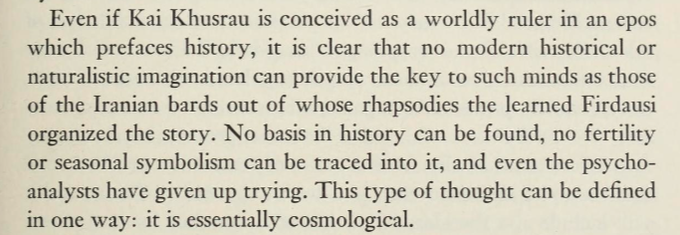
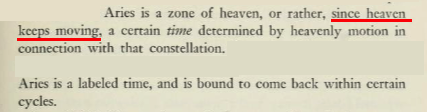
"Hamlet's mill; an essay on myth and the frame of time", 1969, Page 44.

These are the final words spoken by Kay Khosrow, a legendary king of Iran at the end of  Shahnameh, The Iranian Book of Kings:

This basically means "in Aries" (between Pisces and Taurus)...

The author of the Hamlet's mill then goes to say:

The author of the Hamlet's mill then goes on to say that Kay Khosrow is not an earthly king, but a heavenly king, and then he says:

I would like to disagree with the bit that "no fertility or seasonal symbolism can be traced into it". Actually we can, if we assume that originally zodiac was a collection of calendar markers derived from fixed, annual events...As I explained in my article "Zodiac"...

This removes the problem of "heaven keeps moving" and fixes Aries into Mar/Apr. 


The end of the lambing, and the beginning of the milking season...And the start of the transhumance ascend to the mountain pastures. Which happens every year at the same time...

I talked about this in my posts "April" and "Aries must die"...

Another thing that happens in Western Iran in Aries is this: The river discharges suddenly start to increase, as a result of spring rains and snowmelt.


Hence Ram depicted lying in water from the "Zodiac from Isfahan". I talked about it in my post "Sagittarius from Isfahan"...

Which is why, I think, on this late 6th or early 7th c. AD Sasanian silver bowl, we see a king (Kay Khosrow) sitting on a ram (Aries?) throne, feasting, surrounded by musicians and servants. 


Which is what I proposed in my post "Eyeballs platter"...Except when I wrote that post, I didn't now the identity of the King...

Sooooo....See Aries as constellation, and "no fertility or seasonal symbolism can be traced into it". See Aries as animal calendar marker and it all suddenly starts making sense...

That's it. To read more about ancient animal and plant calendar markers, start here…Then check my twitter threads I still didn't convert to blog post...I am way way behind...

Sunday, 7 August 2022

Scorpion king

This is the so called "Scorpion macehead", a 25 cm long decorated pear shaped limestone macehead found in the Ancient Egyptian temple of Horus at Hierakonpolis. Currently in the Ashmolean Museum

It is attributed to the Pharaoh (King) Scorpion (c. 3200–3000 BC) due to the glyph of a scorpion engraved close to the image of a king wearing the White Crown of Upper Egypt. This is the only known depiction of this Pharaoh (King)...

At least this is what some archaeologists think. The fact is that King Scorpion's name, title and even existence are of great dispute in modern Egyptology...

And here I would like to add some oil to this academic fire: I don't think that the scorpion on this macehead spells the name of the Pharaoh depicted next to it. I think that this is an animal calendar marker...🙂
Ashmolean guys interpretation of the macehead scene: "The King, followed by fan-bearers, wears the White Crown of Upper Egypt and a ceremonial bull's tail...before him, a man holds a basket, and another who carries a broom, wait to collect the earth removed by the king's hoe."


This description does not specify what the king is actually doing. The paper "Early Hydraulic Civilization in Egypt" interprets this scene as "Scorpion King ceremonially cutting an irrigation ditch..."

I don't think that this is Scorpion king or that he is cutting an irrigation ditch. I think that it is some Pharaoh performing the ceremonial "cutting of the first furrow", which marks the beginning of the sowing of grain...

Until the 20th century, agricultural year in Lower Egypt was divided into these three seasons: 

Aug-Nov flood which left a coating of fresh mud over the fields 

Dec-Mar sowing season for the staple crops of barley, emmer wheat and flax for linen

Apr-Jul, harvest season

During the late 4th millennium BC, Egyptians didn't have ploughs. So the furrows were made by hoes, like the one held by the Pharaoh depicted on the macehead, and like this one currently in the British Museum...

And in "A History of Ancient Egypt: From the First Farmers to the Great Pyramid" by John Romer we can read this interesting comment: 

"...Nile farmers tended to sow their muddy meadows in December and January, when the scorpions and snakes were hibernating..." 🙂
In 1912, Walter Tyndale published a beautifully illustrated book "An Artist in Egypt


In it we can read that:

"In early November scorpions are still active, and are not hibernating...As we got into December, we heard and saw little of scorpions, and, during the season of hibernation, I forgot about these creatures" 🙂

So the beginning of the hibernation of the scorpions in Egypt, their disappearance in late November, announced the beginning of the grain sowing season...

This is what the scorpion next to the Pharaoh with the hoe means. It is an animal calendar marker for Nov/Dec, beginning of the grain sowing season in Predynastic Egypt...It is not Pharaoh's name...

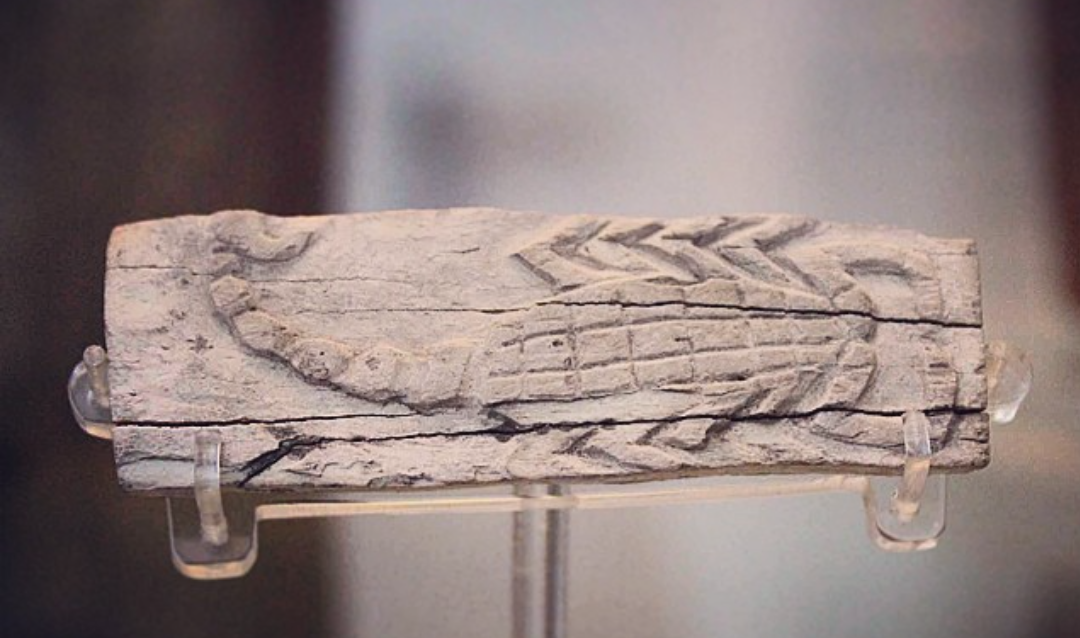
These are drawings of some of the small ivory tags showing the depiction of a scorpion, which were found in the Predynastic graveyards at Abydos, Minshat Abu Omar and Tarkhan...

They show the scorpion holding the hieroglyphic sign for "nome (area)/garden/land with irrigation channels"...Authors of the paper "Abydos tomb u-j of predynastic Egypt Abydos tomb u-j" say that the interpretation of the combination of symbols on these ivory tags is disputed...You can find the sign list here...


Some archaeologists say that this combination of signs has no deeper meaning. Some other archaeologists say that "the scorpion could represent King Scorpion II in his role as a ruler of a certain (but unnamed) nome (area)"...

I would say that this combination of signs does indeed have deeper meaning, and what it means is: saw your grain in your irrigated field when scorpions disappear...

Yeah right...

Well, did you know that archaeological evidence shows that the Early 4th millennium BC Egyptians were under "a surprisingly strong and extensive influence of Mesopotamian culture and religion"...

And guess what we find in Mesopotamia? Scorpion marking the beginning of the ploughing and grain sowing season...

When scorpions disappear, and cranes arrive from the north, and Sirius rises with the moon which points up and looks like a dish ready to catch the first rains, Oct/Nov, it's time to sow grain...I talked about this in my posts "Seven stars of scorpio" and "Ploughing

Oh, BTW, that "rosette" next to the scorpion on the Scorpion Macehead...Its meaning is also disputed (read: no one has any idea what it means)...See, it's a star on Mesopotamian grain sowing seals...Sirius which is visible during the night during sawing time

Sooooo...Is it time to say goodby to the Scorpion king? I think so...Bone fragment with a carving of a scorpion. Late Predynastic - early First Dynasty, about 3100 BC

That's it. 

Oh, have you seen this?

19/11/2021. According to CBS News, thunderstorms along the River Nile swept the scorpions...out of their hiding places where they stay during hibernation...into people's houses...


To read more about ancient animal and plant calendar markers, start here…then check the rest of the blog posts related to animal calendar markers I still didn't add to this page, and finally check my twitter threads I still didn't convert to blog post...I am 9 months behind now...

Saturday, 4 December 2021

Trentar

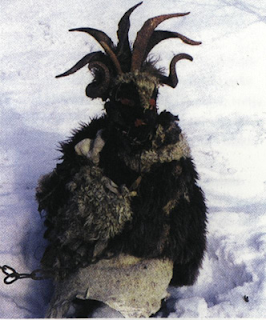
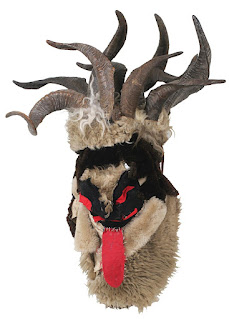
"Trentar", the winter demon from Trenta valley, Slovenija. He´s got 12 horns for 12 months of the year. I want to thank Not Just Another Barbara @another_barbara, great twitter account that tweets about Slovenian folklore, for these pics.


Eeee very very very interesting...

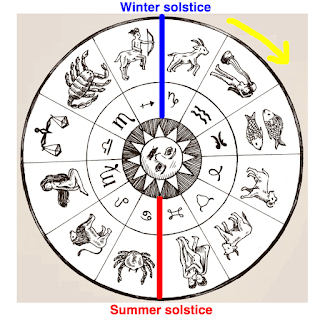
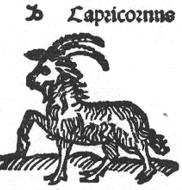
12 "goat" horns, one for each of the 12 months of the solar year which starts in Capricorn (goat)...

In one of my favourite zodiac related legends, the Slovenian legend about Zlatorog, the Ibex goat with gold horns, it is the "hunter from Trenta valley" that hunts and fatally wounds the magic goat, from whose blood springs magic Triglav rose...Which dying magic goat eats and gets healed (magically)...

So hunter, pursues Ibex goat, shoots it, it bleeds, from it's blood grow flowers...What does this mean?

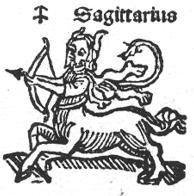
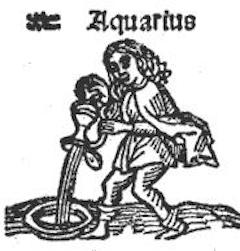
Well, what you are looking at is the winter zodiac: Sagittarius (start of winter), Capricorn (mid winter), Aquarius (end of winter)...

I talked about this in my post "Zlatorog"...


But these are not constellations we are talking about...

Sagittarius marks the fur hunting season in Central Europe...


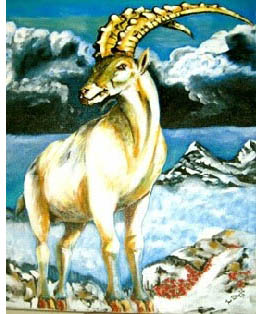
Capricorn marks the mating season of Alpine ibex goats of Central Europe...


Aquarius marks the snowmelt in Central Europe...

I talked about this in my article about the origin of western zodiac...

Saturday, 20 November 2021

Sagittarius from Isfahan

In this article I would like to talk about a beautiful manuscript entitled "The Free Man's Companion to the Subtleties of Poems" written by Jajarmi around 1341AD in Isfahan, Iran. Its illustrations hide some ancient animal calendar markers. And ancient gods...

But first this...

This is the symbol of Isfahan. Two of these images decorate the entrance into Isfahan's Grand Bazaar, one of the greatest and most luxurious covered markets in Iran, built in 1620AD...

And they apparently depict Sagittarius...How do we know this is Sagittarius? Well, because inside of the "The Free Man's Companion to the Subtleties of Poems" there is an illustrated poem about the moon visiting the houses of 12 zodiac signs...And this is Sagittarius...

Here are all 12 illustrations. I want to thank @handarziha for alerting me to this beautiful book. BTW @handarziha, I found missing pisces illustration 🙂 and have added it to the start of the first panel where it should be...


The zodiac used is the European zodiac, with constellations: Aries, Taurus, Gemini, Cancer, Leo, Virgo, Libra, Scorpio, Sagittarius, Capricorn, Aquarius, and Pisces...

Why European zodiac? Firstly because all the animal signs mark significant lifecycle events of the depicted animal, in Europe...I talked about it in my post "Zodiac" and linked posts about each sign. Here is the gist:

This totally improbable "coincidence" made me wonder if this is indeed a coincidence...Which led to the discovery of the ancient animal calendar markers, which are found in all Eurasian and North African cultures since Neolithic...And have nothing to do with stars...

Also, the oldest depiction of this type of zodiac circle was found in Croatia, in the Nakovana cave. 


Not surprising at all, if you know what this "circle of little animals" (that's what zodiac means) actually represents...I talked about it in my post "Nakovana"...

More about animal calendar markers found in ancient cultures, start here…then check the rest of the blog posts I still didn't add to this page, and finally check my twitter threads on @serbiaireland I still didn't convert to blog post...I am 7 months behind now...

Anyway, lets get back to the Isfahan zodiac, and start by saying that it is important to know that the manuscript was written in Isfahan. Cause the animal calendar markers found in it describe Isfahan climate, hydrology and ecology...

Isfahan is located at the foothills of the Zagros mountains on a fertile soil along the Zayandehrud River...This is Khaju Bridge over Zayandehrud river in Isfahan, built around 1650, under the reign of Abbas II, the seventh Safavid king (shah) of Iran...

The climatic year in Isfahan is divided into hot dry half (Jun-Oct) and cool wet half (Nov-May)...This means that Zayandehrud River is, a seasonal river, which  depends mostly on winter and spring rainfall and the spring snowmelt...

Over 70% of Zayandehrud river runoff comes from the snow melting on the mountains surrounding its basin, particularly the Zagros range, which starts in February (yes in Aquarius) and finishes in May. 

Snow cover on the Iranian mountains...

The rest of the water flowing down Zayandehrud river comes from rain, which starts falling in Oct/Nov and stops falling in Apr/May, with maxium rainfal in Mar/Apr...

The combination of the snowmelt and rainfall results in sudden increase of the Zayandehrud river water level starting in Mar/Apr...In Aries...The also the rainiest time of the year in Isfahan...

Monthly flow chart for the Zayandehrud River, from the paper "An overview of the hydrology of the Zayandeh Rud Basin

And here we come to the first animal calendar marker hidden on the first page of the Isfahan Zodiac...Aries ram, depicted as a wild sheep, mouflon, with blue (water like) horns, lying in water...Describing exactly what is happening in Isfahan in Mar/Apr...In Aries...

I don't know Persian, so can't tell what the text this pic illustrates actually says. It would be funny if it said: and when the moon comes to the house of Aries, the rain will pour out of the sky and the river will start rising...Anyone who can read the text?

Anyway cool wet half of the year then abruptly ends in May, when the hot dry half of the year starts...In Taurus...Which is depicted as a zebu bull...Interesting, considering that zebu cattle is predominant cattle breed in India, not Iran...Were they once more common in Iran too?

We can skip through Gemini, Cancer. Nothing really interesting there. But Leo...Leo is depicted as a really cool mean looking lioness...

You know how Leo marks the beginning of the mating season of the Eurasian lions?


And you know how there is this girl, Inanna/Ishtar, who loves standing on lions? 

Why does she do this?

Well...standing on a lion means "In Leo"...

And you know how everyone thinks that Inanna/Ishtar "The queen of heaven", "The morning star" is Venus...Well, when this "mythology" was developed, Sirius rose before the sun, in Leo (Jul/Aug), pretending to be "the morning star"...I talked about this in my post "Ninshubur"...

In "A hymn to Inana as Ninegala" we can read "Inana, great light, lioness of heaven..." Why? 

Well, this, combined with Inanna's obsession with standing on lions only makes sense if she is Sirius, rising with the sun in Leo...

Anyway, you know how some archaeologists say that Inanna's earliest depiction was as a lioness? Does this Elamite figurine made in Iran depict Inanna as lioness...

And is the choice of using lioness instead of lion as Leo in the Isfahan zodiac just a random artistic freedom?

Anyway, we pass Leo and we arrive to Virgo to find out that she is gone shopping and instead of her we see a man harvesting grain...

Now if I have ever seen a blatantly obvious calendar marker based on annual lifecycle of plants this is one...

Grains are always sown and always harvested at the same time of the year...And Virgo illustration says: In Aug/Sep we harvest grain...So what grain is harvested in Aug/Sep?

The grain depicted on the Virgo illustration looks like wheat...So I first looked at wheat, which is today the main grain crop in Iran. But wheat grown in Iran is mostly winter wheat, which is planted in Oct/Nov and harvested in May/Jun...

Then I found in this book "The Middle East (Routledge Revivals): A Physical, Social and Regional Geography" that in high mountain valleys, like in Zagros mountains, people grow spring wheats, which are sown in Mar/Apr and harvested in Jul/Aug...

Hmmm...To early for Virgo...And from what I could find, the wheats grown in Isfahan region is all winter wheat...

But there is another grain crop grown in Isfahan, along the Zayandehrud river...Rice...And in Iran, rice is planted in Apr/May and harvested in Aug/Sep...Virgo...

As I said, I don't know Persian, so I don't know what the text illustrated by this image actually says. But it would be cool if it said: In Virgo we harvest rice...Anyone who can read the text?

So we'll skip pass Libra and will look at Scorpio (Oct/Nov)...

The sign that marks the time of the year when scorpions go to hibernation, because the temperature gets too low...This has been used as an animal calendar marker since Neolithic...

For instance in Göbekli Tepe...I wrote about it in my post "Pillar 43"...

And in Mesopotamia...I wrote about it in my post "Queen Puabi's cylinder seal"...

And in Iran...I wrote about it in my post "Khafajeh vase"...

Once we pass Scorpio, we get to Sagittarius (Nov/Dec)...So we are back where we started...At first sight, a very strange symbol for Sagittarius indeed: An archer killing a dragon...

But if we know that this illustration is made in Isfahan, and we know the Isfahan climate, then this depiction of Sagittarius suddenly makes a lot of sense...

Look at the Isfahan climate chart for again. The year is divided into hot, dry season (May-Oct), and cool, wet season (Nov-Apr). The hot, dry season, the time of droughts, symbolised all over Eurasia by fire breathing dragons, ends in Sagittarius (Nov/Dec). Archer kills dragon...

Isfahan market gate depiction of Sagitarius makes the meaning of this symbol even clearer. There, the body of the Sagitarius is the body of a lion...

Remember that the earliest depictions of dragons found in Mesopotamia had bodies of lions and heads of snakes...I talked about it in my post "Seven headed dragon"...

Snake is the symbol of sun's heat...The only true solar animal. Snakes are in our world when sun is in our world (day and hot part of the year) and in the underworld when sun is in the underworld (night and cold part of the year). 

Sun god with snakes from Bactria. I talked about it in my post "Nude winged hero dominating snakes"...

Lion is the symbol of the hottest part of the year in northern hemisphere, Jul/Aug...The time of the year ruled by Nergal, the destructive sun, who was depicted as a lion, winged lion, lion dragon...I talked about this in my post "Winged superhuman hero"...

Lion is also the symbol of autumn (Aug/Sep/Oct), cause the mating season of Eurasian lions spans autumn...I talked about this in my post "Lion killing bull under palm tree" about this seals telling people when to harvest date: when lion (autumn) kills (ends) bull (summer)...

Lion is also the symbol of the whole hot dry half of the year, Apr/May - Oct/Nov...In my post "Sacred hunt" I talk about ritual lion hunts performed by Assyrian kings. In which they imitated the rain god Ninurta, The Archer who used rainbow as his bow, in the act of ending (killing) the hot dry half of the year, symbolised by a lion...In the act of saving the world, protecting the order from chaos...


And in Isfahan, the (God of) rain arrives in Nov/Dec, in Sagittarius...At the end (tail) of the lion dragon...And kills it... 

As I said, I don't speak Persian, so I don't know what the text illustrated by this image actually says. Anyone who can read the text?

What follows is Capricorn, depicted as a Ibex goat...In European zodiac it marks the mating season of Apline Ibex goats which spans Dec/Jan...However Iranian Bezoar Ibex goats start mating in Oct/Nov, announcing the arrival of the first rains...

This is the old Iranian Goat of Rain...The most depicted animal in Iran...And at one time most sacred...I talked about it this post "Goat petroglyphs from Iran"...

Scorpion, ibex and archer calendar markers once marked the same time of the year, Oct/Nov, the beginning of the cool wet half of the year in Mesopotamia and Iran...

But that didn't really fit the climate and animal behaviour in Europe, hence the change in their positions on zodiac circle...They are all still next to one another...

And so...We finally arrive to Aquarius...Have a look at the depiction of Aquarius? What is this triangular brick thingy?

Now have a look at this. "When Utu/Shamash steps up into heaven, fresh waters shall run out of the ground for you..." from "Enki and Ninhursanga"...The sun god Utu/Shamash climbing the mountains to free Enki/Ea, god of fresh water...I talked about it in my post "Shamash young and old"...

What does it mean? Well, when sun's elevation gets high enough, the snow on the mountains will start melting, and the rivers and wells will start filling up again..And in Isfahan that is in...Jan/Feb...In Aquarius...

Again, I don't speak Persian, so I have no idea what the text illustrated by this image says...But it would be cool if it said: it's getting warmer (see, the guy has no top on him), the water levels in our wells and rivers are rising...

And here we come to the end of the analysis of the poem about moon visiting zodiac houses, from the beautiful manuscript entitled "The Free Man's Companion to the Subtleties of Poems"...

Thanks again to @handarziha for making me do something completely different from what I have planned to be doing for last 2 days...Hope it was worth it...🙂