Showing posts with label Mother Goddess. Show all posts

Wednesday, 15 April 2026

Mesa Mouliana vessel

A very interesting Minoan vessel found in Mesa Mouliana and dated to 1200-1100BC. Do you see the two nipple like things just under the spout? And wavy lines originating from each "nipple " and [my interpretation] symbolising the flow of water (milk of Mother Earth)?

This object is extremely stylised version of this. Ceramic vessel form Crete dated ca 2200-2000 BC. Probably during rituals the liquid would pour out of her breasts symbolically providing nourishment. It’s believed to represent the mountain goddess of Crete...

Both objects are in the Archaeological museum in Heraklion, Crete, Greece. 

What was poured out of this vessel was drinking water. I explained why in my post "Anavlochos mountain" about ancient Mother Earth sanctuaries found on it.

Now here is something that just occurred to me. Look at this beauty: Minoan jug decorated with flying swallows and small breast-like buttons - 1700-1650 BC, discovered in Akrotiri, Santorini. Currently at the Prehistoric Thera Museum, Santorini, Greece

Similar kind of jug, with nipples, but instead of water pouring out of the nipples, a swallow in flight is depicted  on the jug's belly. Why? I already talked about swallows as animal calendar marker for Apr/May, the beginning of summer, in Minoan art in my post "Minoan spring fresco". In it I analysed the animal (swallow) and plant (lily) calendar markers depicted on the "Spring Fresco" from the Akrotiri Site at Thera (Santorini), dated to 1550 – 1500 BC, and I suggested that based on the link between swallows nesting season and the lily blooming season, the fresco should be called "Summer fresco"...


But just now, I discovered that swallows were also linked with saffron crocuses. This is a strainer found in room 3 of the Xeste 3 house in Akrotiri. It is decorated with swallows flying over flowering saffron crocuses...The pic is from this paper...

Crocus flowers in Oct/Nov and is used in Minoan art as a plant calendar marker for Oct/Nov. I talked about this in my post "Male - female Minoan vessel", where I analysed this 16th c. BC Minoan vessel found on Thera, Akrotiri, depicting (according to the museum curators) on one side wild goats and saffron crocuses and on the other side dolphins and sea grass...


What is very very interesting is that swallows are summer visitors to Crete, arriving in Apr/May and leaving in Oct/Nov...

Minoans were maritime people and the swallow migrations marking the beginning and the end of the sailing season must have had a special place in Minoan culture...This veneration of swallows was also found in Ancient Greece. I talked about it in my post "Herald of spring". Did you know that Ancient Greeks had a constellation swallow (Ancient Greek: χελιδών). "...The sun entered into this constellation, when the swallow appeared in Greece as the herald of Spring..." 


And the same link between swallows and sailing was found in Roman culture and later European cultures...I talked about it in my post "Swallow tattoo"...

The period between the arrival of swallows (Apr/May) and the departure of swallows (Oct/Nov) marks the hot, dry half of the year on Crete.

How can this explain the nipple jugs with swallows? Well, the swallow migrations divide the year into female (Wet, Cool, Yin, Sowing - Creating life, No Sailing, Peace) and male (Dry, Hot, Yang, Harvesting - Destroying life, Sailing, War) halves...


The wet half being linked to the (earth) goddess, symbolised by saffron crocuses, goats and boobs 🙂 and the dry half being linked to the (sea/sun) god, symbolised by lilies, bulls and no boobs 🙂...


This is seriously cool...BTW, I already talked about the calendric symbolism of flowers in Minoan art in my post "Three Minoan flowers"...


That's it. To read more about ancient animal and plant calendar markers, start here…Then check my twitter threads I still didn't convert to blog post...I am way way behind...

Saturday, 25 October 2025

Anavlochos mountain

This is The Anavlochos mountain range, located in the Lasithi, Crete. This naturally defensible ridge controls the major communication axis linking Central and Eastern Crete...

Between 1200-1100 BC, small settlement sites were scattered all along the ridge. At around 1100 BC most of them have been abandoned and a large settlement that remained continuously occupied until around 650 BC started developing in the highest part of the central valley...

oldeuropeanculture

Archaeologists from the University of Cincinnati, are currently involved in the excavation of the site known as Deposit 1, a bedrock outcrop with deep crevices. 3D animated model of Deposit 1 showing some of the teracottas...

There, they have discovered huge number of figurines and moulded plaques embedded deep in the crevices of the bedrock.

All were depictions of women or female sphinxes...

What is interesting, is that Anavlochos was settled between 1200 and 650 BC. The figurines date between 900 BC and 350 BC, which means that many of them were deposited after people left the settlement..

Which means that people considered the actual ridge bedrock sacred...And sacrificed to it. Or should I say to her...Mother Earth...Cause:

Great pic by @another_barbara Bedrock is in the Balkans known as "živi kamen, živa stena" (living stone, living rock) because it is believed to be still part of the living body of the Mother Earth which gives birth to all life...I talk about this in my post "Living stone"...

Again this ritual deposit site from Crete proves that people saw symbolic link between earth and female fertility. 

Among Slavs, the last sheaf of wheat was commonly called Baba. 

This word means grandmother, mother, midwife, birth giver...In some places the woman binding the last sheaf the last sheaf of wheat is also called Baba...

I talked about this link in my posts "Baba - the last sheaf of wheat" and "Baubo"...

I talked about the link between the veneration mountain peaks and female and earth fertility in Minoan Crete in my post "Sanctuary rhyton", about this amazing rhyton, discovered in the palace of Zakros, the most isolated of all the Minoan Palaces and was dated to 1550-1500 BC. The decoration on the rhyton depicts a "mountain sanctuary". Were these mountain sanctuaries centres of Ibex "goat of rain" cult? 


As we can see, it seems that this veneration continued after the collapse of the Minoan civilisation...

As we can see from the type of figurines deposited in the bedrock, people saw symbolic link between female lactation and earth producing spring water...

How do I know this? Rain, Water magic was among Slavs always female magic. I talked about this in my post "The last megalithic ritual in Europe", about a ritual which was until recently performed during severe draughts in Belarus to appease the Slavic Sun God Dabog (Giving god) who was also known as Daždbog (Rain giving god). 


And in my post about the "Weather stones", stones used in weather magic...

I talked about women being in charge of weather magic in Europe in my post "De Lamiis et Pythonicis Mulieribus" about this depiction of the two witches conjuring a hailstorm from a medieval manuscript on witchcraft. 

BTW, did you know that the sudden climate change which resulted in the medieval mini ice age was blamed on the weather controlling witches and was the excuse for the subsequent witch-hunt? 

I also talk about this in my post "Pozoj" about male and female dragons from Slavic folklore. In South Slavic folklore, it is a female dragon, ala, that brings hailstorms and unseasonably cold, wet weather during summer months, which destroys crops...In South Slavic folklore, cold, wet weather is "feminine"...

So Mother's milk = symbolically = Mother Earth's spring water...

More about Anavlochos excavation project can be found here.

PS: Just remembered I wrote about this a year ago in my post "Goddess of Myrtos" in which I analysed this 3rd millennium Minoan rhyton in the form of a female deity with pitcher.

Goddess of Myrtos

This is the so called "Goddess of Myrtos". Rhyton, in the form of a female deity with pitcher. Found on Crete, near Ierapetra, Fournou Korifi, in the earliest house shrine found on Crete, dated to EM III, 2300-2200 BC. Currently in the Archaeological Museum of Agios Nikolaos, Crete.

The jug the figure is holding is actually a miniature version of actual jugs found during the excavations...

Now I wonder why checkered square design all around the "belly" of the goddess and why checkered pubic triangle? Are these supposed to symbolise fields? Is this another "Mother of grain"?

I talked about this in my post "The oldest Demeter depiction" about Cycladic mother of grain, proto Demeter, dated to the 3rd millennium BC...And in my post "Mother of grain from Mari" about the (most likely) symbolic depiction of Inanna, also dated to the same period in the 3rd millennium BC. 

And the jug...Is this a jug of water? Is this symbolic linking between water and field fertility? I talked about this link in my posts "Minoan bull sacrifice" and "Agia Triada Sarcophagus"...

And in my post "Woman and pitcher" about this interesting vase with ivy and olive wreaths, in white and white flowers on neck. Cyprus, 400–323 B.C Currently in the Met museum...And symbolism linked to start of the rain season...

Or is the pitcher the pitcher of vine? Did Minoans make and drink vine? Most archaeologists concur that this Minoan artefact is one of the earliest depiction of people dancing. 

But is it? Is it people crushing grapes? 

I talk about it in my post "Shield of Achilles"...

I personally think that this is a depiction of a Mother Earth, the provider of both drinking water and grain, and that the jug was a water jug...Why? Because of all this stuff I discovered after I wrote this originally, and which I published in my post "Anavlochos mountain"...

That's it. To read more about ancient animal and plant calendar markers, start here…Then check my twitter threads I still didn't convert to blog post...I am way way behind...

Thursday, 15 May 2025

Blinged goddess

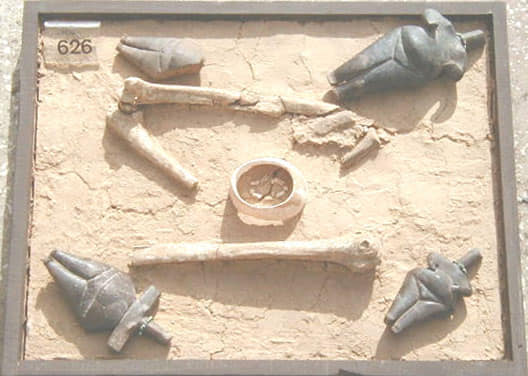
Ceramic figurines with bronze necklaces, found in the Durankulak settlement of the  Late Neolithic Hamangia culture, which flourished in Dobruja (Romania and Bulgaria) during the period 5250-4500 BC. The people of this culture seem to have been immigrants from Anatolia...

The figurines were found together as a group...

Archaeologists also found figurines with bracelets...

And women buried with lots and lots of jewellery...BTW, all the figurines with jewellery were female...

Here are some examples of the jewellery found in the Hamangia culture graves...


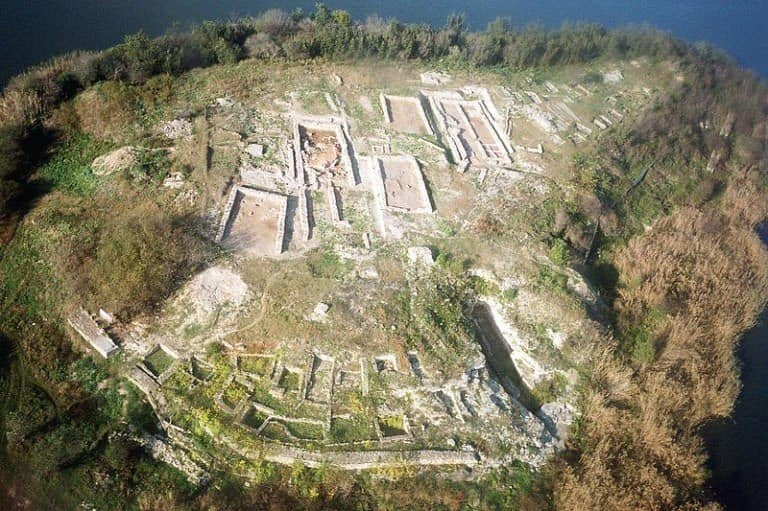
Durankulak settlement on Golemija ostrov in Bulgaria consisted of rectangular wattle and daub houses with stone foundations...Not huts...


The same kind of houses (barns, cowsheds) which were until the 20th c still built in the Balkans, except the roof was covered by thatch...


Sources: "Hamangija culture", "Durankuluk"

ARCHAEOLOGICAL COMPLEX DURANKULAK (Regular Excavations on Golemija ostrov Tell in 2018)

ARCHAEOLOGICAL COMPLEX DURANKULAK. Regular Excavations on Tell Golemija ostrov in 2020. (Presentation 2021)

NEOLITHIC SETTLEMENTS ON BALKAN a comparative study between Durankulak and Sitagroi

PS: These Neolithic Venus figurines are again faceless, with exaggerated sexual characteristics. Basically depicting the idea (goddess) of fertility. Just like Palaeolithic Venus figurines.

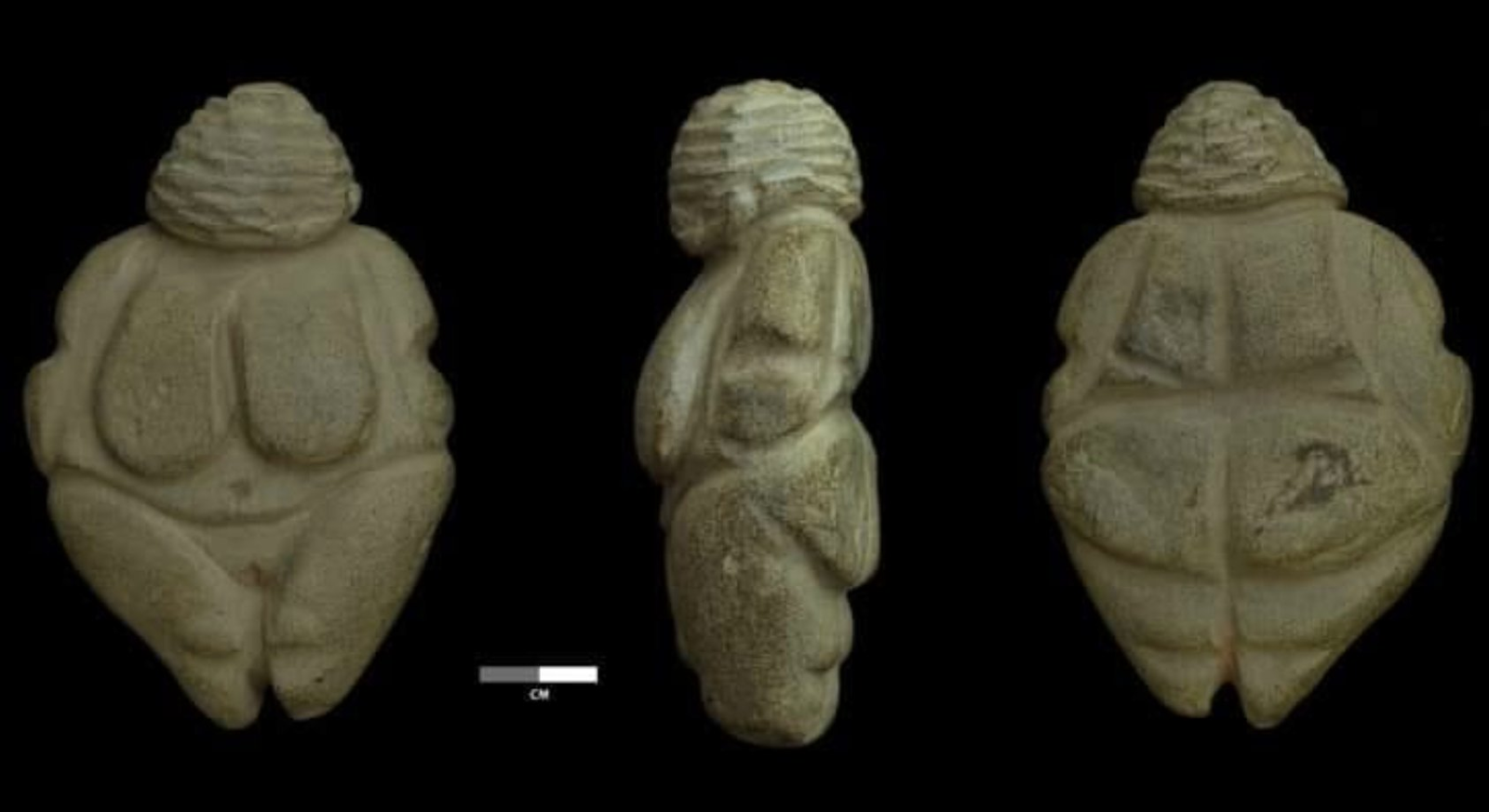
Pic: 17,000 years old Venus of Piatra Neamț, discovered on June 21, 2019, in the area of Piatra Neamț, Romania. 

Talked about this in my posts "Palaeolithic Venus figurines", "The faceless one", "Motanka". 

At the same time when Durankulak people made their faceless goddesses, a gynomorphic (woman like) figurine was made of "soil mixed with chaff and grain seeds" in Grčac, Serbia. by the people of the farming Proto-Starčevo culture, 6200-5500 BC. Direct symbolic link between earth, grain and female fertility. Basically, "Mother of Grain". 


The fact that the people from Durankulak who made these Fertility (Mother Earth) figurines and then put necklaces and bracelets on them, the same type of jewellery worn by the local women, tells me the they have also already symbolically linked the the Earth fertility and female fertility. This symbolic link is still found in Europe, particularly in farming communities in the Balkans and Eastern Europe...

I talk about this in my article "Baba, last sheaf of wheat" and the linked articles...

Sunday, 7 May 2023

Arjoune venus

An early Halaf culture figurine from the Arjoune site in Syria. Pic from: Embodiment of the Halaf: Sixth Millennium Figurines from Northern Mesopotamia.

It is made from a natural pebble, and it depicts a female form, with large eyes with eyelashes and long hair. The very very very interesting bit is the pubic area, which is depicted as a square...


The Halaf culture is a neolithic early farming culture which flourished in the Fertile Crescent, in south-eastern Turkey, Syria, and northern Iraq, between about 6100 BC and 5100 BC...


The people from the same area, just slightly later, made this figurine which I interpreted as the depiction of the Fertile Mother Earth between two great rivers, Tigris and Euphrates

Figurine of a nude "woman" form Yarim Tepe, Iraq. Ubaid period, 5000-4000 BCE. Iraq Museum...


I talked about this in my post "Mother of grain from Yarim Tepe"...

So I am convinced that whoever made this figurine in Arjoune, knew very well what vulva looks like...The fact that here we have vulva depicted as a square, makes me believe that what we have here is a depiction of the fertile Mother Earth, and more specifically Mother of grain...Where the square vulva represents a grain field...

Remember this:

Inanna spoke:

...

As for me, Inanna,

Who will plow my vulva?

Who will plow my high field?

Who will plow my wet ground?

...

From: "The Courtship of Inanna and Dumuzi"

More about depictions of Mother Earth, Mother of Grain, can be found in my article "Altyn Tepe mother of grain", in which I talk about this BMAC figurine...Again Mother Earth, Mother of Grain, Goddess, just different mountains and rivers...


Another Early Halaf figurine depicting female form with square pubic area. Tell Kurdu...Pic from: Embodiment of the Halaf: Sixth Millennium Figurines from Northern Mesopotamia.


Late Halaf figurine. Discovery location unknown. Pubic triangle on front with line representing vulva and dots representing pubic hair. On back, two ears of grain...

Pic from: Embodiment of the Halaf: Sixth Millennium Figurines from Northern Mesopotamia.

Mother Earth turned Mother of grain, true and true...

Most common Halaf figurine depicted voluptuous female form covered in horizontal stripes. Are these supposed to be furrows?