Showing posts with label Grain folklore. Show all posts

Saturday, 7 March 2026

Ultime grida dalla savana

Petroglyph, Wadi Mathendous, Libya

After the mandatory giggle, let's think what this image could represent?

Remember this? "We owe our existence to a six-inch layer of topsoil and the fact it rains".

My guess is that in places like Libya, where life depends on rain, life is created by Sky (Father) inseminating (raining on) Earth (Mother)...

I talked about this in several of my posts: "Riddle", "Living nature", "An Ki Ankh"

Srbska zagonetka: Visok otac, široka majka = nebo i zemlja 🙂

Serbian riddle: Tall (high) father, wide mother = sky and earth 🙂


Father Sky and Mother Earth creating Life, preserved in Serbian tradition.

Because of the above identification of Sky = Father = Male and Earth = Mother = female, in many cultures around the world we find symbolic and ritual linking between:

Male fertility (ability to produce semen), sky fertility (ability to produce rain), seed and sowing...

Female fertility (ability to conceive after being inseminated), earth fertility (ability to grow plants after them being sown), fruit and harvesting...

I talked about this in my post "Sowing", in which I discussed this strange Serbia custom: In Serbia in the past people lived in extended families called "zadruga". When grain needed to be sown, the family would choose one man to do all the sowing. He had to abstain from sex from that moment until all the seeds were sown...

This brings me to a great Italian documentary I saw years ago, "Ultime grida dalla savana" ( Final Cry of the Savanna) which was in 1975 directed by Antonio Climati and Mario Morra...

And in it, if my memory is serving me right, they showed men from some African tribe, ritually inseminating Mother Earth, by each digging a small hole in the ground, lying down over it and...

Basically ritually playing the role of the Sky Father...

Thursday, 15 May 2025

Blinged goddess

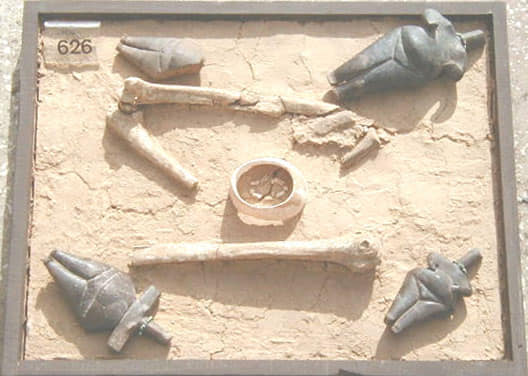
Ceramic figurines with bronze necklaces, found in the Durankulak settlement of the  Late Neolithic Hamangia culture, which flourished in Dobruja (Romania and Bulgaria) during the period 5250-4500 BC. The people of this culture seem to have been immigrants from Anatolia...

The figurines were found together as a group...

Archaeologists also found figurines with bracelets...

And women buried with lots and lots of jewellery...BTW, all the figurines with jewellery were female...

Here are some examples of the jewellery found in the Hamangia culture graves...


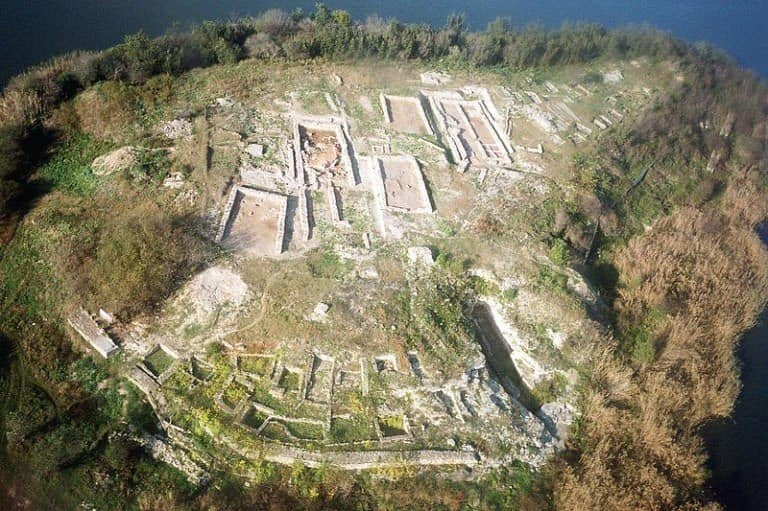
Durankulak settlement on Golemija ostrov in Bulgaria consisted of rectangular wattle and daub houses with stone foundations...Not huts...


The same kind of houses (barns, cowsheds) which were until the 20th c still built in the Balkans, except the roof was covered by thatch...


Sources: "Hamangija culture", "Durankuluk"

ARCHAEOLOGICAL COMPLEX DURANKULAK (Regular Excavations on Golemija ostrov Tell in 2018)

ARCHAEOLOGICAL COMPLEX DURANKULAK. Regular Excavations on Tell Golemija ostrov in 2020. (Presentation 2021)

NEOLITHIC SETTLEMENTS ON BALKAN a comparative study between Durankulak and Sitagroi

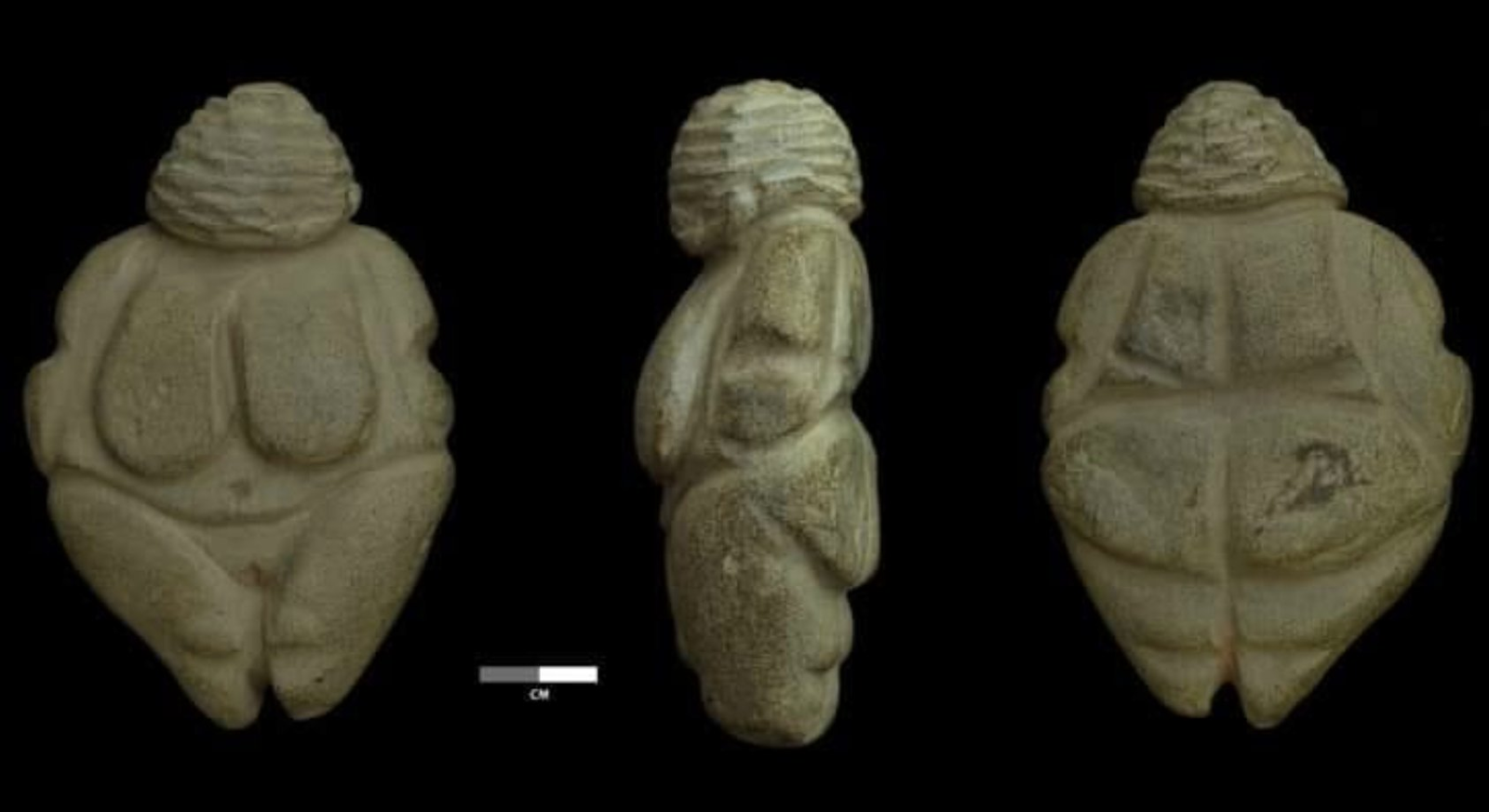
PS: These Neolithic Venus figurines are again faceless, with exaggerated sexual characteristics. Basically depicting the idea (goddess) of fertility. Just like Palaeolithic Venus figurines.

Pic: 17,000 years old Venus of Piatra Neamț, discovered on June 21, 2019, in the area of Piatra Neamț, Romania. 

Talked about this in my posts "Palaeolithic Venus figurines", "The faceless one", "Motanka". 

At the same time when Durankulak people made their faceless goddesses, a gynomorphic (woman like) figurine was made of "soil mixed with chaff and grain seeds" in Grčac, Serbia. by the people of the farming Proto-Starčevo culture, 6200-5500 BC. Direct symbolic link between earth, grain and female fertility. Basically, "Mother of Grain". 


The fact that the people from Durankulak who made these Fertility (Mother Earth) figurines and then put necklaces and bracelets on them, the same type of jewellery worn by the local women, tells me the they have also already symbolically linked the the Earth fertility and female fertility. This symbolic link is still found in Europe, particularly in farming communities in the Balkans and Eastern Europe...

I talk about this in my article "Baba, last sheaf of wheat" and the linked articles...

Monday, 3 February 2025

Mother of grain from Otok

In Otok near Senj, Croatia, a very interesting ritual was performed at the end of the harvest until mid 20th century 

The last sheaf of wheat harvested from a field was stood upright. All male harvesters would then stick their sickles into it. They would then  all kneel around the sheaf and pray to the "lady" thanking her for the harvest 

Then the oldest woman would put her hand all the way through the sheaf and would grab a handful of soil from under it. This soil was then tied into a handkerchief and later used as a cure for uterus problems. It was diluted in water given to the sick woman to drink 

Clearly a thanks giving ritual performed for Mother Earth, otherwise known as The Lady. In South Slavic folklore (mother) earth fertility and (mother) female fertility was always linked and was believed to influence each other 

This same Lady, was represented by the Corn dollies which were made from the last sheaf. They were preserved in homes during the winter, and the seads from the corn dollies were the first sawn next spring. 

It was believed that this last sheaf contained the "corn spirit" the fertile power of Mother Earth...Which farmers depended on for their survival.

Source: "Ivo T. Franić, JUGOSLOVJENSKA ŽETVA, Običaji i obredi s uporedbama"


You can read more about Slavic beliefs and rituals related to grain in my posts "Wheat cross", "Diduch", "Walking sheafs of wheat", "Cock bashing", "The old woman of the milldust", "Wheat wreath", "Sowing", "Can you see me", "Babji mlin", "Bogovo gumno"...

This is just a continuation of the ancient "Mother of grain" cult which originated in the Fertile Crescent in early Neolithic...

Articles about the Mother of grain in Neolithic Europe, Central Asia, Mesopotamia, Iran, Levant: "Mother of grain" "Altyn Tepe mother of grain", "A person in little boat", "Sabi Abyad venus", "Hathor grain pendant"...

Friday, 14 June 2024

Scaring off the dragon

The main worry of the Bulgarian farmers at the beginning of the summer (Apr/May) is drought. 

Traditionally people thought that drought was caused by a winged dragon (zmey), who "stole and locked up" the waters...

And so, to prevent the dragon from steeling the water, in northwest Bulgaria, on a certain date, all the strong and healthy village men would gather at midnight, strip naked and walk the village land in ritual silence brandishing axes or cudgels to scare off the dragon...

It is interesting that they carried axes, just like Perun, the Slavic thunder god, but also like may other Eurasian thunder gods...The dragon slayers...

Article "Kataibates" about the link between stone axes and thunder gods. An altar from Vindolanda dedicated to the late Roman god Jupiter Dolichenus, whose mystery cult was widespread in the Roman Empire in 2nd and 3rd c. AD, wielded an axe. And rode on a bull...

And it is interesting that they carried cudgels...Just like Orion, that father of (sky) gods...Check my posts "Jack and the magic beans" and "Grandmother's cudgels" you might find them interesting...


They are trying to answer the questions such as: Why was Orion seen by Ancient Greeks as a "the greatest hunter" armed with a cudgel (club)? And why do Bulgarians call Orion "cudgels (clubs)" and why do Serbs call Orion "Baba's (grandmother's) sticks" and all the stars "Baba's (grandmother's) cudgels (clubs)"? And why were thunderbolts believed to be made of stone?

Some people might say that maybe they just carried whatever "dangerous implements" they had. But they also had sickles, shovels, hoes, knives, swords, rifles...Why not carry them? I don't know, maybe I am reading too much into it...

Anyway, it is also interesting that the ritual was performed by "healthy naked men"...Considering that rain, and subsequently flowing water, which the "dragon scarers" were trying to protect from the dragon, was considered to be "the semen of the the sky father"...

Is this an example of sympathetic magic? Where men lend their reproductive power to the sky (father) to increase his ability to produce "heavenly semen", rain? Check this out:

In Serbia in the past people lived in extended families called "zadruga". When grain needed to be sown, the family would choose one man to do all the sowing. He had to abstain from sex from that moment until all the seeds were sown...


Sowing (spreading of seeds) is here directly linked with ejaculation (spreading of semen). Male reproductive energy which is usually used to impregnate a woman has to be during sowing period preserved and used to impregnate the Earth...

From my post "Sowing"...

Now while North Western Bulgarians were walking around naked scaring dragons, their North Western neighbours Serbs did this: In the past, during spring droughts, Serbs used to go to mountain lakes and pray for rain on their shores "to a dragon living in the lake who swallowed the rain"...


I talked about this in my post "Dragon who stole rain"...

The dragon that stole water is one of the oldest Indoeuropean myths. In Rig Veda we read:

"I WILL declare the manly deeds of Indra, the first that he achieved, the Thunder-wielder.

He slew the Dragon, then disclosed the waters, and cleft the channels of the mountain torrents."

But why are dragons steeling water is "a bit of a mystery"...Apparently...Well maybe a clue is in the fact that they are always fought by Thunder/Rain gods, who kill the dragon and release the waters...

Question: what causes droughts that the arrival of rains ends? The Sun...Sun's heat...

Now in Slavic folklore (remnants of old mythologies), an animal that is directly associated with the sun's heat is a snake. It eats sun's heat.

Snakes are the only true solar animals. They are in our world when sun is in our world (day and hot part of the year) and they are in the underworld when sun is in the underworld (night and cold part of the year)...Which is why we find them associated with the sun (gods)...I talked about this in my posts "Enemy of the sun", "The chthonic animal"...

Ok, amazing...But what is the link between snakes and dragons? 

Glad you asked...Have a look at this:

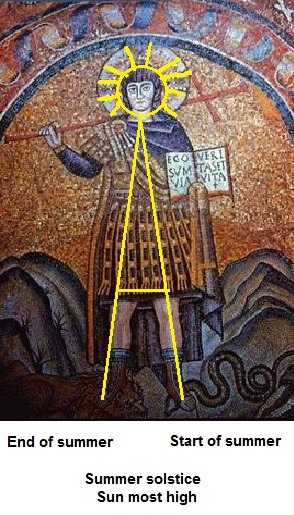
God most high...

Snake: Apr/May, beginning of the main snake mating season, beginning of summer.

Lion: Jul/Aug, beginning of the main lion mating season, end of summer. 

From my post "You will trample great lion and serpent"

Now have a look at this:

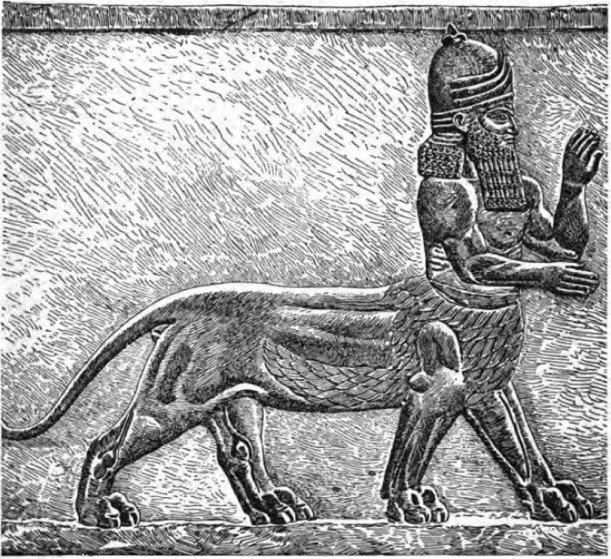
Possibly earliest depiction of a multi headed dragon...And dragon killer(s). 2200 BC, Akkad...Dragon is a symbol of a destructive sun's heat, and this one has lion body, cause Leo is the hottest time of the year, and 7 snake heads, cause of 7 summer months. I talked about this in my post "Seven headed dragon"...

The reason why Mesopotamian dragon has a lion's body, is the same reason why the Mesopotamian god of death has a lion's body...

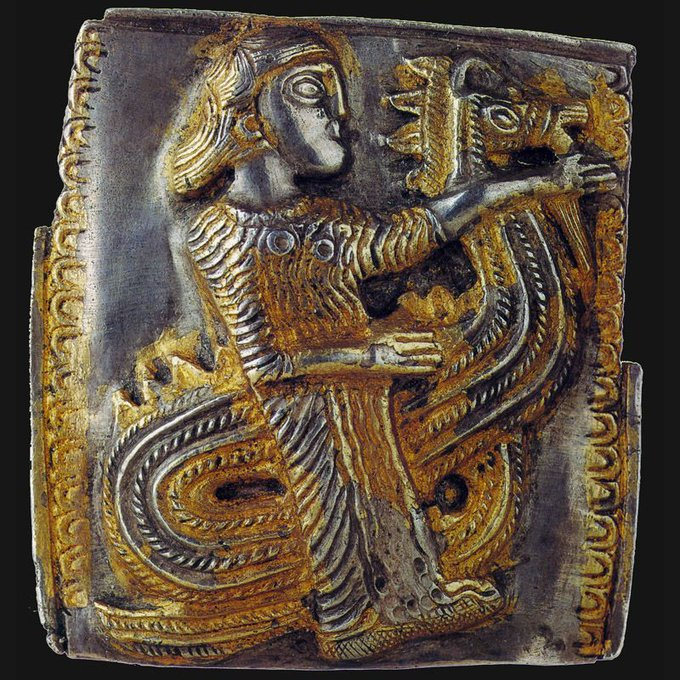
I am the (sun) god of death...About Nergal, the destructive sun in Leo, Jul/Aug, the hottest and driest part of the year in Mesopotamia...I talked about this in my post "Winged superhuman hero"...


Slavs believed that "dragons are just old snakes"...So if snake marks the beginning of the hot dry part of the year, and if snake symbolises sun's heat, then old snake symbolises old sun, the destructive sun of the late summer which causes drought...The (lion) dragon...

It was this Slavic belief that snakes evolve into dragons which was a key that unlocked all these snake/dragon/lion symbolic links found all over the place...

Just search my twitter account or my blog for snake or dragon and you'l see what I mean...

Anyway, you can find more about Slavic snakes and dragons in this article "Letnitsa treasure"...Follow the links at the end of the article to (only some) related articles about snakes and dragons from other mythologies 🙂 

Sources for Bulgarian folklore: 

Ivanichka Georgieva's book "Bulgarska Narodna Mitologia" (1993) p 113, and Vihra Baeva's "Zmey, Zmeyitsa, Lamia, Hala" (2016) p316

I want to thank "A Spell In Time: British-Bulgarian storytelling company" for the info...

You can read more about snakes, dragons and lions in my posts "You will trample great lion and serpent", "Chimera", "Lion killing snake", "Jörmungandr", "Bactrian snakes and dragons", "Seven headed dragon", "Khafajeh vase", "Nude winged hero dominating snakes", "Winged superhuman hero", "Tiger and dragon", "Eagle snake struggle", "Wolf vs snake"...

To read more about ancient animal and plant calendar markers, start here…then check the rest of the blog posts related to animal calendar markers I still didn't add to this page, and finally check my twitter threads I still didn't convert to blog post...I am 9 months behind now...


Tuesday, 22 August 2023

Sabi Abyad venus

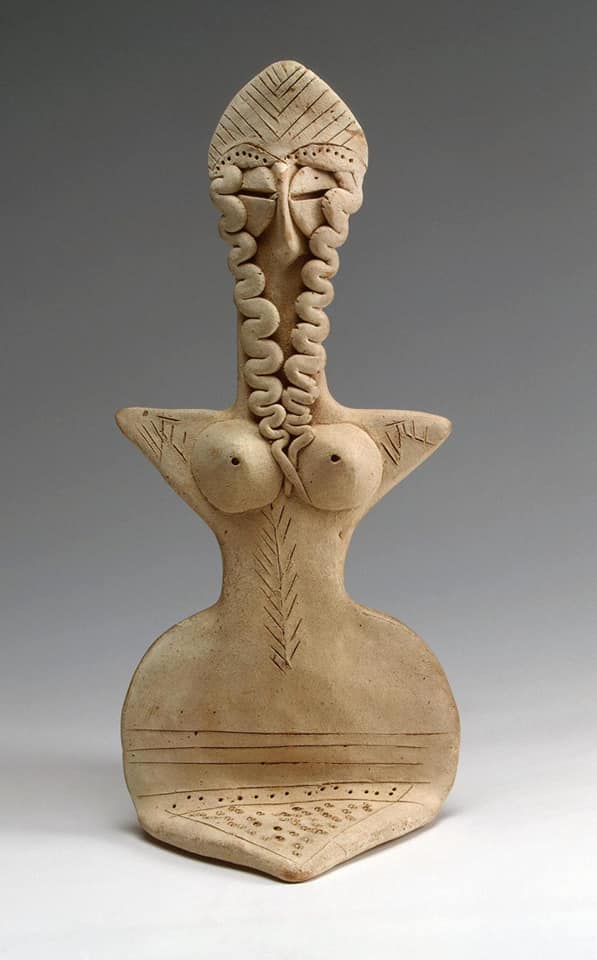
A figurine from the Late Neolithic and Early Halaf Village at Sabi Abyad, Northern Syria, part of Fertile Crescent. dated to 7th mill BC...Depicting Mother Earth turning into Mother of Grain...From "A Late Neolithic and Early Halaf Village at Sabi Abyad, Northern Syria". 

On the front you see what you would expect to see on any female fertility (Mother Earth) figurine: Large vulva and large breasts...


What is depicted on the sides and the back of the legs is what transforms this Mother Earth into Mother of Grain figurine: ears of grain...

How do we know this is grain?

Remember my post about the Mother of Grain?

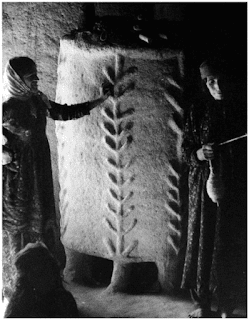
Aliabad women standing beside a grain bin, Iranian Kurdistan...From "Home is where we keep our food: The origins of agriculture and Late Pre-Pottery Neolithic food storage". Very important image, as it confirms that this design pattern, found on pottery and figurines since the Earliest Neolithic all over Eurasia, means "grain"... 


I first talked about this in my post "Scarlet ware harvest vase"...


I then talked about this symbol in my post "Mother of grain"...


And in "Altyn tepe mother of grain"...


And in my post "Arjoune venus"...


And here they all are (so far):


We find the same symbolism on figurines found from the Balkans to Iran. They use similar combination of vulva + grain to depict the same thing: Mother Earth turning into Mother of 

BTW, have you ever heard of the Grain spirit? That "lives in the corn dolly made from the last sheaf of grain"?

I talked about it in my post about it in my post "The old woman of the mill dust

In Gaelic, the word Cailleach means both an old woman and the last sheaf of wheat and the corn dolly made from it. Corn dolly which represents Mother Earth, the life (grain) giving mother...


Who is this "Grain spirit"? Well the mother of grain of course. The mother earth...The mother of all of us (and grain)...The Proto Mother...The ancestor...

I also talked about this in my post "Diduch", the representation of an ancestor "who gives us wheat"...

And my post "Wheat cross"...About living corn dollies from Eastern Europe...

The wheat wreath was the most important part of the Romanian end of harvest ceremonies. It was made from the last sheaf of wheat...

It was normally then used to "crown" the "most beautiful unmarried girl" that participated in the harvest, who then carried it back to the village on her head...Love these pics of the reenactment of this ceremony by Vasile Sarb


Interesting, right?

To read more about ancient animal and plant calendar markers, start here…then check the rest of the blog posts related to animal calendar markers I still didn't add to this page, and finally check my twitter threads I still didn't convert to blog post...I am 9 months behind now...

Sunday, 5 March 2023

Wheat cross

A ceremonial "wheat cross" from Romania. It was made on the last day of the wheat harvest to carry the "wheat wreath" from the fields to the village. Pic from this great paper about crosses from the Alba county in Romania, "Crucea in patrimoniul spiritual al judetului Alba" (In Romanian)...

The wheat wreath was the most important part of the Romanian end of harvest ceremonies. It was made from the last sheaf of wheat...

It was normally then used to "crown" the "most beautiful unmarried girl" that participated in the harvest, who then carried it back to the village on her head...Love these pics of the reenactment of this ceremony by Vasile Sarb


The same Wheat wreath ceremony was performed by the Slavs. Wheat wreath, worn by the "corn maidens" and made from the last sheaf of wheat, was the first batch of grain to be threshed on the threshing floor. This grain was then set aside for next year's sowing and was the fist grain to be sawn. I talked about this in my post "Wheat wreath"...

BTW, a lot of Slavs once lived in Romania, which is attested by huge number of Slavic toponyms and hydronyms and by the amount of Slavic words still present in Romanian language...

Romanians, like many other Europeans, believed that the last sheaf of wheat, from which the wreath was made, contained the "spirit of grain"...This spirit was preserved in a "Corn dolly" made from the last sheaf instead or together with the wreath. I talked about this in my post "Corn dolly"...


Who corn dolly represents can be seen from the fact that in Gaelic, the word Cailleach means both an old woman and the last sheaf of wheat and the corn dolly made from it. Corn dolly which represents Mother Earth, the life (grain) giving mother...

I talked about this in my post "The old woman of the mill dust"...

And in Slovenia we find this: Men bringing an old woman in a grain basket into the mill, where she gets transformed through milling into a young girl. An old story about the rebirth (sowing/sprouting) of the Mother Earth (Mother of grain) over winter? I talked about this in my post "Bablji mlin"...

What is very interesting about the "wheat wreath" was placed on the head of the most beautiful unmarried (fertile!!!) girl which participated in harvesting, who then carried it to the village "while everyone else sang wedding songs and performed various wedding rituals"...

This seems to be directly linking female fertility and land fertility, again something found also in Slavic and Gaelic folklore (remnants of old religions)...

In Ireland "grain sheafs appear at weddings and dance with a bride"...

More about walking sheaves of wheat in European folklore can be found in my post "Walking sheafs of wheat"...

In Russia, in the past, after the last sheaf of grain was cut, women harvesters would lie down on the ground and roll around the field "to return the strength to the earth". 

The Wheat wreath was in Romania always made by women standing in a circle, and originally was made "the way you would plait women's hair"...


Which (thank you @another_barbara) looks like ear of wheat...The girl carrying the wheat wreath was the embodiment of the Corn Maiden...

BTW, this link between female fertility and land, and especially grain field fertility is ancient, and can be traced back to Neolithic Fertile Crescent, from where it spread to Europe...

As I said, all over Europe, The last sheaf of grain represents the living "sprit of grain"...But in Eastern Slavic countries, it also represents The Ancestors...This is Diduch (Grandfather) Christmas sheaf from Ukraine... I talked about this in my post "Diduch"...

And interestingly, the girl carrying the wheat wreath, is sprinkled with water all along her journey from the field to the village...Why? Slavs believed that thirsty ancestors can cause droughts which destroys wheat...I talked about this in my post "White feast"...