Showing posts with label jurjevo. Show all posts

Saturday, 4 March 2023

Parilia

Happy Parilia (or Palilia) - This Roman festival, held on 21st April, cleansed shepherds & sheep, honouring the god of shepherds & sheep, Pales. A bonfire was built, with the shepherd and sheep jumping through the flames to be cleansed. The painting by Joseph-Benoît Suvée reimagines the festival

I find it interesting that the Romans didn't know who or what Pales was...But, considering that Ovid says that Parilia predates the founding of Rome, Pales and related rituals are of Pre Roman and most likely of Non Roman origin...

I don't know who or what Pales was either. But I would like here to add few bits of information that might help someone, some day, solve this mystery 🙂 First let's have a look at the Parilia ceremony:

"...After the sheep pen had been decorated with green branches and a wreath draped on the gate, the remainder of the ceremony took place in this sequence..."

"...At the first sign of daylight, the shepherd would purify the sheep: by sweeping the pen and then constructing a bonfire...the shepherd would jump through this flame, dragging his sheep along with him...Offerings of bread and milk were then presented to Pales..."

"...After these offerings, the shepherd would wet his hands with dew, face the east, and repeat a prayer four times...requesting Pales’s protection of the shepherd and the flock..."

"...The final portion of the rural festival made use of the beverage burranica, a combination of milk and sapa (boiled wine). After consumption of this beverage, the shepherd would leap through the fire three times, bringing an end to the ceremony..."

So...21st of April is very close to the 1st of May...Which was in some parts of the world known as Beltane (Bealtaine)...The day that marked the beginning of the Celtic summer (May-Oct), half of the year dominated by the sun...


On Beltane, in Scotland, they purified the sheep and cattle by walking them between two fires derived from single ritually kindled fire...I talked about this in my post "Beltane purification ceremony"...

And they did the same thing in Ireland on the same day...I talked about this in my post "The City"...

21st of April is very close to the 23rd of April, St George's day...And in the past in the Balkans, at the dawn of the St George's day, two fires were lit between which people and domestic animals (sheep and cattle) walked "for protection from diseases and snakes"...

St George being Christianised old Slavic sun god Jarilo (The Brightly Burning one), and snake being the solar animal which follows sun everywhere, it is obvious why people performed snake protection rituals on the day of the sun...

But there is something really interesting about when we celebrate St George and St Michael...The dragon killers...They mark the beginning and the end of the "Old Summer", the domain of the sun, the domain of the dragon...I talked about that in my post "Dragon always gets killed"...


BTW, in the old Serbian calendar, solar year is also divided into summer and autumn...Where summer starts with summer St Georges day, and winter starts with Winter St Georges day...

Summer George icon. 

Winter George icon.

So the fire purification on the day (around) the beginning of the summer...The season ruled by the Jarilo, the "Brightly Burning One"...The one who "pali" (lights up fires)...

It is interesting that in the past, in the Balkans, on the morning of St George's day kids were woken up by being swished with nettles, "to be healthy"...

Nettle sting feels like burning, and the expression in Serbian for being stung by nettles is "ožariti se" (to be burned)...

In the past, in Skopska Crna Gora region of Macedonia, women swept their houses with nettles early in the morning on St George's day, "to sweep all bad things out of the house, because everything runs away from nettles"...From: Ѓурѓовденски обичаи (1956) which sadly isn't available on Youtube any more...

There is an expression in Serbian "on žari i pali" which means "he burns and lights up fires"...Jarilo, Žarilo, Palilo...The Burning Sun of summer...

Shepherd kids making flower wreaths in the spring, most likely for Djurdjevdan (St George's day)...


From the description of the Parilia ritual:

"...After the sheep pen had been decorated with green branches and a wreath draped on the gate..."

In Serbia, on the St George's day people put wild flower and medicinal herbs wreaths on house gates for good luck and health...

I talked about St George (Jarilo) as the sheep and shepherds god in my posts "April" and "Aries must die"...

From the description of the Parilia ritual: "...Offerings of bread and milk were then presented to Pales..."

St George's day rituals involving bread and milk from Serbia: 

This is "kravaj" (pronounced kravay), a ritual bread made in Serbia. It was in the past used during "premlaz", the ritual first milking of the year which is always done the day before St George's day and which marks the beginning of the milking season...I talked about this in my post "Aries must die"...

From the description of the Parilia ritual: "...After these offerings, the shepherd would wet his hands with dew, face the east...pray..."

Just in case you wondered who the shepherd was praying to facing east at dawn...The sun...god..who "pali" (burns)...

Oh, and why would he "wet his hands with dew" before praying?

Well in places where people believed in purification by fire at the beginning of summer, they also believed in purification by dew at the beginning of summer...

This is one custom that I only read about before. On the morning of St George's day, girls would go to fields to wash their faces in dew, so that they are beautiful all year round. Recorded in Skopska Crna Gora region of Macedonia. From: Ѓурѓовденски обичаи (1956) which sadly isn't available on Youtube any more...


But this ritual was widespread among Serbs too, where dew bathing was done on the so called "herb Friday", the last Friday before St George's day. And the Irish did it too, on Beltane morning...Just another indication what St George's day is...I talked about this in my post "Morning dew"...

Interestingly, the same ritual is performed in Latvia on Jāņi day (summer solstice). Girls wash their faces with the morning dew, so their face will always be white and beautiful"...Great example how ritual dates change because of climate...I talked about this in my post "Jani"...

And that's it from me for today...After all this, I still don't know who Pales was...But I could guess...🙂 Especially after I recently found out that one of the names of the Mesopotamian god of death, Nergal, the personification of the destructive, burning sun of the late summer, was "Palil"...I talked about this in my post "Palil"...

To read more about ancient animal and plant calendar markers, start here…then check the rest of the blog posts related to animal calendar markers I still didn't add to this page, and finally check my twitter threads I still didn't convert to blog post...I am 9 months behind now...

Wednesday, 17 August 2022

White Cross

This is the reconstruction of the Beli križ (White Cross) shrine which was once located in the valley southeast of the village of Prelože, Slovenia...

The shrine was destroyed during the First World War. But the locals preserved a vivid memory of it and of the rituals performed around it. These were collected by ethnographers during the middle of the 20th century...

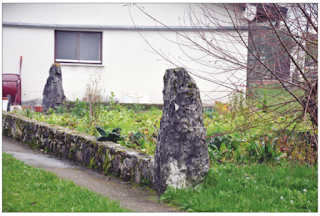
As you can see, it was "a cross in a circle" made of stones, with four stones in each quarter of the circle and four pointy rocks on the ends of cross hands...

Basically this is a so called "sun cross", which symbolises a solar year with four season. Ever spinning solar wheel. This is confirmed by the fact that a bonfire was lit in the field near the shrine on Kresovanje (Bonfire night, Midsummer night)...


In the center of the "shrine" was a stick on which young green tree branches were attached, symbolising a young green tree. Or maybe this cross was rebuilt every year around a real young tree. This is not clear from the original text...This tree symbolically grew during the fertility ceremony which was performed around the cross in the spring "when the foliage turned green", which in the Prelože area happens in April...The carpet of crocus flowers across the slopes of Velika Planina in Slovenia, April...


It is quite possible that this ceremony took place on Jurjevo (St. George’s Day), the old Jarilo (Slavic Young Sun God) day...The field where the White Cross shrine once stood is linked to St George...I talked about him and why he is "The Dragon Killer" in this article "Letnitsa treasure"...

A very interesting metal plaque from the so called "Let­nit­sa Treas­ure", a 4th c. BC Thracian hoard discovered near Let­nit­sa, Bulgaria...This one depicts one of the most common themes from Balkan fairytales: a princess being kidnapped by a dragon...

Jarilo (Jura), whose name means both "the brightly burning one" (sun) and "the young one, the green one" (bringer of spring, summer, The Green Man) was in other Jurjevo rituals from Slovenia represented by a living walking tree.

Zeleni Jura (Green Yura) walking the earth. Part of Jurjevanje, celebration of the return of Jarilo, Jura, The  Young Sun God who brings spring...Today performed on St George's day...Tells you a lot about the true Identity of St George...


This ritual is performed Bela Krajina, area inhabited by descendants of Serbians who migrated here during Turkish invasions of the Balkans. Today split between Croatia/Slovenia...This is the original Green Man...

The Sun God's name Jarilo (pronounced Yareelo) comes from the root "jar" (yar) meaning: young, green (Life giving warm sun of green spring), but also brightly burning and raging, furious (Life destroying burning sun of yellow summer)...

Interestingly, in Sanskrit, har (cognate of jar, yar) can also mean green and yellow... 

So the fact that a (symbolic) young green tree, symbol of the sun god Jarilo, was "growing" in the middle of the shrine shaped like a sun cross, points at the symbolic meaning of this shrine: solar year and the climate which it creates...

And it is this climate which people of Prelože were trying to control...As part of the ceremony at the White Cross, four young girls span around the circle interconnected by ivy branches, singing prayers for "sun, rain and abundant crops"...

They prayed to "Dajbogec" (Giving god), another name for Dabog, the old Slavic Sky God...

In Serbian the expression "On vedri i oblači" means "he rules", "he has absolute control, absolute power". Literally this expression means "he makes the sky clear and cloudy"...I talked about this in my post "The power of the thunder giant"...

Dabog, Dajbog was also another name for Triglav, Trimurti, the Supreme god...I talked about Triglav in several of my posts: "Lugus or Triglav", "When the bride dies soon after the wedding", "Sun thunder fire", "Riddle", "Krkava Triglav stone", "Triglav, Trojan, Trinity, Trimurti, Agni"...

This is what Triglav is, one God with three faces: Sun, Thunder, Fire...

It is very interesting that the "shrine" contained pointy upward stones and that at this shrine girls (women) prayed to Dabog for good weather (just enough rain and sunshine) so that their crops would yield abundantly...

Because this is not the only place where we find large stones used in weather rituals involving Dabog and performed by women...

In his 1925 paper "The Ring of Nestor", Sir Arthur Evans, the excavator of Knossos, mentions a curious rain-making ritual which was performed in Ibrahimovci, near Skoplje, Macedonia, during droughts. 

Pic: Altar dedicated to Jupiter, Juno und Minerva, Macedonia


This is 1925 we are talking about. At least 1500 years since Jupiter was officially a god of rain...And yet, uneducated, illiterate SLAVIC villagers in Macedonia still remembered him in times of desperation...

What is very interesting is that this altar "was lying face down normally but was lifted when the rain was needed". Compare this with this Slavic rain making ritual from Belarus in which Dabog's stone is ceremonially lifted...I talked about this in my post "The last megalithic ritual in Europe"...

And compare this with other weather controlling Slavic rituals involving sky pointing "weather stones"...See, these weather stones have the same shape as the stones from the White Cross...I talked about them in my post "Weather stones"...


Source of info about the shrine and related rituals:

Pleterski, A. 2015, Preplet 3 in 4, preloška "Beli Križ in Triglavca ter Zbruški idol", in: Nesnovna krajina Krasa

Saturday, 29 January 2022

Letnitsa Treasure

Here are some very interesting metal plaques from the so called "Letnitsa Treasure", a 4th c. BC Thracian hoard discovered near Letnitsa, Bulgaria...

This one depicts one of the most common themes from Balkan fairytales: a princess being kidnapped by a dragon...

What happens next in Balkan fairytales is that a prince goes looking for the princess to rescue her. There are several metal plaques in the "Letnitsa Treasure" depicting a mounted warrior, like this one for instance...

Eventually, the prince finds the princess, living quite surprisingly, not unhappily, with the dragon...

What happens next in Balkan fairytales is that the prince manages to persuade the princess to help him defeat the dragon, by tricking the dragon into revealing his weakness...Dragon killed, princess saved, everyone happy. Particularly the princess who is sitting on the prince's laps with his hand up her skirt 🙂...As depicted on this last plaque from the "Letnitsa Treasure"...

Now how do we know that this is a dragon? It looks more like giant snake...With a crown...

Slavic folk tradition related to snakes, which consists of huge number of beliefs, taboos and rituals, is one of the most interesting and most complex in the world. And extremely old...

In Slavic mythology snake is closely connected to two mythological creatures: the Snake King and the Dragon...

And actually the only way to understand the meaning of the beliefs and rituals related to snakes is to look at them in correlation with beliefs related to the Snake King and the Dragon. And the other way round...

The snake king is an old male snake which wears a crown or a jewel on his forehead and usually guards a treasure...And sacred knowledge...

Like "Nemušti jezik" from Serbian folk tales. A language that a man can use to communicate with all living creatures in the world. You can't learn this language. You can only get the knowledge of this language if a Snake king spits into your mouth...

I talked about this in my posts "Glaucos" and "Kassandra"...

It was also believed that the Snake king commanded all the other snakes and told told them who to bite and kill...

Slavs recognized male and female snakes and actually have different words for male and female snakes. Female snake is called "zmija, zmeja"... while male snake is normally called "smuk,  smok"... They were believed to be husband and wife or brother and sister...

What is interesting is that "smuk, smok" is another word for dragon, besides the most common word "zmaj, zmej", which is the masculine form of the word for snake "zmija, zmeja". In Slavic mythology dragon is believed to be an "old male snake"...

This is very interesting as it shows direct link between snakes and dragons and shows that Slavs believed that dragons were actually male snakes.

Slavs also believed that snakes were directly linked to the sun and that they fed off the sun's heat...I talked about this in my post "Enemy of the sun"...

In Poland, people believed that Snake king lives among the roots of an old Hazel tree. Every autumn he gathers all the snakes, who then slither up the tree to its branches "to see the sun for the last time" before they go under ground...

Snakes are solar animals. They are in our world when sun is in our world (hot part of the year) and they are in the underworld when sun is in the underworld (cold part of the year)...I talked about this in my post "The chthonic animal"...

Slavs weren't the only Europeans that believed this. Some "esoteric" dudes, the preservers of the "ancient knowledge" blah blah blah...did too. Vipera Pythia, c. 1651, by Marco Aurelio Severino...

Snakes are symbol of the sun and the sun's heat. They are also symbols of the beginning of summer, as vipers, the most common Eurasian snakes, start mating in Apr/May, beginning of summer...

And dragons, old snakes, are symbol of the old sun, destructive summer sun which burns the land and causes drought. Steals and guards water...Which is why in Slavic mythology, dragon, always breathes fire...

This is actually spelled out in Russian folklore. Nicholas Roerich, "Victory over Gorynych the Serpent". Gorynych means "the fiery one, the burning one", from gori (burns)...

And which is why in the past, during spring droughts, Serbs used to go to mountain lakes, on St George's day, and pray for rain on lake shores "to the dragons living in the lake who swallowed the rain"...

I talked about this in my post "Dragon who stole rain"...

There is actually a Serbian belief that "a snake got wings when it lived over 100 years, after which it flew away to live in lakes and waters"...Just like a Dragon...

This is in addition to the belief from Ukraine and Poland that snakes once had wings and flew in the sky. But the sun burned their wings and they fell on the ground. I wrote about this in my article about Slavic belief in the link between snakes and sun...

Now check this out: Another applique from the famous Thracian Letnitsa treasure, dated to the first half of the 4th c. BC, featuring a maiden (princess) with a three-headed dragon, a common motif from Balkan (and not just Balkan) Slavic fairy tales...

You can see that the dragon heads are depicted as snake heads, so this three-headed dragon is basically just a large three-headed snake...

This "dragon with snake heads" depiction is first found Mesopotamia, where according to their religious texts, summer lasted seven (hot) months...Which is why local dragon (dragon = symbol of summer), had seven snake heads (snake = symbols of sun's heat)...Oh, and look, we also have dragon killer(s) and the princess 🙂 I talked about this in my post "Seven headed dragon"...

We also find dragons depicted with snake heads in Bronze Age Bactria where dragons are literally depicted as snakes with wings:

This is my favourite Bactrian seal depicts a snake with two heads: a dragon (left) and a bull (right)...Symbolically equating dragon (summer sun) and bull (summer starts in Taurus) and linking both with the sun's heat, symbolised by a snake body...I talked about this in my post "Bactrian snakes and dragons"...


We find this same equating of dragons with bulls among Balkan Slavs. 

Christian and Muslim Serbs also sacrificed young girls at the lake under Trojan fortress on Pešter highland, to a three headed dragon, or in another version of the legend, to a water bull...I talk about this in my post "Water bull"...

Some people will say that none of these monsters is Zmaj but that they are Aždaja. However, Serbian Aždaja (Aždaya) or Aždaha is another name for a dragon, which comes from Azhi Dahāka, which comes from Aži (nominative ažiš) is the Avestan word for "serpent" or "dragon"...

I talked about this in my post "Snake god from Hatra":

Azhi Dahāka? Aždaha? Zahak? Arimanius? Ahriman? Angra Mainiu? Nergal? Dragon? Lion? Sun. Destructive sun of summer, which causes drought and death. 


Summer which starts in Apr/May, when vipers start to mate...Hence two snakes coming out of his shoulders. Also snakes are symbol of sun's heat. On this Bactrian seal we find this depiction of the Sun God with heat (sun) rays coming out of his shoulders, holding snakes...


And on this one, heat (sun) rays on one shoulder are actually replaced by a snake, explicitly equating the two as symbols...

Now, there is an interesting Slavic word "jar" which means young, green, spring...It is the root of the name of the Slavic sun god, Jarilo (pronounced Yahreeloh)...He is the life giving spring and early summer sun that brings back life to the frozen earth...Here is a depiction of Jarilo painted by Russian artist Andrey Shishkin...

Jarilo is the original Green Man...This is Zeleni Jura (Green Jarilo) walking the earth. Part of Jurjevanje, celebration of the spring return of Jarilo, Sun god, from the land of the dead...Bela Krajina, area inhabited by descendants of Serbians who migrated here during Turkish invasions of the Balkans. Today split between Croatia/Slovenia...

But the root "jar" can also mean "brightly burning" and "raging, furious"...

This means that Jarilo can also mean "The Scorcher", the life destroying burning sun of the late summer and early autumn...

Two suns, young and old, the life creator and life destroyer...In one...

Jurjevo, the celebration of the return of Jarilo, is today known as St George's day. St George is basically Christianised Jarilo...

Jurjevo is the celebration of the beginning of the summer, the domain of the sun...And dragons...Because as the summer goes on, and the sun gets hotter and hotter, snake, the symbol of sun's heat, grows older and older and eventually turns into dragon, the symbol of destructive sun's heat...

Jarilo, The Scorcher, The Dragon...To whom Serbs, sacrificed rams during droughts, on St George's day, with blood poured into the lake, for the dragon who stole rain...

Funny...

St George = Jarilo = Dragon...

By the way, Serbs believed that the Snake King, who is "An Old Male snake", The Dragon, also had a "green branch in his mouth"...

Interesting right? 

Snake King = Dragon = Jarilo = Green man...

By the way, the dragons who steal princesses in the Balkan fairytales usually live in palaces...They are kings...Snake kings...

I believe that Jurjevo, Jarilo's day, is at the same time the celebration of good spring sun and bad summer sun. The day of thanks for the spring and prayers for the summer...Anyway, on that day spring ends, summer begins...

And every year, on The Day of Jarilo, The Day of Dragon, the Young Spring Earth, Vesna, is "sacrificed" to the Young Sun, Jarilo (The Dragon). Spring (the princess) is "sacrificed" (it ends) so that Summer (The Dragon) can begin???

But wait, St George is a dragon killer!!! Well, what's the best way to Christianise Jarilo, The Sun, The Scorcher, The Dragon, than to turn it into it's opposite...The Dragon Killer...

Anyway, as I said, in AD Balkan Slavic fairytales, prince kills the dragon, gets the girl and lives with her happily ever after...Any BC myths like these?

BTW, this link between sun, snakes and dragons from Slavic mythology allows us to decipher meaning of snakes and dragons from other mythologies too...They are animal calendar markers. Snake is the animal calendar marker for the beginning of summer (Apr/May), when Eurasian snakes begin to mate. And dragon, the old snake, which was sometimes depicted as a lion with snake head(s), is the animal calendar marker for the end of summer (Jul/Aug), when Eurasian lions begin to mate, and snakes get old...

You can read more about snakes, dragons and lions in my posts "You will trample great lion and serpent", "Chimera", "Lion killing snake", "Jörmungandr", "Bactrian snakes and dragons", "Seven headed dragon", "Khafajeh vase", "Nude winged hero dominating snakes", "Winged superhuman hero", "Tiger and dragon", "Eagle snake struggle", "Wolf vs snake"...

More about ancient animal and plant calendar markers, start here then check the rest of the blog posts I still didn't add to this page, and finally to to @serbiaireland and check my twitter threads I still didn't convert to blog post...I am 9 months behind now...