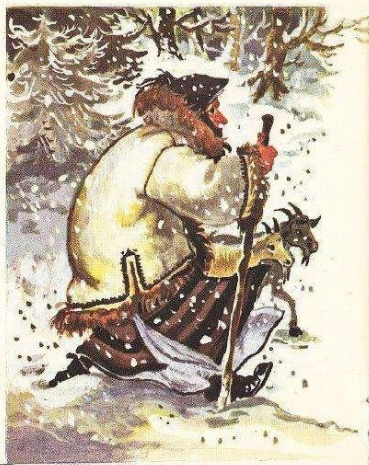
Friday, 11 November 2022

Sun god from Tell Brak

3rd millennium BC cylinder seal imprint found in Tell Brak, Syria? From "Excavations at Tell Brak 2001-2002: Preliminary Report"... 

I think that this could be the oldest depiction of a sun god riding in a quadriga (a car or chariot drawn by four equids abreast)...

And here is why:

Here is the drawing of the scene from the seal. You can see that the seal depicts a quadriga, pulled by 4 equids.


Apparently, these are not horses, but "kungas". These luxury equids, mentioned often in 3rd millennium BC texts, turned out to be specially bred hybrids between female domesticated donkey and a wild male Syrian wild ass. You can read more about it in "The genetic identity of the earliest human-made hybrid animals, the kungas of Syro-Mesopotamia"

Kungas were so highly regarded, that "they were the preferred draught animal, deemed especially suitable for drawing the chariots of kings and gods"... You can read more about it in "Archaeology in Mesopotamia: Digging Deeper at Tell Brak"...

Apart of the quadriga, the Tell Brak seal also depicts three "human" figures. The one on the quadriga being much larger than the other two, usually sign that this is either a king or a deity...

So far the figure on the quadriga could be either a king or a god...So which is it? The authors of the original paper can help us determine this: "the presence of the snake [above the driver of the quadriga] hints at a cultic aspect [of the seal]"...🙂

Soooo...Why is the snake depicted above the driver of the quadriga pulled by four eqides? Archaeology has no idea, but it has to be cultic...Which means that we need turn to animal calendar markers to help us understand what's going on here...Again...

Here is Helios riding on chariot pulled by four solar horses...Why? Cause horse is a "natural solar animal". Horses fertility is governed by the sunlight and it peaks on summer solstice. 

So a quadriga pulled by horses is an ideal ride for a sun god...Why? Cause horse is a natural solar animal...Its fertility (and mating characterised by vicious stallion fights for mares) is governed by the amount of sunlight and peaks on summer solstice...

Which is why we see things like these: Bronze Age "Sun Chariot" pulled by a horse, Denmark 1400 BC...

Or why horses are ridden by sun itself, depicted either as a rider with sun disc with rays instead of the head, or as the sun disc with rays...like on these Celtic coins...

I talked abut this in my post "Hayagriva"...

Anyway, what does this have to do with our quadriga from Tell Brak? It wasn't pulled by horses? Well the thing is that asiatic wild asses have the same mating season as wild horses, which also starts in Apr/May...

I talked about this in my post "Onager"...

Eeee ok, so? Well, in Syria, Apr/May marks the beginning of the hot, dry half of the year which lasts until Oct/Nov...The half of the year dominated by the sun. The half of the year which spans the entire mating season of Asiatic wild asses...


So we could say that a quadriga pulled by four "kungas" would be an appropriate ride for a Sun God...It could...If we only had anything else on this seal that is symbolically linked with the sun...Ah but we do, the snake...The "cultic bit" of the scene...

As I explained in many of my posts, snake is a pure solar animal. It is in our world when sun is here (day, hot half of the year) and it is in the underworld when sun is there (night, cold half of the year)...


Snakes are symbol of the sun and the sun's heat. They are also symbols of the beginning of summer, as vipers, the most common Eurasian snakes, start mating in Apr/May, beginning of summer...

So no wonder we find snake linked to the sun over and over again...

Interestingly, the key for understanding the link between snakes and the sun was best preserved in Slavic folklore (remnants of Slavic mythology). I talked about this in my post "Letnitsa treasure"...


At the same time the Tell Brak seal we are talking about was made, we find this in Iran: Khafajeh vase...I analysed this amazing object in my posts "Lions with grain tails" and "Khafajeh vase"...

See how "Goddess" with a star above her shoulder (usually symbol for Inanna/Ishtar), stands between two lionesses (she was known as the lioness of heaven), holding two snakes? Snake is the symbol of sun's heat. Sun is hottest at the end of Jul, beginning of Aug, in Leo...Which is when Sirius rises with the sun pretending to be "The morning star"...🙂

Or maybe this is a male figure?

And at the same time when Khafajeh vase was made, in Bactria people made things like these: A seal depicting the sun god (see heat rays emanating from his shoulders) holding snakes, symbols of sun's heat...You know, like Utu/Shamash, the sun god? 

Considering though that the other side of the same two face seal depicts this, a lion with heat radiating from its back, I think that this dude is Nergal, the "destructive sun in Leo"...

I talked about this in my post "Nude winged hero dominating snakes"...

At the same time when all the above artefacts were made, down south in Iraq, in Tell Asmar, people depicted dragons with seven snake heads, one of each sunny, hot month of the old Sumerian summer...I talked about this in my post "Seven headed dragon"...

Oh, do you see how the "hero" is about to kill the 4th snake head? Apr/May, May/Jun, Jun/Jul, Jul/Aug...So this happens in Jul/Aug, in Leo...And do you see the "lady" standing behind the hero, with a star above her shoulder? 🙂

So the depiction of a (solar) snake above our quadriga pulled by (solar) equids indicates that whoever is the driver is not a king, but god (cultic!!! 🙂)...Sun god???

Unfortunately I can't tell you the name of this dude...But it could be some local version of the sun god, depicted on a quadriga pulled by equids by people obsessed by equids...Cause Syria was the place where these animals were bred...

That kungas had a special meaning for the 3rd millennium BC Syrians, can be seen from the fact that more than 40 of them were sacrificed and ceremonially buried in elite graves at Umm el-Marra, Syria...

They were placed in separate chambers from the burials of adult humans but many were accompanied by human infants with signs of having been sacrificed to the kungas or with the kungas???

Apart from "Sun's half of the year" arriving "when wild asses start to mate", is there something else important that happens in the Kungas country in Apr/May, that is linked to the sun, and that can be marked with "when wild asses start to mate"?

Well there is. On the above map of 3rd millennium archaeological sites in Syro-Mesopotamia, you can see how all these cities were located along the rivers. Because in this area, the rivers were the only reliable source of fresh water for the people and their animals...

And Mesopotamians believed that it was the Sun god that filled their taps and wells with water. 

In the Sumerian text "Enki and Ninhursanga" Enki [the god of fresh water and the annual flood] says: "When Utu [the sun god] steps up into heaven, fresh waters shall run out of the ground for you"...

I explained why in my post "When Utu steps up into heaven"...

The gist: the majority of the water that flows down the two great rivers, and fills the water tables that feed the wells and taps, comes from the snowmelt on the surrounding mountains and highlands, which starts in Jan/Feb and peaks in Apr/May...


Snowmelt caused by the sun (god) "climbing" higher and higher into heaven (heaven was originally seen as a mountain by Mesopotamians) to release (god of) waters...I talked about this in my post "Shamash young and old"...

So if you live by the Tigris and Euphrates, then there is something that happens every year in Apr/May, beginning of summer, when wild asses (and horses) start to mate: the flood...Here are the water level charts for Tigris (L) and Euphrates (R)...

This rise in the water level in the two rivers is caused by the rise of the temperature caused by the rise of the Sun's heat, which is symbolised by the (Solar) Snake...Depicted over the (Sun?) God, driving quadriga pulled by (Solar) Equids...

So, to sum it up, the beginning of the hot, dry season, Apr/May, the part of the year dominated by the sun, and the beginning of the flood, caused by the snowmelt, caused by the sun, is also the time when both (solar) equids and (solar) snake begin to mate...

Does all this make it possible that on this Tell Brak seal we have a very early depiction of the sun god in his chariot? I think so, but that's just my opinion...

BTW, in the original paper, the authors say that the object above the small figure is possibly a fish?

Hmmm...Very hard so see and say...But while we are talking about fish in Tigris and Euphrates, did you know that Apr/May is the time of the upstream mating migration of huge Mesopotamian carps...


Which is why the god of water and annual flood, Enki/Ea, was depicted with fish swimming towards him...

I talked about this in my post "Utu or Enki"...

Carp fish, an important food source in Early Mesopotamian societies...And another animal calendar marker for the "arrival of the sun" in Apr/May...

That's if folks...

To read more about ancient animal and plant calendar markers, start here…then check the rest of the blog posts related to animal calendar markers I still didn't add to this page, and finally check my twitter threads I still didn't convert to blog post...I am 9 months behind now...

Thursday, 10 November 2022

Archaic rider

Archaic Greek black-figured kylix with a horseman, birds and a winged figure...Sparta, 550BC-530BC, currently in British Museum... We have no idea what this image represents...So let me give one possible interpretation...

I will start with a question: why are plants growing out of the horseman's head?

Seen this before?

Month of April, depicted as a Green Man (!!!), standing over Taurus (!!!), Cycle of the Months, floor mosaic, Crypt of the St. Columban Abbey (Bobbio Abbey), Bobbio, Piacenza, Italy, first half of 12th century...

Interesting...

The end of April is the time when St George, also known as "Green Jura" aka Green (young) Jarilo (Slavic sun god), aka Green Man arrives...Announcing the beginning of summer...In Taurus...

Zeleni Jura (Green Yura) walking the earth. Part of Jurjevanje, celebration of the return of Jarilo, Jura, The  Young Sun God who brings spring...Today performed on St George's day...Tells you a lot about the true Identity of St George...

This ritual is performed Bela Krajina, area inhabited by descendants of Serbians who migrated here during Turkish invasions of the Balkans. Today split between Croatia/Slovenia...This is the original Green Man...

The Sun God's name Jarilo (pronounced Yareelo) comes from the root "jar" (yar) meaning: spring, young, green (Life giving warm sun of green spring), but also brightly burning and raging, furious (Life destroying burning sun of yellow summer)...

Interestingly, in Sanskrit, har (cognate of jar, yar) can also mean green and yellow...

It is the Spring/Summer sun that makes plants grow and get green...Hence Green Man...Hence walking green bush, hence plants growing out of the St George's head on the Italian mosaic, hence plants growing out of the horseman's head on the Greek kylix...I think...

Now in Slavic folklore Jarilo was imagined as a horseman...Just like Svetovid (another name for the sun god) in whose temples priests kept white horses as his sacred animals, which were used for divination...Solar rider from Medieval standing stone Bosnia...I talked about this in my post "Svetovid"...

Why horses? Well, ever heard of a Solar horse? Check this article about "Hayagriva",  out. 

In it I explain why horse is a "natural solar animal". In short, horse's natural reproductive cycle is governed by sunlight, starting in April and peaking on Summer Solstice...Which is why we see horses pulling sun chariots since...forever...Which is why we see things like these: Bronze Age "Sun Chariot" pulled by a horse, Denmark 1400 BC...

Or are ridden by sun itself, depicted either as a rider with sun disc with rays instead of the head, or as the sun disc with rays...like on these Celtic coins...

Or, in case of this Ancient Greek kylix, solar horse is ridden by a rider from whose head grows new vegetation...I think...

Oh did I mention that bull and horse are two interchangeable animal calendar markers, both pointing at Apr/May:

Beginning of calving season of wild Eurasian cattle...Marked by Taurus...🙂

Beginning of mating season of wild Eurasian horses...

Which is why we find Ancient Greek coins like this one. Check the article out: "Coin from Byzantion". 

You'll like it...In it I explain the "mythological" link between cattle and horses...

Anyway, the dead giveaway that the rider is Jarilo, Or whatever name you want to give to the Young Sun God that arrives at the beginning of summer, are the birds...Migratory birds which arrive from Africa together with the Young Sun God...Remember this?

In Slavic mythology Jarilo actually departs for the land of the dead in the Autumn with the migratory birds and returns from the land of the dead in spring with migratory birds...I talked about this in my post "Leto"...

Leto, Slavic word for summer and year is most likely derived from the word "let" meaning flight...Leto (the old summer, the hot, sunny half of the year) is the period between the arrival and departure of the migratory birds...

What was the name of the mother of Apollo? Leto? Remember this post, "Skipping", about the birth of Apollo and the "Unknown meaning of the name Leto"? 

Anyway, back to our horseman kylix. On it, the winged figure at the back is holding two wreaths...Flower wreaths? Like the ones still made on St George's day (Jarilo's day) in Serbia? I talked about this in my post "Aries must die"...

What about the eagle? I am not sure about that, but there is one eagle, which is also migratory, and which arrives to Europe with the Young Sun God, in Apr/May: Snake eagle...Bird of pray which arrives when snake, symbol of sun's heat, appears...I talked about this in my post "Eagle snake struggle"...

Interestingly, the other side, which I would really really really love to see, is apparently decorated with pomegranates...Symbols of winter...Top - Summer, Bottom - Winter? Or...Are these poppies, symbols of summer, and not pomegranates?

Remember this article about "Poppies and pomegranates"? 

What connects pomegranates and poppies? Well obviously shape...But also the fact that these two plants are associated with Demeter (poppies) and her daughter Persephone (pomegranates)...The goddesses of grain...

Anyway, I have no idea if this is what is depicted on this mysterious Archaic Greek kylix, but no one else does either...So...🙂

To read more about ancient animal and plant calendar markers, start here…then check the rest of the blog posts related to animal calendar markers I still didn't add to this page, and finally check my twitter threads I still didn't convert to blog post...I am 9 months behind now...

Skipping

This is one of the best examples of the use of plant calendar markers I have ever seen...Archaic Greek black-figured amphora, found in Etruscan city of Vulci, Italy, and dated to 520BC... 

Currently kept in the British Musem. The main panel depicts, from left to right: 

Hermes

Dionysos holding grapevine with ripe grapes

Leto holding the infants Artemis and Apollo in her arms

Satyr (?) holding long juvenile ivy shoot...

Soooo???

The ripe grape (harvest) season in Greece is autumn, Aug, Sep, Oct...

The common ivy (Hedera helix) is an evergreen which grows throughout the year, but the main growth spurt season in Greece, when it puts out long juvenile shoots, is spring, early summer, Feb, Mar, Apr, May...

So the grapes and ivy shoots can be used as plant calendar markers for autumn and spring...And they are held by Dionysus, god of winter, whose plant symbols are grapevine and ivy, and one of his Satyr mates...

So Dionysus and Satyr are, with their plants, marking beginning and the end of winter. And in the middle of winter is midwinter, winter solstice, the time when the new sun, new solar year is born...Which is exactly where Leto stands...

Now remember that Leto gave birth to Artemis first and Apollo second...Which is why Artemis is closer to the grapes, autumn, and Apollo is closer to the ivy, spring...

Amazing, totally amazing...

But wait!!! This could just be a coincidence!!! Just a random jumble of plants, gods and mythological creatures!!! How can you be sure that this depicts winter?

Cause of the other side of the amphora. Of which, we only have the description:

On the other side, we have a scene of a procession: first a Satyr carrying a wineskin, then another Satyr riding a goat, followed by another Satyr slapping the goat's behind, followed by another Satyr dancing...

So?

Well, if there ever was a symbol of winter, it's a goat...Wild goats mate during winter, and are found as symbol of winter throughout Eurasia...

I talked about the link between wild goats and Dionysus in my post about "Patera of Rennes"...

And in Europe, because the Alpine Ibex mating season centres around Winter Solstice, we have this as the winter zodiac...I talked about this in my post "Trentar"...

This all of course fits with the story about the birth of Apollo and swans...When Apollo was born, swans circled over the place where he was born...

The Swans of Apollo were "Singing swans" which "when the singers would sing hymns to Apollo, would join the chant in unison"...The only swans that "sing" are whooper swans...

Which are migratory birds, which are in Greece only during winter...Right on time for winter solstice...You can read about all this in my post "Singers of Apollo"...

So I will stop here for tonight...Hope you enjoyed this...Have a nice evening...

PS: Forgot to wish you all "Sretno Novo Leto" (Happy New Year/Summer)... Apparently the etymology of Leto's name is unknown, possibly "pre Greek"...

To read more about ancient animal and plant calendar markers, start here…then check the rest of the blog posts related to animal calendar markers I still didn't add to this page, and finally check my twitter threads I still didn't convert to blog post...I am 9 months behind now...

Wednesday, 9 November 2022

Treskavec

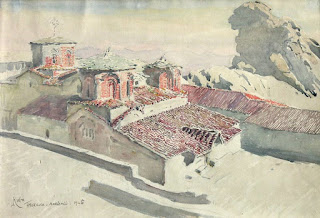
Treskavec Monastery. Beautiful 1925 watercolour by Czech painter Ludvik Kuba 1863-1956...A very interesting monastery indeed...Here is why:


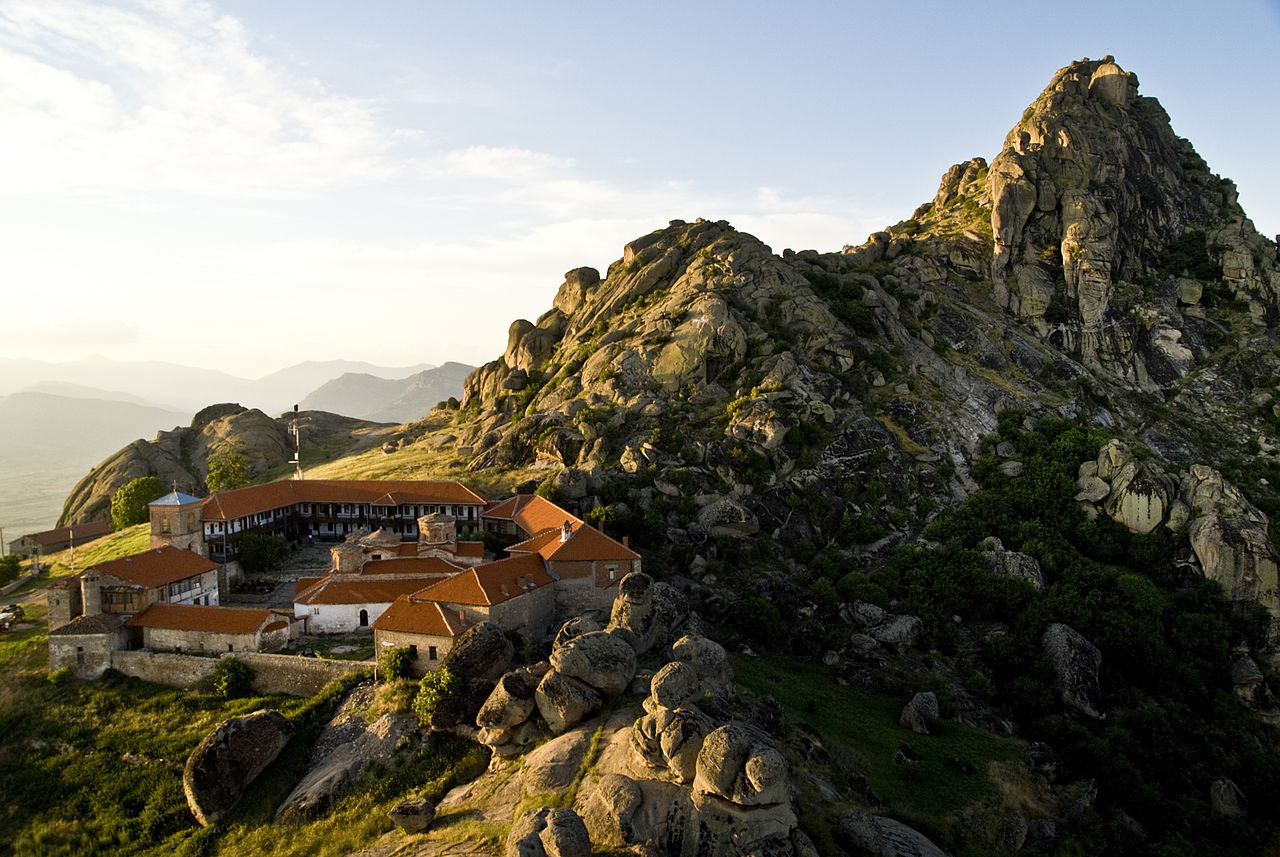
Treskavec (The Holy Mother of God) Monastery, sits right below the 1270m high Zlatovrv (Golden peak) of the Babuna Mountain, which is located 6.5 km north of Prilep, Macedonia...Pic taken by Geoff Wong in 2009...

The word "babuna" means "a woman with an evil look in her eyes" 🙂. But the word is also a feminine form of the word "babun" which in Medieval Church Slavonic meant "heretic".

So female heretic = a woman with an evil look in her eyes 🙂

Interestingly, the word "Babuna" is derived from the word Baba which means Grandmother, but which once meant any woman who had a child or who delivered a child (Mother, Grandmother, Midwife)...

Here we come to Dajbaba (the earth mother), the wife of Dajbog (the sky father)...Milan Budimir talked about her in his paper "Trikleti babuni i babice patarenske" (Serbocroatian) and directly linked her to Baba and Babuna...And Kybele (Kubaba)...

Now, the word baba used to have one more interesting meaning in South Slavic languages: stone, rock, mountain...And hence Mother Earth...There are mountains and mountain tops with the names whose root is Baba all over the Balkans. Like this one, Babin zub (Baba's tooth) from Serbia...

I wrote about them in my post "Baba, mountains and crags"..

And there is folklore related to Baba = Mother Earth all over Balkans too...I talked about it in my post "Living stone"...

In Slovenia in the past, a peace of stone that was cut from the wall of a quarry, had "to calm down", because it had been torn off the "mother's body" and was perceived as still alive for a certain time...

And so...Treskavec Monastery is located on Mountain Babuna, whose name was once probably Baba (Goddess) and was turned to Babuna (An evil woman, Pagan woman? Pagan goddess?) most likely by Christians, when the area around (the holy mountain) was Christianised...

Interestingly, the local population preserved the memory of the Christianisation of the area in a folk song recorded in the 19th century. You can find it in the article "Sakralna topografija manastira Treskavca" (Serbocroatian). 

The interesting bit is:

...

Angels and saints all came 

They all came to Zlatovrv (Golden Peak) Mountain,

They all came to expel the pagans,

From the temple which they built there,

And to turn the temple into a monastery,

For the Holy Mother of God to sit in

...

This confirms that this was (Baba ???) holy mountain which was converted to a holy mountain of Mary...This conversion of holy places dedicated to Baba (Mother Earth) into holy places dedicated to Mary can be seen all over the Balkans...

Now, the word used in the original text for pagans was "Elimi" which is a local bastardisation of "Elini" which means Greeks, but also Giants and Pagans...People basically attributed all the ancient sites which they didn't know who built, to these guys...

You can read about it in "Zbornik za narodni život i običaje južnih Slavena" (Serbocroatian)

Most of the Treskavec monastery architecture visible today is dated from the end of the 12th and the beginning of the 13th century. It was extended in the 14th century by Stephen Uroš II Milutin of Serbia and Stephen Uroš IV Dušan of Serbia...

But, archaeological excavations on the site uncovered that the 12th century church was built on top of the 5th century Early Christian basilica, which was built on top of temples dedicated to Apollo and Artemis...

Interesting...Considering that the Apollo's temple was built under the peak named Zlatovrv (Golden peak), which apparently "sometimes shines like gold at sunrise"...

And considering that the local (Slavic) population, have until the 19th century, preserved (orally) the legend about the existence of the "Elin" Solar temple under the Golden Peak, which was obviously built before the 5th century, when it was converted to Christian Basilica...

And so there you have it...An interesting story about Treskavec monastery...Hope you enjoyed it...

PS: Speaking about "women with evil look in their eyes", you might like this

There are two Serbian words that mean skilful, adept: Vičan (vitchan) & Vešt (vesht). Vešt is the root of the Serbian word for #witch: Veštica (skilful woman). Is it possible that Vičan could be the root of witch (skilful woman)?"

You can read about this in my posts "The Skilful one" and "Wrach"...


Monday, 7 November 2022

Living stone

Stone Quarry, painted c. 1919, by Czech painter Josef Ullmann...

In Slovenia in the past, a piece of stone that was cut from the wall of a quarry, had "to calm down", because it had been torn off the "mother's body" and was perceived as still alive for a certain time...

This belief was recorded by an published by Boris Čok in  "Kamnoseško izročilo o znamenjih na portalih in kolonah po Krasu" (p: 106)

But this is not an isolated belief...

Bedrock is in the Balkans known as "živi kamen, živa stena" (living stone, living rock) and is called so, because it is believed to be still part of the living body of the Mother Earth which gives birth to all life (plant, animal, human)...

These types of stones are also known as "Baba" (Grandmother, Mother) stones...

There are many "Baba" rocks and rocky mountain peaks all over Slavic Balkans. This is one of my favourites: Babin zub (Grandmother's tooth) peak, Mt. Stara Planina (Old Mountain), Serbia...

I list a lot of them in my article "Baba, mountains and crags"...If you know of any more, please post name and link to the map location in the comments...

These Baba stones were once venerated by the local transhumance shepherds communities...

For instance on Velebit mountain in Croatia, on arriving to the summer pastures, shepherd women used to bring food offerings and leave them on the "Baba" stone.  They also used to lite candles on the stone on various holy days. The stone was also known as "the altar"...

Many of these old "Baba" stones were later Christianised, by having chapels dedicated to Mother Mary built on top of them...Same thing, different name...Like this one on Veliko Rujno, Velebit, Croatia...

I talked about this in my post "Shepherd's chapels from Velebit"...

This was done because people believed that it was "Baba" (Mother Earth) that controls cold and damp weather...While her husband, Father Sun (Sky) controlled hot and dry weather...

Father above, Mother below...

Looks familiar? I talked about this in my post "Square and compasses"...

Srbska zagonetka: 

Pitanje: Visok otac, široka majka

Odgovor: nebo i zemlja

Serbian riddle: 

Question: Tall (high) father, wide mother

Answer: sky and earth

I talked about this in my post "Riddle"...

Shepherd's in Slovenia also believed that "baba" stones were linked to weather, water, humidity, mud, soil and fertility and pasture abundance...

This bedrock outcrop near the village of Rodik in Slovenia is known locally as "Baba" (Grandmother)... 

Locals believed that "Baba" controls the (bad) weather: Baba’s urine turns to rain, her fart to wind, and when she raises her skirt, the weather gets nice...🙂

And also used to leave offerings on "Baba" stones during their spring ascent to the summer pastures...I talked about this in my post "Gryla"...

I came across this interesting article in Italian, "La leggenda dell’auricorno e la mitologia delle Alpi slovene" about "Baba" folklore from the Alps. 

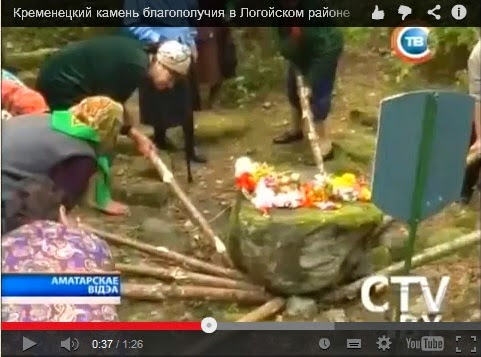
This is why stones are so prominently used in Slavic weather magic...Like here, where women raise "Dabog's stone" during drought to get cool and wet weather...

I talked about this in my posts "Weather stones", "The last megalithic ritual in Europe", "Jupiter from Ibrahimovci", "White cross"...

In South Slavic mythology, it is "Baba", meaning Grandmother, Hag, personification of the winter earth, which causes cold weather...I wrote several blog articles about this character...

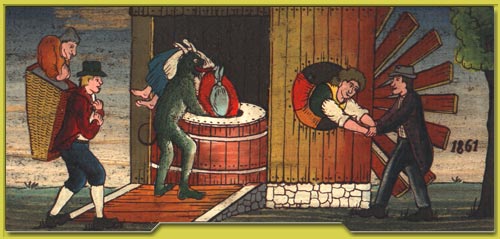
"Bablji mlin", meaning "Granny's mill" scene, Slovenia. An old hag is being milled, and thus transformed, into a young maiden. Winter being transformed into Spring...I talked about this in my post "Bablji mlin"...

Interestingly, in this version, it's Krampus that does the milling...Krampus, Goat man, an animal calendar marker for winter...


Why? Because Ibex goats mate and fight during the winter...

I talked about this in my post "Krampus"...

"Bablje Leto" (Grandmother's summer), one of the names for Indian summer (warm dry autumn weather), is another remnant of the Mother Earth cult in European Christianity and European folklore...I talked about this in my post "Bablje leto"...

"Everyone knows that an ordinary bullet can't kill a witch. If you want to kill a witch, load the rifle with 3 grains of wheat and a bit of Easter beeswax candle" - Serbian saying. 

To understand why, replace witch with winter...

I gave the analysis of this proverb in my post "How to kill a witch"...

Slavs equated The Goddess of Death, Morana (mor=death) with The Old Hag, The Winter Earth, Marzana (marz=frost). She is ceremonially burned (warmed) or drowned (thawed) or both (to de sure to be sure 🙂) during Slavic spring festivals...I talked about this in my post "Gryla"...

As part of end of winter, beginning of summer rituals, men and boys blew willow horns  to scare the witch (winter) away...I talked about this custom in my post "May horns"...

Willow being symbol of spring...I talked about this in my post "Willow in Slavic folklore"...

In Cornwall we find the character called "The Old Sky Woman" who controls the snowfall across North Cornwall and children were told when the snowflakes began to fall, the Old Woman was up in the sky plucking her Goose....


Baba, The Old Hag, The Spirit of Winter Earth...Is also found in Romanian folklore...Just like in Serbian and Slovenian folklore she is associated with goats, calendar markers for winter (🙂)...

I talked about this in my post "Babele"...

In Iceland we find Gryla, who originally was "really a personification of the winter and the darkness and the snow getting closer and taking over the land again"...


Among Kashubians in the Carpathian mountains we find saying: "the old baba (grandmother) went to dance" - when the weather suddenly changes and it starts to snow...

In the Polish Carpathians we find saying: "the baba (grandmother) is already frozen" - the mountain tops are covered with frost or the first snow...
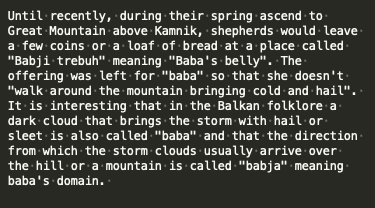
In Gaelic lands of Ireland and Scotland she is Cailleach...
In Italy she is Befana...

In the mountains of Central Europe she is Perchta to Germans or Peruehty to Slavs...

In the North of Germany and in Scandinavia she is "Mother Holle (Hulda) or "Old Mother Frost"...

Interesting, right?

I think so...