Sunday, 25 September 2022

Lotus and papyrus

A bowl whose base is adorned with a lotus flower and the body with a procession of cows, possibly symbols of the goddess Hathor, through a setting of lotus flowers. Egypt, 775-653 BC. Currently in the Brooklyn Museum...


I explained why Hathor was represented as a cow in my article about "Cow and calf ivory".


In short, it is because of how the water level of the Nile is linked to the reproduction cycle of the wild Eurasian Auroch cattle, the ancestors of the domesticated cattle...

This is the annual river Nile flow chart.

The water level starts to rise in May/Jun, just after the wild Eurasian cattle (aurochs) start calving (Apr/May)...


The Nile water level rises through the summer, until it reaches its peak in Jul/Aug, when the flood starts. And aurochs start mating...

Normally, Hator and her cows are depicted emerging from the papyrus flowers thickets...


This is because Hathor has an alter ego, Mehet-Weret, another "Cow goddess", whose name means "Great Flood"...The rising of the water level of the river Nile which culminates in the Great Flood, starts in May/Jun...Which is just after the papyrus plant flower season peaks... 


Hence, Hathor/Great Flood, emerging from the papyrus thickets...

So why are cows on the Brooklyn Museum bowl depicted walking through lotus flowers? Well, first these are not lotus flowers. They are water lilies, wrongly called Blue Lotus, even though they don't belong to the lotus family...

These beautiful blue flowers, native to the Nile marshlands, were believed to be "magic flowers", and were worshiped by the Egyptians...


Blue water lily flowering season is from July until September. When the Nile water level reaches its peak. During the annual Nile flood...When Hathor, who was also Mehet-Weret (The great flood) finally arrives...

Hence papyrus (the beginning of the Nile flood) and lotus (the peak of the Nile flood), the sacred flowers of Egypt...The most depicted plants in Egyptian art. 


This is why the Egyptian god Hapi, who was the god of the annual flooding of the Nile in ancient Egyptian religion, was associated with papyrus and lotus flowers, and is often depicted as twins, tying papyrus and lotus flowers together

This is interpreted as "unity between Lower Egypt, whose symbol was papyrus flower, and Upper Egypt, whose symbol was lotus flower"...But really this is Nile, which rises between flowering of papyrus and flowering of lotus, which is what connects and unites Egypt...


To read more about ancient animal and plant calendar markers, start here…then check the rest of the blog posts related to animal calendar markers I still didn't add to this page, and finally check my twitter threads I still didn't convert to blog post...I am 9 months behind now...

Saturday, 24 September 2022

Minoans spring fresco

The so called "Spring Fresco" from the Akrotiri Site at Thera (Santorini), dated to 1550 – 1500 BC, depicts swallows flying in the air above blooming flowers...


The fresco should really be called "Beginning of summer fresco"...Here is why:

The birds on these frescoes are identified as barn swallows...

And the flowers look like Lilium chalcedonicum

But are mostly identified as Lilium candidum, also known as Madonna Lilies where the red colour is a result of an "artistic freedom"...

You can read more about this in "Seasonal flux—three flowers for three seasons: seasonal ritual at Akrotiri, Thera". 

The Minoan artist depicted what actually happened on Santorini and Crete every May: Madona Lilies began to bloom, right at the time when barn swallows began to nest. And fight...In mid air...

Yup, apparently, the "kissing swallows" are not kissing at all. They are fighting over feathers which they collect to insulate their nest...

At least according to this paper: "A Flight of Swallows" by Karen Polinger Foster...

The blooming of Madonna Lilies, which on Santorini and Crete takes place in May/Jun overlaps with the nesting, hatching and fledgling of barn swallows...

So here we have another example of animal and plant calendar markers...Two things that happen every year at the same time (in May) are depicted together...Marking the beginning of summer...

Hence "Beginning of summer fresco" 🙂

To read more about ancient animal and plant calendar markers, start here…then check the rest of the blog posts related to animal calendar markers I still didn't add to this page, and finally check my twitter threads I still didn't convert to blog post...I am 9 months behind now...

Friday, 23 September 2022

Carp surfer

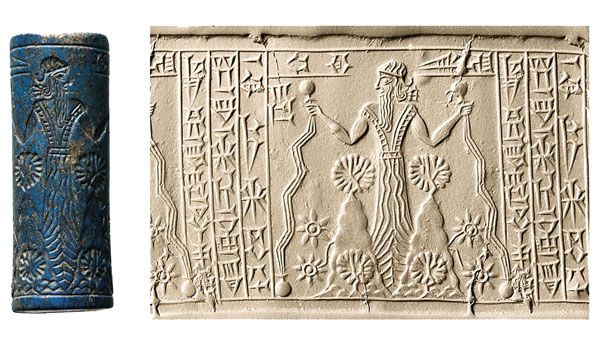
Enki/Ea, god of sweet water and the annual flood. He is shown here holding two jars with water flowing out of them, which represent the sources of Tigris and Euphrates...But why is he standing on a carp fish?

This is the chart showing the annual water flow of Tigris and Euphrates. You can see that it peaks during Apr/May. 

Now remember my post "Goatfish", about the origin and meaning of the Goatfish the symbol of Enki?
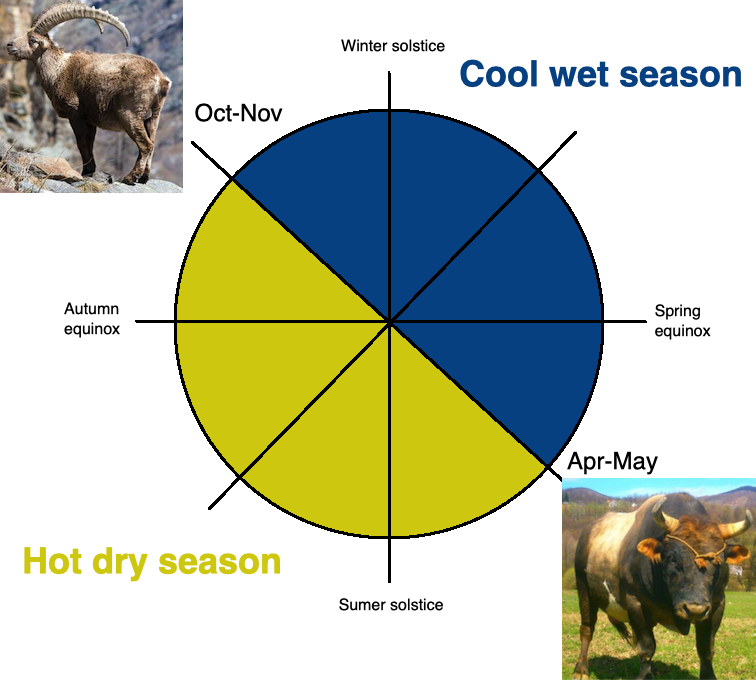
In it I explained that goatfish is the symbol of the wet season in Mesopotamia. 


Wet season which starts in Oct/Nov, when wild goats start to mate, and ends in Apr/May, when the giant Mesopotamian carps start to mate...

The carp swim upstream towards the mountains, which are the source of Tigris and Euphrates...These carps are giants...So there is no way you can not notice their migration upstream...


Migration towards Abzu...Which is a great mountain...Where Enki lives...Here is Enki, standing among the mountains, being a mountain, holding the same two jars, the sources of Tigris and Euphrates...I talked about this in my post "The Great Imposter"...


And so, because peak of the carp mating season coincides with the peak flood season, Enki/Ea, the god of fresh water and the annual flood, is depicted standing on a carp fish, pouring out Tigris and Euphrates...

To read more about ancient animal and plant calendar markers, start here…then check the rest of the blog posts related to animal calendar markers I still didn't add to this page, and finally check my twitter threads I still didn't convert to blog post...I am 9 months behind now...

Tuesday, 20 September 2022

When grapes flower

5th c. BC Etruscan terracotta head of young Turms/Mercury/Hermes, from the Temple of Portonaccio at Veio, Italy...Stunning...


Talking about Hermes, I would like to ask a stupid question: When was Hermes born?

If you ask google this, it will tell you that: "His birthday is known for being the fourth day of the month, and his sacred number is four"...Eeee amazing. Fourth day of what month? And this is where google stays silent...Cause apparently, WE DON'T KNOW...Actually we do...

If we open "Homeric hymn 4 to Hermes", the text that talks about Hermes's birth, we will see why that it says: [Hermes was] "born with the dawning...on the fourth day of the month..." Without mention which month it was...So google is not lying...

But this text actually tells us in which month Hermes was born. Just not directly...Let's look at the above sentence about Hermes's birth again: "Born with the dawning...and in the evening he stole the cattle of far-shooting Apollo, on the fourth day of the month..."

So on the fourth day of yet unknown month Hermes was running through a grassy plain with stolen Apollo's sacred cattle, when he noticed that "...an old man tilling his flowering vineyard saw him..."

When Hermes noticed that he was spotted committing his first crime, he came to the old man and basically told him: "you should strictly remember not to have seen what you have seen, and not to have heard what you have heard, and to keep silent" or else...

And then he ran off with the stolen cattle towards the river Alpheus, where he had to invent fire-drill (stole fire from the gods???) so he could light the "first fire" to make "the first burnt sacrifice" to the gods. I talked about this in my post "12 Olympians"...

Anyway, when later that evening, while looking for his stolen cattle, Apollo came across the same old man "tilling his flowering vineyard", the old man of course told him everything he had seen and heard, which helped Apollo to identify the thief, find his stole cattle...

And there you have it. Hidden in plain sight, again, is the information we need: the month in which Hermes was born in...Do you see it? I'll wait a bit 🙂 ta ta ta ta ta ta ta ta ta, the girl from Ipanema goes walking...

Grape "flowering occurs when average daily temperatures stay between 15–20 °C which in the Northern Hemisphere wine regions is generally around May..."

So, if the old man, who witnessed the theft of the Apollo cattle by Hermes on Hermes's birth day, was indeed "...tilling his flowering vineyard..." then Hermes's birthday was the 4th of May...

This is interesting cause the month of May (Latin Maius) was supposedly named after Maia, who in ancient Roman religion and myth, "embodied the concept of growth" (her name was thought to come from the comparative adjective maius, maior "larger, greater")...

She was identified with Earth (Terra, the Roman counterpart of Gaia) and the Good Goddess (Bona Dea)...

But also with the Greek Maia, who in the Ancient Greek religion, was one of the Pleiades...And the mother of Hermes...

Now the old man saw Hermes running "down the plain through grassy Onchestus..." a town in ancient Boeotia...

And Hesiod, who lived in Boeotia in the 8th c. BC wrote that the grain harvest should start when Pleiades rise with the sun. Which in Hesiod's time occurred...around the first week of May...When Maia, one of the Pleiades, gives birth to Hermes...I talked about this in my post "Hesiod on grain"...

By the way, the first week in May falls in the middle of Taurus, the period when Eurasian wild cattle used to start their calving season...Which is what bull animal calendar marker represents since Neolithic, all over Eurasia and north Africa...I talked about this in my post "Cow and calf ivory"...And considering that this occurs at the same time when grain is harvested, we have the link between bulls and grain...I talked about this in my posts: "Bulls and grain bowl", "Scarlet-ware harvest vase", "How grain came to Sumer", "Three bulls and grain"...

Interestingly, Hemes seems to have only stolen cows from the Apollo's herd, not bulls...Is this significant? I don't know, but weren't Pleiades, which rise with the sun at the exact time when sun god's cows were stolen by Hermes, also known as heavenly herd?

And so in the end I don't think this was such a stupid question...Cause knowing when Hermes was born helps us understand few other very important things about him...Like his true nature...

🙂 But I think this is enough for tonight...More tomorrow...Sweet dreams...

PS: To read more about ancient animal and plant calendar markers, start here…then check the rest of the blog posts related to animal calendar markers I still didn't add to this page, and finally check my twitter threads I still didn't convert to blog post...I am 9 months behind now...

Monday, 19 September 2022

Problems of the Abzu

Recently I wrote an article entitled "Rain and flood", about this Early Sumerian "Enki in the boat" seal. In it I tried to explain the meaning of the scene depicted on this seal through animal calendar markers...

In short: Ibex goat and Auroch bull are calendar markers marking the beginning and the end of the wet season in Mesopotamia...

You should check the above article for detailed explanation...Or you can continue reading this article... 

Since then I came across more evidence that supports my interpretation...This is particularly good one...

The other day I came across an article entitled "Problems of the abzu". And in it, I found this passage: "One of the titles of Enki was Dara-abzu"...

This is very interesting, cause in the Sumerian lexicon we find that the word "duraþ, dàra, dàr" means "Mountain goat buck; Ibex"...This guy...

So why was Enki called Ibex of Abzu? Well what is Abzu? The common explanation is that it is "the underground sea of fresh water, the aquifer, which was given a religious fertilising quality in Sumerian and Akkadian mythology"...

I have already challenged this explanation in many of my articles which deal with the relationship between Utu, the sun god, and Enki, the god of fresh water: "Maran", "Utu or Enki", "Goatfish", "When Utu steps up to heaven", "Shamash young and old"...

Abzu, is the source of the fresh water that flows down Tigris and Euphrates, and the fresh water that fills the wells of Mesopotamia, but is not an underground sea of fresh water...

I mean Ibex goat of the underground sea of fresh water makes no sense...Which is why it is in the article entitled: "Problems of the abzu" 🙂

Hydrological report from Mesopotamia: "Tigris and Euphrates have two flood periods: an irregular, rain-fed rise of minor proportions lasting from November to the end of March (this is basically a slight increase in water levels) and the main snowmelt flood of April and May"...

These are the water flow charts for Tigris and Euphrates


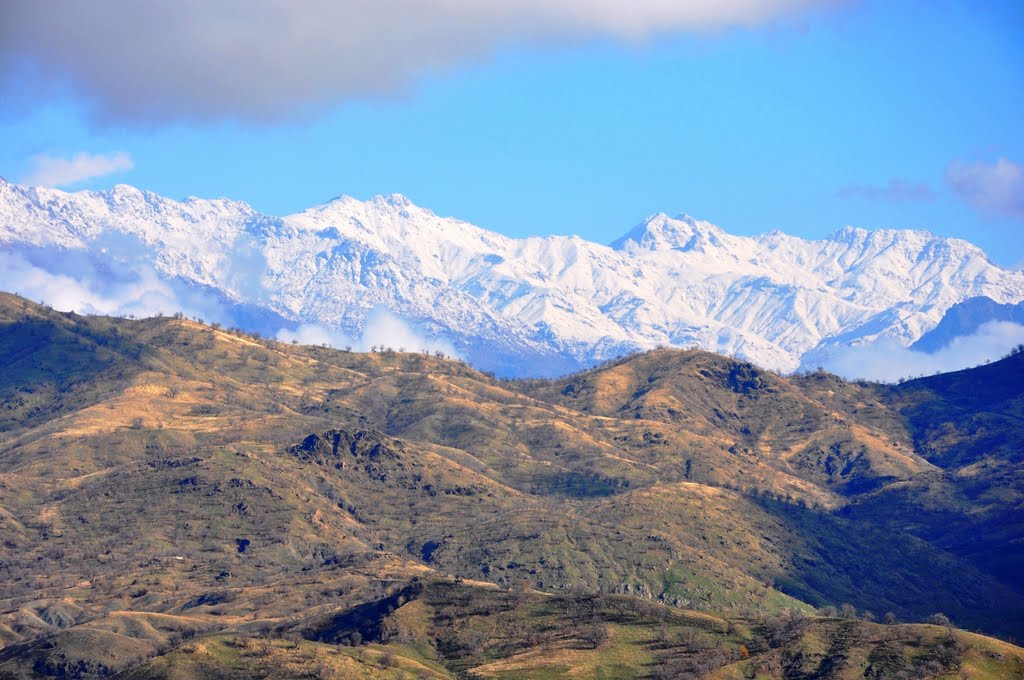
In several of my articles I talked about the fact that the annual flood is mostly result of the snowmelt in the mountain(s), highland(s) north and north-east of Sumer, the source of Tigris and Euphrates (and their tributaries), Anatolian highlands and Zagros Mountains...


Look at the relief map of Mesopotamia and check out the sources of Tigris and Euphrates...

It was in this article, "Shamash young and old", where I fist proposed that Abzu, the source of fresh water, the source of Tigris and Euphrates, are these mountains, and more precisely, the snow that falls during the winter on these mountains and which melts during the spring and summer...

I mean, in the "Debate between Winter and Summer" we read: "By hand Winter guided the spring floods...down from the edge of the hills. He set his foot upon the Tigris and Euphrates like a big bull and released them into the fields"...

As I was writing that, I could hear pretty much every Sumerologist screaming: Abzu means "the underground waters of the Aquifer"!!! 

I think that this commonly accepted meaning of the term Abzu is actually a result of a mistranslation...And not understanding the river system in Mesopotamia...

We have Sumerian ab=water and zu=knowledge, deep, far...Abzu can then mean both deep water and far away water...

Considering that the source of Tigris and Euphrates is far away from Mesopotamia, in the Anatolian highlands and Zagros Mountains, the proper translation of the term Abzu is far away water...

This is actually spelled out for us in the ancient Mesopotamian texts:

"Abzu, place that is a big mountain, princely crown of the heaven and earth. To the lord Nudimmud (Enki), (give) praise!"...

You can find the sources in the paper Ancient Near Eastern Gods Enki and Ea: Diachronical Analysis of Texts and Images from the Earliest Sources to the Neo-Sumerian Period...

The epic "Enki and the world order" tells us that Enki is the king of the Abzu...

Babylonian epic "Enûma Elish" tells us that Enki lives in Abzu...

Enûma Elish tells us that in the beginning, before anything else was created, Abzu (the source of fresh water, the Father) and Tiamat (salt water ocean, the Mother) were there mixing their waters...

It is from their intercourse that the younger gods were created...The younger gods then got so noisy and annoying, and pissed Tiamat off so much, and she complained to Abzu so much, that Abzu decided to destroy them...

But, Enki put Abzu to sleep, and then murdered him. Enki then set up his home "in the depths of the Abzu", and took on all of the functions of the Abzu. We could say that Enki became Abzu...Or that Enki is just Anthropomorphised Abzu...I will talk about this more soon...

So, here is Enki, (in) Abzu, being the source of Tigris and Euphrates...For those who say this not Enki, this Ashur, check this article about "The Great Imposter"...

Anyway, Enki became the god of fresh, fertile water. Actually, fresh water was seen as Enki's semen, as it is the fresh water that makes land fertile...

In "Enki and the world order", Enki stands at the empty riverbeds and fills them with his semen (fresh water)...

While he was filling the rivers with fresh water, Enki was "full of lust like a rampant bull"...Just like winter in the "Debate between Winter and Summer"...

Why are both Winter and Enki compared to bulls at the moment when they "fill the rivers"? Cause the annual flood of Tigris and Euphrates reaches its peak in Apr/May, which is when the Eurasian wild cattle start calving...

I talked about the link between bull and flood in my articles, like "When Utu steps up into heaven", "Butt chewing", "Green Pastures", "Shamash young and old"...

This is the reason why in a royal hymn dedicated to Enki from the times of Šulgi we read: "Great lord...Enki...Important one of the great gods, Nudimmud, great bull of the Abzu".

But why is Enki called the Ibex of Abzu? Because the first rains arrive to Mesopotamia when Ibex mountain goats start to mate, Oct/Nov...

This is such an important event in these arid lands that Ibex was basically deified. I talked about this in my article "Relief from Dur Sharrukin", "Goat carrier", "Iranian goat of rain"...and many others...

Oh, this is also the reason why Enki's sacred animal was Goat-Fish 🙂 

If you what to know why fish, check my article "Goatfish"...

The beginning of the Ibex mating season signals the beginning of the cool, wet season, Winter. And it is the rain and snow which fall during Winter (Nov-May) that are the source of all the fresh water that flows down Tigris and Euphrates...And of Enki's flood...

Sooo...Enki, who is the source of water that flows down Tigris and Euphrates, lives in (or is) Abzu, which is the source of water that flows down Tigris and Euphrates...

The true source of water that flows down Tigris and Euphrates are of course the mountains from which these rivers and their tributaries emerge...Mountains which are the home to Mountain Goat. Ibex...

Ibex, the Goat of Rain (and Snow) that fall down during winter...Rain and snow, which are the source of water that flows down Tigris and Euphrates. "Dara-abzu", Mountain goat of Abzu...Enki...

See, all this makes a lot of sense...Not so much if we are looking for Abzu underground...

I ended the article about the Enki in the boat seal with this: the Rain (and snow) which fall between Oct/Nov (when Ibex mate) and Apr/May (when Aurochs calve) are the source of the flowing water in Tigris and Euphrates (zigzag line) and Enki's flood (boat)...

In my article "Enki's little boat" explained why Enki's boat is the symbol of the flood...

Interestingly, in the article "Problems of the abzu", we find that "Dara-abzu" was also the name of Enki's processional boat, which "possibly even had a goat head at prow"...

As I explained, Enki's boat is symbol for the flood...Flood which starts with the Goat of Abzu and Peaks with the Bull of Abzu...

The Goat of Abzu leading The Bull of Abzu...Just like on the above Enki in the boat seal...

So that's it...What you think?

To read more about ancient animal and plant calendar markers, start here…then check the rest of the blog posts related to animal calendar markers I still didn't add to this page, and finally check my twitter threads I still didn't convert to blog post...I am 9 months behind now...

Sunday, 18 September 2022

The great imposter

A Kassite seal, dated to ca. 1350 BC, currently in the Archaeological Museum in Thebes, Greece. One of several Kassite seals listed in "Reflecting on the Thebes Treasure and its Kassite Findings The Glyptic Art and its Geo-Political Context and Distribution"...

It depicts Enki/Ea, the god of sweet water standing between two mountains, with trees and flowers...Enki is identifiable by the fact that he is holding two jars from which a water is pouring out, and which are symbols of the source of Tigris and Euphrates... 

Super important image. Important cause of this: "Enki lives in Abzu, the source of Tigris and Euphrates"...The official explanation is that Abzu is "an underground aquifer"...

Which I think is completely wrong. I think Abzu was the name for the great mountains from which Tigris and Euphrates emerge...


That Abzu is a mountain is actually spelled for us in the Early Dynastic Za-me hymns where we read:

"Abzu, place that is a big mountain, princely crown of the heaven and earth. To the lord Nudimmud (Enki), (give) praise!"

Also, the late 3rd millennium BC text "Debate between Bird and Fish" tells us that it was Enki who: "laid out side by side the Tigris and the Euphrates, and caused them to bring water from the mountains"...

Do we need any more hints that Abzu is not underground?

And on the original image we see Enki, in Abzu (mountain) pouring out Tigris and Euphrates...Or Enki as Abzu, as Enuma Elish tells us that Enki killed Abzu, and then replaced Abzu and made Abzu his home...

I talked about Abzu in several of my posts: "Maran", "Utu or Enki", "Goatfish", "When Utu steps up to heaven", "Shamash young and old"...

And so we get the above image depicting Enki, as Abzu, The Great Mountain, source of Tigris and Euphrates...

Wait...Wasn't "Great Mountain" the title of Enlil? Hmmm...I will have to write another thread about this (imposter 🙂???) soon...

If you think Enlil is bad, wait until you meed Ashur (Assur), another god who also had the epithet "The Great Mountain"...I talked about this in my post "Ashur"...And some say that the above image actually depicts Ashur, not Enki...

Recently my friend @TheAncientWorld posted this reply to one of my twitter threads:

"Did you know that Tukulti-Ninurta & Tukulti-apil-Esharra are basically the same name? Ninurta was the son of Enlil (chief of Sumerian pantheon) but was also 'adopted' by both Marduk (chief of Babylonian pantheon) and Ashur (chief of Assyrian pantheon). Hence  'apil-Esharra' = son of Ashur = Ninurta..."

Of course they did...This is all the same play with different actors and slightly different choreography 🙂...But the important thing is that all of them point at "The Great Mountain" which is Abzu, where Enki resides...

To read more about ancient animal and plant calendar markers, start here…then check the rest of the blog posts related to animal calendar markers I still didn't add to this page, and finally check my twitter threads I still didn't convert to blog post...I am 9 months behind now...

Sunday, 11 September 2022

Longma

I never know where the day will take me...And today took me to China, to meet Longma...Longma is a fabled winged horse with dragon scales in Chinese mythology. The Chinese word longma combines long 龍 "dragon" and ma 馬 "horse"...


Longma is most famous for its connection with the mythical Hetu 河圖 "Yellow River chart; Yellow River map"...A magic document of extraordinary importance for Chinese culture...

The Yellow River is the second-longest river in Asia, following the Yangtze River, and the sixth-longest in the world. It is along the Yellow River that some of the earliest agricultural societies in China had developed...

The Yellow River has changed its course, settling in new beds, with different outlets to the ocean, many times in the past, causing death and devastation to the human population living along its banks...

The most devastating event of this type was in Chinese history recorded as The Great Flood of China. It was a major flood event which lasted for two generations and which resulted in great destruction, famine and population displacements...

According to mythological and historical sources, this flood is dated to the third millennium BCE, or about 2300-2200 BCE, during the reign of Emperor Yao. 

Interesting. 

Ever heard of The 4.2-kiloyear BP event?

This was one of the most severe climatic events of the last 10000 years. Starting around 2200 BC, it probably lasted the entire 22nd century BC. And probably caused the collapse of the Old Kingdom in Egypt, the Akkadian Empire in Mesopotamia, the Indus Valley Civilisation...

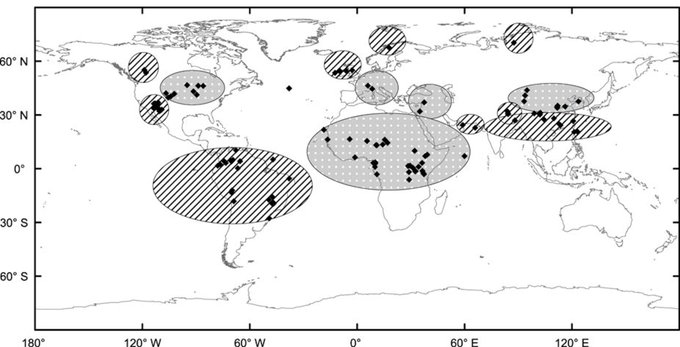
What about China? Have a look at this. This is the map of the world showing the effects of this global weather event. The dotted areas by drought or dust storms. The hatched areas were affected by wet conditions or flooding...

Now have a look at this...You can see that the border between the area affected by aridity and the area affected by flooding goes right between Yellow river and Yangtze river...

Now if I know anything about climate, having such opposing forces so close together for so long can mean only one thing: the whole area was most likely thrown into a complete chaos of droughts followed by floods followed by droughts followed by floods followed by...

The story of the "Great Flood" and the heroic attempts to abate the disaster is a narrative fundamental to Chinese culture. It explains the founding of the first Chinese dynasties, whose main task was the provision of food for their people through control of the great rivers...

According to the tradition, the main river which went crazy during this period was the Yellow River, and one of the keys to the eventual successful efforts to control its waters was the Yellow River Map, Yellow River Chart...

The magic document which enabled people of China to understand the behavior of the Yellow River and to subdue and control it. The Yellow River Chart, Hetu 河圖, which was brought to people by Longma, the dragon-horse...

Which is why Yellow River Chart, Hetu 河圖 is alternately named longtu 龍圖 ("the Yellow River sent forth the dragon chart") and matu 馬圖 ("the Yellow River sent forth the horse chart")...

The fact that it is said that it was Yellow River which itself sent forth the chart that allowed people to subdue it and control it, is very interesting...

Is this the way to say that the observation of the erratic behavior of the Yellow River over the period of the "Great Flood" enabled people to figure out the natural laws which govern their environment...

The chart is directly linked to the most important Chinese natural concepts: 2 principals, 5 Elements, 8 trigrams...Basically, this "magical" document is at the root of the Chinese understanding of nature...

And this "magic" document was sent to people by the Yellow River itself and brought to people by horse-dragon...

Why horse dragon?

Well, because of the climate in the Yellow River valley, and the animal calendar markers that describe it...

TATATAAAA!!! 🙂

I talked about dragon as the symbol of sun's heat which is associated with drought and death in many of my articles, for instance "Dragon who stole rain", "Letnitsa treasure", "Pegasus and Chimera", "Angra Mainyu", "Lion radiating heat", "Seven headed dragon", "Bactrian snakes and dragons"...

In Europe, Levant, Middle East, Central Asia, Iran...There is an association between fire breathing dragons and the burning sun of the hottest, driest part of the year (Jul/Aug) which causes droughts and death...

But not in China, where dragon is bringer of water and life...

Why?

The reason why Chinese dragon is linked with water is because of the climate in the Yellow River valley. Here are climate charts from 4 places along Yellow River (Zhengzhou, Xian, Ordos, Jinan)...


You can clearly see that Jul/Aug, the hottest part of the year, the time of fire breathing dragons, is also the wettest part of the year...So dragon in China really does bring water...I talked about it in these articles: "Chinese dragon" and "Tiger and dragon"...

It is the harmony between the rain water (Yin) and sun's fire (Yang) that keeps the Yellow River in check. Too much Yang and not enough Yin and you have droughts. Too much Yin and not enough Yang, and you have floods...

And you know how dragon is always coiling, writhing, changing direction, jumping up and down during Chinese dragon dance...

I wonder what this represents? The ever changing, unpredictable behavior of the heavenly fire-water dragon which controls the climate in the Yellow River valley...And if so, how old is this? Does it date to the time of the Great Yellow River Madness?

That explains dragon bit in dragon-horse. But what about the horse bit? Believe or not, I already explained that bit and the whole dragon-horse concept in this article, "Mythical beast from Xian", without even knowing about the existence of Longma, which I only discovered today...

It's all in there. Important bit: The horse fertility is governed by the sun. So the natural horse mating season starts in Apr, peaks on summer solstice and finishes in Sep. 

Hence horse as a solar symbol in Eurasia. I talked about it in my article "Hayagriva"...

This also makes a horse a great animal calendar marker for the hot (and in China also wet) half of the year...Just like a dragon, horse also brings both sun's heat (Yang) and rain water (Yin)...

Which makes dragon and horse interchangeable animal calendar markers...

And so...Longma, Dragon-Horse...

"A being with a horse's body, and dragon scales". 

"A being who is the [qi 氣] vital spirit of Heaven and Earth"

Also the being that pulls the sun chariot of the sun goddess Xihe...Surprise surprise 🙂

But that's a story for another article...Soon...

To read more about ancient animal and plant calendar markers, start here…then check the rest of the blog posts related to animal calendar markers I still didn't add to this page, and finally check my twitter threads I still didn't convert to blog post...I am 9 months behind now...