Showing posts with label Lily symbolism. Show all posts

Wednesday, 15 April 2026

Three Minoan flowers

In this paper, Marcia Nugent talks about "3 flowers as 3 Minoan calendar markers for 3 seasons":


1. Madonna lily = Spring

2. Sea daffodil = Summer

3. Saffron crocus = Autumn

She is right about the flowers, but wrong about the seasons...Here's why:

Madonna lily starts blooming on Crete in Apr/May. This is the beginning of summer (summer solstice is "mid summer")...So Madonna lily is the flower calendar marker for summer, not spring...

I talked about it in my post "Minoan spring fresco", in which I explained why this Minoan fresco from the Akrotiri Site at Thera (Santorini), dated to 1550 – 1500 BC, should be called "Beginning of summer" fresco and not "Spring Fresco" 🙂...  

Sea daffodil start blooming on Crete in Jul/Aug. This is the beginning of autumn (autumn equinox marks the middle of autumn)...So Sea daffodil is the flower calendar marker for autumn, not summer...

I talked about it in my post "Minoan griffin fresco", about this detail of the griffin fresco (reproduction) from the throne room, palace of Knossos, Crete, dated to 1700-1450 BC, in which I explained why I think that the flowers depicted around the lying griffin are sea daffodils...

Saffron crocus starts blooming on Crete in Oct/Nov. This is the beginning of winter (winter solstice is "mid winter")....So Saffron crocus is the flower calendar marker for winter, not autumn...

I talked about saffron in several of my posts, "Saffron", "Origin of saffron", "Pan goat of rain", "Crocus fairy", in which I also talk about the famous Minoan "Saffron gatherers" fresco. In them I also talk about the origin of saffron crocus...And why saffron crocus was the sacred plant on Minoan Crete...And why it was linked with Ibex goats...And mother goddess...

Knowing this, here is the fixed flower-season diagram


That's it. To read more about ancient animal and plant calendar markers, start here…Then check my twitter threads I still didn't convert to blog post...I am way way behind...

Sunday, 27 November 2022

Flower of life

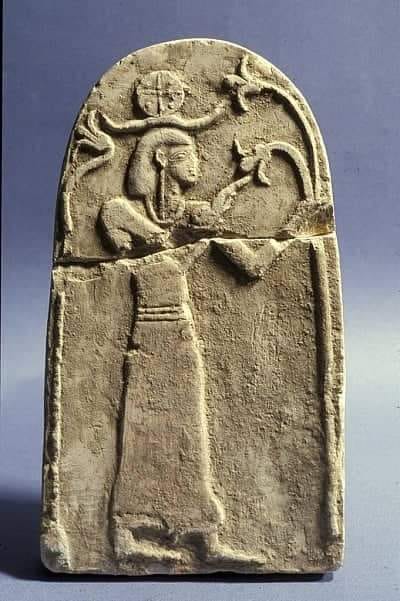
"Limestone Stela depicting Canaanite goddess worshipping the Tree of Life. Tell Beit Mirim, 14th Century BCE, Hecht Museum, University of Haifa Israel"...


Hmmm...Tree of life...Not really...Plant of life...Certainly...Why? Here is why:

The Goddess is most likely some Levantine version of the Egyptian Goddess of Fertility, Hathor (pose, horned disk)...

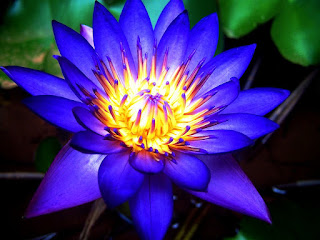
The Goddess is not "worshiping the Tree of Life". She is standing surrounded by Nilotic lotuses...Well, first these are not lotuses. They are Blue Water Lilies, wrongly called Blue Lotus, even though they don't belong to the lotus family...

These beautiful blue flowers, native to the Nile marshlands, were believed to be "magic flowers", and were worshiped by the Egyptians...

For those who believe that these flowers were worshiped because they contained hallucinogenic chemicals: "Blue lotus flower (Nymphaea caerulea) is a psychoactive (not hallucinogenic!!!) plant, also known as blue Egyptian lotus, blue water lily, and sacred blue lily. It's been used in traditional medicine for thousands of years as a natural aphrodisiac (!!! the important bit), sleep aid, and anxiety reliever"

Now here is the reason why Blue lotus (Blue water lily) was such and important symbol: its flowering season is Jul-Sep. When the Nile water level reaches its peak. During the annual Nile flood...When Hathor, who was also called Mehet-Weret (The great flood) finally arrives...

Which is why on the Canaanite stela, Hathor, the Goddess of fertility, who is also called Mehet-Weret (The great flood), is depicted standing in the deep waters of the flooding river Nile, surrounded by long flower stems of the Blue lotuses. How do we know she is standing in the water? These long flower stems grow from the bottom of the river all the way to the surface...Vertically...And the goddess stands among the stems...So...

And the Goddess is pointing at at one of these flowers...As if to say: This is the flower of life, because it flowers during the flood, which is the source of life...And I am this flood...

I talked about lotus and papyrus flowers and why they were worshiped in Ancient Egypt in these posts: "Goddess on a horse", "Lotus and Papyrus", "Cow and calf ivory"...

To read more about ancient animal and plant calendar markers, start here…then check the rest of the blog posts related to animal calendar markers I still didn't add to this page, and finally check my twitter threads I still didn't convert to blog post...I am 9 months behind now...


Saturday, 24 September 2022

Minoans spring fresco

The so called "Spring Fresco" from the Akrotiri Site at Thera (Santorini), dated to 1550 – 1500 BC, depicts swallows flying in the air above blooming flowers...


The fresco should really be called "Beginning of summer fresco"...Here is why:

The birds on these frescoes are identified as barn swallows...

And the flowers look like Lilium chalcedonicum

But are mostly identified as Lilium candidum, also known as Madonna Lilies where the red colour is a result of an "artistic freedom"...

You can read more about this in "Seasonal flux—three flowers for three seasons: seasonal ritual at Akrotiri, Thera". 

The Minoan artist depicted what actually happened on Santorini and Crete every May: Madona Lilies began to bloom, right at the time when barn swallows began to nest. And fight...In mid air...

Yup, apparently, the "kissing swallows" are not kissing at all. They are fighting over feathers which they collect to insulate their nest...

At least according to this paper: "A Flight of Swallows" by Karen Polinger Foster...

The blooming of Madonna Lilies, which on Santorini and Crete takes place in May/Jun overlaps with the nesting, hatching and fledgling of barn swallows...

So here we have another example of animal and plant calendar markers...Two things that happen every year at the same time (in May) are depicted together...Marking the beginning of summer...

Hence "Beginning of summer fresco" 🙂

To read more about ancient animal and plant calendar markers, start here…then check the rest of the blog posts related to animal calendar markers I still didn't add to this page, and finally check my twitter threads I still didn't convert to blog post...I am 9 months behind now...