Showing posts with label Minoan civilisation. Show all posts

Sunday, 20 September 2026

Minoan warm period

One thing no one talks about when they analyse the conquering of the Minoans by the Mycenaeans is this: 

What influence did Minoan warming have on Minoan agriculture and their ability to feed their population? And the reputation of their ruling priestly caste?

What prompted me to ask this question was this interesting X thread which tries to answer the question: How come Mycenaeans were able to so (seemingly) easily conquer the Minoan civilisation even though we know that Minoans had a strong army and navy...

Great account btw, with great threads...

The main hypotheses presented in this thread is that Thera volcanic eruption and the series of earthquakes and preceded it caused a wave of refugees from the Cycladic islands to descend on Crete, causing population explosion, and eventually food shortage...

I lived on Crete. It is a huge, fertile island, with lots of arable land, the garden of Greece, that supplies the Greek mainland with fruit and vegetables.

I am pretty sure that it was able to sustain the Bronze Age Cretan population plus any refugees that could have come to the island from the Cyclades...Providing the climate didn't get too hot...

Which is exactly what happened during the Minoan warming period...I don't know what kind of effect that would have had on the local Cretan climate. Most likely negative. This paper states that:

"Climate modelling results show a decrease in precipitation and an increase in temperature from 2001 to 2100, resulting in 18-56% decrease of flow, 15-34% decrease of soil moisture and 22-65% decrease of groundwater reservoir volume"...

The temperature during Minoan warming was even higher...That would have had a catastrophic effect, triggering famine and the loss of power of the ruling theocracy, which probably claimed that they can in some way control the weather (all religions do that to some extent)...

Mostly through sacrifices, usually animal sacrifices...

You can read more about this in "Minoan Sacrificial Ritual, Cult Practice and Symbolism"...

I also wrote about Minoan animal sacrifices in these two articles: "Minoan bull sacrifice" and "Agia Triada sarcophagus".

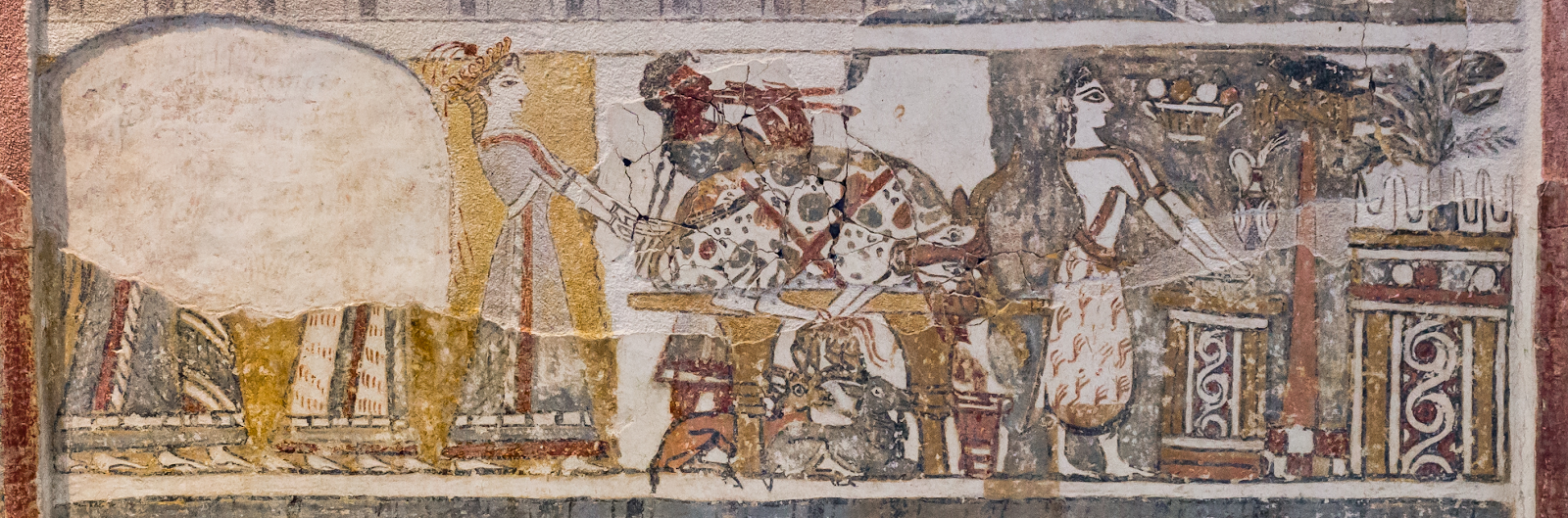
In them I proposed, based on the analysis of the animal and plant calendar markers depicted on this sarcophagus that this scene from the Minoan Hagia Triada Sarcophagus didn't depict funeral scene but a sacrifice of calves and a boat to (Proto) Poseidon. 

It turns out I could have been right: When Odysseus’ son Telemachus voyages to Pylos, he witnesses the sacrifice of 81 bulls to Poseidon. Archaeologists have found what’s likely an inventory for a very similar real-life ceremony recorded on tablets unearthed at Pylos! 

You can read about it here...

But there is evidence that during extremely difficult times Minoans, like many other peoples in similar situations, practiced human sacrifices too. 

In the summer of 1979, Giannis and Efi Sakellarakis, excavated the so-called Temple of Anemospilia, which was located at the northern foothills of Mount Juktas and in close proximity to the important Minoan site of the Archanes. 

The Temple was a symmetrically rectangular building, consisting of three rooms on the south side and a vestibule on its north side, having a clear palatial orientation. 

It was destroyed by an earthquake and a subsequent fire...

This is a depiction of what the temple contained inside (based on archaeological findings) at the moment of its destruction:


The important thing is what was found in the western room. 

It contained three bodies:

an approximately 28-year-old woman, lying face down;

an approximately 37–38-year-old man, lying on his back;

an approximately 18-year-old male, lying on a slightly raised structure/platform.

The last individual was discovered on a raised platform in such a tight fetal position which indicated that he was bound. A bronze blade was found associated with his body. 

The archaeologists argued that all the forensic evidence indicated that he had been killed shortly before the earthquake/fire. 

The adult man and woman were interpreted as the priest and priestess.

Their reconstruction of the events was:

Earthquakes threaten the community.

Priests attempt to appease the deity with a human sacrifice.

Sacrifice is underway. The sacrificial victim is already dead. Blood is being collected for libation.

Another earthquake strikes.

Building collapses and kills everyone inside...

You can read more about this in "Drama of Death: Human Sacrifice in a Minoan Temple"

I am sure that the sudden climate only increased the number of sacrifices, but also decreased the belief of the local population in the effectiveness of these sacrifices and in the power of the priests who performed them...

The same happened with Latin American native cultures...

This probably caused unrests. Maybe even an uprising against the ruling elite. Maybe even a civil war. Which probably prompted one of the Minoan leaders to hire Mycenaean mercenaries to help him fight whoever he was fighting, his own population or other Minoan leaders...

Mycenaeans were known as arms for hire in the whole of Mediterranean...Egyptians used them. So I would say Minoans did too...But as we know from history, mercenaries often turn on their employers in the failing states...

Once on the island, in the middle of the chaos caused by the earthquakes and the climate change, Mycenaeans seized control first of the city state they were meant to protect and then of the rest of the island...

Simple...

I honestly can't see any other reason...

All the ancient civilisations were ruled by the elites who based their power on their ability to feed the population...

The temples and palaces were centres of agricultural administrations first and foremost and were responsible for agricultural organisation and support. 

And when they failed to fulfil this duty...

PS: You might find this interesting. In this old article, "Legendary battle" originally proposed this: Is it possible that the "Combat agate" was worn by a Minoan warrior to commemorate a once famous Minoan victory over Mycenaeans? Only to be taken off his dead wrist by an avenging Mycenaean warrior, buried in the warrior grave found near Pylos, Greece?   

But now that we know that The Griffin Warrior was not genetically Mycenaean (The 2022 Science study and UC research confirm no steppe ancestry. Actually, they confirm the exact opposite—his DNA shows local origins, rooted in Neolithic Aegean populations, not Yamnaya)...

Maybe this Minoan jewel was never taken off "a dead Minoan hand"...

Maybe Mycenaeans didn't conquer Minoan Crete completely replacing Minoan elite with their own...Maybe the story is much more complicated...Maybe a new, mixed elite was formed which then took over the whole of Aegean...The huge cultural influence Minoans had on Mycenaeans supports this... 

Saturday, 17 August 2024

Minoan Bull Sacrifice

This is the bull sacrifice scene from the Minoan Hagia Triada Sarcophagus, a late Minoan limestone sarcophagus, dated to around 1400 BC, excavated from a chamber tomb at Hagia Triada, Crete in 1903 and now on display at the Heraklion Archaeological Museum, Crete, Greece.

As far as I know, all the scenes depicted on this sarcophagus are interpreted as "funeral offerings". This particular scene is interpreted as: "...an offering table on which lies a trussed bull...blood...coming from the bull’s neck and pouring into a vessel next to the table. Beneath the table are two small goats, possibly awaiting a similar fate..."


 "In some ways what we see on...sarcophagus is simple to understand: women and men...making sacrifices and preparing the deceased for burial before his tomb. However, looking more deeply, many questions remain. How is it to be read?"

So how indeed is this to be read? 

I personally don't think this is a depiction of a funeral sacrifice at all...Here is why: 

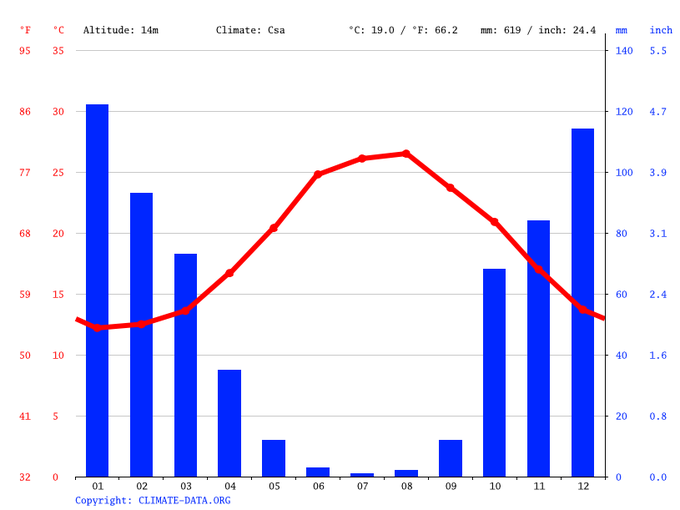
This is climate in Crete...The climatic year is divided into hot and dry half (Apr/May - Sep/Oct) and the cool and wet half (Sep/Oct - Apr/May)...

The hot and dry half starts when the calving of the wild Eurasian cattle used to start, so it's marked by animal calendar marker Bull...

The cool and wet half starts when the mating season of Cretan Ibex starts, so it's marked by animal calendar marker Goat...

So, does killing of the bull, with goats under the table, symbolise the end of the dry season and the beginning of the wet season? A very big deal in Crete...Hence all the leafy green vegetation at the altars everywhere...

The death of the bull brings the rebirth of nature...

I first talked about the climate in Crete and goat and bull as calendar markers in my post "Goat riding thunder god". In this post I talked about this larnax, a type of small closed coffin, box or "ash-chest" often used as a container for human remains. It was found in Mycenaean Tanagra cemetery which was dated to 14th - 13th century BC...


And it was definitely developed under huge Minoan influence. This can be seen from the fact that the bottom part of the panel depicts bull leaping, favourite "past time" of the Minoans. I would say that this activity was a religious ceremony performed during the bull part of the year, summer. In the top panel we see Ibex goat hunt. I would say religious ceremony performed during the goat part of the year, winter.  The main question here is why was this panel divided like this? And why were these two scenes depicted separated like this?

I then talked about this bull/ibex duality in my post "Theseus ring" about two, officially, Mycenaean, but I think Minoan, rings, one depicting bull leaping and the other depicting a sacrifice made to an ibex. 


Now the priestess which performs the bull sacrifice stands in front of an altar which stands in front of a shrine topped with "bull horns of consecration" from which a tree (of life) grows. 

I talked about "bull horns of consecration" temples for the first time in my post "Sanctuary rhyton" where I analysed the scene depicted on the so called "Sanctuary Rhyton" from Zakros, Crete, Greece, dated to the Late Bronze Age, 1550-1500 BC.


The scene depicts a so called "Peak Sanctuary", a mountain top temple, one of many discovered on Crete, whose purpose and dedication is unknown. I proposed that this image actually explains that these mountain top temples were linked with the worship of the "goat of rain"...


You can see that the ibexes, whose mating, which takes place on mountain tops during the peak of the rain season on Crete, are depicted sitting on, what I proposed is, a cistern fool of water, depicted by swirling spirals. 

I talked about them as being the symbol for swirling, running, moving water in my post "Tuna boats" about Cycladic "frying pans".

Quite a lot of these Cycladic frying pens have depictions of boats as part of the decoration...Like this one...A boat depicted among the swirling spirals representing waves, or moving, running water...And right above the bow of the boat there is always a depiction of a fish...Which would suggest that Cycladic boatsmen were fishermen...

Now the same swirling spirals are depicted on the sides of the sacrificial altar and the shrine from the Hagia Triada sarcophagus...Swirling, running, water...


Do you see a jug standing on the altar? Jug with water? Holy, rain, water?

And do you see the basket of fruit above the altar? These could only be oranges, lemons, pomegranates...All winter, rain season, fruit...


Oh are these saffron crocus flowers depicted on the priestess's skirt? 


Like these depicted on a famous saffron gatherers Minoan fresco?


Like these depicted on the skirts of these figurines found in Knosos?


Saffron crocus flowers and is harvested at the beginning of the rain season in Crete...


Interestingly, between the altar and the shrine stands a pole with double headed axe topped by a bird...


In my post about the Mountain Sanctuary, I proposed that the depicted birds are migratory birds, which fly over Crete southward just before the beginning of the rain season, and fly over Crete northward just after the end of the rains season. Thus serving as animal calendar markers for the rain season. 


Now no one knows what the double axe means in Minoan context. We know that it was an important sacred symbol, but not what it meant. But in contemporary Levant and Anatolia, double axes were symbols of the thunderbolt. The double-axe is associated with the Hurrian god of sky and storm Teshub and his Hittite and Luwian counterpart Tarhun. Both are depicted holding a triple thunderbolt in one hand and a double axe in the other hand.

For instance


I talked about this Ugarit seal in my post "Mystery seal"...

So, I would say that the bull sacrifice scene from the Hagia Triada sarcophagus suggest that the Minoan double axe topped by a bird, next to a mountain sanctuary shrine is also a symbol of thunder and rain.

But, I can hear archaeologists shouting, in Crete the double axe only accompanies goddesses, never gods...

Well, If you read my posts about Minoan culture and religion, you will see that I have linked goddess to the rain season (winter, cool, wet, yin, female, goat) and god to the sun season (summer, hot, dry, yang, male, bull)...

Here are these articles, check for yourself: "Goat riding thunder god", "Sanctuary rhyton", "Cornucopia", "Saffron", "Origin of saffron", "Theseus ring"...

So the double axe can be a symbol of thunder and rain and be associated with goddesses only...

A sacrifice of a bull (summer, hot, dry, yang, male) to the double axe (thunder and rain)  standing in front of a shrine symbolising a mountain (goat of rain) sanctuary from which a tree of life grows, now makes a lot of sense...Right?

BTW, I don't think the goats are going to be sacrificed...They are not tied...

That's it. To read more about ancient animal and plant calendar markers, start here…Then check my twitter threads I still didn't convert to blog post...I am way way behind...

PS: I just looked at the other 3 sides of this sarcophagus. There is a lot more to be said about it. Soon.


Saturday, 24 September 2022

Minoans spring fresco

The so called "Spring Fresco" from the Akrotiri Site at Thera (Santorini), dated to 1550 – 1500 BC, depicts swallows flying in the air above blooming flowers...


The fresco should really be called "Beginning of summer fresco"...Here is why:

The birds on these frescoes are identified as barn swallows...

And the flowers look like Lilium chalcedonicum

But are mostly identified as Lilium candidum, also known as Madonna Lilies where the red colour is a result of an "artistic freedom"...

You can read more about this in "Seasonal flux—three flowers for three seasons: seasonal ritual at Akrotiri, Thera". 

The Minoan artist depicted what actually happened on Santorini and Crete every May: Madona Lilies began to bloom, right at the time when barn swallows began to nest. And fight...In mid air...

Yup, apparently, the "kissing swallows" are not kissing at all. They are fighting over feathers which they collect to insulate their nest...

At least according to this paper: "A Flight of Swallows" by Karen Polinger Foster...

The blooming of Madonna Lilies, which on Santorini and Crete takes place in May/Jun overlaps with the nesting, hatching and fledgling of barn swallows...

So here we have another example of animal and plant calendar markers...Two things that happen every year at the same time (in May) are depicted together...Marking the beginning of summer...

Hence "Beginning of summer fresco" 🙂

To read more about ancient animal and plant calendar markers, start here…then check the rest of the blog posts related to animal calendar markers I still didn't add to this page, and finally check my twitter threads I still didn't convert to blog post...I am 9 months behind now...

Thursday, 3 June 2021

Origin of saffron

During the excavations of the the Temple Repositories at Knossos, among many early 2nd millennium BC faience (glazed ceramic) objects, Arthur Evans unearthed ceramic crocuses and models of female garments decorated with crocuses...


I found this image in the "Bronze Age Flower Power: The Minoan Use and Social Significance of Saffron and Crocus Flowers". Really cool article...

In it the author, Rachel Dewan, states that: "...If Evans’ interpretation of the faience models as votive offerings is correct, than here again is evidence for significant links between women, textiles, crocuses, and the divine..."

In the conclusion of her article, Rachel Dewan says: "It is clear from the iconographic evidence that crocuses and saffron were regarded as more than mere crops by the inhabitants of  the Bronze Age Aegean...

As a functional ingredient within the dyeing and perfuming industries, an effective medical treatment, a meaningful cultural symbol most likely used in cultic activities, and a profitable commodity, the plant was revered by the Minoans...

The  numerous correlations between this valuable plant and Minoan females, seen both in iconographic representations  and  archaeological finds, suggests that saffron was held in particularly high esteem by women who embraced it as a symbol of female identity and culture...

By the Mycenaean period, saffron’s value and versatility were well-established, and its detailed recording in Linear B documents reflects its status as a treasured commodity worthy of palatial attention...Saffron ideogram on tablets from Knossos highlighted in yellow...


Interestingly, however, crocus imagery became a rare motif in Mycenaean art throughout the Aegean, suggesting that the plant lost some of  its symbolism in this later period, even as its economic importance remained..."

So there are two unanswered questions here:

1. Why was crocus revered by Minoans before the Mycenaean conquest?

2. Why was crocus not revered by Mycenaeans?

The answers to the first of these questions is: because of climate. The climate in Crete which shaped Minoan mythology...

The climate in Crete is divided into two seasons: 

The dry and hot season May-Sep...

The wet and cool season Oct-Apr...

This is temperature and precipitation chart for Knossos (Modern Heraklion) area of Crete...

The end of the dry season is the moment of prayer in Crete...The rivers and wells are dry...The soil is dry and cracked...Everyone is looking at the sky, waiting for the arrival of the first rain clouds...

And then the Cretan Ibex goat mating season starts, and the first rains arrive...The land turns green. The wells and riverbeds start filling up. The life returns... 

Which is why Ibex goat was venerated as the goat of rain by Minoans. I talked about this in my article "Goat riding thunder gods"...

And right after the first rains, the wild flowers appear everywhere. Including saffron crocuses which flower in November - December...They were picked by Minoan women, as depicted on these Minoan frescoes...


I talked about this in my article "Saffron"...

These flowers were picked because of their vivid crimson stigmas...About 400 hours of labour is needed to produce just one kilogram of saffron...Which is why saffron was worth its weight in gold...Still is by the way...


We know this because saffron was the only spice to be measured by weight, in the same small, intricate values used for gold, suggests that it was considered to be a valuable commodity, carefully monitored by the palace...

The appearance of the saffron ideogram (CROC) on 59 whole or partial Linear B tablets is indicative of its economic importance. It was a valuable commodity...The reason for this is because it was used in the production of luxury goods...

Because of its extremely strong color, saffron was  used to die clothes yellow, the color which was from Eastern Mediterranean to Mesopotamia considered to be the color of divinity and royalty...

Because of its aroma and color, saffron was used as a food spice and as a compound in cosmetics, like cremes, body paint, and perfumes...

Because of its medicinal properties, saffron was used in preparation of medicines. As a matter of fact it was in the past one of the most famous medicinal plants...Amongst medicinal plants known in the Near East and Mediterranean, saffron has the largest number of applications...

Here is the interesting bit: the spice’s most common ancient reference is as a pain-reliever for menstrual cramps and childbirth. Saffron can act as an abortive in high doses, and may have functioned as an early form of birth control...

A women's plant...

Rachel Dewan quotes Robert Arnott who notes the prominent role that herbal healing would have played within the ancient Aegean, particularly amongst ancient midwives and female healers. I talked about the old midwife cult in my article about Balkan village midwives "Baba's day"... 

Rachel Dewan then says that "The fact that women, rather than men, are shown in scenes involving crocuses and saffron has led many scholars to suggest that the Minoans were aware of the gynecological benefits of saffron, and thus exploited the plant’s medicinal properties..."

Indicating that maybe this plant was sacred to Minoan women precisely because of its obstetrical-gynecological medical application...And I do agree that this is part of the reason why saffron crocus was sacred to the Minoan women...

But I also believe that the saffron crocus acquired religious significance because of when it flowered: right after the first rains...

The plant directly connected with feminine beauty and fertility flowered at the moment when Mother Earth's beauty and fertility was restored by her first "period": the first trickle of water in dry riverbeds after the first winter rains...You could make a religion out of it...

Now what about the decline of the crocus veneration under Mycenaeans...

To answer this question we have to look at the saffron crocus plant itself...The saffron crocus plant grown commercially today is Crocus Sativus...

But this is not the crocus flower picked by Minoans...They picked this: Crocus Cartwrightianus, the wild ancestor of the Crocus Sativus...

If we look at the natural distribution of this wild saffron Crocus Cartwrightianus we can see that it is found in Crete, Cyclades islands and Attica...

Now the Crocus Sativus is a triploid with 24 chromosomes. This makes the plant sterile due to its inability to pair chromosomes during meiosis. Which means that it has to be propagated by corms...And transplanted from place to place by humans...

The ancestor of the Crocus Sativus, which is unknown in the wild is Crocus Cartwrightianus.

Now today I came across the article "Saffron (Crocus sativus) is an autotriploid that evolved in Attica (Greece) from wild Crocus Cartwrightianus".

In this interesting article we read that: "...From Minoan frescos it is clear that more than 3600  years ago humans already harvested and used wild saffron in the southern Aegean...

The first clear indication for the cultivation of triploid saffron can be found in Historia Plantarum (350 BCE–287 BCE) where Theophrastus described the plant as being propagated by corms...

Our GBS (genotyping-by-sequencing) data point to the small Greek region around Athens as the place where Crocus Sativus evolved. We assume that sometime in between 1600 BCE and 350 BCE a triploid Crocus Cartwrightianus cytotype originated in Attica and was selected by humans...

They must have realized that they have a highly aromatic and stable type at hands that keeps the valuable properties of saffron through time and (vegetative) generations..."

Now "between 1600 BCE and 350 BCE" is a huuuuge time period...Can we narrow down the time when the domestication of Crocus Sativus happened? Well I think we can...

Something extremely important happened "between 1600 BCE and 350 BCE". The eruption of Thera, which according to archaeological data occurred in c. 1500 BC. It and the tsunami that followed caused cataclysmic destruction and the decline of the Minoan civilization of Crete...

This turn of events gave the opportunity to the Mycenaeans to spread their influence throughout the Aegean. Around c. 1450 BC, they were in control of Crete itself, including Knossos, and colonized several other Aegean islands, reaching as far as Rhodes...

I would here argue that the domestication of Crocus Sativus, if it happened in Attica, definitely didn't happen before the Mycenaean conquest of Minoan territories...Because I don't think that Mycenaeans knew what the source of saffron was before that...

Here is my theory: The wild Crocus Cartwrightianus was before Minoans endemic to Crete and this was the only place where it was originally found...

Minoans brought it to their colonies on Cycladic islands where they planted it, grew it and harvested it for saffron...The substance worth its weight in gold...

What I think is that Minoans probably kept the whole thing as a sacred secret...Partially because if you keep the source of your product secret you make sure no one else can take over your market by stealing few plants and planting them in their back garden...

But also because for Minoans saffron crocus was not just valuable. It was sacred...You wouldn't want some foreign devils laying their filthy barbaric eyes or hands on your sacred plant...

Then Thera exploded and Mycenaeans invaded Crete...Mycenaeans of course knew about saffron and now they were able to get their hands on the plant that saffron was extracted from...And of course they brought it to their mainland home and planted it in their back garden...

I believe that this is when Crocus Cartwrightianus left Minoan territory for the first time and was for the first time planted in Attica...

The plant was originally grown and harvested as a "wild plant"...Just like it was on Crete... Eventually at some point "between 1450 BCE and 350 BCE" somewhere in Attica someone came across the mutated Crocus Cartwrightianus and hey presto, Crocus Sativus...

Mycenaeans only saw economic importance of saffron crocus...As a male dominated warrior society, to Mycenaeans, the whole link between feminine beauty and fertility and the beauty and fertility of the Mother Earth was alien, unimportant and most likely laughable...

This was part of the Minoan culture and religion which they hated and probably actively eradicated...Which is why after the arrival of Mycenaeans, saffron crocus disappears from divine images and remains only in profane accounting tables...

That's it...What do you think?