Showing posts with label Horse mythology. Show all posts

Saturday, 29 August 2026

Curlew

60BC-20BC, Celtic Atrebates/Regni gold coin, found in 1873 in Selsey, East Wittering, England, currently in the British Museum.  Official description:


Obv: Abstract design derived from head of Apollo.

Rev: Stylised horse, left; wheel above horse; bird, right below horse.

Basically what the description says is that this Celtic coin is an abstraction of a coin like this: Bronze drachm of the Philip II of Macedon. 359-336 BC. Alexander the Great's father. From this article...

Obv: Head of Apollo

Rev: Naked youth on a prancing horse

Celts are known to have made their own copies of well known Greek/Macedonian coins. More on this great site "Balkancelts"...

But what I find very interesting about this Celtic coin is how it has abstracted the Macedonian one.

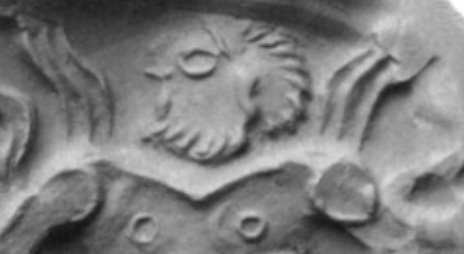
The head of Apollo became two sun discs eyes...

The youth on a prancing horse (which was actually a depiction of the Young Sun God Apollo himself riding on a solar horse) became sun disc on a prancing solar horse...

BTW, Celts made another version of this Solar Rider coin, where the rider is still "a young man" but with a sun for a head...Like this Celtic coin from Hungary...

I talked about solar riders, and why was horse a solar animal in many of my posts...

Anyway, the reason why horse is a solar symbol found all over Eurasia, is because horse mating season, characterised by vicious stallion fights, is governed by the sunlight: it starts at the beginning of the summer and it peaks in midsummer, on summer solstice...

Hence these two lads, Castor and Polux, marking the summer solstice...

This is the horse sorted ๐Ÿ™‚ But what bird is depicted on the original Celtic coin? 

I think to answer this "important" ๐Ÿ™‚ question, we need to look at the reverse of this coin as an animal calendar marker...

Knowing what we know about horses mating season, and how horse was used as a calendar marker elsewhere, I would suggest that the prancing solar horse with the sun disc on the original Celtic coin depicts the hot, sunny half of the year in England, Apr/May-Oct/Nov.

Now usually, the birds associated with solar cult are migratory birds, like swans, which arrive to the areas with the continental climate from their wintering grounds in spring, with the "Young Sun"...

This link is already found in Late Neolithic Northern Europe. Among the Lake Onega petroglyphs, Russia, made c. 4000BC, the only two petroglyphs which were "Christianised" with a cross were "The Devil" and "The Swan"...

Why? Cause "The Devil" is actually the sun god. And (migratory) swans are his birds. These two images are actually part of a large solar year calendar which was encoded using local animal and plant calendar markers. I talk about these amazing petroglyphs in my post "Bes"...

I talk about migratory birds as animal calendar markers linked to the solar cults in many of my posts...

But looking at the bird depicted under the horse, you can see that it definitely isn't a swan. I was first reminded of a common crane, another bird associated with the solar cult

Another bird that looks like the bird standing under the horse, which is also associated with the sun cult is a stork.

But there is a problem here: the curved beak...Now this could be just a bad craftsmanship. But it could actually be an important clue that could help us identify the bird depicted standing under the solar horse...

There is a bird native to England, which (kind of ๐Ÿ™‚) looks like this: curlew. This bird is a resident species in England, bit it is also locally migratory: During the warm part of the year, it is found inland, and during the cold part of the year it is found only on the coast...

The reason for this is that curlew "nests on the ground in rough pastures, meadows and heather"...


This is the horses country...

And: "Curlew arrive back at their breeding grounds in late March or early April, laying their eggs between mid-April and mid-May. Chicks hatch between May and June and have typically fledged by mid-July"...

Right during the time when horses are mating (and prancing ๐Ÿ™‚).

And when the "Young Sun God" arrives riding on a prancing horse...

That's it. To read more about ancient animal and plant calendar markers, start here…Then check my twitter threads I still didn't convert to blog post...I am way way behind...

Friday, 10 July 2026

Whore of Babylon

Whore of Babylon on the Seven-Headed Beast, Illustration for Rev. 17:3–8. From the Las Huelgas Apocalypse, ca. 1220

I love this. The Whore of Babylon (aka Sirius, aka Ishtar) riding (in the middle of, in Jul/Aug, in Leo) seven headed beast (seven months of Mesopotamian summer Apr/May - Oct/Nov), just before she starts rising with the sun before dawn (so still invisible in the day, red sky)...

I talked about her in my post "Apocalypse" in which I give full symbolic analysis of the Woman of the Apocalypse, described in Chapter 12 of the Book of Revelation...

The same girl...


The Woman Clothed with the Sun (aka Sirius rising with sun in Leo, aka Ishtar), an illustration from the Rothschild Canticles, c. 1300

The same girl again...

3rd mill BC Mesopotamian dragon has lion body (Jul/Aug, Leo is the hottest time of the year) and seven snake heads (one for each hot month of Mesopotamian summer, Apr/May-Oct/Nov)...Analysis of this seal dated to 2200 BC can be found in my post "Seven headed dragon"...

The "dragon" (summer) is depicted while his 4th head (4th month, Jul/Aug) is being killed (is in progress). To the left we see "The Lady" standing under a star (Ishtar -  Sirius)...

Why is Ishtar depicted standing next to the seven headed dragon? 

For the same reason she is depicted here standing on a lion. Cause she is deified Sirius, which rises with the sun (morning star) in Leo, Jul/Aug, the hottest time of the year. Which is why she is depicted standing on a lion with the sun above lion's head and is known as "The Lioness of heaven"...

For the same reason she is the one who sits on a lion throne...

I gave complete explanation of why Ishtar is Sirius and not Venus in this article containing full symbolic analysis of the Sumerian poem "Inanna and ล ukaletuda"...

I talked about Inanna/Ishtar and why it was Sirius that was her original "morning star" in many of my posts...


You can start here: You know how everyone thinks that Inanna/Ishtar (Morning Star) is Venus and how I think that it was originally Sirius, and only later became Venus?

Well, it seems that Ancient Egyptians preserved the proof of this switch in their myths about Sopdet...


I talked about this in my post "Sirius mother of Venus"...

She of course has many faces and names...

Silver seal from Gonur Tepe, Turkmenistan, late 3rd-early 2nd mill BC. Depicting a winged goddess riding on a lioness...

Who could this be?

Well, of course, a Central Asian version of the "Lioness of heaven", Inanna/Ishtar/Asherah/Artemis.../Sirius in Leo...

I talk about this in my post "Silver seal from Gonur Tepe"

Back to the original Whore of Bablylon painting and why I like it so much. The same "two skies" trick was used here: Does anyone else think that this picture, allegedly showing King John on a stag hunt, looks strange, and may be hiding something in plain sight? No? 


Well I do ๐Ÿ™‚ I explain why in my post "King John"...

In short, King John here is symbolic depiction of St John's day, Midsummer day, Summer solstice. 

White horse is a universal solar symbol. On this Celtic coin from Hungary, this is symbolically depicted through "solar rider", an anthropomorphised sun riding a horse. 


I wrote many posts about horse/equid as a solar symbol from Around the world. 

Horse is a solar symbol because horse fertility is governed by sunlight and peaks on Summer solstice. St John (day), Summer solstice is in the middle of the solar horse, going from red sky (increasing sunlight, before summer solstice) to blue sky (decreasing sunlight, after summer solstice)...

John is riding after (towards) a stag, (the symbol of) winter...

Jingle bells, Jingle bells, Jingle all the way...Bronze stag pendant with bell feet, early 1st mill BC, Transcaucasia or Iran. Currently in the Met Museum...

Stag is a symbol of winter because it is through the winter that stags have their full grown antlers. 

I talked about the stag as the symbol of winter in my posts "Winter deer"  and "Deer kills snake" 

What is very interesting is that deer antlers are fully grown in Sep/Oct, right in time for the start of deer mating season and the end of the horse mating season. The old antlers fall off, and the new ones start growing, in Mar/Apr/May right in time for the start of the horse mating season. 


This means that deer and horse are natural animal calendar markers for the opposite halves of the year...Which is why King John on his white horse will (symbolically) never catch the deer... 

So, (never ending) stag hunt..Talked about it in my post "White stag"...


If you are interested in reading more about ancient animal and plant calendar markers, which are at the root of all our mythologies, start here…Then check my twitter threads I still didn't convert to blog post...I am way way behind...

PS: Just came across this amazing painting: The woman clothed with the sun and the seven-headed dragon, c. 1360-70 by Giusto di Giovanni de Menabuoi.


Which is, I think, much b
etter viewed like this...


The Woman clothed with the sun - Sirius rising with the sun in Jul/Aug, the middle, the hottest part of the Mesopotamian summer which lasts seven months...

The Dragon - Nergal, The Destructive Sun (God) Shamash...The God whose seat is in Jul/Aug, the middle, the hottest part of the Mesopotamian summer which lasts seven months...Whose main head is the middle head of the seven headed dragon...

This guy...


Saturday, 21 February 2026

Little horses

The ลพirgeliai (little horses), are common motifs on Lithuanian rooftops, placed there for protection of the house...

They are a symbolic depiction of the Aลกvieniai, Baltic counterparts of Vedic Ashvins, who are said to pull the chariot of Saulฤ— (the Sun Goddess) through the sky. As depicted on this rooftop of a house in Nida...

Both names, Lithuanian aลกva and Sanskrit ashva, mean "horse" and are derive from the same Proto-Indo-European root for the horse – *ek'w-...

And in India, we also find (horse headed) twins...

Surya's wife Saranyu transforms into a mare and runs away from her husband. Surya eventually finds her, turns himself into a white stallion and...

After which Saranyu delivers horse head twins called Ashvins...

I talked about this in my post "Hayagriva" about the Indian solar horse mythology...

BTW, these guys were hidden in our zodiac as Dioskuri, divine twin horsemen... 

The guys who wanted to marry "the daughters of the white horse". They mark Summer Solstice, the peak of the horse mating season, characterised by wild stallion fights for mares...

I talked about solar horse (more precisely equid) in many of my posts...

We find the same horse twins in Etruria. I talked about this in my post "Ponte Sodo fibula" about this Etruscan gold disc fibula, from the Necropolis of Ponte Sodo, Vulci, Etruria, Italy. 650 BC, from the "Orientalizing period". Currently in the Antikensammlungen, Munich, Bavaria, Germany. 


We find them in Sasanian Iran, on this plate with youths and winged horses drinking water from a jar ca. 5th–6th century AD. I talked about this in my post "Dioskuri plate from Iran"...

And in Gotland. Together with horses. And pile of soar symbols...I talked about this in my post "Gotland sun stone with Dioscuri"...


But this link between (horse) twins and Summer Solstice is not just an Indo-European thing. 

In Mesopotamia, we find them "guarding the gates of hell". In my post "White raven" about Apollo-Nergal, I talk about the Sumerian twin gods, identified as Gemini constellation, and associated with Nergal, which "guard the gates of hell"...Are they holding torches? Or keys?

And in Egypt, we find god Hapi, the god of the annual flooding of the Nile, who was "often depicted as twins, tying papyrus and lotus flowers together". Papyrus flowers in Apr/May, and lotus in Jul/Aug...I talked about him/them ๐Ÿ™‚ in my post "Lotus and papyrus"...


Twins marking summer solstice, Nubia. I talked about this in my post "Meroitic language"...


In Central America the Hero Twins pour the water of heaven (rains there arrive in Jun/Jul). I talked about this in my post "Resurrection of the maize god"...

To read more about ancient animal and plant calendar markers, which are at the root of all our mythologies, start here…Then check my twitter threads I still didn't convert to blog post...I am way way behind...

Saturday, 14 February 2026

Temple of Isis on Philae Island

This painting by the 19th century French painter Thรฉodore Frรจre depicts the Philae Island, located near the First Cataract of the Nile in Upper Egypt, with the central structure being the oldest temple, temple of Isis, built by Psamtik II (595 BC – 589 BC)...

The temple was the last temple built in the classical Egyptian style. It was also the place where the last known Egyptian hieroglyphic inscription (394 AD), and the last known Demotic inscription (452 AD) were found...

Finally, it was the last functioning pagan temple in Egypt (the temple was closed down in AD 537).

The temple of Isis was Christianised by carving lots of Coptic crosses into its walls and columns...

My favourite being this one. Why? Cause Christians also carved a star just above the cross...And this is actually an astonishing find. Why? Here's why:

Christ as the sun-god Helios/Sol, 3rd c. AD, Vatican. Christ is born on Winter Solstice, (re)birth day of the sun (god), he enters Jerusalem on a donkey, "animal of the (sun) gods and kings", and gets put on a cross, symbol of the sun (god). Interesting...I talked about this in my post "Alexamenos graffito"...

I often wondered if early (Hebrew) Christians did know that cross represented sun god Shamash? 

I talked about this in my posts "The cross of Shamash" and "Sun god tablet"...

You know Shamash, the solar deity of the early Hebrews, to whom they dedicated their first temple (according to their own scriptures)...

Zodiac, with Helios in its center. 6th c. synagogue at Beit Alpha, Israel. Why? Well:

"Josiah removed from the entrance of the LORD's Temple the horse statues...and burned the chariots...which...kings of Judah dedicated to the sun..." 

I talked about this in my post "Sun god from the first temple"...

The First (solar) Temple was built on a threshing floor. Threshing floors were used in the past as solar observatories. Now if you wanted to make a (solar) temple on a solar observatory, and "orient" it (make it to face east), if you wanted to make a "House of God" to face the "House of (Sun) God", how would you do it? Like this:

The two little sticks could then be deified and called Boaz and Jachin...I talked about this in my post "Boaz and Jachin"...

Solar temple dedicated to a Sun god in a chariot pulled by 4 horses...I originally thought that this god was some kind of local Helios...But since then I learned that Shamash also traveled in a chariot pulled by four equids...

I talked about this in my posts "Sun god from Tell Brak" and "Shamash playing with solar horse"... 

So the Sun God that Josiah says the Jews worshiped in the First Temple was most likely Shamash...They still do worship him BTW...

Remember this post, "The tree of life, light", about the origin of the Hanukah (Winter Solstice) celebration? And the link between Yahweh and Shamash, the old Semitic (Akkadian) sun god...

Now in this post, "Menorah from Nipur", about this 3rd mill. BC seal from Nipur, I postulated, based on the fact that Shamash is depicted sitting between two bulls, that the Shamash worshipped through Menorah was Sun in Taurus, Apr/May. The good sun, the sun of life...
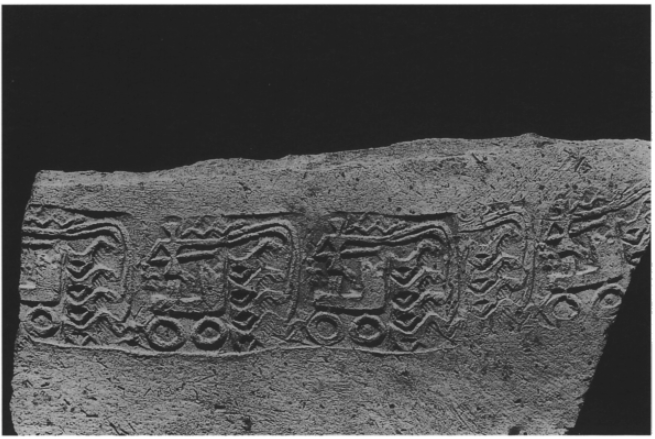
But I completely missed the fact that the two bulls have erections, which means they symbolised Jul/Aug, the start of the beginning of the mating season of wild cattle...I talked about this important "detail" in my post "Tree huggers", about this strange moulded plaque, Babylonian, ca. 2000–1600 BC. 

And I also, for some weird reason, ignored the fact that Shamash is holding the reed cutting knife. I talked about the importance of the reed cutting knife in my post "Canals", where I explain why Shamash holds reed cutting knife when he is depicted standing in an empty canal/river bed. About Jul/Aug being the best time to cut reed in Mesopotamia if you want to make long lasting reed boats, houses and canal dams...BTW, see how he is standing between two lions, in Leo...

Both pointing to the fact that the Shamash of the Menorah is Shamash in Jul/Aug...See how Shamash has (mostly) 3 heat waves coming from each shoulder? Togehter whith his head, that is 7...7 months of the Sumerian summer...With the head in Jul/Aug, the hottest part of the year...

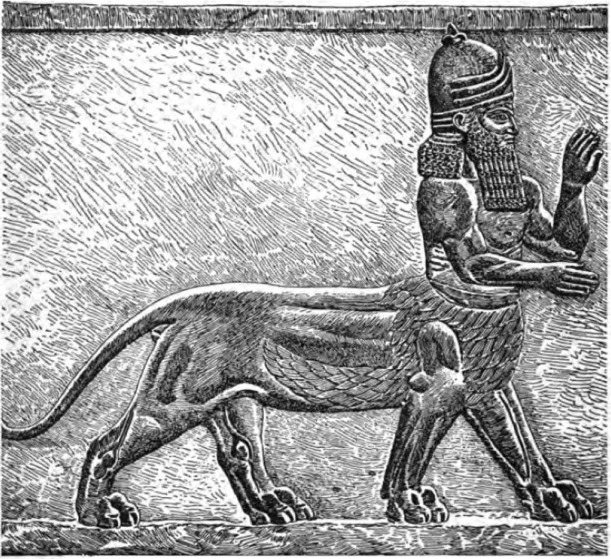
Sun in Jul/Aug. Nergal...The deified destructive "burning" sun, which was depicted as a lion man


because Jul/Aug, Leo, is the hottest and driest part of the year in Mesopotamia...

Talked abut Nergal in my post "Winged superhuman hero"...

Nergal the god of death...Is Jahveh?

As I said, I often wondered if the early Christians did know that cross represented sun god, and I had a feeling that they did. And this particular cross with the star above it proves that at least some of them did know...

Cause carving this cross with the star above it into the column of the temple of Isis only makes sense if they knew that the cross represented Sun. And that the star represented Sirius. And that together, sun and star represented Isis, Sirius rising with the sun in Leo (Jul/Aug).

So what did the person who carved this cross and star really want to tell the world? A lot...

EGYPT. Drachm. Antoninus Pius. AD 138-161. Zodiac series. Lion springing right; above, star and radiate and draped bust of Helios right...

The star is of course Sirius, which rises before the sun in Jul/Aug, Leo. 

This is the same as:


Sirius in Leo, also known as Ishtar...For those who will say "Ishtar was the morning star", yes she was, in Leo (Jul/Aug), when Sirius rose in the morning with the sun...Which is why Ishtar stands on a lion (with sun above the lion) and why Ishtar is known as "The Lioness of heaven"...


I talked about deified Sirius in many of my posts...

You can start here: You know how everyone thinks that Inanna/Ishtar (Morning Star) is Venus and how I think that it was originally Sirius, and only later became Venus?

Well, it seems that Ancient Egyptians preserved the proof of this switch in their myths about Sopdet...


I talked about this in my post "Sirius mother of Venus"...

To read more about ancient animal and plant calendar markers, start here…Then check my twitter threads I still didn't convert to blog post...I am way way behind...