Showing posts with label Assyrian mythology. Show all posts

Sunday, 3 August 2025

Scorpion under the bed

A drawing of an archaic seal impression from Ur depicting a copulating couple and a scorpion, from "Ur Excavations (Volume 3) Archaic seal impressions".


Today I came across this article entitled "Medicine in Ancient Assur..." by Troels Pank Arbøll. And in it, starting from the pate 74, I stumbled across very interesting note about the link between scorpions and snakes and human fertility:

Snakes and scorpions were and still are very common in Mesopotamia. Both animal are normally seen in nature, in fields, gardens, forests, marshes, desert, surrounding the human settlements...

But, the ancient texts and seals also tell us that scorpions could be found under the bed or in store rooms. 

A number of seals with bed scenes display a scorpion underneath the bed. 

I couldn't find any better image of these seals or any info about this seal, so would be grateful if someone could send me a picture of one of them so I can include it here. And, scorpions were referred to as the "wolfs of the storeroom, lions of the larder"...

Snakes were also said to venture into human habitations, usually through drainage pipes and sewers and are said to be sometimes giving birth in people's houses...

According to Troels, scorpions were the symbol of motherhood and were related to fertility and the image of the married woman...And, apparently, one of the symptoms of the scorpion invenomation is priapism (enlarged forced erection)...

Troels then says, "one cannot help but associate the scorpion stings with potency, as well as the various metaphoric relationships inherent in scorpions, such as motherhood and the marriage bed...Scorpion underneath the bed, probably refferrs to the couple's married aspect."

And, "Snakes were used to to describe an infant child coiled up within the mother and coming out slithering like a snake...Snakes may have been related to fertility or youth on the basis of their "renewal" when shedding their skin"...

Interesting...But there is one other, I think, very interesting thing about scorpions and snakes and their link to (human) fertility. This is the climatic year in Mesopotamia. You can see that the cool, wet season starts in Oct/Nov and ends in Apr/May...


Oct/Nov is also when the climate in Mesopotamia gets cool and wet enough for scorpions to start looking either for a hole to hibernate in, or for a dry warm place to live in...Like people's houses...Say under people's beds...

What about snakes? They go to hibernation too, thankfully not inside people's houses...They emerge out of hibernation in the spring, change their skins, and the most common Eurasian snakes, vipers, start mating in Apr/May...

This is why scorpion is an animal calendar marker for Oct/Nov, end of the hot/dry season and the beginning of the cool/wet season. 

This is why snake is an animal calendar marker for Apr/May, end of the cool/wet season and the beginning of the hot/dry season.

Oct/Nov, the time of the year marked by scorpion, was the time of the year when fields were ploughed and grain was sown in Mesopotamia, after the first rains fall (rain was also seen as the heavenly semen, seed of the rain god) that fertilises mother Earth...

Apr/May, the time of the year marked by snake, was the time of the year when the Tigris and Euphrates flood spilled out, and when fertile mother earth gave birth to grain, when grain was harvested in Mesopotamia...

So 

Oct/Nov, scorpion, semen, corn seed, sowing, rain (heavenly seed), fertilisation...

Apr/May, snake, baby, corn ears, sheaves, harvesting, flood (earthly flood is the child of the heavenly seed, spilling of waters), delivery...

Again it seems that in Mesopotamia human and earth fertility was symbolically linked...This time through animal calendar markers: scorpion and snake...

You can find more about the use of scorpion as an animal calendar marker in these posts...

You can find more about the use of snake as an animal calendar marker in these posts...

BTW, I just remembered this drawing of an archaic seal impression from Ur, also from "Ur Excavations (Volume 3) Archaic seal impressions". Self explanatory after what you just read? I think so...

That's it. To read more about ancient animal and plant calendar markers, start here…Then check my twitter threads I still didn't convert to blog post...I am way way behind...

Monday, 5 February 2024

Care of the dead

Two Assyrian soldiers forcing Elamite captive to grind bones of his family, 7th - 6th c. BC. This wasn't like most people think an act of random cruelty...Making someone destroy the bones of their ancestors was a deliberate forced act of sacrilege...


Assyrian culture, like all the other Mesopotamian cultures, was built around the cult of the dead. Assyrians, often buried their dead under house floors. They also practiced "kispu", regular, ritual feeding and watering of the deceased after their burial...

Based on this, in the "Death as a Stage for Performing Identity in the Assyrian Empire" Petra M. Creamer concludes that "Socially, this indicates deep linkages to familial practices and ancestral memory".

So, it is precisely because Assyrians respected their dead ancestors so much, that I am sure that them forcing their Elamite captives to destroy the bones of their own ancestors was a lot more than just ordinary act of cruelty...

We actually know why they did this. There is a  King Ashurbanipal’s inscription in which he says that he exposed the grave of the Elamite kings and deprived them of sacrificial food and drink offerings...

Destroying the bones of the enemy ancestors was done for the same reason: To prevent the Elamites from sacrificing food and drink to their dead.

But why was sacrificing food and drink to the dead so important to the Mesopotamians and their Iranian neighbours?

And we know that it was very important, because we have written records, from the 3rd millennium BC onwards about "kispu" (the care of the dead), which involved regular "feeding and watering" of the dead though food and water sacrifices...

The other day, I came across a paper entitled "Peace for the Dead, or kispu(m) Again" by Akio Tsukimoto, in which he talks about mentions of this practice in Sumerian, Old Babylonian and Kassite records...

In it we can read that the dead were served with food (grain) and drink (water) offerings not only during their funeral ceremonies, but also regularly thereafter, at least once a month, and in some cases possibly even every day...

There were also two festival dedicated to the dead ancestors with big feasts in which the living ate and drank with the dead. I will talk about these in my next thread.

Importantly, the dead were kept fed and watered because otherwise they would get angry...

Neither Petra M. Creamer nor Akio Tsukimoto explain why feeding and watering the dead was soo important to the Mesopotamians and kind of punishment by the angry dead were they afraid of. But I did, in my post "The house of bones".

In it I talked about the mystery of the missing bones of the Hittite royals. And I proposed that the bones were taken by the Hittites with them, when they abandoned their capital Hattusa, because they wanted to be able to continue to sacrifice food and drink to the dead...

Just like the Chaldean king Meredach, who, when he fled from Babylon to Elam, in front of the advancing forces of Sargon, "took with him all the gods of the land and all the bones of his ancestors from their graves"...

And I explained that the Hittites, just like their Mesopotamian and Elamite contemporaries, remembered their dead and sacrificed food and water to them regularly, because forgotten, hungry and thirsty dead ancestors will take revenge on their living descendants...

And one of the ways they would do that is by causing droughts, storms, floods and other natural disasters that would cause grain crops to fail, and would result in famine and the death of the living...

Eeeee where did you get this idea? From here: Serbs and other Balkan Slavs believed that if the dead were not given water, they would drink it from the clouds, and would cause drought. I talked about this in my article "Thirst", "White feast"...

Serbian belief system, according to ethnographers, was based on the cult of the dead. They regularly shared food and drink with their dead. And they even took the bones of their dead with them, when they were forced to move due to wars or famines. I talked about this in "The house of bones".

BTW, this belief in the world of the dead being a thirsty place seems to have been widespread in the past.

Ghandara culture graves, Pakistan, 1200-800BC...The drinking vessels were placed in graves with drink "for the other world"...I talked about this in my post "One for the road".


But how could Serbian/South Slavic folklore help us understand the Hittite culture?

Serbs, like all the other Balkan people, are descendants of pretty much everyone who ever lived in the Balkans...Which is why, I thought then, and still think, we can find so many interesting bits of many old lores in Serbian folklore...

Anyway, back to the Hittites. Remember this depressed dude? This is the statue of the Last Hittite king Suppiluliuma II. And he said: "...humiliation of the Hittite kingdom is the result of the fact that the Hittites have forgotten to respect the sacred bond with their dead..."

He then promises in the name of the Hittite kings and in the name of his subjects that they will do everything in their power to rebuild this sacred bond again...

But that was too little too late...The Hittite empire collapsed, their capital Hattusa was abandoned and Hittite royals disappeared from the face of the world...Together with the bones of their ancestors...

It turns out, that I was right about the reason for the Hittite empire collapse. According to this recent article from Nature, "Severe multi-year drought [my comment: caused by the angry ancestors] coincided with Hittite collapse around 1198–1196 BC"...


BTW, this is not the only thing found in Serbian/Slavic folklore that I used to unlock the secrets of much older, seemingly unrelated cultures. I discovered the key for unlocking the secrets of ancient animal calendar markers among the Serbian/Slavic snake and goat folklore...

If it wasn't for that, we would still be looking at all these animals depicted on all these ancient artefacts, and talked about in all these ancient myths, legends, folk stories, without having a clue what they mean...

Anyway, I might one day give you the chronology of the discovery of each animal calendar marker and what helped me figure it out. If anyone cares...

I will stop here. This is just an intro into much more important thread about the Sumerian "Zadušnice" festivals of the dead 🙂


Sunday, 30 October 2022

Black basalt stone of Esarhaddon

This rectangular-sided monument made of black basalt in 670 BC, records Assyrian King Esarhaddon's restoration of Babylon, after it was destroyed by his father Sennacherib in 689 BC. Currently in The British Museum, London...

The top side of this memorial (or foundation) stone is carved with a very interesting relief whose meaning is not understood...

I came across the paper "The black stone of Esarhaddon" by D. D. Luckenbil, which claims to have found the solution to the relief riddle. First, here is what the author says is depicted on the relief:

In the upper register we have a shrine surmounted by the horned headdress, symbol of deity. Next a man, probably a king, with hand upraised in adoration. Back of him stands the conventionalized sacred tree. And at the end a bull...

In the lower register there comes, first of all, a symbol of doubtful significance; next a plow with seed drill attached; then a palm tree with two clusters of dates. And, finally, another enigmatic symbol consisting of four circles at the corners of a square...

In the paper, the author then says: "Assuming that the explanation would most probably be found in the texts accompanying the symbols, I made a search which almost immediately led me to what I regard as the solution of the problem"...

"The general meaning [of this sentence] is, I believe, perfectly evident: 'Pictures in colored clay (in the form of) constellations, the likeness of the writing of my name, I engraved (or impressed) thereon'"...

The author of the paper then interprets this as "the symbols on the relief on the black stone of Esarhaddon represent constellations, which have been chosen because each looks similar to one of the cuneiform characters spelling Esarhaddon's name"...

And so the rest of the paper is his attempt to identify which constellations these symbols represent...You can read the full paper here...

However, in the paper, the author says that "The colored' clay does not, of course, fit into a description of the symbols found on the stone or metal memorials. But it does for that impressed upon the clay prisms"...What prisms?

This is the cuneiform prism describing the restoration of Babylon by Esarhaddon, stamped with Assyrian hieroglyphic inscription dated to 676-672 BC. Currently in the Met Museum...

It also has pretty pictures on its top, some of the them the same as the ones found on the top of the black basalt stone. And the guys from the Met say that "Together, the signs are thought to form a cryptographic writing of Esarhaddon’s name and titles"...

Which is possible...Esarhaddon himself said he impressed his name in constellations on colored clay...But I don't think that the symbols on The black stone of Esarhaddon are constellations and that they spell Esarhaddon's name...

Here is what I think that relief means...

In the above clay prism, Esarhaddon, while rebuilding the city, ascribes Babylon’s destruction not to his father, but rather to the anger of Babylon’s chief deity, Marduk, provoked by the Babylonian people’s neglect of their gods and rituals...

In the paper "The black stone of Esarhaddon" we can read about a brick inscription which tells how "for Marduk, his lord, Esarhaddon, king of Assyria, king of Babylon, had made new bricks for Esagila and Babylon"...

The author of the paper then says that "Schmidke's conclusion that this text must come from the end of Esarhaddon's reign, since, 'so long as city and temple lay in ruins, there could be no king of Babylon' is a marvelous bit of reasoning"...

So, were the inscriptions stamped on the bricks after they were in the walls of the restored temple and city? And is the temple shown on the black stone of Esarhaddon, the rebuilt temple of Marduk? I think so...

The temple is "surmounted by the horned headdress, symbol of deity"...The etymology of the name Marduk is conjectured as derived from amar-Utu ("immortal son of Utu" or "bull calf of the sun god Utu")...

The same Sun God Utu depicted as the golden bull with lapis lazuli beard...Why?

Well because It is Shamash/Utu, the sun, that melts the snow on the mountains that feed the sacred rivers, Tigris and Euphrates...

This is the result of the heating up of the mountains which are the source of the two great rivers: Anatolian highlands and the Zagros mountains...Which causes the snow to melt, which causes the rivers to swell...

Symbolically, Utu (Sun) climbs to Abzu (Melts the snow on Zagros mountains) and frees Enki from his icy prison (Snowmelt runoff)...

I talked about this in many of my posts. For instance "Maran", "Utu or Enki", "Goatfish", "When Utu steps up to heaven", "Shamash young and old", "Problem of the Abzu"...

This flood peaks during Taurus (Apr/May)...The golden bull (sun in Taurus) brings flood (lapis lazuli beard in a shape of the flowing water)

Taurus of course originally had nothing to do with stars...This part of the year (Apr/May) is marked by a bull, Taurus, Because this is the beginning of the calving season of wild Eurasian 

Which is why in "Enki and the world order" we read: "...Father Enki...he stood up full of lust like a rampant bull, lifted his penis, ejaculated and filled the Tigris with flowing water. He was like a wild cow mooing for its young in the wild grass..."

Oh by the way, the flood peaks in Apr/May, the beginning of summer, when Aurochs calve, and ends in Jul/Aug, the end of summer, when Aurochs mate...Which is why the symbol for summer is Bull...You can read more about this in my post "Symbols of the seasons"...

The flood is what makes the fields (the square) fertile...I talked about square as the symbol for a field in my post "Arjune venus"...


Having fun so far? Let's continue...

Right after the end of the flood, during the driest and hottest part of the year, Jul/Aug, Leo, is time to pick dates...I talked about this in my post "Lion killing bull under a date palm"...

The hottest, driest part of the year is marked by the lion animal calendar marker...Leo...The reason for this is that this is when the Eurasian lions main mating season starts...


The lion mating season lasts throughout autumn (Jul/Aug-Oct/Nov)...Which is why the symbol for autumn is a lion...

At the end of autumn, Oct/Nov, is when the first rains arrive, brought by the goat of rain. Here is rain god Ninurta/Ningirsu, who was, in the earliest records, also agriculture god, giving plough to the people...

He is sitting on a throne, behind which we can see a mountain and an ibex goat. Why? Because in Mesopotamia, ploughing is done after the first rains, which arrive in Oct/Nov, when Ibex, Goat of rain, climbs to the mountain tops and starts mating...

Like on this Akkadian seal, dated to 2250–2150 BC, currently in the Met Museum

The seal doesn't depict hunting scene, like the Met guys think. No one hunts goats with a scimitar...The dude with a scimitar is Nergal, the god of destructive sun, the hot, dry, yellow part of the year. He is killing Ibex, symbol of the cool, wet, green part of the year...

Old Babylonian cylinder seal from Larsa, depicting the underworld (the god of death) Nergal, holding his distinctive scimitar and the double lion headed scepter.  I talked about Nergal and his symbols in my post "Winged superhuman hero"...

I think we covered all the symbols depicted on The black stone of Esarhaddon 🙂 And so here is how this relief "can be" interpreted:

Esarhaddon rebuilds the temple of Marduk, the bull calf of the triumphant bull god Utu. The old faith has been restored...He prays to Marduk, to support (the tree of) life in his kingdom, and his prayers are heard...

The bull calf of the triumphant bull god Utu releases Enki, the (God of) flood from his icy prison, during the time of the calving of the wild Eurasian cattle, which feeds the tree of life...The king is happy...

It is this flood that supports (the tree of) life in Mesopotamia, irrigates the grain fields and date gardens...The food is plentiful and the kingdom is happy...And the king is even happier...

Right after the bull (flood) dies, the date harvest begins...Then the ploughing and sowing of grain begins...

And then the snow covers the mountains...Enki retreats to Abzu...And the year ends...Until the prayer to Marduk, the bull calf of the triumphant bull god Utu, stars the whole cycle again...

That's it, I think...What do you think? No need for stars?

To read more about ancient animal and plant calendar markers, start here…then check the rest of the blog posts related to animal calendar markers I still didn't add to this page, and finally check my twitter threads I still didn't convert to blog post...I am 9 months behind now...

Sunday, 18 September 2022

The great imposter

A Kassite seal, dated to ca. 1350 BC, currently in the Archaeological Museum in Thebes, Greece. One of several Kassite seals listed in "Reflecting on the Thebes Treasure and its Kassite Findings The Glyptic Art and its Geo-Political Context and Distribution"...

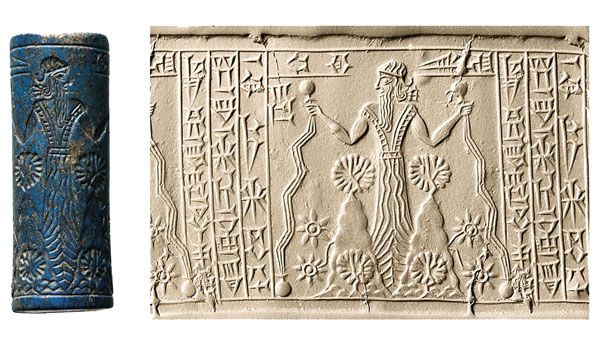
It depicts Enki/Ea, the god of sweet water standing between two mountains, with trees and flowers...Enki is identifiable by the fact that he is holding two jars from which a water is pouring out, and which are symbols of the source of Tigris and Euphrates... 

Super important image. Important cause of this: "Enki lives in Abzu, the source of Tigris and Euphrates"...The official explanation is that Abzu is "an underground aquifer"...

Which I think is completely wrong. I think Abzu was the name for the great mountains from which Tigris and Euphrates emerge...


That Abzu is a mountain is actually spelled for us in the Early Dynastic Za-me hymns where we read:

"Abzu, place that is a big mountain, princely crown of the heaven and earth. To the lord Nudimmud (Enki), (give) praise!"

Also, the late 3rd millennium BC text "Debate between Bird and Fish" tells us that it was Enki who: "laid out side by side the Tigris and the Euphrates, and caused them to bring water from the mountains"...

Do we need any more hints that Abzu is not underground?

And on the original image we see Enki, in Abzu (mountain) pouring out Tigris and Euphrates...Or Enki as Abzu, as Enuma Elish tells us that Enki killed Abzu, and then replaced Abzu and made Abzu his home...

I talked about Abzu in several of my posts: "Maran", "Utu or Enki", "Goatfish", "When Utu steps up to heaven", "Shamash young and old"...

And so we get the above image depicting Enki, as Abzu, The Great Mountain, source of Tigris and Euphrates...

Wait...Wasn't "Great Mountain" the title of Enlil? Hmmm...I will have to write another thread about this (imposter 🙂???) soon...

If you think Enlil is bad, wait until you meed Ashur (Assur), another god who also had the epithet "The Great Mountain"...I talked about this in my post "Ashur"...And some say that the above image actually depicts Ashur, not Enki...

Recently my friend @TheAncientWorld posted this reply to one of my twitter threads:

"Did you know that Tukulti-Ninurta & Tukulti-apil-Esharra are basically the same name? Ninurta was the son of Enlil (chief of Sumerian pantheon) but was also 'adopted' by both Marduk (chief of Babylonian pantheon) and Ashur (chief of Assyrian pantheon). Hence  'apil-Esharra' = son of Ashur = Ninurta..."

Of course they did...This is all the same play with different actors and slightly different choreography 🙂...But the important thing is that all of them point at "The Great Mountain" which is Abzu, where Enki resides...

To read more about ancient animal and plant calendar markers, start here…then check the rest of the blog posts related to animal calendar markers I still didn't add to this page, and finally check my twitter threads I still didn't convert to blog post...I am 9 months behind now...

Tuesday, 8 March 2022

Relief from Dur Sharrukin

The hand...Relief from Dur Sharrukin (the Assyrian capital in the time of Sargon II of Assyria), "detail of a throne???", ca 721 -705 BC...


The only throne depiction from Dur Sharrukin I found is this one. The "figure" holding a goat and poppies (???) is the same, but there is no giant hand behind...So where is the original image from?


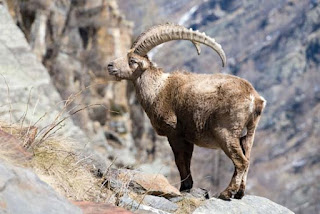
Is the Assyrian god holding Ibex, the Goat of Rain? 

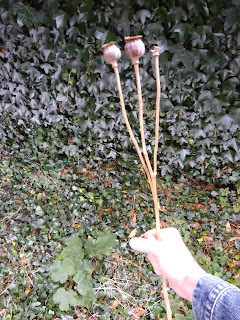
And Poppies? 

And why?

Remember this guy, a Urartian contemporary of this Assyrian dude, also holding poppies, but standing on a bull??? 

He is standing on a bull, holding ripe poppies, because poppy harvest takes place during Taurus (Bull), Apr/May...I talked about him in my post "Poppies"...

Bull is an animal calendar marker, which marks the beginning of the calving season of Wild Eurasian Cattle (Aurochs), Apr/May...I talked about this in my post "Ram and bull"... 

Goat is an animal calendar marker, which marks the beginning of the mating season of the Wild Goats (Ibex), Oct/Nov...I talked about this in my post "Iranian goat of rain"...

The goat and bull are two opposite animal calendar markers, marking two most important natural events in Mesopotamia...

The goat (Oct/Nov) marks the beginning of the rain season in Mesopotamia and the bull (Apr/May) marks the end of the rain season in Northern Iraq, where Assyrian capital is located...


Bull also marks the time when Tigris and Euphrates reach their peak water level 6 months later, in Apr/May...

I talked about this in my post "Rain and flood"...

Water flow charts

Tigris

Euphrates

The gestation period of the Ibex goats that live in Northern Mesopotamia is 150 days...So the first baby goats appear just before the water levels peak in the two Holy Rivers....

Remember this guy, Enki/Ea, the god who ejaculates Tigris and Euphrates? This happens in Taurus (peak water level) right when the baby Ibex goats are being born? 

Which is why Enki is depicted sitting on his throne, and either being the source of two grate river or holding a jar which is the source of the two great rivers...

Guess what is the present being brought to Enki? A baby goat...

The goat carrier was always the king...Carrying a goat was a symbol of royalty...Which is why we find inscriptions like this: "The year in which Ammisaduqa, the king, had made the image of him carrying a kid against his chest"...I talked about this in my post "Goat carrier"...

Guess what else happens during the inundation of Tigris and Euphrates, right after the first baby goats are born? Poppy harvest...

Interesting...I would love to find out where the original image is actually from. If anyone knows please let me know.