Showing posts with label Abzu. Show all posts

Tuesday, 3 February 2026

Mountain god with streams

Fragments of an ivory frieze, representing a "mountain god with streams, surrounded by trees". Middle Assyrian Period (14th century BC.). Found in the New Palace of Assur. Vorderasiatisches Museum of Berlin...

Who is this "Mountain god"? And what is really depicted here?

Let me try to explain:

Remember this:

Why did so many Mesopotamian "Supreme" gods have an attribute "The Great Mountain"? Cause they all wanted to be Enki...But there is only one Enki, who is (in) Abzu, "place that is a big mountain"...All the others are just imposters...I talked about this in my post "The great imposter"...

So this is Enki, the god who is simultaneously said to "rule Abzu" and "to be Abzu", Abzu being the source of Tigris and Euphrates"...

I talked about this in my posts "Problems with Abzu", "Shamash young and old", "When Utu steps up into heaven"...

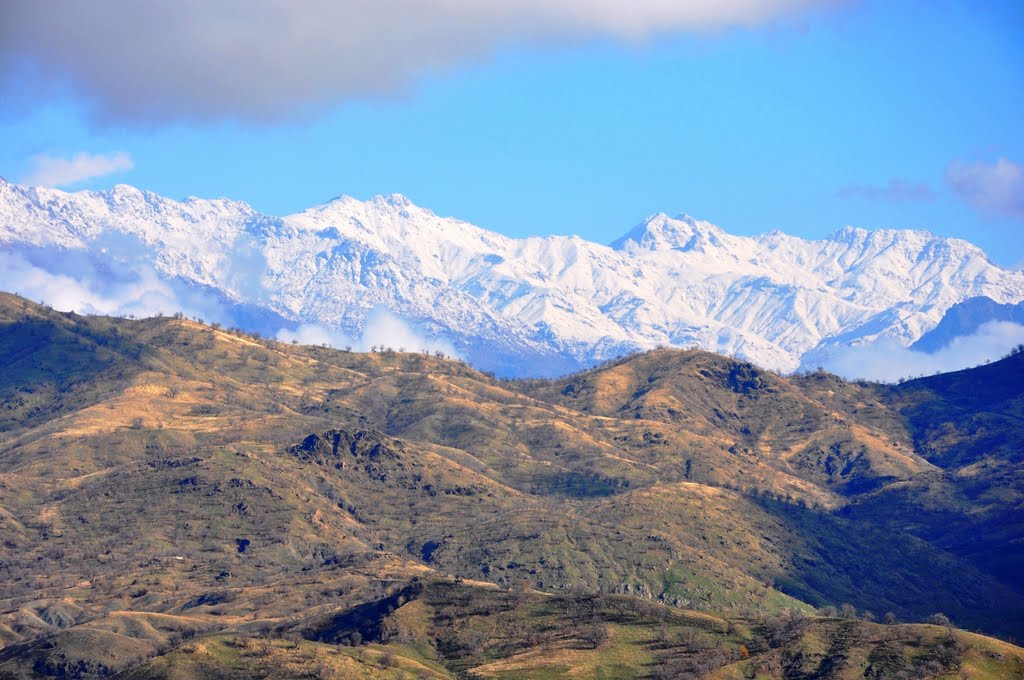
In them I explained that because the source of Tigris and Euphrates is in the mountains north east of Mesopotamia, Abzu is described as a mountain...

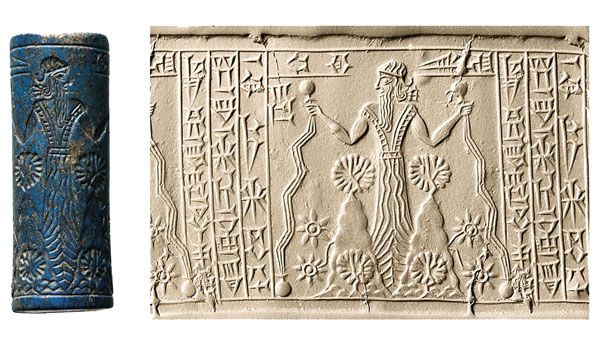
You can see that on both depictions, there are two jars in the sky pouring water and two jars in on the ground gathering water. What does this mean?

I already talked about this in my post "Water basin from Assur" about the 7th century BC basalt water basin from Assur, Iraq. Pergamon Museum, Germany...

Basically he two jars in the sky are clouds, and the two jars on the ground are human water receptacles... And Enki, who is (in) Abzu, is the intermediary...

I also talked about this in my post "Kassite seal with Apkallu", about this Kassite seal (18th-12th centuries BC) from Syria. National Museum of Damascus...

And in these posts I also explain the meaning of the fish men, if anyone is interested...

Oh, and the two trees on the ivory freeze...They are the trees of life. Life which exists in Mesopotamia because of the grace of Enki, who is (in) Abzu...

To read more about ancient animal and plant calendar markers, start here…Then check my twitter threads I still didn't convert to blog post...I am way way behind...

Wednesday, 21 February 2024

Basalt water basin from Assur

God of fresh water and annual flood Ea/Enki flanked by fish-cloaked Apkallus. Part of the 7th century BC basalt water basin from Assur, Iraq. Pergamon Museum, Germany...


Ea/Enki is often depicted as the source of the two great rivers, Tigris and Euphrates, which either flow out of his shoulders, or out of a cup that he holds in his hands...Enki is (in) Abzu, The Northern mountains/highlands, the source of Tigris and Euphrates...

I love the fact that on the relief from the water basin from Assur, the water is depicted flowing out of the "jugs" in the sky (rain), into the "jug" held by Enki/Ea (Abzu, mountains/highlands which are source of Tigris and Euphrates) and then out of it as two great rivers...

What about the fish dudes?

Fish are often depicted swimming towards Enki. I talked about this in my posts "Adda seal", "Goatfish", "Utu and Enki"...

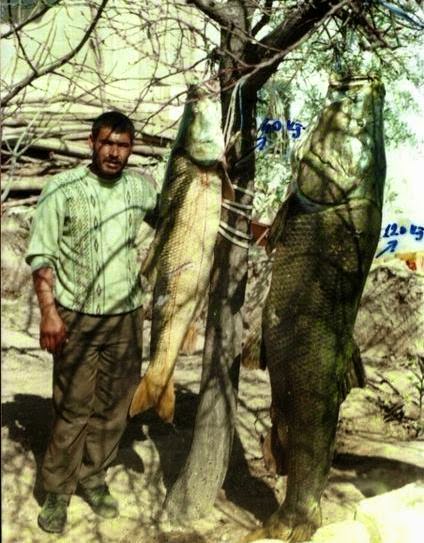
These are giant Mesopotamian carps, migratory fish which migrate upstream, towards Enki who is (in) Abzu, the source of Tigris and Euphrates, for spawning during the flood...Hence the expression "carp flood" found in Mesopotamian texts...


These were then seen as Enki's messengers, and on the Stella of the Vultures, we can read that they were "sent with messages to Enki"...You can read about this in my post "Goatfish".

These giant fish were eventually turned into Apkallu, which are on the Assur basin seen "facing" Enki. Apkallu were seen as proxies through whom Enki, the god of wisdom and civilisation, established civilisation in Lower Mesopotamia...Basically Neolithic settlers from Anatolia...I talked about them in my post "Apkallu"...
 

So that wasn't so difficult to understand, right? Well if you know what animal calendar markers are and how to interpret them...

Oh and what about the things Apkallu are holding in their hands? They are buckets. Containing "holy" water. Which is then sprinkled by Apkallu using a pine cone.  

Pine cone is a plant calendar marker for Oct/Nov. Because this is when pine nut harvest starts in Eastern Mediterranean and Western Asia...


Pine nut harvest season

Oct/Nov is also when the rain (holy water) season starts in Eastern Mediterranean and Western Asia...Including Mesopotamia...


Sprinkling of holy water (usually on a tree of life) from the water bucket then becomes extremely symbolically important...

To read more about ancient animal and plant calendar markers, start here…then check the rest of the blog posts related to animal calendar markers I still didn't add to this page, and finally check my twitter threads I still didn't convert to blog post...I am 9 months behind now...

Wednesday, 17 January 2024

Apkallu

Gold and lapis lazuli carps found in the grave of the Sumerian Queen Puabi who was buried in Ur around 2500BC...


Gold for sun and blue for water...

The latest data from Ancient Mesopotamian city of Girsu  shows that agriculture built around system of irrigation canals existed for a 1000 years before the first city was built...

Which is "surprising" as it was believed that it was agriculture that was the catalyst for emergence of the first Mesopotamian cities and civilisation...Apparently something else triggered this development, "but we don't know what"...

Maybe city building fashion was brought to Mesopotamia by outsiders? Ever heard of Apkallu, the "seven sages (demigods)" who brought civilisation to Sumer?

Their names are very interesting:

"He who finished the plans for heaven and earth",

"He who was endowed with comprehensive intelligence",

"He who was allotted a good fate",

"He who was born in a house",

"He who grew up on pasture land",

"He who built the city of Eridu",

"He who ascended to heaven"

I wonder if these were 7 sages, or just 7 epithets of the original culture heroes, who brought civilisation to Mesopotamia...From the same place from where grain was brought to Mesopotamia...From Levant via Anatolia...I talked about it in my post "How grain came to Sumer"...

Anatolia is where before any city was built in Mesopotamia, we find cities like Çatalhöyük...

Where people "endowed with comprehensive intelligence", who were "born in a house" and "grew up on pasture land" and who were "allotted a good fate" to bring them to Sumer where they "conjured the city of Eridu" before they "ascended (went back) to heaven"...

BTW, heaven was by Sumerians seen as a mountain...Most likely the Northern Mountains from which Tigris and Euphrates emerge...So "ascending (going back) to heaven" just means "going back north"...I talked about this in my posts "When Utu steps into heaven", "Eagle dance", "Descending to Hades"...

Ok...I can hear you mumbling...Where are the animal calendar markers? How disappointing... 🙂

Guess what Apkally were depicted as? Fish men...You know "The Amphibians aliens"...


They were of course aliens...But in a sense "not from lower Mesopotamia" and not "not from Earth"...

And they were not fish-men. They were men wearing skins and heads of giant Mesopotamian carps. These monsters...

Remember my post "Goatfish" about the meaning of the symbol of Goatfish? 

Symbol for the wet season in Mesopotamia, which starts with rain, when goats mate, and ends with flood, when carps mate...


In it I talked about the fact that carp swimming upstream for spawning was believed to be them "swimming back to their master, Enki/Ea, god of fresh water and annual flood, who resides in Abzu, source of fresh water"...


That identifies Abzu as the Northern mountains and highlands. I talked about this in my post "Problems with Abzu" and "The great imposter"...

In the "Poem of Erra", we can read this line:

"Where are the seven Apkallu of the apsu, the holy carp, who are perfect in lofty wisdom like Ea's their lord..."

This clearly states that apkallu belong to Enki/Ea...And that they are fish (men)...

Enki/Ea, god of sweet water and the annual flood is shown here holding two jars with water flowing out of them, which represent the sources of Tigris and Euphrates...Standing on a carp fish...I talked about this in my post "Carp surfer"...  


Now Enki/Ea was seen as the actual source of wisdom and civilisation, and Apkallu were just his proxies, through whom he transmitted knowledge...

And considering that Enki/Ea was in Abzu, which was up north, somewhere at the "source of sweet water", Apkallu made their annual upstream "pilgrimage" from which they returned with more "knowledge from the source"...

And so did the actual giant carp. They swim up the rivers, towards river sources, towards Abzu, for spawning, every Apr/May, during the annual Tigris and Euphrates flood. Which is why in "A study of Sumerian faunal conception..." we can read that an Ur III text calls Enki "the (wielder of) the a-eštub (carp flood)”...

Back to our golden (sun) and lapis (water) fish. Why sun and water and fish? 

It is Utu/Shamash who releases Enki/Ea, the sweet water, from his icy prison on top of the sacred mountains, Abzu...

Over 70% of all the water flowing down Tigris and Euphrates comes from the snowmelt. Snowmelt which is caused by Utu/Shamash. I talked about this in my post "Shamash young and old"...

The snowmelt peaks at the beginning of summer, Apr/May, in Taurus... 


Which is why Tigris and Euphrates flood also reaches its peak in Apr/May, in Taurus... 

Which is why Utu/Shamash was depicted as a golden bull (Sun in Taurus) with flowing lapis lazuli beard (flowing water)...


I talked about this in my posts "Solar bull", "Elamite water bull", "Butt chewing", "Killing of the bull of heaven"...And many others...

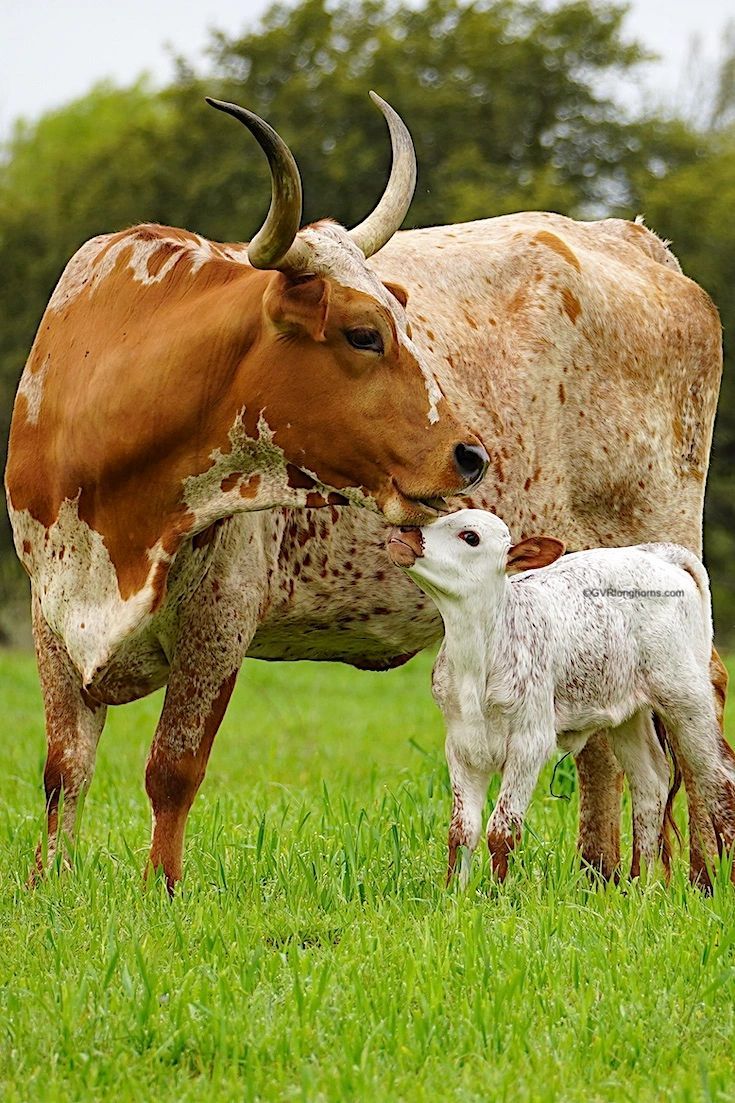
By the way, this is the old Taurus, the original Taurus, which has nothing to do with constellations. The old animal calendar marker, marking the beginning of the calving period of the wild Eurasian cattle. I talked about it in my posts "Ram and bull", "Cow and calf ivory"...And many others...

Anyway, I think this is kind of interesting...To read more about ancient animal and plant calendar markers, start here…then check the rest of the blog posts related to animal calendar markers I still didn't add to this page, and finally check my twitter threads I still didn't convert to blog post...I am 9 months behind now...

PS: Before there were fishmen in Mesopotamia, there were fishmen in the Balkans...I talked about this in my post: "Mesolithic sturgeon fishermen"


Friday, 23 September 2022

Carp surfer

Enki/Ea, god of sweet water and the annual flood. He is shown here holding two jars with water flowing out of them, which represent the sources of Tigris and Euphrates...But why is he standing on a carp fish?

This is the chart showing the annual water flow of Tigris and Euphrates. You can see that it peaks during Apr/May. 

Now remember my post "Goatfish", about the origin and meaning of the Goatfish the symbol of Enki?
In it I explained that goatfish is the symbol of the wet season in Mesopotamia. 


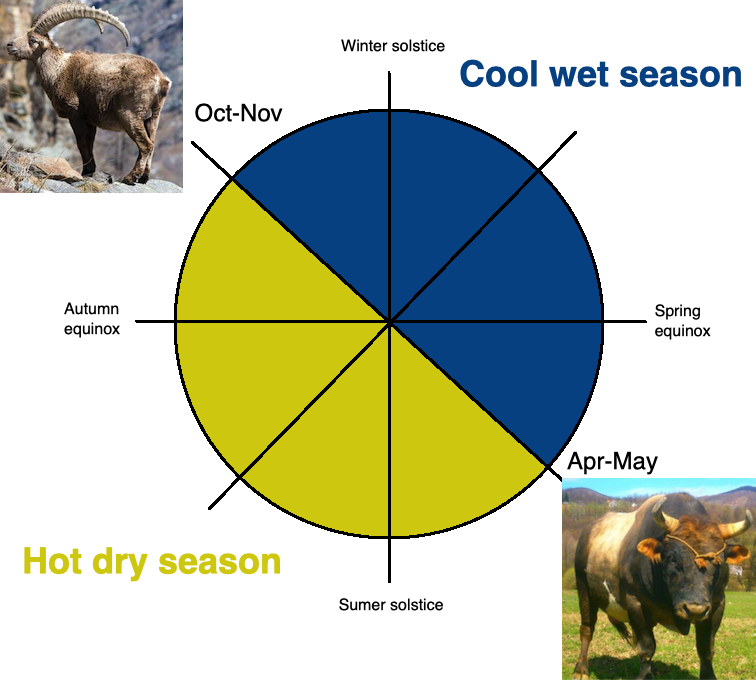
Wet season which starts in Oct/Nov, when wild goats start to mate, and ends in Apr/May, when the giant Mesopotamian carps start to mate...

The carp swim upstream towards the mountains, which are the source of Tigris and Euphrates...These carps are giants...So there is no way you can not notice their migration upstream...


Migration towards Abzu...Which is a great mountain...Where Enki lives...Here is Enki, standing among the mountains, being a mountain, holding the same two jars, the sources of Tigris and Euphrates...I talked about this in my post "The Great Imposter"...


And so, because peak of the carp mating season coincides with the peak flood season, Enki/Ea, the god of fresh water and the annual flood, is depicted standing on a carp fish, pouring out Tigris and Euphrates...

To read more about ancient animal and plant calendar markers, start here…then check the rest of the blog posts related to animal calendar markers I still didn't add to this page, and finally check my twitter threads I still didn't convert to blog post...I am 9 months behind now...

Monday, 19 September 2022

Problems of the Abzu

Recently I wrote an article entitled "Rain and flood", about this Early Sumerian "Enki in the boat" seal. In it I tried to explain the meaning of the scene depicted on this seal through animal calendar markers...

In short: Ibex goat and Auroch bull are calendar markers marking the beginning and the end of the wet season in Mesopotamia...

You should check the above article for detailed explanation...Or you can continue reading this article... 

Since then I came across more evidence that supports my interpretation...This is particularly good one...

The other day I came across an article entitled "Problems of the abzu". And in it, I found this passage: "One of the titles of Enki was Dara-abzu"...

This is very interesting, cause in the Sumerian lexicon we find that the word "duraþ, dàra, dàr" means "Mountain goat buck; Ibex"...This guy...

So why was Enki called Ibex of Abzu? Well what is Abzu? The common explanation is that it is "the underground sea of fresh water, the aquifer, which was given a religious fertilising quality in Sumerian and Akkadian mythology"...

I have already challenged this explanation in many of my articles which deal with the relationship between Utu, the sun god, and Enki, the god of fresh water: "Maran", "Utu or Enki", "Goatfish", "When Utu steps up to heaven", "Shamash young and old"...

Abzu, is the source of the fresh water that flows down Tigris and Euphrates, and the fresh water that fills the wells of Mesopotamia, but is not an underground sea of fresh water...

I mean Ibex goat of the underground sea of fresh water makes no sense...Which is why it is in the article entitled: "Problems of the abzu" 🙂

Hydrological report from Mesopotamia: "Tigris and Euphrates have two flood periods: an irregular, rain-fed rise of minor proportions lasting from November to the end of March (this is basically a slight increase in water levels) and the main snowmelt flood of April and May"...

These are the water flow charts for Tigris and Euphrates


In several of my articles I talked about the fact that the annual flood is mostly result of the snowmelt in the mountain(s), highland(s) north and north-east of Sumer, the source of Tigris and Euphrates (and their tributaries), Anatolian highlands and Zagros Mountains...


Look at the relief map of Mesopotamia and check out the sources of Tigris and Euphrates...

It was in this article, "Shamash young and old", where I fist proposed that Abzu, the source of fresh water, the source of Tigris and Euphrates, are these mountains, and more precisely, the snow that falls during the winter on these mountains and which melts during the spring and summer...

I mean, in the "Debate between Winter and Summer" we read: "By hand Winter guided the spring floods...down from the edge of the hills. He set his foot upon the Tigris and Euphrates like a big bull and released them into the fields"...

As I was writing that, I could hear pretty much every Sumerologist screaming: Abzu means "the underground waters of the Aquifer"!!! 

I think that this commonly accepted meaning of the term Abzu is actually a result of a mistranslation...And not understanding the river system in Mesopotamia...

We have Sumerian ab=water and zu=knowledge, deep, far...Abzu can then mean both deep water and far away water...

Considering that the source of Tigris and Euphrates is far away from Mesopotamia, in the Anatolian highlands and Zagros Mountains, the proper translation of the term Abzu is far away water...

This is actually spelled out for us in the ancient Mesopotamian texts:

"Abzu, place that is a big mountain, princely crown of the heaven and earth. To the lord Nudimmud (Enki), (give) praise!"...

You can find the sources in the paper Ancient Near Eastern Gods Enki and Ea: Diachronical Analysis of Texts and Images from the Earliest Sources to the Neo-Sumerian Period...

The epic "Enki and the world order" tells us that Enki is the king of the Abzu...

Babylonian epic "Enûma Elish" tells us that Enki lives in Abzu...

Enûma Elish tells us that in the beginning, before anything else was created, Abzu (the source of fresh water, the Father) and Tiamat (salt water ocean, the Mother) were there mixing their waters...

It is from their intercourse that the younger gods were created...The younger gods then got so noisy and annoying, and pissed Tiamat off so much, and she complained to Abzu so much, that Abzu decided to destroy them...

But, Enki put Abzu to sleep, and then murdered him. Enki then set up his home "in the depths of the Abzu", and took on all of the functions of the Abzu. We could say that Enki became Abzu...Or that Enki is just Anthropomorphised Abzu...I will talk about this more soon...

So, here is Enki, (in) Abzu, being the source of Tigris and Euphrates...For those who say this not Enki, this Ashur, check this article about "The Great Imposter"...

Anyway, Enki became the god of fresh, fertile water. Actually, fresh water was seen as Enki's semen, as it is the fresh water that makes land fertile...

In "Enki and the world order", Enki stands at the empty riverbeds and fills them with his semen (fresh water)...

While he was filling the rivers with fresh water, Enki was "full of lust like a rampant bull"...Just like winter in the "Debate between Winter and Summer"...

Why are both Winter and Enki compared to bulls at the moment when they "fill the rivers"? Cause the annual flood of Tigris and Euphrates reaches its peak in Apr/May, which is when the Eurasian wild cattle start calving...

I talked about the link between bull and flood in my articles, like "When Utu steps up into heaven", "Butt chewing", "Green Pastures", "Shamash young and old"...

This is the reason why in a royal hymn dedicated to Enki from the times of Šulgi we read: "Great lord...Enki...Important one of the great gods, Nudimmud, great bull of the Abzu".

But why is Enki called the Ibex of Abzu? Because the first rains arrive to Mesopotamia when Ibex mountain goats start to mate, Oct/Nov...

This is such an important event in these arid lands that Ibex was basically deified. I talked about this in my article "Relief from Dur Sharrukin", "Goat carrier", "Iranian goat of rain"...and many others...

Oh, this is also the reason why Enki's sacred animal was Goat-Fish 🙂 

If you what to know why fish, check my article "Goatfish"...

The beginning of the Ibex mating season signals the beginning of the cool, wet season, Winter. And it is the rain and snow which fall during Winter (Nov-May) that are the source of all the fresh water that flows down Tigris and Euphrates...And of Enki's flood...

Sooo...Enki, who is the source of water that flows down Tigris and Euphrates, lives in (or is) Abzu, which is the source of water that flows down Tigris and Euphrates...

The true source of water that flows down Tigris and Euphrates are of course the mountains from which these rivers and their tributaries emerge...Mountains which are the home to Mountain Goat. Ibex...

Ibex, the Goat of Rain (and Snow) that fall down during winter...Rain and snow, which are the source of water that flows down Tigris and Euphrates. "Dara-abzu", Mountain goat of Abzu...Enki...

See, all this makes a lot of sense...Not so much if we are looking for Abzu underground...

I ended the article about the Enki in the boat seal with this: the Rain (and snow) which fall between Oct/Nov (when Ibex mate) and Apr/May (when Aurochs calve) are the source of the flowing water in Tigris and Euphrates (zigzag line) and Enki's flood (boat)...

In my article "Enki's little boat" explained why Enki's boat is the symbol of the flood...

Interestingly, in the article "Problems of the abzu", we find that "Dara-abzu" was also the name of Enki's processional boat, which "possibly even had a goat head at prow"...

As I explained, Enki's boat is symbol for the flood...Flood which starts with the Goat of Abzu and Peaks with the Bull of Abzu...

The Goat of Abzu leading The Bull of Abzu...Just like on the above Enki in the boat seal...

So that's it...What you think?

To read more about ancient animal and plant calendar markers, start here…then check the rest of the blog posts related to animal calendar markers I still didn't add to this page, and finally check my twitter threads I still didn't convert to blog post...I am 9 months behind now...

Sunday, 18 September 2022

The great imposter

A Kassite seal, dated to ca. 1350 BC, currently in the Archaeological Museum in Thebes, Greece. One of several Kassite seals listed in "Reflecting on the Thebes Treasure and its Kassite Findings The Glyptic Art and its Geo-Political Context and Distribution"...

It depicts Enki/Ea, the god of sweet water standing between two mountains, with trees and flowers...Enki is identifiable by the fact that he is holding two jars from which a water is pouring out, and which are symbols of the source of Tigris and Euphrates... 

Super important image. Important cause of this: "Enki lives in Abzu, the source of Tigris and Euphrates"...The official explanation is that Abzu is "an underground aquifer"...

Which I think is completely wrong. I think Abzu was the name for the great mountains from which Tigris and Euphrates emerge...


That Abzu is a mountain is actually spelled for us in the Early Dynastic Za-me hymns where we read:

"Abzu, place that is a big mountain, princely crown of the heaven and earth. To the lord Nudimmud (Enki), (give) praise!"

Also, the late 3rd millennium BC text "Debate between Bird and Fish" tells us that it was Enki who: "laid out side by side the Tigris and the Euphrates, and caused them to bring water from the mountains"...

Do we need any more hints that Abzu is not underground?

And on the original image we see Enki, in Abzu (mountain) pouring out Tigris and Euphrates...Or Enki as Abzu, as Enuma Elish tells us that Enki killed Abzu, and then replaced Abzu and made Abzu his home...

I talked about Abzu in several of my posts: "Maran", "Utu or Enki", "Goatfish", "When Utu steps up to heaven", "Shamash young and old"...

And so we get the above image depicting Enki, as Abzu, The Great Mountain, source of Tigris and Euphrates...

Wait...Wasn't "Great Mountain" the title of Enlil? Hmmm...I will have to write another thread about this (imposter 🙂???) soon...

If you think Enlil is bad, wait until you meed Ashur (Assur), another god who also had the epithet "The Great Mountain"...I talked about this in my post "Ashur"...And some say that the above image actually depicts Ashur, not Enki...

Recently my friend @TheAncientWorld posted this reply to one of my twitter threads:

"Did you know that Tukulti-Ninurta & Tukulti-apil-Esharra are basically the same name? Ninurta was the son of Enlil (chief of Sumerian pantheon) but was also 'adopted' by both Marduk (chief of Babylonian pantheon) and Ashur (chief of Assyrian pantheon). Hence  'apil-Esharra' = son of Ashur = Ninurta..."

Of course they did...This is all the same play with different actors and slightly different choreography 🙂...But the important thing is that all of them point at "The Great Mountain" which is Abzu, where Enki resides...

To read more about ancient animal and plant calendar markers, start here…then check the rest of the blog posts related to animal calendar markers I still didn't add to this page, and finally check my twitter threads I still didn't convert to blog post...I am 9 months behind now...

Friday, 8 July 2022

Nanshe

In this article, I will tell you a story about a chance discovery I made today about geese...From the end to the beginning...

Terracotta plaque showing seated goddess Nanshe and geese. From southern Iraq. 2003-1595 BCE. Iraq Museum...Pic by Osama Shukir Muhammed Amin... 


In Sumerian mythology, Nanshe was the daughter of Enki (god of sweet water) and Ninhursag (earth and mother goddess). 

Her functions as a goddess were varied, but like her father, she was heavily associated with water...

Here is another depiction of the goddess Nanshe. She is accompanied by two geese and holds a vase in hand. Two streams of water and fish emerging from the vessel...Ur, 2100 BC...


She is depicted as the source of  Tigris and Euphrates...Just like her father Enki...

The most common depiction of Enki is with two streams pouring out of his shoulders or out of a jar which he is holding in his hands. This portrays Enki as the god of water who controls the source of Tigris and Euphrates...You can read about it in my posts "Utu or Enki", "Goatfish" and many others...

So why geese...Well geese, water...Kind of obvious, right? True, but there is a lot more to it. Geese here are used as a animal calendar marker...

If we check the list of birds of Iraq, we can see that three large geese species found in Iraq (the geese depicted next to Ninshe are large birds): A: Graylag goose, B: Greater white-fronted goose, C: Lesser white-fronted goose...

Now all these geese are winter visitors to Mesopotamian marshes. They spend summers near arctic circle, where they breed, and spend winters in Mesopotamia, where they arrive in Oct/Nov...

The fact that the geese arrive to Mesopotamia at the beginning of winter is very important and explains why the goddess Nanshe, the goddess of water and fertility, was depicted with geese...(apart from the fact that geese like water 🙂)

The climatic year in Mesopotamia is divided into hot/dry half (Apr/May-Oct/Nov) and cool/wet half (Oct/Nov-Apr/May). And all the sweet water which makes Mesopotamia fertile and habitable is the result of the rain and snow that falls during the cool/wet half of the year...


And geese arrive from the north, right at the beginning of the rain season, bringing rain with them...And stay in Mesopotamia during the cool, wet, fertile season...

They arrive from the direction of Abzu, the source of sweet water, and the place where Enki, the god of sweet water lives. 

"Abzu, place that is a big mountain, princely crown of the heaven and earth. To the lord Nudimmud (Enki), (give) praise!"

Basically, Abzu are the North-Eatern mountains, which are the source of Tigris and Euphrates...

Now have a look this. This is (most likely) Jemdat Nasr style seal 3100-2500 BC (?). From the Leroy Golf collection of Sumerian Seals...

Officially it depicts "animals in two rows: three gazelles next to a column of two flying birds over two walking birds". 

Actually what this seal depicts is: 

1. Birds, which look very much like ducks or geese, landing...

2. Gazelles or Ibex goats...Left: gazelle, Right: ibex

Both Gazelles and Ibex goats are a common animal calendar marker for the beginning of the rain season in Mesopotamia. Why? Cause the beginning of their mating season (Oct/Nov) coincides with the beginning of the rain season in Mesopotamia...

I talked about goat as a symbol for the rain season in "Goat carrier", "Dancing goat men from Luristan", "Vessel from Tepe Hissar" and many others

I talked about gazelle as a symbol for the rain season in "Pissing gazelle", "Ashur", "Mysterious creature", "Abu" and many others

And the migratory geese (ducks) arrive to Mesopotamia right at the time when gazelles start mating and when the rains arrive... Which is what this seal depicts... Beginning of rain season...

And as I said, the geese arrive from the north, from the northern mountains, Abzu, the mountain home of Enki, the God of water, source of fresh water, which is source of fertility... 

Hence geese as the companions of Enki's daughter, Nanshe, the goddess of water and fertility...

Now in "Alternate fortunes? The role of domestic ducks and geese from Roman to Medieval times in Britain" we can read that "...in ancient Mesopotamia geese were kept in herds and were used for sacrifices and food, but this does not necessarily prove domestication..."

Well, I can tell you that geese were definitely not domesticated during the time when Sumerian language was developing in Mesopotamia...We can see this from the Sumerian lexicon where the word for goose is: 

kur-gimušen: ('mountains'+'to return') 🙂

The birds which arrive from Enki's mountains in the north at the beginning of the rain season, and go back to Enki's mountains at the end of the rain season...

And this is where the story began...With me finding the Sumerian word for goose...

To read more about ancient animal and plant calendar markers, start here…then check the rest of the blog posts related to animal calendar markers I still didn't add to this page, and finally check my twitter threads I still didn't convert to blog post...I am 9 months behind now...