Showing posts with label Papyrus symbolism. Show all posts

Saturday, 9 May 2026

Crux Ansata

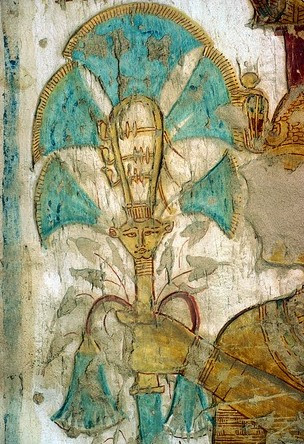
5th-century relief featuring the Coptic "crux ansata" (Christianised ankh), from a 5th Century AD Coptic Church. 


According to Socrates of Constantinople (380 – 439 AD), when Christians were dismantling Alexandria's greatest temple, the Serapeum, in 391 AD, they noticed cross-like signs inscribed on the stone blocks. Pagans who were present said the sign meant "life to come", an indication that the sign Socrates referred to was the ankh; Christians claimed the sign was their own, indicating that they could easily regard the ankh as a Crux Ansata.

This is Crux Ansata:


The explanation that the Ankh symbol meant "life to come" is very interesting indeed. Here is why:

In my 2018 post "Square and compasses" and in my 2019 posts "Etemenanki" and "An-Ki-Ankh" discussed the origin of the Ankh symbol. 


And I proposed that the ankh symbol came from Mesopotamia where it originally looked like this:

A hand (of god, the great architect) holding measuring line (for measuring domed sky, An) and measuring rod (for measuring flat earth, Ki). 


Basically, primitive Square and Compasses...


There is actually Serbian saying "Pomoću štapa i kanapa" (Using stick and rope) meaning "in the old primitive way"...

This symbol, meaning An (Sky) - Ki (earth) eventually became Ankh...

In these old posts I also wrote that: 

Early examples of the ankh sign date to the First Dynasty (c. 30th to 29th century BC). There is little agreement on what physical object the sign originally represented. Most scholars believe the sign is a knot formed of a flexible material such as cloth or reeds or rope... The below stone ankh was actually made to resemble ankh made from reeds.


This ankh is made by bending one piece of reed into a loop, and then tying it to a handle created from  another piece of reed bent to form T shape. Like this:


Here is one I made today :)


What does the intercourse between the Father Sky and Mother Earth produce? Life. Living nature including us humans...Life is materialised divine, (sky) god who became (earth) matter...

So An+Ki = Father+Mother = Life... 

What did the intercourse between God (Father Sky) and Mary (basically symbolical replacement for Mother Earth) produce? Christ who is God who became Man. God materialised. So based on the above analogy, Christ is just a symbol. Symbol of life itself. 

I wrote about Christ as Life in my post "Living nature", but I will repeat it here...


If Christ is life, living nature, then his immaculate conception and virgin birth become easy to understand...

If Christ is life, living nature, then his death and resurrection become easy to understand...

If Christ is life, living nature, and we are part of life, living nature, then we are Christ. We truly live and move and have our being in Christ...This too then becomes easy to understand...

If Christ is life, living nature, then god who became matter is easy to understand too...

If Christ is life, living nature, then we are all Christ, we are all god. Just like the mystics the world over have been teaching for millennia...

Apparently this is too "Pagan" for "Christians" and too "Christian" for "Pagans"...So everyone gets offended...

This is Christ on the cross from "Plaque from the Maskell ivories", AD 420-30, Rome 


This is also crux ansata, Ankh, AnKi, life...

On the original Coptic relief, the priest (saint?) is using ankh to point at the green plants, symbol of life. Which can't grow without (rain, flood) water...It is (rain, flood) water that makes life possible. It is the (rain, flood) water that contains the essence of life...

I recently wrote an article "Sycamore tree goddess" in which I talked about the link between ankh (life) and (Nile flood) water (the source of life) in Egypt...


Which is why (rain, flood) water is holy. Cause, despite all our accomplishments, we owe our existence to a six-inch layer of topsoil and the fact it rains (floods)...

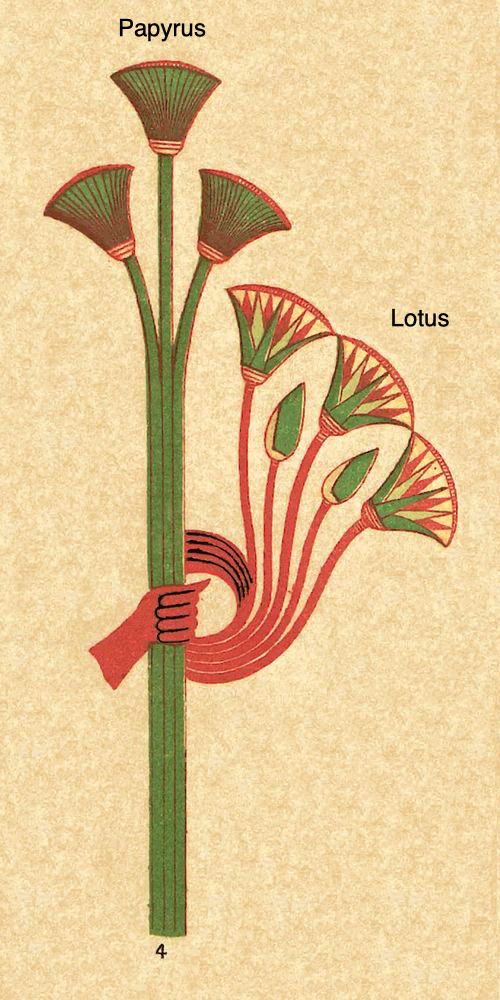
This link between the Nile flood, life and Ankh is symbolically depicted through this, most likely the oldest, the original Egyptian Ankh: A hand holding a knot made from Papyrus (flowers during and therefore marks the beginning of the the Nile flood) and Lotus (flowers during and therefore marks the peak of the Nile flood). I talked about this first in my post "Goddess on a horse"...


Which is why this is super interesting: A relief from the ancient Egyptian Temple of Hatshepsut. It shows a platter with food arranged to look like a duck by making an (ankh) knot using lotus, the symbol of the Nile flood without which there will be no food in Egypt...

I talked about the blue lotus as the plant calendar marker for the Nile Flood in many of posts. For instance "Lotus and papyrus" in which I explain why the Egyptian god Hapi, who was the god of the annual flooding of the Nile in ancient Egyptian religion, was associated with papyrus and lotus flowers, and is often depicted as twins, tying papyrus and lotus flowers together...

And my post "Beautiful boy", about Nefertem, the Egyptian Beautiful Boy, originally a lotus flower at the creation of the world, who had arisen from the primal waters...Nefertem emerging from the lotus blossom, from the tomb of Tutankhamun...


PS: Now I understand why the Innana knot, the symbol of fertility and plenty, made from reeds and directly linked to the annual Tigris and Euphrates flood...Will write more about this soon...


BTW, I already talked about some other aspects of the Inanna cult found in Egypt in my post "Inanna in Egypt"... 

That's it. If you are interested in reading more about ancient animal and plant calendar markers, which are at the root of all our mythologies, start here…Then check my twitter threads I still didn't convert to blog post...I am way way behind...

Saturday, 19 August 2023

Dog rider

Goddess Isis, "who was connected with water", riding on a dog and holding a sistrum, from the Iseum temple from Savaria, Pannonia Provincia (Hungary).


The dog is Sotis, Sirius star constellation. 


During New Kingdom period Isis took attributes of the Goddess Hathor, the Holy Cow...

One of them being sistrum which was sacred to Hathor...

Sistrum was a sacred instrument whose handle was shaped like a papyrus flower with Hathor's head...

Papyrus was sacred to Hathor...Because the flowering of papyrus announces the beginning of the annual Nile flood. I talked about this in my post "Holy cow":

Shaking of sistrum was supposed to resemble sound of the papyrus flowers shaken by the arriving Hathor (Flood)...

BTW, the reason why Hathor, the Holy Cow is depicted emerging from flowering papyrus, is because wild cattle calving season starts in Apr/May, right when papyrus start to flower...I talked about this in my posts "Lotus and papyrus", "Cow and calf ivory" and "Goddess on a horse"...

The link between papyrus and sistrum was pretty explicitly depicted on this chalice depicting a sistrum with Hathor's head on top of a papyrus flower handle and more papyrus flowers growing out it. 1070–712 BC. Currently in the Met Museum... 

And on this wall painting, from the KV1 tomb of the Twentieth Dynasty pharaoh Ramesses VII, depicting a sistrum with papyrus flowers growing out of it...


So Isis, "who was connected with waters" is carrying sistrum, sacred to Hathor, "who was linked to the Nile Flood"... But why is Isis riding on a dog? Cause the annual Nile flood peaks during Dog Days, end of Jul, beginning of Aug, when Sirius, Dog Star rises with the sun...


Why is the week around the end of Jul, beginning of Aug called Dog days? Why is Sirius called Dog Star? Cause natural old dog breeds mating season starts at the beginning of Aug...I talked about this in my post "Dog days"...


So Isis, "associated with waters" holding sistrum and riding on a dog...

BTW, did you know that Ishat (fire), the Canaanite goddess of fire and drought, was known as "the bitch of the gods"...Jul/Aug, the "Dog days" is the hottest and driest time of the year in Canaan...Same dog symbol, different hydrology, different meaning of the symbol...I talked about this in my post "Anat"...


Now interestingly, in Zoroastrianism, the Dog Star or Sirius, which is known as "Tishtrya", is also the Yazata (Divinity) of rainfall/fertility...Very strange considering that Jul/Aug is hottest and driest part of the year in Persia too...Well...I talked about this in my post "Tishtrya"...


This linking between Sirius and rain season is much better suited to India, where Jul/Aug, Dog Days, is he peak of the Monsoon Rain Season...No wonder then that in Indian mythology we find "Bitch of the gods" linked to water...I talked about this in my post "The bitch of the gods"...


To read more about ancient animal and plant calendar markers, start here…then check the rest of the blog posts related to animal calendar markers I still didn't add to this page, and finally check my twitter threads I still didn't convert to blog post...I am 9 months behind now...

Wednesday, 18 January 2023

Sphinxy

In 1989 film When Harry Met Sally, Harry Burns says: You know, I have a theory that hieroglyphics are just an ancient comic strip about a character named Sphinxy...

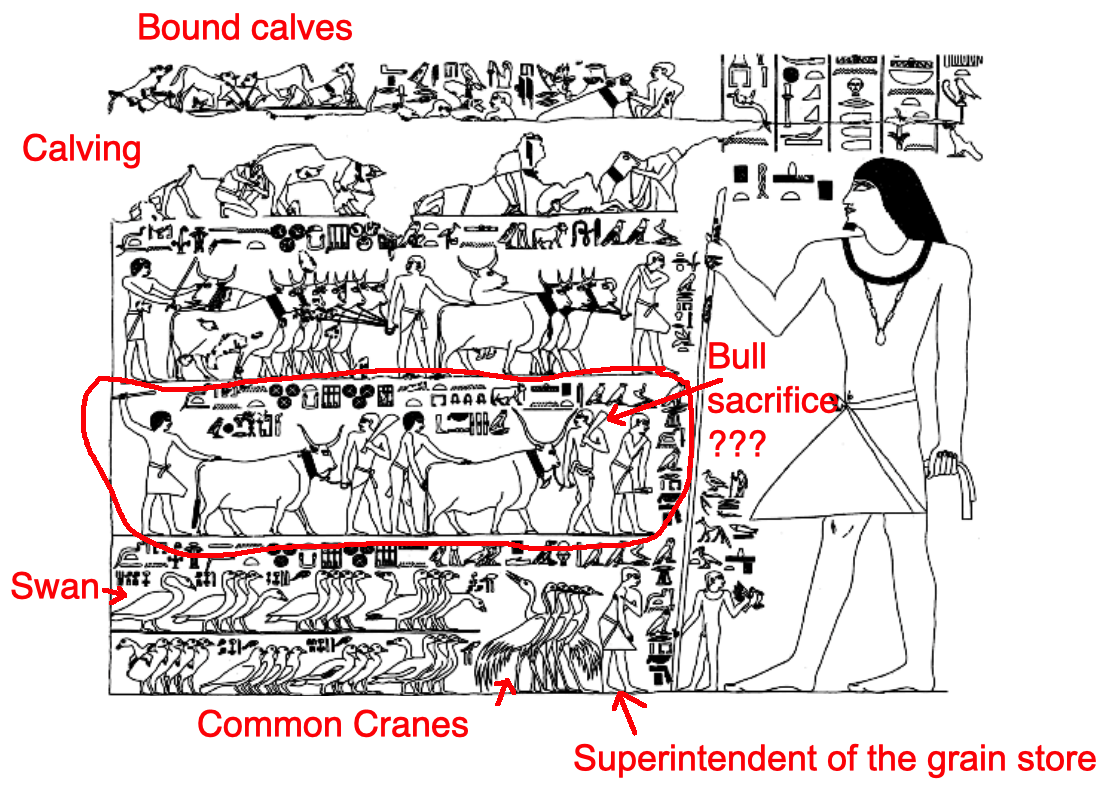
This is a drawing of the eastern wall relief from the mid 3rd mil BC tomb of Ptahhotep in Saqqara.

I talked about it in my post "Papyrus harvest time", in which I tried to determine when the Ancient Egyptians harvested papyrus, which apparently is not known. 


I based my argument on the plant calendar markers found on the relief from Ptahhotep's tumb.

But this relief is turning to be more interesting than I originally thought. As it seems that this "comic strip" contain quite a few additional animal and plant calendar markers...

Today I will like to talk about this part of the relief. I will again be using the drawings from this page from this great site "osirisnet.net"...

First register contains herdsmen and scenes with cattle, one of which is calving. The narrow sub-register above contains tethered calves...

Second and third registers contain various groups of cattle which are led or driven before Ptahhotep. The third register being the particularly interesting one...

Fourth register shows "the superintendent of the corn store leading a flock of cranes"? Followed by two rows, the upper division containing three sorts of geese then a group of swans...and lots of other birds numbering in total more than 600,000 based on the accompanying text...

Sooo...What's the big deal here? Well, I think that this part of the relief is depicting a (known? unknown?) ceremony, festival, which (I think) included bull sacrifice, which took place during Shemu (Mar/Apr/May), the grain harvest season in Ancient Egypt...

Why do I think this? Because of the animal calendar markers depicted together in this scene: wild cattle calving which takes place while "the superintendent of the corn store" "leads" huge number of wild birds towards Ptahhotep, most importantly common cranes and swans...

Let's start from the end: common cranes and swans. Both of these birds are winter visitors to Egypt, which arrive in Oct/Nov and leave in Mar/Apr...

You can find information about the autumn and spring migration of the common cranes in Egypt in these books:

"The Birds of the Egyptian Western Desert" by Steven M. Goodman

"A handbook to the birds of Egypt" by G.E. Shelley

So the only time when these birds could have been "led" by "the superintendent of the corn store" in Egypt is between Oct and Apr...

It is interesting that it is "the superintendent of the corn store" that leads these migratory birds "in huge numbers", considering that the spring northward migration of these birds out of Egypt, coincides with Shemu (Mar/Apr/May), the grain harvest season in Ancient Egypt...

Guess what else happens during this period, more precisely Apr/May? The calving season of the Wild Eurasian cattle. Which is why cow and calf is an ancient animal calendar marker for Apr/May. Today this period is marked by Taurus. I talked about this in my post "Cow and calf ivory"...

So all these animal calendar markers point at Apr/May, harvest time...Was there a festival that took place during that time, during which bulls were sacrificed? What are these things that look like some kind machete to me...

Not sure if Egyptians had anything like that...Anyone knows?

To read more about ancient animal and plant calendar markers, start here…then check the rest of the blog posts related to animal calendar markers I still didn't add to this page, and finally check my twitter threads I still didn't convert to blog post...I am 9 months behind now...

Friday, 11 November 2022

Goddess on a horse

Gold plaque depicting a naked goddess on a horse. According to the Israel Museum page probably Astarte or Anat. Late Canaan period, 13th c. BC, Found in Levant, but made under strong Egyptian influence.


What is the meaning of this image??? And who is the naked goddess?

Have you ever heard of the "Mother-of-Horses"? A goddess found in texts from Bronze Age Ugarit?

Is this goddess standing on a horse the "Mother-of-Horses"?

Well, apparently, we still don't know if she was a goddess or "a symbolic entity representing a human’s concern for their horses"...

Cause the mentions of the "Mother-of-Horses" were apparently found "primarily in incantations against snakebites"...What does horse goddess have to do with snakes?

Well, interestingly both Snakes and Horses are solar animals, Solar symbols...

And so I would here like to propose that the "Mother-of-Horses" was just an epithet...Epithet of whom? Of the alleged Mother of the "Mother-of-Horses": the sun goddess Shapash, female equivalent of the sun god Shamash...

As I explained in many of my posts, snake is a pure solar animal. It is in our world when sun is here (day, hot half of the year) and it is in the underworld when sun is there (night, cold half of the year)...


Snakes are symbol of the sun and the sun's heat. They are also symbols of the beginning of summer, as vipers, the most common Eurasian snakes, start mating in Apr/May, beginning of summer...

So no wonder we find snake linked to the sun over and over again...

Interestingly, the key for understanding the link between snakes and the sun was best preserved in Slavic folklore (remnants of Slavic mythology). I talked about this in my post "Letnitsa treasure"...


What about horses? The natural breeding season of horses typically begins around mid-April and finishes around mid September...It is marked by wild stallion fights for mares...

Apr/May marks the beginning of summer, and so horse was used as an animal calendar marker for the beginning of summer...


I talked about this in my post "Trojan horse", "Unicorn"...

Horses sexual drive is governed by the sun and it peaks on summer solstice...I heard summer solstice was a big thing for sun worshipers...Hence horse twins marking the midsummer...

This is also why we see things like these: Bronze Age "Sun Chariot" pulled by a horse, Denmark 1400 BC...

Or why horses are ridden by sun itself, depicted either as a rider with sun disc with rays instead of the head, or as the sun disc with rays...like on these Celtic coins...

I talked abut this in my post "Hayagriva"...

It is not just horses whose mating season is governed by the sun. It's all the equids...Asiatic wild asses have the same mating season as wild horses, which also starts in Apr/May...At the beginning of summer. I talked about this in my post "Onager"...

BTW Equine gestation period is 11-12 months...Which means that the equine mating season (Apr-Sep) is also the equine birthing season...

And that season corresponds to hot dry half of the year in Middle East and Levant...Apr/May - Oct/Nov...The season dominated by the sun...

And the season which, as I already said above, starts with the mating season of most common snakes in Eurasia, vipers...

Hence the link between equids and snakes...

Remember this article, "Sun god from Tell Brak" about how old the symbolic link between equids and snakes is?

3rd millennium BC cylinder seal imprint found in Tell Brak, Syria, depicting a quadriga pulled by four equids, with a snake flying above it...

So, I guess, if you knew that the sun god(dess), the one that controls the mating season of horses (hence The Mother of Horses) was the one that controls the appearance and disappearance of snakes, you would logically pray to her for protection from snakes...I guess...

But the guys from the Israel Museum, Jerusalem say it's "Astarte or Anat". Well, It is definitely not Anat...Anat is the one that kills Mot (the hot dry season, season of the horse), and helps Baal (the cool wet season) get the throne...I talked about her in my post "Anat"...

She could be Astarte, cause this lady is linked with the grain harvest and storage season, which overlaps with the horse mating season...Levant agricultural calendar...

I talked about her in my post "Sacred marriage on the threshing floor", "Jerusalem of gold" and "Tishtrya"...

Now how can I be certain that the horse on our plaque is an animal calendar marker for the horse mating season? Because of what the goddess standing on the horse is holding in each hand: a papyrus and a lotus flower...

And these are very important plant calendar markers...From Egypt...

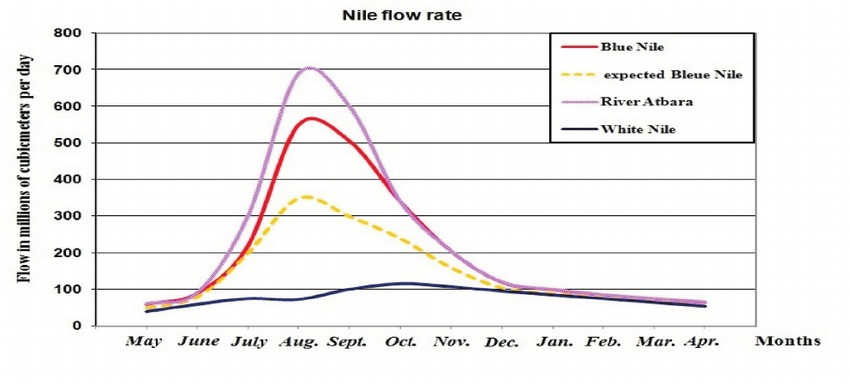
The water level of the Nile starts to rise when the papyrus starts flowering (Apr/May/Jun...) and it peaks when lotus starts flowering (Jul/Aug/Sep), during the flood...

I talked about this in my post "Lotus and papyrus" in which I analysed the "decorations" from this bowl whose base is adorned with a lotus flower and the body with a procession of cows, possibly symbols of the goddess Hathor, through a setting of lotus flowers. Egypt, 775-653 BC. 

The flowering seasons of papyrus and lotus demarcate the flood season in Egypt (Apr-Oct), the fertile season...Which is also the fertile season of the horses (Apr-Sep)...

Hence the goddess on the horse holding papyrus and lotus flowers represents period Apr-Sep...

BTW, I just noticed something...The Papyrus - Lotus bunch often depicted on Egyptian wall paintings resembles Ankh, the symbol for Life...


Life made possible in Egypt by the flood waters of the Nile...So Water = Life...

As depicted here: Chains of ankh (life) signs representing water poured over pharaoh Hatshepsut in a purification scene within the red chapel at Karnak...

You might like this article, "An-Ki, Ankh", about the (possible) origin of the Ankh symbol and its name...

To read more about ancient animal and plant calendar markers, start here…then check the rest of the blog posts related to animal calendar markers I still didn't add to this page, and finally check my twitter threads I still didn't convert to blog post...I am 9 months behind now...