Showing posts with label Minoan archaeology. Show all posts

Sunday, 12 April 2026

Male - Female Minoan bowl

A 16th cent. BC Minoan vessel found on Thera, Akrotiri, depicting (according to the museum curators) on one side wild goats and saffron crocuses and on the other side dolphins and sea grass...

According to the museum curators:

The vessel was found in the so-called "House of the Ladies", a building of both residential and ritual character...We think that the vessel had (possibly) ritual meaning and use, but we don't know what meaning and what use...
Maybe I can help here. This vessel is a ritual calendar, depicting a division of a solar year into cool/wet half of the year (goat) and hot/dry half of the year (dolphin)...

Why goat and dolphin? The beginning of the hot dry season coincides with the beginning of the mating of the dolphins (Apr/May) and the beginning of the cool wet season coincides with the beginning of the mating of the wild goats (Oct/Nov)...

I actually talked about this in detail in my post "Horned animal attacked by a dolphin" that analysis this strange Minoan seal...

Hot dry season Apr/May - Oct/Nov (Dolphin season) is also the sailing season...Extremely important if you were a Minoan...

I talked about this in my post "Minoan dolphin fresco" about the famous Minoan "dolphins fresco" from Knossos, Crete, dated to 1500BC...


What about crocuses? Well, wild Cretan crocus, the ancestor of all the saffron crocuses, starts flowering in Oct/Nov...

At the beginning of rain season, when wild Cretan Ibex goats start to mate...

Talked about this in my posts "Saffron" and "Origin of saffron"...

Which is why crocus was The Flower of The Goddess of Fertility...2nd millennium BC faience (glazed ceramic) models of female garments decorated with crocuses excavated by Arthur Evans during the excavations of the the Temple Repositories at Knossos...

This is the famous Minoan Hagia Triada Sarcophagus, a late Minoan limestone sarcophagus, dated to around 1400 BC. 


On it, we see a priestess presiding over a bull sacrifice wearing a skirt decorated with crocus flowers...


I talk about this in my posts "Agia Triada sarcophagus" and "Minoan bull sacrifice"...

BTW, Apr/May, the beginning of the sailing season in the Eastern Mediterranean is marked with a Bull, Taurus...This is because Apr/May was the time when wild Eurasian cattle calving season used to start...I talked about the "Old Taurus" in many of my posts...

I talked about the symbolic division of the Minoan year into Goat and Bull halves in this post "Theseus ring", about Winter (Ibex) and Summer (Bull) Minoan rings. Article about the opposite goat - bull symbolism in Minoan art. 


This 14th-13th c. BC larnax (a container for human remains), found in Mycenaean Tanagra cemetery, but created under strong Minoan influence, depicts:

The top part: Ibex goat (ritual?) hunt

The bottom part: Auroch bull (ritual?) leaping

Why?

This is typical Cretan climate chart:

Top: Ibex goat, symbol of cool, wet half of the year. Ibex goat animal calendar marker for Oct/Nov, start of the Ibex mating season

Bottom: Auroch bull, symbol of hot, dry half of the year. Auroch bull animal calendar marker for Apr/May, start of the Auroch calving season


Ritual ibex goat hunt marks the start of the cool wet half of the year and the end of the sailing season?

Ritual bull leaping marks the start of the hot dry half of the year and the start of the sailing season?

You can find more interesting things about this in my post "Goat riding thundergod"...

Because sailing was male dominated activity and saffron gathering and processing was female dominated activity, we could say that the Thera vessel is divided into male (Bull/Dolphin) and female (Goat/Saffron) halves...

Reflecting the division of the Cretan year into female (Wet, Cool, Yin, Sowing - Creating life, No Sailing, Peace) and male (Dry, Hot, Yang, Harvesting - Destroying life, Sailing, War) halves...

That's it. What do you think?

To read more about ancient animal and plant calendar markers, which are at the root of all our mythologies, start here…Then check my twitter threads I still didn't convert to blog post...I am way way behind...

Saturday, 25 October 2025

Goddess of Myrtos

This is the so called "Goddess of Myrtos". Rhyton, in the form of a female deity with pitcher. Found on Crete, near Ierapetra, Fournou Korifi, in the earliest house shrine found on Crete, dated to EM III, 2300-2200 BC. Currently in the Archaeological Museum of Agios Nikolaos, Crete.

The jug the figure is holding is actually a miniature version of actual jugs found during the excavations...

Now I wonder why checkered square design all around the "belly" of the goddess and why checkered pubic triangle? Are these supposed to symbolise fields? Is this another "Mother of grain"?

I talked about this in my post "The oldest Demeter depiction" about Cycladic mother of grain, proto Demeter, dated to the 3rd millennium BC...And in my post "Mother of grain from Mari" about the (most likely) symbolic depiction of Inanna, also dated to the same period in the 3rd millennium BC. 

And the jug...Is this a jug of water? Is this symbolic linking between water and field fertility? I talked about this link in my posts "Minoan bull sacrifice" and "Agia Triada Sarcophagus"...

And in my post "Woman and pitcher" about this interesting vase with ivy and olive wreaths, in white and white flowers on neck. Cyprus, 400–323 B.C Currently in the Met museum...And symbolism linked to start of the rain season...

Or is the pitcher the pitcher of vine? Did Minoans make and drink vine? Most archaeologists concur that this Minoan artefact is one of the earliest depiction of people dancing. 

But is it? Is it people crushing grapes? 

I talk about it in my post "Shield of Achilles"...

I personally think that this is a depiction of a Mother Earth, the provider of both drinking water and grain, and that the jug was a water jug...Why? Because of all this stuff I discovered after I wrote this originally, and which I published in my post "Anavlochos mountain"...

That's it. To read more about ancient animal and plant calendar markers, start here…Then check my twitter threads I still didn't convert to blog post...I am way way behind...

Sunday, 6 October 2024

Minoan flying goddess with griffin

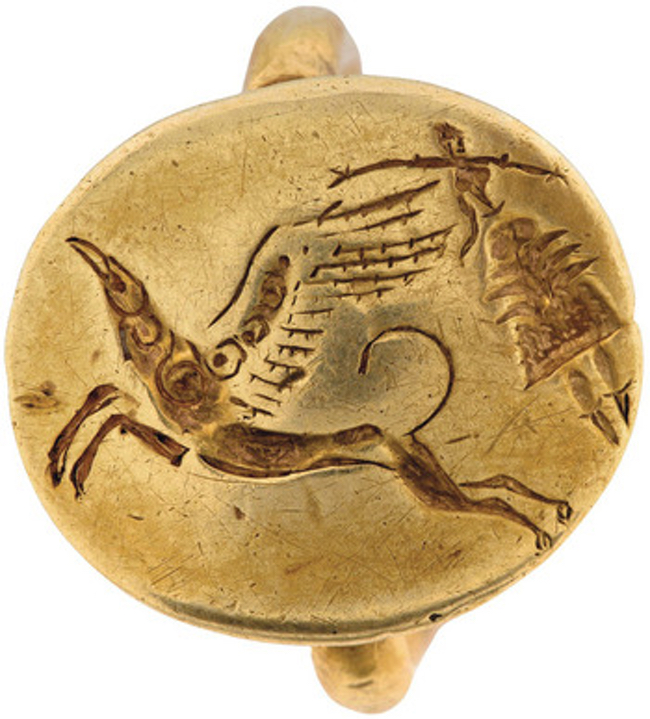
Minoan gold signature ring depicting a flying griffon and goddess, from cemetery at Archanes, Phourni, in Crete, 1700-1450 BC.

What does this mean? 

I believe that this means: The goddess of fertility arrives at the end of autumn symbolised by a griffin.

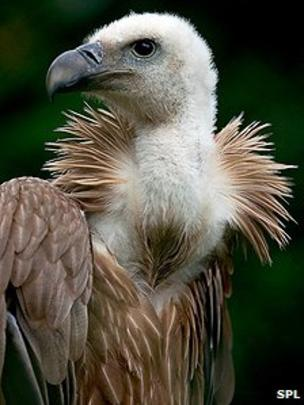
Minoan griffin consists of: 

Lion, animal calendar marker known as Leo, marks Jul/Aug, cause the mating season of Eurasian lions starts in Jul/Aug...

Vulture, animal calendar marker known as Eagle, marks Oct/Nov, cause the mating season of Eurasian vultures starts in Oct/Nov

I talked about it in my post "Origin of griffins" which contains symbolic analysis of this Proto-Elamite seal, dated to 3000 BC and depicting a griffin, followed by ibex goat, or goitered gazelle...


I talked about the Minoan griffins in several of my posts. Like "Minoan griffin fresco" about the griffin fresco from the throne room, palace of Knossos, Crete, dated to 1700-1450 BC. 

I also talked about Minoan griffins in my post "Minoan dolphins fresco" about the famous Minoan "dolphins fresco" from Knossos, Crete, dated to 1500BC...And about the symbolism of dolphins in Minoan art and culture...

And their (strange) link to griffins, depicted here on this very interesting Minoan sealstone discovered at Akrotiri, Thera, and dated to the 18th c. BC, which depicts a griffin suckling a dolphin...

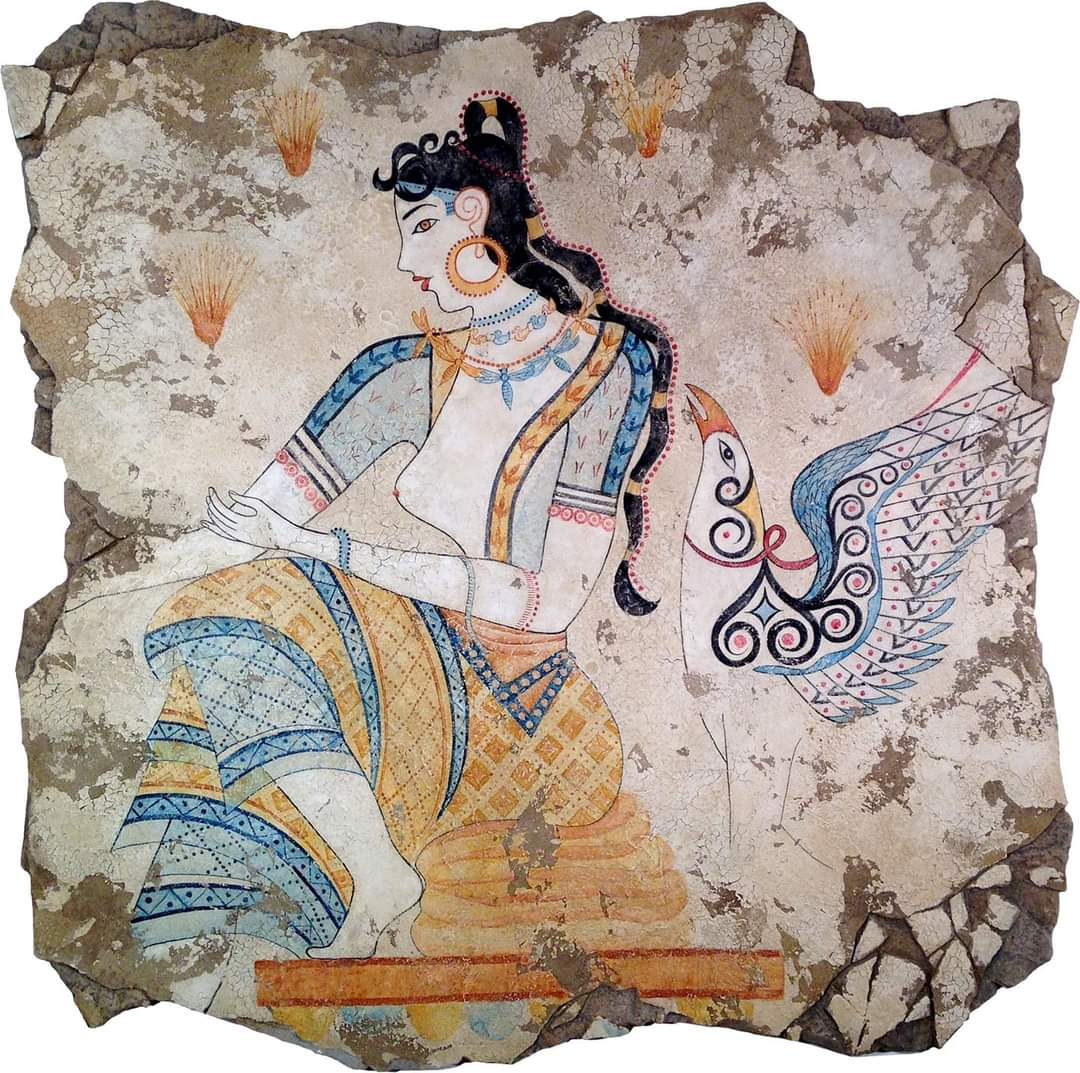
Here is another interesting Minoan fresco. This one is commonly known as the "Saffron goddess". 1600 BC Akrotiri frescoes, Santorini, Greece. Griffin is depicted sitting next to the same fertility goddess... 


Why saffron goddess?

This is a part of the saffron harvest fresco. 

The goddess is depicted sitting on a throne among the blooming saffron crocuses...


The start of the Saffron crocus flowering/harvest season in Crete coincides with the beginning of the rain season (Oct/Nov)...And in Crete rain=fertility=life.


Posts about saffron and its symbolic role in Minoan mythology: "Saffron", "Origin of saffron"...

That's it. To read more about ancient animal and plant calendar markers, start here…Then check my twitter threads I still didn't convert to blog post...I am way way behind...

Friday, 27 September 2024

Minoan griffin fresco

This is a detail of the griffin fresco (reproduction) from the throne room, palace of Knossos, Crete, dated to 1700-1450 BC. 

In this shortish article I would like to explain why I think that the flowers depicted around the lying griffin are sea daffodils...

To start, check my article "Minoan spring fresco" in which I showed that Minoans basically treated both the animals and plants they depicted together as calendar markers. For instance swallows nesting season overlaps with Madonna lily flowering season, as depicted on the so called "Spring Fresco" from the Akrotiri Site at Thera (Santorini), dated to 1550 – 1500 BC...

Then check my article "The origin of griffins" about this 3000 BC Proto-Elamite seal, in which I explained why I believe griffin is not a mythical animal, but actually a complex animal calendar marker for autumn (Aug/Sep/Oct)...

Now check this out: this is sea daffodil, a flower native to Crete. Compare it to the flowers depicted next to the griffin...Now the best bit is that sea daffodil flowers from Aug to Oct...Basically during autumn (Aug/Sep/Oct), the same period of the year marked by griffin...

Now of course we can't be 100% sure the flowers depicted around the lying griffin are sea daffodils, but there are no other similar flowers that bloom in Crete in August...So...

That's it. To read more about ancient animal and plant calendar markers, start here…Then check my twitter threads I still didn't convert to blog post...I am way way behind...

Friday, 23 August 2024

Apollo and dolphins

This is a 490 BC Etruscan hydria from Vulci, previously belonging to the Feoli Collection. shows Apollo in the centre, holding his lyre, seated on the Delphic tripod...with a dolphin to either side of the tripod...

What's with Apollo and dolphins?

Well, one of Apollo's epithets was Δελφίνιος (Delphinius, Delphinios), literally "Delphic", after Δελφοί (Delphi). An etiology in the "Homeric Hymn of Apollo" associated this with dolphins...

The earliest account of the origin of the Delphic oracle is provided in the Homeric Hymn to Apollo, which recent scholarship dates within a narrow range, c. 580–570 BC...

It describes in detail how Apollo built his temple in "Crisa beneath snowy Parnassus" and how then he went looking for priests that will serve him...

For some weird reason, Apollo chose his first priests to be  "Cretans from Minos' city of Knossos" who were voyaging on a "black ship" across the sea. Apollo leapt into the ship in the form of a dolphin "a great and awesome monster"...

Dolphin-Apollo then forced the ship to sail to Parnassus where: "...like a star at noonday, the lord, far-working Apollo, leaped from the ship: flashes of fire flew from him thick and their brightness reached to heaven..."

"...He entered into his shrine between priceless tripods, and there made a flame to flare up bright, showing forth the splendor of his shafts, so that their radiance filled all Crisa, and [all who saw it] raised a cry...for he cast great fear upon them all..."

"...From his shrine he sprang forth again, swift as a thought, to speed again to the ship, bearing the form of a man, brisk and sturdy, in the prime of his youth, while his broad shoulders were covered with his hair: and he spoke to the Cretans, uttering winged words..."

"...guard my temple and receive the tribes of men that gather to this place"...

Interestingly, the Cretan archaeological finds from Delphi, dating from the 8th to the late 7th c. BC confirm that there once might have been Cretan priests at Delphi. But why Apollo as a dolphin? 🙂

This is the famous Minoan "dolphins fresco" from Knossos, Crete, dated to 1500BC...

Old Cretans, Minoans, were really into Dolphins, as any Mediterranean Maritime culture should be. Why? Cause of animal calendar markers of course. Dolphin was an animal calendar marker for Apr/May-Oct/Nov.

The reason why dolphin became an animal calendar marker for hot part of the year, is because dolphin mating and calving season in Mediterranean spans period May-Oct. It takes place in the shallows, and is therefore easily observable by people living and fishing along the coast...

I talked about this in my post "Minoan dolphin fresco"...

Guess what? Apr/May-Oct/Nov is also the sailing season in Eastern Mediterranean. I talked about it in my post "Three sacrifices", where I analyse this crazy story from the beginning of the Trojan war: 

Greeks are sacrificing to the sun god waiting for good winds to sail to Troy, when suddenly, a snake slithered from the altar to a sparrow's nest in platanus tree nearby. It ate the mother and her nine chicks, then was turned to stone. And then the good winds started to blow....Eee what? Why? Because the sailing winds in Eastern Mediterranean start blowing in Apr/May, when platanus trees start blooming, the sparrows are nesting and the vipers start mating...

BTW, note that the Greeks are praying to the Apollo for good wind...Good winds which blow from Apr/May to Oct/Nov, the dolphin season...Why?

It is the sun (Apollo), that heats up the Eastern Mediterranean...Which creates an updrift, which sucks the cooler air from Europe to start streaming southward, creating the etesian trade winds...And they get stronger as the summer progresses...

Minoans also depicted dolphins as "a great and awesome monsters" attacking goats. Why? Again, cause of animal calendar markers. I talked about this in my post "Horned animal attacked by a dolphin"...

This is a typical climatic chart for Crete

On Crete, the cool, wet season starts in Oct/Nov, when wild goats start to mate, and the hot, dry season starts when dolphins start to mate...So dry/good winds/sailing season (dolphin) ending (killing) wet/bad winds/no sailing season (goat)


Interestingly, Minoans seem to have linked lions with dolphins. Why? Well, cause the middle point between the beginning and the end of the dolphin mating season, Jul/Aug, Leo, is according to Hesiod "the best time to go to the sea"...

I talked about this in this post about this silver Tetradrachm from Byblos, Phonecia, apparently, minted during the reign of Adramelek, 315 BC-...and currently in the British Museum...

So what's that got to do with Apollo as a dolphin?

In Greece, the sun god Shamash, more precisely the "terrible" sun, Shamash as Nergal,  became Apollo. The "terrible" sun god Apollo...I explained why terrible in my post "Apollo from Delos" about the lions from the 600 BC Temple of Apollo from Delos:

So Apollo would then be this dude, Sun in Leo...

Nergal, the deified destructive "burning" sun, was depicted as a lion man, because Jul/Aug, Leo, is the hottest and driest part of the year in Mesopotamia...


Talked abut him in my post "Winged superhuman hero"...

BTW, Leo originally had nothing to do with stars. It was an animal calendar marker marking the beginning of the main mating season of Eurasian lions, which starts at the beginning of autumn, Jul/Aug and spans the whole of autumn, (Jul/Aug - Oct/Nov)...


Hence lion as an animal calendar marker for Jul/Aug, Leo. And why lion is the symbol of autumn in general (Jul/Aug - Oct/Nov)...I talked about this in my post "Symbols of the seasons"...

So sun in Leo = Apollo as dolphin?

So maybe whoever wrote the "Homeric hymn to Delphic Apollo" wasn't just making ridiculous link between unrelated terms Apollo Δελφίνιος (Delphinios) and δελφίν, Koine form of δελφῑ́ς (dolphin)...

Check this out: δελφῑ́ς (dolphin) comes from Proto-Indo-European *gʷelbʰ- (womb), so originally it meant "fish with a womb". Now Δελφοί (Delphi), comes from the same Proto-Indo-European root *gʷelbʰ meaning womb.

Apollo's temple in Delphi was originally, according to legends, temple of Gaia, the old Mother Earth. And, again according to legends, the temple was located "at the centre of the earth" which was marked with ὀμφαλός (omphalós) meaning navel stone.

So we have a navel of the mother earth...In the place called Womb...So what was then (symbolically 🙂) the crack in the earth that the oracle sat over while reciting her prophecies? What makes every woman a woman, including Mother Earth?

That's it. To read more about ancient animal and plant calendar markers, start here…Then check my twitter threads I still didn't convert to blog post...I am way way behind...