Showing posts with label Ancestor cult. Show all posts

Sunday, 30 August 2026

Bird hills

A map from "Tičnice iz naravoverja: zanesljivi kažipoti v slovensko prazgodovino" [Bird-hills from Natural Religion: Reliable Waymarks of Slovene Prehistory] self published book by Leopold Sever in 2013. 

It is showing "gradišča" [hill-forts] (blue circles) and "tičnice" [bird-hills] (red circles) in the historical  Slovene regions in Slovenia and southern Austria...

In Slovenia, there are currently more than 200 hill-forts known as (gradišče) and more than 200 bird-hills known under various names (Tičnica, Tičn’ca, Tičistan,  Tičerca, Tičnik, Tičevo, Na tičnici, Tičjak, Tičjek, Križ na tičnici, Ptičjek, Za tičnico, etc).

According to local lore, these were the hills where people once performed religious ceremonies (???), fed birds (???) and "exposed their dead to the birds so that the birds could carry the soul of the  deceased into the sky" (???) before burials...Oh and they believed that these hills were haunted and should be avoided after dark...

Thanks to @another_barbara for alerting me to this.  The book is mentioned in this paper:

Staroverstvo - the Old Religion - the Slovene Pre-Christian Religion

In several parts of Eastern Bosnia and Hercegovina, at the end of the wheat harvest, a patch of wheat is left unharvested "for God's birds". 

In pre-Christian times, Slavs believed that souls of their dead entered birds and through birds entered heaven, Iriy. So feeding birds with grain was basically a form of feeding the ancestors, sacrificing to the ancestors...

Scandinavians did the same, although they don't seem to remember why...

I talked about this in several of my posts: NavBird weddingJulenek...

Slavs also believed that the bountiful grain harvest was direct result of the good will of the dead ancestors...

And that good will was the result of their descendants remembering them and providing them with food (grain, bread) and drink (water, milk, red wine).

So...

I talked about the importantce of feeding the dead with bread in several of my posts like "Soul breads" "Dead man loaf"... 

According to the Serbian folklore, it is important that the food served to the dead contains "a bit of everything that land gives birth to". It was believed that the dead are the source of life and that they give back manyfold what we give to them...

It is important that the food for the dead contain especially "a bit of all the grains" again because the dead will give us back manyfold of what we give them... 

This is the root of "Koljivo" the meal made from boiled grains, nuts, raisins and sugar used in the Eastern Orthodox Church for commemorations of the dead...


The origins of koliva predate Christianity. In the Ancient Greece, panspermia, a mixture of cooked seeds and nuts, was offered during the pagan festival of the Anthesteria, which was primarily concerned with placating ancestral spirits...  

So when a priest tells you that you should not bring food to the grave for your dead, because that is a pagan custom, and that instead you should make koljivo, which is Orthodox Christians custom...

Serbian ethnographer Veselin Čajkanović believed that originally the sacrifice offered to the dead included blood sacrifice as well. The meal contained not just plant food, but also one of each type of farmed animal, ritually slaughtered, drained of blood, and roasted...

Blood was given to the dead, as it was their favourite drink...I talked about blood sacrifices in many of my posts...
 And the meat was eaten by the living...

Again all of this was done because people believed that their dead are the ones who "make the crops (and especially grain) grow"...

Depiction of Diduch (grandfather), symbolic representation of the ancestral spirit which governs the lives of the living (and most importantly determines how good grain harvest will be). From Central European Slavic mythology / folklore. 


I talk about Diduch and it's symbolic representation in my post "Diduch"...

Saturday, 14 March 2026

Milk for the dead

After Vespers on the eve of All Saints' Day, Bretons would commonly visit the cemeteries to kneel at the graves of their loved ones; to pray and anoint the hollow of the gravestones with holy water or milk...


A very interesting custom indeed...Here we have pretty explicit water/milk libation sacrifice to the dead...

I first talked about the "thirsty" dead first in my posts "Thirst" and "White feast" about South Slavic beliefs that the dead are linked to rain and grain fertility...And that thirsty ancestors will "drink rain from the clouds and will cause drought"...

I then talked about "thirsty dead" in my post "Lapis Manalis" about Roman belief that the dead are linked to rain and grain fertility...BTW, do you see the similarity between cup and ring marked stones and rain caused ripples on water? Or is it just me?

I finally talked about "thirsty dead" in my post "Care of the dead" about Hittite and Sumerian belief that the dead are linked to rain and grain fertility...And if you forget to respect the sacred bond with the dead...

It is interesting that in Brittany, the libation was poured into what looks like a stone mortar (quern) hole...

These are knocking stones from Scotland...


They were used as mortars for husking and pounding barley and other cereals...I talked about them in my post "Knocking stones"...

Interestingly, some of them were locally known as "fonts"...Confusion? Well, no, not really. From: 

In Baltic countries, quern stones were once buried as "corner stones", the most important stones in the house foundation...


And milk libations were poured into the hollow "for the house snake", which was believed to contain the spirit of the ancestors...I talked about this in my post "Stones with narrow bottom bowls"...

Meanwhile in Scotland: in the Highlands, knocking stones were occasionally used as the receptacle into which a daily offering of milk for the Gruagach was poured. Gruagach, a domestic spirit which looked after the cattle/household...

The above is copied from historian, Stuart McHardy's essay, "Gruagach; a wee remnant of something much bigger?"...

That's the same house snake I talked about in my post "House snake"...

In Belarus, when storytellers want to emphasise that something happened long time ago, they would say "in the old days, when people kept snakes in their houses"...And fed them milk...Again because they believed that these snakes contained the spirits of their ancestors and were protecting the family...

Interesting, right? 

Saturday, 7 February 2026

Chinese door deities

In Chinese mythology, Shentu神荼 and Yulü 郁壘 are two door deities that protect Chinese houses from ghosts and demons. Legend says that they were the guardians of the ghost gate in a divine peach tree in ancient times, and responsible for watching over the ghosts as they pass through...

Very interesting indeed...Ghosts normally means the souls of the dead ancestors...And it is very significant that "the ghost gate" was located "in a divine peach tree". Here is why: plant calendar markers 🙂. Let me explain:

Peach (apricot) was directly linked to thunder (rain) god and it is actually a plant calendar marker for the beginning of the monsoon season in China...

Lei Kung (or the son of thunder) started his life as a mortal and only became the God of Thunder after eating a magic peach (apricot) after which he grew storm wings and got supernatural strength...I talked about Peach/apricot as calendar markers in my posts "Lei kung", "The sun of thunder"...

I have written a lot about the link between the dead and water (rain). 

I talked about the "thirsty" dead first in my posts "Thirst" and "White feast" about South Slavic beliefs that the dead are linked to rain and grain fertility...And that thirsty ancestors will "drink rain from the clouds and will cause drought"...

I then talked about "thirsty dead" in my post "Lapis Manalis" about Roman belief that the dead are linked to rain and grain fertility...

BTW, do you see the similarity between cup and ring marked stones and rain caused ripples on water? Or is it just me?

And in my post "Care of the dead" about Hittite and Sumerian belief that the dead are linked to rain and grain fertility...And if you forget to respect the sacred bond with the dead you end up dying of thirst...

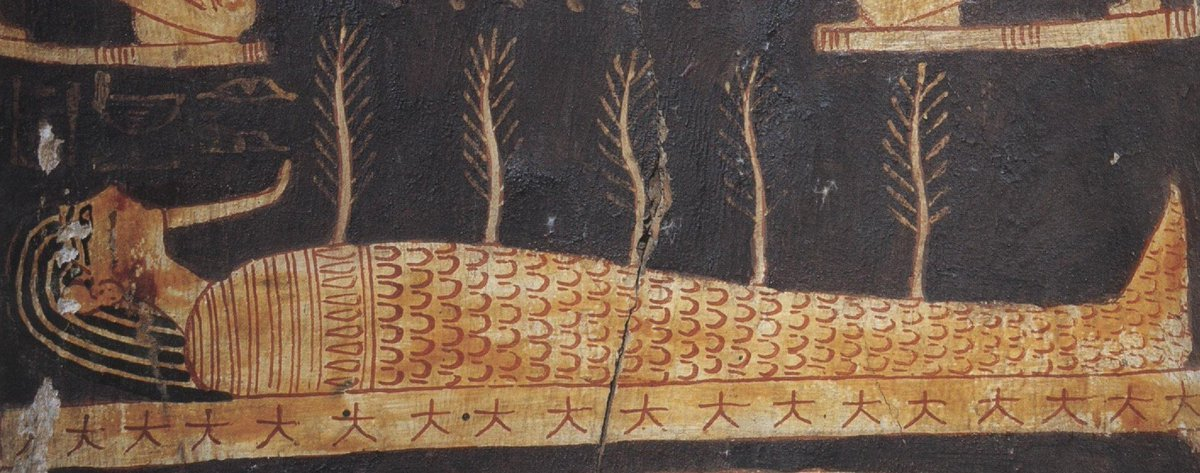
There is also a link between the dead and water in Egypt. I talked about this in my post "The beard of Osiris" about Pharaohs who wore a false beard to pretend to be Osiris (who wore a false beard to pretend to be a dead ancestor 🙂) and about the cult of the dead in Ancient Egypt. Grain growing from the body of Osiris. 

The same link is found in Buddhism where we find Pretas, the hungry ghosts of the ancestors...I talked about this in my post "Pretas"... 

And as we can see we have the same link in China, where the ghost (ancestors) gate is located in a peach tree, the thunder (rain) tree...Very interesting indeed...

It seems this link between the dead and water (rain) and grain is found everywhere in Eurasia and North Africa...

To read more about ancient animal and plant calendar markers which enabled me to decipher all this, start here…Then check my twitter threads I still didn't convert to blog post...I am way way behind...

Thursday, 24 April 2025

Pretas

In Buddhism, Pretas, the "Hungry ghosts" are pitiable creatures with huge, empty stomachs which suffer constant hunger...

Buddhists believe that beings are reborn as hungry ghosts because of their greed, envy, addiction, obsession, and compulsion and jealousy...

And yet, in the summer there are hungry ghost festivals throughout Asia that feature food and entertainment for the hungry ghosts...

The origin of Buddhist "hungry ghosts" is in Hinduism, where originally Preta was understood as the ghost of any deceased individual. The Sanskrit word "preta" (प्रेत) literally means "departed, deceased, a dead person" derived from "pra-ita" meaning "gone forth, departed"...

Today, the dead are burned and the food is given to them "for a year, until they reincarnate"...But I wonder if this belief about the hungry dead originates from the time before Hindus started to be burn their dead and before Hindus started believing in reincarnation?

Here is why.  Today the Hindu families ritually feed the deceased "whose spirit is often symbolised by a clay mound somewhere in the house"...Why? Is this a remnant of the memory of the the time when the dead were buried under the mounds of clay (earth), under tumuli?

Is it possible that this belief and ritual came to India from the steppe with the Indo-Europeans? Who did bury their dead under the tumuli. And is it possible that these are actually remnants of the ancient Ancestor Cult?

The same ancestral cult featuring ever hungry and thirsty ancestors found among the Slavs for instance? I talked about this in many of my posts, like "Soul breads", "Dead man loaf" and , in which I talked about the breads made for the hungry dead...

It is interesting that Hindus feed their "hungry dead" rice balls, "which are said to symbolise the body of the deceased"...Just like in the Slavic ancestor cult where ancestors are believed to be the source of grain. 

I talked about this in my post "Diduch", about Diduch (grandfather), symbolic representation of the the dead ancestors who govern the lives of the living... 

Romans too saw direct link between the dead and the grain. I talked about this in my article "Lapis Manalis", about the sacred water stone which covered the entrance into the underworld/grain storage pit...

BTW, while I was looking for a suitable illustration for "lapis manalis" (we don't know what it actually looked like), the sacred stone used as part of a Roman "aquaelicium" (calling of the waters), rain making ceremony performed during droughts, I suddenly realised what cup and ring marks look like...

We find the same link between the dead, the god of the dead, Osiris and grain in Egyptian religion too. I talked about this in these articles where I talk about why Egyptians believed that grain grows from the body of Osiris...I talked about this in my post "The beard of Osiris" and "Braided beard"...


It is this life giving power of the dead, which Pluto (Hades), the giver of wealth, appropriated for himself. And this is why Hades and Persephone are depicted sitting on their throne in the land of the dead, with sheafs of wheat and flowers...I talked about this in my post "Pluto"...

In the Mesopotamian and Hittite ancestor cult, we also find hangry and thirsty ancestors who are also linked to rain and grain. Talked about this in my article "Care of the dead" about the care of the dead in Mesopotamia and Anatolia...

"...humiliation of the Hittite kingdom is the result of the fact that the Hittites have forgotten to respect the sacred bond with their dead..." - Last Hittite king Suppiluliuma II.

Statue of Suppiluliuma II, Hatay Archeology Museum

The last thing that I will say about the "hungry ghosts" is that in China the hungry ghost festival is held on the 15th day of the 7th lunar month which corresponds to Jul/Aug in Gregorian calendar...

During the festivals, people give food to the hungry ghosts and hope for blessings from their ancestors in return...This is the old contract between the dead and the living. The living feed the dead so that the dead will feed the living...The contract the Hittites broke...

The Chinese seventh lunar month, is actually known as the "Ghost Month" or "Hungry Ghost Month," and is believed to be a time of the year when the gates of the underworld open, allowing spirits to roam the earth...

Very interesting, considering that in Mesopotamia, July, or month of Ab, was dedicated to the dead and the dead god, Tammuz, who died and went to the underworld...You can read more about this here...

The rituals of this month, consisted in eating bread in the funeral feasts for the dead god of life, who now reposed in hell, and in carrying torches by night for the souls of the dead who during this month ascended from the underworld to the world of the living...

Interesting, right?


Sunday, 25 August 2024

Braided beard

An Egyptian Bronze Figure of Osiris, 21st/26th Dynasty, 1075-525 BC.

Why does Osiris wear "braided", "plaited" false beard?

Remember my post "Sphinx" about this 2,800 year old ivory was recently discovered in the old Hittite capital Hattusa, Turkey and the Sphinx as a Deified Lion animal calendar marker?

And do you remember the followup post "Giza lioness" about the Queen Hetepheres II sphinx from the Cairo Museum and the meaning of the part of the Egyptian creation myth that says that: "...lion emerged from the primeval mass within the primeval waters before all other animals, and mankind"?


Well in that post I talked about the importance of  the fact that the Great sphinx originally had "a long braided ‘divine beard’...that gods and deified kings wore, and not a short, square beard worn by living kings"...


And then I said "This is the same beard worn by Osiris, the god of resurrection directly linked to the annual flood..." I talked about this beard and its meaning in my post "The beard of Osiris". I also talked about Pharaohs who wore a false beard to pretend to be Osiris (who wore a false beard to pretend to be a dead ancestor 🙂) and about the cult of the dead in Ancient Egypt. Grain growing from the body of Osiris.


When I posted the link to this article on Facebook yesterday, a friend of mine asked me a very interesting question:

"A puna šaka brade?" (What about the expression "hand full of beard"?)

The "puna šaka brade" (hand full of beard) is an expression from Serbo-Croatian which means "big gain, big fortune, big happiness, big satisfaction"...

In this article (in Serbian) the author argues that the expression comes from the fact that "rubbing one's chin, or stroking one's beard is a natural expression of satisfaction"...

I've seen old people doing this so many times all over the Balkans...And now I am one of the "old people" stroking my beard as a sign of great satisfaction that I had stumbled across another interesting "syncretism" 🙂

In my post about the fake beard of Osiris, I talked about the Egyptian cult of the dead, and the cult of the dead in general, and how the dead ancestors, represented by the guys with long beards, were linked to grain agriculture and grain fertility...

Now remember my post "Wheat cross" about "wheat cross" decorated with "wheat wreath" harvest traditions from Central Europe?

In it I said that the wheat wreath was always made by women, and was made "the way you would plait women's hair"...

Which (thank you @another_barbara) looks like ear of wheat...

Which means that the girl carrying the wheat wreath was the embodiment of the Grain/Wheat/Corn Maiden...

Now this is what real plaited, braided beard actually looks like. It also looks like ear of grain...Very fitting as a symbol of Osiris, the god of the fertile black soil from which grain grows...

So is this why the (false) beard of Osiris and Deified Pharaohs (Deified Ancestors) is plaited? To look like grain growing out of the (grateful) dead?

Diduch (grandfather), symbolic representation of the ancestral spirit which governs the lives of the living. 


From Central European Slavic mythology / folklore. More in my post "Diduch"...

I talked about the importance of keeping the dead happy if you wanted your grain to grow in my post "Care of the dead"...

Remember this depressed dude? This is the statue of the Last Hittite king Suppiluliuma II. And he said: "...humiliation of the Hittite kingdom is the result of the fact that the Hittites have forgotten to respect the sacred bond with their dead..."

Maybe Osiris wore "grain beard". Or maybe this is all just a coincidence...And this has nothing to do with anything: The last harvested sheaf of wheat was in the past in some parts of Serbia used to make "Velesova brada"(The beard of Veles, Slavic sun/summer/harvest god) or just Božija brada (God's beard)...

The "grain spirit" is in European folklore usually preserved as female "corn dolly" made from the last harvested sheaf of wheat. I talked about this in my post "Corn dolly" and "The old woman of the mill dust"...

The spirit of the "Mother of Grain" (Mother Earth). After all grain grows from earth...

I talked about this in my post "Mother of grain"...Grain seed and vulva symbolism...Link between female fertility and earth/grain field fertility...


But did (some weird) Serbs, just like (weird) Ancient Egyptians, associate the grain fertility with a male god...And hence preserved the "grain spirit" in the male God's beard?

Again, let me remind you of this

Serbs, like all the other Balkan people, are descendants of pretty much everyone who ever lived in the Balkans...Which is why, I thought then, and still think, we can find so many interesting bits of many old lores in Serbian folklore...

There is of course another possibility. A long beard, means long life...In the past, in the Balkans, men had long life only if they were fucking lucky...

This is Serbian gusle player and epic poems singer Rajko Ivković. Born in 1880, in the village Gradovi on mountain Rudnik in Serbia. Survived 3 wars. Had many stories to tell. The word history deep down means "what old people saw". From my post "History"...

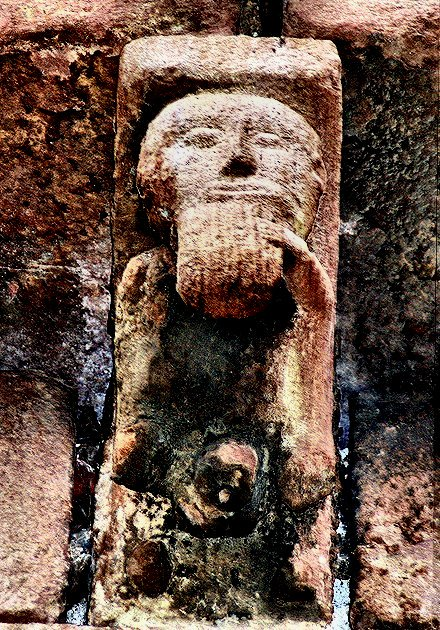
Anyway, speaking of "stroking ones beard as a natural expression of satisfaction" 🙂 Remember my post "Sceptre"?

Church decoration, Mansilla de la Sierra, Spain. 

Serbian expression "he acts as if he pulled god's beard", which means "he acts like god gave him power", has another version "he acts as if he pulled god's penis". 

I hope you liked this. Have a nice evening 🙂 And "May your beards grow long". Unless you are a woman of course.

That's it. To read more about ancient animal and plant calendar markers, start here…Then check my twitter threads I still didn't convert to blog post...I am way way behind...