Showing posts with label European Neolithic. Show all posts

Tuesday, 5 August 2025

Seefin passage tomb

This is Seefin passage tomb located atop Seefin Hill, County Wicklow, Ireland. The tomb was built circa 3,300 BC. It was excavated by R. A. Stewart Macalister in 1931, but no artefacts or human remains were found inside...

Several theories have been put forward to explain the empty tomb:

Maybe the remains were removed by the decedents of the people who were originally buried in the tomb, when they moved away...

Maybe the grave was, at some unknown time in the past, desecrated, looted, with all traces of the those interred removed and destroyed...

Or maybe, no-one was actually ever buried in the Seefin passage tomb, because this is not actually a tomb...So what was this structure then?

Here is the last theory I heard that tries to explain what the Seefin tumulus was actually built and used for:

Well, you know how all these passage tombs look like bellies of pregnant women? And how entrances of the passage tombs look like vaginas? 

Well whoever built Seefin passage tomb made sure that nothing was left to the imagination...

A very narrow entrance with labia like door pillars and clitoral lintel...Behind this vulva like entrance, just like in all the other passage tombs, is a long narrow passage (a birth canal), ending in a large chamber (womb)...

Anyone entering this "passage tomb" would have been, symbolically, entering the womb of the mother earth...

In there in complete darkness, in complete sensory isolation, they would (symbolically) die...

To be (symbolically) reborn after leaving the inner chamber (womb), crawling through the narrow passage (birth canal) and squeezing through the narrow entrance (vulva) into the sunshine...

Well this is just a theory that no one can prove (or disprove)...It's a good one though...

Thursday, 15 May 2025

Blinged goddess

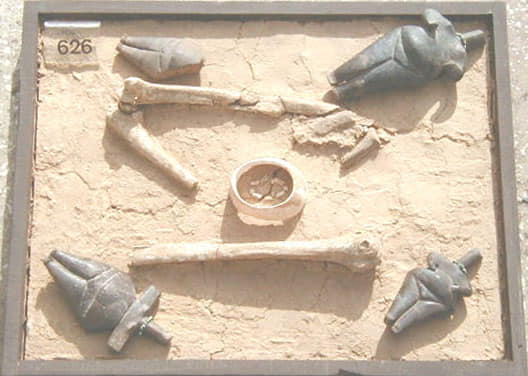
Ceramic figurines with bronze necklaces, found in the Durankulak settlement of the  Late Neolithic Hamangia culture, which flourished in Dobruja (Romania and Bulgaria) during the period 5250-4500 BC. The people of this culture seem to have been immigrants from Anatolia...

The figurines were found together as a group...

Archaeologists also found figurines with bracelets...

And women buried with lots and lots of jewellery...BTW, all the figurines with jewellery were female...

Here are some examples of the jewellery found in the Hamangia culture graves...


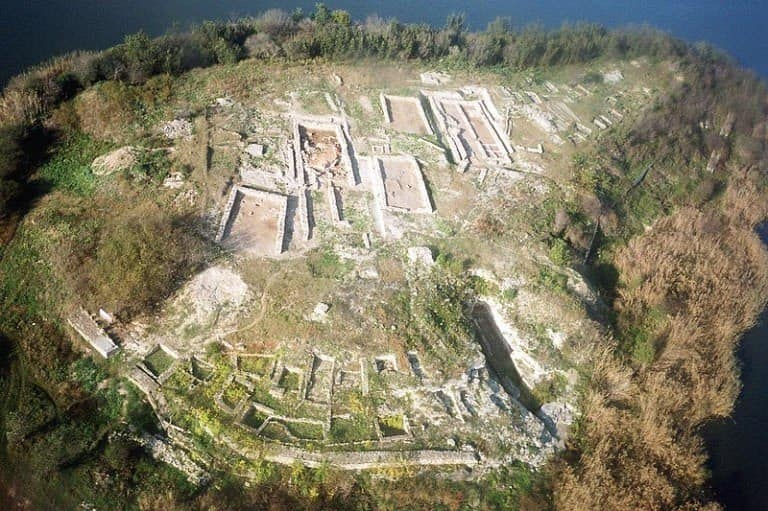
Durankulak settlement on Golemija ostrov in Bulgaria consisted of rectangular wattle and daub houses with stone foundations...Not huts...


The same kind of houses (barns, cowsheds) which were until the 20th c still built in the Balkans, except the roof was covered by thatch...


Sources: "Hamangija culture", "Durankuluk"

ARCHAEOLOGICAL COMPLEX DURANKULAK (Regular Excavations on Golemija ostrov Tell in 2018)

ARCHAEOLOGICAL COMPLEX DURANKULAK. Regular Excavations on Tell Golemija ostrov in 2020. (Presentation 2021)

NEOLITHIC SETTLEMENTS ON BALKAN a comparative study between Durankulak and Sitagroi

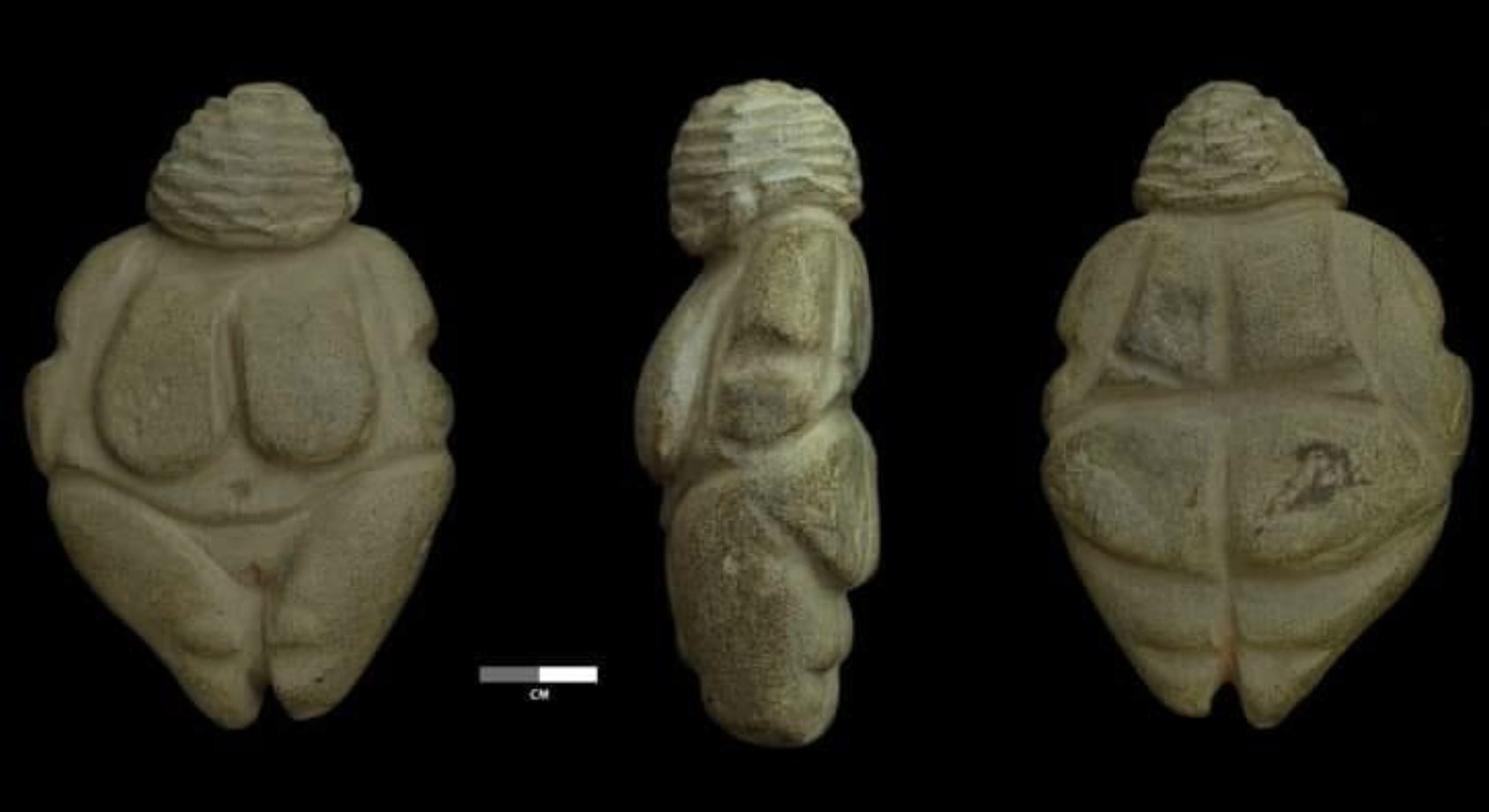
PS: These Neolithic Venus figurines are again faceless, with exaggerated sexual characteristics. Basically depicting the idea (goddess) of fertility. Just like Palaeolithic Venus figurines.

Pic: 17,000 years old Venus of Piatra Neamț, discovered on June 21, 2019, in the area of Piatra Neamț, Romania. 

Talked about this in my posts "Palaeolithic Venus figurines", "The faceless one", "Motanka". 

At the same time when Durankulak people made their faceless goddesses, a gynomorphic (woman like) figurine was made of "soil mixed with chaff and grain seeds" in Grčac, Serbia. by the people of the farming Proto-Starčevo culture, 6200-5500 BC. Direct symbolic link between earth, grain and female fertility. Basically, "Mother of Grain". 


The fact that the people from Durankulak who made these Fertility (Mother Earth) figurines and then put necklaces and bracelets on them, the same type of jewellery worn by the local women, tells me the they have also already symbolically linked the the Earth fertility and female fertility. This symbolic link is still found in Europe, particularly in farming communities in the Balkans and Eastern Europe...

I talk about this in my article "Baba, last sheaf of wheat" and the linked articles...

Wednesday, 13 November 2024

Sun eyes

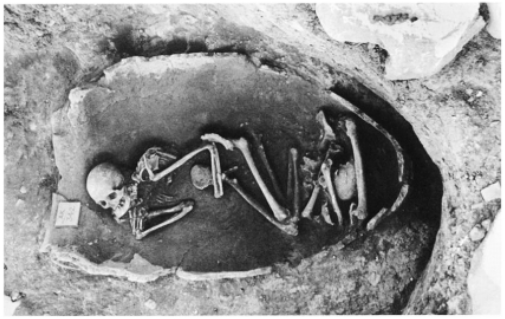
Skull with plain amber discs on clay in eye-sockets Grave 275. Dated to the 4th millennium BC. Zvejnieki cemetery, Latvia. Researched by F. Zagorskis. Photo by A. Butrimas...

On the skulls with red ochre and clay round amber discs (sometimes rings) were found stuck intentionally into eye sockets as "replacements" for the eyes. In all those cases, the amber pieces have a large, centrally placed hole...

Obviously to resemble eyes...

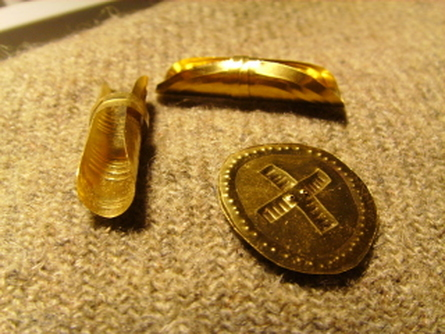
The graves of the same culture also contained perforated amber disc with "sun cross" design...

Amber disc (obverse (sun cross), reverse (sun rays) and cross-section) from Daktariškė 5 Neolithic settlement...

In 1956 Eduard Šturms presented the first overview of Amber artefacts in Eastern Globular Amphora Culture and interpreted them as symbols of the sun and (male) sun god, as they were (apparently) found in men's graves...

All the researchers agree that amber was regarded as a "sun stone", because of its colour and the way it reflects light...


So, to me it is obvious that the perforated amber "sun" discs that were inserted into diseased eye sockets directly linked sun and sight...

I talked about the same idea here:

Utu, Sun: 𒀭𒌓

According to this table, this means god, heaven + day = sun...

Did the god sign originally mean shiny thing? Did the day sign originally mean "eye"? 

If so: shiny thing + eye = to see = sun? 

Like Slavic Svetovid = light + to see  

I talked about this in my post "Svetovid"...

Now, check this out:

Irish "súil" (eye), from Old Irish súil (eye), from Proto-Celtic "sūle" ("two suns"), dual of "*sāwūl" (sun), from Proto-Indo-European "*sóh₂wl̥" (sun). 

Officially: The change in meaning in Irish is apparently due to the mythological view of the sun as the "eye of the sky"...Or maybe because sun (light) gives us sight...

More info on amber sun discs can be found in this article...

This sun cross thing can explain this petroglyph The Sun in the ship. Rock engraving. Sweden (after R. Rimantienė)...

How? The sailing season in the Baltic Sea and White Sea starts in Apr/May...At the beginning of summer...I talked about this in my post "Bes", about petroglyphs from Lake Onega in Russia...

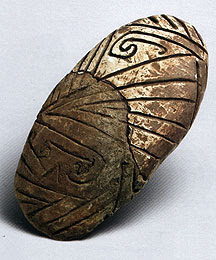
BTW, while the Globular Amphora guys were making their amber sun discs, the guys from Late Neolithic Vasagård archaeological site located on the southern side of the island of Bornholm, Denmark, were making these: sun stones...I talked about this in my post "Sun stones"...

Oh yeah, and guess who also had a cross as his symbol...Mesopotamian sun god...

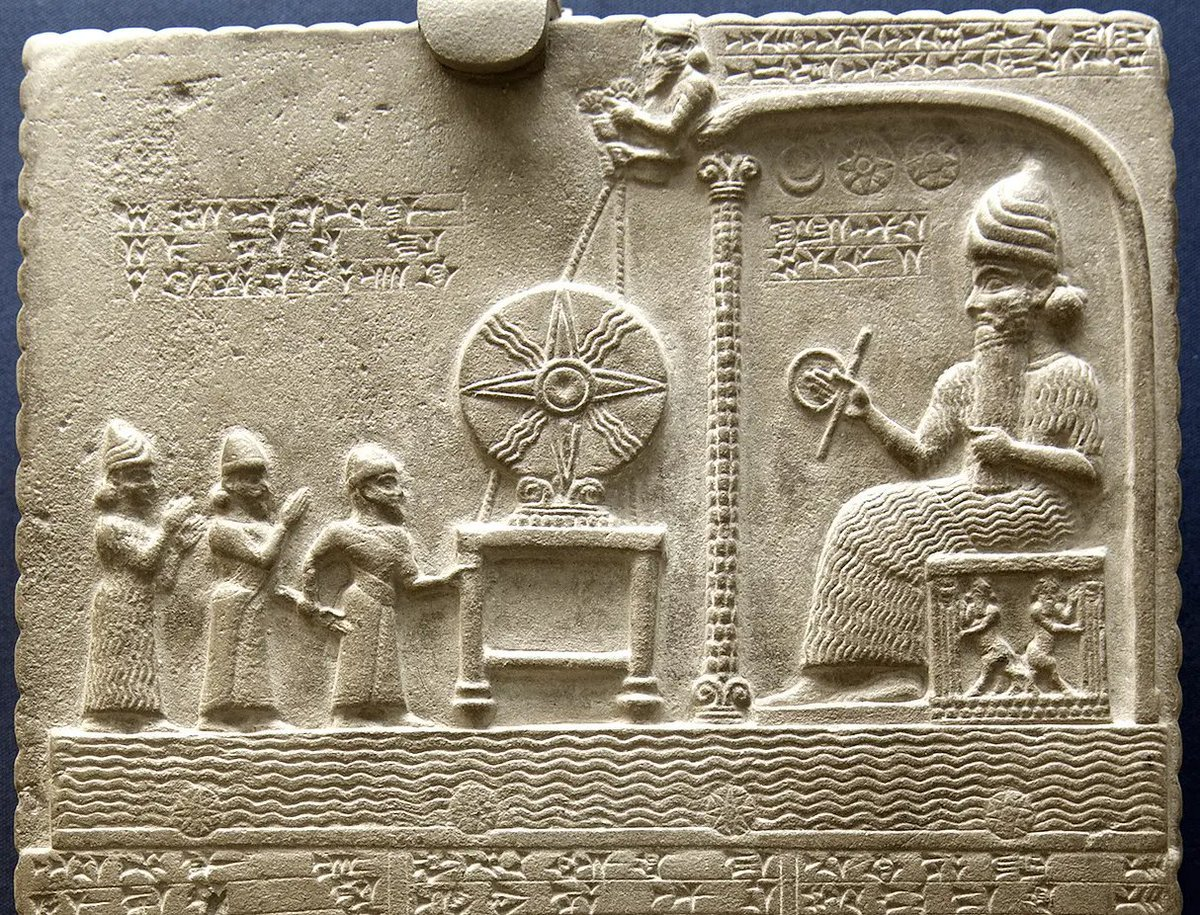
This is the 860BC-850BC Middle Babylonian limestone "Sun God Tablet", currently in the British Museum.

And in this article, "Sun god tablet", I tried to add few bits of information that will help us understand some of the symbols depicted on this tablet...

Finally don't forget this...I almost did. I should have posted this right after the post about the eye-sun link in the Irish language...

Basalt Idol (?) depicting a humanoid figure with spiky hair (sun rays?) and torcs (gold lunula like this one from Ireland?) around the neck. 


Ciudad Rodrigo, Spain. Early-Middle Bronze Age. Museo Archaeologico National in Madrid. Pic: Mark Vyvyan-Penney...I talked about the Irish gold sun bling in my post "Or Ireland's gold"...

I will talk more about sun crosses soon. Just discovered something interesting related to this on Malta...For people who are wondering why I omitted Bell Beakers and their golden sun crosses...

Almost forgot this. Christ as the sun-god Helios/Sol, 3rd c. AD, Vatican. Christ is born on Winter Solstice, (re)birth day of the sun (god), he enters Jerusalem on a donkey, "animal of the (sun) gods and kings", and gets put on a cross, symbol of the sun (god). Interesting. I talked about this in my post "Alexamenos graffito"...


Finally, I promise 🙂 According to Slavic folklore, west is where the entrance to the other(under)world is. Why? Cause this is where sun enters the other(under)world. Hmmm...Did the "sun disc eye for the dead" dudes also have a notion of this?

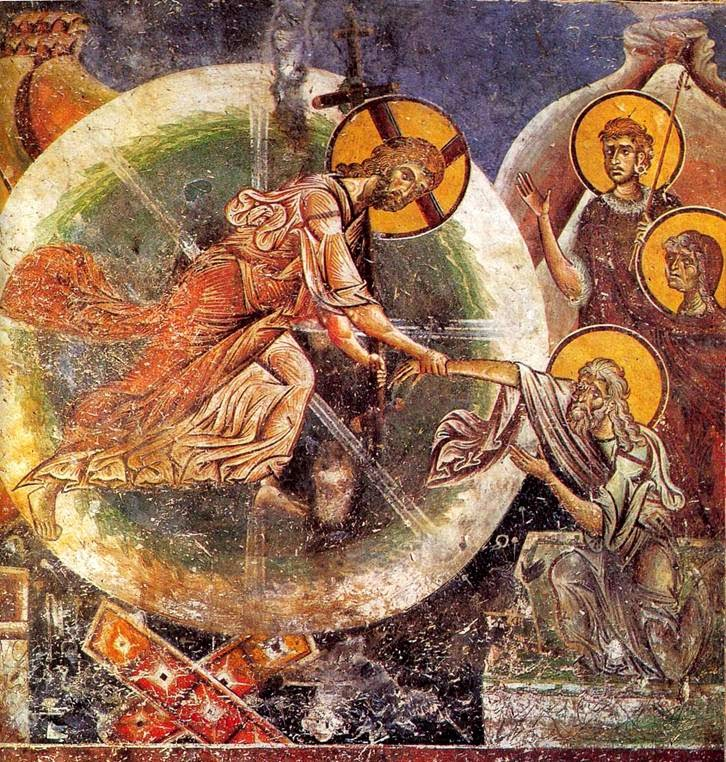
One of my favourite frescoes: Christ's descent into Hades, fresco from the 12th c. Church of St. George, Kurbinovo, Macedonia...Stunningly beautiful, it is also super unusual and interesting.

Article "Descending to Hades", about the Sun God as the ruler of the land of the dead.


Monday, 24 April 2023

Female pots from Europe

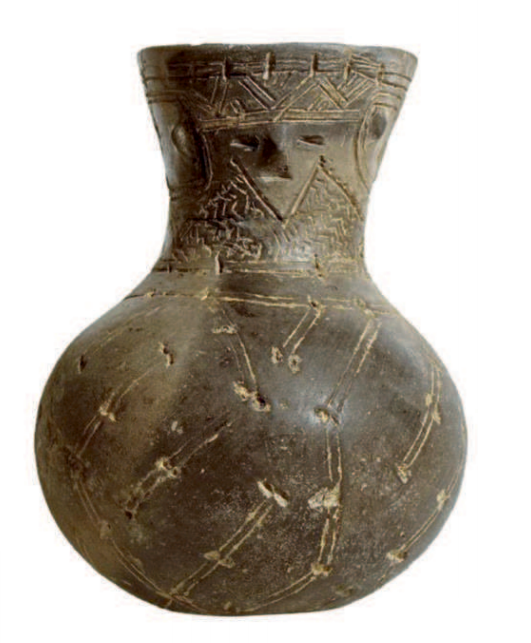
Anthropomorphic vessel with breasts, Neolithic Lengyel culture (5000-3400 BC)

Anthropomorphic vessel with breasts and grain ears (?) instead of hands, Chalcholitic Baden culture (3600–2800 BC) which developed from Lengyel culture

I wrote about these two vessels in these posts, "Baden culture grain maiden" and "So Indoeuropean" and I asked the question: are we looking at this, grain goddess, later known as Demeter/Persephone? See the posture?

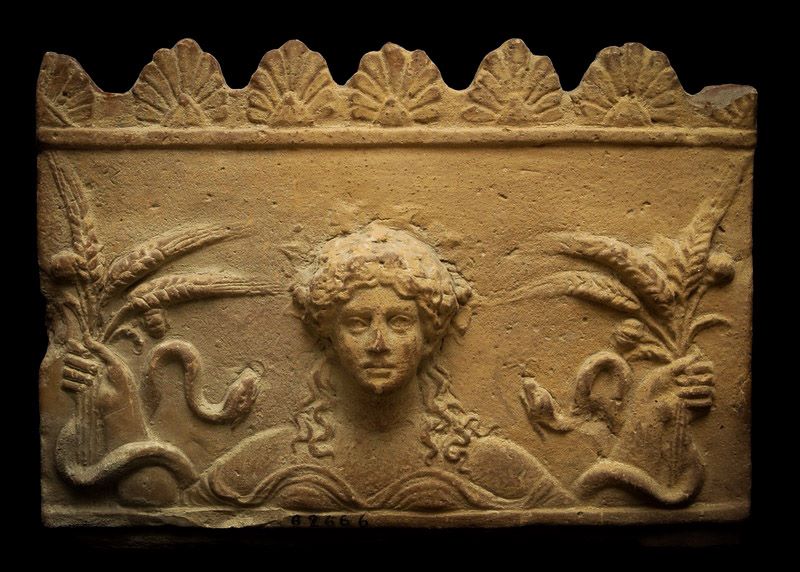
If you are interested in Demeter/Persephone you might also find this article "Who are Persephone's parents" interesting. It talks about snakes in Persephone/Demeter cult...

Now have a look at this:

Left: Anthropomorphic vessel with breasts, 3000-2000BC Troy, Turkey

Right: Anthropomorphic vessel with breasts and vagina, 3000-2000BC Lemnos, Greece

Interesting, right? This is obviously the same cultural trait, which first appeared in Neolithic Central Europe and then traveled down to Anatolia and Greece during Chalcolithic and Bronze Age...

We know that these areas were connected. The same type of butter churners was found from Central Europe, through Greece (Lemnos), Asia Minor (Troy) to Levant (Gilat) during the period 5000-1000BC...I talked about this in my post "Milk, butter, cheese"...

The distribution of butter churns could be just a sign of technological exchange along trade routes, if it wasn't for the fact that milk consumption was rare during this time, as it depended on milk tolerance, which is a genetic trait passed from parents to their children...

Does this mean then that these cultures were somehow related? I mean not just culturally, as seen by the female vessels found in both Central Europe and Greece and Anatolia, but also genetically? I know Lengyel and Baden genes (I2a, G2a). What about Troy, Lemnos, Gilat?

Maybe there are other examples of these "female pots" with raised arms? I didn't spend much time looking into this so any additional info would be appreciated...

Female pots...Female pots...Have you seen these female pots from Late Neolithic Chalcolithic Central Europe? With birth diver "M"(ama) symbol depicted on them? I talked about these pots in my post "Mama"...

Female pots...Female pots...Did you read my post "The female pots from Sudan", about the female pots with boobs used as granaries and the (likely) remnants of the Neolithic grain goddess cult found in Sudan?

Interestingly the female pots we are talking about served as urns...Remember the link between the pot and the "womb (of the mother goddess)" preserved in Nigeria, also (likely) remnant of the Neolithic grain goddess cult?

The same Neilithic grain goddess cult found all over Eurasia too. This cult probably originated in the Fertile Crescent in the first farming communities, and was from there spread to Europe, Asia and Africa...

The female pots symbolising the body of the grain goddess, mother earth, would explain all the pithos (large storage vessels used as granaries) burials found all over Western Anatolia in the 3rd millennium BC. You can read more about it in "Early Bronze Age Burial Customs in Western Anatolia"...

When and where did this custom appear first?


Saturday, 14 May 2022

Vinča bread

One of several similar cult models of a loaf of bread, from the Neolithic Vinča culture. This one was found at Banjica-Usek archaeological site in Belgrade, capital of Serbia, and was dated to 4500 BC. Length 18 cm, width 6 cm. Collection of Belgrade City Museum...

Here is another one...


Another Vinča culture votive bread...This one could have found its way to Ireland...


From this post ritual hiding behind giant breads and about Neolithic Newgrange temple from Ireland and a very strange similarity between its entrance stone and this votive bread...


Einkorn and emmer wheat were an important part of the diet of ancient Vinča-culture. Cereals were ground using small quern-stones and the flour was made into dough which was then baked in ovens found in every Vinča house...

Photograph of the excavation of the Vinča Belo Brdo site, showing archaeologist Miloje Vasić standing next to a clay oven "in situ" and local villagers employed as excavators standing in the background. Early 20th c.  

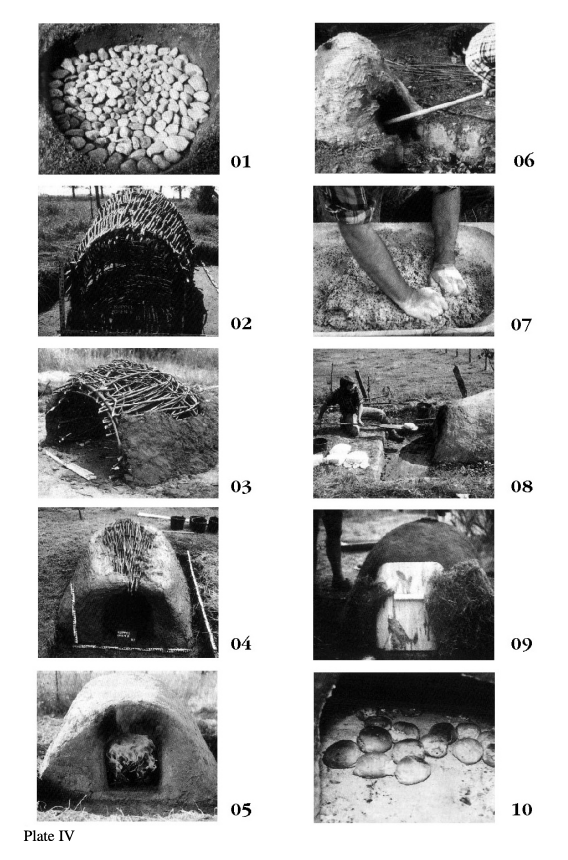
Are you an experimental archaeology fan? Do you want to know how to make Neolithic Vinča culture style bread oven? And Bake bread in it? If you are any of the above, then this paper entitled "Late Neolithic ovens in central Balkans region" is a must... 

This is Pločnik archaeological site in Toplica District, Serbia. The 120 hectare settlement was built by people of the Neolithic Vinča culture around 5500 BCE and was used for 800 years, until it was destroyed by fire in 4700 BC... 

Local archaeologists reconstructed several houses and created a small replica neolithic village... 

The houses are equipped with the replicas of furniture, figurines and bread ovens found during the excavation... 

Local archaeologists use the archaeo village to run educational programs for kids. During one of these programs kids were thought how to make bread "neolithic style"...


Kids absolutely love kneading dough and making flat bread patties...


These are then placed in clay ovens, baked and then eaten by children themselves...


BTW, Vinča culture guys inherited their obsession with bread from the ancestral Starčevo culture. These where the guys who adopted grain agriculture, originally developed in the climate of the fertile crescent, for the European climate...

I wrote and article about one of their sites, Blagotin, where a temple dedicated to grain was found with many votive clay grain seeds...