Showing posts with label Predynastic Egypt. Show all posts

Sunday, 7 August 2022

Scorpion king

This is the so called "Scorpion macehead", a 25 cm long decorated pear shaped limestone macehead found in the Ancient Egyptian temple of Horus at Hierakonpolis. Currently in the Ashmolean Museum

It is attributed to the Pharaoh (King) Scorpion (c. 3200–3000 BC) due to the glyph of a scorpion engraved close to the image of a king wearing the White Crown of Upper Egypt. This is the only known depiction of this Pharaoh (King)...

At least this is what some archaeologists think. The fact is that King Scorpion's name, title and even existence are of great dispute in modern Egyptology...

And here I would like to add some oil to this academic fire: I don't think that the scorpion on this macehead spells the name of the Pharaoh depicted next to it. I think that this is an animal calendar marker...๐Ÿ™‚

Ashmolean guys interpretation of the macehead scene: "The King, followed by fan-bearers, wears the White Crown of Upper Egypt and a ceremonial bull's tail...before him, a man holds a basket, and another who carries a broom, wait to collect the earth removed by the king's hoe."


This description does not specify what the king is actually doing. The paper "Early Hydraulic Civilization in Egypt" interprets this scene as "Scorpion King ceremonially cutting an irrigation ditch..."

I don't think that this is Scorpion king or that he is cutting an irrigation ditch. I think that it is some Pharaoh performing the ceremonial "cutting of the first furrow", which marks the beginning of the sowing of grain...

Until the 20th century, agricultural year in Lower Egypt was divided into these three seasons: 

Aug-Nov flood which left a coating of fresh mud over the fields 

Dec-Mar sowing season for the staple crops of barley, emmer wheat and flax for linen

Apr-Jul, harvest season

During the late 4th millennium BC, Egyptians didn't have ploughs. So the furrows were made by hoes, like the one held by the Pharaoh depicted on the macehead, and like this one currently in the British Museum...

And in "A History of Ancient Egypt: From the First Farmers to the Great Pyramid" by John Romer we can read this interesting comment: 

"...Nile farmers tended to sow their muddy meadows in December and January, when the scorpions and snakes were hibernating..." ๐Ÿ™‚

In 1912, Walter Tyndale published a beautifully illustrated book "An Artist in Egypt


In it we can read that:

"In early November scorpions are still active, and are not hibernating...As we got into December, we heard and saw little of scorpions, and, during the season of hibernation, I forgot about these creatures" ๐Ÿ™‚

So the beginning of the hibernation of the scorpions in Egypt, their disappearance in late November, announced the beginning of the grain sowing season...

This is what the scorpion next to the Pharaoh with the hoe means. It is an animal calendar marker for Nov/Dec, beginning of the grain sowing season in Predynastic Egypt...It is not Pharaoh's name...

These are drawings of some of the small ivory tags showing the depiction of a scorpion, which were found in the Predynastic graveyards at Abydos, Minshat Abu Omar and Tarkhan...

They show the scorpion holding the hieroglyphic sign for "nome (area)/garden/land with irrigation channels"...Authors of the paper "Abydos tomb u-j of predynastic Egypt Abydos tomb u-j" say that the interpretation of the combination of symbols on these ivory tags is disputed...You can find the sign list here...


Some archaeologists say that this combination of signs has no deeper meaning. Some other archaeologists say that "the scorpion could represent King Scorpion II in his role as a ruler of a certain (but unnamed) nome (area)"...

I would say that this combination of signs does indeed have deeper meaning, and what it means is: saw your grain in your irrigated field when scorpions disappear...

Yeah right...

Well, did you know that archaeological evidence shows that the Early 4th millennium BC Egyptians were under "a surprisingly strong and extensive influence of Mesopotamian culture and religion"...

And guess what we find in Mesopotamia? Scorpion marking the beginning of the ploughing and grain sowing season...

When scorpions disappear, and cranes arrive from the north, and Sirius rises with the moon which points up and looks like a dish ready to catch the first rains, Oct/Nov, it's time to sow grain...I talked about this in my posts "Seven stars of scorpio" and "Ploughing

Oh, BTW, that "rosette" next to the scorpion on the Scorpion Macehead...Its meaning is also disputed (read: no one has any idea what it means)...See, it's a star on Mesopotamian grain sowing seals...Sirius which is visible during the night during sawing time

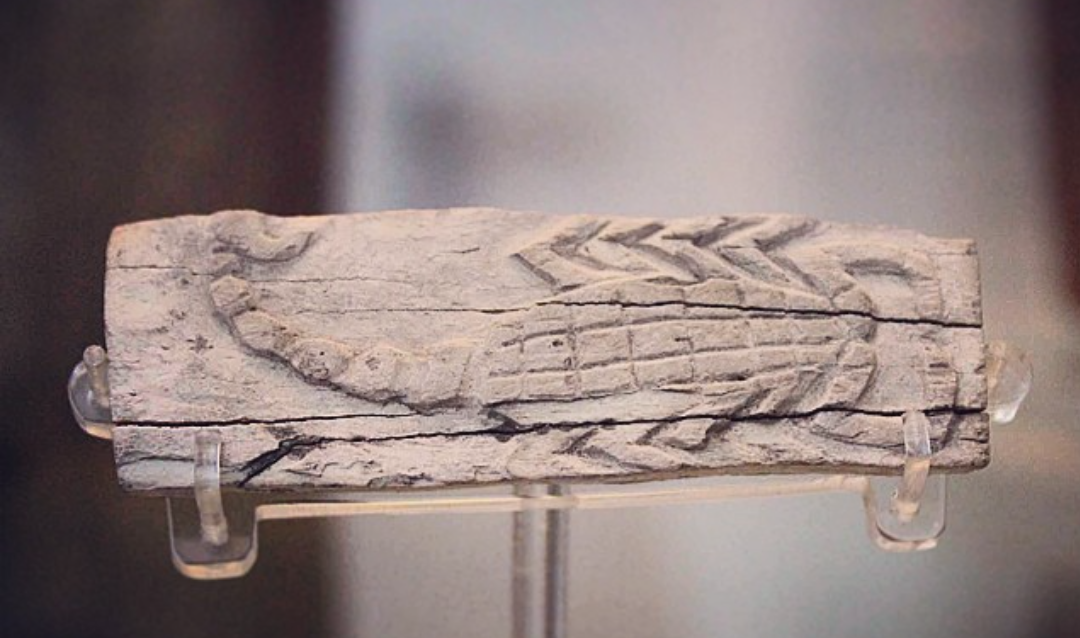
Sooooo...Is it time to say goodby to the Scorpion king? I think so...Bone fragment with a carving of a scorpion. Late Predynastic - early First Dynasty, about 3100 BC
That's it. 

Oh, have you seen this?

19/11/2021. According to CBS News, thunderstorms along the River Nile swept the scorpions...out of their hiding places where they stay during hibernation...into people's houses...


To read more about ancient animal and plant calendar markers, start here…then check the rest of the blog posts related to animal calendar markers I still didn't add to this page, and finally check my twitter threads I still didn't convert to blog post...I am 9 months behind now...

Tuesday, 13 July 2021

Markhor goat in Naqada

Ceramic vase - Naqada II, Egyptian Predynastic period 3500 BC. Dim 8,5x7,6 cm. Currently in: Museo Arqueologico Nacional, Madrid, Spain...


Officially depicts a hunting scene...

Have you seen this article called "Nahal Mishmar hoard"? About the treasure throve of bronze objects found at Nahal Mishmar in Israel and dated 4000-3500 BC. 


One of the artifacts found in the treasure is this beautiful staff...

It is topped with the 4 small heads of Ibex goats 

surrounding the big central head of a Markhor goat 

Now Ibex goats are found in Levant. And there they are a symbol of the rainy season, which starts when ibex goats start to mate, in Oct/Nov...Like on this depiction of the mother goddess from Revadim...


The problem is that Markhor goats don't live in Levant. They live in Central Asia, Iran, Iraq, Pakistan...Where they are a symbol of the rainy season, interchangeable with Ibex goat. Because both of their mating seasons start in Oct/Nov, when rains arrive...

I talked about this in my post "Goat in a tree"

So while researching Nahal Mishmar hoard, I proposed that the it must have been made by someone from that part of the world, Central Asia, Iran, Iraq, Pakistan. Cause only they could have seen Markhor goats and had it associated with Ibex goats as a symbol...

It turned out Nahal Mishmar treasure is believed to be made by immigrants from Iran. Because of genetics of the people who made the treasure...And the similarities of artifacts from both areas...

Now the makers of the Nahal Mishmar treasure were expelled by the locals...Those the locals couldn't kill. I thought they went back north to Iran. But what if they went the other way...Down south...To Egypt...

Who else could have made a vase with Markhor goats and Ibexes prancing around the mountains?

By the way, Ibex goats live in Egypt. It is the subspecies known as Nubian Ibex. And Nubian Ibex mating season is from October to December...

Guess what happens in Naqada in October? Rains arrive...

So I think that Ibex was depicted on the above vase for a reason. It is another example of Ibex goat being used as a calendar marker that means: rains arrive when Ibex goats start to mate...

Just like in Levant, Mesopotamia, Arabia, Central Asia, Iran...Amazing...

So I think that  the guy with huge erection standing in the middle of mating Ibex and Bezoar goats is not a hunter. I mean he is unarmed which is usually a dead giveaway for "not a hunter". He is most likely a fertility symbol, fertility god, possibly rain god...

By the way this vase is not an exception. Markhor goats are found on other Naqada vases too. Like this one. Again no explanation how come this goat is here, in Egypt...


Ibex goats are also found all over predynastic artifacts. Here is another vase from Naqada II period. Dated to 3500BC.

It depicts Ibex goats...And Flamingos. 

Why flamingos? Because breeding season of Greater Flamingo, the subspecies found in Egypt, is "Erratic, depending on the rains, but mainly November-February"...Ha!

As a comparison, here is a vase from Susa, Iran, dated to 4000BC...

In its center is a huge Ibex. Its horns surround what looks like a furrow with a plant, most likely grain. Rains make plants grow. And they start falling when Ibexes start mating...It is also "after the first rains" that fields are ploughed and grain is sown...Important!!!

The Susa vase also depicts pile of flamingoes...Flamingoes which arrive to Iran every November from Central Asia, to spend the winter...Interesting...Right?

Guess what happens in Egypt during the Ibex and Flamingos mating? Well grain is planted...The flood has ended, the soil was fertilized, and it's time to plough and plant grain while the first rain is falling...

What is amazing is that once we understand why these animals are depicted on the ancient artifacts, we can then detect anomalies in distribution of these artifacts: pieces that are found in the areas where the animals depicted don't exist...

Or the depicted scene put together makes no sense...When compared with the local climate...Which are all indicators of the foreign influence and possible migrations which brought these influences...

Like these vases. 

Or this for instance

I talked about this in my post "An Ki = Ankh"


PS: Is it possible that the animal with the spiral horns is Kudu antelope? They lived in the North Africa, Levant and Arabia in the early and middle Holocene...Well at least this is what the authors of this paper think the animals with spiral horns depicted on the petroglyphs were...But were they Kudu's or Markhor goats? When did Kudus disappear from these areas? Were they still around in the 4th millennium BC? Did immigrants who came to Egypt from Mesopotamia bring Markhor goats with them? Via Arabia and Levant?