Showing posts with label Iran archaeology. Show all posts

Tuesday, 21 July 2026

Kuseh Gardani

Oh this is amazing. This image depicts a traditional Iranian "Kuseh Gardani" ritual, which is performed by men in times of drought or low rainfall...This image is from this site...

One man, chosen as the "Kuseh" (devil of drought), has his face blackened, wears horns (positioned in such a way to resemble ibex goat horns) and bells, and leads a procession through the village...

He stops at every house and collects some flour. After visiting all the houses, a large bread is baked from the collected flour and is shared between the villagers...

The ceremony is a symbolic performance of overcoming drought and seeking rain...

Unreal...Here is why:

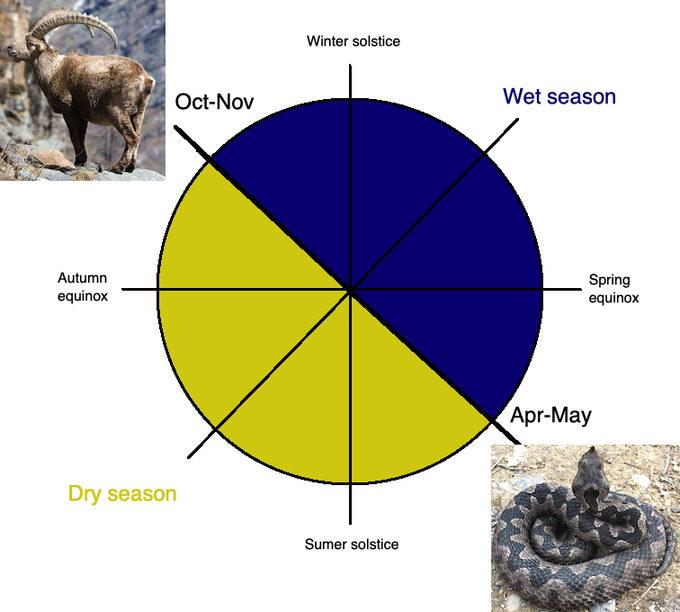
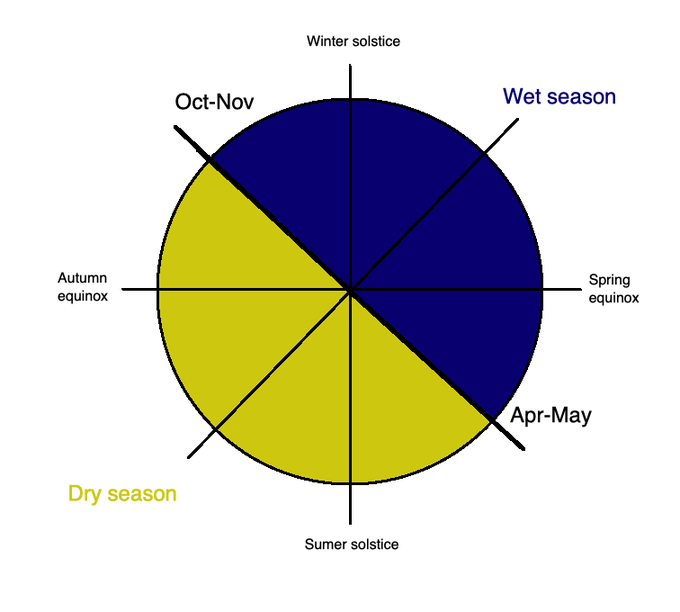
Climate in Iran is divided (roughly) into hot, dry half (Apr/May - Oct/Nov) and cool, wet part (Oct/Nov - Apr/May)...


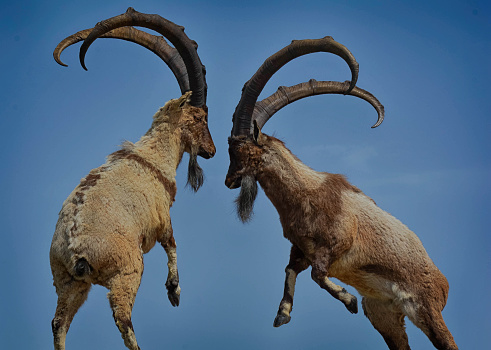
And the start of the wet season coincides with the start of the mating season of the ibex goats, mating season characterised by wild male goat fights for females...

Which is why ibex goat became associated with rain, and became "goat of rain", an animal calendar marker for the start of the rain season: When ibex goats start fighting the rain will start falling...

And which why ibex goat became the most depicted animal in Iran since Early Neolithic...

I talked about this in my post "Goat petroglyphs from Iran"...

Eventually, with the start of grain agriculture, when having rain at exact time at exact quantity became super important, people turned "goat of rain" into "god of rain with goat horns". It's easier to pray to gods than goats...

And so, local priests started wearing goat horns and playing the role of the goat rain god...

It is most likely that it was in Iran in the 9th mill BC when the goat of rain got anthropomorphised and turned into the god of rain with goat horns...

I talked about this in my post "Zavi Chemi Shanidar"...

"Kuseh Gardani" is a very very very very....distant echo of this...

And this:

Stamp seals, Tepe Giyan, Iran, 5000-4000 BC...Anthropomorphised rain goat (god) dominating sun snake (dragon)...


I talked about this in my post "Master of the animals from Tepe Giyan"...

And this:

Elamite figurine from around 3000BC, depicting a man with goat horns (or a goat horns helmet, cap) and a goaty 🙂 How goat of rain became god of rain...


I talked about this in my post "Strider"

And this:

Article about this Bronze top for a standard. ca. 8th–7th century BC. Luristan, Iran...Two human figures with male Ibex goat ears and horns holding hands...Why? Same thing I guess...

I talked about this in my post "Dancing goat men from Luristan"... 

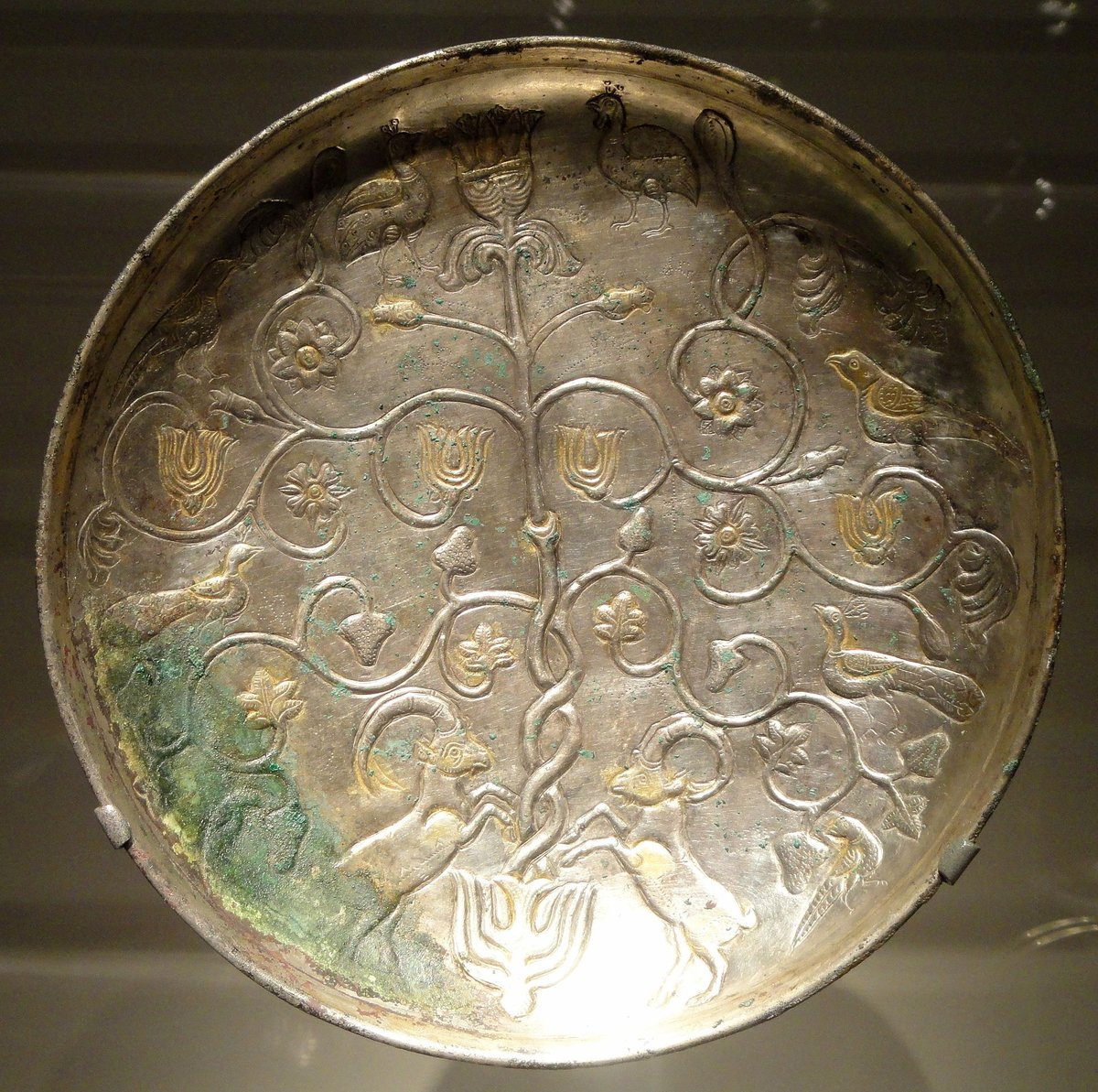
The rain brought by the goat of rain is what supports (the tree of) life in Iran. Which is why we see prancing ibex goats flanking the tree of life...

I talk about this in my post "Sassanian goats with the tree of life" where I analyse these two Sassanian wall relief slabs dated to the 5th-6th c. AD, depicting rampant ibex goats flanking "the tree of life"...

This again is an ancient symbol found in all the areas where ibex mating season overlaps with rain season...

As we can see, Iranian people still kind of remember that "ibex is linked to rain". But with the arrival of Islam, the (goat) "god of rain", became "devil of drought"...The one who (still) brings rain (and bread) if he is asked politely...

How cool is this? 

If you are interested in reading more about ancient animal and plant calendar markers, which are at the root of all our mythologies, start here…Then check my twitter threads I still didn't convert to blog post...I am way way behind...

Friday, 25 October 2024

Jackals from Susa

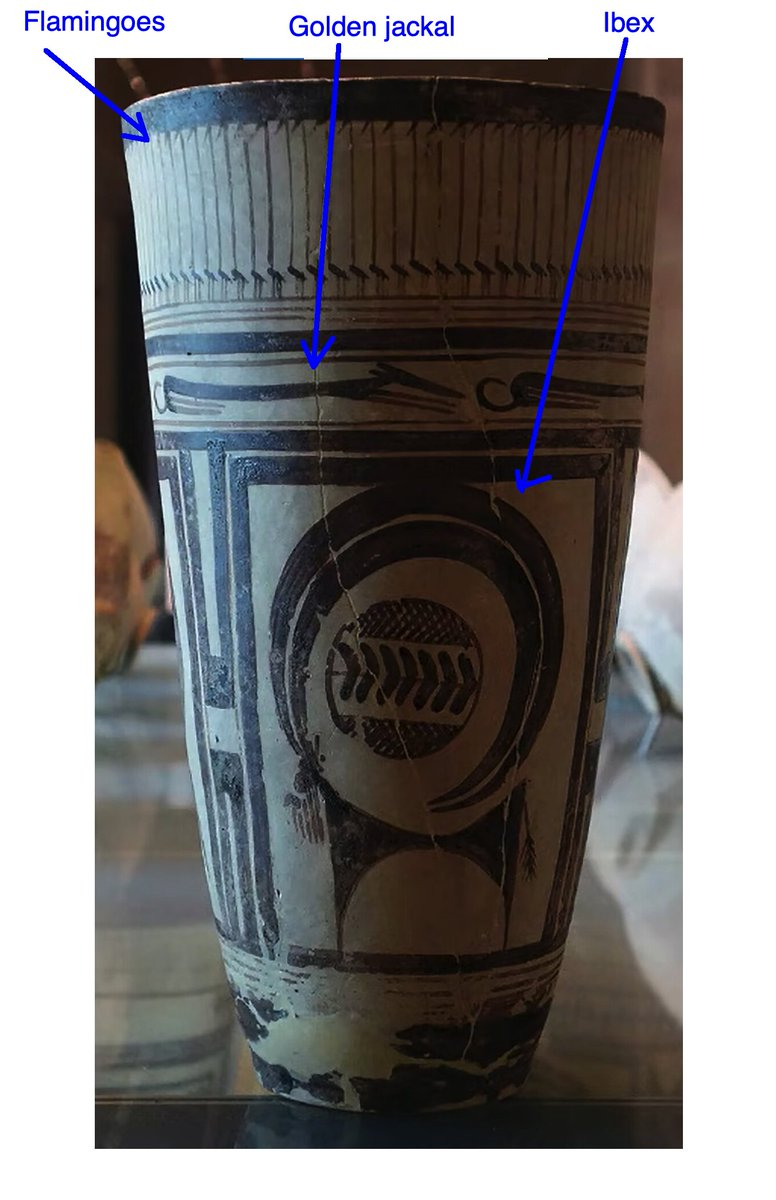
An amazing vase/beaker, made between 4200 and 3500 BC in Susa, an ancient city in the Near East located in modern-day Iran...

Full of animal calendar markers for Oct/Nov, beginning of the rain season in the Susa area...

If we look at the climate chart for Susa area, we can see that the climatic year is divided into hot, dry summer and cool, wet winter...


As it happens, in Iran, the beginning of the Ibex mating season (Oct/Nov), overlaps with the beginning of the rain season, which is marked by violent and loud male goat fights for females...

So ibex goat became animal calendar marker for the beginning of the rain season (rains arrive when ibexes start to mate)...

And because rain supports (the tree of) life...

Iran, Sasanian period, 6th-7th century AD silver and gilt plate depicting the tree of life flanked by between two prancing ibex goats...


I talked about this in my posts "Anahita" and "Jiroft flood vase"...

Eastern Mediterranean, Levant, Mesopotamia, Iran, Central Asia have the same climate and so we find the same symbol, ibex goats flanking the tree of life, in all these places. Check my post "Bactrian bronze age menorah", in which I talk about this very cool Bactrian bronze stamp, dated to 2400BC-1600BC, for examples

Neolithic Farmers from Iran progressed very quickly from a calendar marker "rains arrive when ibexes start to mate", to "rains are brought by ibexes" to "rains are a gift of the ibex god (anthropomorphised ibex)"...

"Master of Animals" stamp seals, Tepe Giyan, Iran, 5000-4000 BC...


You can read more about the eternal struggle between the rain goat and the sun serpent/dragon in my post "Master of animals from Tepe Giyan"...


As I said once before, all our mythologies are the result of the fact that people are very good at noticing patterns in nature while simultaneously being very bad at distinguishing between correlation and causation 🙂...

As for anthropomorphization...It's hard to pray to goat for rain. It's much easier, psychologically, to pray to a human like god of rain (with goat horns)...

Anyway, back to our amazing beaker from Susa. 

This beautiful vase is not a Modern Art Masterpiece...It is almost 6000 years old, and is currently kept in Louvre, Paris in the "Département des Antiquités orientales"...Analysis of the symbols + lots about sad state of Flamingos in Iraq can be found in my post "Flamingos from Susa"... 

And in it I provided the calendaric link between ibex (beginning of the mating season of ibex goats, Oct/Nov) and flamingoes (arrival of Greater Flamingos to their wintering grounds in the warm Southern Mesopotamian marshes, Oct/Nov)...

So that's two out of three animal calendar markers from the original Susa vase identified. So what about the canine?

Dog...Right?

Wrong...from the animal calendar markers point of view...Dog is a well known animal calendar marker for Jul/Aug, dog days.

When our mythologies were made out of animal calendar markers, Sirius, the Dog Star rose with the sun in Jul/Aug, when mating season of the old dog breeds began...

Egypt: "Dog days"

Mesopotamia: "Tishtrya"

India: "The bitch of the gods"

It would not make sense to put dog on this vessel together with ibex and flamingoes...There must be another kind of canine that lives in Iran and starts mating in Oct/Nov...

And there is. Golden jackal.

Could this be the canine depicted on our Susa vessel?

All the animals are identical calendar markers, all marking Oct/Nov, the arrival of rains to Susa...

Rains that make grain grow. Kind of a big deal if you are a Neolithic farmer in Iran...Is this grain symbol under the Ibex horns? Grain was planted in Iran in Oct/Nov too...

Some posts about the symbol for grain and the Mother of grain in Neolithic Europe, Central Asia, Mesopotamia, Iran, Levant: "Mother of grain", "Altyn Tepe mother of grain", "A person in a little boat", "Sabi Abyad venus", "Hathor grain pendants"...


That's it. To read more about ancient animal and plant calendar markers, start here…Then check my twitter threads I still didn't convert to blog post...I am way way behind...

Monday, 26 December 2022

Harness ring from Luristan

Today @dalaygiz asked me if I know what I thought about this harness ring, dated to the 9th century BC and found in Luristan, Iran...

Well it is a beautiful object. And a great example of a complex animal calendar marker...Which depicts the cool wet half of the year...

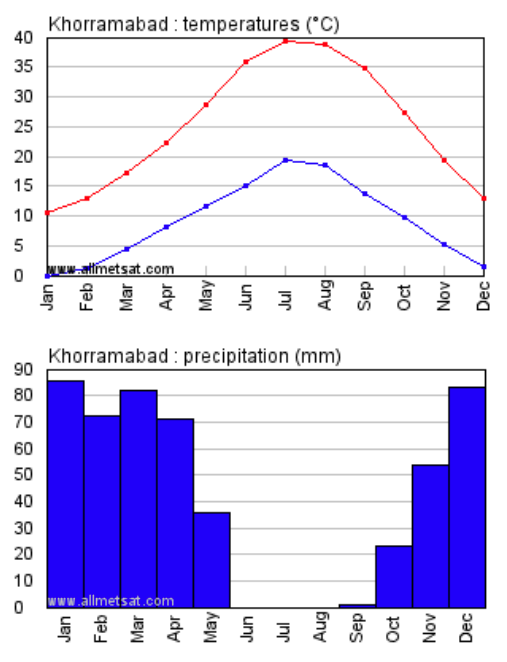
Ok to understand what is depicted on this artifact, we first have to look at the climate in Luristan. Climate charts for Khorramabad, the city bang in the center of Luristan province.

You can see that the year is divided into hot dry half (May-Oct) and cool wet half (Nov-Apr)...

In Luristan, it is the rain and snow that falls during this wet half of the year that supports life in the area...And this wet half of the year starts when Ibex goats start mating (Oct/Nov)...And fighting...And you can't miss this event. You can hear horn clashes from miles away

Which is why Ibex, the goat of rain, is the most prominent animal depicted on this artifact and one of the most depicted animals on Luristan bronzes in general. I talked about Ibexes in Luristan in my article "Dancing goats from Luristan" about this bronze top for a standard from Luristan, Iran, dated 8th–7th century BC. 

This is why Ibex was venerated in Iran, and this is why it is in Iran that we find the first Goat man...The earliest transition from Goat of rain to God of rain...I talked about this in my post "Strider"...


This is also why in Iran (and in other places with similar climate and Ibex annual lifecycle, like Mesopotamia, Central Asia, Levant, Crete) we find Ibex flanking the tree of life. Here is Iranian, Sasanian example from my post "Anahita"...

Ok, so what about the two spotty beast depicted on the sides of the harness? Well they are Asian leopards...And these beasts mate at the end of Jan beginning of Feb...

I talked about leopard as an animal calendar marker for the end of winter - beginning of spring (Jan/Feb) used in Iran (and elsewhere) in several articles. Like my post "Spots and stripes" about the depiction of leopards on Iranian pottery standing over the zig zag design depicting flowing water...

And this one, "Elamite Copper Bowl", about this amazing bowl from the early 3rd millennium BC, with the depictions of four seasons, where leopard was used as a symbol for spring...

Or this one, "A vessel from Tepe Hissar", about this amazing painted vessel from Tepe Hissar, Iran, dated to 4500-4000 BC, where both Ibex goat and Leopard/Cheetah are actually  depicted ejaculating (rain)...

Leopard is an animal calendar marker for Jan/Feb because Asian leopards mate in Jan/Feb...From the point of view of Luristan people, this is extremely important time of the year. The beginning of the snowmelt...

snow cover Iran

river flow Iran

And it is this snowmelt that contributes over 70 percent to the water flow in Iranian rivers...The water flow which peaks in Apr/May...In Taurus...Hence these depictions of flowing water pouring our of bulls on this vase made by the people of the Jiroft culture from Iran...I talked about this in my post "Jiroft flood vase"...

BTW did you see the moon pointing up on the Jiroft vase, the winter moon? The moon of the rain season... I talked about this moon symbol in my post "Angra Mainyu", about this Middle Assyrian Cylinder Seal with a "Lion-Dragon", 1300-1200 BC. 

Anyway, Taurus, is an ancient animal calendar marker which marks the calving of wild Eurasian cattle, Aurochs...This animal calendar marker is found with the exactly same meaning all over Eurasia and North Africa...I talked about this in my post "Cow and calf ivory" about many Neo-Assyrian, 9th-7th c. BC cow and calf ivories found in Middle East...


Interestingly, wild Zebu cattle from India used to start their mating season in May, so a zebu animal calendar marker is derived from the mating season rather than calving season...I talked about this in my post "Kharif and Rabi seasons"...

So where are bulls here on our Luristan harness? Well disguised as two smily horned heads under big Ibex horns...The same head we see on these Luristan winged bulls...


So what we have depicted here is the beginning of the cold wet season (Oct/Nov - Ibex), middle of the cold wet season (Jan/Feb - Leopard) and end of the cold wet season (Apr/May - Bull)...

I think 🙂

PS: Winged bull with Ibex horns...Also from Iran, depicting the beginning and the end of the cool wet season...I talked about this amazing artefact in my post "Winged bull with Ibex horns"... 

PPS: To read more about ancient animal and plant calendar markers, start here…then check the rest of the blog posts related to animal calendar markers I still didn't add to this page, and finally check my twitter threads I still didn't convert to blog post...I am 9 months behind now...

Wednesday, 6 July 2022

Tigers tigers everywhere

Open bracelet decorated with feline heads. 9th - 8th century BC. Bronze, Luristan, Western Iran, currently in Louvre Museum...


Which feline? Tiger or Lion? I would say tiger...See all the stripes everywhere, including the neck...

If Tiger, this becomes very interesting...Here is Luristan on the 1900 AD Caspian tiger distribution map. Did tigers live further south during Iron Age?

It seems like it, considering that people in Luristan made tiger bracelets...

Why is this important? Cause of the "monster" Humbaba and the story about the Erin forest he (it) protected...Humbaba was described as a frightening roaring monster "whose face is that of a lion" but stripy...And he guarded the eastern mountains, the residence of the sun god Utu, from where all the wood came from to Mesopotamia. Until Mesopotamian heroes killed him...And cut all the trees...

"My friend! We have reduced the forest to a wasteland...How shall we answer God Enlil in Nippur?

Enkidu talking to Gilgamesh, after they have killed Humbaba, the guardian of the forest, and have cut all the trees down... 

Now in my post "Humbaba", I proposed that Humbaba, the guardian of the ancient eastern forests was a tiger...

And based on the above distribution of tigers in Western Asia, and the fact that Enkidu and Golgamesh transported felled trees "down Euphrates westward", I proposed that the original location of the Erin forest which Humbaba guarded was here, in upper reaches of Euphrates...

In the time before "Civilisation came to Sumer"...

Now when I was in Louvre, I came across this bowl, with felines. It was found in Tepe Djowi, south western Iran, and was dated to 6th millennium BC


When I saw this bowl, I couldn't believe what I was looking at. Were these cats tigers? But Tepe Djowi is all the way down south, at the bottom of Mesopotamia... Did tigers live there during late Neolithic period?


The cats depicted on this bowl are definitely not leopards, so often depicted on early Iranian pottery. For comparison, have a look at this vessel also currently kept in Louvre. The vessel is from Tepe Sialk, Iran, and was dated to 4th millennium BC. The animals depicted on the vessel are leopards.


Leopards are depicted above flowing water, because they are used as an animal calendar marker for the end of winter, beginning of spring. I talked about this in my post "Spots and stripes"...


The zig zag lines symbolically depict flowing water, making leopard "the cat of flowing water"...And the reason for this is that snowmelt in Iranian mountains stats when leopards start to mate, Jan/Feb. In Aquarius 🙂

Pic snow cover Iranian mountains


And it is this snowmelt that makes Iranian rivers flow...

 Pic: water flow in Iranian rivers


And so it is possible that the felines depicted on the Tepe Djowi bowl are leopards with "flowing water" zig zag line drawn on their bodies, to symbolically turn them into "cats of flowing water"...But that would be the only such depiction of leopards I have seen so far...Which makes it a lot more likely that these cats are actually tigers...Now extinct Caspian tigers...Which is kind of amazing...


To read more about ancient animal and plant calendar markers, start here…then check the rest of the blog posts related to animal calendar markers I still didn't add to this page, and finally check my twitter threads I still didn't convert to blog post...I am 9 months behind now...