Showing posts with label Origin of agriculture. Show all posts

Sunday, 7 August 2022

Scorpion king

This is the so called "Scorpion macehead", a 25 cm long decorated pear shaped limestone macehead found in the Ancient Egyptian temple of Horus at Hierakonpolis. Currently in the Ashmolean Museum

It is attributed to the Pharaoh (King) Scorpion (c. 3200–3000 BC) due to the glyph of a scorpion engraved close to the image of a king wearing the White Crown of Upper Egypt. This is the only known depiction of this Pharaoh (King)...

At least this is what some archaeologists think. The fact is that King Scorpion's name, title and even existence are of great dispute in modern Egyptology...

And here I would like to add some oil to this academic fire: I don't think that the scorpion on this macehead spells the name of the Pharaoh depicted next to it. I think that this is an animal calendar marker...πŸ™‚

Ashmolean guys interpretation of the macehead scene: "The King, followed by fan-bearers, wears the White Crown of Upper Egypt and a ceremonial bull's tail...before him, a man holds a basket, and another who carries a broom, wait to collect the earth removed by the king's hoe."


This description does not specify what the king is actually doing. The paper "Early Hydraulic Civilization in Egypt" interprets this scene as "Scorpion King ceremonially cutting an irrigation ditch..."

I don't think that this is Scorpion king or that he is cutting an irrigation ditch. I think that it is some Pharaoh performing the ceremonial "cutting of the first furrow", which marks the beginning of the sowing of grain...

Until the 20th century, agricultural year in Lower Egypt was divided into these three seasons: 

Aug-Nov flood which left a coating of fresh mud over the fields 

Dec-Mar sowing season for the staple crops of barley, emmer wheat and flax for linen

Apr-Jul, harvest season

During the late 4th millennium BC, Egyptians didn't have ploughs. So the furrows were made by hoes, like the one held by the Pharaoh depicted on the macehead, and like this one currently in the British Museum...

And in "A History of Ancient Egypt: From the First Farmers to the Great Pyramid" by John Romer we can read this interesting comment: 

"...Nile farmers tended to sow their muddy meadows in December and January, when the scorpions and snakes were hibernating..." πŸ™‚

In 1912, Walter Tyndale published a beautifully illustrated book "An Artist in Egypt


In it we can read that:

"In early November scorpions are still active, and are not hibernating...As we got into December, we heard and saw little of scorpions, and, during the season of hibernation, I forgot about these creatures" πŸ™‚

So the beginning of the hibernation of the scorpions in Egypt, their disappearance in late November, announced the beginning of the grain sowing season...

This is what the scorpion next to the Pharaoh with the hoe means. It is an animal calendar marker for Nov/Dec, beginning of the grain sowing season in Predynastic Egypt...It is not Pharaoh's name...

These are drawings of some of the small ivory tags showing the depiction of a scorpion, which were found in the Predynastic graveyards at Abydos, Minshat Abu Omar and Tarkhan...

They show the scorpion holding the hieroglyphic sign for "nome (area)/garden/land with irrigation channels"...Authors of the paper "Abydos tomb u-j of predynastic Egypt Abydos tomb u-j" say that the interpretation of the combination of symbols on these ivory tags is disputed...You can find the sign list here...


Some archaeologists say that this combination of signs has no deeper meaning. Some other archaeologists say that "the scorpion could represent King Scorpion II in his role as a ruler of a certain (but unnamed) nome (area)"...

I would say that this combination of signs does indeed have deeper meaning, and what it means is: saw your grain in your irrigated field when scorpions disappear...

Yeah right...

Well, did you know that archaeological evidence shows that the Early 4th millennium BC Egyptians were under "a surprisingly strong and extensive influence of Mesopotamian culture and religion"...

And guess what we find in Mesopotamia? Scorpion marking the beginning of the ploughing and grain sowing season...

When scorpions disappear, and cranes arrive from the north, and Sirius rises with the moon which points up and looks like a dish ready to catch the first rains, Oct/Nov, it's time to sow grain...I talked about this in my posts "Seven stars of scorpio" and "Ploughing

Oh, BTW, that "rosette" next to the scorpion on the Scorpion Macehead...Its meaning is also disputed (read: no one has any idea what it means)...See, it's a star on Mesopotamian grain sowing seals...Sirius which is visible during the night during sawing time

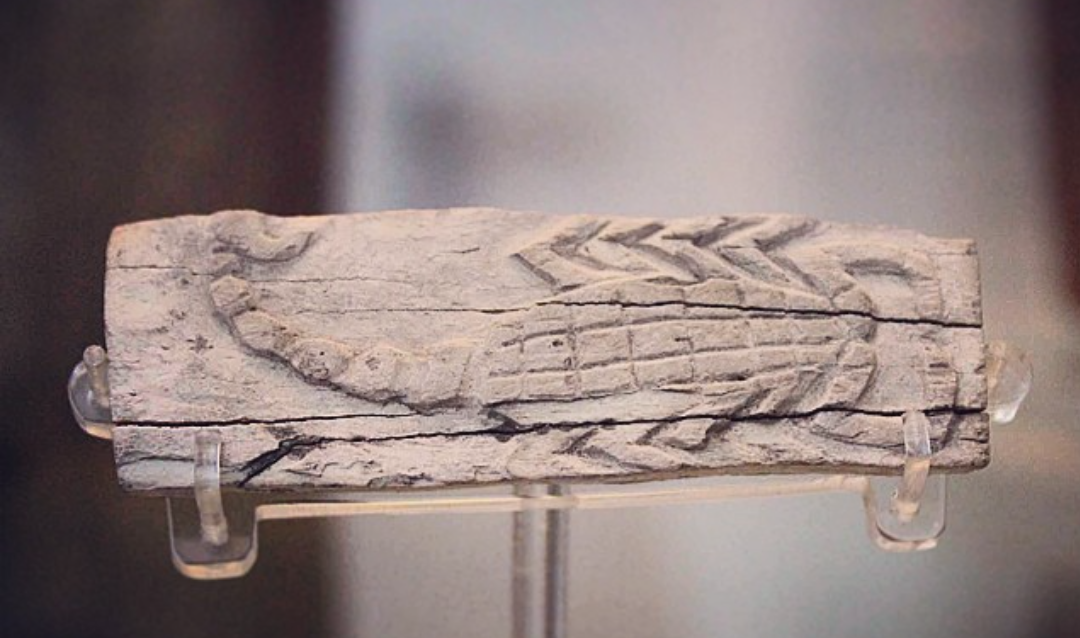
Sooooo...Is it time to say goodby to the Scorpion king? I think so...Bone fragment with a carving of a scorpion. Late Predynastic - early First Dynasty, about 3100 BC
That's it. 

Oh, have you seen this?

19/11/2021. According to CBS News, thunderstorms along the River Nile swept the scorpions...out of their hiding places where they stay during hibernation...into people's houses...


To read more about ancient animal and plant calendar markers, start here…then check the rest of the blog posts related to animal calendar markers I still didn't add to this page, and finally check my twitter threads I still didn't convert to blog post...I am 9 months behind now...

Saturday, 30 October 2021

How grain came to Sumer

Sumerian cylinder seal, Uruk, c. 3500-3100BC , currently in Louvre 


Description: cattle herd in a grain field...Now unless Sumerians grew giant grains, this is most likely a symbol, of something, but what?

Well, as I already explained in my post "Bulls and grain bowls", this is a calendar marker for the grain harvest which in Mesopotamia starts in Apr/May, Taurus

Taurus, which is an ancient animal calendar marker which marks the beginning of the calving season of the wild Eurasian cattle, which used to start in Apr/May...


And has nothing to do with stars...I talked about this in my post "Dairy farming seal"...

Keeping that in mind, let's have a look at another interesting cylinder seal from Uruk, dated to 3200BC, also in Louvre. Description: king-priest and his acolyte feeding the sacred herd...


You can see that the king is feeding the calves...So again we are in Taurus, the calving season...But what is the king feeding the calves with? It's hard to see on this impression.

Here is another depiction of the same scene. And here it is pretty clear that the king-priest's acolyte is holding the same giant grain...Which is then what the king is feeding the calves with...


So again, unless Sumerians grew giant grains, this is also a symbol, of the same thing: We harvest grain at the same time the wild Eurasian cattle calve...

And maybe Sumerians had some kind of thanksgiving ritual, where they fed the first calves with first grain? Don't know...

But I have already talked about all this before...So today I would like to talk about something else: How old are some of the Sumerian legends? For instance this one: "How grain came to Sumer"...

In this legend, we can read that: 

"Men used to eat grass with their mouths like sheep. In those times, they did not know grain, barley or flax"

When was this time "before grain" in Mesopotamia?

"An brought these down from the interior of heaven"

What does this mean "the interior of heaven"? 

Look at this: 

Sumerian: kur: n., mountain; highland; (foreign) land; the netherworld...

Sumerian Ekur (𒂍𒆳 Γ‰.KUR), is a term meaning "mountain house". The term was applied specifically to the mountain(s), where the gods were born...

And before the later speculative view was developed, according to which the gods, or most of them, have their seats in heaven, it was on the E.KUR mountain(s) where gods dwelt...

So maybe An didn't bring the grain from "the interior of heaven" but from the mountains...

E.KUR (The mountain house) was thus the place of the Assembly of the gods in the "Garden of the gods". Which is why E.KUR was also the name for Ziggurats, which were supposed to be models, imitations of the real, one and only E.KUR...

"Enlil...looked southwards and saw the wide sea; he looked northwards and saw the mountain of aromatic cedars. Enlil piled up the barley, gave it to the mountain..."

"Then Ninazu said: "Let us go to the mountain, to the mountain where barley and flax grow; ...... the rolling river, where the water wells up from the earth. Let us fetch the barley down from its mountain, let us introduce the barley into Sumer..."

Very very interesting...Because that is exactly what happened...around 9000BC...

Today I came across this article: "The distribution, natural habitats and availability of wild cereals in relation to their domestication in the Near East: multiple events, multiple centres" which compares the late Pleistocene/early Holocene archaeobotanical assemblages found in the Near East with present-day distributions of wild cereals...


The early agricultural sites are found in the same areas where the wild grains grow in abundance even today. In the mountains and highlands surrounding (and mainly to the north of) Mesopotamia...Look at the relief of the early cereal domestication sites...


Remember my article about the Garden of eden? You know the garden of the God(s)...Which was located "on the holy mountain"...Where, it turns out, grains grew wild in huge amounts...

Is this the place where during "Golden age humans enjoyed the spontaneous bounty of the earth without labor"? You know, Eden...The place from which 4 rivers emerge...The mountains north of Sumer...


Apart from wild cereals, these uplands are full of edible trees: sweet oaks, hazels, fir, junipers...The true garden of eden: God said, “Let the land produce vegetation: seed-bearing plants and trees on the land that bear fruit with seed in it, according to their various kinds”

I wrote series of articles about human relationship with oaks and human consumption of acorns. It seems that all the earliest permanently settled sites were located in edible acorn rich areas. The jump page to the acorn related articles is called  πŸ™‚ "Acorns"

Oak uplands can easily support large villages of up to 1000 people and these people could harvest in 3 weeks enough acorns to last them 2 to 3 years...

Acorns could be stored in above ground aerated bins, in underground pits or they can be buried at the edge of streams where they can get leached while they keep fresh...

The people of these oak cultures could, with very little effort, provide their daily bread doing what god told them to do: eat the fruit of the trees and plants that bear seeds...

With plenty of free time people could enjoy life and develop their culture and technology. With plentiful supply of food there was no need to kill and eat all the animals that were caught...

So people could catch and keep the animals, breed them and eventually domesticate them. It was these animals that were probably first fed the wild grasses which later became our grains...

Interesting, right?

Garden of the gods? So how old is the Sumerian legend about "How grain came to Sumer"? Old, very old...And, considering that cuneiform emerged in Sumer in the late fourth millennium BC, and that grain was brought to Sumer from the northern mountains in the tenth millennium BC, this legend was already 6000 years old before it was possibly first time written down...

Guess what, there could be one even older legend. Found in Europe...But possibly not originating in Europe...

Before people gathered and processed grain, they gathered and processed acorns...

Sooooo???

Have you ever heard about the legend how Pelasgos taught people how to eat acorns? 

Apparently: "...Pelasgos was he who checked the habit of eating green leaves, grasses, and roots always inedible and sometimes poisonous. But he introduced as food the nuts of trees, not those of all trees but only the acorns of the edible oak..." 

I talked about this in my posts "Pelasgos" and "Acorns in ancient texts"...

So how old is this myth? And where did it originate? Lots of things to ponder...

That's it for tonight...

To read more about ancient animal and plant calendar markers, start here…then check the rest of the blog posts related to animal calendar markers I still didn't add to this page, and finally check my twitter threads I still didn't convert to blog post...I am 9 months behind now...

Saturday, 27 February 2021

Pillar 43

While we are talking about GΓΆbekli Tepe, I would like to just ask few questions about the "famous" pillar 43,   Otherwise known as "scorpion and vultures pillar". I would add "and bags, don't forget the bags"...

Is this a random collection of images or???

In my article about the "Four living creatures" I explained that scorpio is the only Zodiac sign which has its double: eagle (actually a vulture and you will see soon why).


I have shown in my articles about zodiac signs that they are actually all solar calendar markers, marking the part of the solar year when the animal in question has its mating or birthing season. An obvious annual event which you can't miss...

That this use of animals as solar calendar markers predates Greek Zodiac by thousands of years, and was ubiquitous all over Eurasia and North Africa, and used in the same way since Neolithic, I have shown in my articles about animal calendar markers...

Interestingly, both animals depicted on the pillar 43, vultures and scorpion, were used in Middle East and Central Asia as calendar markers to mark the beginning of the rain season. Why?

In the area of Gobekli tepe the solar year is divided into two seasons, dry season (end of May to start of October) and rain wet season (end of October to start of May). And in places with this kind of climate, the arrival of life giving rain is the most important calendar event.

Vultures begin their mating season when the first rains arrive, November. 

And you can't miss it, because they start their mad areal synchronised displays:


I talked about this in my article "Double headed eagle"...

Scorpions hide when the temperature gets too low. Which in the area of GΓΆbekli Tepe is also when the first rains arrive, November. And you can't miss this because they disappear from the fields, where it's cold and wet, and appear in your houses, where it's warm and dry

I talked about this in my post "Dilmun goats seal"...

So both scorpion and vultures being depicted on the pillar 43 could mean: when rains arrive...

Cool, I can hear people say, but maybe just a coincidence. How do you explain the bags?

Well, scorpion was used in Mesopotamia (just down the road from Gobekli tepe) as calendar marker to mark the beginning of the grain sowing season. 

Sowing of grains was done after the first rains, when the scorpions disappear. I talked about this in my articles "Sowing" and "7 stars of scorpio"...

After the furrow is made, the seeds are planted into the furrow. Now how did these early sowers bring the seeds to the field? Most likely in a basket...or a bag...with a handle...

Like this one carried by the sower walking next to the plow on this Mesopotamian seal.

Or like this one seen carried by the sower walking behind the plow on this Egyptian mural.

Or like this one carried by the sower on this European Medieval drawing.

I Mean this is the same thing, just the basket is replaced by a "bag" or a bib...

Or like this one carried by the sower on this Van Gough painting...

And so on and so forth...

I know others asked this question before, but here it is again: I wonder if the "basket" like objects found depicted all over Mesopotamia were possibly actually just baskets. Full of grain seeds used for planting new grain.

If you think about it, the mental jump from "eat all the seeds you collect" to "save some of these seeds to plant them so they will grow into plants that will produce more seeds next year" was huge. I mean this was a paradigm shift of the highest order...

The faith placed in these seeds was huge. The expectation from these seeds was huge. We know, from ethnographic records, that these seeds were treated in a special way, that special rituals were performed with them, that blood sacrifices were offered to them...

All in hope that these seeds will take, sprout, grow, ripen and eventually, after a whole solar year has passed, yield more seeds then were originally in the basket...That is a lot of anxious waiting and hoping and praying...So much, you could make a religion out of it πŸ™‚

Considering all this, is it possible that the seed basket was also seen and treated in a special way? Is it possible that this basket of seeds for sowing became a symbol of the new "agri" culture? Not sure...

Anyway, I just find it interesting that we find all these symbols linked to grain sowing together on one stone in Gobekli tepe. By the way, is that a hand poking into the middle "bag" (basket)? Like as if to take something, I don't know, maybe seeds, out of it? It's not clear...

PS: The other day I saw this interview with Dr. Lee Clare, the head of fieldwork and research coordinator for the German Archaeological Institute (DAI) project at the GΓΆbekli Tepe. In it he explains that the grains found in GΓΆbekli Tepe were wild grains. 

My opinion is that this doesn't preclude the possibility that the people from GΓΆbekli Tepe culture, who actively collected the wild grain seeds for food, actually planted them too. As I said, if this happened, this would be a huge paradigm shift which could have led to eventual domestication of wild grains...

But can't prove whether they did or didn't do that. 

Also, Dr. Lee Clare thinks that these were not bags at all, but actual depictions of houses with roofs. Which is also possible...

To read more about ancient animal and plant calendar markers, start here…then check the rest of the blog posts related to animal calendar markers I still didn't add to this page, and finally check my twitter threads I still didn't convert to blog post...I am 9 months behind now...

Monday, 29 June 2020

Baden culture grain maiden

This is a very, very interesting ceramic vessel made by people of the Copper Metalworking and Grain Farming "Baden culture" which flourished in Central and Southeast Europe (Czech Republic, Hungary, Poland, Slovakia, Serbia, Romania, Austria), c 3600–2800 BC...


The vessel body is shaped like a young female body with bare breasts. And the vessel handles are shaped like growing sheaves of grain...The first time I saw this vessel, I stared at it for good 10 mins trying to figure out what it reminded me of...

I eventually gave up and dismissed it as a case of deja vu. That was few years ago, and I almost forgot about this artefact. And then, the other day, I was finishing my post about the Abduction of Persephone. I was looking at this, the last image in the article and suddenly...


This is the Roman, Augustan period "bas relief of Ceres (Demeter) or Proserpine (Persephone) rising from the ground with sheaves of wheat and poppies"...Persephone has come back from "The Underworld". She is Demeter now, goddess of grain, bringer of wealth...

So is the neolithic Baden culture pot depicting the same mythological scene?

Now remember the European tradition about the "Sprit of grain"? Which is preserved every year in "The last sheaf" from which a "Corn dolly" is made, in order to preserve this spirit from harvest to sowing?


I talked about this in my post "Corn dolly"...Who is this "Spirit of grain"? Is this Persephone again? Well the corn dolly is made in a shape of a woman. Her skirt is made from ears of wheat, which contain seeds...The seeds from the corn dolly's skirt are the first seeds sown during next sowing...The corn dolly is killed and buried only to be reborn, sprout and grow into new wheat...

What is interesting is that according to archaeologist, the agriculture practiced by the first European farmers was based around spring sown grains...I talked about this in my post "To kill a witch"...

In which case Persephone, the spirit of grain, would have gone to "The Underworld" (grain sown) beginning of February (beginning of spring), and would have came out of "The Underworld" (grain sprouting) end of February, beginning of March...

This also means that the seeds are sown at the exact moment when the Old Hag, Winter Earth dies and the Young Maiden, Spring Earth is born...

In which case, originally, during the time of the first farmers in Continental Europe, Spirit of Grain and Spirit of Spring were one and the same...Which is exactly what the Greeks claimed...

Is this how old the legend of Persephone is? 

Possibly...

But wait, wait....What about all the references to autumn in the depiction of the Persephone's abduction from the Homeric hymn to Demeter? I mean you wrote the whole article about it "Abduction of Persephone". Was that all rubbish? (I can hear you say)

Well...As I said in that article, I believe that that version of the story with the end of autumn beginning of winter references originated in Crete...And in Crete, the climate is very similar to the climate in the Fertile Crescent, where the agriculture was invented...There the sowing was done after the first rains, at the end of autumn beginning of winter...So it is possible that the original version of the story is the one where Persephone goes to the underworld at the end of autumn beginning of winter...And then that story was brought to Crete, where because the climate was very similar to the one in Fertile Crescent  the story was preserved unchanged. The story was also brought to the Balkans, where the first farmers had to learn how to grow grain in continental European climate...And there, because of that, the story was changed to fit the new climate...

But also, as I said in my post "Abduction of Persephone", maybe her time spent underground represents winter in Europe, the infertile, dead time of the year, and not the time it takes grain to sprout after sowing...

Anyway, it is an interesting thing to think about...