Showing posts with label Wolf symbolism. Show all posts

Friday, 20 February 2026

Casa dei Ceii zodiac

Very interesting fresco of hunting animals from the garden of the Casa dei Ceii, Pompeii (I.6.15)...

What is interesting is that the animals are, from left to right, top to bottom, all arranged in order based on their anima calendar marker meaning...

Top row, left to right:

Deer, mating season Sep/Oct/Nov

I talked about deer as animal calendar marker in many of my posts...

Boar, mating season Oct/Nov/Dec/Jan. 

I talked about boar as animal calendar marker in many of my posts...

Wolf, mating season Jan/Feb/Mar. 

I talked about wolf as animal calendar marker in many of my posts...

Leopard: Mating season Jan/Feb. 

I talked about leopard as animal calendar marker in many of my posts...

Sheep: Lambing season, Feb/Mar/Apr. 

I talked about ram/lamb as animal calendar marker in many of my posts...

Bottom row, right to left:

Bull: Calving season Apr/May/Jun. 

I talked about bull/calf as animal calendar marker in many of my posts...

Lion: Mating season Jul/Aug/Sep/Oct. 

I talked about lion as animal calendar marker in many of my posts...

So here we have a full solar year marked circularly, sunwise (turning from left to right as the sun moves in the sky) by animal calendar markers...

Coincidence? Or deliberate? No idea. If deliberate, why? Again, no idea...

That's that. To read more about ancient animal and plant calendar markers, start here…Then check my twitter threads I still didn't convert to blog post...I am way way behind...

Monday, 21 April 2025

The birth of Romulus and Remus

Roman Republic, Didrachm, 269BC Apparently, today (April 21) is Rome's birthday...Roman historians dated the city's foundation by Romulus (plus/minus Remus) to c. 750BC, and Plutarch reckoned that Romulus and Remus were born c. 771 BC. But in what month? Let's find out...

The legend:

Romulus and Remus were born in Alba Longa. Their mother, Rhea Silvia, a vestal virgin, was impregnated by the God Mars, when he visited her in a sacred grove dedicated to him...

Rhea Silvia was the daughter of the former king of Alba Longa, Numitor, who was overthrown by his brother Amulius. Seeing Romulus and Remus as a threat to his rule, Amulius, took the kids from Rhea Silvia and ordered a servant to kill them by throwing them into the Tiber River...

But the servant took pity on the twins and instead of throwing them into the river, he placed the twins into a basket and put the basket into the River Tiber, and the river carried the boys to safety...

The river god Tibernus ensured the safety of the twins by calming the river, and causing their basket to catch in the roots of a fig tree which grew at the base of the Palatine Hill in the Velabrum swamp...

The twins were then discovered by a she-wolf (Lupa), who had just lost her cubs. She lived in a cave near the fig, which is today known as the Lupercal. She suckled the twins and they were also fed by a woodpecker...

Eventually, Romulus and Remus were discovered and adopted by a shepherd called Faustulus...

The rest is boring stuff, murders, rapes, wars and other "glorious" stuff...I will leave that to historians and Rome "enthusiasts"...

So...Where do we start? I think with the she-wolf (Lupa). She just lost her cubs...and was still lactating...which means that Romulus and Remus were born during the Italian wolf birthing season...Or just before it...Which is when?

Well, it turns out that the Italian wolf, a special subspecies of the wolf family, begins to mate in the middle of Feb...Right around the time of the very important Roman fertility festival Lupercalia (wolf festival)...

The sacred rites performed during Lupercalia were centred around the Lupercal cave...Yup, the one where she-wolf Lupa lived...And the wild fig-tree to which Romulus and Remus were brought by the divine intervention of the river-god Tiberinus...

Interestingly, some Roman sources name the wild fig tree caprificus, literally "goat fig". 

Why is this interesting? 

Cause the main sacrificial right performed during Lupercalia was a sacrifice of goats at the Lupercal altar by Luperci, Wolf Priests...

After the blood sacrifice, two Luperci had their foreheads anointed with blood from the sacrificial knife, which was then wiped clean with wool soaked in milk, after which they were expected to laugh...

The sacrificial feast followed, after which the Luperci cut thongs (known as februa, hence February) from the flayed goat skin, and ran with these, naked, along the old Palatine boundary, laughing and striking those they met with goat skin thongs...

Plutarch writes that "Many women of rank also purposely get in their way, and like children at school present their hands to be struck, believing that the pregnant will thus be helped in delivery, and the barren to pregnancy"...

Luperci then returned to the Lupercal cave...

So...What's all this about? Remember that Ibex (wild) goats were in Europe used as animal calendar markers for winter (Nov,Dec,Jan)...Because their mating season starts in Oct/Nov...

Article "Goat in European culture", about Ibex goat as an animal calendar marker imbedded in in European cultures and mythologies...

Winter finishes in Jan, and spring starts in Jan/Feb...Right when Italian wolves start mating in Feb/Mar...And when Luperci, wolf priests (spring) kill goats (winter) and use goat skin thongs as magic fertility instruments...

Because in continental Europe nature dies at the beginning of winter, and gets resurrected at the end of winter, and because winter is the season of the goat, the goat has to die, so nature can get resurrected...

Article "Krampus", explaining the link between Mountain Ibex Goats, #Capricorn zodiac sign, #Yule Goat, #Krampus and all the other Christmas related goat characters and masks:


You might like this too: Describe winter zodiac poetically 🙂


A hunter chases an ibex with gold horns up the mountain. At the summit he shoots the goat. The goat is bleeding and dying. But a magic flower grows out of its blood. Goat eats the flower, gets revived and runs away. I talked about this in my articles "Zlatorog-Goldhorn" and "Trentar"...

After the goat was killed by Wolf priests, the sacrificial knife  was cleaned by milk and wool...Feb is the the time when sheep start lambing and lactating...

The sheep stop lambing and the milking season starts in Mar/Apr, in Aries...

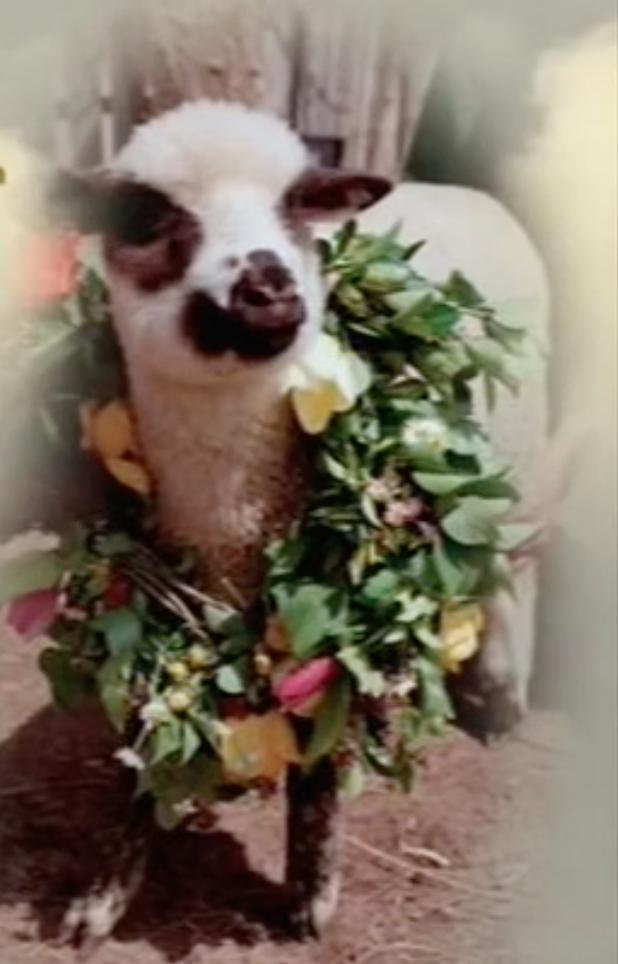
When a lamb is decorated like this in Serbia, it means that it's destined to be sacrificed to St George...Aries must die so Taurus can begin...Spring is sacrificed to summer... 

Also the lambing season is over and the milking season begins. From my article "Aries must die"...

The killing of a dog, together with goats, was a sacrifice to wolves, so that they spare the flocks...

BTW, dog mating season is opposite to wolf mating season...They are opposite calendar markers...Natural antagonists...

When our mythologies were made out of animal calendar markers, Sirius, the Dog Star rose with the sun in Jul/Aug, when mating season of the old dog breeds began...

Egypt: Article about "Dog days"...

Mesopotamia: Article about "Tishtrya"...

India: Article about "The bitch of the gods"...

Anyway, back to Romulus and Remus...The Italian wolf mating season spans Feb/Mar. The gestation lasts 2 months...Which means that the Italian wolf cubs are born in in Arp/May...

And so, Romulus and Remus could have been born in Mar/Apr (Aries) possibly in Mar, the month of their father Mars...But then they would have been a month old before they were thrown into Tiber...

Could that be the case?

I think that Amulius decided to kill Romulus and Remus as soon as he found out they were born...Which means that they were probably born in Apr/May...

Look at this. This is flood chart of the river Tiber. You can see that the floods almost completely subside by Apr/May...Remember that Tibernus "calmed the waters of Tiber down to ensure safety of the twins"...

And then he delivered the basket with the boys to the roots of a wild fig...Where they were "cradled in the shade of the fig branches". Fig trees are deciduous, dropping their leaves in late fall and leafing out again in early spring...

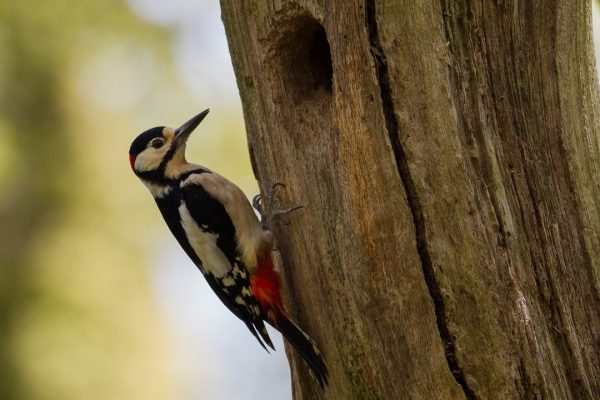
So when are fig leaves fully grown in the area around Rome? Finally, while Lupa was breastfeeding the twins, "woodpeckers were bringing them food too"...Woodpecker was the sacred bird of Mars, the father of Romulus and Remus...

And 4 main woodpecker species in Italy (The great and lesser spotted woodpeckers, Green and Black woodpecker) are nesting in Apr/May...Right on time to feed Romulus and Remus...


The two wolf boys were then found and adopted by Faustulus, the shepherd, and were brought up as shepherds...Interesting...Apr/May is when shepherds take their sheep to the highland pastures...I talked about this in my article "Aries must die"...


Sooooo....Apr/May? Guess what happens in Apr/May? More precisely on the 21st of Apr? The Rome was founded...By Romulus (plus/minus Remus)...

Oh and this is when the flocks are purified during Palilia (Parilia) ceremony...

Palilia (Parilia), the Roman festival, held on 21st April, cleansed shepherds & sheep, honouring the god of shepherds & sheep, Pales. Interestingly, Romans didn't really know who Pales was...So in this article I tried to uncover Pales's the secret identity 🙂 I talked about this in my article "Parilia"...


That's that. Interesting? I think so. 

To read more about ancient animal and plant calendar markers, start here…Then check my twitter threads I still didn't convert to blog post...I am way way behind... 

Monday, 26 December 2022

Wolf moon

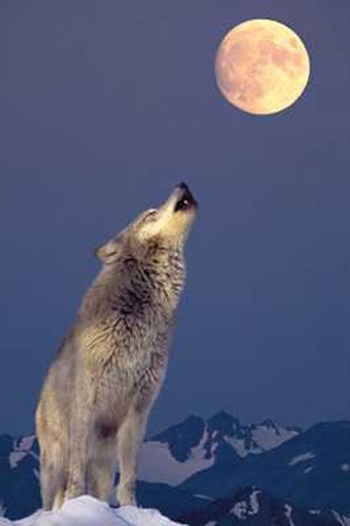
The January full moon is referred to as the "Wolf Moon," because traditionally, "wolves can be heard howling at the moon more this time of year". Why?

Cause wolves mating season starts in mid January.

MacBain's Gaelic dictionary says that period from mid January to mid February was once called "faoilleach", "faoillteach", Irish "faoillidh", "faoilleach"...From "faol", wolf, meaning "wolf-month". The month when wolves mate...

Anglo-saxons also called January "Wulf-monath" (meaning "wolf month"). For the same reason: wolves are much louder and more noticeable in January, which is when breeding season begins...

Interestingly, in Serbian tradition, 14th of January (Julian) or 27th of January (Gregorian) calendar, is the day of the Serbian patron saint, St Sava...

Who was known as "The wolf shepherd"...

St Sava's cult replaced the cult of the Serbian supreme god Dabog who was also known among other things as "Wolf Shepherd". Both originally Dabog and later St Sava were believed to be able to command the wolves who and when to attack, and whom not to attack...

So remember how animal calendar markers are made? The fact that wolves mate during Jan/Feb, something that is hard to miss if you live in a wolf country, makes wolf a great animal calendar marker for Jan/Feb, the end of winter. Like in this Sumerian story: 

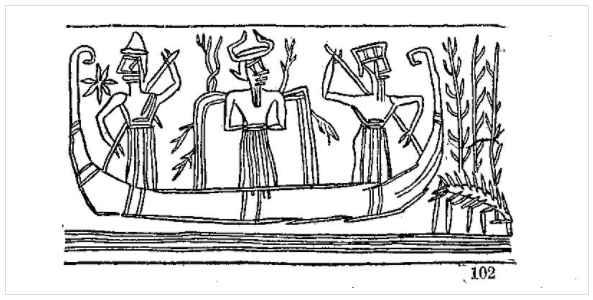
"When Enki set sail...against the lord a storm...arose...The waves at the bow of the boat rose to devour the lord like wolves and the waves at the stern of the boat were attacking Enki like a lion..."

All the animals in these scene are animal calendar markers for the beginning of the flood season in Mesopotamia, which starts when wolves mate (Jan/Feb) and ends when lions mate (Jul/Aug)...I talked about this in my post "Enki's little boat"...

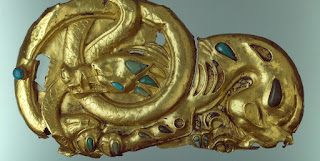
Because of their mating season at the end of winter, wolves are used for creating composite "mythical animals", that represent winter...Like on this "Scythian" gold belt buckle depicting a "fight between a wolf and a snake"...Wolf is here depicted with boar tusks...Wild boar mate in Oct/Nov, beginning of winter, while wolves mate in Jan/Feb, the end of winter...In the world of animal calendar markers, this would mean "division of the year into winter (boar, wolf) and summer (serpent)"...I talked about this object in my post "Volf vs snake"...


When I originally posted the belt buckle article as a twitter thread
@Peter_Nimitz sent this reply:

Fascinating thread on animal calendars. Wonder if the wolf Fenrir & serpent Jormungandr are distant descendants of this mythology - compare the belt buckle to this Norse stave church with the serpent & the wolf...


Jörmungandr, the Great Serpent and Fenrir, the Great Wolf, are brothers...Brothers are usually used to specify that we are talking about two aspects of the same thing, in this case solar year: serpent (summer, heat) and wolf (winter, cold)...

Anyway, we started with "wolf moon is called wolf moon cause wolves like howling at it"...So let's finish with this...

The howling wolf. Wood with shell inlay, Southern Siberia, 3rd c. BC. Nomadic steppe art. Cleveland Museum of Art, Ohio, USA. 

I wonder if people, when they invented "old style" polyphonic singing, actually imitated wolf pack howling? I talked about this in my post "Ojkanje, the wolf singing"...

To read more about ancient animal and plant calendar markers, start here…then check the rest of the blog posts related to animal calendar markers I still didn't add to this page, and finally check my twitter threads I still didn't convert to blog post...I am 9 months behind now...

Saturday, 4 December 2021

Wolf vs snake

Few days ago I came across this amazing artefact: A "Scythian" gold belt buckle depicting a "fight between a wolf and a snake"...


This is one of 250 decorative gold objects made by the Eurasian nomads between the 7th c. BC and 2nd c. AD, in the so called "Scythian-Siberian animal style"...which are part of the "Siberian collection" of Peter I which was assembled in the early 18th c...

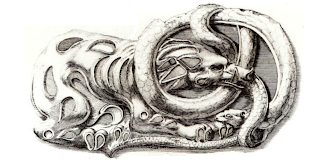
Now there is something very strange about this object...The wolf is not really a wolf...You can see more clearly what I mean on this drawing made one century before the Siberian collection was assembled...

This is not the drawing of the belt buckle from the collection of the Peter I. It is a drawing of another belt buckle, most likely a part of a pair, from the Nikolaas Witsen collection...Depicting a mirror image of the scene from the belt buckle from the Peter I collection...

Nikolaas Witsen was a Dutch scientist and cartographer, who visited Russia in 1664-1665. He wrote about his trip in a book "Northern and Eastern Tartaria" where this drawing appear...

In this first detailed depiction of Siberia (Tartaria) in Europe, Witsen also wrote about the gold objects which were at that time dug out of the ancient Siberian burial mounds...

Apparently, looting ancient Siberian burials for gold was a big business at the time...No one knows what was found and lost...The belt buckle from the drawing was one of the objects Witsen "collected" or bought from the "collectors" for himself...

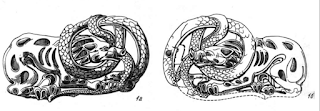
Here are the drawings of both buckles:

L: Nikolaas Witsen collection R: Peter I collection. 

Drawing from this page which compares these two collections...

You can see that the "wolf" is actually a composite animal, with the body and the head of a wolf and the snout (and a tusk) of a wild boar...

So...Composite animal...Mythical beast? Or a complex animal calendar marker? 🙂

So what are animal calendar markers? Well these are ancient animal symbols used as calendar markers to mark the time when the depicted animal mates, gives birth, migrates, hibernates...

They were most likely devised by the first farmers in the Fertile Crescent, maybe 15,000 years ago, although there are some indications that they could be even older, developed in Palaeolithic Europe, and then brought to Fertile Crescent during last Ice Age...

Anyway, these animal markers were in the Fertile Crescent used to create first agricultural calendar...The reoccurring annual events important for agriculture were marked by the animals that mated, or gave birth, or migrated, or hibernated...at that same time...

For instance: 

Rains arrive when ibex goats are mating.

Flood arrives when auroch cattle are calving.

Snow starts melting when leopards start mating.

The hottest and driest part of the year is when lions start mating.

And so on and so forth...

The first farmers brought this agricultural calendar with them, as they were spreading through Eurasia and North Africa. Amazingly, over time these animal calendar markers became deified...And became base on top of which all Eurasian and North African mythologies are built...

More about ancient animal calendar markers, start here then check the rest of the blog posts I still didn't add to this page, and finally check my twitter @serbiaireland threads I still didn't convert to blog post...I am 7 months behind now...

Back to the belt buckle...

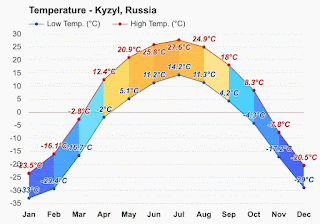
So what about our belt buckle then? What do the animal calendar markers (snake, wild boar, wolf) depict? Well to understand this we need to look at the climatic year in Central Siberia, and particularly the temperature...See, two halves: hot (+30) and cold (-30)...


So, snake...

Snake is a solar animal, which is in our world when sun is in our world: during the day and during the hot part of the year...Which is why it was in this ancient calendar, used as a solar symbol and the symbol of the hot half of the year...I talked about this in many of my posts, for instance "Enemy of the sun", "The chthonic animal", "Bactrian snakes and dragons"...

Dragon of a fire breathing variety, is just "an old snake", just a "snake that has looked at the sun for a long time"...Dragon is basically just a symbol of the late summer, the hottest and (usually) driest part of the year, the time of droughts...I talked about this in many of my posts, for instance "Dragon who stole rain", "Seven headed dragon", "Winged superhuman hero", "Is that you Gilgamesh"...

If you are interested in mythology where dragon is a water animal, because the hottest part of the year is also the wettest, check these articles out about Chinese dragons: "Chinese dragon", "Tiger and dragon"...

So we have a snake/dragon as a symbol of the hot part of the year...Fighting with a composite creature, part wild boar (mating season Nov-Jan), part wolf (mating season Jan-Mar)...


As you can see the animals forming "The enemy of the snake/dragon" mate during the winter, and are used widely as symbols for winter, the cold part of the year, when snakes are nowhere to be seen...They are killed (forced underground into hibernation) by their "mythical enemy"...Cold winter...

And if we look at the "mythical animal", we can see that the wild boar (snout, tusk) actually marks the beginning of winter and the wolf (head, body) marks the end of winter...

So...I believe that here we have a symbols of two opposing halves of the Central Siberian climatic year, hot summer and cold winter...Depicted through animal calendar markers...

PS: Here is another article about an artefact done in "Siberian animal style" with every single animal depicted having its mating season during the winter, which why it is being used as an animal calendar marker for winter...I talked about it in my post "Tasmola talisman"...


To read more about ancient animal and plant calendar markers, start here…then check the rest of the blog posts related to animal calendar markers I still didn't add to this page, and finally check my twitter threads I still didn't convert to blog post...I am 9 months behind now...

Sunday, 24 October 2021

Vettersfelde Treasure

The Vettersfelde Treasure is a treasure trove of gold objects, which was found by chance in what was then Vettersfelde in the Province of Brandenburg (modern Witaszkowo, near Gubin, Poland) in 1882. The treasure is now in the Antikensammlung Berlin...


The main objects in the trove are: a fish shaped plaque, four discs plaque, and a cover of a dagger sheath. All these objects are dated to the early 6th century BC, are decorated in the steppe "animal style", and are believed to be "of Scythian origin"...

How they ended up in the North Poland is still debated. Original theory was that during a Scythian expedition into central Europe, a Scythian prince died and was buried near Brandenburg with the trove forming part of his grave-offerings. But this is today disputed...

As interesting as the origin of the hoard is, I find what is depicted on the objects more interesting...From the point of view of animal calendar markers and their presence in Scythian (???) culture...

I already talked about the presence of animal calendar markers in the steppe "animal style" decorated objects in two previous articles.

In my article about "Combs from Tuva"


And in my article about "Tasmola talisman"

In them I showed that that animals used were not depicted together randomly. Rather, the animals that are depicted together, are the animal calendar markers, used to mark the same part of the year...

In the paper "Der Goldfund von Vettersfelde" (in German) we can find high definition drawings of the objects from the Vettersfelde Treasure which allow us to see precisely what animals are depicted on them...

In the rest of this article I will analyze the scenes depicted on these objects and will try to explain why they were decorated the way they were...

The cover the of the dagger sheath. 

On top we can see a lion chasing the sun. Lion is primarily symbol of autumn (Aug,Sep,Oct) because this is when the main Eurasian lion's mating season takes place. This is what Leo marks 🙂. Start of lion mating season.


But lion is also used to represent the whole hot dry part of the year. Leo marks the hottest and driest part of the year in continental northern Eurasia...I talked about this in this article "Mycenaean ostrich egg with seasons" where I talked about this beautiful Mycenaean engraved ostrich shell


Below the lion chasing sun, in the top strip, we see a wild boar (mating season, beginning of winter, Nov/Dec/Jan) being chased by a Eurasian leopard (mating season, end of winter, Jan/Feb). So the top strip symbolises winter...

I talked about boar as a symbol for the beginning of winter, and winter itself, in my posts "Tasmola talisman","Calydonian boar", "Double headed eagle", "Overpowering"...

I talked about leopard as a symbol for the end of winter, and winter itself, in my posts "Leopard and tiger", "Furious Maenad", "Spots and stripes", "Two headed dragon", "Griffin killing lizard", "Vessel from Tepe Hissar"...

Below that, in the bottom strip, we see a Persian fallow deer (mating season, autumn, Aug/Sep) being chased by an Eurasian lion (mating season, autumn, Aug/Sep/Oct). So the bottom strip symbolises autumn...

I talked about deer as a symbol for autumn in my posts "Mycenaean ostrich egg with seasons", "Queen Puabi's cylinder seal", "Entemena Vase", "Upside down"... 

I talked about lion as the symbol for the beginning of autumn (Jul/Aug) the hottest time of the year, and for autumn itself in my posts "Mycenaean ostrich egg with seasons", "Musth", "Lions vs buffalos", "Summer and winter seal", "Winged superhuman hero"...

Interestingly, the mating seasons of wild boar and Eurasian leopards overlap at the end of winter, the coldest part of the year. While the mating seasons of the Persian fallow deer and Eurasian lions overlaps at the beginning of autumn, the hottest part of the year...

So it is possible that these two scenes actually depict the two "old" seasons: summer (Apr/May-Oct/Nov) and winter (Oct/Nov-Apr-May) with coldest part (Leopard) and Hottest part (Lion)

Why are fishes there? Well, it is possible that some migratory fish, which lived in the rivers flowing through the territory where the artist that made this object lived, migrated up the river "after autumn and winter", which is why the fishes are depicted following the other animals??? That this is indeed the case becomes clear when we see the next object.

Fish shaped plaque. 


In the top strip on the fish's body, we find the same two pairs of animals we find on the dagger sheath cover. From the head: lion chasing deer (autumn), leopard chasing boar (winter). 

In the bottom strip on the fish's body, we find fish, fish, fish...Lots of fish swimming together. And dolphins...And a fish man...Strange things for steppe nomads to be into, right? But not for people living around the Black and Azov seas and along the great rivers that empty into them.

Like Greek colonists from many Greek cities dotting the Scythian coast...And they were into fish and fishing. And dolphins. And probably the fish guys (any idea who he could be?). 

This is why I believe that these gold objects were made in one of these cities, by a Greek...

But what do these fishes represent? Well, in my post "Mesolithic sturgeon fishermen" I talked about the fact that giant beluga sturgeons migrate into Danube to spawn in late Feb - early Mar, in Pisces...


I talked about the fact that Pisces marks the main upstream migration time for salmon  in continental Europan rivers in my post "Fishes". It turns out Black and Azov sea sturgeons also have the same mating pattern. 

So the pile of fishes in the bottom strip on the fish plaque, could represent this upstream fish  migration which takes place after lion chasing deer (autumn, Aug/Sep/Oct) and leopard chasing boar (winter, Nov/Dec/Jan) are over...In Feb/Mar...

The tail is made up of two ram heads and a bird in flight. Ram is usually used as a symbol for spring (Feb/Mar/Apr). You can read more about the symbols of the seasons in my post "Symbols of the seasons"

The lambing season of the wild Eurasian sheep takes place in (Mar/Apr). I talked about this in my post "Ram and bull". The end of the lambing season is the beginning of the milking season. This important event is marked by Aries (Mar/Apr), which has to die in order for Taurus (Apr/May) to begin...Which is why we sacrifice lambs at this time of the year...I talked about this in my post "Aries must die"...

So why are these ram heads here? Well, they represent spring (Feb/Mar/Apr) which follows winter, represented by leopard killing boar (Nov/Dec/Jan), which follows autumn, represented by lion killing deer (Aug/Sep/Oct)...More specifically, they represent Aries (Mar/Apr) which follows Pisces (Feb/Mar)...

What about the bird? What kind of bird is it? It looks like a raptor. Is it possible that this is some kind of migratory raptor that arrives back to the steppe in spring? Or nests in spring? 

Interestingly, there is an eagle that nests in Mar/Apr and which fishes during the warm part of the year. And even eats dolphins (dead, stranded ones to be fair). White tailed eagle which lives along the Black and Azov sea coast...


And Pontic Greeks depicted it on their coins both 

eating fish 


and eating dolphins 


I talked about this in my post "Eagle eating dolphin"...

Cool, right?

The discs. 

Top left, boar facing leopard (we have seen this already here, end of winter), and lion facing bull (we haven't seen this here so far, but it represents the end of summer)...
Summer (May/Jun/Jul) starts in Taurus (Apr/May). Taurus, which marks the beginning of the calving season of the Eurasian wild cattle. I talked about this in my post "Ram and bull". This makes bull the most common symbol for the beginning of summer and the summer itself. I talked about this in my posts "Symbols of the seasons", "Green pastures", "Rain and flood", "Dairy farming seal", "But chewing", "Holy cow", "White calf"...
Here we could be looking again at the depiction of winter vs summer: coldest part of the year (Jan/Feb, wild boar and leopard mating season) and hottest part of the year (Jul/Aug, wild cattle and lion mating season)...
Top right, wolf facing ibex goat, and two rams facing each other...

Ibex goats mate during winter (Nov/Dec/Jan) and just like wild boar are common symbol for winter. Actually the most common symbol for winter. I talked about Ibex symbolism in my posts "Combs from Tuva", "Goat riding thunder god", "Krampus" "Goat petroglyphs from Iran", "Tanngnjostr and Tanngrisnir"...

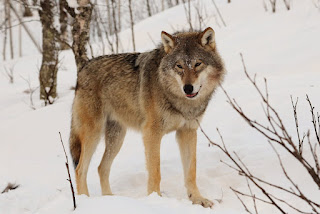
Wolves mate in Jan/Feb/Mar, at the end of winter. Which makes them a very good symbol for the end of winter and winter itself. I talked about this in my post  "Tasmola talisman

So that part depicts winter.

What about two rams? This can either be the mating season of the wild sheep (Nov-Jan) or lambing season of the wild sheep (Mar/Apr)...I am not sure...Most likely spring...

Bottom left. Dog chasing hare. The hare mating period starts end of January, beginning of February. I talked about this in my post "Winter spirit". Hare is one of the most common symbols of spring...

The mating season of hares ends at the end of July, beginning of August...Right when the mating season of the old primitive dog breeds starts, in dog days...I talked about this in my post "Dog days"...

Which is also when the mating season of both Persian fallow deer and Eurasian lions starts...I talked about this in my post "Entemena vase"...

So both dog/hare and lion/deer point to the same time of the year, beginning of Aug...

Bottom right...Four leopards facing each other...I have no idea what this could be. Maybe whoever made this object just liked leopards very much 🙂 Or maybe they loved sturgeon fish very much, which start migrating upstream (when it is the best time to catch it), in Feb/Mar, right after leopards finish their mating season in Jan/Feb...

That is not really that important...

Important thing is that these objects were not decorated with a random depictions of animals. Whoever made these objects used the same old animal calendar markers in the same way all the ancient cultures used them to create their "religions"...

To read more about ancient animal and plant calendar markers, start here…then check the rest of the blog posts related to animal calendar markers I still didn't add to this page, and finally check my twitter threads I still didn't convert to blog post...I am 9 months behind now...