Showing posts with label Sumerian. Show all posts

Thursday, 28 April 2022

Cow and calf ivory

Decorative carved ivory with a cow suckling her calf and licking its tail among (very stylised) papyrus flowers. Neo-Assyrian, 9th-7th c. BC. Found in Nimrud, Iraq. Currently in the Iraq Museum in Baghdad...

Take a good look at the scene depicted on this ivory...

Pic by Osama Shukir Muhammed Amin


Now have a look at this: Another decorative carved ivory with a cow suckling her calf and licking its tail among (much less stylised) papyrus flowers.  No idea where it was found. Currently in the Ashmolean museum, Oxford and apparently "it was probably carved in Syria, 850–700BC"

Pic: Ashmolean museum

It must have been a very popular theme at the time...Cause while wondering through Mesopotamian section in the Louvre museum last weekend, I came across three Neo Assyrian ivory plaques, all found in Arslan Tash, all dated 800-700BC and all depicting the same scene: A cow suckling her calf...

Pic: Louvre museum

Pic: Louvre museum

Pic: Louvre museum

Why? Well, one possible explanation could be this: These objects are not (only) decorative...

Well they wouldn't have been if they were made in Ancient Egypt...There, papyrus flowers were sacred to the Egyptian mother goddess Hathor...Celestial Cow goddess Hathor...Who is often depicted emerging from the flowering papyrus thickets...

To understand why papyrus was sacred to Hathor, we need to look at the association of Hathor with Mehet-Weret, another "Celestial Cow goddess" whose name means "Great Flood" and who was thought to bring the inundation of the Nile River which fertilised the land...

Mehet-Weret, had no independent cult of her own. It is presumed that Hathor absorbed most of her attributes as early as the Old Kingdom, as many references of the two as identical are found in Pyramid and Coffin Texts...

Now Mehet-Weret is goddess who causes the annual Nile River flood. The flooding of the Nile is the result of the yearly monsoon Mar/Apr and Jul/Aug causing enormous precipitations on the Ethiopian Highlands...
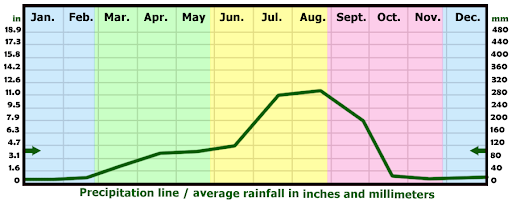
This rain causes the nile water flow rate and water level to start rising from May/Jun

And interestingly, the period (Apr/May), right before the Nile water level begins to rise, is marked by a bull animal calendar marker...And has been in Eurasia and North Africa since Neolithic...Animal calendar marker which we today know as Taurus zodiac sign...

But which has nothing to do with stars...This animal calendar marker marks the start of the Eurasian wild cattle calving season. So originally it was a wild cow and calf marker...I talked about this in my post "Ram and bull"...

So Hathor, Mehet-Weret (The Great Flood), arrives during the time when wild cows start giving birth to their calves and start producing milk...Interestingly, Hathor was said to be a "wild cow whose udders were spilling milk on the earth"...

Oh yeah, Taurus is also the beginning of summer, the season marked with the bull throughout Eurasia and North Africa since Neolithic too...In Egypt that is the season during which the Nile water levels rise until the river floods Jul/Aug...I talked about this in my post "Symbols of the seasons"...

Oh and: Hathor arrives carrying sun between her horns...Translation: The half of the year dominated by the sun, starts when the wild cows start calving...In Taurus...

So if the above two ivories were carved by Ancient Egyptian artists, that would explain why the cow and the calf scene wouldn't have been "only decorative"...I think...But what about papyrus?

As I said, papyrus plant was sacred to Hathor. 

The main annual ritual associated with Hathor was the so called "Ritual of Plucking Papyrus for Hathor" which appears to have been an invocation, offering and pacification ritual...

This is the depiction of the ritual. Goddess Hathor emerges from the papyrus thicket on a sacred boat and is greeted by the woman who offers her papyrus flowers...

Apparently: "the ritual has extremely early origins and may have become a ritualised form of the simple act of picking papyrus flowers as votive offerings for the goddess Hathor"...Why papyrus and not some other plant?

Apparently: "papyrus symbolised life, joy and renewal"...Why papyrus and not some other plant?

The answer can be found in this paper: "Ecology and biomass production of Cyperus papyrus L. on the Nile bank at Damietta, Egypt" by Mamdouh S. Serag...

In this article you can find this chart...It seems that if you wanted to go plucking papyrus flowers, the best time to do it was during Taurus (April-May), right at the time of the arrival of the the great flood, Mehet-Weret, Hathor...Calving wild cow...

All of this happens right at the time when the Nile water level start to rise...So flowering of the papyrus plants announces the arrival of Hathor, Mehet-Weret, Great Flood...

I talked about this in my post "Holy cow"...

No wonder papyrus flower symbolised life, joy and renewal. No wonder papyrus flowers were sacred to Hathor and were plucked and offered to her as a sacrifice...No wonder papyrus flowers were sacred to the Ancient Egyptians...

Soooo....The two original carved ivories are calendar markers for Apr/May - when wild cows calve and papyrus plant flowers and Nile water level starts to rise...As I said, a pretty important part of the year in Ancient Egypt...Even more important thing in Ancient Mesopotamia...

As the sun's elevation rises, the earth starts to warm...Which cause the snowmelt to start in the mountains North-East from Mesopotamia...


Which causes the snowmelt runoff to increase and peak in Apr/May (Taurus 🙂)

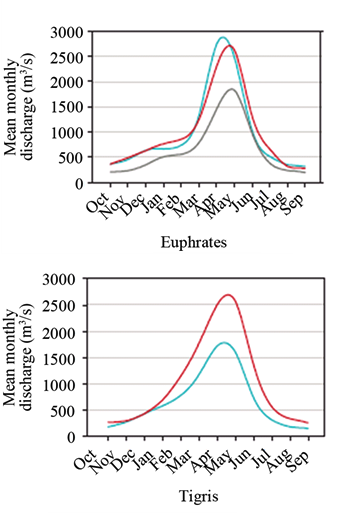
And it is this snowmelt that is the main contributor to the water flow of Tigris and Euphrates...Which also peaks in Apr/May (Taurus)...

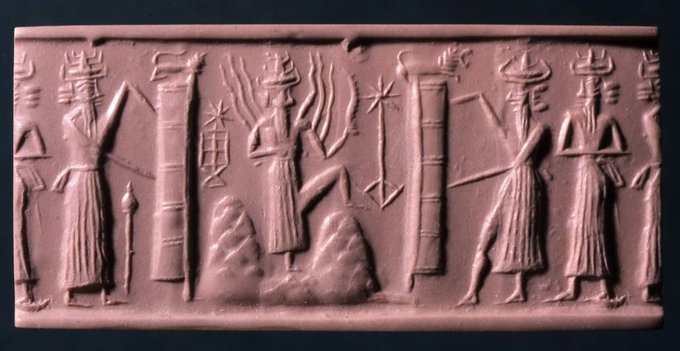
In Mesopotamia the flood was thought to be caused by the god of fresh water and flood Enki who: "stood up full of lust like a rampant bull, lifted his penis, ejaculated and filled the Tigris with flowing water. He was like a wild cow mooing for its young in the wild grass..."

At the same time "Enki placed in charge of the whole of heaven and earth the hero, the youth Utu (Shamash), the bull standing triumphantly, audaciously, majestically...the great herald in the east of holy An...with a lapis-lazuli beard, rising from the horizon..."

Pic: Penn museum

I talked about the link between bull and flood in my posts "When Utu steps up into heaven", "Butt chewing", "Green Pastures", "Shamash young and old"...

So the above two carved ivories made a lot of sense to Mesopotamians and probably weren't "only decorative" to them either...

Apparently no one knew why Enky was "like a wild cow mooing for its young", or why Hathor was "a wild cow", or why papyrus was so sacred to her, or why these carved ivories depict cow and calf among papyrus flowers...Until I started researching animal calendar markers...Weird...

To read more about ancient animal and plant calendar markers, start here…then check the rest of the blog posts related to animal calendar markers I still didn't add to this page, and finally check my twitter threads I still didn't convert to blog post...I am 9 months behind now...

Saturday, 30 October 2021

Bulls and grain bowls

Fragment of a vessel with wheat stalks and a procession of bulls in relief, Late Uruk–Jemdet Nasr, 3300–2900 BC, Southern Mesopotamia. Why bulls and grain? Currently in the Met Museum


Steatite bowl with bulls in relief (5 cm. high). Found in a house of much later (Persian) times; dated stylistically to the Jemdet-Nasr period, 3100–2900 BC, Southern Mesopotamia. Currently in the gallery of the University of North Carolina...


Sumerian limestone bull cup with wheat stalks. Late Uruk–Jemdet Nasr, 3100–2900 BC, Southern Mesopotamia. Why bulls and grain? Sold by Christies...


Why bulls and grain? For the same reason sun god Shamash/Utu was depicted as a bull with a tail made of wheat...

Because it is in Taurus (Apr/May), at the beginning of the hot half of the year, when sun god ascends to his throne, that the grain harvest begins in Mesopotamia...

But this is the old Taurus, which has nothing to do with stars...It is an ancient animal calendar marker which marks the beginning of the calving of the wild Eurasian cattle. 

I talked about this in many posts...

Like "Ram and bull" about the zodiac sings of Aries and Taurus and their link to annual lifecycles of wild sheep and cattle...

Like "Green pastures" about this plaque from Tel Asmar...


Or like "Butt chewing", about this plaque from the first dynasty of Ur...

If you look at the Mesopotamian agricultural calendar, you will notice that: 

Mesopotamian summer (Apr/May-Jul/Aug) started with grain harvest and ended with grain threshing and storage...These are Neolithic sickles from Mesopotamia

I talked about this in my posts "Sickle" and "Seven seals"...

The grain collecting season, summer, which starts in Taurus, is symbolised by a bull, because both calving (begins in Apr/May) and mating (begins in Jul/Aug) of Wild Eurasian cattle takes place during the summer, May to August...

I talked about animal symbols of the seasons in my post "Symbols of the seasons"...

Which is why on the Late Uruk–Jemdet Nasr vessels we see bulls depicted with ripe grain...

Now check Hesiod and what his agricultural calendar has to say about grain: "When the Pleiades, daughters of Atlas, are rising, begin the harvest". 

At the mid 8th century BCE in Bœotia, the heliacal rising of the Pleiades occurred about 47 days after spring equinox, which corresponds approximately to the first week of May...in Taurus...

I talked about this in my post "Hesiod on grain"...

Oh by the way, this is also when the Sacred marriage ceremony between Enki/Ea and Inanna/Ishtar was performed on threshing floors in Mesopotamia...I talked about it in my post "Sacred marriage on the threshing floor"...

To read more about ancient animal and plant calendar markers, start here…then check the rest of the blog posts related to animal calendar markers I still didn't add to this page, and finally check my twitter threads I still didn't convert to blog post...I am 9 months behind now...

Sunday, 20 June 2021

Dairy farming seal

Cylinder seal, c.3200-3000 B.C. Late Uruk-Jemdet Nasr period. Official description:

In the lower field of this seal appear three reed cattle byres (cow sheds). Each byre is surmounted by three reed pillars topped by rings, a motif that has been suggested as symbolizing a male god, perhaps Dumuzi... (question here: why?)

Within the huts calves or vessels appear alternately; from the sides come calves that drink out of a vessel between them. Above each pair of animals another small calf appears. A herd of enormous cattle moves in the upper field...

This is a very interesting seal. First I think that it is a calendar marker. The cattle are the wild eurasian cattle, aurochs, which start calving in Apr/May. This is what the original Taurus animal calendar marker marked...

I talked about this in my post "Ram and bull"...

This is a super important part of the year in Mesopotamia. The peak of the water levels of Tigris and Euphrates. The annual flood...Which was believed to be caused by Enki, the god of fresh water...

Water level charts:

Tigris

Euphrates

Which is why, in "Enki and the world order" we read: "...Father Enki...he stood up full of lust like a rampant bull, lifted his penis, ejaculated and filled the Tigris with flowing water. He was like a wild cow mooing for its young in the wild grass..." 

I talked about this in my post "Shamash young and old"...

The houses depicted on the seal are the houses of the so called Marsh Arabs...The annual flood which coincides with the beginning of the aurochs calving season used to turn the central Mesopotamia into this 

I talked about this in my post "Enki's little boat"...

You can see cattle, sheep and goats inside of pens, enclosures, located next to houses...Not inside of the houses...Which makes me doubt whether the buildings depicted on the seal are indeed cattle byres...

So what is depicted on this seal?

What is very interesting is that one of them is full of calves and the other one is full of ceramic vessels...What could this mean?

Is it possible that this is a very early depiction of butter production? Like humans, cows only produce milk after they have given birth...Almost all calves are separated from cows within hours or days of birth, so that they don't drink all the milk the cows produce...

So if you want to milk the cows, you would take the calves away from their mothers, and put them into a separate object, a calves shed. You would then milk the cows, take part of the milk for yourself and give part of it to the calves...

This would explain that only calves are depicted in the so called cattle byres. And this would also explain why the calves are drinking out of vessels...But what about the pots? Well, I think they could be butter churns and butter storage vessels...

Exactly that is depicted on the frieze from the temple at Ubaid, near Ur, in southern Mesopotamia. Dating from ca. 2,500 B.C., this frieze has been cited as "the earliest absolute evidence for the use of milk"...


Here is the same scene drawn, so you can see the details more clearly. The drawing is from this interesting paper: "Cows, milk and religion: the use of dairy produce in early societies"... 

Top row shows cows being milked with their calves tied around their necks...

Bottom row shows calves in their separate shed, separated from their mothers, who are now milked for their milk, which is then turned into butter, by the man in the middle...

Cows, milk and religion: "Milk quickly turned sour in the hot climate of Early Mesopotamia and as a consequence appears not to have been consumed to any great extent by adults. It was fed to young babies [and calves]...but was mainly processed to make butter and cheese"...

"The early texts indicate that Sumerian butter and cheese were made from soured milk...The fact that the early sources note that the butter was poured and stored in similar vessels to other liquids indicates that butter was clarified to form ghee"...

"Butter would first have been produced in solid form and then boiled in order to remove the water content. It is the water in solid butter that causes it to turn rancid but conversion to ghee increases its life for up to a year"...

"Ghee would have had similar uses to olive oil, the latter being little used in early Mesopotamia...Ghee also had non-culinary uses. One Ur III (2112-2004 BC) text indicates that it was used for sealing the hulls of boats"...

So that would explain the scene depicted on the original seal. In the left house we see amphoras for storing ghee on the left and butter churns on the right. And in the right house we see calves...Calves which drink from the same vessels...Indicating they are drinking milk...

This is super cool. Why? Cows, milk and religion: "The evidence for "dairying" in Mesopotamia...are virtually

absent from Uruk IV (3200-3100 BC) texts but become plentiful during the Uruk III (3100-3000BC). This may indicate an expansion in the use of dairy produce at this time"

The original seal is from 3200-3000 BC...So from the time of the sudden arrival of dairying to Mesopotamia...So this could actually be the oldest depiction of a dairying scene found in Mesopotamia, predating the Ubaid frieze by half a millennium...

Where did dairying arrive from so suddenly? In this article "Milk, butter, cheese" I talked about early butter churns from Neolithic Levant, Anatolia and Central Europe...Things that looked like this:

These vessels were filled with milk from the top, then hanged from a tree or a tripod and swung to shake the milk inside the vessel and separate butter from milk liquid...

These ceramic butter churns were clay versions of much older sheep (or goat) skin churns, like this one on the picture, which were still used by Beduins, Arabs, Kurds and Iranians until the 20th century...

Cows, milk and religion: "[according to the early textual and graphic depictions]...the butter was churned in earthenware vessels...the skin bags used for butter making are rarely mentioned in the early Sumerian texts"...

That is very interesting...The butter churn depicted on the Ubaid frieze looks very much like this: traditional Indian butter churn...

Why? Did dairying arrive to Mesopotamia from the east and not from the west?

Cows, milk and religion: "[After suddenly appearing during 3100-3000BC]...records of dairy produce tend to decline from the Old Babylonian period (2000-1600BC) onwards and are rare in Babylonian or Assyrian sources"...

Why? Is this sudden appearance and disappearance of the dairying records in some way linked to sudden appearance and disappearance of dairy liking people?

Cows, milk and religion: "Cattle, however, were not kept primarily for their milk and their main role appears to be the provision of traction. Old Babylonian texts record a price of 7 ⅔ shekels for a fully grown milking cow, compared with 12 shekels for a draft ox"...

But that was after the decline of dairying in Mesopotamia...Very strange...To me anyway...

To read more about ancient animal and plant calendar markers, start here…then check the rest of the blog posts related to animal calendar markers I still didn't add to this page, and finally check my twitter threads I still didn't convert to blog post...I am 9 months behind now...

Monday, 24 May 2021

Ninshubur

A very very interesting Old Babylonian  cylinder seal, circa 1700-1600BC. 

The official description:

"A supplicant (the one who prays to god), wearing long robe, stands before a deity. The deity is standing with one foot resting on a lying animal (?), holding a staff with elaborate top part, which is  positioned directly under a crescent and circle with an inscribed cross"...

There are three lines of cuneiform text reading: "Nin-Subur (Ninshubur), wise in all things, have mercy on me"... 

That's very interesting. Ninshubur was the sukkal (vizier) of the goddess Inanna/Ishtar...You know, Inanna/Ishtar (the warrior goddess) who likes posing standing on a lion...Like on this Akkadian seal, dated 2350–2150 BC...Ninshubur is the girl on the left admiring the goddess...

Why is Inanna/Ishtar standing on a lion?...Is that important? Well very much so...You know how Inanna/Ishtar was "the morning star"? Everyone thinks that's Venus, as Venus does rise with the sun every morning...

Now standing on a lion, standing between lions, being driven by lion pulled chariots, being depicted as half lion...All mean in Leo, at the beginning of the main mating season of the Eurasian lions...


Guess who rises with the sun, pretending to be "the morning star" in Leo? Sirius...A very special star indeed...True lady of heaven...

BTW, Inanna/Ishtar was not just depicted standing on a lion...She was the lion. This is a chlorite bowl from the temple of Inanna at Nippur. It depicts a large feline battling a giant snake and a cuneiform inscription on the bowl reads "Inanna and the Serpent", indicating that the cat is supposed to represent the goddess... 

So the lion on the Ishtar gate is probably Ishtar herself...

O by the way, the snake is the symbol of sun's heat. Which grows during summer, reaches its peak in Leo, and diminishes during autumn, symbolised by lion...So lion killing snake means cooling...

It turns out, that, according to references found in various texts, Ninshubur could also have been sukkal (vizier) or wife of Nergal, the god of death...

Now guess who is the god, depicted on the original seal, standing on the right facing Ninshubur, holding a two headed lion scepter and a scimitar, standing under the sun disc? No other than Nergal...See? Same guy...

Nergal was actually commonly depicted as a human headed lion...


Why?

Cause he was "the personification of the Destructive, Burning sun". And in Mesopotamia, the sun is hottest and most destructive in Leo...


I talked about Nergal and his link to Leo in my post "Winged superhuman hero"...

In southern Mesopotamian cities like Girsu, Lagash, and possibly Adab during the third millennium BC, Ninshubur was officially paired with Meslamtaea—the prominent underworld god who was later fully syncretized into Nergal...

The claim that Ninshubur was Nergal's sukkal (vizir), as well as Ishtar's sukkal (vizir), is found in Old Babylonian Lexical Texts and God Lists uncovered at Nippur...

So it looks like this tablet might be another example of Ninshubur being explicitly named as the sukkal (vizier) or wife of Nergal. An intermediary to whom the mortals prayed, hoping that she would put in a god word for them to Nergal...

Or maybe, the god to whom Ninshubur is talking to is not a god but a goddess, Ishtar herself. She also stands on a lion and holds lion (or is it a lion headed serpents) sceptre...Like on this early 2nd millennium BC Babylonian terracotta relief from Eshnunna, currently in Louvre, Paris...


 And is also sometimes armed with scimitar...

Oh, did you notice how both of Ninshubur's bosses, Ishtar and Nergal, are in a war business, her being the goddess of war and him being the god of war...And did you notice how they both have offices in Leo...Same building? Convenient...

Oh and you know how the note on the original seal says "The sun god and the worshiper"? Why sun god? Cause of the cross in a circle symbol depicted right above the lion sceptre. Sun in Leo...Guess who else is standing "between the lions"? The Old Utu/Shamash, the Old Sun of Leo...The destructive sun that dries the rivers and canals... 


I talked about this in my posts "Canals" and "Shamash young and old"...

To read more about ancient animal and plant calendar markers, which are at the root of all our mythologies, start here…Then check my twitter threads I still didn't convert to blog post...I am way way behind...