Showing posts with label Cow and calf symbolism. Show all posts

Wednesday, 1 March 2023

Cypriot stamp seal with cow and calf

Conoid stamp seal, Late Cypriot III. Cyprus (?), ca. 13th–12th c. BC. Currently in the Met Museum. Official description: lions (?) attacking a cow suckling a calf...Actually, this is a complex animal calendar marker, marking the beginning of August...

First, cow suckling its calf...It is a symbol for Apr/May, the time when wild Eurasian cattle start to calve...


I talked about this in my posts "Cow and calf ivory", "Foundation peg of the goddess Nanshe" and many others...

Apr/May is also the time when the wild cows began to lactate...I talked about this in my post "Dairy farming seal", about this 3200-3000 BC. Late Uruk-Jemdet Nasr period seal

This is also the time when the grain harvest starts in Middle East, Levant...And Cyprus...I talked about this in my posts "Bulls and grain bowls", "Hesiod on grain"...and many others...

So an important calendar marker indeed...Which we today know as Taurus, Bull, but which I always thought should have been a cow and a calf...I talked about Taurus and why this part of the year is marked by a bull in my post "Ram and bull"

Now summer (May, Jun, Jul) starts with calving of wild Eurasian cattle, and ends with mating of wild Eurasian cattle...Which is why bull has been the symbol of summer all over Eurasia and North Africa since at least Neolithic. I talked about this in my post "Symbols of the seasons"...

Autumn (Aug, Sep, Oct), starts in Leo, animal calendar marker which marks Jul/Aug, the time when the main mating season of Eurasian lions begins...

Lion mating season spans the whole of autumn, which is why lion has been the symbol of autumn all over Eurasia and North Africa since at least Neolithic...

Summer ends at the end of Jul, and autumn begins at the beginning of Aug. Symbolically, lion (autumn) kills bull (summer)...Usually depicted as a lion chewing on the butt of a bull...
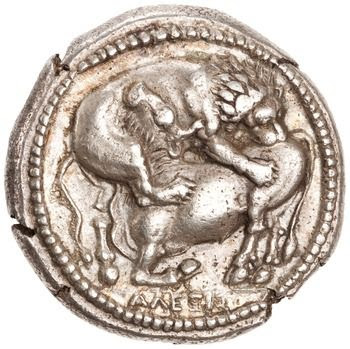
Or in the case of this Cypriot seal, lion jumping on  the back of the cow suckling its calf...

I talked about lion killing bull symbol in my post "Under blazing Sun - Sirus"...

And in my post "Winged superhuman hero (Nergal)"

And in my post "Lion killing bull under date palm"

Do you see how there is a dog standing under the palm tree? Why? For the same reason the animal "attacking" the cow from the front on the Cypriot seal definitely isn't a lion...I think that it could be a dog...Viewed from the top...Why? 

Because mating season of the oldest domesticated dog breeds, begins during dog days, end of Jul beginning of Aug...

When our mythologies were made out of animal calendar markers, Sirius, the Dog Star rose with the sun during dog days...

This has been preserved in mythologies from Egypt, I talked about this in my post "Dog days", Mesopotamia, I talked about this in my post "Tishtrya", India, I talked about this in my post "The bitch of the gods", Levant, I talked about this in my post "Anat"...

So both lion and dog (both animal calendar markers for the beginning of autumn) attack  bull (animal calendar marker for summer) at the same time, now, beginning of August...

What about the fish? If this is Cypriot seal, then I would propose that the fish is Tuna...Whose mating season in Mediterranean sea peaks in Jul/Aug which is also the beginning of the main Tuna fishing season in the Mediterranean sea... I talked about this in my post "Tuna coin from Akanthos"...

But maybe I am wrong...You never know with these ancient artifacts...Maybe I am just reading too much into it all...

To read more about ancient animal and plant calendar markers, start here…then check the rest of the blog posts related to animal calendar markers I still didn't add to this page, and finally check my twitter threads I still didn't convert to blog post...I am 9 months behind now...

Friday, 27 May 2022

Watering papyrus

Here is another very interesting object I've stumbled across in Louvre last weekend 

It is a Hellenistic stela dated to the 4th-3rd c. BC, found in Umm al-Amad, Lebanon. The important bit of the description is circled in red


So...A ritual "watering of papyrus" by two (semi?) naked women...Anyone heard of this ritual? 

I can bet that this is a fertility related ritual considering papyrus is watered by (semi?) naked women 🙂 That and the fact that it "recalls the Egyptian motif of annual renewal"...

But what does "Egyptian motif of annual renewal" mean? Well check this article: "Cow and calf ivory", in which I talk about the importance of papyrus in Egyptian mythology. Why it is directly linked to the annual flood. It is basically a plant calendar marker that marks the beginning of the rising of the water level in the river Nile, because the papyrus start flowering at that exact time...

Here is Hathor/Mehet Weret (Great Flood), emerging from the flowering papyrus...


Hence "annual renewal"...

Hence "ritual watering of papyrus"...The ritual imitation of the flood...Very interesting indeed...

I wonder if people in Umm al-Amad knew what this all meant? This stela is definitely not an import from Egypt. It was made locally. Depicting local people performing ritual papyrus watering...Which makes no sense in Lebanon...

Anyway another great example of a transplanted deified calendar marker. This time plant calendar marker...

To read more about ancient animal and plant calendar markers, start here…then check the rest of the blog posts related to animal calendar markers I still didn't add to this page, and finally check my twitter threads I still didn't convert to blog post...I am 9 months behind now...

Thursday, 28 April 2022

Cow and calf ivory

Decorative carved ivory with a cow suckling her calf and licking its tail among (very stylised) papyrus flowers. Neo-Assyrian, 9th-7th c. BC. Found in Nimrud, Iraq. Currently in the Iraq Museum in Baghdad...

Take a good look at the scene depicted on this ivory...

Pic by Osama Shukir Muhammed Amin


Now have a look at this: Another decorative carved ivory with a cow suckling her calf and licking its tail among (much less stylised) papyrus flowers.  No idea where it was found. Currently in the Ashmolean museum, Oxford and apparently "it was probably carved in Syria, 850–700BC"

Pic: Ashmolean museum

It must have been a very popular theme at the time...Cause while wondering through Mesopotamian section in the Louvre museum last weekend, I came across three Neo Assyrian ivory plaques, all found in Arslan Tash, all dated 800-700BC and all depicting the same scene: A cow suckling her calf...

Pic: Louvre museum

Pic: Louvre museum

Pic: Louvre museum

Why? Well, one possible explanation could be this: These objects are not (only) decorative...

Well they wouldn't have been if they were made in Ancient Egypt...There, papyrus flowers were sacred to the Egyptian mother goddess Hathor...Celestial Cow goddess Hathor...Who is often depicted emerging from the flowering papyrus thickets...

To understand why papyrus was sacred to Hathor, we need to look at the association of Hathor with Mehet-Weret, another "Celestial Cow goddess" whose name means "Great Flood" and who was thought to bring the inundation of the Nile River which fertilised the land...

Mehet-Weret, had no independent cult of her own. It is presumed that Hathor absorbed most of her attributes as early as the Old Kingdom, as many references of the two as identical are found in Pyramid and Coffin Texts...

Now Mehet-Weret is goddess who causes the annual Nile River flood. The flooding of the Nile is the result of the yearly monsoon Mar/Apr and Jul/Aug causing enormous precipitations on the Ethiopian Highlands...

This rain causes the nile water flow rate and water level to start rising from May/Jun

And interestingly, the period (Apr/May), right before the Nile water level begins to rise, is marked by a bull animal calendar marker...And has been in Eurasia and North Africa since Neolithic...Animal calendar marker which we today know as Taurus zodiac sign...

But which has nothing to do with stars...This animal calendar marker marks the start of the Eurasian wild cattle calving season. So originally it was a wild cow and calf marker...I talked about this in my post "Ram and bull"...

So Hathor, Mehet-Weret (The Great Flood), arrives during the time when wild cows start giving birth to their calves and start producing milk...Interestingly, Hathor was said to be a "wild cow whose udders were spilling milk on the earth"...

Oh yeah, Taurus is also the beginning of summer, the season marked with the bull throughout Eurasia and North Africa since Neolithic too...In Egypt that is the season during which the Nile water levels rise until the river floods Jul/Aug...I talked about this in my post "Symbols of the seasons"...

Oh and: Hathor arrives carrying sun between her horns...Translation: The half of the year dominated by the sun, starts when the wild cows start calving...In Taurus...

So if the above two ivories were carved by Ancient Egyptian artists, that would explain why the cow and the calf scene wouldn't have been "only decorative"...I think...But what about papyrus?

As I said, papyrus plant was sacred to Hathor. 

The main annual ritual associated with Hathor was the so called "Ritual of Plucking Papyrus for Hathor" which appears to have been an invocation, offering and pacification ritual...

This is the depiction of the ritual. Goddess Hathor emerges from the papyrus thicket on a sacred boat and is greeted by the woman who offers her papyrus flowers...

Apparently: "the ritual has extremely early origins and may have become a ritualised form of the simple act of picking papyrus flowers as votive offerings for the goddess Hathor"...Why papyrus and not some other plant?

Apparently: "papyrus symbolised life, joy and renewal"...Why papyrus and not some other plant?

The answer can be found in this paper: "Ecology and biomass production of Cyperus papyrus L. on the Nile bank at Damietta, Egypt" by Mamdouh S. Serag...

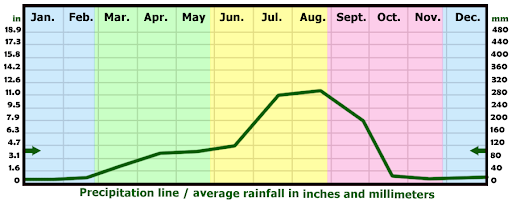
In this article you can find this chart...It seems that if you wanted to go plucking papyrus flowers, the best time to do it was during Taurus (April-May), right at the time of the arrival of the the great flood, Mehet-Weret, Hathor...Calving wild cow...

All of this happens right at the time when the Nile water level start to rise...So flowering of the papyrus plants announces the arrival of Hathor, Mehet-Weret, Great Flood...

I talked about this in my post "Holy cow"...

No wonder papyrus flower symbolised life, joy and renewal. No wonder papyrus flowers were sacred to Hathor and were plucked and offered to her as a sacrifice...No wonder papyrus flowers were sacred to the Ancient Egyptians...

Soooo....The two original carved ivories are calendar markers for Apr/May - when wild cows calve and papyrus plant flowers and Nile water level starts to rise...As I said, a pretty important part of the year in Ancient Egypt...Even more important thing in Ancient Mesopotamia...

As the sun's elevation rises, the earth starts to warm...Which cause the snowmelt to start in the mountains North-East from Mesopotamia...


Which causes the snowmelt runoff to increase and peak in Apr/May (Taurus 🙂)

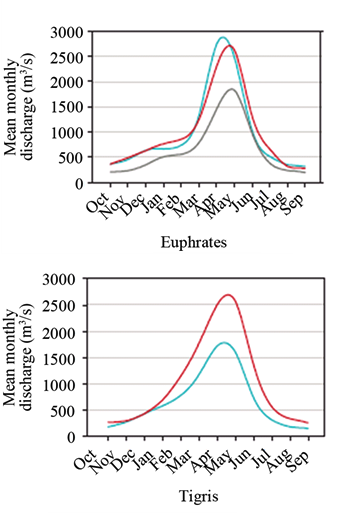
And it is this snowmelt that is the main contributor to the water flow of Tigris and Euphrates...Which also peaks in Apr/May (Taurus)...

In Mesopotamia the flood was thought to be caused by the god of fresh water and flood Enki who: "stood up full of lust like a rampant bull, lifted his penis, ejaculated and filled the Tigris with flowing water. He was like a wild cow mooing for its young in the wild grass..."

At the same time "Enki placed in charge of the whole of heaven and earth the hero, the youth Utu (Shamash), the bull standing triumphantly, audaciously, majestically...the great herald in the east of holy An...with a lapis-lazuli beard, rising from the horizon..."

Pic: Penn museum

I talked about the link between bull and flood in my posts "When Utu steps up into heaven", "Butt chewing", "Green Pastures", "Shamash young and old"...

So the above two carved ivories made a lot of sense to Mesopotamians and probably weren't "only decorative" to them either...

Apparently no one knew why Enky was "like a wild cow mooing for its young", or why Hathor was "a wild cow", or why papyrus was so sacred to her, or why these carved ivories depict cow and calf among papyrus flowers...Until I started researching animal calendar markers...Weird...

To read more about ancient animal and plant calendar markers, start here…then check the rest of the blog posts related to animal calendar markers I still didn't add to this page, and finally check my twitter threads I still didn't convert to blog post...I am 9 months behind now...