This is the so called "Goddess of Myrtos". Rhyton, in the form of a female deity with pitcher. Found on Crete, near Ierapetra, Fournou Korifi, in the earliest house shrine found on Crete, dated to EM III, 2300-2200 BC. Currently in the Archaeological Museum of Agios Nikolaos, Crete.
The jug the figure is holding is actually a miniature version of actual jugs found during the excavations...
Now I wonder why checkered square design all around the "belly" of the goddess and why checkered pubic triangle? Are these supposed to symbolise fields? Is this another "Mother of grain"?
I talked about this in my post "The oldest Demeter depiction" about Cycladic mother of grain, proto Demeter, dated to the 3rd millennium BC...And in my post "Mother of grain from Mari" about the (most likely) symbolic depiction of Inanna, also dated to the same period in the 3rd millennium BC.
And the jug...Is this a jug of water? Is this symbolic linking between water and field fertility? I talked about this link in my posts "Minoan bull sacrifice" and "Agia Triada Sarcophagus"...
And in my post "Woman and pitcher" about this interesting vase with ivy and olive wreaths, in white and white flowers on neck. Cyprus, 400–323 B.C Currently in the Met museum...And symbolism linked to start of the rain season...
Or is the pitcher the pitcher of vine? Did Minoans make and drink vine? Most archaeologists concur that this Minoan artefact is one of the earliest depiction of people dancing.
I personally think that this is a depiction of a Mother Earth, the provider of both drinking water and grain, and that the jug was a water jug...Why? Because of all this stuff I discovered after I wrote this originally, and which I published in my post "Anavlochos mountain"...
That's it. To read more about ancient animal and plant calendar markers, start here…Then check my twitter threads I still didn't convert to blog post...I am way way behind...
Symbolic analysis of this Tetradrachm minted in Byzantium, Thrace, ca 240–220 BC.
It depicts:
Veiled head of Demeter, wreathed with corn
Poseidon seated right on rock, holding aphlaston in extended right hand and trident over shoulder
So why Demeter and Poseidon?
According to Greek mythology, Demeter's daughter Persephone was abducted by Hades and taken to the underworld. I talked about the abduction of Persephone in my post "Abduction of Persephone". This is my favourite depiction of the abduction of Persephone by Hades. Fresco from the small royal tomb at Vergina, 340 BC, Macedonia, Greece.
While Demeter was searching for her daughter, Demeter was "pursued" by Poseidon, her brother, who "lusted after her"...Poseidon pursuing a woman, 480-450BC. Currently in the Metropolitan Museum of Art, Manhattan NY. Could this unidentified "woman" actually be Demeter?
To escape Poseidon, Demeter turned herself into a mare and hid among the mares of Oncius, king of Thelpusa in Arcadia. But Poseidon turned himself into a stallion and mated with Demeter, fathering Arion, a magic stallion...I'll talk more about Arion in one of my next posts...
This myth makes no sense, until you realise that here we are here dealing with horse as an animal calendar marker for the beginning of grain harvest season and sailing season in the Eastern Mediterranean...
Poseidon was god of the sea, storms...and horses. This is reflected in his epithets: Nauklarios (Ναυκλάριος) "belonging to the ship-owners", Pelagikos (Πελάγίκος) "belonging to the sea"...and Hippeios (ἲππειος) "belonging to a horse"...
Sailors prayed to Poseidon for a calm seas and safe voyage, "sometimes drowning horses as a sacrifice"...
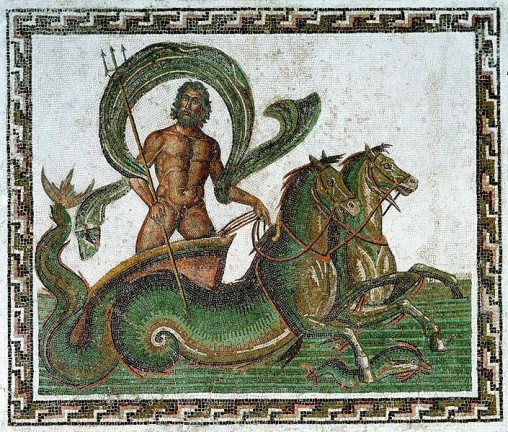
In Greek art, Poseidon rides a chariot that was pulled by a hippocampus or by horses that could ride on the sea...
Poseidon is apparently "...more often regarded as the tamer of horses, but in some myths he is their father, either by spilling his seed upon a rock or by mating with a creature who then gave birth to the first horse..."
In Arcadia, one of the most conservative parts of Ancient Greece, Poseidon was worshipped as a stallion...
Why? Why?
Cause mating season of horses, marked by wild stallion fights, also marks the sailing season in the Eastern Mediterranean. Both start in Apr/May and finish in Sep/Oct...
I talked about this in my post "Trojan horse", in which I asked a question: was Trojan horse "hypos" - a wooden horse left as tribute, or "hypos" - a wooden boat with a horse head used for transporting tributes...
So that would explain Poseidon part of the the myth. But what about Demeter?
Demeter is the mother of grain, deified grain harvest. Persephone is the grain, deified grain seed.
Grain seeds are sown in Oct/Nov and are harvested (given birth to) starting from Apr/May
Why are opium poppies sacred to Demeter, goddess of grain harvest, while pomegranates are sacred to her daughter, Persephone? Check this chart out...More details can be found in my post "Poppies and pomegranates"...
It is during this period between the sowing and harvesting that Demeter is looking for Persephone.
And it is towards the end of this period, most likely in Apr/May, when the horse mating season starts, that Poseidon (as a stallion) elopes with Demeter (as a mare)...Guess what begins in Apr/May? Grain harvest season...
Hesiod declares: "When the Pleiades, daughters of Atlas, are rising, begin the harvest". At the mid 8th century BCE in Bœotia, the heliacal rising of the Pleiades occurred about 47 days after spring equinox, which corresponds approximately to the first week of May...I talked about this in my post "Hesiod on grain"...
Grain harvest season, when Demeter brings Persephone back from the underworld (sown grain seed, sprouts, grows, ripens, gets harvested), while stallions are prancing around fighting for mares...
Ever seen this? Demeter in her horse-drawn chariot with her daughter Persephone, driving between two prancing stallions. I wonder why??? 🙂 Selinunte, Sicily 6th c. BC
And so, Demeter with beautiful golden hair full of ripe ears of grain and Poseidon holding a trident and aphlaston...aphlaston...the most sacred part of every Ancient Greek warship...Interesting...Very interesting...I will talk about this in one of my next posts...
To read more about ancient animal and plant calendar markers, start here…Then check my twitter threads I still didn't convert to blog post...I am way way behind...
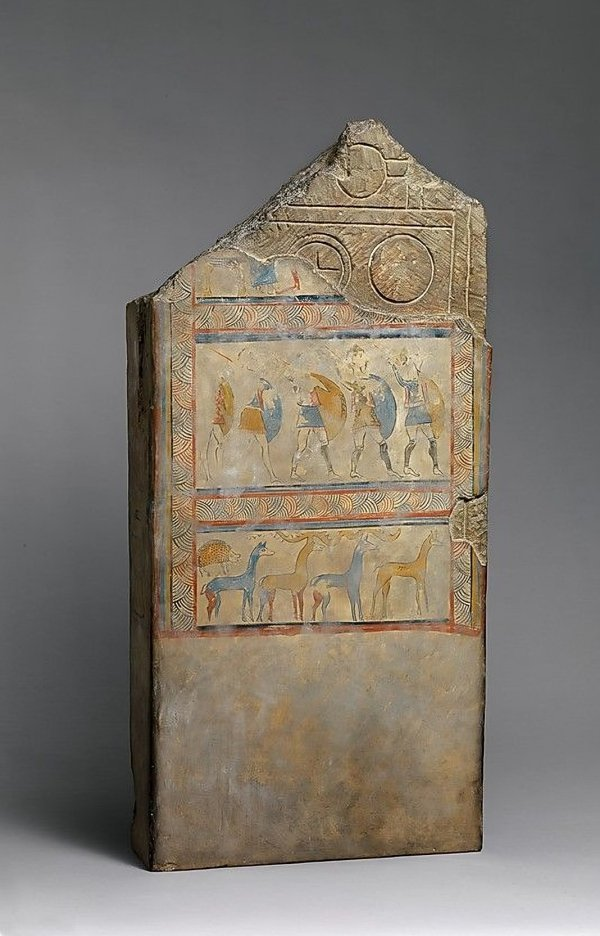
Today I came across this article "The natural order and an apparent anomaly" which presents the symbolic analysis of this 12th c. BC Mycenaean stone stele covered in plaster with painted decoration in bands, currently in the Hellenic National Archaeological Museum. Which I don't agree with 🙂
And here is why:
The article authors proposed that what is depicted is the "natural order":
Top: Gods/Rulers
Middle: Army
Bottom: Nature
Really?
I don't know for sure what all three freezes put together symbolise, but I am pretty sure what the bottom one symbolises: It's an animal calendar marker for the war season...
What we see is
A hedgehog
Three stags following a doe/hind.
The article says, "...hedgehogs hibernate [between Nov and Mar] and that’s why they were considered symbols of [spring] throughout time..."
Basically, hedgehog is an animal calendar marker for Feb/Mar/Apr...
The article doesn't put forward any explanation for the deer...But stags only follow does/hinds during deer rut. Deer rut starts in Sep, peaks in Oct and ends in Nov...
Meaning deer is animal calendar marker for Sep/Oct/Nov...
Put together, from left to right these animals mark the period between Feb/Mar and Oct/Nov. In Roman times, Mar-Oct was the "war season", which was opened and closed with the appropriate religious festivities presided by the Salii priests...
Did Mycenaeans also have a "war season" which started when hedgehogs reappeared from their hibernation (Mar) and ended when deer rut peaked (Oct)?
Why am I asking?
The Mycenaean stele depicts
Top: Some religious ceremony (According to the article)
Middle: Warriors/War (Obvious)
Bottom: War season, Mar-Oct (Not so obvious unless of course you know about animal calendar markers)
As I said, I don't know "for sure" 🙂 what the artist wanted to actually depict on this interesting stele, but I think this explanation makes a lot more sense than the explanation put forward in the quoted article...What do you think?
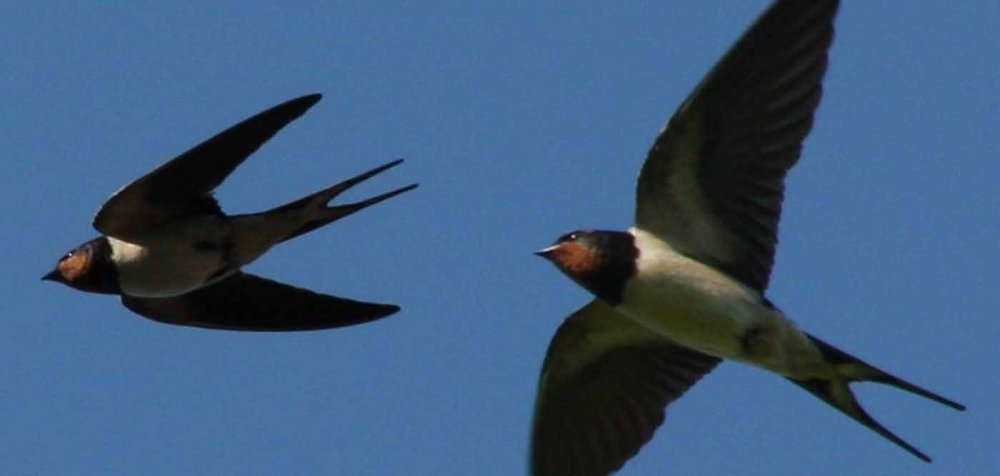
A swallow tattoo means 5000 nautical miles a sailor has traveled. For regular seamen, this is about 5,750 miles (ca. 9,254 km).
This article is about swallows as animal calendar markers for the beginning of the sailing season in Ancient Rome, about Isis, as the goddess of the sea, and about the climate change...and roses...
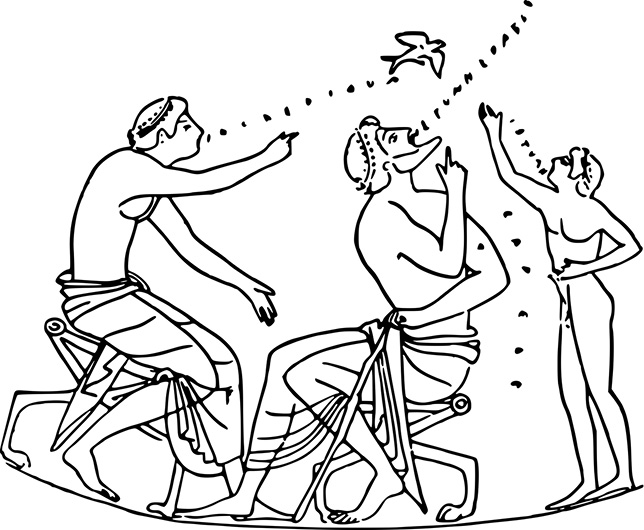
A group of children, somewhere in Greece, holding wooden spinners decorated with flowers, with a model of a swallow on a spindle, acting as a weathervane. They are getting ready to sing the "swallow song", a song welcoming swallows as the heralds of spring...
You can actually hear the children singing the "swallow song" in this documentary:
Χελιδονίσματα στο Σιτοχώρι Σερρών την 1η Μαρτίου 1967
Athenaeus of Naucratis (3rd c. CE) writes that after the first swallow was spotted, the Rhodians would hold a festival.
During the festival the Rhodian children would sing:
He comes! He comes!
Who loves to hear
Soft sunny hours, and seasons fair:
The swallow hither comes to rest
His sable wing and snowy breast.
The children then ran to different houses and "played the swallow", demanding food.
Ashleigh Green then goes on to talk about animal calendar markers 🙂 without knowing that she is talking about animal calendar markers: "In ancient times, people did not rely on calendars or clocks to tell them the time or the passing of the seasons..."
"...They watched and listened to birds. Cockcrow heralded sunrise and roused them from sleep; cranes migrating told them it was time to sow; and swallows returning from worlds unknown told them spring had arrived."
And then she says: The sailing season was also marked by the swallow’s return. Taking the swallow’s appearance as their cue, centuries of Greek poets sang to sailors to weigh anchor and unfurl the sails...the swallows are here. Winter storms have passed, it is time to go to sea.
These poems are written by Leonidas, Antipater of Sidon, Marcus Argentarius, Thyillus and Agathias Scholasticus respectively, and although they stretch from the third century BCE to the sixth century CE, they are almost identical in form and substance.
Such evidence suggests that swallows truly were linked as closely to sailing as to spring. The spring wind was even called chelidonia after the swallow, and Horace suggests that the swallow actually helps to calm the sea...Very interesting...Why would people believe such a thing?
Cause the return of the swallows from Africa in Mar/Apr and their nesting in Apr/May coincides with the change of wind. Sun, heating up the Eastern Mediterranean, creates an updrift, which sucks the cooler air from Europe to start streaming southward, creating the etesian winds.
This table, from a South Aegean Yachting site, gives directions of the prevailing winds in Aegean sea during the sailing season: Apr-Oct...Even today, with much better boats, this is the safe sailing season...
I talked about Etesian winds and the sailing in the Eastern Mediterranean in this post about "Three sacrifices" performed during the Trojan war.
7th c. BC Mykonos pithos. It contains the oldest depiction of the Trojan Horse, the way Homer described it in Iliad
So, swallows return, start nesting, it's time to go sailing...Another animal calendar marker embedded into mythology. Swallow was apparently a holy bird of Isis, who also apparently, had a control of the sea, and was the goddess people prayed for calm waters and good winds...
The swallow was also associated by the Ancient Greeks, and the Romans, with "euploia" (a pleasant voyage). Indeed it is attested that during the Roman festival Navigium Isidis, the festival in honour of Isis for good sailing, the devotees held models of swallows...
The Navigium Isidis was an annual Roman religious festival, held on March the 5th, in honour of the goddess Isis, when people prayed for the safety of seafarers and then a model of a ship was carried in a procession from the local Isis temple to the sea or to a nearby river...
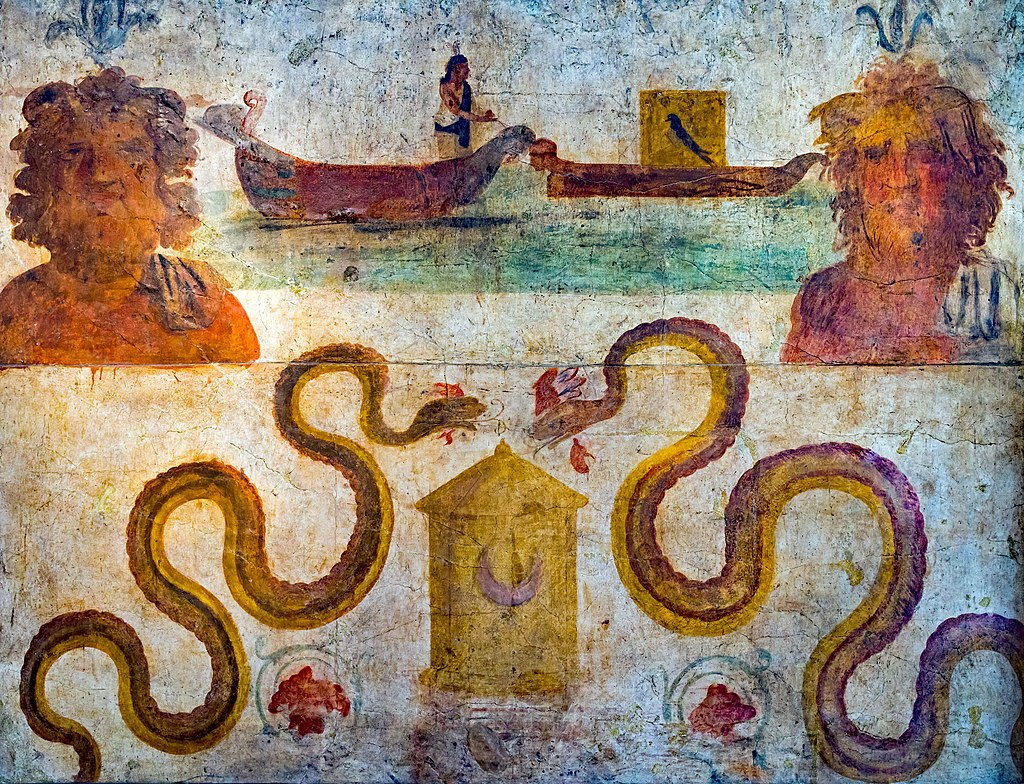
This is a fresco from the sanctuary of Isis in Pompeii, currently in the Museo Archeologico Nazionale, Napoli. It depicts cista mystica between two snakes (similar to a lararium) and above it navigium Isidis (boat of Isis) on the left and another boat with a swallow in it...
Why did sailors pray to Isis for calm seas and good winds? In the article entitled "Isis, goddess of the seas and the Navigium Isidis, Celebrate the beginning of the maritime season with Isis" by Rhakotis Magazine we can read:
By the Roman period, Isis has become the predominant sea goddess to such an extent that her festival marked the official beginning of the sailing season across the empire. This seems strange when we consider the fact that Egypt was not known for its maritime prowess.
River sailing was an important aspect of its society and economy for millennia. Indeed, the sail may have first emerged from Egypt, with south blowing winds powering ships up the Nile against the current. Yet Egypt did not really have any sea gods for much of its early history.
It was perhaps outside of Egypt that the association of Egyptian gods and the sea first began. Byblos was an important trade center with Egypt for centuries. A text from the Middle Kingdom calls Hathor "Mistress of Byblos [who] holds the rudders of barques" (!!!)
During the New Kingdom Isis took over more and more functions of Hathor, ultimately becoming the predominant goddess in the Egyptian pantheon. About this time, she also became the Egyptian goddess in Byblos, "taking over" Hathor’s maritime goddess role.
Very interesting...
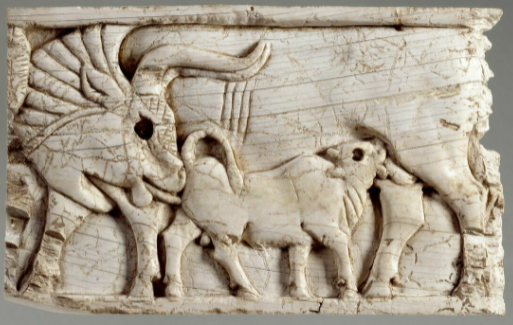
I talked about Hathor as a deified animal calendar marker for Apr/May, the beginning of the calving period of the the wild Eurasian cattle in my post "Cow and calf ivory". Which is exactly when etesian winds start blowing in the Eastern Mediterranean...
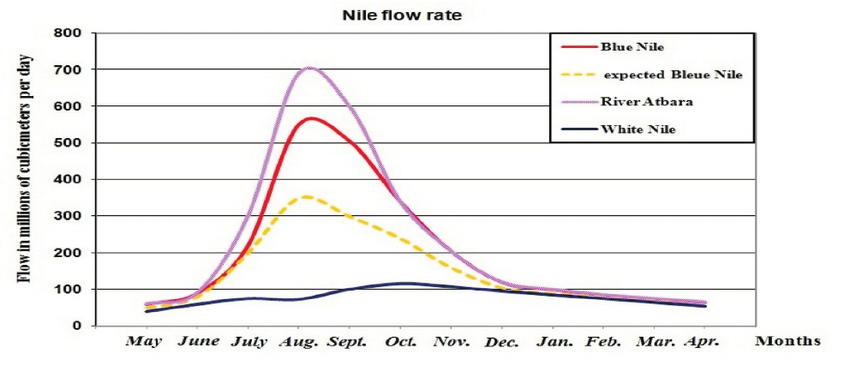
Navigating the Nile was fundamentally a seasonal occupation, closely tied to the cycle of the flood. Changing water levels meant variable navigability in the river channel, especially for larger cargo vessels. The optimal time for sailing was during the height of the inundation.
Even in the main channel of the Nile, water levels effected navigability. A dwindling river made sand banks an increasing hazard, threatening not only to block a vessel’s passage, but also to trap it and, at worst, capsize and wreck it...
By happy coincidence, it is also during this high-Nile season that the maxim of ‘current from the south, wind from the north’ is most valid. The Nile valley and the Nile Delta are subject to two quite different wind regimes.
In the Nile valley, northerly winds blow year round because of the cyclonic highs that sit over the Sahara desert year round...
In the Delta, northerly winds blow only during the summer...because the Delta is under the influence of Mediterranean weather systems...
And so, if you wanted to sail up the Nile delta and then further up the Nile river, you had to wait for Hathor, the holy cow to give birth to a holy calf in Apr/May. And then when the water level of the Nile starts to rise, in Jun/Jul, catch the northerly wind and sail south...
So is this why Hathor was associated with sailing and was the Goddess "who holds the rudders of barques"? And why Isis, Hathor's replacement, was known as the Goddess "that opens the seas"?
For the end I want to ask two questions:
Why was Navigium Isidis celebrated on the 5th of March, when all the old Roman texts tell us that the safe sailing season in the Mediterranean was Apr to Oct? In Ships and Fleets of the Ancient Mediterranean, J. Rouge summarised the problem of winter navigation as follows:
Vegetius (fourth century AD) says that the seas were (generally) closed between Oct/Nov and Apr/May
And in this article, Oded Tammuz goes on to propose that even though the main sailing season in the Mediterranean was Apr to Oct, the sea was never really closed. Here are 5th century BC Egyptian customs records, noting down ships that arrived to the Elephantine harbour.
We also have many Roman sources which say that opportunistic captains would sail outside of the main sailing season, because the gains that could be made were very high. But so were the risks...I wonder how many Mediterranean shipwrecks are ships trying to sail the closed seas?
Romans started celebrating Navigium Isidis, around 100BC. Now I wonder if the reason why the Romans celebrated the opening of the seas at the beginning of March, was because the Mediterranean sea was around 100BC indeed fully navigable in March. Due to climate change...
This chart shows polar temperature variation in last 10,000 years. We can see that the temperature has been going up and down madly all the time. And one of the big temperature spikes, which centres around 100BC, when Navigium Isidis became a thing, is marked as Roman warming.This warming must have affected the weather in Mediterranean. Making sailing safe a month earlier, in March? I think so. Which is why Navigium Isidis was celebrated on the 5th of March...
And here I come to the second question: Are there any roses blooming in Italy and Greece on the 1st of March?
Why am I asking this? Because, according to Lucius Apuleius, who in the 2nd c. AD wrote "The Golden Ass", roses were already blooming on the 5th of Mar during his time.
The Golden Ass is a story about certain Lucius, who drank a magic potion which accidentally turned him into an ass. He spends the rest of the book trying to turn back into a man. Finally, he succeeds on the day of Navigium Isidis...
The night before the festival of the opening of the seas, Lucius, still an ass, is on the seashore watching the moon emerging from the sea. He prays to Isis to turn him back into a man.
He then falls back to sleep, and dreams (has a vision) of the goddess herself emerging from the sea. She tells him tomorrow there will be a festival "when the ocean’s storm-blown waves are calmed".
And then she tells him: "My priest...will be carrying in his right hand as part of his processional equipment a sistrum wreathed with a garland of roses...Approach the priest and...gently take a bite of the roses".
Here is a fresco from the Temple of Isis in Pompeii depicting priestesses of Isis holding a sistrum...Currently in the Naples National Archaeological Museum.
And so, on the morning of the 5th of Mar in the middle of the 2nd c. AD, an ass turned into a man on the streets of Corinth after eating a rose. Just like the Goddess Isis told him it would happen...
Today, in Italy and Grece, as far as I know, roses start blooming in Apr/May. Maybe (big maybe) you can find them blooming at the end of Mar. But, it is very unlikely, that a donkey wandering around Corinth on the 5th of Mar today would be able to find a blooming rose and eat it.
Yet Lucius Apuleius wrote that donkey ate a rose on the day of the opening of the sea, and no one batted an eyelid...Like of course, why wouldn't it? Roses are already blooming in and around Coritnh at the 5th of March. Everyone knows that...
Interesting right? Roman warming? Also, did you know that equids (horses and asses) start mating in Apr/May, at the beginning of the "safe sailing season"? Interestingly, all Eastern Mediterranean sea gods seem to be obsessed with horses...I talked about this in my post "Trojan horse"...
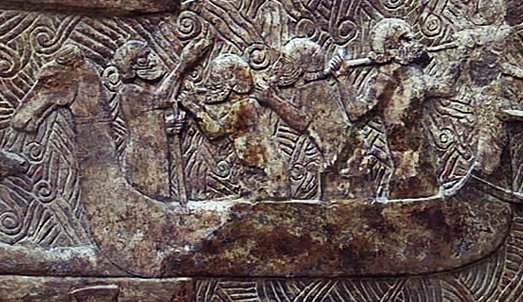
A type of merchant ship which had horse figurehead on its prow and which Greeks called "hippos" (horse), and used for delivering tributes...
And finally...I wonder if all this assing around in Golden Ass is kind of symbolic, in a calendaric kind of way? Maybe someone should look into it...That's it...That's all I have to say about that...
Thank you an I hope you enjoyed this meandering article, originally published as an X thread.
Even more interestingly, two snakes have a specific meaning as a calendar marker for Apr/May, beginning of summer, domain of the sun. Why? Cause the mating season of the most common Eurasian snakes starts in Apr/May...
And which is why Hermes (who was born in Apr/May) was by Apollo (the sun god) given the Caduceus, staff with two entwined snakes...I talked about this in my post "Lyre of Apollo"
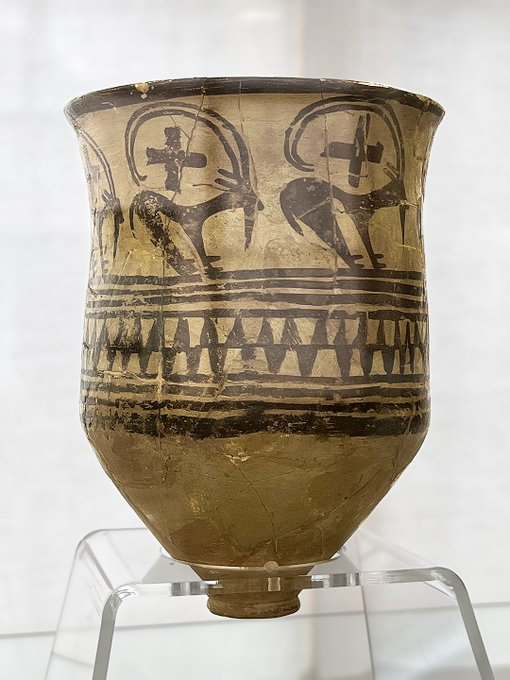
Between the two snakes we see crosses...I talked about crosses as ancient solar symbols in my post "The cross of Shamash" about this beaker, Sialk South Mound, Kashan, Isfahan, Late Calcolithic period, Sialk III7 period, ca. 3750-3350 BC, the National Museum of Iran, Tehran, Iran
In short, the cross was since the earliest times in Mesopotamia used as the symbol for the sun (god)...
And on both sides of the two snakes we see swastikas, another ancient solar symbol. I talked about it in my post "Kolo-vrt", about this ancient (officially medieval???) standing stone, Bosnia. Depicting solar wheel (swastika) and solar dance (kolo)... Pic by Kemal Čolak...
Anyway, on the sides of our pyxis, we have more swastikas, crosses and horses...Why horses?
Horses are solar animals.
Roman silver coin of the Pyrrhic war (275-270 BC) Apollo wears a laurel- wreath & a galloping horse beneath the "star". Thanks @HawkeJonfor the pics.
The "star" is The Sun...Above The Solar Horse...Symbol of The Sun God Apollo...
The reason why equids are solar animals and the reason why they are linked with Sun gods, stems from the fact that horse fertility is governed by sunlight and their mating season peaks at the summer solstice...
Sun god in his horse drawn chariot...
So, we have an interesting situation where the mating season of the most common Eurasian snakes, vipers, and the mating season of the wild Eurasian horses, the two animals depicted on our pyxis, with crosses and swastikas, both start in Apr/May, beginning of summer, the time of the year dominated by the sun...
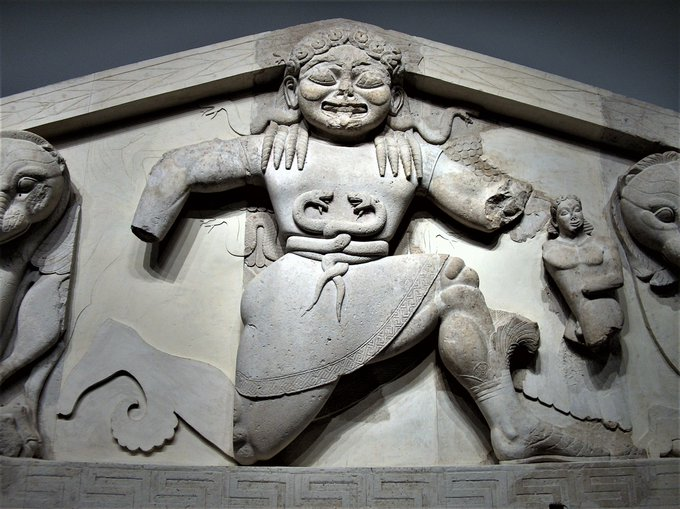
Finally, the "Mistress of the Animals" is Artemis, the "terrible" twin sister of the "terrible" sun god Apollo...This girl: Artemis, of the original, archaic type, before people forgot her real meaning...From the Temple of Artemis, Corfu
Definitely not moon goddess here with all these snakes. And lions (wink wink, notch notch)
On our pyxis, the Winged Archaic Artemis is holding two ducks or gees...Both migratory water birds...Spring bird migration in Greece peaks during late April-early May...
The "rosettes" are another symbol of the sun...Or Sirius...Which is in the sky with the sun, during the day, between Apr/May and Jul/Aug. At least it was during the time when our mythologies were made. Will write about this soon...
But it could also just mean "spring flowering season" which in Greece also peaks in Apr/May...
Soooo...Not only are all the symbols on this Larnax solar symbols, but they also all seem to point at the same time of the year, Apr/May, beginning of summer...