Showing posts with label Sphinx. Show all posts

Sunday, 24 November 2024

Inanna in Egypt

Inanna in Egypt? Hmmm...


Recently, I discovered that Inanna was "associated with cattle and particularly calves"...Here is a depiction of the Inanna's "nuptial hut" as a calving hut, on a carved stone vase from  Khafajah. Pic from "The Three Faces of Inanna: an Approach to her Polysemic Figure in her descent to the Netherworld."

One of Inanna's appellations was "wild cow", and wild cows start calving in Apr/May, the time of the year marked by Taurus, the animal calendar marker which today means Bull, but which originally most likely meant Calf...


"...you were a baby, Assurbanipal, when you sat in the lap of the Queen of Nineveh (Ishtar/Inanna). Her four teats are placed in your mouth [Ishtar/Inanna is often pictured as a wild cow, so four teats are normal for her]..."

Inanna was also associated with grain and grain harvest.


This is Inanna speaking:

"Before my lord, Dumuzi,

I placed grain before him,

I poured out grain before him,

I poured out grain before my womb..."

Mother of grain...Link between female fertility and earth/grain field fertility...

Some posts about the symbol for grain and the Mother of grain in Neolithic Europe, Central Asia, Mesopotamia, Iran, Levant: "Mother of grain", "Altyn Tepe mother of grain", "A person in a little boat", "Sabi Abyad venus", "Hathor grain pendants"...


Apr/May, Taurus, is also the time when the water levels in Tigris and Euphrates peak. The time of the annual flood, and it is this flood that makes the land fertile...


Which is why Mesopotamian sun god Utu/Shamash was depicted as a golden bull (Sun in Taurus) with flowing lapis lazuli (flowing water) beard...

I talked about this in many of my posts. Like: "Lyres of Ur", "Shamash young and old", "When Utu steps up into heaven", "Butt chewing", "Maran"...

This is also the time when Sirius, the true star of Inanna (Elaborated on this in my post "Inanna and Sukaletuda") is last seen in the night sky, just before the sunset. Between Apr/May and Jul/Aug, Sirius is in the sky during the day, with the sun, and therefore invisible...

Sirius reappears in the night sky, just before dawn, in Jul/Aug...This is Ishtar, the destructive form of Inanna...

For those who will say "Ishtar was the morning star", yes she was, in Leo (Jul/Aug), when Sirius rose in the morning before the sun...Which is why Ishtar stands on a lion (with sun above the lion) and is known as "The Lioness of heaven"...

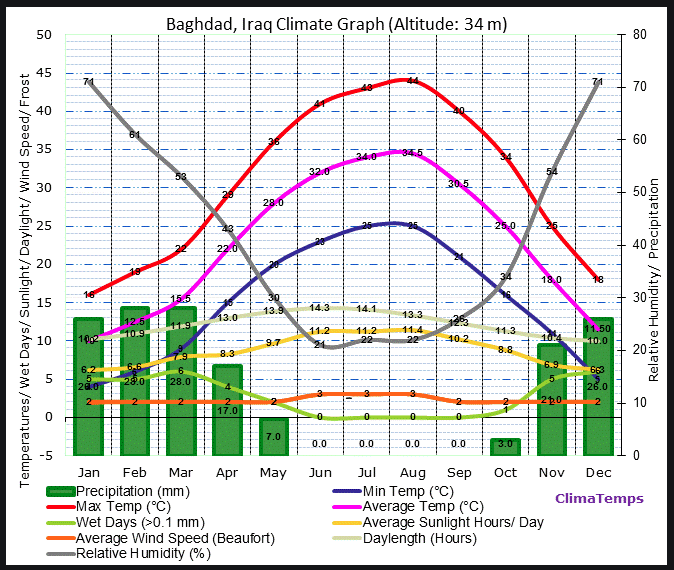
Destructive why? Cause of the Mesopotamian climate and the hydrology of Tigris and Euphrates. Jul/August is not just the hottest and the driest time of the year, but this is also the time when the two great rivers have the lowest water levels...

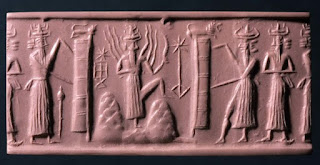
Sun God Utu/Shamash with sun (heat) rays emanating from his shoulders, standing in in an empty canal, in Leo (between the lions), the hottest, driest time of the year in Mesopotamia, and the time when canals were repaired, holding reed cutting knife...I talked about this in my post "Canals"...

The destructive sun in Leo is also symbolically depicted like this


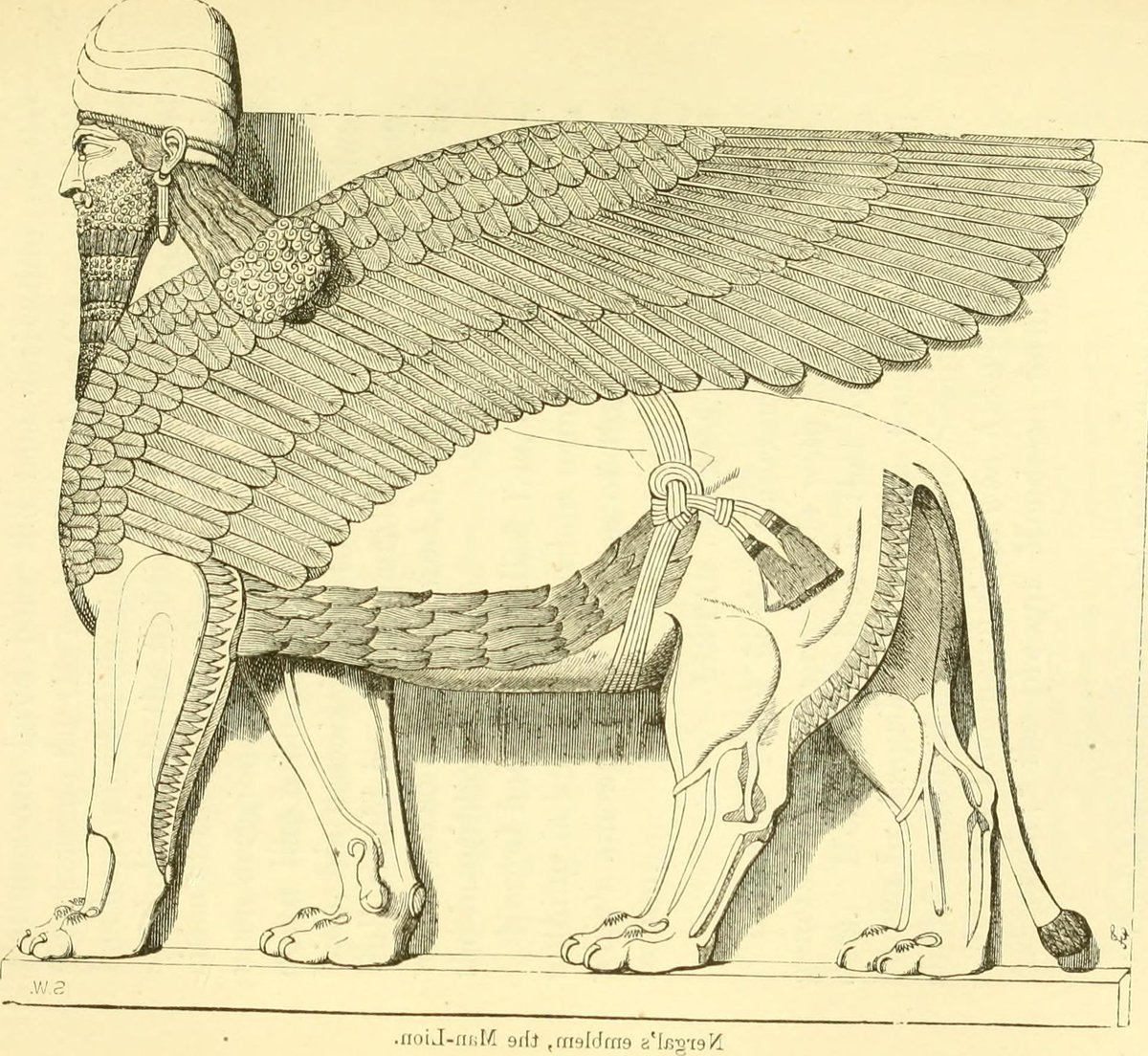
Nergal, the deified destructive "burning" sun, was depicted as a lion man, because Jul/Aug, Leo, is the hottest and driest part of the year in Mesopotamia...


Talked abut him in my posts "Winged superhuman hero", "Lord of the flies"...

So here we have the same goddess with two faces, life giving (holy cow, Inanna, good) and life taking (holy lioness, Ishtar, bad)...And this switch can be perfectly explained through the Mesopotamian climate and Tigris and Euphrates hydrology...

And interestingly, we find the same thing in Ancient Egypt. A goddess with two faces, life giving (holy cow, Hathor) and life taking (holy lioness, Sekhmet)...I talked about this in my post "Holy cow"... 

Except, this switch can't be explained through the Egyptian climate and Nile hydrology...

The holy cow, the life giving Hathor, linked to water, grain, milk (calving), and her symbolism is easy to explain...


I talked a lot about it in "Holy cow" "White calf" "Cow and calf ivory", "Lotus and papyrus"

Hathor marks the "return of waters of the Nile".

The holy lioness, the life taking Sekhmet not so easy...Actually it is impossible to explain this switch in Egypt. Lioness should be a super positive, life giving goddess, because it is Leo, Jul/Aug, when the Nile flood peaks...

I already started wondering about the lion mythology in Egypt, and whether it originated in Mesopotamia in my posts "Sphinx" and "Giza lioness", "Sirius the mother of Venus"...

In there I explained why Atum, the Creator God of Egyptian world, created himself as a lion (Leo, Jul/Aug), after emerging from the primordial (read annual) flood (starts in Leo, Jul/Aug), the flood which makes land fertile without which there would be no Egypt...

I then talked about the Egyptian holy lioness, the precursor of the Sphinx, which again fits into the whole "lion(ness) good in Egypt"...

But for some reason, while writing these articles, I completely forgot about the murderous, destructive, Sekhmet...

"Cow good - Lioness bad" makes a lot of sense in Mesopotamia. 

"Cow good - Lioness great" would make a lot of sense in Egypt.

But...

What do you think?

To read more about ancient animal and plant calendar markers, start here…Then check my twitter threads I still didn't convert to blog post...I am way way behind...

Saturday, 21 September 2024

Sirius, the mother of Venus

You know how everyone thinks that Inanna/Ishtar (Morning Star) is Venus and how I think that it was originally Sirius, and only later became Venus? 

Well, it seems that Ancient Egyptians preserved the proof of this switch in their mythology. 

Meet Sopdet...

Sopdet, the personification of Sirius, was the consort of Sah, the personification of Orion. And their child was Sopdu, the personification of Venus, "Lord of the East" (Venus as morning star)....

Ta Ta Taaaaaaa!!!!

Why the f*ck would Sirius be the mother of Venus? Because Venus is what everyone thinks when we say "Morning Star"...But Sirius is also "Morning Star", actually "The (most important) Morning Star", in Jul/Aug, when it rises together with the sun, to announce the Nile Flood...

So does this myth, Mother (Sirius, Older Morning Star) --> Son (Venus, Younger Morning Star), trying to tell us that Sirius was (Original, Important, Once A Year) The Morning Star, and Venus is (Later, Less Important, Every Day) Morning Star?

I think so. 

BTW if you want to see where the "Lioness of heaven" (Ishtar) is hiding in Egypt, check these two articles: "Sphinx" and "Giza lioness"...

Did Mesopotamians forget this switch? Don't know. They certainly left is clues that we can use to decipher the true nature of Ishtar: 

Sirius...The morning star in Leo. Hence Inanna/Ishtar (personification of Sirius), also known as the lioness of heaven, standing on a lion, with sun above the lion, in Leo... 


In my article "Inana and Ĺ ukaletuda" I analysed the epic "Inana and Ĺ ukaletuda" which is used as "proof" that Inanna is Venus, but in which all calendar markers point at Inanna being Sirius and not Venus...

More about Inanna/Ishtar as Sirius can be found in this article, "The brightest star", about Ishtar being the the most shining when Sirius is the most shining, and also about Bow and Arrow constellation and its link with Leo, Ishtar and Nergal...And in this article, "Woman of the Apocalypse" about the true identity of this mysterious "Lady"...

To read more about ancient animal and plant calendar markers, start here…Then check my twitter threads I still didn't convert to blog post...I am way way behind...

Sunday, 25 August 2024

Braided beard

An Egyptian Bronze Figure of Osiris, 21st/26th Dynasty, 1075-525 BC.

Why does Osiris wear "braided", "plaited" false beard?

Remember my post "Sphinx" about this 2,800 year old ivory was recently discovered in the old Hittite capital Hattusa, Turkey and the Sphinx as a Deified Lion animal calendar marker?

And do you remember the followup post "Giza lioness" about the Queen Hetepheres II sphinx from the Cairo Museum and the meaning of the part of the Egyptian creation myth that says that: "...lion emerged from the primeval mass within the primeval waters before all other animals, and mankind"?


Well in that post I talked about the importance of  the fact that the Great sphinx originally had "a long braided ‘divine beard’...that gods and deified kings wore, and not a short, square beard worn by living kings"...


And then I said "This is the same beard worn by Osiris, the god of resurrection directly linked to the annual flood..." I talked about this beard and its meaning in my post "The beard of Osiris". I also talked about Pharaohs who wore a false beard to pretend to be Osiris (who wore a false beard to pretend to be a dead ancestor 🙂) and about the cult of the dead in Ancient Egypt. Grain growing from the body of Osiris.


When I posted the link to this article on Facebook yesterday, a friend of mine asked me a very interesting question:

"A puna šaka brade?" (What about the expression "hand full of beard"?)

The "puna šaka brade" (hand full of beard) is an expression from Serbo-Croatian which means "big gain, big fortune, big happiness, big satisfaction"...

In this article (in Serbian) the author argues that the expression comes from the fact that "rubbing one's chin, or stroking one's beard is a natural expression of satisfaction"...

I've seen old people doing this so many times all over the Balkans...And now I am one of the "old people" stroking my beard as a sign of great satisfaction that I had stumbled across another interesting "syncretism" 🙂

In my post about the fake beard of Osiris, I talked about the Egyptian cult of the dead, and the cult of the dead in general, and how the dead ancestors, represented by the guys with long beards, were linked to grain agriculture and grain fertility...

Now remember my post "Wheat cross" about "wheat cross" decorated with "wheat wreath" harvest traditions from Central Europe?

In it I said that the wheat wreath was always made by women, and was made "the way you would plait women's hair"...

Which (thank you @another_barbara) looks like ear of wheat...

Which means that the girl carrying the wheat wreath was the embodiment of the Grain/Wheat/Corn Maiden...

Now this is what real plaited, braided beard actually looks like. It also looks like ear of grain...Very fitting as a symbol of Osiris, the god of the fertile black soil from which grain grows...

So is this why the (false) beard of Osiris and Deified Pharaohs (Deified Ancestors) is plaited? To look like grain growing out of the (grateful) dead?

Diduch (grandfather), symbolic representation of the ancestral spirit which governs the lives of the living. 


From Central European Slavic mythology / folklore. More in my post "Diduch"...

I talked about the importance of keeping the dead happy if you wanted your grain to grow in my post "Care of the dead"...

Remember this depressed dude? This is the statue of the Last Hittite king Suppiluliuma II. And he said: "...humiliation of the Hittite kingdom is the result of the fact that the Hittites have forgotten to respect the sacred bond with their dead..."

Maybe Osiris wore "grain beard". Or maybe this is all just a coincidence...And this has nothing to do with anything: The last harvested sheaf of wheat was in the past in some parts of Serbia used to make "Velesova brada"(The beard of Veles, Slavic sun/summer/harvest god) or just BoĹľija brada (God's beard)...

The "grain spirit" is in European folklore usually preserved as female "corn dolly" made from the last harvested sheaf of wheat. I talked about this in my post "Corn dolly" and "The old woman of the mill dust"...

The spirit of the "Mother of Grain" (Mother Earth). After all grain grows from earth...

I talked about this in my post "Mother of grain"...Grain seed and vulva symbolism...Link between female fertility and earth/grain field fertility...


But did (some weird) Serbs, just like (weird) Ancient Egyptians, associate the grain fertility with a male god...And hence preserved the "grain spirit" in the male God's beard?

Again, let me remind you of this

Serbs, like all the other Balkan people, are descendants of pretty much everyone who ever lived in the Balkans...Which is why, I thought then, and still think, we can find so many interesting bits of many old lores in Serbian folklore...

There is of course another possibility. A long beard, means long life...In the past, in the Balkans, men had long life only if they were fucking lucky...

This is Serbian gusle player and epic poems singer Rajko Ivković. Born in 1880, in the village Gradovi on mountain Rudnik in Serbia. Survived 3 wars. Had many stories to tell. The word history deep down means "what old people saw". From my post "History"...

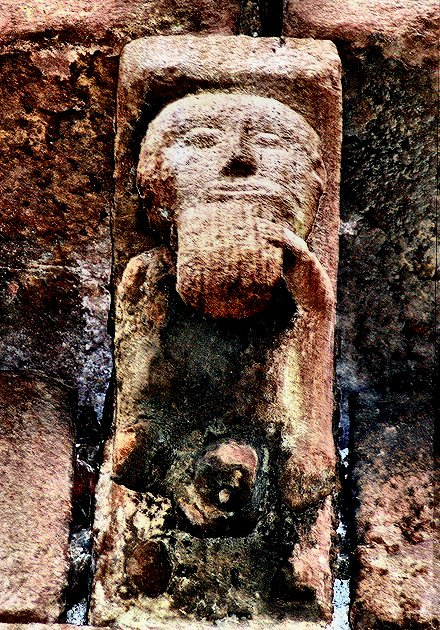
Anyway, speaking of "stroking ones beard as a natural expression of satisfaction" 🙂 Remember my post "Sceptre"?

Church decoration, Mansilla de la Sierra, Spain. 

Serbian expression "he acts as if he pulled god's beard", which means "he acts like god gave him power", has another version "he acts as if he pulled god's penis". 

I hope you liked this. Have a nice evening 🙂 And "May your beards grow long". Unless you are a woman of course.

That's it. To read more about ancient animal and plant calendar markers, start here…Then check my twitter threads I still didn't convert to blog post...I am way way behind...

Saturday, 18 May 2024

Giza lioness

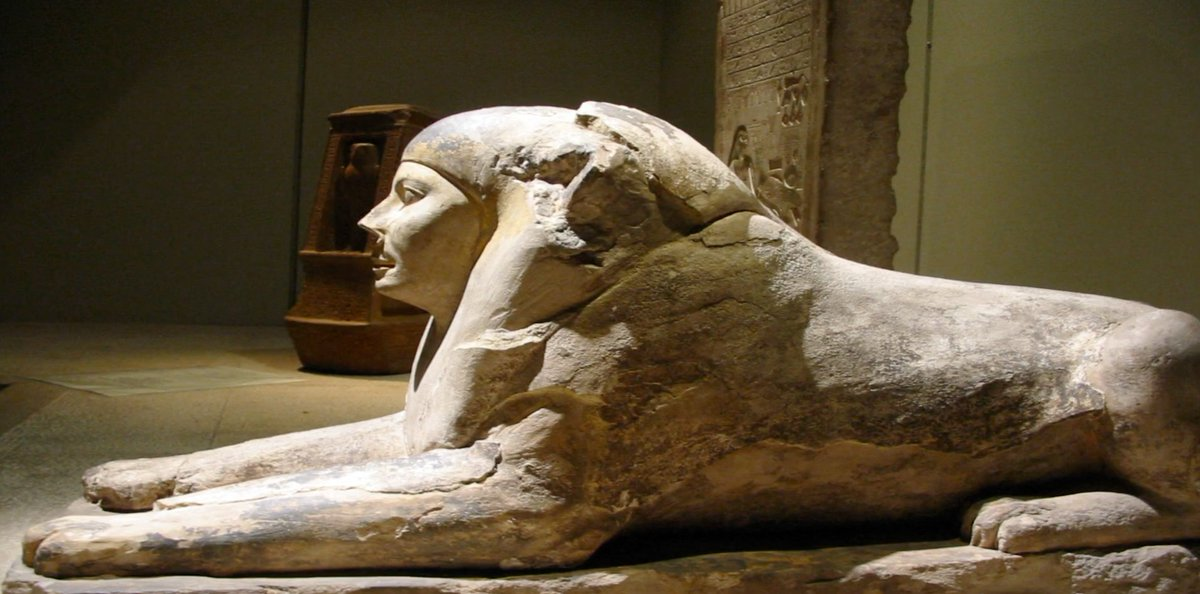
Queen Hetepheres II sphinx – Cairo Museum. 

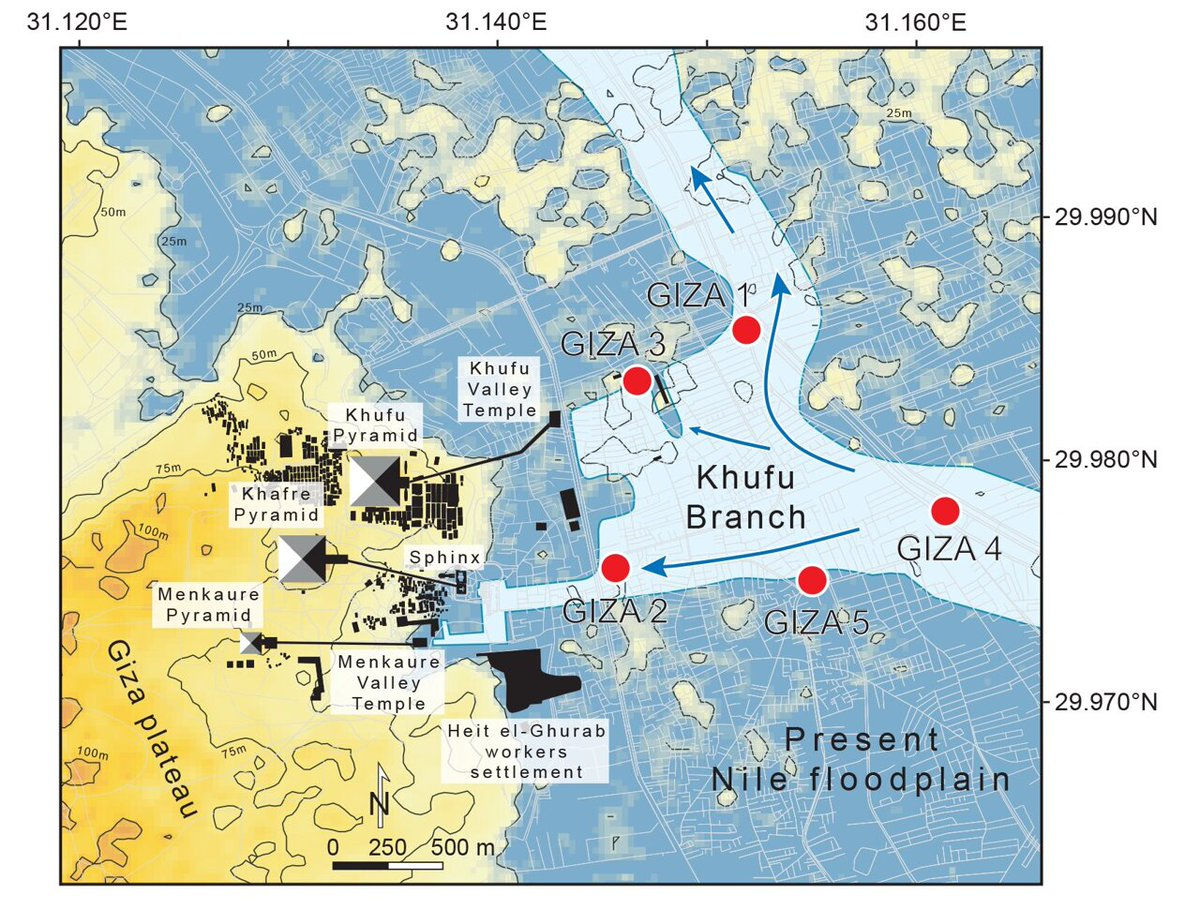
This sphinx is contemporaneous with the Great Sphinx in Giza. And interestingly, it seems that this was originally a lion(ness) sculpture turned into a sphinx by chiseling the lion(ness) head into the queen's head...

Hetepheres II was the daughter of Khufu, the guy who built the Great pyramid in Giza and a wife of Djedefre, the guy who built the Great sphinx in Giza...

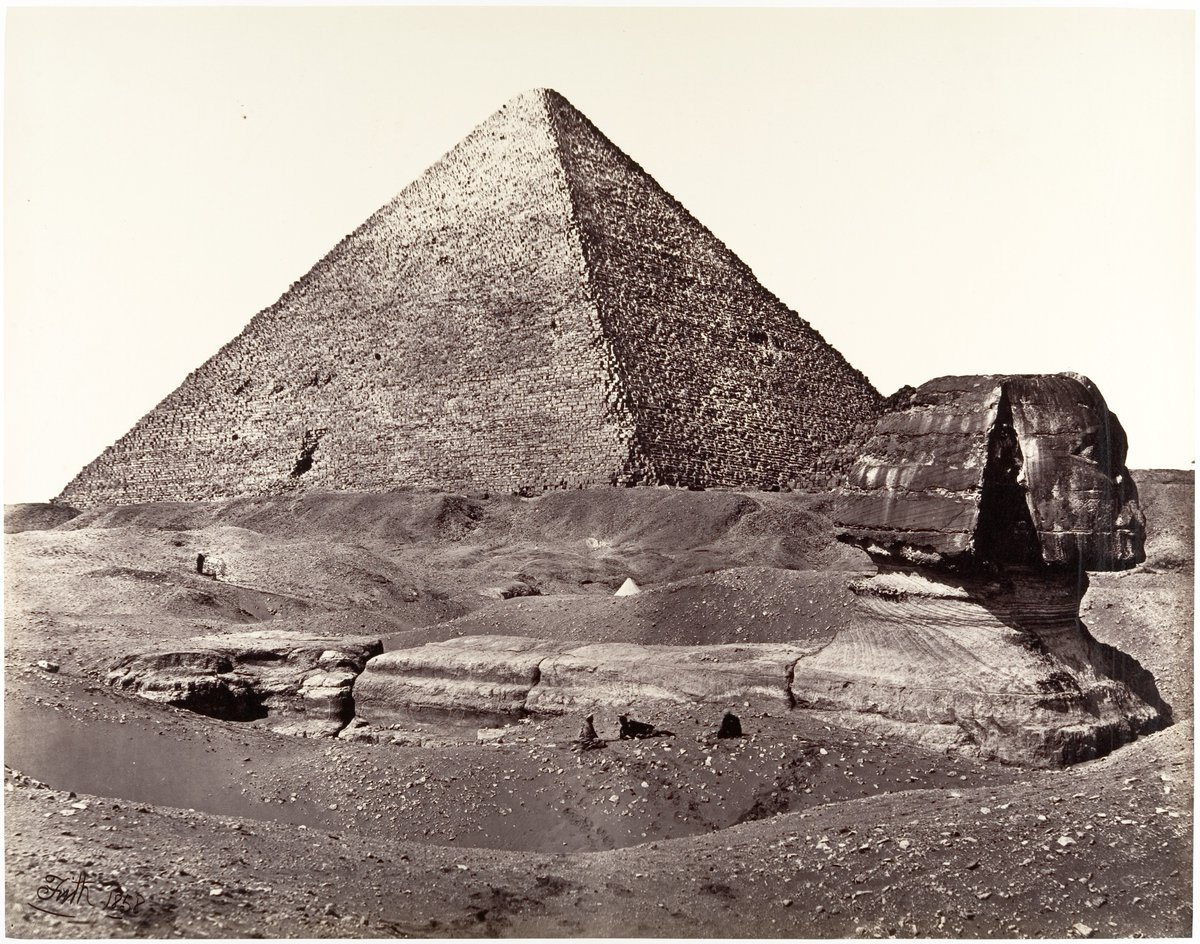
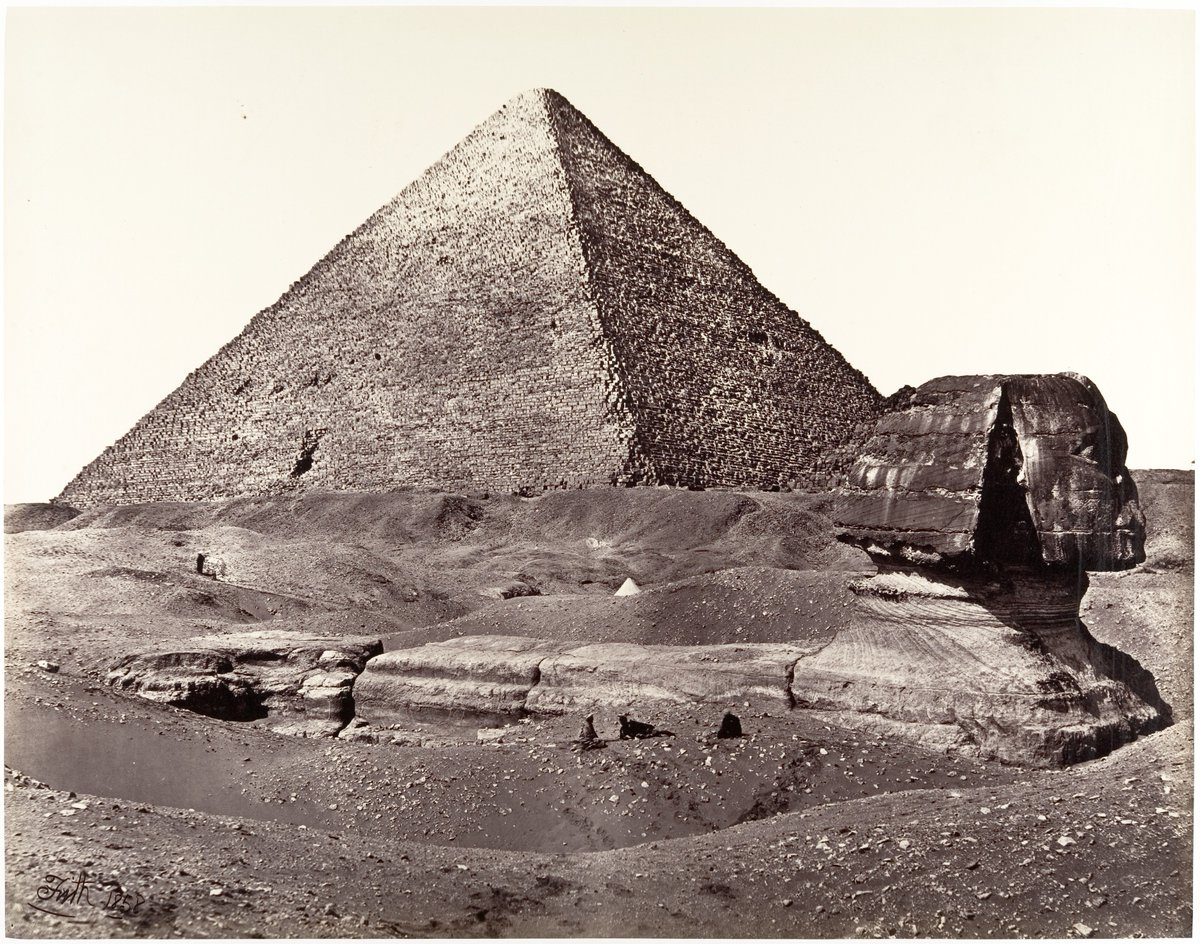
Great sphinx has weird proportions. Its head is too small for its body...Which is totally weird for Egyptians who were obsessed with perfection of measure and proportion...

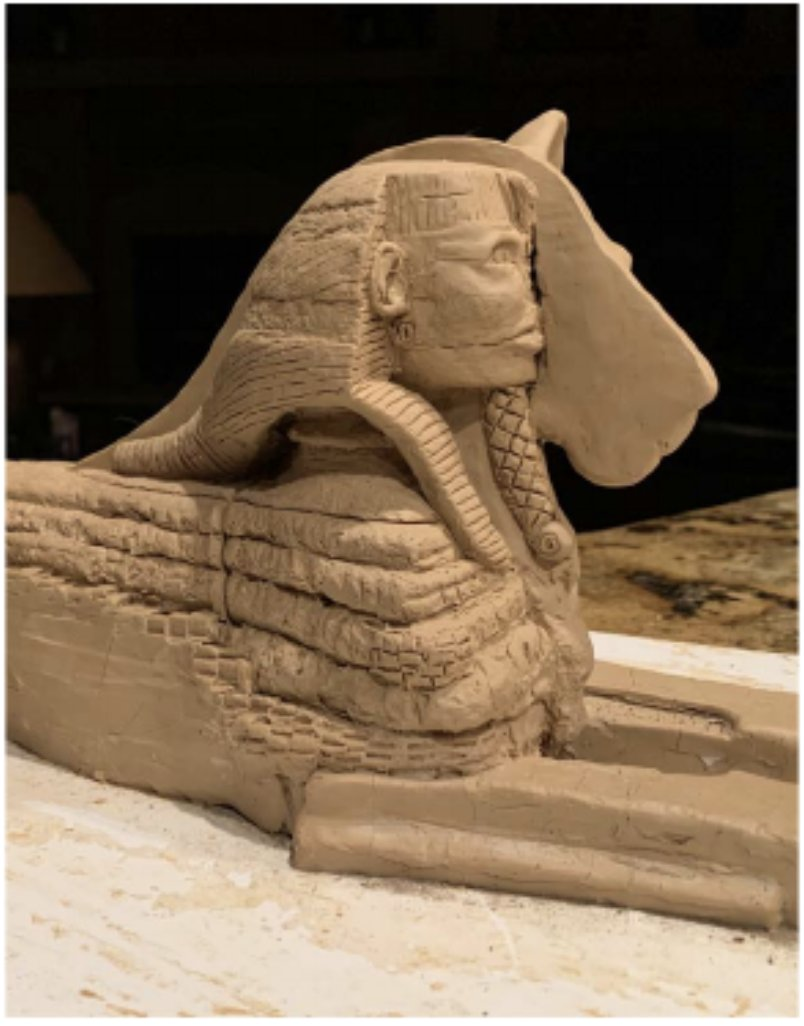
So it has long been speculated that originally the Great sphinx was in fact a Great lion(ness) whose head was chiseled down into the head of Djedefre during his reign...This pic is from one such paper, "Mehit’s Stump: Unmasking the Great Sphinx of Giza"...

That the sphinx (pharaoh) head is a later addition is supported by the fact that even though, for the most of its existence, only the head was visible above the sand, it is the body that is deeply eroded by the water erosion and not the head...Sphinx before the body was excavated from the sand...

Now we know that the climate got much dryer soon after the reign of Djedefre, which means that the body of the Great sphinx must have been eroded during the centuries/millennia before the Djedefre's reign...

Now as I said already, the common conclusion is that the Great Sphix was originally a Great lion(ness). The problem is that there is no mention of any Great lioness statue anywhere in the Old Kingdom Egyptian texts...

So I wonder if what was turned into the Great sphinx by Djedefre, was not a giant sculpture of a lioness, but instead an ancient, deeply eroded, natural bedrock outcrop which loosely resembled the body of a couchant lion(ness). Like this one from Balochistan, Pakistan.

Now in my post "Sphinx", I explained why Egyptians worshiped lion(ness)s (the annual Nile flood peaks in Jul/Aug, Leo), and why Djedefre would want to create something like a Great sphinx out of a weathered outcrop that resembles a lion(ness)...

That Djedefre (means "He appears as Ra") was depicting himself as Atum/Ra, can be seen from the fact that the Great sphinx originally had "a long braided ‘divine beard’, curled at the end, that gods and deified kings wore, and not a short, square beard worn by living kings"...A part of that beard was found and preserved in the Cairo museum...

This is the same beard worn by Osiris, the god of resurrection directly linked to the annual flood...I talked about this beard and its meaning in my post "The beard of Osiris"...Figurine of a bearded man by the Naqada I culture, 3800–3500 BC, from Upper Egypt... 

In my original sphinx article I also mentioned that Atum, The Creator God, was believed to have created himself as the first thing on the primordial mound after it emerged from the primordial waters. And that some believed that he was actually the primordial mound itself...

I also mentioned that, apparently, Pyramid Texts, Coffin Texts and the Book of the Dead state that "lion emerged from the primeval mass within the primeval waters before all other animals, and mankind"...

Now here is an interesting thought: Is it possible that the Giza plateau, or the bedrock outcrop on the Giza plateau, which looked like a couchant lion(ness) was seen by the Old Kingdom Ancient Egyptians as the Benben, the primordial mound?

That would explain why Khufu would build the pyramids on the Giza Plateau...Reconstructed apex (top stone) of one of the pyramids (G1-d) of the Giza Plateau, symbolising Benben...

And this would also explain why the ancient, rain eroded rocky outcrop, resembling a couchant lion(ness) overlooking the Nile flood plain, was turned into the Great sphinx, which depicts Djedefre as Atum/Ra who emerged out of the flood as a lion mound...

And this would also explain why when Djedefre decided to turn this primordial lion(ness) shaped mound into the Great Sphinx, Egyptians thought it was such a great idea, totally in keeping with their religion, that every pharaoh worth his beard had one made for him (her) self...

What do you think? Did anyone else propose this already? Would be really surprised if no one did...It's kind of obvious...

To read more about ancient animal and plant calendar markers, start here…then check the rest of the blog posts related to animal calendar markers I still didn't add to this page, and finally check my twitter threads I still didn't convert to blog post...I am 9 months behind now...

Friday, 17 May 2024

Sphinx

This 2,800 year old ivory was recently discovered in the old Hittite capital Hattusa, Turkey. According to excavation director Prof. Dr. Andreas Schachner, the engraving depicts "a Sphinx, a Lion, and two Trees of Life" and is a unique find.

That's it. That's it?

We don't know:

1. Where was this piece made?

2. What is the meaning of the depicted scene?

So...Let me try to propose the answers to these questions...

I never actually thought about the sphinx symbol before. Crazy I know. But better ever than never 🙂

The oldest, largest and most famous sphinx is the Great Sphinx of Giza, situated on the Giza Plateau adjacent to the Great Pyramids of Giza on the west bank of the Nile River.


The Great Sphinx, which has a body of a lion and a man's face, was built around 2500BC by the Pharaoh Khafre of the 4th dynasty and it is believed that Sphinx face is that of the Pharaoh Khafre...

The Sphinx faces east. And right under its feet, archaeologists have discovered the oldest Ancient Egyptian solar temple, where the sun was worshipped as Khepri, the rising sun, Ra, the midday sun, and Atum, the setting sun. 


According to "The Sun Temples of the Vth Dynasty: A Reassessment", during the Old Kingdom, "kingship assumed a solar trait which culminated with the building of the Giza Sun Temple, a place devoted to the celebration of...solar nature of the pharaoh who represented the only link between gods and people..."

Now, knowing this, it is very interesting that the Great Sphinx which stands over the sun temple, has a face of the Pharaoh Khafre, whose name means "He appears as Ra (Sun god)".

I would say that this was done to explicitly identify Pharaoh Khafre as the Living Sun God.

This would answer, apparently still unanswered, question: what was the original symbolic meaning of the Sphinx?

Common opinion is that Sphinx symbolises human triumph over wild nature.

But Egyptologist Alan Gardiner suggested that the Egyptian phrase, "shesep ankh Atum" (Living Image of Atum), which was associated with sphinxes, signified the pharaoh in the form of the primeval sun and creator god Atum.

In the Heliopolitan creation myth, Atum was the first god. Some say that he was the primordial mound which emerged from the primordial waters. Others say that he created himself as the first thing on the primordial mound after it emerged from the primordial waters.

Apparently, Pyramid Texts, Coffin Texts and the Book of the Dead state that "lion emerged from the primeval mass within the primeval waters before all other animals, and mankind". 

Which would imply, as the Egyptologist Karol Mysliwiec pointed out, that it was Atum himself who appeared on earth as a lion. Hence Sphinx, a lion man, as the Living Image of Pharaoh as Atum...

Interesting, right?

But why did Atum appear as a lion? No one knows...Well actually I know...Animal calendar markers...

This is annual Nile flow rate chart. You can see that the flow peaks in Jul/Aug (Leo) resulting in the annual flood...


During the sunniest, hottest time of the year in Egypt (Cairo climate chart). And because it is the annual Nile flood that makes the life in Egypt possible, we have the Sun (god) being the creator of life...

Now in my post "Beautiful boy", about Nefertem, the Egyptian Beautiful Boy, originally a lotus flower at the creation of the world, who had arisen from the primal waters, I explained why I think that when Egyptians talk about "primal waters" or "primordial waters" from which their world emerged, they actually mean "annual Nile flood" without which Egypt wouldn't exist...

So Atum appearing out of the "primordial waters" as a lion just means fertile land appears out of the Annual Nile flood which starts in Jul/Aug, in Leo...

And because the Pharaoh is the "living life giving sun god", we end up with a Sphinx, a lion man, sun (god) in Leo...

BTW, this is also the time when the the god Osiris, the personification of the fertile black soil, gets resurrected, after being killed by god Set, the personification of the infertile red (desert) soil

In Egypt, agriculture depended not on rain, but on the annual Nile flood. And who was the god directly linked to the annual Nile flood that created the black (fertile) soil? Osiris. I talked about this in my post "Holy carp"...

Osiris with wheat growing from his body. From the coffin of Nespawershepi.

And because Osiris is "an ideal Pharaoh", and because Osiris likes wearing a false beard, Pharaohs wore false beards...I talked about this in my post "The beard of Osiris"...

Figurine of a bearded man by the Naqada I culture, 3800–3500 BC, from Upper Egypt...

But I am digressing...

Jul/Aug is marked with animal calendar markers Leo (Lion) because this is when Eurasian lions main mating season used to start...It originally had nothing to do with constellations...

Asiatic lions mating season started in Jul/Aug and spanned the whole of Autumn (Aug/Sep/Oct)...

In the "THE ASIATIC LION: A study of ecology and behaviour" by Paul Joslin we can read that based on the observation of the large number of wild lions, the mating season of the Asiatic lions starts in August and lasts until October. 


Which is why autumn starts in Leo (Jul/Aug). And why lion is the symbol of autumn...I talked about this in my post "Symbols of the seasons"...

Now here is a very interesting fact: Now extinct, North African lions have a completely different mating season from Eurasian lions. They mated in January...I talked about this in my post "Barebery lion", about this Roman mosaic, 2nd century AD, Tunisia, depicting Dionysus riding a lion...Great example how different reproductive cycles of different subspecies of the same animal, in this case Eurasian lion and African Barbery lion, change the meaning of the lion symbol.

This means that unless Eurasian lions once lived in Egypt, Ancient Egyptians could not have developed Leo animal calendar marker for Jul/Aug by observing local lions behaviour.

So what does this mean? It means that this animal calendar marker and the associate mythology was imported into Egypt from somewhere else, from a place where local lions did start mating in Jul/Aug...

That place is Mesopotamia...And guess who we find in Mesopotamia?

Nergal, the deified destructive "burning" sun, was depicted as a lion man, because Jul/Aug, Leo, is the hottest and driest part of the year in Mesopotamia...Talked abut him in my post "Winged superhuman hero"...

Well lion-man otherwise known as Sphinx...Except, because of the different hydrological situation, Jul/Aug is not just the hottest and driest time of the year, but also the beginning of the time period with the lowest water level in Tigris and Euphrates. The real time of death...

A lot has been written about Egypt - Mesopotamia relations Mesopotamians had a huge genetic and cultural influence on Early Egypt. Even I wrote about it in my post "Markhor goat from Naqada"...

Anyway, guess what's depicted on one of the most "Mesopotamian" objects found in Egypt, the so called "Gebel el-Arak Knife", Dated 3300–3200 BC, and found in Abydos, Egypt?

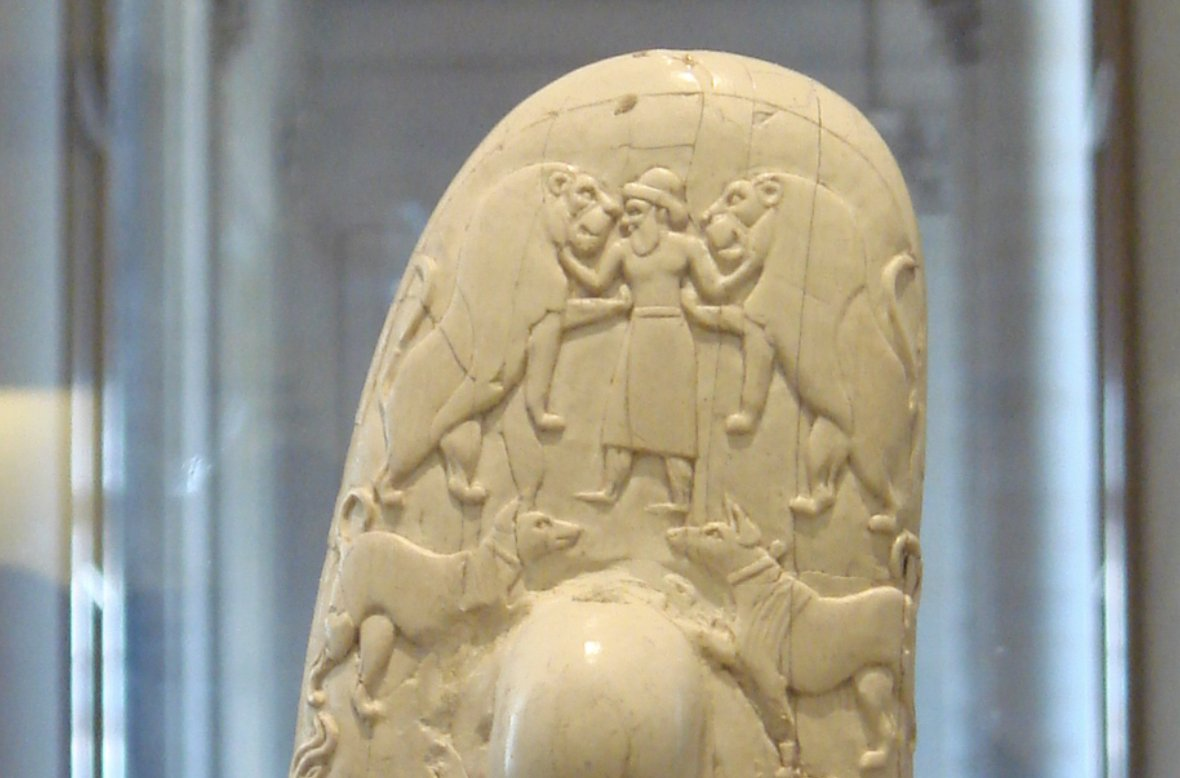
"King as master of animals fighting two lions" 🙂

This is kind of true. The king (dressed like early Mesopotamian Uruk culture kings) is depicted "in Leo" (between the lions)...

The most important duty of Mesopotamian kings was to oversee the building and maintaining of irrigation canals and dams.

Sun God Utu/Shamash with sun (heat) rays emanating from his shoulders, standing in in an empty canal, in Leo (between the lions), the hottest, driest time of the year in Mesopotamia, and the time when canals were repaired, holding reed cutting knife...I talked about this in my post "Canals"...

It was irrigation which made grain agriculture possible in Mesopotamia and helped people defeat the destructive sun in Leo...Hence...

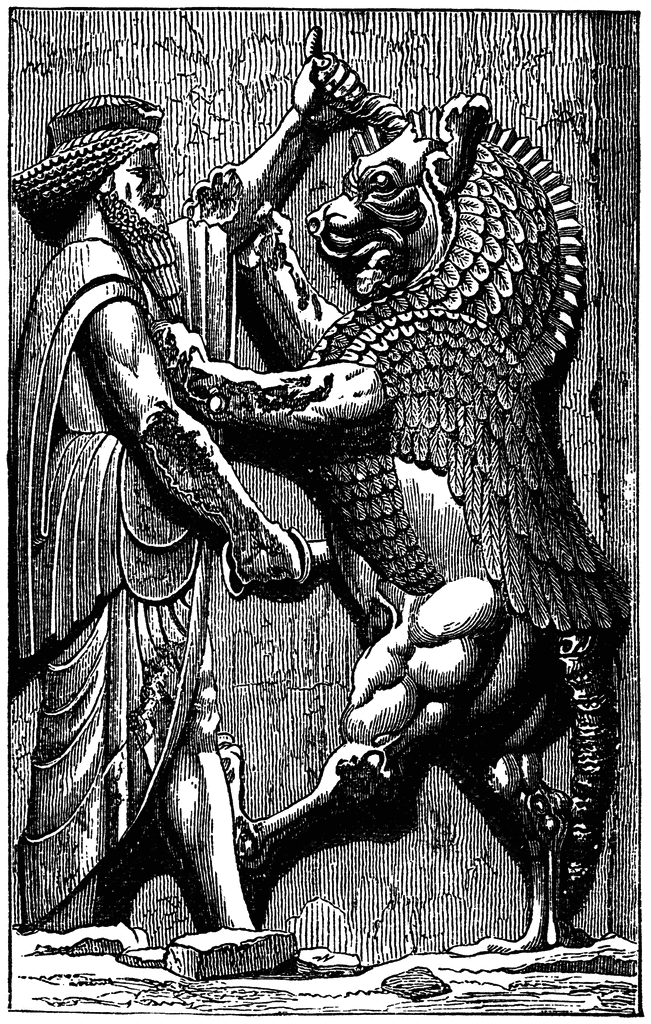
Why were Persian kings so obsessed with killing lions? Well they were't really killing lions. They were symbolically killing dry season...Which starts in Apr/May, Bull, peaks in Jul/Aug, Leo and ends in Oct/Nov, Scorpio/Eagle...I talked about this in my post "King killing Angra Mainyu".

As I already said, because of the different hydrology, in Egypt, the time between the lions, Jul/Aug, Leo, was not the time of drought, death, but the time of flood, life. Hence pharaoh was eventually depicted not fighting the lions, but being a lion...A Sphinx...

Which I why I think that Gebel el-Arak Knife and other depictions of kings fighting lions were made under the direct cultural influence from Mesopotamia, and predate the development of the local Egyptian "good lion-sun god =  lion-pharaoh cult"...

BTW, in Mesopotamia the sun god was also the giver of life...But it was the sun in Taurus, the time when water levels peak in Tigris and Euphrates.

Mesopotamian god Utu/Shamash was depicted as a golden bull (Sun in Taurus) with flowing lapis lazuli beard (flowing water)...

Cause flood arrives there in Taurus...

I talked about this in many of my posts. For instance "Butt chewing"...

I talked about Shamash (sun) and his link to annual Tigris and Euphrates flood and Ankh in my post "Sun god tablet" in which I present detailed analysis of this 860BC-850BC Middle Babylonian limestone tablet known as "Sun god tablet"...

But I am digressing again...

Now, if lions in Egypt had a different mating season from the Eurasian lions, how did Mesopotamian people who arrived and settled in Egypt know that the annual Nile flood starts in Jul/Aug, Leo...

Enter Sirius, the one star that every old civilisation seem to have known, worshiped, tracked and used as a calendar marker.

During the time when Mesopotamian and Egyptian   mythologies were formed, Sirius rose with the sun in Jul/Aug, in Leo, when Eurasian lions began their mating season...Hence in Mesopotamia we have a goddess of war and destruction associated with lions...

For those who will say "Ishtar was the morning star", yes she was, in Leo (Jul/Aug), when Sirius rose in the morning before the sun...Which is why Ishtar stands on a lion (with Shamash sun cross above the lion) and is known as "The Lioness of heaven"...

I know, I know, everyone believes that the star of Inanna/Ishtar was Venus. In my post "Inanna and Shukeletuda", through analysis of this famous poem, I explain in detail why I believe that this is in fact wrong...And why the star of Inanna/Ishtar is in fact Sirius...

In Egypt, Jul/Aug, Leo, is also the time of the "Eyes of Ra", murderous lioness war goddesses, like Sekhmet...I talked about this in my posts "Holy cow" and "Baboon"...

In Mesopotamia, the heliacal rising of Sirius marked the lowest water level in the Tigris and Euphrates rivers, the beginning of drought...It also marked the arrival of Nergal, the lion-god, the sun god of death...

In Egypt, the heliacal rising of Sirius marked highest water level in the Nile river, the beginning of the annual flood...It also marked the arrival of Atum/Ra, the lion-god, the sun god of life...

BTW...When our mythologies were made out of animal calendar markers, Sirius, the Dog Star rose with the sun in Jul/Aug, when mating season of the old dog breeds began...


I talked about the dog star in Egypt in my post "Dog days"...

I talked about the dog star in Mesopotamia in my post "Tishtrya"...
I talked about the dog star in India in my post "The bitch of gods"...

Why is this important? Cause on the Gebel el-Arak Knife, the king is standing not just between two lions (in Jul/Aug, Leo), he is also standing between two dogs (In Jul/Aug, Dog days)...When Dog Star Sirius (the eye of Ra???) rises with the sun (Ra)...

Sooooo...

Back to our original Hittite engraving...Well it makes the link between Sphinx and lion (Leo) obvious. In case this is still not obvious...

Hittite relief sculpted orthostat stone panel of Herald's Wall Basalt, Karkamıs, (Kargamıs), Carchemish (Karkemish), 900-700 B.C. Chimera. Anatolian Civilisations Museum, Ankara, Turkey.

I think that it was made under Egyptian influence, as in Egypt and not Mesopotamia lions (and lion-men, Sphixes) bring life (Trees of life)...

But the Spinx depicted on the engraving has wings, which Egyptian lion-man does't have, but Mesopotamian lion-man (Nergal) has...


So I wonder if this piece was made during the time when Mesopotamians ruled Egypt? Which is basically the exact time to which this Hattusa engraved ivory was dated to...And which is why we see Mesopotamian lion-man with attached Egyptian symbolism?

Anyway, that's it for today. Hope you enjoyed this. To read more about ancient animal and plant calendar markers, start here…then check the rest of the blog posts related to animal calendar markers I still didn't add to this page, and finally check my twitter threads I still didn't convert to blog post...I am 9 months behind now...

PS: It just occurred to me that the later Greek Female Sphinx as murderous keeper of secrets, could just be Sirius, "The Lioness of Heaven", "The Eye of Ra" under another name and guise...I might write another thread about this at some later stage...