Showing posts with label Osiris. Show all posts

Wednesday, 6 May 2026

Horizon

This is my 3rd Horus post...

I am continuing my series of posts about Horus. In this one I would like to talk about a hieroglyph which we find often associated with Horus, the "mountain" hieroglyph, and I will try to show that our current understanding of its meaning is...incomplete...

Big claim I know. But hear me out...

This is Egypt, this blue green flower of life growing out of the red desert of death...Everyone who ever contributed to the creation of the Egyptian civilisation lived within this narrow blue green fertile strip along the River Nile...

Surrounded on both sides by first high sand dunes, then even higher distant hills, then even even higher and even more distant (few and far between) mountains...

This is elevation map of Egypt...

And this is what this all looks like from the Nile water level, from the fertile land which is flooded by this same Nile water, from Egypt...

Looks familiar? I believe that the "mountain" hieroglyph does not represent any mountain. It represents the banks of the Nile river, its dunes, hills and mountains...With Nile and Egypt lying between them...

That I could be right about the original deep meaning of the "mountain" hieroglyph can be seen from the fact that this symbol had its mirror in ancient Egyptian architecture: the pylon, the front part of Egyptian temples...

The pylon consists of two pyramidal towers, each tapered and surmounted by a cornice, joined by a less elevated section enclosing the entrance between them...

This design makes no sense if the towers represented any two mountains. It makes a lot of sense if the two towers represented the banks of the river Nile...

Because then the Temple would have been a symbolic representation of (heavenly and earthly) Egypts, the place where men and gods meet...

According to the people from The Met, the ancient Egyptians viewed the temple as the place where "the (re)creation, (re)birth, of the world was thought to be continuously repeated, and the building itself was regarded as an image of the natural world"...

Knowing that for Egyptians "The World" was equal to Egypt, the fertile land along the Nile, which was (re)created by the Nile ever year, making the temple to look like the Nile River Valley, like Egypt, makes so much sense...

I talked about the continuous (re)creation of The World (Egypt) by the River Nile in my post "Beautiful boy" about Nefertem, The Beautiful (Lotus) Boy from Egyptian mythology... 

I wonder if "the lotus flower at the creation of the world, who had arisen from the primal waters" just means: "the lotus flower who arrises from the waters of the Annual Nile Flood"? 

I also talked about this in these two posts about the origin of the Sphinx mythology, "Sphinx" and "Giza lioness"...

Anyway, apparently, in ancient Egyptian religion, the pylon didn't mirror the "mountain" hieroglyph. Instead it mirrored the "horizon" hieroglyph, which is basically the "mountain" hieroglyph with the sun above it. This thing...


Now according to this paper the hieroglyph "horizon" was "a depiction of two hills between which the sun, the giver of life, rose and set on the first morning of the universe"...

As I said many times before, this "first day of the universe", when the world emerged from the primordial waters is not something that happened once in a distant past. It is something that happens every year, on the first day of the flood...

Remember, continuous (re)creation...

Interestingly, according to the same paper, "in another symbology, the hieroglyph horizon was a depiction the two banks between which the Nile River flows, this too being a giver of life"....

TA!....TA!....TAAAAAAAA!!!!! πŸ™‚

Now if the "mountain" hieroglyph was indeed symbolic depiction of the Nile River valley, the way it was seen from it, from Egypt, then the "horizon" hieroglyph doesn't depict sun rising and setting between the mountains on the first day of creation of the world...

It depicts the sun, the giver of life, above the Nile River valley, above Egypt. At noon, when it is right above the Nile, the actual giver of life...

And when we overlay the "mountain" hieroglyph over this map, it perfectly fits the movement of the sun from east to west over the Nile River Valley...

The movement described by the "horizon" hieroglyph...

Also, the "horizon" hieroglyph, when overlayed over the map of Egypt, shows something else: The direction from which the annual Nile River flood comes...

It comes from the south, from the direction of the midday sun, and it fills the Nile River with the water of life, which then spills over the river banks into the Nile River valley (re)creating Egypt...

So I believe that the "horizon" hieroglyph has another meaning: "The Sun filling the Nile River valley with water". Basically "The Annual Nile River Flood". I first started thinking about this meaning of the sun as the source of the flood in my post "White calf", in which I tried to answer the question: why is this white calf standing between two sycamore trees under a red sun? 

I mean this has to be the other meaning of the "horizon" hieroglyph, or this "strange" image from the "Funerary Papyrus of Khonsu (c. 1070–712 BC) would make no sense...

I mean it would make no sense from the natural world point of view. This post gives some possible explanations for this scene from the Mythological point of view, and you will see that the nature and mythology again overlap...

If we accept that the "horizon" hieroglyph also meant "The Sun filling the Nile River valley with water" then then this image depicts Egypt (circular part with farmers digging the new fertile black soil brought by the flood) being (re)created by the Sun caused Nile flood...

The two female figures could be the White and Blue Nile, pouring water into the Nile River valley. The water is sometimes depicted as dark red (like blood) because this is the colour of the flood water, due to the sediment it brings down from the Ethiopian highlands...

The two female figures are sometimes named as Isis, and Nephthys, the two twin sisters of Osiris, the god of "the black soil", the fertile soil of the Nile River valley...

Osiris who IS "the black soil", the fertile soil of the Nile River valley, is depicted being watered by the flood and hoed by the people, being prepared for grain sowing...


Egyptians actually believed that grain grows from the (dead) body of Osiris...I talked about this in my posts "The beard of Osiris" and "Braided beard"...

So his two twin sisters pouring water (White + Blue Nile = Nile), the water of life, which makes Osiris (god of) the fertile black soil get reborn makes a lot of sense to me...

The water of life, the flood water. Being here poured by the Sycamore goddess, Nut (Hathor, Isis)...depicted with ankh (life) symbols inside it...Tomb, Siwa Oasis, 400-600 BC. Egypt...

Ok, ok...That's all great. But where is Horus?

Right here, on the same papyrus of Khonsu. 


From left to right:

Khonsu offers sacrifice to Ra-Horachte, the hybrid of Ra of the sun at noon πŸ™‚ and Horus of the horizon πŸ™‚.

Khonsu then takes water of life from the sycamore tree goddess. BTW, sycamore tree is full of fruit during the Period May/Jun (when Nile water levels start to rise) - Sep (when Nile water levels peak) πŸ™‚.

After which we have the scene depicting (re)creation, resurrection (of Egypt) through annual flood πŸ™‚.

And symbolically, resurrection of Osiris together with Khonsu...

You might want to also read my first Horus post "Great duel" and my second Horus post "Horus the Elder"...

If you are interested in reading more about ancient animal and plant calendar markers, which are at the root of all our mythologies, start here…Then check my twitter threads I still didn't convert to blog post...I am way way behind...

Saturday, 17 May 2025

Golden men

One of two golden men with large erect penises found in the settlement of Tell el-Farcha, located in the Nile Delta, Egypt, and dated to c. 3000 BC...Pic from this article...

This is the second, smaller figurine...

The figurines had a core made of probably wood, which was then covered with thin gold foil, which was fastened by golden rivets, 4 mm long and 1 mm in diameter. Whoever made these figurines was a seriously good goldsmith...

The archaeologists who found these figurines believe that "It is possible that the golden figurines, depict...a Predynastic ruler...and his son"...

I have to disagree with this. I believe that they depict a god (not sure which one) linked to the sun and the flood...

The reason why I believe this is because figurines were made of gold (sun), had huge penis (fertility), and had eyes made of lapis-lazuli (water)...And in Egypt, the flood which makes the land fertile arrives during the sunniest and hottest time of the year (Jul/Aug)...

But that's just my opinion...BTW...lapis lazuli used for the eyes of the golden figurines was was imported from the area of today’s Afghanistan!!! How cool is this? 3000 BC...

Mesopotamian god Utu/Shamash was depicted as a golden bull (Sun in Taurus) with flowing lapis lazuli beard (flowing water)...This object was found in Ur and dates to 2450 BC. It is currently in the Pen Museum...


Why lapis lazuli beard on the solar bull? Cause flood, caused by the snowmelt in the North-Eastern Mountains, caused by sun's heat, arrives there in Taurus...

I talked about this in my posts: "Solar bull", "Water bull",  "Bactrian snakes and dragons", "Shamash young and old", "Butt chewing", "When Utu steps up into heaven", "Maran", "Sun god tablet", "Gisgis relief", "Lyres of Ur"... 

Hmmmm....

Osiris and Horus, Father and Son?

I talked about Osiris and its link to flood in my posts "Braided beard" and the "Beard of Osiris"...
That's it. To read more about ancient animal and plant calendar markers, start here…Then check my twitter threads I still didn't convert to blog post...I am way way behind...

Sunday, 25 August 2024

Braided beard

An Egyptian Bronze Figure of Osiris, 21st/26th Dynasty, 1075-525 BC.

Why does Osiris wear "braided", "plaited" false beard?

Remember my post "Sphinx" about this 2,800 year old ivory was recently discovered in the old Hittite capital Hattusa, Turkey and the Sphinx as a Deified Lion animal calendar marker?

And do you remember the followup post "Giza lioness" about the Queen Hetepheres II sphinx from the Cairo Museum and the meaning of the part of the Egyptian creation myth that says that: "...lion emerged from the primeval mass within the primeval waters before all other animals, and mankind"?


Well in that post I talked about the importance of  the fact that the Great sphinx originally had "a long braided ‘divine beard’...that gods and deified kings wore, and not a short, square beard worn by living kings"...


And then I said "This is the same beard worn by Osiris, the god of resurrection directly linked to the annual flood..." I talked about this beard and its meaning in my post "The beard of Osiris". I also talked about Pharaohs who wore a false beard to pretend to be Osiris (who wore a false beard to pretend to be a dead ancestor πŸ™‚) and about the cult of the dead in Ancient Egypt. Grain growing from the body of Osiris.


When I posted the link to this article on Facebook yesterday, a friend of mine asked me a very interesting question:

"A puna Ε‘aka brade?" (What about the expression "hand full of beard"?)

The "puna Ε‘aka brade" (hand full of beard) is an expression from Serbo-Croatian which means "big gain, big fortune, big happiness, big satisfaction"...

In this article (in Serbian) the author argues that the expression comes from the fact that "rubbing one's chin, or stroking one's beard is a natural expression of satisfaction"...

I've seen old people doing this so many times all over the Balkans...And now I am one of the "old people" stroking my beard as a sign of great satisfaction that I had stumbled across another interesting "syncretism" πŸ™‚

In my post about the fake beard of Osiris, I talked about the Egyptian cult of the dead, and the cult of the dead in general, and how the dead ancestors, represented by the guys with long beards, were linked to grain agriculture and grain fertility...

Now remember my post "Wheat cross" about "wheat cross" decorated with "wheat wreath" harvest traditions from Central Europe?

In it I said that the wheat wreath was always made by women, and was made "the way you would plait women's hair"...

Which (thank you @another_barbara) looks like ear of wheat...

Which means that the girl carrying the wheat wreath was the embodiment of the Grain/Wheat/Corn Maiden...

Now this is what real plaited, braided beard actually looks like. It also looks like ear of grain...Very fitting as a symbol of Osiris, the god of the fertile black soil from which grain grows...

So is this why the (false) beard of Osiris and Deified Pharaohs (Deified Ancestors) is plaited? To look like grain growing out of the (grateful) dead?

Diduch (grandfather), symbolic representation of the ancestral spirit which governs the lives of the living. 


From Central European Slavic mythology / folklore. More in my post "Diduch"...

I talked about the importance of keeping the dead happy if you wanted your grain to grow in my post "Care of the dead"...

Remember this depressed dude? This is the statue of the Last Hittite king Suppiluliuma II. And he said: "...humiliation of the Hittite kingdom is the result of the fact that the Hittites have forgotten to respect the sacred bond with their dead..."

Maybe Osiris wore "grain beard". Or maybe this is all just a coincidence...And this has nothing to do with anything: The last harvested sheaf of wheat was in the past in some parts of Serbia used to make "Velesova brada"(The beard of Veles, Slavic sun/summer/harvest god) or just BoΕΎija brada (God's beard)...

The "grain spirit" is in European folklore usually preserved as female "corn dolly" made from the last harvested sheaf of wheat. I talked about this in my post "Corn dolly" and "The old woman of the mill dust"...

The spirit of the "Mother of Grain" (Mother Earth). After all grain grows from earth...

I talked about this in my post "Mother of grain"...Grain seed and vulva symbolism...Link between female fertility and earth/grain field fertility...


But did (some weird) Serbs, just like (weird) Ancient Egyptians, associate the grain fertility with a male god...And hence preserved the "grain spirit" in the male God's beard?

Again, let me remind you of this

Serbs, like all the other Balkan people, are descendants of pretty much everyone who ever lived in the Balkans...Which is why, I thought then, and still think, we can find so many interesting bits of many old lores in Serbian folklore...

There is of course another possibility. A long beard, means long life...In the past, in the Balkans, men had long life only if they were fucking lucky...

This is Serbian gusle player and epic poems singer Rajko Ivković. Born in 1880, in the village Gradovi on mountain Rudnik in Serbia. Survived 3 wars. Had many stories to tell. The word history deep down means "what old people saw". From my post "History"...

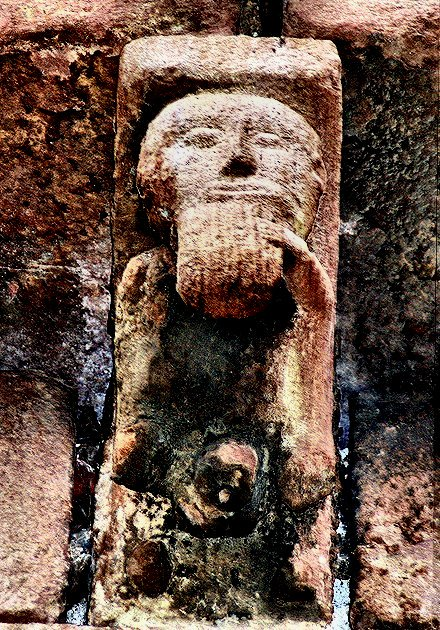
Anyway, speaking of "stroking ones beard as a natural expression of satisfaction" πŸ™‚ Remember my post "Sceptre"?

Church decoration, Mansilla de la Sierra, Spain. 

Serbian expression "he acts as if he pulled god's beard", which means "he acts like god gave him power", has another version "he acts as if he pulled god's penis". 

I hope you liked this. Have a nice evening πŸ™‚ And "May your beards grow long". Unless you are a woman of course.

That's it. To read more about ancient animal and plant calendar markers, start here…Then check my twitter threads I still didn't convert to blog post...I am way way behind...

Saturday, 18 May 2024

Giza lioness

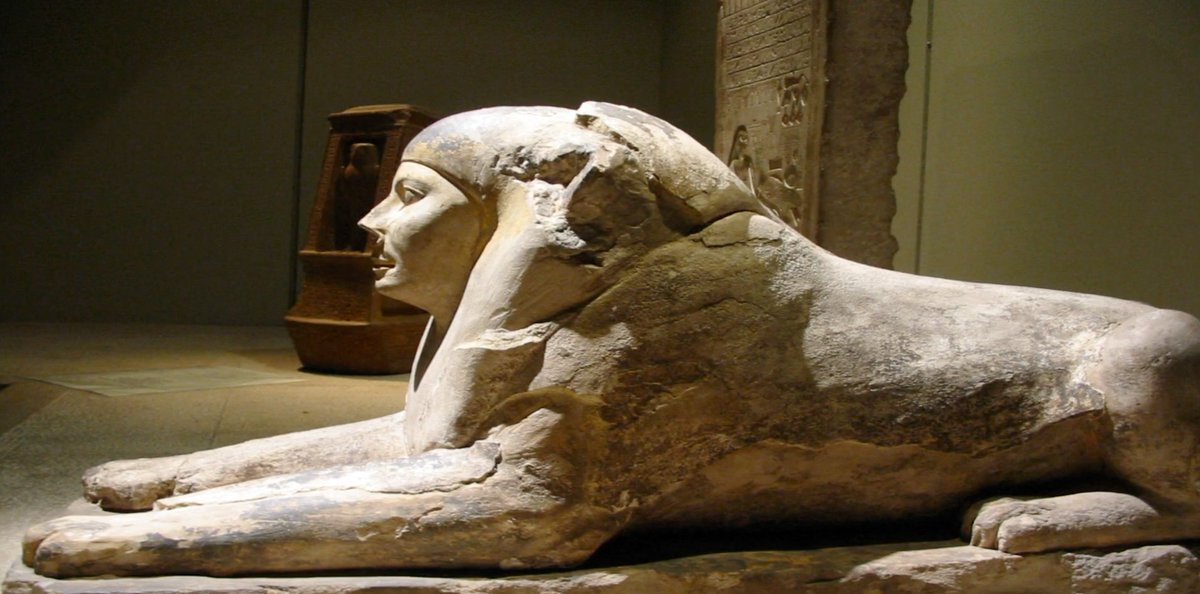
Queen Hetepheres II sphinx – Cairo Museum. 

This sphinx is contemporaneous with the Great Sphinx in Giza. And interestingly, it seems that this was originally a lion(ness) sculpture turned into a sphinx by chiseling the lion(ness) head into the queen's head...

Hetepheres II was the daughter of Khufu, the guy who built the Great pyramid in Giza and a wife of Djedefre, the guy who built the Great sphinx in Giza...

Great sphinx has weird proportions. Its head is too small for its body...Which is totally weird for Egyptians who were obsessed with perfection of measure and proportion...

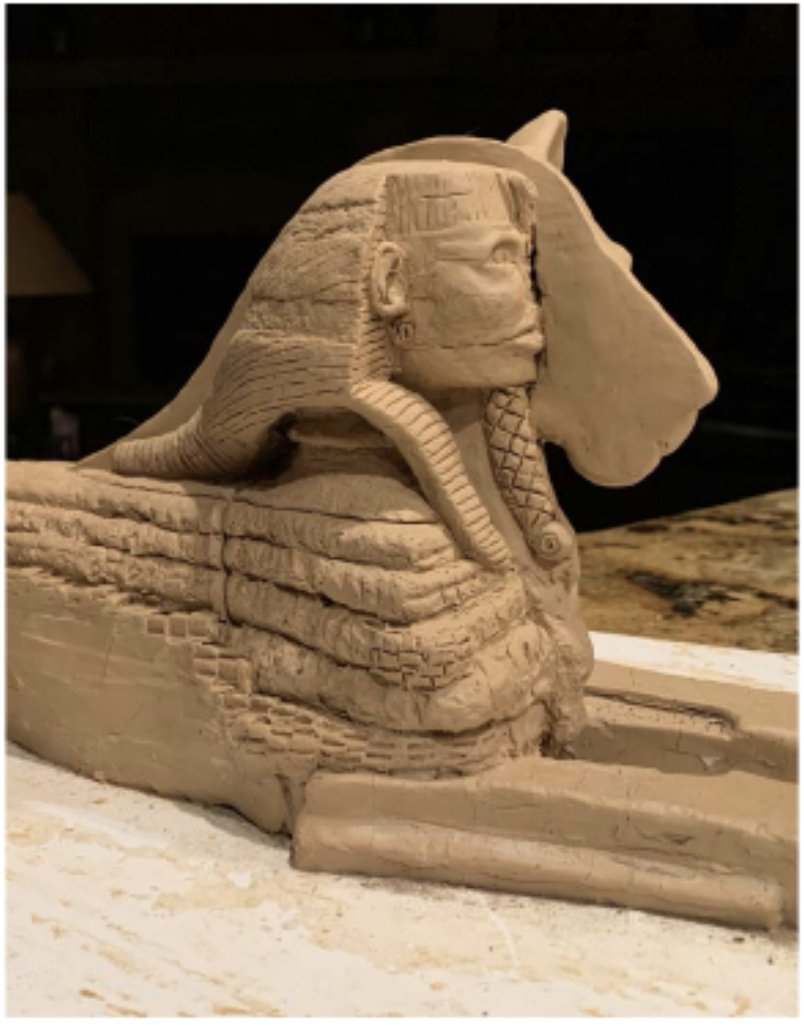
So it has long been speculated that originally the Great sphinx was in fact a Great lion(ness) whose head was chiseled down into the head of Djedefre during his reign...This pic is from one such paper, "Mehit’s Stump: Unmasking the Great Sphinx of Giza"...

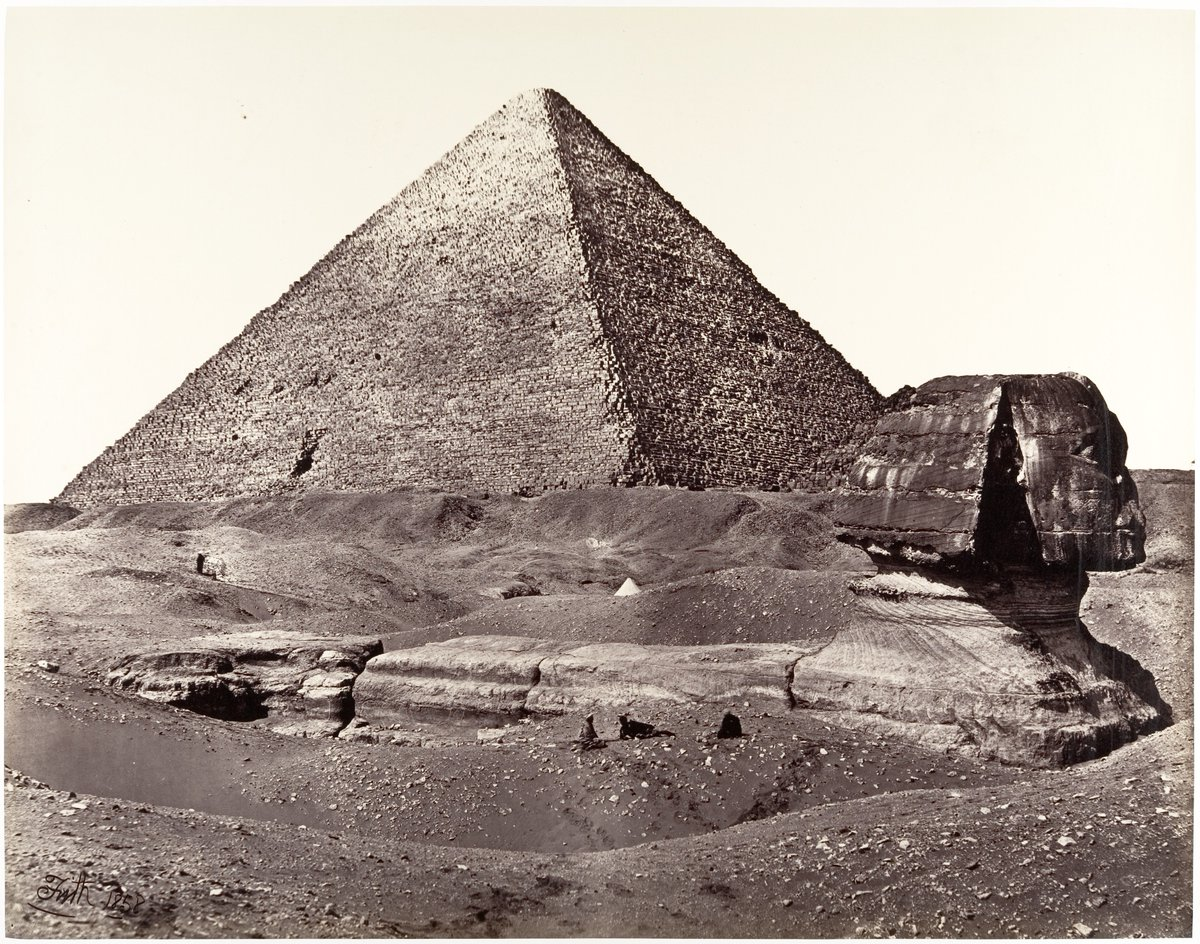
That the sphinx (pharaoh) head is a later addition is supported by the fact that even though, for the most of its existence, only the head was visible above the sand, it is the body that is deeply eroded by the water erosion and not the head...Sphinx before the body was excavated from the sand...

Now we know that the climate got much dryer soon after the reign of Djedefre, which means that the body of the Great sphinx must have been eroded during the centuries/millennia before the Djedefre's reign...

Now as I said already, the common conclusion is that the Great Sphix was originally a Great lion(ness). The problem is that there is no mention of any Great lioness statue anywhere in the Old Kingdom Egyptian texts...

So I wonder if what was turned into the Great sphinx by Djedefre, was not a giant sculpture of a lioness, but instead an ancient, deeply eroded, natural bedrock outcrop which loosely resembled the body of a couchant lion(ness). Like this one from Balochistan, Pakistan.

Now in my post "Sphinx", I explained why Egyptians worshiped lion(ness)s (the annual Nile flood peaks in Jul/Aug, Leo), and why Djedefre would want to create something like a Great sphinx out of a weathered outcrop that resembles a lion(ness)...

That Djedefre (means "He appears as Ra") was depicting himself as Atum/Ra, can be seen from the fact that the Great sphinx originally had "a long braided ‘divine beard’, curled at the end, that gods and deified kings wore, and not a short, square beard worn by living kings"...A part of that beard was found and preserved in the Cairo museum...

This is the same beard worn by Osiris, the god of resurrection directly linked to the annual flood...I talked about this beard and its meaning in my post "The beard of Osiris"...Figurine of a bearded man by the Naqada I culture, 3800–3500 BC, from Upper Egypt... 

In my original sphinx article I also mentioned that Atum, The Creator God, was believed to have created himself as the first thing on the primordial mound after it emerged from the primordial waters. And that some believed that he was actually the primordial mound itself...

I also mentioned that, apparently, Pyramid Texts, Coffin Texts and the Book of the Dead state that "lion emerged from the primeval mass within the primeval waters before all other animals, and mankind"...

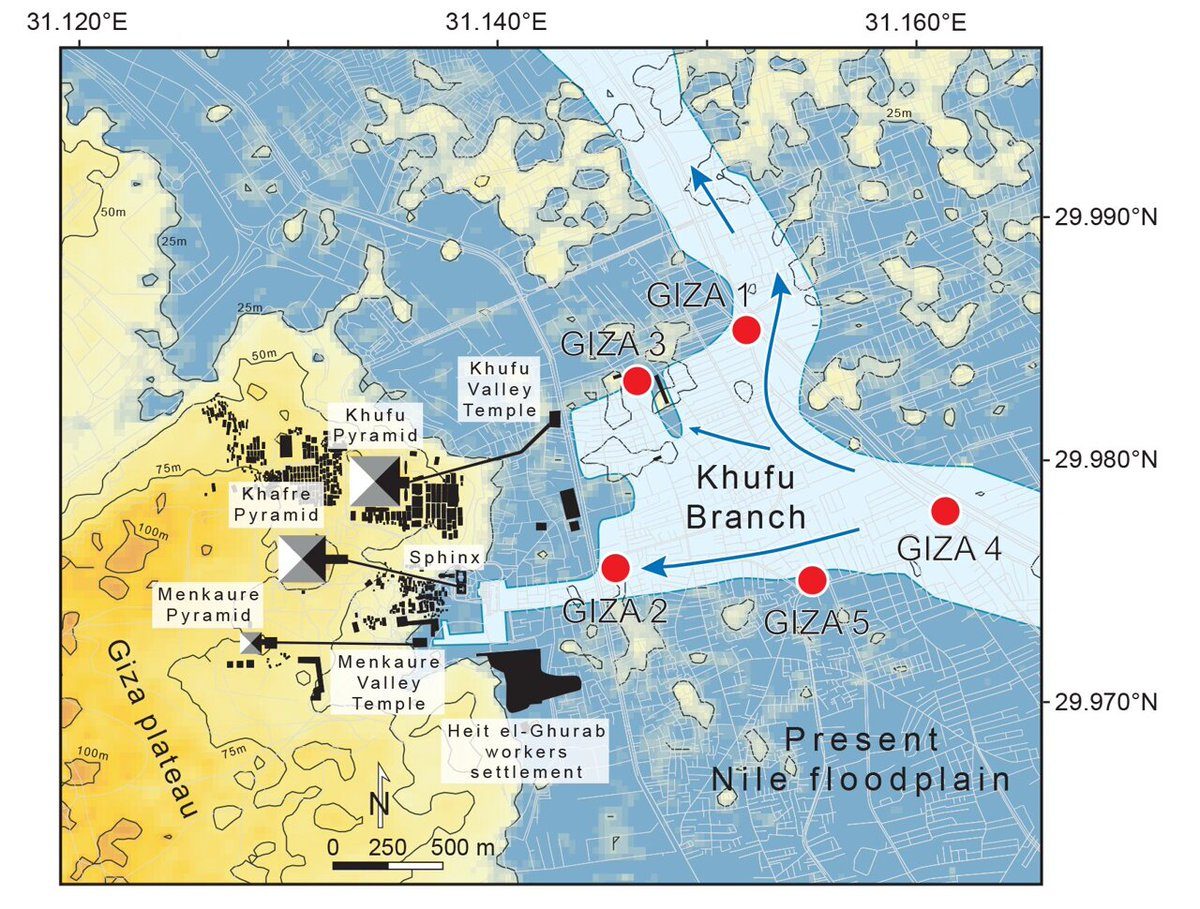
Now here is an interesting thought: Is it possible that the Giza plateau, or the bedrock outcrop on the Giza plateau, which looked like a couchant lion(ness) was seen by the Old Kingdom Ancient Egyptians as the Benben, the primordial mound?

That would explain why Khufu would build the pyramids on the Giza Plateau...Reconstructed apex (top stone) of one of the pyramids (G1-d) of the Giza Plateau, symbolising Benben...

And this would also explain why the ancient, rain eroded rocky outcrop, resembling a couchant lion(ness) overlooking the Nile flood plain, was turned into the Great sphinx, which depicts Djedefre as Atum/Ra who emerged out of the flood as a lion mound...

And this would also explain why when Djedefre decided to turn this primordial lion(ness) shaped mound into the Great Sphinx, Egyptians thought it was such a great idea, totally in keeping with their religion, that every pharaoh worth his beard had one made for him (her) self...

What do you think? Did anyone else propose this already? Would be really surprised if no one did...It's kind of obvious...

To read more about ancient animal and plant calendar markers, start here…then check the rest of the blog posts related to animal calendar markers I still didn't add to this page, and finally check my twitter threads I still didn't convert to blog post...I am 9 months behind now...