Showing posts with label cailleach. Show all posts

Monday, 7 November 2022

Living stone

Stone Quarry, painted c. 1919, by Czech painter Josef Ullmann...

In Slovenia in the past, a piece of stone that was cut from the wall of a quarry, had "to calm down", because it had been torn off the "mother's body" and was perceived as still alive for a certain time...

This belief was recorded by an published by Boris Čok in  "Kamnoseško izročilo o znamenjih na portalih in kolonah po Krasu" (p: 106)

But this is not an isolated belief...

Bedrock is in the Balkans known as "živi kamen, živa stena" (living stone, living rock) and is called so, because it is believed to be still part of the living body of the Mother Earth which gives birth to all life (plant, animal, human)...

These types of stones are also known as "Baba" (Grandmother, Mother) stones...

There are many "Baba" rocks and rocky mountain peaks all over Slavic Balkans. This is one of my favourites: Babin zub (Grandmother's tooth) peak, Mt. Stara Planina (Old Mountain), Serbia...

I list a lot of them in my article "Baba, mountains and crags"...If you know of any more, please post name and link to the map location in the comments...

These Baba stones were once venerated by the local transhumance shepherds communities...

For instance on Velebit mountain in Croatia, on arriving to the summer pastures, shepherd women used to bring food offerings and leave them on the "Baba" stone.  They also used to lite candles on the stone on various holy days. The stone was also known as "the altar"...

Many of these old "Baba" stones were later Christianised, by having chapels dedicated to Mother Mary built on top of them...Same thing, different name...Like this one on Veliko Rujno, Velebit, Croatia...

I talked about this in my post "Shepherd's chapels from Velebit"...

This was done because people believed that it was "Baba" (Mother Earth) that controls cold and damp weather...While her husband, Father Sun (Sky) controlled hot and dry weather...

Father above, Mother below...

Looks familiar? I talked about this in my post "Square and compasses"...

Srbska zagonetka: 

Pitanje: Visok otac, široka majka

Odgovor: nebo i zemlja

Serbian riddle: 

Question: Tall (high) father, wide mother

Answer: sky and earth

I talked about this in my post "Riddle"...

Shepherd's in Slovenia also believed that "baba" stones were linked to weather, water, humidity, mud, soil and fertility and pasture abundance...

This bedrock outcrop near the village of Rodik in Slovenia is known locally as "Baba" (Grandmother)... 

Locals believed that "Baba" controls the (bad) weather: Baba’s urine turns to rain, her fart to wind, and when she raises her skirt, the weather gets nice...🙂

And also used to leave offerings on "Baba" stones during their spring ascent to the summer pastures...I talked about this in my post "Gryla"...
I came across this interesting article in Italian, "La leggenda dell’auricorno e la mitologia delle Alpi slovene" about "Baba" folklore from the Alps. 

This is why stones are so prominently used in Slavic weather magic...Like here, where women raise "Dabog's stone" during drought to get cool and wet weather...
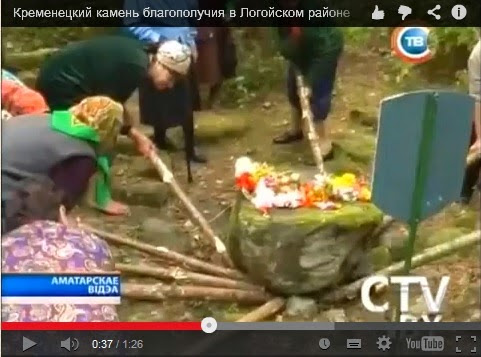
I talked about this in my posts "Weather stones", "The last megalithic ritual in Europe", "Jupiter from Ibrahimovci", "White cross"...

In South Slavic mythology, it is "Baba", meaning Grandmother, Hag, personification of the winter earth, which causes cold weather...I wrote several blog articles about this character...

"Bablji mlin", meaning "Granny's mill" scene, Slovenia. An old hag is being milled, and thus transformed, into a young maiden. Winter being transformed into Spring...I talked about this in my post "Bablji mlin"...
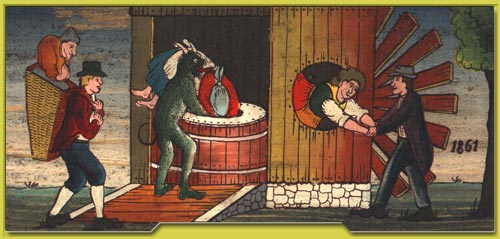
Interestingly, in this version, it's Krampus that does the milling...Krampus, Goat man, an animal calendar marker for winter...


Why? Because Ibex goats mate and fight during the winter...

I talked about this in my post "Krampus"...

"Bablje Leto" (Grandmother's summer), one of the names for Indian summer (warm dry autumn weather), is another remnant of the Mother Earth cult in European Christianity and European folklore...I talked about this in my post "Bablje leto"...

"Everyone knows that an ordinary bullet can't kill a witch. If you want to kill a witch, load the rifle with 3 grains of wheat and a bit of Easter beeswax candle" - Serbian saying. 

To understand why, replace witch with winter...

I gave the analysis of this proverb in my post "How to kill a witch"...

Slavs equated The Goddess of Death, Morana (mor=death) with The Old Hag, The Winter Earth, Marzana (marz=frost). She is ceremonially burned (warmed) or drowned (thawed) or both (to de sure to be sure 🙂) during Slavic spring festivals...I talked about this in my post "Gryla"...

As part of end of winter, beginning of summer rituals, men and boys blew willow horns  to scare the witch (winter) away...I talked about this custom in my post "May horns"...

Willow being symbol of spring...I talked about this in my post "Willow in Slavic folklore"...

In Cornwall we find the character called "The Old Sky Woman" who controls the snowfall across North Cornwall and children were told when the snowflakes began to fall, the Old Woman was up in the sky plucking her Goose....


Baba, The Old Hag, The Spirit of Winter Earth...Is also found in Romanian folklore...Just like in Serbian and Slovenian folklore she is associated with goats, calendar markers for winter (🙂)...
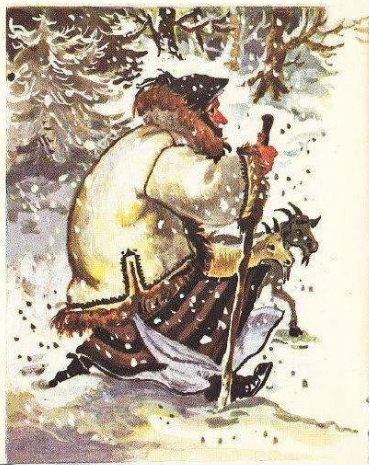
I talked about this in my post "Babele"...

In Iceland we find Gryla, who originally was "really a personification of the winter and the darkness and the snow getting closer and taking over the land again"...


Among Kashubians in the Carpathian mountains we find saying: "the old baba (grandmother) went to dance" - when the weather suddenly changes and it starts to snow...

In the Polish Carpathians we find saying: "the baba (grandmother) is already frozen" - the mountain tops are covered with frost or the first snow...

In Gaelic lands of Ireland and Scotland she is Cailleach...

In Italy she is Befana...

In the mountains of Central Europe she is Perchta to Germans or Peruehty to Slavs...

In the North of Germany and in Scandinavia she is "Mother Holle (Hulda) or "Old Mother Frost"...

Interesting, right?

I think so...

Saturday, 24 April 2021

Diduch

This is Diduch or Did, the most important decoration made in the Carpathian villages in Western Ukraine during the traditional winter holidays, originally Winter Solstice, now Christmas...


It is a decorated sheaf of grain (rye or wheat) made from a the first and the last stalks of grain reaped that year and brought home ceremonially from the fields by the queen of the harvest...

I talked about the end of harvest rituals in my post "Wheat wreath"...

In the Boykivshchyna, agricultural tools were stuck in Didukh: a sickle and a rake. Today dried flowers and ribbons are aded...


Diduch was made on the morning of the Christmas Eve by the man of the house and was left in the barn. Then in the evening, with the rising of the first star, the man of the house, or if he had sons, his eldest son, would go to the barn to bring Didukh to the house...


He would bring Didukh solemnly to the house door, and crossing the threshold, he would take off his hat and greet the woman of the house, as if seeing her for the first time:

May God give you health!

God help us. What are you carrying?

Gold, so that you live wealthy life!

Then the man bringing in the Diduch would bless the house wishing everyone peace, good health, good luck, good harvest, fertile women, animals, fields...

Now, "Diduch" (Didukh, Did) literally means "Grandfather" and is believed to contain "the spirit of the dead ancestors" who gather in and around it during the time Diduch is in the house...

In the past, every family in the Ukrainian Carpathian knew, remembered and honored all the ancestors up to the seventh generation. At least...

And throughout the Christmas week, Carpathian Slavs "invited" all the dead ancestors every night to a feast. Funeral dishes were left on the tables for the night for the them, and the food and drink were not remove from the table until the morning...

It was believed that the souls of the dead are in constant contact with the family, help in the household, protect the home and the field from fire, flood, hail, make sure that the family was in order and peace, healthy and happy...

It was also with the help of the dead that all living things grew and multiplied. 

I talked about this Slavic belief in the dead governing the lives of the living in few posts: "Thirst", "Blood red wine", "Wolf feast", "House of bones"...


Which is why I believe that this is why the man bringing Diduch into the house was greeted as a stranger...He wasn't bringing Diduch (The ancestor). He was Diduch (The Ancestor)...One of many or all of them together...

Or maybe even the ancestral deity himself, Dabog, the Giving God...And the blessing the Diduch bringer uttered wasn't his blessing. It was Diduch's (The Ancestor's, God's) blessing...

People believed that the ancestors helped only those families in which they were honored by their descendants. And making Diduch and bringing it into the home and making him part of the family feast was considered to be one of the best ways to show this respect...

Interestingly, when Diduch was brought into the house, he was placed in the "Sacred corner", the holiest place in the house, where the holy icon was kept...And where once Slavs buried their dead, or more precisely reburied the bones and particularly sculls of their dead...

But this is an amazing story in itself and deserves a separate post...Soon...

By the way, it is this life giving power of the dead, which Pluto (Hades), the giver of wealth, appropriated for himself. And this is why Hades and Persephone are depicted sitting on their throne in the land of the dead, with sheafs of wheat and flowers...

I talked about this in my post "Pluto"

This is also why Hades is depicted holding Cornucopia, the horn of plenty... 

Again something he appropriated...Well maybe...Maybe not...You'll see why further down in this article :) I wrote about the origin of Cornucopia and why it is a "goat's horn" in my article "Cornucopia"

It is the ancestors and the ancestral deity Dabog who are the givers (or takers) of wealth, health, luck...Dabog has all the characteristics of the god of the dead, which is how he was interpreted by the Serbian ethnographers...This is of course true. He is "The Giving God"...

But what these ethnographers forgot is that Dabog is also explicitly described as The Sun God and The Rain God, basically Sky God...Whose house is underground...In the land of the dead...From where he comes at sunrise and to where he returns at sunset...

I talked about this in my post "Day star"...

A lot of Winter Solstice, New Year, Christmas "beliefs" and "rituals" from across Europe now feature "scary demons and ghosts" who "descend on" people's houses at this time of the year, and which need to be "expelled" from the houses to protect the living...

The same good, venerated dead and ghosts, which were once invited in by their descendants...This is another great example of the suppression of the old beliefs by the Church and their inversion into their opposites...

Also I think that Diduch explains a lot of things about the end of the harvest rituals, the last sheaf rituals, and winter sheaf rituals...

It is now obvious why the Irish called the last harvested sheaf of wheat "Cailleach" (Old Woman, Grandmother)...

I talked about this in my post "The old woman of the mill dust"...

And it is now obvious why the Irish called the Corn Dolly made from the last harvested sheaf "Cailleach" too. And whose spirit was the "spirit of grain" that inhabited the Corn Dolly...

I talked about this in my post "Corn dolly"...

Diduch also explains which god Slavs talk about when they call this particular type of wheat ornaments made from the last harvested sheaf of grain "Good's beard"...It's Dabog, the Giving God, who was also known as Djed, Did (Grandfather), The Ancestor...

Diduch also explains why "On Christmas morning in Scandinavia every gable, gateway, or barn-door, is decorated with a sheaf of grain fixed on the top of a tall pole, wherefrom it is intended that the birds should make their Christmas dinner"...


I talked about this in my post "Nav"...

Slavs believed that the souls of the dead are ferried to and from the otherworld by birds...So birds feeding on Diduch, The Ancestor is kind of symbolic, right? Did Scandinavians once had the same belief, but they forgot it and kept making Diduch as "one ought to"?

Diduch also explains why "wheat sheafs" roam the streets of many towns in Europe...Like these "skeklers", children dressed in straw suits, who would in the past go round the houses at Halloween (Gaelic new year), New Year, on Shetlands islands, asking for food, apparently "to bring the sun back from the grip of winter and ensure good crops"..

I talked about this in my post "Walking sheafs of wheat"...

Diduch also explains the "old Christmas prank" that people in Scandinavia played with each other: In Sweden in the past, people would make a figure of a goat from the last harvested sheaf of wheat and call it The Yule Goat...


People regarded The Yule Goat as a "spirit that would appear around Christmas to make sure that the Yule preparations were done right" 

Interesting right? Diduch, The Ancestor, The Ancestral Deity, making sure the old ways, which the dead ancestors represent, are still respected.

But then: "In the past in Scandinavia, a popular Christmas prank was to place this Yule goat in a neighbour's house without them noticing. The family successfully pranked had to get rid of it in the same way..."

Bringing of the symbolic representation of the dead into the house, basically inviting the dead to come and celebrate the Winter Solstice, New Year, Christmas day with the living, was originally a sombre ceremony with huge real (for out ancestors at least) implications...

And again this was turned on its head. It was replaced with a "prank" where the symbol of the ancestors and the ancestral deity was brought into the house "against the will of the hosts". And the hosts tried their best "to find the cursed thing and get rid of it"...

All part of the conversion process...Turn old good gods into evil devils...Old good symbols into bad omens...Old positive rituals into negative...Eventually people forget...What's left is Krampus...And such abominations...

I talked about this in my post "Krampus"...

By the way, the reason why goat features prominently in winter agriculture fertility rituals is because in the areas where agriculture was developed, the beginning of the rain season, and winter, coincided with the beginning of the mating season of the Ibex goats (Oct/Nov)


So Ibex goat became "The goat of rain" and "Bringer of fertility"...I talked about this in many articles on my blog, starting with this one about "Goat riding thunder gods"...This is also why Cornucopia is made from an Ibex goat horn...

Anyway, back to Diduch...On the eve of St. Basil's Day (sometimes before the Epiphany), Didukh was taken out of the house at midnight. It was believed that the souls of the dead ancestors also left the house with it...

In some areas of the Carpathian mountains, like in Pokut, Didukh was burned, usually on a crossroad, one of the favorite hangouts of "evil spirits and vampires" (read good ancestral spirits). Diduch's burning symbolically announced the birth of the New Year...

In the villages of the Halyts'kyi district Diduch was threshed  by the first footer. The threshed Diduch grain was then thrown on neighbor's and friend's houses for happiness and good luck...

And that's it...I'll leave you with this image of children carrying Diduchs. The future carrying the past in their hands and their hearts...


Because there is a sacred bond between the living and the dead...

Friday, 28 February 2020

The Old Woman of the Mill-Dust

Carmina Gadelica is a compendium of prayers, hymns, charms, incantations, blessings, folkloric poems and songs, proverbs, lexical items, historical anecdotes, natural history observations, and lore gathered in the Gaelic-speaking regions of Scotland between 1860 and 1909.


In this book, the author Alexander Carmichael recorded a tune, still popular today especially among pipers, called Cailleach an Dùdain (The Old Woman of the Mill-Dust).

You can hear the song here, and here is the note sheet.

Here are the lyrics. I couldn't translate one of the lines


In my post "Gryla" I talked about the Old Hag Winter from European folklore.


I mentioned that in Gaelic lands of Ireland and Scotland her name was Cailleach.

But Cailleach is also a name for a Corn dolly in Irish and Scottish folklore.


At the end of the article about Cailleach corn dollies, I talked about the folk play from Slovenia called "Babji mlin" (Grandmother's mill, or mill for milling grandmothers) in which "an old woman was transformed into a young girl through milling"


In the Slovenian folk play an old woman gets transformed into a young girl through milling.
In the Gaelic folk song "Old woman of mill dust" an old woman is asked to give her daughter away.

How should we understand these two allegorical images?

Like this: In Slavic mythology, there is really only goddess: Mother Earth. But she has three faces. She is young virgin girl, Vesna (Spring), mature fertile woman, Mokosh (Summer, Autumn) and old barren old woman, the hag, Morana (Winter)...

The harvest happens in the summer and autumn and the harvested grains are milled over the winter and spring to make bread. Which is why milling is symbolically used the Slavic ritual play to describe passage of time which turns winter (Grandmother into spring (Maiden).

I believe that "Old woman of mill dust" was a Gaelic ritual song, sang during the reenactment of the transformation of the Old Hag Winter Earth into Young Maiden Spring Earth, probably during Imbolc (beginning of spring) festival...

That this is indeed the case, can be seen from the fact that elsewhere in Carmina Gadelica, Carmichael has a long note about the curious ‘resurrection’ dance which accompanied the playing of this jig:


In this curious dance, the woman playing the Old Hag Winter Earth (Old Lady of the mill dust, flour) dies and is then revived (gives her daughter away), is turned into Young Maiden Spring Earth, by the young man playing the Young Sun...

Remember in Slovenian "Milling of the grandmother" ritual play depictions, it is always young men who bring the Old Hag to the mill and take away the Young Maiden...

This is truly incredible. This is a remnant of the old European religious rituals which were once probably performed throughout Europe, but were to our days only preserved in Scotland and in Slovenia. Again Slavs and Gaels...We find this toooo often to be a coincidence...

I will finish this article with the great picture entitled: "Cailleach aig a bheil cailleach" (An old woman with a last sheaf of wheat) from Carmichael Watson Project page about the Cailleach an Dùdain. Cailleach means both an old woman, and the last sheaf of wheat and the corn dolly made from it. Corn dolly which represents Mother Earth, the life, birth giving mother of all...


Corn dolly

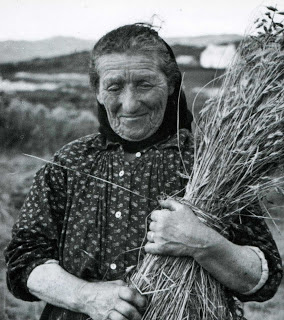
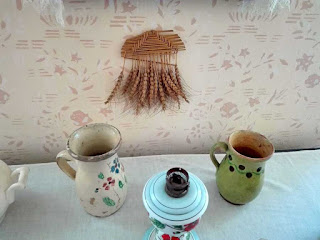
A 'Cailleach' is a special object woven in Ireland from the last standing sheaf in a field. It was made to mark/celebrate the gathering of the harvest. The word 'Cailleach' means 'hag' or witch.


In Northern Ireland this last sheaf of wheat was called "Calacht". It was ritually cut by the harvesters as seen on this photo entitled "Cutting the ‘Calacht’" by WA Green. Image sourced from the National Museum of Northern Ireland.


In "Folk-lore - A Quarterly Review", Volume 25 published in 1914, we can read a short description of this custom which once marked the end of the grain harvest in Ireland:


Harvest Meal from Co. Antrim. Notice the straw "Calacht" (Cailleach) over the table. Photo by WA Green. Image sourced from the National Museum of Northern Ireland.


The same tradition was once common in Scotland too. There the object made from the last sheaf was called "cailleach-bhuaineadh" (‘the old woman of the harvest’). Here is an example of the cailleach from Scotland.


The reason people gave for this custom can be found on the website "Digital Archive of Scottish Gaelic"


Cailleach, The Hag represented Mother Earth in her winter form. At the end of the harvest (literally means autumn) her spirit (ability to produce food) was spent, and the last of it was preserved in this effigy for the next year. Pic: Winter, Roman mosaic


During the winter, as the grain from the autumn harvest was ground into flour, the Ugly Old Hag of Winter transformed into the Beautiful Young Maiden of Spring full of reproductive energy again. Pic: Slovenian folk painting depicting "Babji mlin" (Grandmother's mill)