Showing posts with label straw boys. Show all posts

Saturday, 24 April 2021

Diduch

This is Diduch or Did, the most important decoration made in the Carpathian villages in Western Ukraine during the traditional winter holidays, originally Winter Solstice, now Christmas...


It is a decorated sheaf of grain (rye or wheat) made from a the first and the last stalks of grain reaped that year and brought home ceremonially from the fields by the queen of the harvest...

I talked about the end of harvest rituals in my post "Wheat wreath"...

In the Boykivshchyna, agricultural tools were stuck in Didukh: a sickle and a rake. Today dried flowers and ribbons are aded...


Diduch was made on the morning of the Christmas Eve by the man of the house and was left in the barn. Then in the evening, with the rising of the first star, the man of the house, or if he had sons, his eldest son, would go to the barn to bring Didukh to the house...


He would bring Didukh solemnly to the house door, and crossing the threshold, he would take off his hat and greet the woman of the house, as if seeing her for the first time:

May God give you health!

God help us. What are you carrying?

Gold, so that you live wealthy life!

Then the man bringing in the Diduch would bless the house wishing everyone peace, good health, good luck, good harvest, fertile women, animals, fields...

Now, "Diduch" (Didukh, Did) literally means "Grandfather" and is believed to contain "the spirit of the dead ancestors" who gather in and around it during the time Diduch is in the house...

In the past, every family in the Ukrainian Carpathian knew, remembered and honored all the ancestors up to the seventh generation. At least...

And throughout the Christmas week, Carpathian Slavs "invited" all the dead ancestors every night to a feast. Funeral dishes were left on the tables for the night for the them, and the food and drink were not remove from the table until the morning...

It was believed that the souls of the dead are in constant contact with the family, help in the household, protect the home and the field from fire, flood, hail, make sure that the family was in order and peace, healthy and happy...

It was also with the help of the dead that all living things grew and multiplied. 

I talked about this Slavic belief in the dead governing the lives of the living in few posts: "Thirst", "Blood red wine", "Wolf feast", "House of bones"...


Which is why I believe that this is why the man bringing Diduch into the house was greeted as a stranger...He wasn't bringing Diduch (The ancestor). He was Diduch (The Ancestor)...One of many or all of them together...

Or maybe even the ancestral deity himself, Dabog, the Giving God...And the blessing the Diduch bringer uttered wasn't his blessing. It was Diduch's (The Ancestor's, God's) blessing...

People believed that the ancestors helped only those families in which they were honored by their descendants. And making Diduch and bringing it into the home and making him part of the family feast was considered to be one of the best ways to show this respect...

Interestingly, when Diduch was brought into the house, he was placed in the "Sacred corner", the holiest place in the house, where the holy icon was kept...And where once Slavs buried their dead, or more precisely reburied the bones and particularly sculls of their dead...

But this is an amazing story in itself and deserves a separate post...Soon...

By the way, it is this life giving power of the dead, which Pluto (Hades), the giver of wealth, appropriated for himself. And this is why Hades and Persephone are depicted sitting on their throne in the land of the dead, with sheafs of wheat and flowers...

I talked about this in my post "Pluto"

This is also why Hades is depicted holding Cornucopia, the horn of plenty... 

Again something he appropriated...Well maybe...Maybe not...You'll see why further down in this article :) I wrote about the origin of Cornucopia and why it is a "goat's horn" in my article "Cornucopia"

It is the ancestors and the ancestral deity Dabog who are the givers (or takers) of wealth, health, luck...Dabog has all the characteristics of the god of the dead, which is how he was interpreted by the Serbian ethnographers...This is of course true. He is "The Giving God"...

But what these ethnographers forgot is that Dabog is also explicitly described as The Sun God and The Rain God, basically Sky God...Whose house is underground...In the land of the dead...From where he comes at sunrise and to where he returns at sunset...

I talked about this in my post "Day star"...

A lot of Winter Solstice, New Year, Christmas "beliefs" and "rituals" from across Europe now feature "scary demons and ghosts" who "descend on" people's houses at this time of the year, and which need to be "expelled" from the houses to protect the living...

The same good, venerated dead and ghosts, which were once invited in by their descendants...This is another great example of the suppression of the old beliefs by the Church and their inversion into their opposites...

Also I think that Diduch explains a lot of things about the end of the harvest rituals, the last sheaf rituals, and winter sheaf rituals...

It is now obvious why the Irish called the last harvested sheaf of wheat "Cailleach" (Old Woman, Grandmother)...
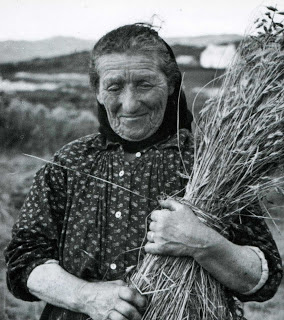
I talked about this in my post "The old woman of the mill dust"...

And it is now obvious why the Irish called the Corn Dolly made from the last harvested sheaf "Cailleach" too. And whose spirit was the "spirit of grain" that inhabited the Corn Dolly...

I talked about this in my post "Corn dolly"...

Diduch also explains which god Slavs talk about when they call this particular type of wheat ornaments made from the last harvested sheaf of grain "Good's beard"...It's Dabog, the Giving God, who was also known as Djed, Did (Grandfather), The Ancestor...
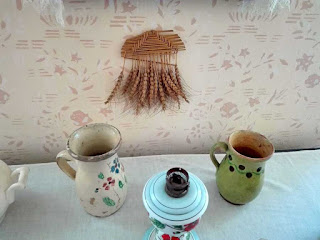
Diduch also explains why "On Christmas morning in Scandinavia every gable, gateway, or barn-door, is decorated with a sheaf of grain fixed on the top of a tall pole, wherefrom it is intended that the birds should make their Christmas dinner"...


I talked about this in my post "Nav"...

Slavs believed that the souls of the dead are ferried to and from the otherworld by birds...So birds feeding on Diduch, The Ancestor is kind of symbolic, right? Did Scandinavians once had the same belief, but they forgot it and kept making Diduch as "one ought to"?

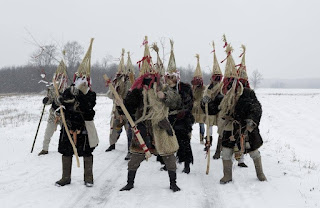
Diduch also explains why "wheat sheafs" roam the streets of many towns in Europe...Like these "skeklers", children dressed in straw suits, who would in the past go round the houses at Halloween (Gaelic new year), New Year, on Shetlands islands, asking for food, apparently "to bring the sun back from the grip of winter and ensure good crops"..

I talked about this in my post "Walking sheafs of wheat"...

Diduch also explains the "old Christmas prank" that people in Scandinavia played with each other: In Sweden in the past, people would make a figure of a goat from the last harvested sheaf of wheat and call it The Yule Goat...


People regarded The Yule Goat as a "spirit that would appear around Christmas to make sure that the Yule preparations were done right" 

Interesting right? Diduch, The Ancestor, The Ancestral Deity, making sure the old ways, which the dead ancestors represent, are still respected.

But then: "In the past in Scandinavia, a popular Christmas prank was to place this Yule goat in a neighbour's house without them noticing. The family successfully pranked had to get rid of it in the same way..."

Bringing of the symbolic representation of the dead into the house, basically inviting the dead to come and celebrate the Winter Solstice, New Year, Christmas day with the living, was originally a sombre ceremony with huge real (for out ancestors at least) implications...

And again this was turned on its head. It was replaced with a "prank" where the symbol of the ancestors and the ancestral deity was brought into the house "against the will of the hosts". And the hosts tried their best "to find the cursed thing and get rid of it"...

All part of the conversion process...Turn old good gods into evil devils...Old good symbols into bad omens...Old positive rituals into negative...Eventually people forget...What's left is Krampus...And such abominations...

I talked about this in my post "Krampus"...

By the way, the reason why goat features prominently in winter agriculture fertility rituals is because in the areas where agriculture was developed, the beginning of the rain season, and winter, coincided with the beginning of the mating season of the Ibex goats (Oct/Nov)


So Ibex goat became "The goat of rain" and "Bringer of fertility"...I talked about this in many articles on my blog, starting with this one about "Goat riding thunder gods"...This is also why Cornucopia is made from an Ibex goat horn...

Anyway, back to Diduch...On the eve of St. Basil's Day (sometimes before the Epiphany), Didukh was taken out of the house at midnight. It was believed that the souls of the dead ancestors also left the house with it...

In some areas of the Carpathian mountains, like in Pokut, Didukh was burned, usually on a crossroad, one of the favorite hangouts of "evil spirits and vampires" (read good ancestral spirits). Diduch's burning symbolically announced the birth of the New Year...

In the villages of the Halyts'kyi district Diduch was threshed  by the first footer. The threshed Diduch grain was then thrown on neighbor's and friend's houses for happiness and good luck...

And that's it...I'll leave you with this image of children carrying Diduchs. The future carrying the past in their hands and their hearts...


Because there is a sacred bond between the living and the dead...

Saturday, 2 January 2021

Walking sheafs of wheat

In the past, in Shetlands, "skeklers", children dressed in straw suits, would go round the houses at Halloween (Gaelic new year), New Year, asking for food, apparently "to bring the sun back from the grip of winter and ensure good crops"...


Apparently, these "straw men" would also turn up at weddings...

Interestingly, exactly the same type of grain straw men exist in Ireland...There they parade on St. Stephen's day when they are called wren boys...I talked about them in my post "Wran or wren"...

But they also turn up at weddings...You can read more about the Irish wedding traditions on this great page about Irish weddings from askaboutireland.ie...

The whole thing is related to fertility. Just like in Slavic culture, here too female and earth fertility is directly linked, through the fact that the "grain sheafs appear at weddings and dance with a bride"...

I talked about this link in Slavic culture in many posts, here are just two: "Wheat wreath" and "Partridge"...

This is my favorite example of that link: In the past in Russia, after the last sheaf of grain was cut, women harvesters would lie down on the ground and roll around the field "to return the strength to the earth". Russian harvest custom which directly links female and earth fertility...

So, where else do "sheafs of wheat" or "straw men" walk among the people during the winter? 

I'll start:

Walking sheafs of wheat are part of the Ķekatas masked men who wander the night on Ziemassvētki and Meteņi, "to seal away evil and bring good fortune and blessings"...


Walking wheat sheaf from Kuva region in Finland. The last day of Christmas...

Bears of wheat and peastraw, Empfingen, Baden-Württemberg. These are the so called "Straw bears", but really walking sheafs of wheat...


Straw bears also walk in Whittlesea, England...Again, walking sheafs of wheat...

Schabmänner (brooms) or Rauhen from Styria (Štajerska), Austria, but really walking sheafs of wheat...

Buttmandl (bundled men) in the area around the Bavarian town of Berchtesgaden. Walking sheafs of wheat...With St Nicholas...Remember this, this is important...

Your turn....

Tuesday, 27 December 2016

Wren or wran?

The wran, the wran, the king of all birds...

This is wren. The Wren is small and rather inconspicuous. But it lives life at a fast, relentless pace and it sings this way too - it trembles as it puts everything into its song, which lasts about 5 seconds and usually ends in a trill.They are either the first or one of the first birds to start singing at dawn and once they start their song is so loud that it drowns out everything else. So they are known as the heralds of the rising sun. 


In European folklore, the wren has always been considered the king of the birds, as its name in European languages indicates. Aristotle and Plutarch called the wren basileus (king) and basiliskos (little king). In Latin he was known as Regulus - prince. In French, Roitelet - little king. Celtic names of the wren (draouennig, drean, dreathan, dryw etc.) all mean druid bird, and in Welsh the word dryw actually means both druid and wren. It is the same in Germanic languages. In Teutonic wren is Koning Vogel meaning king-bird. In Old German wren is Schneekönig meaning snow king, in Modern German wren is Zaunkönig meaning king of the hedge and in Dutch wren is winterkoninkje meaning winter little king. The same situation is in Slavic languages. In Serbocroatian wren is carić maning little tzar, in Russian wren is korolek, in Ukrainian wren is korolik, in Sorbian wren is kralik, In Slovenian wren is kraljiček, in Slovak wren is hrdlik all meaning prince, little king. 

It was generally believed that wren brought good fortune and harming the bird or its nest was strictly forbidden. It was also believed that anyone who broke this taboo would die from a lightning strike. 

Well wren was considered the bringer of good news everywhere except in Ireland where he was considered to be the bringer of bad news. This is the list of local beliefs related to wren from Ireland from "Pagan Celtic Britain", by Ann Ross, Chapter VI, page 260:

"...if it call from behind you importuning of your wife by another man in despite of you. If it be on the ground behind you, your wife will be taken from you by force. If the wren call from the east, poets are coming towards you, or tidings from them. If it call behind you from the south, you will see the heads of good clergy or hear death tidings of noble ex lay men. If it call from the south robbers and evilkinsmen are coming. If it call from the north west, a noble hero of good lineage and noble hospitallars and goodwomen are coming.
If it call from the north, bad people are coming whether warriors or clerics or bad women and wiched youths are on way..."

So no wonder that in Ireland on Christmas day wren was hunted and killed...

Long ago, on Christmas day, in Ireland, group of men an boys, called "wren boys" go out "hunting the wren". Pursuit of the bird persisted into the early years of the 20th century. Accounts relate that for a day or two previous to the holiday wren was, ‘hunted and knocked over with stick or stone. Two or three of them were tied to a branch torn from a holly bush, which was also decorated with coloured ribbons. Sometimes a pole or a basket was used to carry the dead wren. If the group as "unlucky" and couldn't find and kill a wren, an effigy, a bird doll was used. 

Yates drawing of "wren boys"

Then on the St Steven's day, the "wren boys" or as they are sometimes called "straw boys" get dressed up in masks, straw suits, and colorful motley clothing, and go from home to home displaying the dead birds and begging for money "to bury the wren." They play music instruments, sing and make a lot of noise. At the door step of each home the 'Bean an Tí' (the woman of the house), is beseeched:

The wren, the wren, the King of all birds,
St. Stephen's Day was caught in the furze.
So up with the kettel and down with the pan,
and give us a penny to bury the wren.
The house that is least generous is likely to have the wren buried under their door, "through which no luck would then enter for a twelvemonth". 

Here are some pictures of "wren boys" or "straw boys" from Ireland:


Similar traditions of hunting the wren have been performed on the Isle of Man on Boxing Day and in Pembrokeshire, Wales on Twelfth Day (6 January, the old Christmas day) and, on the first Sunday of December in parts of Southern France, including Carcassonne. 

What is the explanation for this strange custom? Why, of all birds, is this tiny bird chosen as the martyr for display by groups who take their name from it? 

Apparently because of its treachery. Here are the explanations given in Ireland for this custom:

When the Irish forces were about to catch Cromwells troops by surprise, a wren perched on one of the soldiers drums made a noise that woke the sleeping sentries just in time, thereby saving the camp.  

Another explanation is that wren betrayed St. Stephen, the first Christian martyr, by flapping its wings to attract his pursuers when he was hiding in a bush. 

Another explanation for the hostility towards this most harmless of creatures says that it is all the result of the efforts of clerics in the middle ages to undermine vestiges of druidic reverence and practices regarding the bird. Medieval texts interpret the etymology of wren, the Irish for which is dreolín, as derived from 'dreán' or 'draoi éan' the translation of which is 'druid bird'. So once venerated and protected bird, whose harming was by the Irish believed to be punishable by death by lightning, became the target of the ritual killing on the same day when it was originally celebrated. 

The last explanation for the hatred towards wrens is also the explanation for how wren got to be called the "little king".This explanation is associated with the fable of the election of the "king of birds". The story goes like this. The birds decided to elect the king of birds and decided that the bird that could fly to the highest altitude would be made king. The eagle out-flew all other birds, but he was beaten by a wren that had hidden in his plumage. And when the eagle tired, the wren flew out above him and won the race. 

This fable is already known to Aristotle (Historia Animalium 9.11) Plutarch (Political Precepts xii.806e) and Pliny (Naturalis Historia 10.74). 

Plutarch implied that this story teaches us that cleverness, trickery is better than strength. Hmmmm...Great lesson....

What is interesting is that this old fable is actually still told as a fairy-tale in Ireland and in Slavic lands. 

In Irish version, god wished to know who was the king of all birds so he set a challenge. The bird who flew highest and furthest would win. The birds all began together but they dropped out one by one until none were left but the great eagle. The eagle eventually grew tired and began to drop lower in the sky. At this point, the treacherous wren emerged from beneath the eagle's wing to soar higher and further than all the others. And this is why wren is hunted and killed. In Irish the word Dreoilín means wren and the word dreolán means trickster...

In the Slavic version the bird which flies the highest, while carrying the wren hidden in his feathers,  is eagle (in East Ukrainian and Polish version) or heron (in West Ukrainian version) or stork (in Sorbian version). Once the eagle (heron, stork) out-flies all the other birds, wren flies out of its plumage and out-flies the eagle (heron, stork). 

That wren is seen as trickster in Slavic mythology can be seen from the fact that wren is also known as "obluda" meaning "trickster", "durisvit" meaning "charlatan, fool", "zvoditelj" meaning "joker". But in Slavic version of the story, the trick is discovered and wren is forced to run and hide in order to avoid punishment. In Ukrainian and Sorbian versions of the story, this is not the end. Angry birds decide that because they could not find the king of the bird through a "who can fly the highest" competition decide to stage a context in "who can get the deepest". The bird that can get the deepest into the ground will be the king of the birds. And again wren won the contest. The wren scientific name Troglodytidae is derived from the word "troglodyte", which means "cave-dweller". The wrens get their scientific name from the fact that they forage in dark crevices and hide from the cold in holes just like mice. This small, brown bird that scurries through the undergrowth and into log piles and holes in search of insects and any other small animals, particularly beetles and spiders, from a distance actually looks like a mouse. Thus in Ukrainian and Polish tradition, wren is also known as mouse king. It is interesting that Icelanders also consider wren to be the "mouse's brother". 

The Celts and the Slavs seem to have understood the story slightly differently from the Greeks. Wren's trickery was not seen as virtue but as a crime, a sin...punishable by death...

Are Slavic wren stories versions of older Celtic stories preserved in Central Europe when Celts morphed into Slavs? Or does this story about the cheating wren predate both Celts and Slavs? Or is this story about the cheating wren a later corruption of a much earlier story which doesn't involve wren at all but another bird whose name sounds very much like wren, making the wren an unfortunate victim of a mistaken identity? 

Let's see what we can dig out. 

Remember that wren forages and hides in holes in the ground, in "the underworld". This makes wren, the bird that can be under ground, on the ground and in the air "the bird that connects the three worlds". 

As I already said, wren is the first bird to start singing in the morning. And the loudest. This is why wren is known as the herald of the rising sun. 


So every evening both the sun and wren go underground. And every morning wren emerges from the underground before the sun does, effectively out-running the sun during their race from the underworld to heaven. Now the bird most associated with the sun is eagle, who is the solar bird pretty much in every religion in the northern hemisphere. So wren racing the sun can be nicely represented with wren racing an eagle. Is this the origin of the story about the bird race in which a wren beat an eagle?

Also because wren announces the arrival of the sun, during the Pagan times, wren, the "little king of birds", was announcing the arrival of the Sun, the "big king of heaven". That is a particularly important role in sun worshiping religions. No wonder wren was so venerated and protected. 

European Wrens are migratory in some parts of Europe, flying anything up to 2500 km (1500 miles) with some migrating all the way from Scandinavia down to Spain. But in British Isles wren is one of the few non migratory songbirds and is often the only bird singing during the winter solstice period. Its song on the Winter Solstice morning, not only announces the sunrise, it announces the beginning of the new solar year, the birth of the new sun, new sun god, new little king of heaven.

Christmas is repackaged Winter Solstice and that many old rituals related to winter solstice were moved to Christmas. So instead of the birth of the new sun, new sun god, little king of heaven which happens on the Winter Solstice morning, we have the birth of baby Jesus, the son of God the king of heaven, which happens on Christmas morning. Now correct me if I am wrong, but the son of the "king of heaven" is defacto the "prince of heaven" or the "little king of heaven". Right?

When the Winter Solstice celebration of the birth of new Sun God was replaced by the Christmas celebration of the birth of the Son of God, Christians didn't want to be reminded of the old Sun God by the wren, who was still announcing his arrival. So Is this why wren had to die on the day the new Son of God was born to replace Sun the God? Look at the day on which the dead wren, the dead herald of the old Sun God was paraded around. That day is the day after the Christmas day, the St Stephen's day. Now who is this St Stephen? St Stephen or St Stephan is traditionally venerated as the Protomartyr or first martyr of Christianity. Now this means the first one to be killed in the name of Christ, Son of God. And the first to be killed in the name of the Son of God is Sun the God. New young Sun God, old "little king of heaven", which used to be born on the day of the Winter Solstice is now killed on Christmas day, replacement for the Winter Solstice, and is replaced by Son of God, new "little king of heaven". And the day when this "first victim of Christianity" is celebrated is St Stephen's day. Funnily name Stephen or Stephan was originally a title meaning "crowned" or king, the origin of which is in the  Ancient Greek word "στέφανος" which means crown. It was the title given to many kings in medieval Serbia, Croatia, Hungary and Poland. So the death of the old "little king" and the enthronement of the new "little king" is celebrated on the day of Stephen, the day of the "crowned one" the day of the king. Do you think that there is some kind of symbolism here? 

But this is not all.

Why is the killing of wrens or disturbing of their nests punished by thunder? And why is it said that wren is the bird of Lugh, the Celtic thunder god? Well to understand this we need to look at what happens to the newly born Sun God after the Winter Solstice.

Remember my post "Two crosses"?

As soon as he is born on Winter Solstice, the Sun God starts its ascend to the throne. He finally sits on its throne on Summer Solstice. This is the day when the sun reaches the highest point in the sky above the northern hemisphere. This is the maximum sunlight day. One would expect that the day after the Summer solstice, as the days start getting shorter the weather would start getting colder. But that is not the case. The days start getting shorter but the weather continues to get warmer. Until the 2nd of August. This is the maximum heat day. This is the sun at its maximum strength. After that the days finally start getting cooler.

In Serbia the 2nd of August is Perun day, but also the day of Ilija Gromovnik, the Thundering Sun, the Thunder Giant. In Serbian Thunder Giant is Grom Div. In Ireland 2nd of August is the day of Chrom Dubh, the Sky God and the main agricultural deity of the old Ireland. But also the day of Lugh, the thunder god.

Now if we look at wren life-cycle we will notice something very interesting. This is an excerpt from Edward Armstrong's THE WREN (1955) which talks about wren's singing patterns:

"Usually there is little song in January apart from imperfect phrases, lacking in verve, during the day, especially in the morning if the weather is mild, and some rallying songs at dusk, if it is severe. .... Favourable weather in February elicits a fair amount of morning song, a song or two in the afternoon and a little regular song before roosting. ... In March [if the weather is mild] there is intermittent singing for two or three hours in the morning, an increase in the evening output and a general advance towards day-long song .. at the end of the month, when nest-building has begun, song is in every way well developed. ... In April there is still more territorial song ... apparently there is some diminution in May [when females are incubating or, towards end of May, feeding young] ... it is difficult accurately to assess the output of song at this stage as individuals vary according to the phase of the breeding cycle. ... In June many reach their highest daily production of song and a few young Wrens begin to sing at the end of the month. During July song decreases and deteriorates, and some adults go almost out of song, but the number of juveniles singing increases. The moult in August is accompanied by an abrupt diminution of song, so far as most adults are concerned, but the birds of the year frequently utter their broken ditties, mainly during the hour and a half after sunrise. This may continue until about the beginning of October when song becomes bolder and clearer, though still incomplete. In November if the weather is [mild], there is little change: Wrens are heard for about half and hour after sunrise and a few phrases are uttered in the late afternoon and towards sunset. Song diminishes in December, but even when it is freezing Wrens occasionally engage in song duels."

So wrens sing the most around Summer Solstice period as befits the herald of the Sun. But they get almost completely silent around Crom Dubh, Lugh, Ilija Gromovnik, Perun day. And this is the only time when these loudmouths shut up. Why? The reason for the sudden silence of wrens, is the annual moult: a complete change of feathers after the final wear and tear of the breeding season. Even juveniles are changing into adult plumage. Moulting takes energy, as the bird's metabolism speeds up to grow new feathers and push out the old ones. The birds become lethargic, reluctant to fly very far, and spend much of the day resting in deep cover. Keeping their beaks shut.

And this coincides with the period when Summer turns into Autumn and the beginning of the harvest. For early farmers this must have been very auspicious. As I wrote in my post about the Sky Father, the beginning of the harvest is the most critical period of the whole grain vegetative cycle. Sudden storm, heavy rain and particularly strong winds can destroy everything farmers worked for the whole year. On Summer Solstice Sun God was powerful and merciful. On the 2nd of August he is even more powerful but he is angry, angry because his reign is coming to an end. This is why 2nd of August is the real seat of the Sky God. Because this is when he is most dangerous.

And in Serbia, on the 2nd of August people celebrate St Stephen the Wind maker. This saint is Christianized version of Stribog, the old Slavic wind god, the destructive face of Perun. 

So during this "dangerous" harvest period, during the reign of Perun the destroyer, Stribog, wren doesn't sing. It hides and it looks like it has disappeared. Well this looks like a fitting announcement of the arrival of the old cranky god, don't you think? Run and hide... And then it starts singing again when the harvest is finished and the reign of the sun is over. Right on time for the arrival of the Lady, Virgo. Is this why there is the link between the Storm god and wren and why those who harm wrens are punished by thunder? I also believe that the fact that wren is in Slavic countries also known as "bull's eye" is another thing that confirms this link between the Sky god in his terrible Destroyer role and wren. The sacrificial animal of both Perun and Crom Dubh was bull...

O and by the way in Japan, the wren is labelled king of the winds...

But it is possible that the hunt actually originally happened on winter solstice day but that the bird that was hunted was not wren but wran, vran meaning crow, raven.

In English tradition, "the cock robin and the jenny wren are the Queen of Heaven’s cock and hen".
The shape-shifting Fairy Queen took the form of a wren, known as "Jenny Wren" in nursery rhymes.

In my post "Babje leto - Grandmother's summer" I talked about the transformation of the old mother goddess into Mary the mother of god, the Queen of heaven. According to the old Serbian and Celtic tradition, the year was divided into two parts: the white, light, warm part dominated by the Sky father and the black, dark, cold part dominated by the Earth Mother. These two opposites mix during the year and produce life. But in their extremes they are both destructive and bring death. 

The period between the Summer solstice (21st of June) and the beginning of Autumn (2nd of August), is the extreme Sky Father period. This is the period symbolized by the Eagle. The period between the Winter solstice (21st of December) and the beginning of spring (2nd of February) is the extreme Earth Mother, Baba, Cailleach period. This period is symbolized by crow and raven. In my post "Bran Vran" I talked abut the word "bran, vran, wran, fran" which is found in both Slavic and Celtic languages and which means "crow, raven" but also "black".  Crow and ravens, the ominous black birds of death are sacred birds of the mother goddess in her most extreme form as the old hag of winter. 

The eagle, the big king of the summer skies and the crow, the usurper, the little king of the winter skies. Interestingly crows are the only birds which are not afraid of eagles and are known to gather in groups and attack eagles...On top of this crows and ravens are the smartest birds. So if any bird was to outsmart an eagle and use smartness against strength it would have been crow (wran) and not wren. 

In Ireland the "wren boys" don't actually sing "The wren, the wren, the king of all birds...". They sing "The wran, the wran, the king of all birds...". Is this just the mispronunciation or were the original "wren boys" actually "wran boys" who didn't hunt wrens but "wrans", crows and ravens?

Crows and ravens can devastate the grain fields during the winter and early spring. They gather in huge flocks, land on fields and can basically poke and pull every last seed out of the ground. This is why farmers since the time immemorial considered crows their enemies and built scarecrows


Now here is again the picture of the "wran boys":


Don't they look like scarecrows dressed in old mismatched colorful clothing? And look at the "straw boys". Don't they look like walking grain stacks? 


Giant grain stacks, good harvest, is reason why crows (wrans) are killed... 

The "wran boys" go through the fields, bang drums, blow pipes and shout. Just what you want to do if you want to scare the crows and ravens (wrans). And if you also manage to kill a crow and raven (wran) or even many crows and ravens (wrans) even better. And to prove that you have done your job of protecting the fields well, you attach the dead crows and ravens (wrans) on the holy branch and parade them through the village and you ask for money to bury them. And you kill the crows and ravens (wrans) on the day of the Winter Solstice, the day when the Sun is reborn, to help the Eagle win over crows, to help light win over darkness, to help the summer win over winter...

Remember how in Ireland wren was considered the bringer of bad news, which is the role dedicated to crows and ravens in Slavic countries where wren always brings good news? Did someone seriously misunderstand something here? I believe so. I believe that the old custom of killing crows and ravens on Winter Solstice was, when the meaning of the word "wran" was forgotten, replaced with killing of wren, which is the closest English word that sounds like "wran"...

What do you think?

I will leave you with this great song by Snakefinger and Residents called "Kill the great raven". You can hear the song here.

Kill the Great Raven 

His tiny eyes, they search the skies 
He looks so alone, so he must die 
"Oh, does he really have to die?" 
"Oh yes, he really has to suffer" 

Kill the Great Raven 

And when he dies, 
to his surprise 
The sun will set 
and he will rise
"Where will he go?" 
"He'll become the sun of course. 
We must have one you know...

Kill the Great Raven 
Kill the Great Raven