Showing posts with label Norse mythology. Show all posts

Saturday, 1 October 2022

Freya and her cats

According to the legend, Norse goddess Freya travels in the heavens in the chariot pulled by two giant, blue cats. These cats are the children of the magic Cat Bayun that have been presented to Freya by Thor the Thunderer...

There is a goddess found all over Eurasia and North Africa, who stands, sits, rides on lions, rides on chariots pulled by lions, stands, sits between lions, is lion headed... I talked about this in my post "Assumption of Mary"...

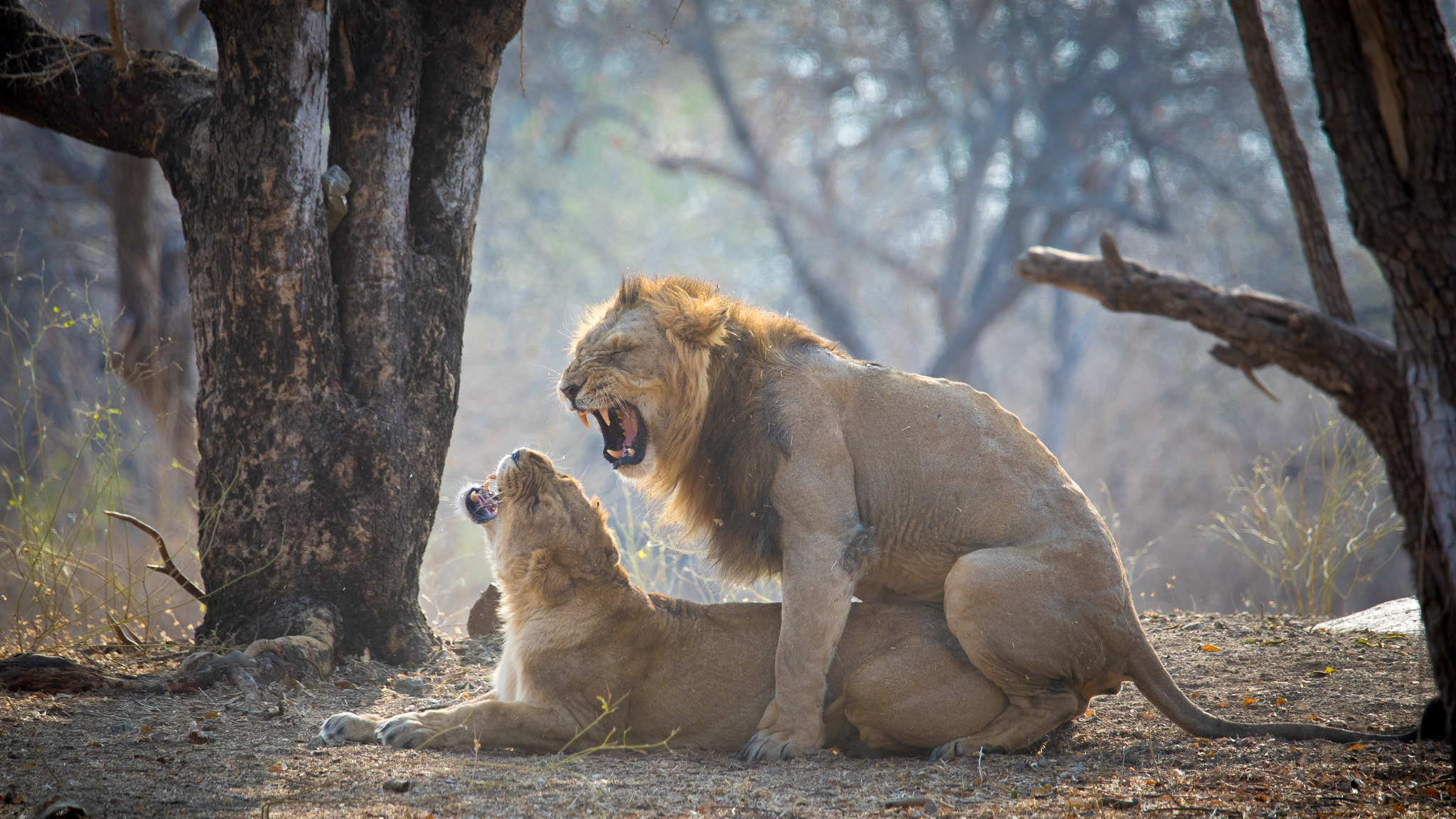
The lion here is animal calendar marker Leo, which marks the beginning of the mating season of the Eurasian lions...I talked about this in many of my posts, for instance "Angra Mainyu"...


What does this have to do with Freyja? Writer Johan Alfred Göth recalled a Sunday in 1880 where men were walking in fields and looking at nearly ripened rye, where Måns in Karryd said: "Now Freyja is out watching if the rye is ripe"...

Rye is typically ready for harvest in late July or early August...In Leo...The time of the year ruled by the goddess who stands, sits, rides on lions, rides on chariots pulled by lions, stands, sits between lions, is lion headed...Or rides in a chariot pulled by magic cats...

Oh, and just in case you are wondering what that goddess actually is, Sirius used to rise in the morning with the sun in Leo (Jul/Aug)...Technically it still shines with the sun in lion, as lion is the animal symbol for autumn (Aug/Sep/Oct)...I talked about this in my post "Symbols of the seasons"...

To read more about ancient animal and plant calendar markers, start here…then check the rest of the blog posts related to animal calendar markers I still didn't add to this page, and finally check my twitter threads I still didn't convert to blog post...I am 9 months behind now...

Sunday, 7 August 2022

Julenek

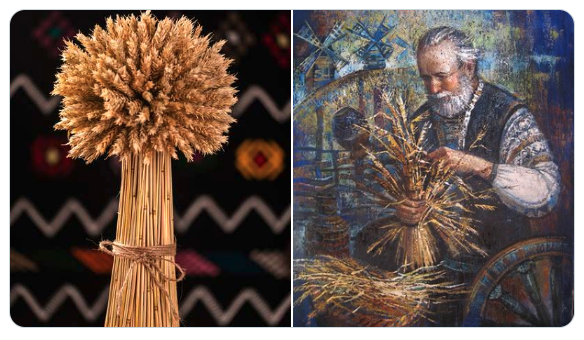
"On Christmas morning in Norway every gable, gateway, or barn-door, is decorated with a sheaf of grain, called 'Julenek', fixed on the top of a tall pole, wherefrom it is intended that the birds should make their Christmas dinner"...Julenek, Karl Uchermann 1855-1940...

On Christmas Eve, the Swedes hang out the last sheaf of grain from the harvest, known as the Julkarve, as an offering to the birds. And they believe that the more birds come to feed, the better the next year's grain harvest will be...Bird sheaf, Siegwald Dahl 1827-1902...

The usual explanation for this custom is that that the birds were fed to stop them eating grain from grain stores...But the belief that feeding the birds has influence on the next year's harvest points at another explanation for this custom...Preserved in Slavic folklore...

All over Europe, it was believed that the last harvested sheaf of grain contained the living "sprit of grain"...This last sheaf was turned into a "Corn dolly", which was preserved until the next sowing season,. The seeds from the Corn dolly were then mixed with the seeds about to be sown, and were sometimes the first to be sown into the ground...I talked about this in my post "Corn dolly


A hint who this "Corn spirit", preserved in the "Corn dolly", really was, can be found in the Gaelic language and tradition. In Gaelic, the word Cailleach means at the same time An Old Woman, Mother Earth, The Last Sheaf of Wheat and the Corn Dolly made from it. So the Corn Spirit was really the fertility of the Mother Earth, of the life (grain) giving mother of us all...I talked about this in my post "The old woman of the mill dust"...

In Eastern Slavic tradition the identity of the "Grain spirit" is spelled out. The Last Sheaf of Wheat is turned into a Corn Dolly called Diduch (Grandfather, The Ancestor)...I talked about this in my post "Diduch"...

Now Slavs believed that all the good comes from the ancestors...Including grain...Which is why it was so important to keep ancestors happy, well fed and well watered, particularly during winter...

In some parts of Serbia, on Christmas Eve people used to take a table laid with food on the doorstep of the house and would then ask wolves to come to the feast. In other parts of Serbia they would invite the dead to the feast in the same way...I talked about this in my post "Wolf feast"...

Finally, in pre-Christian times, Slavs believed that souls of their dead entered birds and through birds entered otherworld, heaven, Iriy. And through birds returned back to our world to be reborn. I talked about this in my posts "Nav" and "Bird wedding"...

So feeding birds with grain from the last sheaf during winter was basically a form of feeding the ancestors, sacrificing to the ancestors...

Anyway, I wonder if any of this was preserved in Nordic and Finish folklore? 

I will finish this article with the link to my articles "Walking sheafs of wheat" which roam the roads of Europe during the winter...


Monday, 20 June 2022

Axe or hammer

Perun, Slavic thunder god wielded an axe...

Thor, Norse thunder god, wielded a hammer...

Both Slavs and Norse wore axe (hammer) protective amulets...

Left: Thor's hammer amulet

Right: Perun's axe amulet


I always thought that Thor's hammer looked like a stylised axe...

That Thor's "hammer" probably was originally an axe, can be seen from this next artifact. A museum in Utrecht has a relic called "the hammer of St. Martin of Tours". 

The "hammer" was made in the 13th or 14th c. from a Bronze Age stone axe dated to 1,000 - 700 BC...

What does this have to do with Thor's hammer? Well, St Martin thunder god in saintly disguise. Oh and Utrecht was founded by Slavic tribe Wiltzi (who worshiped thunder god with an axe) and was originally called Wiltaburg. More in my post "Axe of Martin"...

But the main indication that Thor's hammer was originally an axe, is the etymology of the the Thor's axe name: Mjǫllnir, "which is disputed among historical linguists". You'll quickly see why. Here are proposed etymologies, and you tell me which one is most plausible...

1. Old Norse Mjǫllnir developed from Proto-Norse *melluniaR. This connects it to Old Church Slavonic mlunuji and Russian molnija meaning "lightning", which would make Mjǫllnir "the lightning-maker" (either borrowed from a Slavic or both stemming from a common source)...

2. Another proposal connects Mjǫllnir to Old Norse mjǫll meaning "new snow" and modern Icelandic mjalli meaning "the color white", rendering Mjǫllnir as "shining lightning weapon"???

3. Finally, another proposal connects Old Norse Mjǫllnir to Old Norse mala meaning "to grind" and Gothic malwjan "to grind", yielding Mjǫllnir as meaning 'the grinder'???

Considering the amount of mixing between Slavs and Norse and mutual cultural influences, and the fact that Thor made lightning with his "hammer" (actually axe), I would go with number one...Controversial!!! 🙂 But most logical...

Particularly in light of the fact that stone axes were directly linked with thunder gods for millenniums in Eurasia...And that so many thunder gods wielded axes...I talked about this in my post "Kataibates"...

One last thing: In Scandinavia thunderstones (Neolithic/Bronze Age flint axes) were frequently worshiped as family gods who kept off spells and witchcraft...So...

And finally (promise 🙂) The word "mo(ld)nya" (lightning) exists in all Slavic languages. It's cognates, apart from Norse Mjǫllnir are: Latvian milna (hammer of the thunderer 🙂), Old Prussian mealde (lightning), Middle Welsh mellt, myllt (lightning)...

Also, did I mention that the word for Thursday (Thor’s day) was in the Polabian Baltic Slavic language, Peründan (Perun's day)... 

PS: Someone asked me: Did Perun's axe have a name like Thor's hammer?

Considering that Mjǫllnir just means lightning, and that both Slavs and Norse believed that stone axes were remnants of lightnings, then I would guess that Thor's hammer's "name" is just misunderstanding of Slavs pointing to a stone axe and saying: look, lightning...

Sunday, 4 July 2021

Kataibates

Zeus, the god of lightning, had a nickname "Kataibates" (he who descends). This basically equated Zeus with Thunder/Lightning...

Pic: Antikenabteilung, Staatliche Museen zu Berlin—Preussischer Kulturbesitz

Remember this article about what came first: Thunder/Lightning or Thunder God? Thunder gods of course...

The piece of ground hit by lightning cannot be walked on, is consecrated to Zeus and is marked by a monument or an altar. These altars were then used to make offerings to Zeus in exchange for protection from lightning...

Same altars dedicated to Zeus Kataibates were also built in front of houses, and there too offerings were made in order to protect the house from lightning. This custom seems to have been fairly common in Greece. 

You can read more about this in "Greek Popular Religion" by Martin P. Nilsson...

Interestingly, Zeus's thunderbolt was imagined to be a stone or a stone axe. Like this one. 


Which is interesting considering that Zeus didn't wield an axe...Well that's not exactly true. Late Roman god Jupiter Dolichenus, whose mystery cult was widespread in the Roman Empire from the early-2nd to mid-3rd centuries AD, wielded an axe. And rode on a bull... Here is an altar from Vindolanda dedicated to Jupiter Dolichenus...


It is believed that he came from the east...And in the east, in Anatolia, we find Hittite thunder god(s) wielding an axe...

Pic: www.mesopotamiangods.com

And even further east we find Adad, Mesopotamian storm god, who also loved axes...


Pic: History of Egypt, Chaldea, Syria, Babylonia and Assyria, Vol. III

How far East and how far back in time should we go?

Stone axes or adzes, originally shaped and polished in Neolithic times, sometimes turn up in later archaeological sites or graves from the Bronze Age down to the medieval period...

Because they were apparently thought to have some kind of magical power to protect buildings and people, especially from lightning and violent storms...

We know something about these beliefs thanks to a string of testimonia in technical treatises on stones, beginning with a third-century BCE Greek author named Sotacus and ending with a twelfth-century bishop of Rennes. And thanks to European folklore...

It is important to understand that there is no evidence that the Greeks or Romans realized that these axe-heads were manufactured by previous stone-age cultures. They were believed to be “natural” stones which, like amber, jet or coral, had special protective powers...

Sotacus, the Hellenistic author of a lost treatise on stones maintained (according to Pliny’s abridged account) that "cerauniae are similar to axes" except they are not axes but magic thunderstones...

Latin lapidary (natural history) attributed to Damigeron-Evax, devotes an entire chapter (12) to the "lapis ceraunius" (thunderstone), which is found in places where lightning has struck...

Timotheos of Gaza, a 5th c. CE author tells us that "you will have an amulet against a thunderblast (keraunon), if you inscribe a thunderstone (lithon keraunion) with the letters αφια αφρυξ and keep it in your house"

In his Etymologies Isidore, the early 7th c. CE bishop of Seville, also notes that "ceraunia" (thunderstones), were found in places struck by lightening and could avert lightening...

In the 12th c. AD, Marbodaeus, the bishop of Rennes, preserves a similar account in his own Liber lapidum.

And in the 11th century the Byzantine emperor sent to the Holy Roman emperor a "heaven axe" as a present...

Ethnographers and folklorists have also established the existence of similar long-standing and widespread beliefs throughout Europe.

For instance, in modern Greece, astropelékia ("lightening axes") are sought out at places where "lightning has fallen" and are kept in houses to ward off lightning and fire...

Perun, Slavic thunder god, also wielded an axe...According to Slavic folk beliefs, prehistoric stone axes found in the ground were remains of these weapons...

Thor wielded a hammer...And we know that in Scandinavia thunderstones were frequently worshiped as family totems which kept off spells and witchcraft...

Both Slavs and Scandinavians wore axe (hammer) amulets...

Thor's hammer amulet

Pic: Sveriges hednatid, samt medeltid, förra skedet, från år 1060 till år 1350

Perun's axe amulet

Pic: Древнерусские амулеты-топорики

I always thought that Thor's hammer looked like a stylized axe

That Thor's "hammer" was originally an axe, can be seen from this next artifact. A museum in Utrecht has a relic called "the hammer of St. Martin of Tours". 

Pic: Museum Catharijneconvent

The "hammer" was made in the 13th or 14th c. from a Bronze Age stone axe dated to 1,000 - 700 BC...

What does this have to do with Thunder gods? Well, St Martin is another "saint" who is nothing more than the thunder god in disguise. I talked about this in my post The "The axe of Martin"...

Another indication that Thor's hammer was originally an axe, can be seen from the etymology of the the Thor's axe name: Mjǫllnir. The etymology of the hammer's name is disputed among historical linguists.

Here are proposed etymologies. You tell me which one is most plausible:

1. Old Norse Mjǫllnir developed from Proto-Norse *melluniaR and one proposed derivation connects this form to Old Church Slavonic mlunuji and Russian molnija meaning 'lightning' (either borrowed from a Slavic source or both stemming from a common source) and subsequently yielding the meaning 'lightning-maker'. 

2. Another proposal connects Mjǫllnir to Old Norse mjǫll meaning 'new snow' and modern Icelandic mjalli meaning 'the color white', rendering Mjǫllnir as 'shining lightning weapon'. 

3. Finally, another proposal connects Old Norse Mjǫllnir to Old Norse mala meaning 'to grind' and Gothic malwjan 'to grind', yielding Mjǫllnir as meaning 'the grinder'.

Considering the amount of mixing between Slavs and Norse and mutual cultural influences...

Also, The word "mo(ld)nya" (lightning) exists in all Slavic languages. It's cognates, apart from Norse Mjǫllnir are: Latvian "milna" (hammer of the thunderer 🙂), Old Prussian "mealde" (lightning), Middle Welsh "mellt, myllt" (lightning)...So...

Archaeological evidence confirms, that this belief in the link between Thunder Gods and stone axes, and the belief in their protective power was already widespread all over early Roman Empire.

For instance, in a survey of pre-historic axe-heads found in Roman sites in Britain, of the forty known examples, twenty nine were found in or closely associated with buildings...Some in temples...

You can read more about this in "Inscribed Greek Thunderstones as House- and Body-Amulets in Roman Imperial Times". 

The generally accepted belief was that a thunderstone fallen from the sky will in future protect against thunderstorms and lightning strikes. It's power will be greatly increased if inscribed with a magic spell...Like this roman example with Greek inscription...

Pic: www.nat.museum-digital.de

Or like this Roman stone axe amulet worn as a protection against evil...Lightning too...


Pic: Inscribed Greek Thunderstones as House- and Body-Amulets in Roman Imperial Times

So...

Are European folk beliefs related to the thunderstones Roman in origin?

Are Roman beliefs related to thunderstones Greek in origin?

Are Greek beliefs related to thunderstones Hittite in origin?

Are Hittite beliefs in thunder gods armed with an axe Mesopotamian in origin?

Where and when does the link between the stone axe and thunder god originate?

I would suggest that this link between a stone, more specifically flint axe, and thunder gods, already existed in the 4th millennium BC Europe...Enter exploding flint axes dudes from Southern Baltic... 

Pic: www.naturstyrelsen.dk


Tuesday, 31 March 2020

Jörmungandr

The other day I came across this pendant on one of the auction sites with the description: "Medieval Period - Viking Pendant Depicting Coiled Sea Serpent - Jörmungandr". Lot closed. 145$...


In Norse mythology, Jörmungandr is a giant serpent whom Odin tossed into the great ocean that encircles Midgard.  The serpent is so large that it is able to surround the earth and grasp its own tail, receiving the name "World Serpent". It's arch-enemy is the thunder-god Thor...


The stories about Thor's encounters with this serpent are very interesting. They are full of symbols whose meaning, by the time the stories were recorded, was almost completely forgotten...Uncovering the meaning of these symbols will show us the true identity of Jörmungandr...

Before I analyse the only two preserved Norse stories about the encounters between Jörmungandr and Thor, I will first just quickly remind you all of the main thing Thor (as the thunder god) has to do in Indoeuropean mythology: he has to kill the dragon (Serpent)...

The identity of this Dragon (Serpent) can be deduced from, for instance, the Slavic myth about Perun, Thunder god, killing Veles, Great Serpent, who stole Perun's cattle (clouds). Perun kills Veles, releases his cattle (clouds), and rains return...

Snake is in Slavic mythology directly linked with the sun. It is the symbol of sun's heat. The symbol of summer. The snakes are in the underworld during the winter and are in our wold during the spring, summer autumn, when sun dominates the Sun-Earth system...


In the spring, sun's heat is a positive force which creates life. But as summer progresses, the heat gets stronger and stronger. And by the end of the summer, sun's heat becomes a negative force which destroys life. And so the snake grows into the Great Snake, The Dragon...

The dragon that has to be killed, or his fiery breath will turn everything into cinder. Ta-Dah!!! Enters The Thunder god of your choice, battle ensues...and the dragon dies...The drought ends, the rains return, the world is saved (again)...

In Slavic mythology, Thunder god Perun kills Great Snake Veles on Perun's day, 2nd of August, the day that marks the end of Summer, and beginning of Autumn. This day falls in the middle of Leo zodiac sign, when sun is the hottest...I talked about this in my post "Thundering sun god"...

So, Great Serpent, Dragon (Draught) dies in Leo :) Or to say it another way, Lion kills Serpent. This Romanesque object depicts Lion killing Snake under the head of Helios. Perun's day is in Serbia also the day of St Elijah, Christianised Helios...I talked about it in my post "Lion killing snake"...


Ok, back to Thor and Jörmungandr. This is one of only two preserved stories about the encounters between the Thunder god and the Great Serpent...You'll love it...


The part "the serpent disguised by magic in the form of a magic colossal cat" would make no sense at all, if we didn't know that in Slavic mythology, the Thunder God fights and kills the Great Serpent in the middle of Leo...

Now all of a sudden it all makes perfect sense...Including the fact that Thor can't lift the Great Serpent disguised as a Great Cat. One other story, from Egypt, can also be decoded using the same symbol dictionary: The story of Apep, Great Chaos Serpent...I talked about this in detail in my post "Apep"...

Guess what. Apep is killed by Ra (Sun) in a form of a Cat (Leo)...When the Great Serpent is killed, inundation of the Nile is at it's highest level, nature is saved, hence the tree behind the snake...


Of course this whole thing doesn't make much sense in far north, where there is little chance of sun causing draughts...

Jörmungandr and Thor meet again when Thor goes fishing with the giant Hymir. Hymir is a very interesting giant indeed. He is the father of the god Týr, whom Romans identified as Aries, the god of War...

Now in Slavic mythology, god Jarilo, is the Young Sun God, who was in Greek Mythology personified by Apollo, who replaced Helios, the old Titan (Giant) Sun God...

The root of the name Jarilo is "jar" which can mean both "green, young" and "raging heat, raging anger". Jarilo is symbol of male (and Sun) energy, which can be both creative and distructive...It is suspicious how close Jarilo is to Ares, the god of rage (jara)...

So is Giant Hymir, the father of Týr (Ares, Jarilo) actually Titan Helios? After all Perun kills The Great Serpent on the day of Helios, the hottest day in the northern hemisphere...And here in this story Thor kills Jörmungandr while fishing with Hymir (father of Ares)...


This story is great. The part: "Hymir refuses to provide Thor with bait, Thor strikes the head off Hymir's largest ox to use as his bait" makes no sense unless we know that Summer which is ruled by The Great Serpent, starts in Taurus, Bull...

In Slavic mythology, Perun kills the Great Serpent at the end of summer. At the end of the season whose symbol is The bull...So Bull also dies on Perun's day...I talked about this in my post "Symbols of the seasons"...


That there is a direct link between bull and dragon can be seen from some legends preserved in the Balkans, in which young girls were sacrificed to the Giant Bull rather than to the Dragon...I talked about this in my post "Water bull"...

So Thor kills the bull to kill the Dragon...This is the Altuna Runestone showing Thor fishing for three headed dragon using a bull head...With his hammer on the ready to strike the final blow...


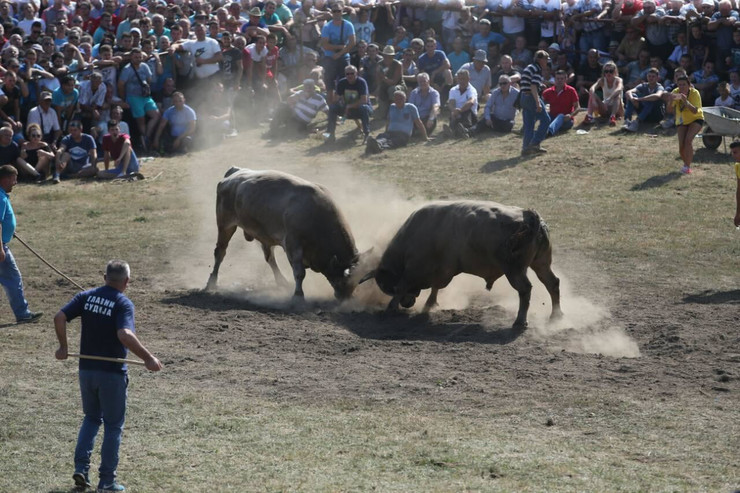
What is interesting is that in the Balkans, the day of Perun, the day of Helios, is the day when people organise Bull fights. I talked about this in my post "Alidjun"...


This is also the day when bulls are ceremonially slaughtered, roasted and eaten...Historical sources tell us that Slavs sacrificed bulls to Perun...So these bull fights were originally probably a ritual in which the best bull was chosen to be sacrificed to Perun...

I talked about ritual slaughtering of Bulls in Slavic culture, and the meaning of this ritual, in my  post "Bull of Grom Div"...

But it wasn't just Slavs who sacrificed bulls, symbol of summer which starts in Taurus, at the end of summer...The Old Gaels (The Irish) did it too. I talked about this in my post "Bull of Crom Dubh"...

So what are we to make of all this? Well, well done Thor, you are truly Indoeuropean Thunder god now. You killed your Great Serpent, Dragon...But why is it that this Norse legend can be explained through Slavic folk tradition, but not through Norse folk tradition? Or can it be?

Also, as I already said, the story makes no sense in the far north. In the far north the Thunder god has no need to kill the heat of the summer. The opposite is the case...In the far north you want sun to be hot and the summer to last as long as possible...

There is one more thing that can be decoded once we know what does the cat represent. Why is Freya riding around in chariots pulled by cats...She is just another representation of Virgo, the feminine, yin, earth influence which becomes ever stronger from the middle of Leo...


I talked about this ubiquitous Lion Lady in my post "Assumption of Mary"...

One other thing. Why is The Great Serpent Jörmungandr biting its tail? Enters Ouroboros. This symbol of the serpent biting its tail was first seen in Egypt. There it is linked to deity Mehen, who in other funerary texts protects Ra in his underworld journey...


Ra spends every night in cold watery underworld. In order to emerge bright and shining in the morning, Ra's fire, his heat, needs to be preserved. By coiled snake... Symbol of sun's heat in Slavic mythology...

Ra's heat also needs to be preserved during the winter. According to the 4th-century AD Latin commentator Servius who was aware of the Egyptian use of the Ouroboros symbol, the image of a snake biting its tail represented the cyclical nature of the year...Solar wheel...

That Ouroboros did represent the solar year, the ever turning (changing) life creating solar wheel, can be seen from Gnostic Pistis Sophia (c. 400 AD), which describes the ouroboros, the soul of the world, as a twelve-part dragon, surrounding the world with its tail in its mouth

In my post "Yin and Yang", I talked about this ever changing, life producing interplay between the Earth and the Sun...


One thing that most people don't know, is that the Yin-Yang symbol is spinning and ever changing. The Great serpent, the Sun, The Yang, is constantly oscillating between its minimum (in the middle of maximum Yin) to it's maximum (where we find minimum Yin in the middle of it)...

This is what "Serpent biting it's tail means". Dragon, The Great Serpent doesn't get killed by Thor or Perun or any other Thunder god. It kills (eats) itself. Spring-Summer-Autumn-Winter-Spring...The ever spinning Ouroboros, the solar wheel...


And this is why the end of the world will come when Jörmungandr spits its tail...Because that means that the Earth-Sun system has gone out of balance. The heat will either increase so much that the world will burn, or will decrease so much that the world will freeze...

I love Jörmungandr...

Tuesday, 31 December 2019

Nav


"On Christmas morning in Scandinavia every gable, gateway, or barn-door, is decorated with a sheaf of grain fixed on the top of a tall pole, wherefrom it is intended that the birds should make their Christmas dinner"

Quote from 1902 book "Christmas: Its Origin and Associations", by William Francis Dawson

"In pre-Christian times, Slavs believed that souls of their dead entered birds and through birds entered heaven, Iriy. So feeding birds with grain during  winter was basically a form of sacrificing grain to the ancestors."

Quote from my post "Bird wedding

Are these customs linked? 

This is the page about a strange creature from Serbian folklore called "Nav". 


The page is from the beautiful illustrated children's book on Serbian mythology called "Ale i Bauci" by Rastko Ćirić.

According to the Serbian mythology, soul of a dead unbaptised child enters a bird and becomes a "nav". It screeches during the night most commonly making crying sounds. It can make breastfeeding mothers go dry. Crossing yourself and saying "I baptise myself" makes it disappear.

This is very interesting. Slavic word Nav denote the souls of the dead in Slavic mythology. The singular form (Nav or Nawia) is also used as a name for the "otherworld". 

In Slavic mythology, souls of the dead entered birds who brought them to irij, paradise. Birds then brought the souls back when they were ready to be reborn. It is interesting that only the souls of unbaptised (still pagan) children become "nav" 🙂

What is even more interesting is that in Irish the word for saint is "naomh" which is pronounced like "n(i)ev" and which comes from Old Irish noíb (noeb) meaning sacred, holy. 

And that in Irish the word for heaven (where saints (naomh) go) is "neamh" which is pronounced like "nav" 🙂and which comes from PIE "*nébʰos." meaning sky which is in Slavic "nebo" 🙂

So in Slavic languages the dead, (navi) go to underworld, old pagan heaven probably, (nav) and in Irish language saints (niev) go to haven (nav)...