Showing posts with label Thunderbolt. Show all posts

Monday, 2 March 2026

Thunder axe

Few days ago @CotswoldArch posted this on X:

Imagine digging Iron Age and Roman pits in central Bedfordshire, and coming across 𝘡𝘩π˜ͺ𝘴 Neolithic beauty? 🀯

This polished Late Neolithic axehead is made of a volcanic rock called gabbro. These axeheads were widely exchanged around the British Isles, and sometimes even across the Irish Sea into Ireland, but that doesn't explain how it ended up in a pit some 2000 years after its creation!

Older artefacts found in newer archaeological features are often termed as 'residual' – redeposited from earlier activity – yet our pit appeared undisturbed. We want to think it was intentionally kept – possibly a prehistoric "curiosity", treasured by the people living centuries later...

I don't think this stone axe was kept as "curiosity". I think it was kept as a protective talisman known as "thunder axe"...

Check this out:

Prehistoric axe head, engraved during the medieval time (9th–early 13th century.) with the image of Christ and St Elijah (Byzantine, Balkan???). Currently kept in Met museum...

Balkan Slavs believed that these stone axes fell from the sky when lightning struck the ground and were attributed to Perun. They were known as thunderstones...Hence Perun's axe...I talked about this in my post "Axe or hammer"...

St Elijah was in Balkan Slavic countries known as St Elijah the Thunderer...So a thunder god replaced with a thunder saint...

I talked about Elijah in my post "Thundering sun god"...

Here is also a very interesting article about Elijah and Teshub, which proposes that Elijah was just a thinly disguised Sky (Thunder) god...

So that explains St Elijah being depicted on the Thunder Axe...

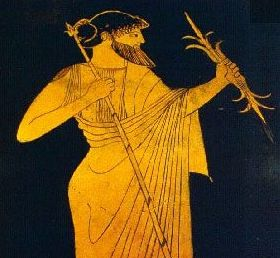
Interestingly, Zeus's thunderbolt was imagined to be a stone or a stone axe. Hence the belief that stone axes had protective powers which is why they were used as magical amulets. 

I talked about (stone) axe as a symbol of Zeus/Jupiter and thunder (gods) in general in my post "Kataibates"...

I also talked about why storm gods from different cultures carry (stone) axes in my post "Mamaragan"...

Adad, Mesopotamian storm god, holding an axe and lightning bolt...


Teshub, Hittite thunder god, also wielded a (thunder) axe. While standing on a bull...About to kill a snake/dragon...I talked about this relief in my post "Teshub killing snake"...

How old is this association between storm (thunder) gods an (stone) axes? 

I suggested that this link between a stone, more specifically flint axes, and thunder gods, already existed in the 4th millennium BC Europe...I explained why I thought so in my post "Sun stones" about exploding flint axes rituals fron Neolithic Denmark...

Knowing all this, it is no wonder that people believed that thunderbolts were made of stone well into middle ages...A 15th-century engraving depicts the town of Ensisheim in present-day France being struck by a thunderbolt (stone)...I talked about this in my post "Jack and magic beans", about giants who lived on a stone sky and who hurled giants rocks down on earth...The original sky (stone) thunder gods...

One of these "thunderbolts" was found and secured in a church to ensure it wouldn’t escape back into the sky...


Friday, 6 February 2026

The wheel of fire


In "The Golden Bough" by James George Frazer we can read that:

"Among the Slavs from Masuria the new fire for the village was made on the Midsummer day by making a wheel to revolve rapidly around the axle of oak until the axle took fire..."

"Also among the Magyars in Hungary on the Midsummer Eve in many places it is customary to kindle bonfires on heights by rotating a wheel round a wooden axle wrapped in hemp."

In the "Balder the beautiful : the fire-festivals of Europe and the doctrine of the external soul" by Sir James George Frazer we read that:  "In the Island of Mull in the Hebrides, the need-fire was as late as 1767 kindled like this..."

"People would carry a wheel and nine spindles of oak wood to the top of the Carnmoor hill. Every fire in the vicinity of the hill was extinguished. The wheel was then turned rightward, over the nine spindles...to produce fire by friction. The fire had to be produced by noon..."

We know that wheel is a symbol directly linked with sun. But it is also linked with thunder and fire. We can see this through the symbols of Svetovid (sun) and Perun (thunder): their wheels. The wheel of Perun is "like" the wheel of Svetovid, a fiery version of it...
Sun creating fire through lightning...

Q: "It is a great secret how Svarog (heavenly and earthly fire) is at the same time Perun (thunder and lightning) and Svetovid (Sun)."

Science: easy...Solar fire creates solar winds which trigger lightning which creates earthly fire...I talked about this in my post "Sun, Thunder, Fire"...
Also don't forget St Elijah, who was in Balkan Slavic countries known as St Elijah the Thunderer...And was depicted blazing and thundering over the tops of the clouds...

When I was a kid, I spent my summers with my grandparents. One year, around the 2nd of August, the day of the St Ilija the Thunderer, a late summer storm was rumbling over the village. My grandmother turned to me and said: "It's St Ilija the Thunderer driving his chariot over the clouds. The rolling thunder and flashing in the clouds are made by the fiery wheels of St Ilia's chariots bouncing off the bumpy tops of the clouds".

I talked about this in my post "Thundering sun god"...

In North Germany too, the peasants say, when they hear the low rumbling of distant thunder, "Use Herr Gott mangelt" meaning 'The Lord is mangling, or rolling the thunder...

Rolling the burning wheel down the hill was part of the celebrations usually linked with summer solstice across Germanic and Slavic world. I talked about it in my post "Burning rolling wheel". Pic from Belarus.,.

Hence Taranos


In the "Curiosities of Indo-European tradition and folk-lore" by Kelly, Walter Keating, we can read that:

"It appears from the preceding accounts that, both by Celts and Germans, a wheel was often used for kindling the needfire..."

"Jacob Grimm was the first to make it evident that, for the Germans at least the wheel was an emblem of the sun, and numerous facts which have come to light since he wrote, abundantly verify his conclusion..."

"He mentions...that in the Edda the sun is called fagrahvel " fair or bright wheel," and that the same sign ☉ which in the calendar represents the sun stands also for the Gothic double consonant 'hw,' the initial of the Gothic word 'hvil,' Anglo-Saxon 'hveol,' English wheel..."

"In the needfire on the island of Mull the wheel was turned, according to Celtic usage, from east to west, like the sun..."

Digression: Talked about the importance of the "sunwise" movement in

Q: "Which way to turn myself I know not?" 

A: "If you worship the gods, right-hand wise, I apprehend."

Ever wondered why "clockwise" means "circle to the right" and "anti clockwise" means "circle to the left"? 

Cause the original clocks were sundials...


I talked about this in my post "Sunwise"...

"There was a twofold reason for this use of the emblem of the sun, for that body was regarded not only as a mass of heavenly fire, but also as the immediate source of the lightning..."

"When black clouds concealed the sun, the early Aryans believed that its light was actually extinguished, and needed to be rekindled. Then the pramantha [firedril] was worked by some god in the cold wheel until it glowed again..."  

Digression:

Thread: "Hestia, you who tends the holy house of the lord Apollo...come now into this house...having one mind with Zeus the all-wise..." From "Homeric Hymn To Hestia"

What does this mean?

It means that the lightning which was the source (essence) of fire...

I talked about this in my post "Having one mind with Zeus"... 

Apparently, Hestia was for some "inexplicable" reason linked to Hermes...

"...but before this was finally accomplished the pramantha often shot out as a thunderbolt from the wheel, or was carried off by some fire robbers..."

"The word 'thunderbolt' itself like its German equivalents expresses the cylindrical or conical form of the pramantha. When the bolts had ceased to fly from the nave, and the wheel was once more ablaze, the storm was over."

Interestingly, it is Hermes, the younger brother of Apollo (Sun god) who invented fire (!!!) drill...

That's the same Hermes who later became Messenger (Thunder) of Zeus (Thunder god)...

What did Hermes do on the day he was born? He stole Apollo's cows. He then invented fire drill, made fire, and sacrificed one of the cows to the gods...I talked about this in my post about (apparently inexplicable πŸ™‚) link between Hermes and Hestia (fire)...

I talked about this in my post "12 Olympians"...

Also interestingly, the term pramantha is closely associated with the, sacred, ancient symbol of the swastika, particularly in Vedic and metaphysical contexts, acting as a metaphor for the creation of fire and, by extension, cosmic creation... 

In Sanskrit, pramantha is an instrument used for kindling fire through rotary motion (a fire drill)...

The swastika (卍 or 卐) is traditionally seen as a symbol representing the pramantha (drill) and the arani (the baseboard) used in Vedic rituals to produce sacred fire (Agni)...

The rotary action of the fire drill—symbolized by the bent arms of the swastika—represents the creation of life and energy. It is considered a "summary in a few lines of the whole work of creation or evolution"...

Swastika is also a solar symbol, a symbolic depiction of ever turning solar wheel, solar year...


I talked about this in my post "Kolo-Vrt"...

And considering that it is sun that powers lightning that creates fire...

Sunday, 27 April 2025

Donderbezem

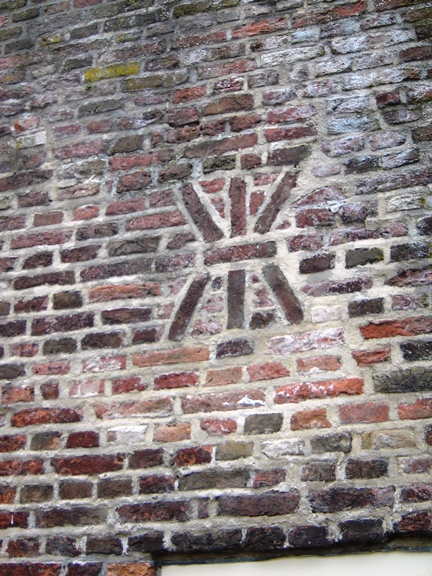
This is so called Donderbezem (thunder broom), a protective symbol used in Holland and northern Germany as a protection from lightning strikes and evil spirits.

These symbols were either built into brick walls of the houses...This example is from the city wall of Elburg, Holland, and dates to 14th century...

Or they were engraved on the metal parts used as wall or door frame reinforcement...This one is from Nijmegen, Holland, and dates to 16th century. It is even made to look like a broom...

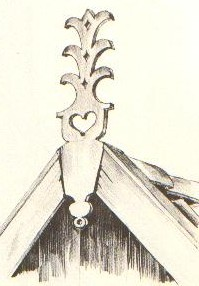
Or they were placed on the ridge of a roof pointing to the sky...This one is from Vleerbosch, Haarle/Tubbergen, and dates to 20th century. 


Most sources will tell you that these symbols were connected with the Germanic god of thunder (Thunar/Donar/Thor) and that the origin of this symbol is the Younger Futhark Haglaz rune which means "hailstone"...


What is interesting is no one really knows why this symbol is called "thunder broom"...Apart from a vague belief that a broom would keep evil spirits from entering your home, cause broom is used for cleaning, expelling...

That thunder broom being a broom is important, can be seen from the fact that there is a variant of Donderbezem symbol built into brick walls which actually looks like a broom. This example is from Altengamme near Hamburg, Germany, and dates to 20th century.

The broom pointing up looks very much like another rune, this time  Elder Futhark rune, Algiz...Which means "Protection"...From thunder and lightning?

That thunder broom being a broom is important, can also be seen from the fact that most of the Donderbezem symbols placed on the ridge of a roof actually look like a broom too...These examples are from Rekken in Berkelland province, Holland.


That thunder broom being a broom is important, can also be seen from the fact that sometimes actual brooms were hang under the roof as a protection from thunder...

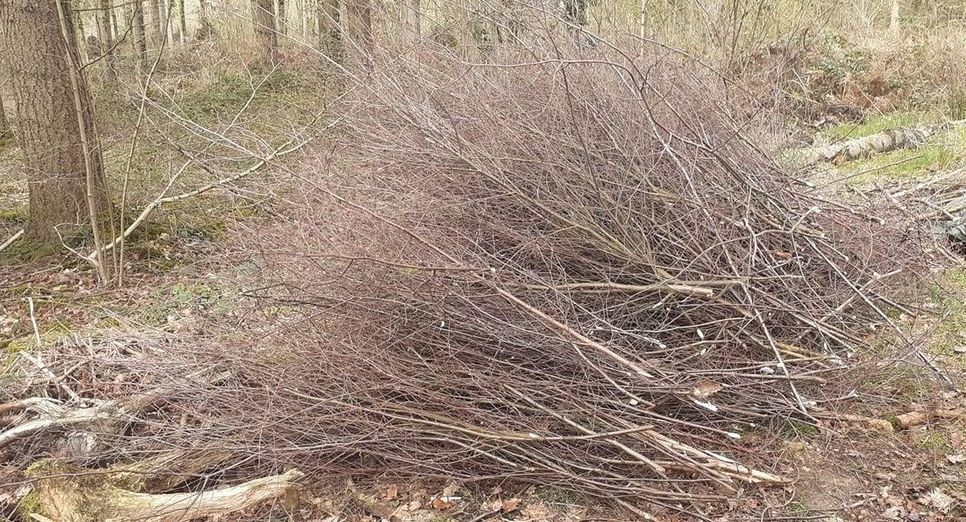
Originally a Donderbezem was just a bundle of twigs stuck under the roof of the house...Technically brooms were originally just bundles of twigs. Like these ones...So it was in affect a broom stuck under the roof of the house that was the original Donderbezem (thunder broom)...

But as I said, I couldn't find any explanation in Germanic mythology or folklore for why people would believe that a broom was able to protect their houses from thunder strike. I have to admit I didn't do a thorough search, so I could've missed some important info. Anyone knows?

Traditionally, brooms are made from the twiggy growth of the birch tree, and the craft was particularly strong in areas where birch coppices abounded...


So I thought: could it be that the reason why broom was used as a protection against thunder strikes was because birch tree was believed to protect against thunder strikes?

Again, I couldn't find anything in Germanic mythology or folklore about people believing that birch was able to protect their houses from thunder strike. I have to admit I didn't do a thorough search, so I could've missed some important info. Anyone here knows?

But interestingly, Slavs believed that the birch, planted near the house, repels evil and protects from lightning...And even better, they believed that stuck under the roof of the house, birch branches (broom) protected the house from the lightning, storm, and hail...πŸ™‚

Wow...Strange...So what about Donderbezem? Where did that belief come from? This is map of Utrecht, city in Central Holland, dated to 1581...

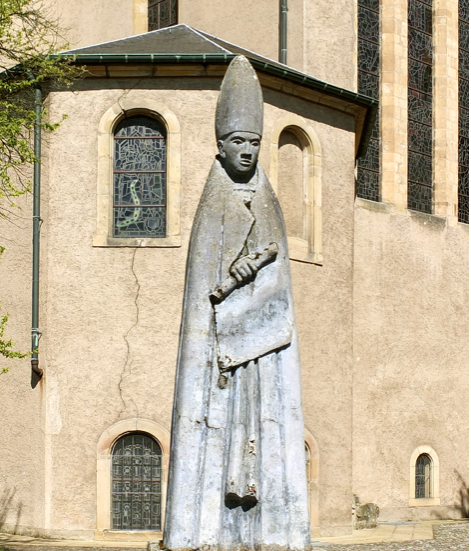
And this is Willibrord  (658 – 739 AD),  a Northumbrian missionary saint, known as the "Apostle to the Frisians" in the modern Netherlands. He became the first Bishop of Utrecht...I talked about him in my post "Axe of Martin"....


Bede says: "Pepin gave Willibrord a place for his episcopal see in his famous castle, which, in the ancient language of those people (who originally built it), is called Wiltaburg (the town of the Wilti), but in the French tongue Utrecht..."

Wilti, of Wiltzi were a West Slavic tribe. During the time of Charlemagne, Wilti were in alliance with the Saxons, fighting against the Franks who were allied with another Slavic tribe, Obodriti...

You can read more about Slavs among Anglo Saxons in my post "The origin of Anglo-Saxon race" which talks about the 1906 book "Origin of the Anglo – Saxon race" by Thomas William Shore...

Slavs lived all over Northern Holland and Northern Germany (Donderbezem country) until they were either exterminated or germanised during hundreds of years of Anti Slavic crusades...

So is it possible that Donderbezem is a remnant of old Slavic belief that birch and birch twigs (broom) can protect the house from thunder strikes?

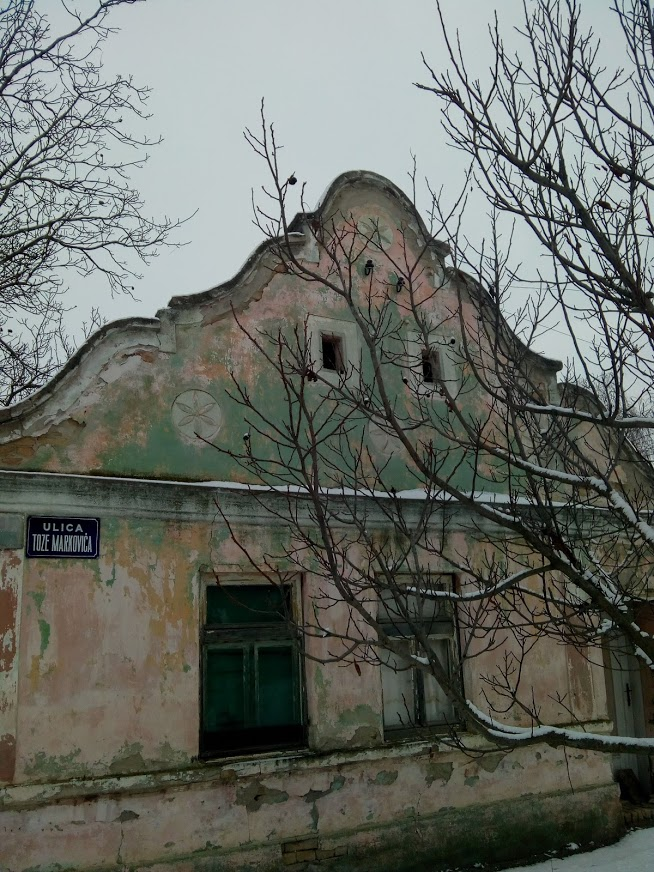
Interestingly, some of the roof Donderbezem look like this... 

See that rosette? That's Perunika, The flower of Perun (Slavic thunder god). Also known as "Gromoviti znak" (Thunder mark), it was carved into wood, stone, plaster on Slavic houses as a protection against...thunder...

Like this...BTW, do you notice how much Perunika looks like Donderbezem aka Haglaz rune??? 

Interesting, right? And mysterious...

Now it is possible that this is also linked in some way to the shape of the ΞΊΞ΅ΟΞ±Ο…Ξ½ΟŒΟ‚ (keraunos), the lightning bolt of Zeus...


And is it possible that this is also linked to ΰ€΅ΰ€œ्ΰ€° (vajra) the thunderbolt of Indra... 


And is it possible that this is also linked to the unnamed lightning weapon wielded by Ninurta?


And is it possible that this is also linked to the the "bundle" with unknown meaning held by Hadad


Don't they all look like the original, double broom Donderbezem?

Also just remembered this. 

Serbian Folk song from Bosnia collected by Kosta H. RistiΔ‡ in 1873. 


It talks about quarrel between Sun and Vila. Vila is mostly translated as Fairy or Mountain Nymph. The problem is that the word Vila literally means trident, pitchfork, fork...


Pitchfork being one of the ancient weapons of the thunder gods means that Vila is actually lightning personified...The best discussion about Vila's identity and her identification with the thunderstorms and lightning can be found in "Stara vjera Srba i Hrvata" by Nodilo... 

The song describes the two competing forces, sun and thunderstorms during summers, when sun wins over thunderstorms, skies dry out and droughts arrive...


Original in Serbian can be found here...

And here is another Serbian ritual song which talks about a (disastrous) marriage between Vila (literally "pitchfork"), a mountain fairy (but really personification of lightning) and Davor (Dabog), Serbian (Slavic) sun and rain (sky) god...I wrote about this in my post "When bride dies soon after the wedding"...

Is it possible that this is somehow linked to the the "pitchfork/broom" weapon of Ningirsu?


Or the ΰ€€्ΰ€°िΰ€Άूΰ€² (trishula) pitchfork of Shiva


Doesn't this look like single broom Donderbezem?


Anyway...