Showing posts with label Zeus. Show all posts

Sunday, 26 July 2026

Jupiter Zeus Dolichenus

Stone relief dated ca 50-150 AD from Croy Hill, Scotland. It depicts Jupiter Dolichenus (standing on a bull) and his wife and consort Juno Dolichena (standing on a cow). National Museum of Scotland, Edinburgh, UK...

Juno Regina is the Queen of the Gods and Queen of Heaven and the patron goddess of Rome... 

Jupiter Dolichenus is a mixture between Roman Jupiter and a Anatolian sky god. Carrying a thunderbolt (Jupiter) and a double-headed axe (Teshub)...

Jupiter Dolichenus stands on a bull because the Anatolian thunder god stood on a bull...

Pics of the two stele from Tell Ahmar are from this paper... 

And he stood on a bull because...Officially we don't know, but actually we do know. He stood on a bull because:

This Hittite symbol means storm god. Bottom part (Bull head) means storm, the above part means god...

The thunderstorm season in Anatolia starts in Apr/May, Taurus...Which is why Hittite Thunder God stands on a bull...I talked about this in my post "Bull god from Arslantepe"


Roman Juno was associated with cows and calves...And so was her Greek predecessor Hera.

Which is interesting considering that Apr/May, the start of the thunderstorm season in Anatolia and Southern Europe, is also the start of the calving season of the wild Eurasian cattle...

This is what Taurus, Bull (it really should be Calf), marks. It originally had nothing to do with stars. It was a marker for Apr/May, the beginning of the calving season of the wild Eurasian cattle. Talked about it in many of my posts...

BTW, Jupiter (Zeus) Dolichenus was also known as Jupiter (Zeus) Heliopolitanus. This is because the cult originated from the area between the cities of Doliche and Heliopolis, which both housed important temples of the god...

Between the two cities lies the mount Caisus, the sacred home of Ba‘al Hadad, who was the Ugaritic version of the Hurian storm god Teshub...

It is in this area that we see the local storm god, wearing local clothes...

Become Romanised/Hellenised, and starts wearing Roman military attire, and gets his lightning trident replaced with lightning bolt...


Pics again from this paper...

Here is another relief, this one from Rome, 3rd c. AD, depicting Jupiter Dolichenus and Juno Dolichena. See the eagle killing snake in the top left corner, the symbol of Zeus/Jupiter?

I love this one a lot. A sculpture of an eagle devouring a serpent from Roman London. 

It depicts a snake eagle killing a snake...

Why is this a symbol of Zeus/Jupiter? Because:

Eagle-Snake struggle is a complex animal calendar marker for the thunderstorm season in Europe Apr/May -  Sep/Oct, when migratory snake eagles can be seen in Europe...I talked about this in my post "Eagle snake struggle"... 

Interestingly, main snake mating season, when snakes coil like this, also starts in Apr/May...


And so:

Why is Hermes, the herald of Zeus, carrying a staff with two coiling snakes, given to him as a present by Apollo, the sun god?

Cause snakes (solar animals) mate (coil) in Apr/May, (heralding) the beginning of the thunderstorm season. I talked about this in my post "Lyre of Apollo"...

So...The visual depictions of Jupiter Dolichenus and Juno Dolichena are full of animal calendar markers for Apr/May...

The time of the year when snakes start mating, snake eagles arrive back from Africa to Anatolia/Southern Europe, wild cows start calving, and when the thunderstorms (ThunderGod) arrives riding on a bull...In Taurus...

BTW, If you want to see how Teshub the thunder god is actually symbolically equated with the snake eagle check my post "Teshub killing snake" out. It gives symbolic analysis of this Neo-Hittite basalt stele from the 9th-8th c. BC and explains why is Teshub standing on a bull and why is he holding a snake in his left hand...

To read more about ancient animal and plant calendar markers, which are at the root of all our mythologies, start here…Then check my twitter threads I still didn't convert to blog post...I am way way behind...

Sunday, 27 April 2025

Donderbezem

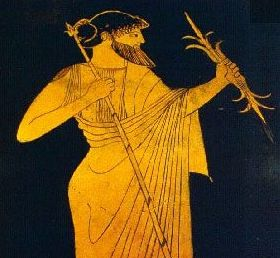
This is so called Donderbezem (thunder broom), a protective symbol used in Holland and northern Germany as a protection from lightning strikes and evil spirits.

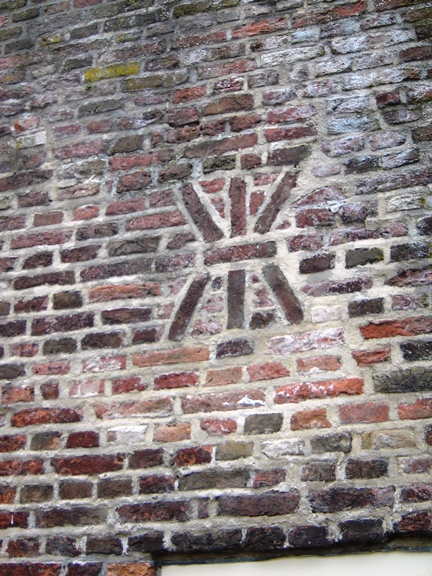
These symbols were either built into brick walls of the houses...This example is from the city wall of Elburg, Holland, and dates to 14th century...

Or they were engraved on the metal parts used as wall or door frame reinforcement...This one is from Nijmegen, Holland, and dates to 16th century. It is even made to look like a broom...

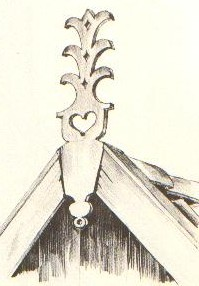
Or they were placed on the ridge of a roof pointing to the sky...This one is from Vleerbosch, Haarle/Tubbergen, and dates to 20th century. 


Most sources will tell you that these symbols were connected with the Germanic god of thunder (Thunar/Donar/Thor) and that the origin of this symbol is the Younger Futhark Haglaz rune which means "hailstone"...


What is interesting is no one really knows why this symbol is called "thunder broom"...Apart from a vague belief that a broom would keep evil spirits from entering your home, cause broom is used for cleaning, expelling...

That thunder broom being a broom is important, can be seen from the fact that there is a variant of Donderbezem symbol built into brick walls which actually looks like a broom. This example is from Altengamme near Hamburg, Germany, and dates to 20th century.

The broom pointing up looks very much like another rune, this time  Elder Futhark rune, Algiz...Which means "Protection"...From thunder and lightning?

That thunder broom being a broom is important, can also be seen from the fact that most of the Donderbezem symbols placed on the ridge of a roof actually look like a broom too...These examples are from Rekken in Berkelland province, Holland.


That thunder broom being a broom is important, can also be seen from the fact that sometimes actual brooms were hang under the roof as a protection from thunder...

Originally a Donderbezem was just a bundle of twigs stuck under the roof of the house...Technically brooms were originally just bundles of twigs. Like these ones...So it was in affect a broom stuck under the roof of the house that was the original Donderbezem (thunder broom)...

But as I said, I couldn't find any explanation in Germanic mythology or folklore for why people would believe that a broom was able to protect their houses from thunder strike. I have to admit I didn't do a thorough search, so I could've missed some important info. Anyone knows?

Traditionally, brooms are made from the twiggy growth of the birch tree, and the craft was particularly strong in areas where birch coppices abounded...


So I thought: could it be that the reason why broom was used as a protection against thunder strikes was because birch tree was believed to protect against thunder strikes?

Again, I couldn't find anything in Germanic mythology or folklore about people believing that birch was able to protect their houses from thunder strike. I have to admit I didn't do a thorough search, so I could've missed some important info. Anyone here knows?

But interestingly, Slavs believed that the birch, planted near the house, repels evil and protects from lightning...And even better, they believed that stuck under the roof of the house, birch branches (broom) protected the house from the lightning, storm, and hail...🙂

Wow...Strange...So what about Donderbezem? Where did that belief come from? This is map of Utrecht, city in Central Holland, dated to 1581...

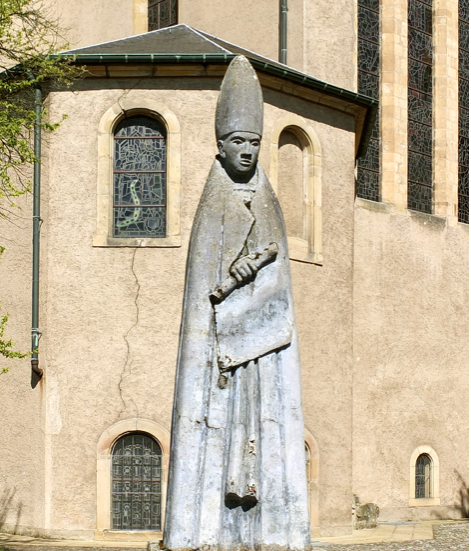
And this is Willibrord  (658 – 739 AD),  a Northumbrian missionary saint, known as the "Apostle to the Frisians" in the modern Netherlands. He became the first Bishop of Utrecht...I talked about him in my post "Axe of Martin"....


Bede says: "Pepin gave Willibrord a place for his episcopal see in his famous castle, which, in the ancient language of those people (who originally built it), is called Wiltaburg (the town of the Wilti), but in the French tongue Utrecht..."

Wilti, of Wiltzi were a West Slavic tribe. During the time of Charlemagne, Wilti were in alliance with the Saxons, fighting against the Franks who were allied with another Slavic tribe, Obodriti...

You can read more about Slavs among Anglo Saxons in my post "The origin of Anglo-Saxon race" which talks about the 1906 book "Origin of the Anglo – Saxon race" by Thomas William Shore...

Slavs lived all over Northern Holland and Northern Germany (Donderbezem country) until they were either exterminated or germanised during hundreds of years of Anti Slavic crusades...

So is it possible that Donderbezem is a remnant of old Slavic belief that birch and birch twigs (broom) can protect the house from thunder strikes?

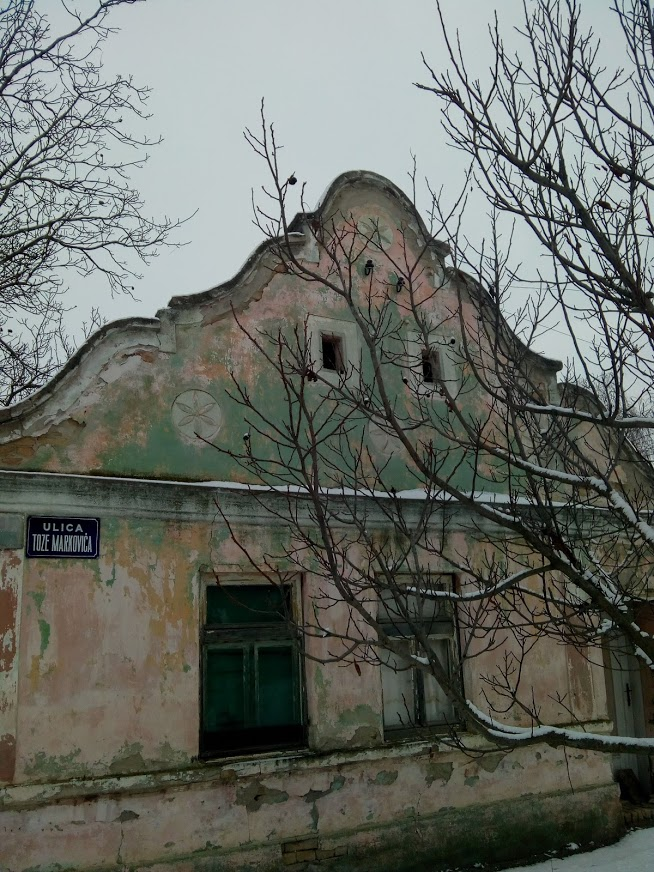
Interestingly, some of the roof Donderbezem look like this... 

See that rosette? That's Perunika, The flower of Perun (Slavic thunder god). Also known as "Gromoviti znak" (Thunder mark), it was carved into wood, stone, plaster on Slavic houses as a protection against...thunder...

Like this...BTW, do you notice how much Perunika looks like Donderbezem aka Haglaz rune??? 

Interesting, right? And mysterious...

Now it is possible that this is also linked in some way to the shape of the κεραυνός (keraunos), the lightning bolt of Zeus...


And is it possible that this is also linked to वज्र (vajra) the thunderbolt of Indra... 


And is it possible that this is also linked to the unnamed lightning weapon wielded by Ninurta?


And is it possible that this is also linked to the the "bundle" with unknown meaning held by Hadad


Don't they all look like the original, double broom Donderbezem?

Also just remembered this. 

Serbian Folk song from Bosnia collected by Kosta H. Ristić in 1873. 


It talks about quarrel between Sun and Vila. Vila is mostly translated as Fairy or Mountain Nymph. The problem is that the word Vila literally means trident, pitchfork, fork...


Pitchfork being one of the ancient weapons of the thunder gods means that Vila is actually lightning personified...The best discussion about Vila's identity and her identification with the thunderstorms and lightning can be found in "Stara vjera Srba i Hrvata" by Nodilo... 

The song describes the two competing forces, sun and thunderstorms during summers, when sun wins over thunderstorms, skies dry out and droughts arrive...


Original in Serbian can be found here...

And here is another Serbian ritual song which talks about a (disastrous) marriage between Vila (literally "pitchfork"), a mountain fairy (but really personification of lightning) and Davor (Dabog), Serbian (Slavic) sun and rain (sky) god...I wrote about this in my post "When bride dies soon after the wedding"...

Is it possible that this is somehow linked to the the "pitchfork/broom" weapon of Ningirsu?


Or the त्रिशूल (trishula) pitchfork of Shiva


Doesn't this look like single broom Donderbezem?


Anyway...

Sunday, 15 September 2024

Lakonian snake eagle kylix

Lakonian Black-Figure Kylix depicting a snake eagle flying to the left, gripping the neck of a snake in its beak and clutching the serpent's long, undulating body in its talons. 530 BC. Currently in the Getty Villa.

From the Getty page: "In the Iliad, the poet Homer described an omen seen by the Trojans as they were attacking the Greek forces. Signifying the eternal conflict of the forces of the earth and the sky, the motif of the battling eagle and snake was used throughout antiquity"...

The eagle fighting a snake can of course be seen as the depiction of the fight between the forces of earth and sky. But is this the only meaning of this image?

Eagle-Snake struggle mosaic from the palace of the Emperor Justinian I  (527-565), Istambul.


This is a complex animal calendar marker for the thunderstorm season in Europe Apr/May -  Sep/Oct...

when migratory snake eagles can be seen in Europe...

I talked about this in my post "Eagle snake struggle"...

The snake eagle is also a migratory species in Western Anatolia, where Troy is located...So the only time when the Trojans could have seen a snake eagle flying over the battlefield carrying a snake in its beak was during the summer, Apr/May - Sep/Oct...Significant? 🙂

The same animal calendar marker, snake eagle carrying a snake in its beak, used for the same time of the year, on this complex Mesopotamian calendar encoded using animal and plant calendar markers. 

I talked about it in my post "Adda seal"...

The same symbol (animal calendar marker), eagle fighting snake, depicted on this gold plaque excavated from the Majiayuan cemetery in Zhangjiachuan, Gansu Province, China and dated to 5th-3rd c. BC. 

I talked about this beautiful object in my post "Snake eagles from Inner Mongolia"...

That's it. To read more about ancient animal and plant calendar markers, start here…Then check my twitter threads I still didn't convert to blog post...I am way way behind...