Showing posts with label Mesopotamian agriculture. Show all posts

Sunday, 7 May 2023

Arjoune venus

An early Halaf culture figurine from the Arjoune site in Syria. Pic from: Embodiment of the Halaf: Sixth Millennium Figurines from Northern Mesopotamia.

It is made from a natural pebble, and it depicts a female form, with large eyes with eyelashes and long hair. The very very very interesting bit is the pubic area, which is depicted as a square...


The Halaf culture is a neolithic early farming culture which flourished in the Fertile Crescent, in south-eastern Turkey, Syria, and northern Iraq, between about 6100 BC and 5100 BC...


The people from the same area, just slightly later, made this figurine which I interpreted as the depiction of the Fertile Mother Earth between two great rivers, Tigris and Euphrates

Figurine of a nude "woman" form Yarim Tepe, Iraq. Ubaid period, 5000-4000 BCE. Iraq Museum...


I talked about this in my post "Mother of grain from Yarim Tepe"...

So I am convinced that whoever made this figurine in Arjoune, knew very well what vulva looks like...The fact that here we have vulva depicted as a square, makes me believe that what we have here is a depiction of the fertile Mother Earth, and more specifically Mother of grain...Where the square vulva represents a grain field...

Remember this:

Inanna spoke:

...

As for me, Inanna,

Who will plow my vulva?

Who will plow my high field?

Who will plow my wet ground?

...

From: "The Courtship of Inanna and Dumuzi"

More about depictions of Mother Earth, Mother of Grain, can be found in my article "Altyn Tepe mother of grain", in which I talk about this BMAC figurine...Again Mother Earth, Mother of Grain, Goddess, just different mountains and rivers...


Another Early Halaf figurine depicting female form with square pubic area. Tell Kurdu...Pic from: Embodiment of the Halaf: Sixth Millennium Figurines from Northern Mesopotamia.


Late Halaf figurine. Discovery location unknown. Pubic triangle on front with line representing vulva and dots representing pubic hair. On back, two ears of grain...

Pic from: Embodiment of the Halaf: Sixth Millennium Figurines from Northern Mesopotamia.

Mother Earth turned Mother of grain, true and true...

Most common Halaf figurine depicted voluptuous female form covered in horizontal stripes. Are these supposed to be furrows?

Saturday, 6 May 2023

Mother of grain from Yarim Tepe

Figurine of a nude "woman" from Yarim Tepe, Iraq. Ubaid period, 5000-4000 BCE. Iraq Museum...

Pic by Osama Shukir Muhammed Amin

Here is the drawing of this figurine with the dimensions form this paper: Understanding symbols: putting meaning into the painted pottery of prehistoric northern Mesopotamia

Really cool...

But, potentially, this figurine could be really really really cool, if I am right...🙂

Look at this: Yarim Tepe was an early farming settlement situated between Tigris and Euphrates...

Now have a look at the figurine again... Is this really just a figurine of an ordinary woman with an extraordinary large "V", or is this a depiction of a fertile land between two great rivers? A "fertile mother earth"...

Inanna spoke:

...

As for me, Inanna,

Who will plow my vulva?

Who will plow my high field?

Who will plow my wet ground?

...

From: "The Courtship of Inanna and Dumuzi"

BTW, did you notice that the figurine is headless? Remember my post about Palaeolithic Venus figurines from Europe: Why were (most) European Palaeolithic female figurines made faceless and fat with super exaggerated sexual characteristics? Cause (maybe) they don't depict real women. Cause (maybe) they depict an idea of fertility...Goddess of Fertility... 


Same thing here?

Wednesday, 16 November 2022

Bull carrying granary

One of many seals, from "Die Entwicklung der Glyptik während der Akkad-Zeit" by Boehmer, R. M. published in 1965, depicting a bull carrying a building with plants growing (protruding) out of the building walls...

What does this mean?

I would first suggest that the bull depicted on this seal is an animal calendar marker, Taurus, which has been used as a marker for Apr/May all over Eurasia and North Africa since at least Early Neolithic in the Fertile Crescent...

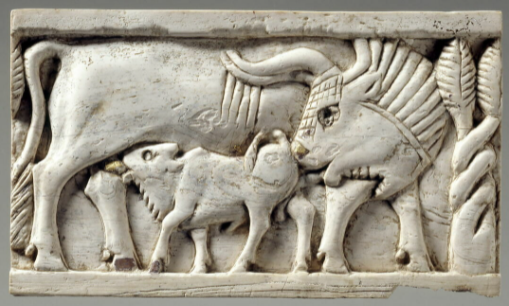
Now this "Old Taurus" has nothing to do with stars. It is the marker that marks the be part of the year when Wild Eurasian Cattle begin to calve...

Check my post "Cow and calf ivory" to see what I mean:

Taurus also marks the beginning of summer (May,Jun,Jul), which is why bull is the most common symbol for summer. I talked about this in my post "Symbols of the seasons"

Which is why in Mesopotamia Utu/Shamash, the sun god, the ruler of summer, is depicted as a bull...I talked about it in my post "Butt chewing"...

Apr/May, Taurus, is also the time when the grain harvest  begins in Mesopotamia...Grain harvest which lasts throughout the summer, the season of the bull...

Hence all these depictions of bulls and grain...I talked about this in my posts "Bulls and grain bowls" and "How grain came to Sumer"...

And bull gods with grain tails...I talked about grain tail symbol in my post "Lions with grain tails"...

Which leads me to believe that the plants growing out of the building being carried by the bull are symbolic depictions of grain ears...

BTW, here is another amazing seal from "Die Entwicklung der Glyptik während der Akkad-Zeit" by Boehmer, R. M. published in 1965...

It depicts sun god Utu/Shamash, recognisable by sun rays emanating from his shoulders. Here Shamash is depicted in his role as the god of justice...I talked about this in my post "Bribing Shamash"...

This is a common depiction of the sun god in Mesopotamia but also in Central Asia. 

A great example of the use of related animal calendar markers. Bactrian two side seal. Sun god with sun rays emanating from his shoulders (like Shamash/Utu), with snakes, symbols of sun's heat and winged lion, Nergal, symbol of hottest part of the year...I talked about this in my post "Summer and winter BMAC seals"...

Back to the second seal from "Die Entwicklung der Glyptik während der Akkad-Zeit". Now that we know what all these symbols mean, the meaning of the whole scene becomes clear: The sun god stands "between two bulls", which means "in Taurus" (Apr/May). Out of the bulls grows grain, which means beginning of grain harvest in Apr/May...

All that leads me to believe that the building full of grain carried by the bull, symbol of summer (May,Jun,Jul), which is also the harvest season, could be a granary full of grain harvested during the season of the bull...

PS: I want to thank @another_barbara for this comment: Can't stop staring at ... the divining rod?

The snowmelt on the north eastern mountains, that feeds Tigris and Euphrates, peaks at the beginning of summer, Apr/May, in Taurus. 

Which is when Tigris and Euphrates flood reaches its peak. 

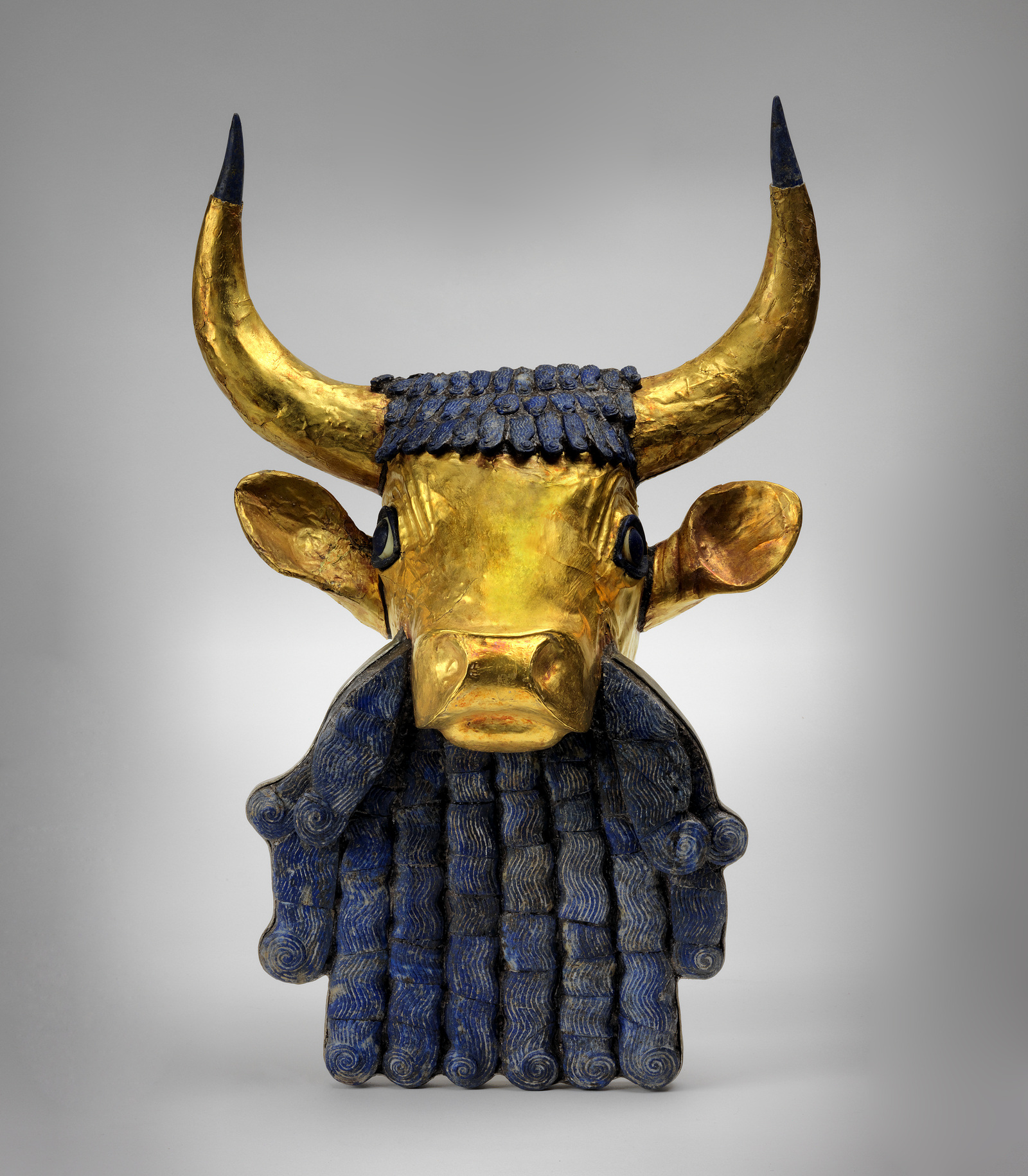
Which is why Utu/Shamash was depicted as a golden bull (Sun in Taurus) with flowing lapis lazuli beard (flowing water)...


To read more about ancient animal and plant calendar markers, start here…then check the rest of the blog posts related to animal calendar markers I still didn't add to this page, and finally check my twitter threads I still didn't convert to blog post...I am 9 months behind now...

Wednesday, 2 March 2022

Scarlet ware goat

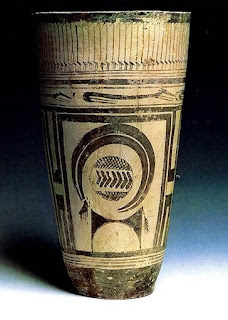
Beautiful Scarlet-Ware Vase from Tell Agrab, beginning of the 3rd millennium BC. The vase depicts Ibex goat among vegetation, with birds and fish. 


Interestingly, the goat is not only surrounded with plants. Plants actually grow out of its back...What does all this mean?

The climatic year in the Tell Agrab area, like in the rest of Iraq, is divided into two halves: hot dry, half (May-Oct) and cool, wet half (Nov-Apr)...

The beginning of the rain season (Oct/Nov), which brings revival of nature and makes everything green and lush again, coincides with the beginning of the mating season of local Bezoar Ibex goats...

Hence the importance of the "Goat of Rain" in the local cultures, illustrated by the fact ibex goat was the most depicted animal on the local artefacts...

I talked about this in my posts "Flamingos from Susa", "Goat carrier"...and many others...

Which is why on this vase we see small green plants actually growing out of the Ibex back...This is not the only such symbolic depiction of this link between ibexes and vegetation from the area. Here is another one from my post "Iranian goat of rain"...

Something interesting. What are these small plants growing out of the back of the Goat of Rain? Any random generic plants? 

I don't think so. I think it's grass and young grain and reeds. 

Because of the climate in the region, the grass growing season is the rain season, symbolised by the goat of rain...I talked about this in my post "Green pastures"...Which is why winter (Oct/Nov-Apr/May) was the grass grazing season... 

Now once the rain season ends, in Apr/May, the grass quickly withers and dies under the scorching summer sun...But luckily, this exactly when the grains and reeds harvest season starts...

Which is why the two plants depicted on either side of the goat are reed and grain...

I think that the plant in front of the ibex is actually reed that grows in flood plains of lower Mesopotamia...

Reeds were an important crop in Mesopotamia, as important as grain. Reeds were used as building material for building irrigation canal dams, houses and boats, and for making baskets, mats and furniture...

I talked about this in my post "Canals"...And it turned out the best time to cut reeds for building purposes was in August, during the hottest and driest time, in Leo...Hence Shamash with a serrated reed cutting knife...Between lions...in an empty river, canal bed...

What I didn't know until today is that the reeds were also used as animal fodder. From everything I managed to find about the common reed lifecycle, it seems that in the climatic zones like Mesopotamia, "...the above-ground biomass increases from February until it reached its maximum during August and then decreased again. Moreover, the nutrient content (g/m2) increased from the early growing season (Feb) and reached its peak during Apr–Aug and then decreased..."

Which means that the best time to harvest reeds for animal fodder is between Apr and Aug...Exactly the same time when grain is harvested... 

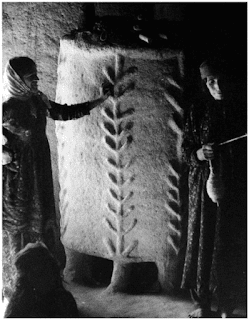
And I think that the plant behind Ibex goat is grain...That this is indeed symbol for grain, can be seen from the fact that the same symbol was put on grain granaries in Kurdistan until 20th century. Aliabad women standing beside a grain bin, Iranian Kurdistan...From "Home is where we keep our food: The origins of agriculture and Late Pre-Pottery Neolithic food storage". Very important image, as it confirms that this design pattern, found on pottery and figurines since the Earliest Neolithic all over Eurasia, means "grain"... 

I talked about this in my post "Scarlet-ware harvest vase"...

Today I came across this interesting book, "Mesopotamian Civilization: The Material Foundations" By Daniel T. Potts. And in it I came across this passage

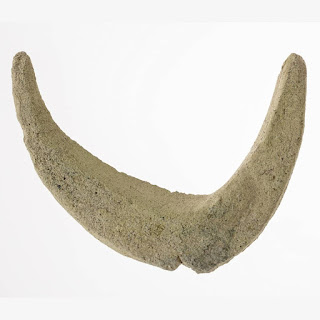
"...Microwear studies of Ubaid clay sickles from Tell Oueilli have suggested that these common tools could have been used for cutting reeds. And a new study of their distribution in Southern Mesopotamia suggests that this may indeed have been their primary function, rather them having been used for harvesting cereal...[My comment: Although they could have been used for both]...Virtually identical clay sickles were used during Late Uruk period as well..."

Here is one of these clay sickles from the site of Chogha Mish in Iran, ca. 3400–3100 BC, currently kept in the Oriental Institute in Chicago...


From my article about the development of sickles...

I am not sure what bird is depicted standing on the Ibex's back. It is most likely one of many bird species that used to spend winters in the Mesopotamian marshes, while they still existed...Could it be a common crane? See the bushy tail?

The common crane lives in Northern Eurasia, but winters in Southern Asia and North Africa, Including Mesopotamia.

According to "Cranes of the World: Eurasian Crane (Grus grus)" by Paul A. Johnsgard, Cranes gather  in huge numbers in Eastern Turkey in Sep/Oct, from where they fly down to the marshlands of Mesopotamia...Right in time for the beginning of the mating season of the Ibex goats, and the beginning of the rain season, Oct/Nov...

Oh, and right at the time for grain sowing...Hence cranes depicted flying over the sowing seen on this seal. 

You can read more about this and other similar seals in my post "Ploughing"...

And cranes all leave the Mesopotamian marshes by Apr/May, the end of the rain season symbolised by the goat of rain...

Hence the bird depicted standing on the goat...I think... 

One other thing...The fishes...Is the reason why fishes are depicted swimming towards "The Mountain Goat" the same reason they are depicted swimming towards Enki? 

I explained why they swim towards Enki in my post "Goatfish"...

So the scene depicts winter, cool, wet half of the year. The half of the year when Ibex goats mate, migratory birds arrive and everything is green again...The half of the year which ends in grain and reed harvest and fishes swimming towards mountain goats...

The vase images are from this great publication by the University of Chicago: "OIP 63 Pottery from the Diyala Region"...

To read more about ancient animal and plant calendar markers, start here…then check the rest of the blog posts related to animal calendar markers I still didn't add to this page, and finally check my twitter threads I still didn't convert to blog post...I am 9 months behind now...

Thursday, 11 November 2021

Lions with grain tails

A while back I wrote an article about the Khafajeh vase, which was made in Iran in the mid 3rd mil. BC by the people of the Jiroft culture...It is still one of the most amazing animal calendars I have seen so far...


This particular scene depicts the driest and hottest part of the year in the Jiroft County, located in the Kerman Province of the South-Eastern Iran...Jul/Aug...Leo...


This is symbolised by the person holding two snakes (symbols of sun's heat) standing between two lions (in Leo)...

This "person" is the sun god, the same dude depicted on this Bactrian seal from the same period. I talked about this in my post "Bactrian snakes and dragons"...

What I didn't notice at the time when I wrote my article were the tips of the lions' tails. They end in what looks like wheat ears...Why? Is this significant?


Well, in my post "Shamash young and old" I talked about young and old sun god Utu/Shamash from Mesopotamian mythology...

He is most often depicted as a man with heat rays radiating from his shoulders...See here, Shamash standing in a dried up canal during the hottest and driest part of the year, Jul/Aug, in Leo, holding a reed cutting knife (that is the best time to cut reeds for making houses and boats)...In Leo is again depicted as "between the lions"...I talked about this in my post "Canals"...


But Utu/Shamash is often depicted as a bull with human face and long flowing beard...

Sometimes Utu/Shamash is depicted as a bull with human face and a long flowing beard having his butt chewed by a winged lion...This is because summer, symbolised by a bull, ends in Leo...I talked about this in my post "Butt chewing"...

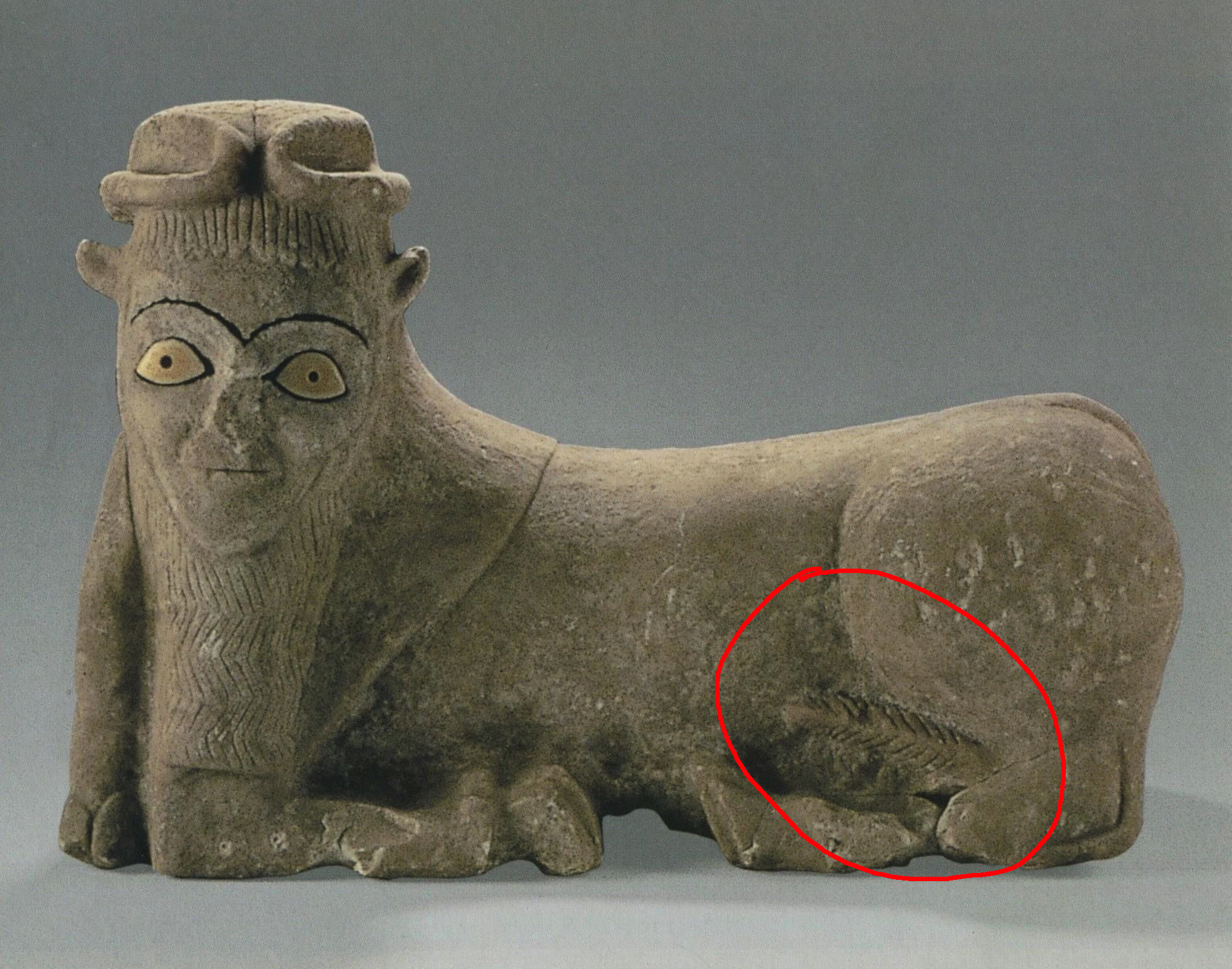
Here is another one of those depictions of the sun god Utu/Shamash as a bull with human face and a long flowing beard. But this time he also has a tail that ends in a ear of wheat...Why? Is this significant?

Well it is. Utu/Shamash is depicted as a bull, cause summer starts in Apr/May, in Taurus, the time when Wild Eurasian Cattle begin to calve...I talked about this in my posts "Dairy farming seal", "Green pastures" and many others...Summer as a season is most often symbolised by a bull too...I talked about this in my post "Symbols of the seasons"...

This is also the time of the peak flood of the Tigris and Euphrates, which is caused by the snowmelt on the mountains that feed these two great rivers, which is in turn caused by the sun, Utu/Shamash...Hence golden bull (sun metal) with blue lapis (water stone) beard 

Apr/May, Taurus, is also the time when the grain harvest  begins in Mesopotamia...Hence bulls and grain...And bulls with grain tails...I talked abut this in my posts "Bulls and grain bowls" and "How grain came to Sumer"

But what does this have to do with the lions with grain tails from the Jiroft vase? Well...

I googled Iran grain harvest season and (eventually) found this: "wheat harvest season is approximately 4.5 months in Iran starting in early April up to mid-August, depending on the region and it's local climate"...

According to this paper about the affect of the global warming on grain agriculture in Iran, "...most of the wheat in Iran is cultivated in October and harvested in July..."

Finally I found this: "KERMAN, Aug. 13 (MNA) – Farmers of Deh Ziyar village in Kerman province, harvest wheat using traditional methods"... 


Basically they are harvesting grain in Leo...

Is Jul/Aug really grain harvest season in Kerman province? Is this why lions on this vase made by the people of the Jiroft culture from the Kerman province of Iran have tails that end in grain ears?

PS: I just looked at the pictures of the wheat being harvested in Kerman province. It looks like one of the old wheat types, emmer, durum, which are both awned (with bristles). 

Durum wheat is the predominant wheat type grown in the Middle East. And it is traditionally a "spring wheat" which is sown in Feb/Mar and harvested in Jul/Aug. It has lower yields, thick husks, long bristles and is resistant to high temperatures...

It fits...