Showing posts with label Venus figurines. Show all posts

Thursday, 15 May 2025

Blinged goddess

Ceramic figurines with bronze necklaces, found in the Durankulak settlement of the  Late Neolithic Hamangia culture, which flourished in Dobruja (Romania and Bulgaria) during the period 5250-4500 BC. The people of this culture seem to have been immigrants from Anatolia...

The figurines were found together as a group...
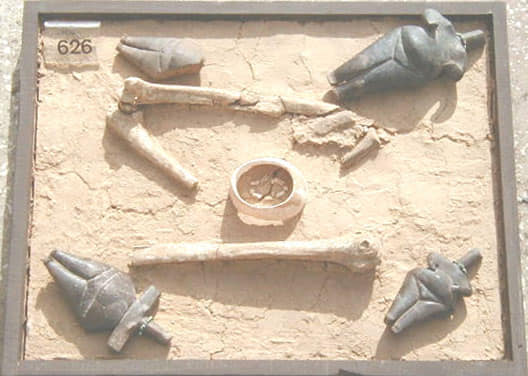
Archaeologists also found figurines with bracelets...

And women buried with lots and lots of jewellery...BTW, all the figurines with jewellery were female...

Here are some examples of the jewellery found in the Hamangia culture graves...


Durankulak settlement on Golemija ostrov in Bulgaria consisted of rectangular wattle and daub houses with stone foundations...Not huts...

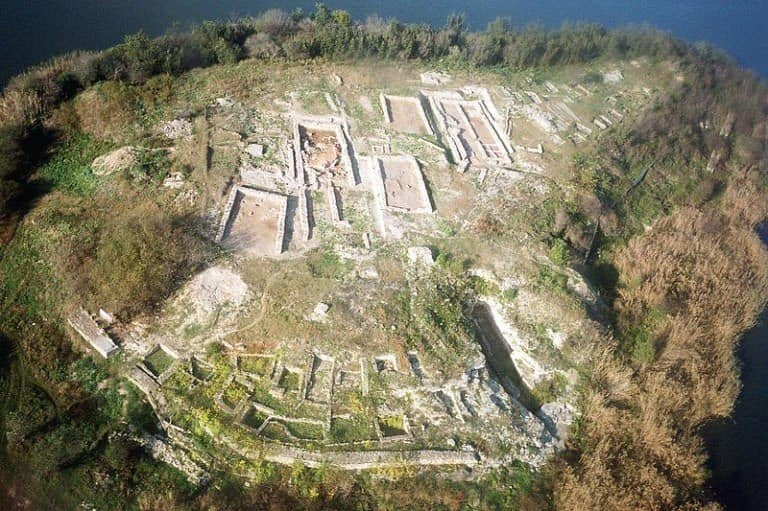

The same kind of houses (barns, cowsheds) which were until the 20th c still built in the Balkans, except the roof was covered by thatch...


Sources: "Hamangija culture", "Durankuluk"

ARCHAEOLOGICAL COMPLEX DURANKULAK (Regular Excavations on Golemija ostrov Tell in 2018)

ARCHAEOLOGICAL COMPLEX DURANKULAK. Regular Excavations on Tell Golemija ostrov in 2020. (Presentation 2021)

NEOLITHIC SETTLEMENTS ON BALKAN a comparative study between Durankulak and Sitagroi

PS: These Neolithic Venus figurines are again faceless, with exaggerated sexual characteristics. Basically depicting the idea (goddess) of fertility. Just like Palaeolithic Venus figurines.

Pic: 17,000 years old Venus of Piatra Neamț, discovered on June 21, 2019, in the area of Piatra Neamț, Romania. 
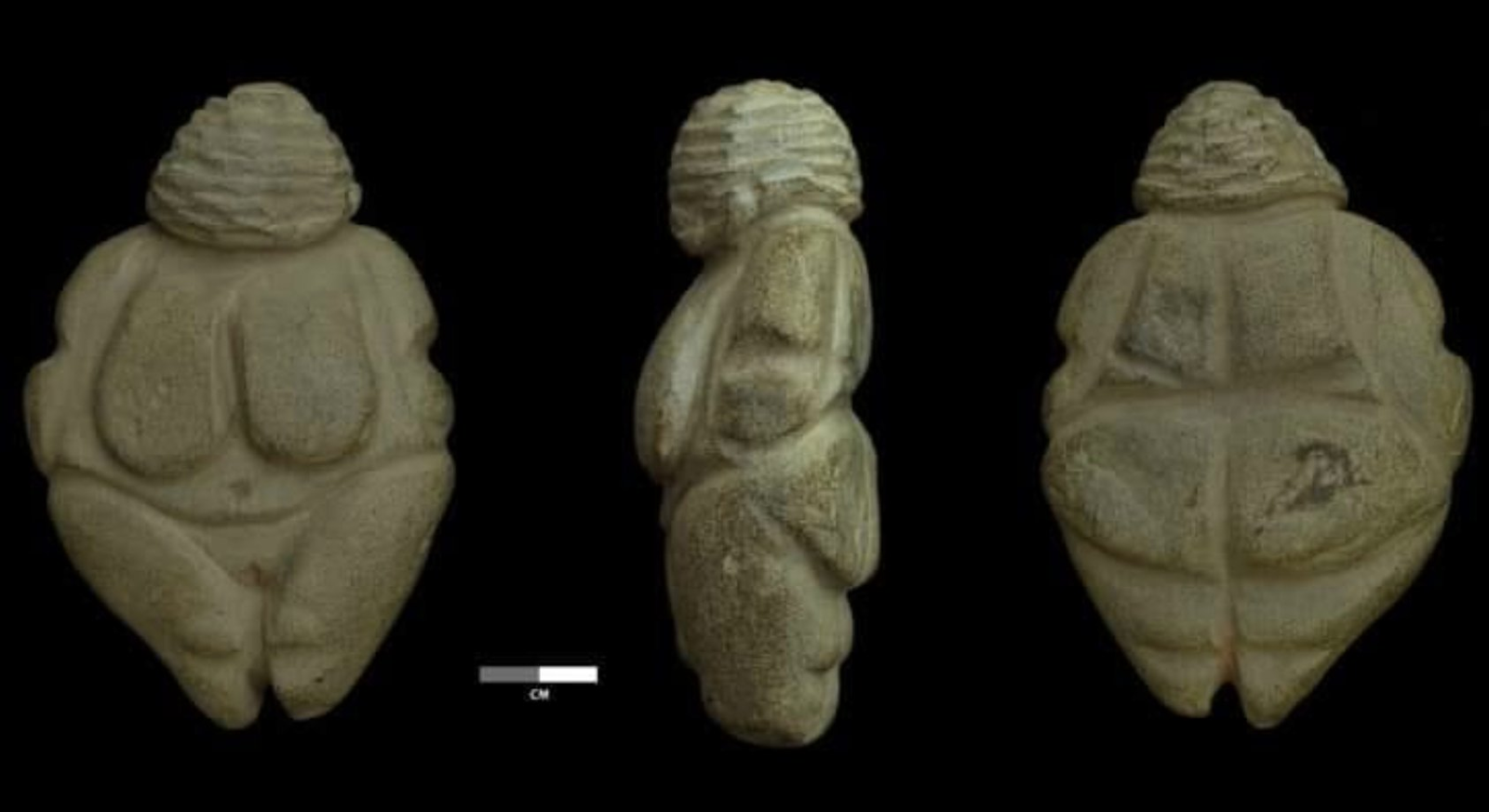
Talked about this in my posts "Palaeolithic Venus figurines", "The faceless one", "Motanka". 

At the same time when Durankulak people made their faceless goddesses, a gynomorphic (woman like) figurine was made of "soil mixed with chaff and grain seeds" in Grčac, Serbia. by the people of the farming Proto-Starčevo culture, 6200-5500 BC. Direct symbolic link between earth, grain and female fertility. Basically, "Mother of Grain". 


The fact that the people from Durankulak who made these Fertility (Mother Earth) figurines and then put necklaces and bracelets on them, the same type of jewellery worn by the local women, tells me the they have also already symbolically linked the the Earth fertility and female fertility. This symbolic link is still found in Europe, particularly in farming communities in the Balkans and Eastern Europe...

I talk about this in my article "Baba, last sheaf of wheat" and the linked articles...

Monday, 30 December 2019

Palaeolithic Venus figurines

The other day I came across this image


The comment that accompanied it read: "Archaeologists have unearthed a figurine from the early Upper Paleolithic at the prehistoric site of Renancourt in Amiens, northern France. She was found in a layer with organic remains that has been radiocarbon dated to 23,000 years ago"

Again no face (in this case deliberately replaced by geometric abstraction) and a fat exaggerated body. Without arms. Only the "important" bits: butt, pussy and tits...Sorry, couldn't resist it... 

This is not a woman. This is "Fertile Mother Earth"...

The Venus of Willendorf is an 11.1-centimetre-tall (4.4 in) Venus figurine estimated to have been made 30,000 BCE.


The Venus of Hohle Fels, unearthed in 2008 in Hohle Fels, a cave near Schelklingen, Germany. It is dated to between 40,000 and 35,000 years ago


Venus of Dolní Věstonice is a Venus figurine, a ceramic statuette found at the Paleolithic site Dolní Věstonice in the Moravian basin south of Brno, dated to 29,000–25,000 BCE


Deliberately making these figurines faceless, by people whom we know were perfectly able to depict human faces in detail, means that this is not a depiction of any one person, but a depiction of a concept: fertility...

This is what a Palaeolithic depiction of an actual woman looks like. 

The Venus of Brassempouy, a fragmentary ivory figurine from the Upper Palaeolithic. discovered in a cave at Brassempouy, France. About 25,000 years old


And this is what a Palaeolithic depiction of an actual female body looks like. Actual female body depiction found with the Venus of Brassempouy, wearing a belt of sorts. Lean, as you would expect a hunter gatherer woman to be... 


Final proof that Palaeolithic Europeans were perfectly able to depict facial features of real women, can be seen from this small ivory head. 


Found on the the same archaeological site, Dolní Věstonice, where the above faceless black "Venus" figurine was found, it is a very detailed depiction of a female face. 

What is amazing about this figurine is that we know that it is actual portrait of a woman who lived in the settlement. We know that because the figurine depicts the disfigurement on the woman's face. The same disfigurement was found on a female skeleton found at the site...

So we know that the people from Dolní Věstonice were able to depict human faces. Yet they made the above large fat figurine with huge breasts and hips faceless. Why? 

If we look at any of these Palaeolithic faceless figurines, you can see that the bodies are depicted in incredible detail. They are anatomically perfectly depicted. Why would the artists then omit the face? Because with the face they become individuals. Without, they are symbols.

Individual creativity can be seen from the fact that these figurines are all different except that they are all depicting faceless fat woman. What we can conclude from this is that all these people probably shared the same belief system depicted using the same symbol system...

BB King once said that when he was a kid, he was always hungry. And all he ever dreamed about was to one day be "fat and happy"... I think that Palaeolithic hunter gatherers probably shared his dream...