Showing posts with label Fire cult. Show all posts

Friday, 6 February 2026

The wheel of fire


In "The Golden Bough" by James George Frazer we can read that:

"Among the Slavs from Masuria the new fire for the village was made on the Midsummer day by making a wheel to revolve rapidly around the axle of oak until the axle took fire..."

"Also among the Magyars in Hungary on the Midsummer Eve in many places it is customary to kindle bonfires on heights by rotating a wheel round a wooden axle wrapped in hemp."

In the "Balder the beautiful : the fire-festivals of Europe and the doctrine of the external soul" by Sir James George Frazer we read that:  "In the Island of Mull in the Hebrides, the need-fire was as late as 1767 kindled like this..."

"People would carry a wheel and nine spindles of oak wood to the top of the Carnmoor hill. Every fire in the vicinity of the hill was extinguished. The wheel was then turned rightward, over the nine spindles...to produce fire by friction. The fire had to be produced by noon..."

We know that wheel is a symbol directly linked with sun. But it is also linked with thunder and fire. We can see this through the symbols of Svetovid (sun) and Perun (thunder): their wheels. The wheel of Perun is "like" the wheel of Svetovid, a fiery version of it...

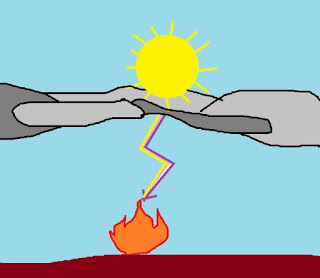
Sun creating fire through lightning...

Q: "It is a great secret how Svarog (heavenly and earthly fire) is at the same time Perun (thunder and lightning) and Svetovid (Sun)."

Science: easy...Solar fire creates solar winds which trigger lightning which creates earthly fire...I talked about this in my post "Sun, Thunder, Fire"...

Also don't forget St Elijah, who was in Balkan Slavic countries known as St Elijah the Thunderer...And was depicted blazing and thundering over the tops of the clouds...

When I was a kid, I spent my summers with my grandparents. One year, around the 2nd of August, the day of the St Ilija the Thunderer, a late summer storm was rumbling over the village. My grandmother turned to me and said: "It's St Ilija the Thunderer driving his chariot over the clouds. The rolling thunder and flashing in the clouds are made by the fiery wheels of St Ilia's chariots bouncing off the bumpy tops of the clouds".

I talked about this in my post "Thundering sun god"...

In North Germany too, the peasants say, when they hear the low rumbling of distant thunder, "Use Herr Gott mangelt" meaning 'The Lord is mangling, or rolling the thunder...

Rolling the burning wheel down the hill was part of the celebrations usually linked with summer solstice across Germanic and Slavic world. I talked about it in my post "Burning rolling wheel". Pic from Belarus.,.

Hence Taranos


In the "Curiosities of Indo-European tradition and folk-lore" by Kelly, Walter Keating, we can read that:

"It appears from the preceding accounts that, both by Celts and Germans, a wheel was often used for kindling the needfire..."

"Jacob Grimm was the first to make it evident that, for the Germans at least the wheel was an emblem of the sun, and numerous facts which have come to light since he wrote, abundantly verify his conclusion..."

"He mentions...that in the Edda the sun is called fagrahvel " fair or bright wheel," and that the same sign ☉ which in the calendar represents the sun stands also for the Gothic double consonant 'hw,' the initial of the Gothic word 'hvil,' Anglo-Saxon 'hveol,' English wheel..."

"In the needfire on the island of Mull the wheel was turned, according to Celtic usage, from east to west, like the sun..."

Digression: Talked about the importance of the "sunwise" movement in

Q: "Which way to turn myself I know not?" 

A: "If you worship the gods, right-hand wise, I apprehend."

Ever wondered why "clockwise" means "circle to the right" and "anti clockwise" means "circle to the left"? 

Cause the original clocks were sundials...


I talked about this in my post "Sunwise"...

"There was a twofold reason for this use of the emblem of the sun, for that body was regarded not only as a mass of heavenly fire, but also as the immediate source of the lightning..."

"When black clouds concealed the sun, the early Aryans believed that its light was actually extinguished, and needed to be rekindled. Then the pramantha [firedril] was worked by some god in the cold wheel until it glowed again..."  

Digression:

Thread: "Hestia, you who tends the holy house of the lord Apollo...come now into this house...having one mind with Zeus the all-wise..." From "Homeric Hymn To Hestia"

What does this mean?

It means that the lightning which was the source (essence) of fire...

I talked about this in my post "Having one mind with Zeus"... 

Apparently, Hestia was for some "inexplicable" reason linked to Hermes...

"...but before this was finally accomplished the pramantha often shot out as a thunderbolt from the wheel, or was carried off by some fire robbers..."

"The word 'thunderbolt' itself like its German equivalents expresses the cylindrical or conical form of the pramantha. When the bolts had ceased to fly from the nave, and the wheel was once more ablaze, the storm was over."

Interestingly, it is Hermes, the younger brother of Apollo (Sun god) who invented fire (!!!) drill...

That's the same Hermes who later became Messenger (Thunder) of Zeus (Thunder god)...

What did Hermes do on the day he was born? He stole Apollo's cows. He then invented fire drill, made fire, and sacrificed one of the cows to the gods...I talked about this in my post about (apparently inexplicable 🙂) link between Hermes and Hestia (fire)...

I talked about this in my post "12 Olympians"...

Also interestingly, the term pramantha is closely associated with the, sacred, ancient symbol of the swastika, particularly in Vedic and metaphysical contexts, acting as a metaphor for the creation of fire and, by extension, cosmic creation... 

In Sanskrit, pramantha is an instrument used for kindling fire through rotary motion (a fire drill)...

The swastika (卍 or 卐) is traditionally seen as a symbol representing the pramantha (drill) and the arani (the baseboard) used in Vedic rituals to produce sacred fire (Agni)...

The rotary action of the fire drill—symbolized by the bent arms of the swastika—represents the creation of life and energy. It is considered a "summary in a few lines of the whole work of creation or evolution"...

Swastika is also a solar symbol, a symbolic depiction of ever turning solar wheel, solar year...


I talked about this in my post "Kolo-Vrt"...

And considering that it is sun that powers lightning that creates fire...

Sunday, 18 December 2022

The Tree of Light (Life)

3,000 BCE Sumerian Stamp Seal with Impression Tree of Life with Rampant Goats. Mesopotamia. Chicago. Oriental Institute Museum...

This "Tree of Life" looks a lot like Hanukah Menorah...So maybe I should look into it???

Ok First...I got this image and the info years ago and I added it to my notes where it lay until two days ago when I decided to use it as an illustration for this article. Unfortunately, I can't find this image using the Oriental Institute search any more...Searching the net, all I could find was a bigger picture of the same seal in a display cabinet, next to what looks like a top of a plaque (?) with a depiction of a Sumerian deity with characteristic horned headdress...


Because I couldn't find any direct link to the data about this object on the Oriental Institute Museum website, I have to put a big question mark about the data I posted about this seal. I would be grateful if anyone can give me more info about it, where is it, what is it exactly. Thank you.

Anyway...

If this "Tree of Life" was an ordinary looking tree, like this 2600 BC one found in the Sumerian Queen Pu-abi's tomb, I would say Ibex animal calendar markers marking Ibex mating season which overlaps with rain season which supports (the tree of) life...I talked about it in my post "Shell plaque with ibexes"...

But is the shape of that Tree of Life a coincidence? I started digging around and I found this: A 13th c. BC pottery shard from Lachish, an ancient Canaanite and Israelite city in the lowlands of Judea, mentioned in the Hebrew Bible. O look, Temple Menorah! Flanked by Ibex goats! Pic from Western Asiatic Tree-Goddesses by Irit Ziffer


Soooo...

This is the reconstruction of the menorah of the Temple in Jerusalem, created by the Temple Institute of Israel. Menorah is widely recognised as a symbol of Hebrew culture...

But what was Menorah supposed to have been the symbol of originally?

Apparently Yahveh himself gave the instructions how to make the original Menorah to Moses: 

Hammer a lamp out of one piece of pure gold. It should have a base and shaft, with 3 branches on one side and 3 on the other, ending in cups shaped like almond flowers...

The menorah was made and placed in the antechamber of the Temple sanctuary, over against its southernmost wall...Its cups were lit daily from fresh, consecrated olive oil and burned from evening until morning...

There is a story in Talmud that says that although all the lamps were filled with the same amount of oil, and the central lamp was lit first, all the other lights would run out of oil by the morning, except the central lamp which continued burning oil all through the day too...

This miracle, according to the Talmud, was taken as a sign that the god dwelt among Israel and the central lamp was actually called the lamp of god...

Most people associate Menorah with the winter holiday of Hanukah. The Menorah lit during Hanukah though has 4 branches on each side...Apparently, the Talmud states that it is prohibited to use a seven-lamp menorah outside of the Temple...Hence eight-lamp Hanukah Menorah...

But apparently this is not why the Hanukah Menorah has 8 branches. There are two stories explaining why Jews celebrate Hanukah when they celebrate it (end of Nov/Dec beginning of Dec/Jan, basically mid winter), and why they light Menorah with 8 branches during this celebration...

The first one states that this is to commemorate the recovery of Jerusalem and subsequent rededication of the Second Temple at the beginning of the Maccabean revolt against the Seleucid Empire in the 2nd century BC...

According to the Talmud, there was only enough consecrated olive oil left to fuel the eternal flame in the Temple for one day. Miraculously, the oil burned for eight days, giving the Jews enough time to press more fresh oil...Hence Hanukah and 8 branch Menorah...

But there is another story, also from Talmud, that says that when Adam, during his first winter, saw the days growing shorter and shorter, he feared that God was angry and planned to destroy the world...

So what did he do while he waited for the end of the world? He feasted for eight days and nights 🙂 Then the light began to grow longer. What did Adam do when he realised that the world was actually not going to end? He feasted for eight days and nights of course 🙂

The next year, Adam celebrated both the eight days of darkness (before winter solstice) and the eight days of light (after winter solstice). The Talmud gives this story as the explanation for the Roman winter solstice festival of Saturnalia...

But Talmud scholars, like Prof. Moshe Benovitz, believe that "The ritual of candle lighting on Hanukkah developed from Roman custom of lighting lights during the Solstice festival of Saturnalia, most likely during the reign of King Herod"... 

Prof. Benovitz also says that it was only later that 8 days of Hanukah and the 8 branches of Hanukah Menorah were connected to the Maccabees, in the form of the miracle of the oil...

Implying that this was just a Roman fashion adopted by the Jews during Roman occupation...

This would mean that lighting of candles over Hanukah (winter solstice) has the same ritual significance as burning of the Yule log during Christmas (winter solstice)...It is a ritual rekindling of the sun's fire...

"The ancient fire-festival of the winter solstice...has survived...in the custom of the Yule log...[once]...widespread in Europe, it seems to have flourished especially in England, France, and among the South Slavs"...From "The Golden Bough"... 

I talked about it in these articles:

"Yule log in English tradition", "Yule log in French tradition", "Yule log in South Slavic tradition", "First footer"...

And this foreign custom was later absorbed into Judaism through Maccabees oil miracle story...Hmmmm...I definitely agree that lighting of the Hanukah Menorah is a winter solstice ceremony. But I would disagree that the Jews learned how to worship sun from the Romans...

I would argue that the original Maccabean Menorah lighting ceremony, which took place in the Second Temple of Jerusalem, was performed on winter solstice too. Deliberately...

In fact, I would argue that the whole Maccabean revolt against the Seleucid Empire in the 2nd century BC was timed to start at "auspicious time", so that lighting of the Temple Menorah can lit in the rededicated temple on winter solstice...

Which would mean that Hanukah is NOT a Jewish festival commemorating the recovery of Jerusalem and subsequent rededication of the Second Temple at the beginning of the Maccabean revolt...It is the same winter solstice ceremony Maccabeans performed themselves...

And it is definitely NOT a Roman import...

Do I have any proof for this? 

Weeeell...Remember the Talmud story about the central light of the First Temple Menorah, which was the only light that burned through the day...Just like The Sun, does...The God light...

Knowing the link between Menorah Hanukah and the Sun, the fact that the central candle of the Hanukah (Solstice) Menorah is called Shamash (The name of the old Akkadian sun god), and that this candle has to be lit first, and then used to light all the other candles, shouldn't be a surprise any more...

Of course, we are told that the name of the central Menorah candle, shamash, means "attendant" or "servant"...That could be so...Hebrew is written without vowels...So שמש (sh-m-sh) can be interpreted in different ways, depending which vowels are inserted...Any one means servant?

However, when we look at the Hebrew Old Testament, what we find as the translation of the word שמש (sh-m-sh), is this:

Strong’s H8121, שמש shemesh, a concrete noun meaning, “sun, sunrise,” from an unused primitive root meaning, “to be brilliant.”

Out of 134 times that this word appears in the text

119 times shemesh is translated as “sun.”

9 times it is translated as “sunrising.”

2 times it is translated as “east side.”

1 time each it is translated as “window,” “eastward,” “west,” “westward.”

Like: And take heed, lest you lift your eyes to heaven, and when you see שמש (the sun), the moon, and the stars, all the host of heaven, you feel driven to worship them and serve them, which YHVH your God has given to all the peoples under the whole heaven as a heritage. Deu 4:19

And so it is pretty clear that the central light of the Hanukah (Winter Solstice) Menorah, Shamash, represents The Sun, The True Light which lights up everything else...

Here is another interesting scripture excerpt featuring שמש (the sun):

Then he removed the horses that the kings of Judah had dedicated to שמש (the sun), at the entrance to the house of YHVH...and he burned the chariots of שמש (the sun) with fire. 2 Kin 23:11

Remember this? My article "Boaz and Jachin" about the  (First) Temple, built on a Threshing Floor (also used as solar observatory), and "oriented" (made to face east). A "House of God" made to face the "House of (Sun) God"...

And do you remember this? My article "The sun god from the first temple" about the solar cult from the First Temple? In it, I asked: was Helios the Sun God of The First Temple who rode in a horse pulled quadriga? 


I asked this (silly) question, because the sun god worshiped in The First Temple rode on quadriga pulled by 4 horses. And when I wrote that article, way back when, I didn't know that Shamash also rode on a quadriga...3rd mill BC cylinder seal imprint found in Tell Brak, Syria...

I talked about this in these two articles: "Sun god from Tell Brak", "Shamash playing with solar horse"

So I think that the Sun God that Josiah says the Jews worshiped in the First Temple was no other than Shamash himself... 

Interestingly, the quadriga of the sun god Shamash rode on was not originally pulled by horses but by but "kungas", a specially bred hybrids between female domesticated donkey and a wild male Syrian wild ass...Basically a fancy donkey...Pic: Male Syrian wild ass...

Kungas were so highly regarded, that "they were deemed especially suitable for drawing the chariots of kings and gods"...

Kings and gods...Kings and gods...Why did Jesus have to ride into Jerusalem on a donkey/ass again? To prove what?

People would say: He was't proving anything. He was fulfilling a scripture prophecy.

"Rejoice, O people of Zion! Shout in triumph, O people of Jerusalem! Look, your king is coming to you. He is righteous and victorious, yet he is humble, riding on a donkey— riding on a donkey’s colt." Zechariah 9:9

Except he didn't ride on a donkey to show he was humble...He rode on a donkey, cause donkey was the ride of kings since Sumerian times...And he and his "revolutionary" pals new it...And when I say revolutionaries...I talk about religious revolutionaries...Or maybe counter-revolutionaries...Not everyone in Judea liked what Josiah and his followers did...

And even though Jesus says: "My Kingdom is not an earthly kingdom. If it were, my followers would fight to keep me from being handed over to the Jewish leaders. But my Kingdom is not of this world." John 18:36

There is no way that him and his followers weren't aware of the significance of the fact that donkey was originally the mount for God/King...Shamash...

But I am digressing...This is all really cool so far. But I don't think that this was the (only) original meaning of the Menorah that Yahveh told Jews to make "in a shape of a blossoming almond tree" and which should be lit only by freshly pressed olive oil...

Sure the fact that this Menorah was a lamp made from pure gold hints at the solar aspect of this symbol...But Menorah was a lamp shape like a tree. The Tree of Light? Sure...The Tree of Life too? Let's see what plant calendar markers can tell us...

In Levant, almond trees are the first trees to bloom each year...They blossom in Jan/Feb. At the end of winter, beginning of Spring...I don't think Yahveh chose the Menorah tree randomly...

In Levant, olive harvest season is Oct/Nov/Dec (in the past even Jan). It starts at the end of autumn, beginning of winter...Oil is pressed right after all the olives were harvested...So in Oct/Nov/Dec...I don't think Yahveh chose the Menorah fuel randomly...

Here is why I think Menorah could be a complex calendar marker...This is climate in Levant...You can see that the climatic year is divided into two halves, the hot, dry summer (Apr/May - Oct/Nov), and cool, wet winter (Oct/Nov - Apr/May)...

In Levant, it is the rain that falls during the winter that supports "The Tree of Life", that makes life possible...And the wettest time of the year Levant is between the harvesting of olives and blossoming of almonds, peaking right around winter solstice...

And as I said at the beginning of this article, there is one other thing that happens in Levant, Mesopotamia between Oct/Nov and Jan/Feb, peaking around winter solstice: mating of wild ibex goats marked by wild loud buck fights...This is why Ibex was in Levant, Mesopotamia associated with winter, rain and the tree of life...


Interestingly, Hanukah (winter solstice), the rainiest time of the year in Levant, falls at the beginning of the month of Tevet, which usually occurs in Dec/Jan on the Gregorian calendar...BTW, Tevet comes from Araḫ Ṭebētum, the "muddy month"...Appropriate for the wettest month of the year in both Mesopotamia and Levant...

The mazal (constellation) for Tevet is gedi (goat), Capricorn...Capricorn, Tevet, ends when wild Ibex goats stop mating, and almond trees start blooming in Levant, in Jan/Feb...Soon after that the rains stop, and shamash שמש (the sun) god, who disappeared in Oct/Nov comes back...

Sooooooooo....What should we make out of all this? Was Menorah deliberately shaped like a tree of life, because it was originally just burned during the winter, rain season, Oct/Nov - Jan/Feb, during the time when Sun, Shamash, was absent, to symbolically replace his light?

Don't know...I will leave it all this info here. It might be useful to someone for something...

Oh, and Merry Christmas and Happy Hanukah...

To read more about ancient animal and plant calendar markers, start here…then check the rest of the blog posts related to animal calendar markers I still didn't add to this page, and finally check my twitter threads I still didn't convert to blog post...I am 9 months behind now...


Sunday, 31 July 2022

12 Olympians

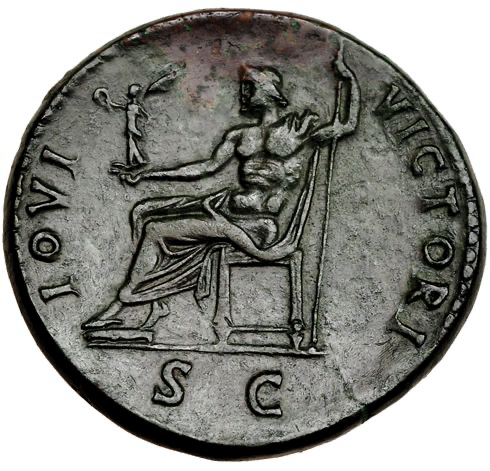
In this article, I would like to again point at things hidden in plain sight...Around 435 BC, Greek sculptor Phidias made a giant seated statue of the sky and thunder god Zeus for the Temple of Zeus in Olympia...

Unfortunately the statue was destroyed during the 5th century AD; but we know what the statue looked like from Greek and Roman coins...

And from written records, like the one left by the 2nd c. AD geographer and traveler Pausanias

What I want to talk about here is what Pausanias says about the platform that supported the throne. He says that it depicted a line of paired deities standing between the sun and the moon...

Zeus and Hera...and Hermes and Vesta close to Hermes...and Eros receiving Aphrodite...and Apollo and Artemis...and Athene and Hercules, and at the end Amphitrite and Poseidon...

They were all coupled based on some mythological link that connected them. What is interesting is that Phidias depicted Hermes coupled with Hestia...Why? 

What is the relationship between these two deities? They are not husband and wife, nor brother and sister, nor mother and son nor protector and protege...

Holy fire and a Messenger of Zeus? What could connect the two? 

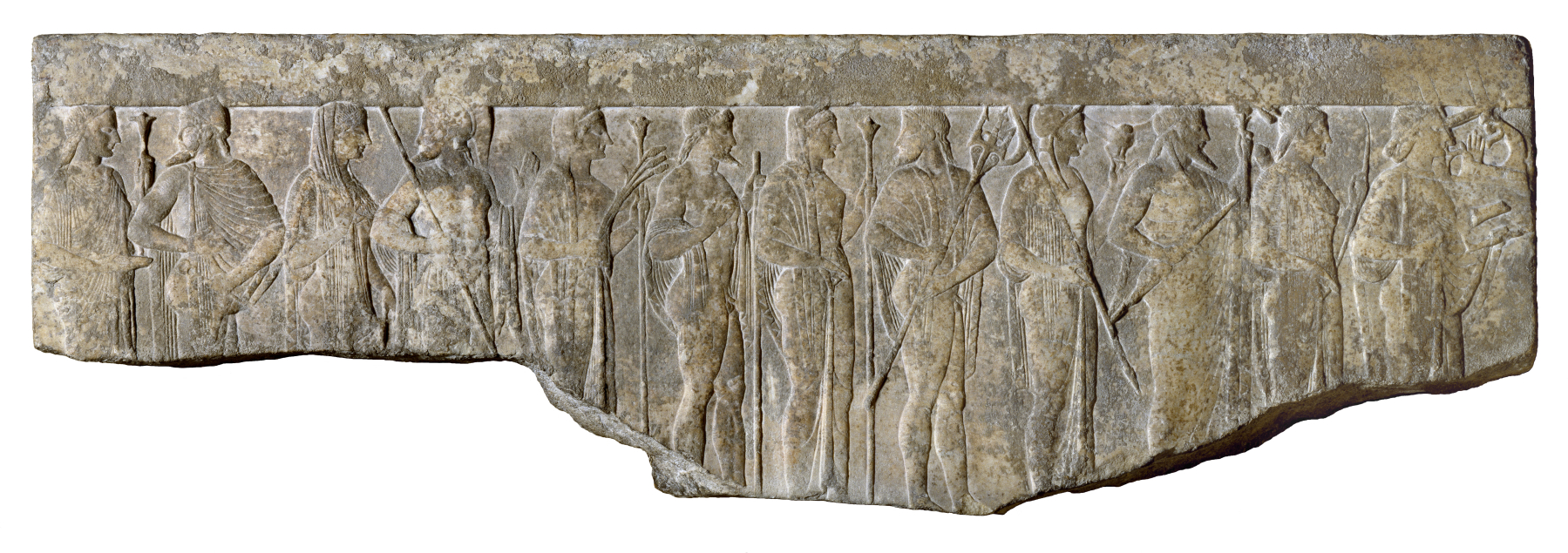
That these two were not put together by accident on the Zeus's throne, can be seen from this Fragment of a Hellenistic relief (1st c. BC–1st c. AD) currently in the Walters Art Museum and depicting the twelve Olympians...


From left to right: 

Hestia, Hermes, Aphrodite, Ares, Demeter, Hephaestus, Hera, Poseidon, Athena, Zeus, Artemis, Apollo

Here they are, Hestia and Hermes...

Hestia and Hermes were also linked together in The Homeric Hymn 29 to Hestia...

"Hestia, in the...dwellings of all, both deathless gods and men who walk on earth, you have gained an everlasting abode and highest honour...for without you mortals hold no banquet...and you, Hermes, messenger of the blessed gods, bearer of the golden rod, giver of good...be favourable and help us, you (Hermes) and Hestia...come and dwell in this glorious house in friendship together; for you two, well knowing the noble actions of men, aid on their wisdom and their strength..."

Really, what's going on with these two? 

Well, lots of people have asked this question before me...

Jean-Pierre Vernant asked this question in 1969 in his paper "Hestia - Hermes : The religious expression of space and movement among the Greeks"

Patricia J. Thompson asked it in 1994 in "Dismantling the Master's House: A Hestian/Hermean Deconstruction of Classic Texts"

Apparently this was still an unanswered question in 2001, so Jean Robert asks it again in "Hestia and Hermes: The Greek Imagination of Motion and Space"

The explanation given by Jean Robert, is that Hestia and Hermes are coupled because they express two opposing, but linked concepts...

Hestia, whose place is at the hearth, in the center of the house, rules over the inside. Hermes, whose place is the door, at the edge of the house, rules over the outside...Hestia anchors, Hermes makes mobile...

Cool. But I think that there is much better reason for this seemingly strange association. Guess what was the first thing Hermes did after he was born? He escaped his cradle, and managed to steal Apollo's cattle...


Funnily enough the thieving Hermes was on the above vase depicted as an adult...With all his attributes including the caduceus, his magic staff...Important detail! Artistic freedom I suppose?

Anyway, after stealing Apollo's cattle, Hermes then wanted to make the first ever sacrifice to the gods. But he couldn't. Cause in order to do so, he needed fire, Hestia, to burn his offerings in...But he had no fire, and apparently, making fire was an art still not invented...

Sooo: "He [Hermes] chose a stout laurel branch and trimmed it with the knife ...held firmly in his hand: and the hot smoke rose up. For it was Hermes who first invented fire-sticks and fire"...From "Hymn 4 to Hermes"...

Wow...

A very strange thing to be attributed to a messenger of Zeus...

Or is it? 

Remember the article about this excerpt from the Homeric Hymn To Hestia: "Hestia, you who tend the holy house of the lord Apollo...come now into this house...having one mind with Zeus the all-wise..."?

In it I talked about how strange it was that Classical cultures still talked about the invention of fire making as if it was a really really big deal?

And I also talked about the fact that before people learned to make fire themselves, Fire (Hestia) descended to earth from the Sun (Apollo, Helios) through Thunder/Lightning (Zeus)... 

So if fire (Hestia) was made (Fathered) by the thunder/lightning (Zeus) then Hermes, "the messenger of Zeus", is the perfect inventor of the fire stick and fire making... 

Remember, Hermes was not the only messenger of Zeus...He shared his workload with Iris. (Attic Red Figure Stamnos, ca. 480-470 BC, Louvre)

Look they are both holding caduceus stick...

Actually, before Hermes got the job, Iris was the sole "speaker of messages of Zeus"...The only "voice of Zeus"...Which is kind of important...

Remember the article "Iris" in which I proposed that Iris might not have been the personification of the rainbow...But that instead she could have been the personification of thunder/lightning, the true "voice of the thunder god"...


Remember that before people invented the fire stick (sorry before Hermes invented the fire stick), Zeus used lightning to light fires on earth...Lightning was the "fire stick" of the Thunder god...

Thunder, which is inseparable from lightning, is the "voice of thunder god"...Which, as I explained in my article about Iris, I believe is the meaning of the "speaker of messages of Zeus"...

If Iris is personification of thunder/lightning, and Hermes is her later replacement as the messenger of Zeus, then Hermes would be perfect god to invent fire stick...The human replacement for thunder/lightning...

That's it...

I mean could there be a more direct link between Hestia and Hermes? Without Hermes there would be no Hestia...To me this is glaringly obvious...Maybe too obvious for some...

But if you "miss" (ignore) this, you can then go ahead and write endless academic papers trying to answer the question "why are Hestia and Hermes linked together"...

Anyway, this brings me back to one of my favourite unanswered questions: why was invention of fire such a big deal in all our mythologies, if people knew how to make fire, like, for ever?

Having one mind with Zeus

"Hestia, you who tend the holy house of the lord Apollo...come now into this house...having one mind with Zeus the all-wise..." from the "Homeric Hymn To Hestia"...

What does this mean?

Maybe the same thing as this: In Hindu mythology, Agni (fire) was believed to have three manifestations: Sun, Lightning, Fire...Which is why he had three heads...I talked about Agni and why he likes riding on a ram in my post "The ram of Agni"...

Just like Slavic Supreme god Triglav (Three headed)..."Because it is a great secret how Svarog (heavenly and earthly fire) is at the same time Perun (thunder) and Svetovid (Sun)"...I talked about Triglav in my posts "Triglav Trojan Trinity Trimurti Agni" and "Lugus or Triglav"...

Interesting right? Cause before people learned how to make fire, fire descended from the sun through lightning...

By the way, modern science seem to confirm that it is indeed Sun (Surya) which gives power to Indra (lightning) which becomes Agni (fire)...I talked about this in my post "Sun thunder fire"...


Or, Sun (Apollo, Helios) through Lightning (Zeus) gives birth to Fire (Hestia)...Hence "one mind", one essence...

Basically, sun gives birth to fire through lightning...Which is why Surya, the sun god, had a daughter, Tapati, whose name literally means "warming", "the hot one", "burning one"...Who was apparently the same as Scythian Tabiti...And Herodotus claimed that Tabiti was the same as Hestia...

And it is because the hearth fire is the same fire burning inside of the sun, that people make sure the hearth fire burns through the winter solstice (Christmas) night, the longest night, "so the sun's fire doesn't get extinguished"...I talked about this in my posts "Badnjak", "La buche de noel" and "Yule log in English tradition"

This fire which descended from the sky, was imagined as a firebird which came down from the sky to earth to nest. It had to be found, caught and brought home...Hence legends about "the hunt for the firebird whose one feather can light up the whole room"...I talked about this in my post "Firebird"...

How old are these legends? Well they most likely predate the moment when "Prometheus stole the fire from the gods" (thunder god to be more precise)...I talked about this in my post "Prometheus"...

Or, before people accidentally discovered fire making while drilling...I talked about this in my post "Fire-drill"...

And how long ago did people become masters of fire, considering that "fire-drill" was still worshiped as deity in Mesopotamia...I talked about this in my post "Holy fire-drill"...

How long ago did people become masters of fire, considering that fire making or fire stealing or fire catching was still the stuff of legends during classical times?

How long ago did people become masters of fire, considering that hearth was the center of the house cult, the house altar in so many Eurasian cultures until recently? 

And considering that making sure that hearth fire never died was so important to Eurasian people until very very recently? 

And considering that "live fire pulled out of wood" (kindled using fire drill) was believed to have magic properties by may Eurasian people until very very very recently? 

Like among the Serbs...I talked about this in my posts "Fire goddess", "Bride and hearth", "Verige", "Live fire"...

I am not saying that people have not been using fire for a very very long time...But I am pretty sure that the making of fire was a pretty recent invention...Neolithic...Mesolithic at the earliest...Which makes legends about the the time when people had to find or steel fire, before they learned how to make it, very very very old indeed... 

BTW, Hestia, (the etymology unknown, believed to be Pre-Greek) has only one cognate, Slavic word jesteja (yesteya) meaning "hearth, paved area around or in front of a hearth used for cooking food" which comes from "jesti" (yestee) meaning to eat...

Which would make Jesteja (Yesteya) the place where food was cooked...Which is exactly what hestia was...Not any fire...Domestic fire...The fire where food was cooked...

I talked about this in my post "Hestia"...

Sunday, 26 June 2022

Yule log in English tradition

Have you cut your Yule log yet?


"The ancient fire-festival of the winter solstice...has survived...in the custom of the Yule log...[once]...widespread in Europe, it seems to have flourished especially in England, France, and among the South Slavs"...From "The Golden Bough"... 

I wrote about South Slavic Yule log customs in my posts "Badnjak" and "First footer"...

I wrote about old French Yule log customs in my post "La buche de noel"...

In this post I will write about Yule log customs from England:

Robert Chambers, in his 1864 work, "Book of Days" notes that "one of popular observances belonging to Christmas is more especially derived from the worship of our pagan ancestors: the burning of the Yule log."

Clement A. Miles in Christmas in "Ritual and Tradition" published in 1912, says: 

"...within the memory of many [Yule log] was a very essential element in the [Christmas] celebration...not just for warmth, but as possessing...magical properties..."

"In some remote corners of England it probably lingers yet. English customs, they can hardly be better introduced than in Robert Herrick's words:  


"We may note especially that the [Yule log] must be kindled with last year's brand; here there is a distinct suggestion that the lighting of the log at Christmas is a shrunken remnant of the keeping up of a perpetual fire..."

Another tradition and its origin are thus described by Sir Laurence Gomme in "Folk Lore Relics of Early Village Life"...

"From there being an ever-burning fire, it has come to be that the fire must not be allowed to be extinguished on the last day of the old year, so that the old year's fire may last into the new year"...

"In Lanarkshire it is considered unlucky to give out a light to any one on the morning of the new year, and...if the house-fire has been allowed to become extinguished recourse must be had to the embers of the village fire [on New Year's Eve a great public bonfire is made]"...

J. Ashton, in "A righte Merrie Christmasse!!" says: "In the north of England...[over Christmas] it was useless to ask a neighbour for light, so frightfully unlucky was it to allow any light to leave the house between Christmas Eve and New Year's Day"...

Georgina F. Jackson say in "Shropshire Folk-Lore: A Sheaf of Gleanings": 

"In Shropshire the idea is extended even to ashes, which must not be thrown out of the house on Christmas Day, 'for fear of throwing them in Our Saviour's face'"...

"Perhaps such superstitions may originally have had to do with dread that the 'luck' of the family, the house spirit...might be carried away with the gift of fire from the hearth"...

"In the 1880s there were still many West Shropshire people who could remember seeing the Christmas Brand drawn by horses to the farmhouse door, and placed at the back of the wide open hearth, where the flame was made up in front of it"...

"The embers, says one informant, were raked up to it every night, and it was carefully tended that it might not go out during  the whole season, during which time no light might either be struck, given, or borrowed"...

"At Cleobury Mortimer in the south-east of the county the silence of the bells during 'the Christmas' points to a time when fires might not be extinguished during that season"...

In 1849 "Notes and Queries" George Bell says: "The place of the Yule log in Devonshire is taken by the "ashen faggot" (sticks of ash fastened together by ashen bands), still burnt in many a farm on Christmas Eve...

In 1740 "Observations on Popular Antiquities", Henry Bourne writes: "Our Fore-Fathers lit up Candles of an uncommon Size, which were called Christmas-Candles, and layed a Log of Wood upon the Fire, which they termed a Yule-Clog, or Christmas-Block"...

"The Yule-Clog therefore...seems to have been used, as an Emblem of the return of the Sun, and the lengthening of the Days. For as both December and January were called Guili or Yule, upon Account of the Sun's Returning, and the Increase of the Days"...

"So, I am apt to believe, the Log has had the Name of the Yule-Log, from its being burnt as an Emblem of the returning Sun, and the Increase of its Light and Heat"...

H. J Rose says in 1923 "Folklore Scraps": "In the last generation the Yule log was still burned, and a piece of it saved to light the next year's log"...

In the 1790 "The Gentleman's Magazine", we can read that: "In England the Yule log was often supplemented or replaced by a great candle"...

"At Ripon in the eighteenth century the chandlers sent their customers large candles on Christmas Eve, and the coopers, logs of wood"...

And finally: In 1841 "Medii Aevi Kalendarium", Hampson says: "Candle that is lighted on Christmas Day must be so large as to burn from the time of its ignition to the close of the day, otherwise it will portend evil to the family for the ensuing year"...

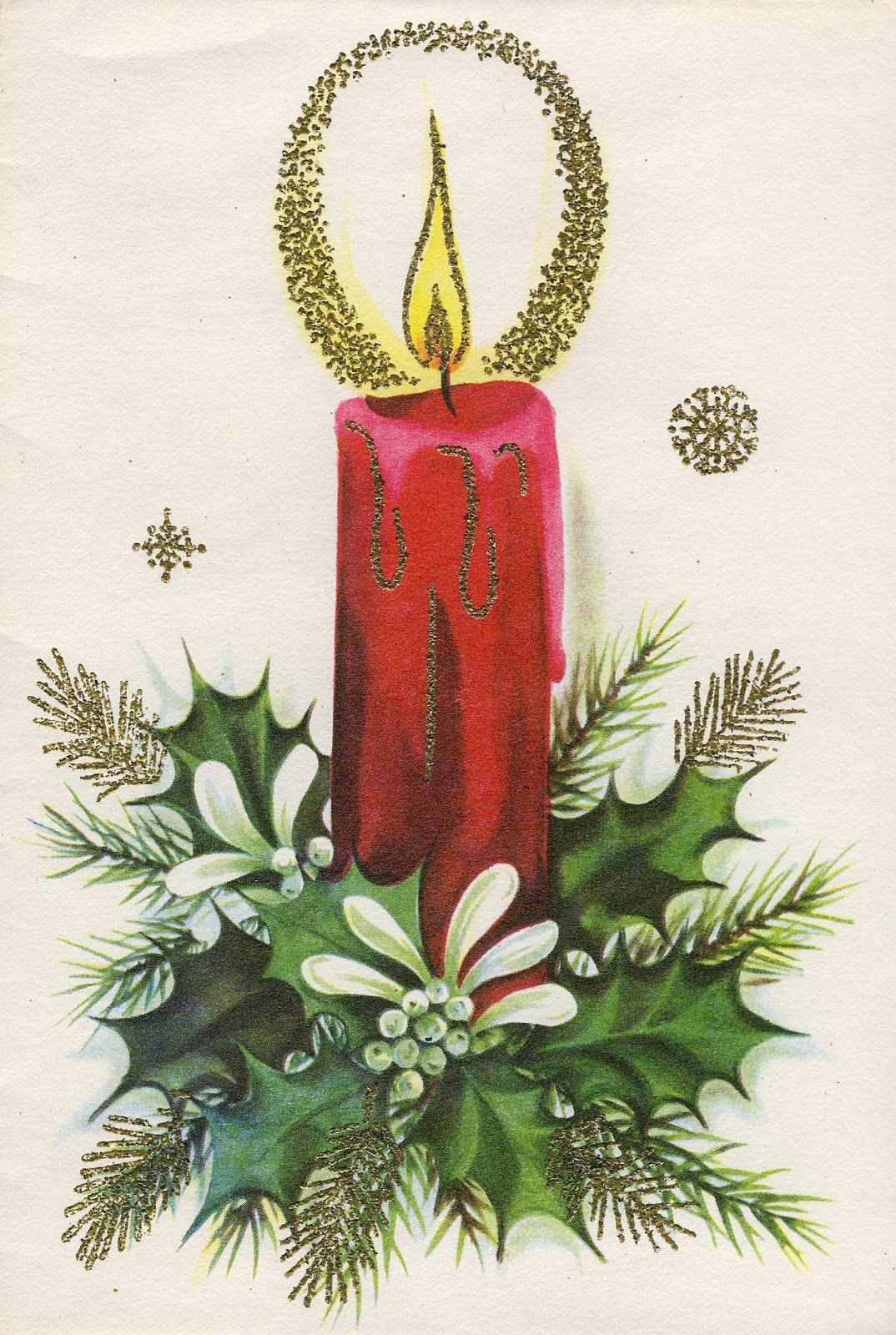
So basically Christmas candle is just a Yule log in disguise...

Anyway, may your fire burn bright...

Merry Christmas eve to all who celebrate Christmas tomorrow...

Sunday, 14 March 2021

Holy fire-drill

The Assyrian king Tukulti-Ninurta I with a torch, worshipping the fire god Nusku. About 1200 BC. The artifact is in Berlin. Pic by petrus.agricola.

In Babylonia and Assyria Nusku is the symbol of the heavenly as well as of the terrestrial fire. As the former he is the son of Anu, the god of heaven...

Well no surprises here. Originally fire from sun descended to earth through lightning...So fire was the child of heaven...

I wrote about this in my article "Sun, Thunder, Fire"...

He was also looked upon as the protector of the family. No surprise here either, as fire has always been "the protector of the family from wild beasts"...

He was also the mediator between humanity and the gods, since it is through the fire on the altar that the offering is brought into the presence of the gods...Fair enough...The smoke of the offerings rises to heaven bringing offerings to the Father Sky...Logical...

The fire-god is also viewed as the patron of the arts and the god of civilization in general. Well a great surprise here...Apparently, because of "the natural association of all human progress with the discovery and use of fire"...

"While temples and sanctuaries to Nusku-Girru are found in Babylonia and Assyria, he is worshipped in a more symbolical form than the other gods"...

What does this even mean? 

Wait for it...

Nusku is basically Asyro Babylonian version of the Sumerian god of fire Gibil, god of fire, the son of An (Sky) and Ki (Earth)...

Well, as I already said, no surprises here. Originally fire from sun descended to earth through lightning...The Sumerians actually spell it out pretty clearly here: The fire is the product of lightning which connects the father sky and mother earth...

In some versions of the Enûma Eliš, Gibil is said to have broad wisdom, and that his mind is "so vast that all the gods, all of them, cannot fathom it". 

Again a great surprise here...Why would fire god be smarter than all the other gods put together?

Some versions state Gibil, as lord of the fire and the forge, also possesses wisdom of metallurgy...Again no surprise here as without fire there can be no metallurgy...

No I went and checked the etymology of the name "Gibil"...I came across a very interesting paper entitled "The Vocabulary of Sumerian" that talks about the habit of Sumerian priests to encode gods' names by inverting them...

So Gibil was written bil-gi, where "bil" means fire and "gi" means reed, stick...So Gibil is not a name. It means fire stick, fire drill...Gibil, the fire god is actually a deified fire stick, the tool used for making fire...


Which is exactly what the Assyrian king Tukulti-Ninurta I is worshiping: a fire stick on a throne, altar...

Babylonians and Assyrians are not worshipping Nusku "in symbolical form"...They are worshiping Nusku in his original form, Gi-Bil, Bil-Gi, Fire Stick...

Anyone stopped to think why would Sumerians, Babylonians, Assyrians, people from some of the most developed ancient civilisations, worship a fire stick? If making fire was by their time already a common knowledge for eeee 1 million years (according to official history books)...

Ah wait. I did 🙂

And I published what I thought about it in these three articles: "Fire-drill", "Fire bird", "Prometheus"

Did Sumerians believe that the fire god possessed unfathomable wisdom, because they considered the invention of fire making to be such an amazing thing, that it could only have been a product of "unfathomable wisdom which all gods together could not get". Let alone mortals...

But that is ridiculous....Right? We all "know" that humans have been able to make fire like for ever...